
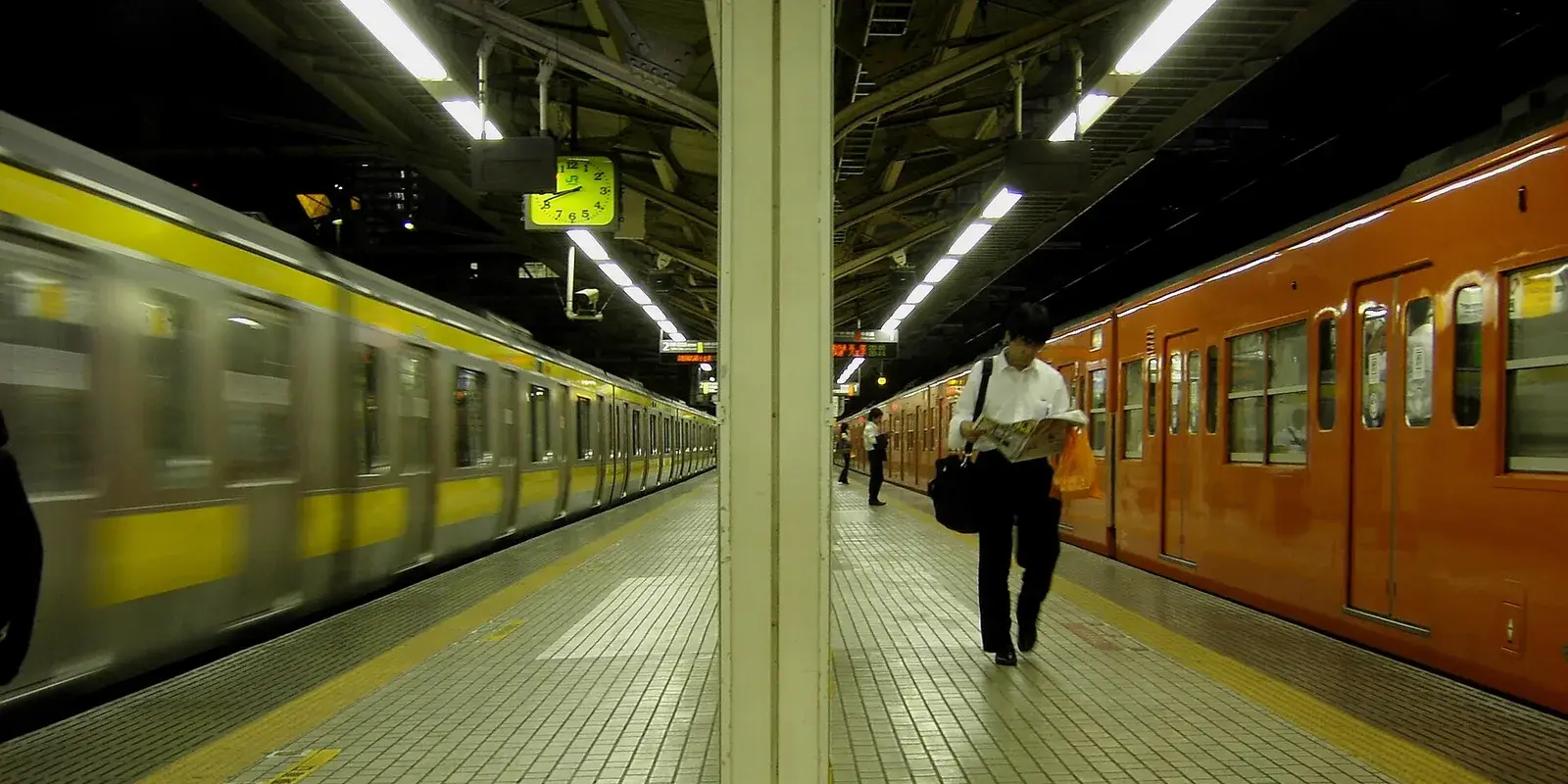
Getting Around Japan: The Tiny Things That Earn You a Nod
What you'll learn in this article:
- What 310 Japanese people said about suitcases on trains, JR Passes, IC cards, and getting lost at stations
- Why the guilt you feel about your luggage is louder than anyone's actual annoyance
- The small transport moments (a smooth tap, a hesitant "sumimasen") that quietly earn you warmth
How do Japanese commuters feel about tourists on trains? We collected 310 public posts by Japanese people. 60% said a suitcase is understandable or that it depends on the situation. 97% either helped a lost foreigner or wished they could. When you fumble at the ticket gate, 91% are patient. The things that earn warmth are small: a suitcase against the wall and a grateful nod are enough.
Every Japan travel guide gives you the same logistics: buy a Suica card, figure out the Yamanote Line, download a transit app. Solid advice. But none of them tell you what's happening inside the heads of the people standing next to you on that train.
The commuter gripping the overhead handle at 8:47 a.m. The station attendant watching you approach the ticket gate. The office worker who notices you wrestling with a suitcase in the vestibule.
What are they actually thinking?
We read what 310 Japanese people (commuters, station staff, train enthusiasts, and everyday riders) wrote about the moments where visitors and Japan's transport system collide. What we found surprised us. Not because Japanese people are always patient (they're not), but because the line between "annoyed" and "I get it" is thinner than you'd expect, and the things that tip it are smaller than you'd think.
Quick Guide
| Situation | What Japanese People Said | |
|---|---|---|
| 🟢 Relax | Tapping your IC card smoothly | 58% of reactions were positive. A smooth tap earns a quiet "they know what they're doing." Getting stuck? Also fine: Japanese people get stuck too. |
| 🟢 Relax | Looking lost at a station | 58% of Japanese people said they want to help, but freeze because of English anxiety. If you look lost, someone is probably working up the courage to approach you right now. |
| 🟡 Good to know | Big suitcase on the train | Opinions split almost evenly: 40% find it annoying, while 60% said it's understandable or that it depends on the situation. Avoiding rush hour is the biggest thing you can do. |
| 🟡 Good to know | Using a JR Pass | Feelings are complex. Some Japanese people openly admit they're jealous. Others say "enjoy it, that's what it's for." The 2023 price increase actually eased some of the tension. |
The one thing to remember: Japan's transport system is designed for people who've used it their whole lives. Nobody expects you to navigate it perfectly on day one. The tiny things that earn you warmth aren't about mastering the system. They're about showing you're trying to share the space considerately. A smooth IC card tap, a suitcase pushed against the wall, a grateful nod when someone helps you find your platform: these small moments register.
How We Gathered These Voices
We collected 310 Japanese-language responses across five transport topics: big luggage on trains (55 responses), feelings about the JR Pass (50 responses), IC card and station navigation (50 responses), helping lost foreigners at stations (80 responses), and generational differences in transport attitudes (75 responses). We gathered these voices from public Japanese Q&A sites, forums, and social posts, along with news articles from All About, MoneyPost, J-CAST, and a 306-person nationwide survey by Railway Trend Research Institute.
A quick note: This isn't a scientific survey. It's a collection of what real Japanese people said in their own words, on public platforms. Most travel guides tell you how to ride Japanese trains. We wanted to show you what it feels like from the other side of the platform.
The Suitcase Question
Let's start with the moment most visitors dread: dragging a large suitcase onto a crowded Japanese train.
Travel guides are blunt about this. "Don't bring large luggage during rush hour." "Ship your bags ahead." "Take a taxi." The message is clear: your suitcase is a problem.
But what do Japanese commuters actually think?
Yes, 40% find it annoying. That's real. But look at the other 60%, and more importantly, look at why the understanding voices say what they say.
全然気にならないけどな。人が密着してくるほうが嫌だ I don't mind at all, honestly. People pressing against me bothers me more than a suitcase.
公共交通機関は誰でも安価に利用できるもの。邪魔だけど仕方ない Public transit is for everyone to use affordably. It's in the way, but what can you do.
日本がマナー良すぎるというか、日本の電車が異常なんだよ。外国人はわかんないから。お互い様 It's not that other countries are rude — Japan's trains are the unusual ones. Visitors don't know. It works both ways.
That last voice, "it works both ways," appeared in multiple forms across our data. Japanese people who've traveled abroad, or who've had to take suitcases on trains for business trips themselves, were consistently more understanding.
出張多いんで申し訳ない。コロナでバス廃止になったまま復活してないから電車しか手段がない I travel for work a lot, so I feel bad too. Our airport bus was cancelled during COVID and never came back — the train is my only option.
迷惑やなぁ...と思いつつ、自分も旅行する時はスーツケース持つから強くは言えない I think "that's annoying"... but then I remember I do the same thing when I travel. Can't really complain.
Why It's Harder Than It Looks
Here's something most visitors don't realize: Japan's trains weren't designed for large luggage. European trains have dedicated luggage racks near every door. Japanese trains, built for high-density commuting, have almost none.
これは旅行者のマナー問題というよりも、設計段階で大型荷物用のスペースを想定していない点が荷物難民を生み出してしまっている This isn't really a traveler manner problem — the trains weren't designed with large luggage space in mind, which creates "luggage refugees."
ドア前は邪魔と言われ、通路横に置いても邪魔と言われ、ボックスシートでも邪魔と言われる。そもそも置き場所がないんだよ Put it by the door — "you're blocking." Put it in the aisle — "you're blocking." Put it on a box seat — "you're blocking." There's literally nowhere to put it.
Japan also has something most countries don't: a nationwide luggage delivery service (takkyubin) that can send your suitcase from the airport to your hotel for about ¥2,000–3,000. Japanese travelers use this routinely, but most visitors don't even know it exists.
JR East's official position? Suitcases are allowed. The rules permit luggage up to 250cm (length + width + height combined), under 2m long, and under 30kg, up to two pieces per person. There is no extra charge.
スーツケースをお持ちのお客さまにおかれましては、他のお客さまに当たらないようにお気をつけいただくなど、譲り合いのお気持ちでご乗車いただければと考えております We ask passengers with suitcases to be mindful not to bump into other passengers, and to ride with a spirit of mutual consideration. — JR East official statement
💡 The guilt gap, train edition
The guilt you feel dragging a suitcase onto a Japanese train? It's almost certainly louder than anyone's actual annoyance. 60% of responses were understanding or neutral, and the 40% who were annoyed? Most of them blamed the system rather than you. Push your suitcase against the wall, keep it close, and avoid the 7:30–9:00 a.m. crush if you can. That's genuinely all it takes.
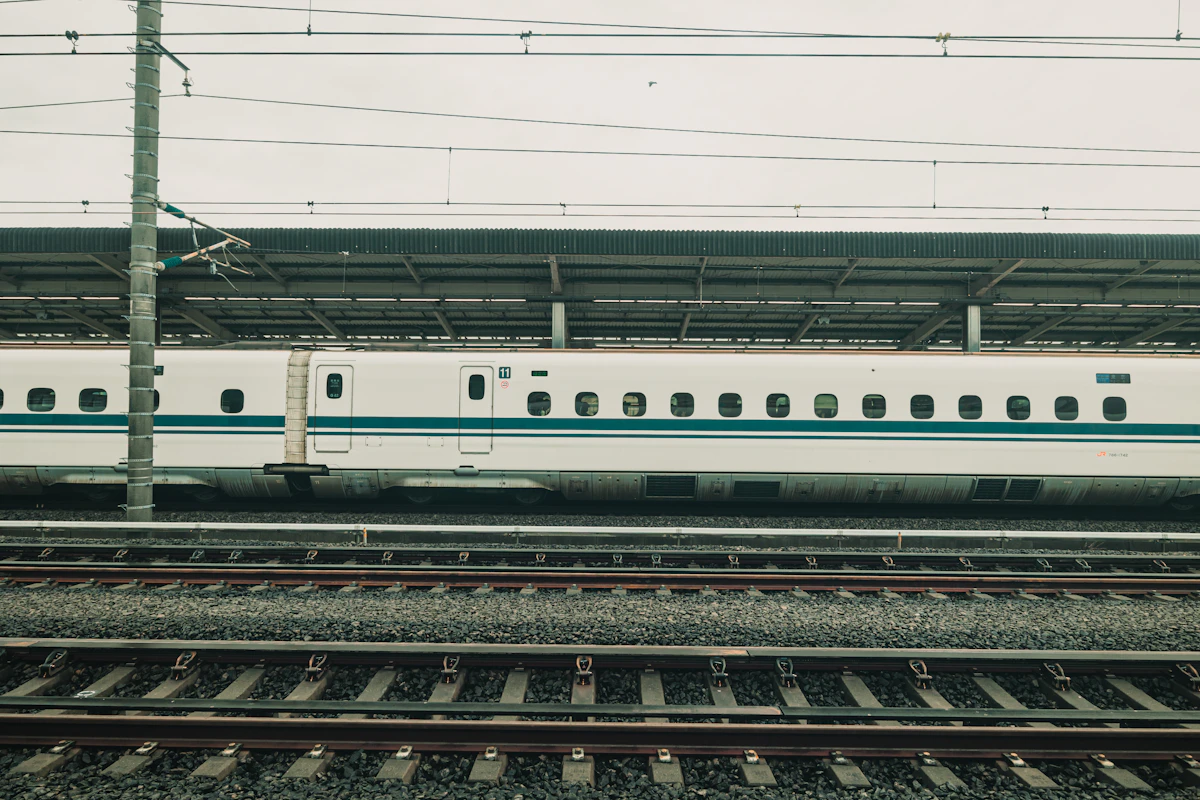
The JR Pass: A Ticket Japanese People Can't Buy
Here's something that makes Japanese people's feelings about transport unusually complex: the Japan Rail Pass.
For those who don't know: the JR Pass is an unlimited rail ticket, including the shinkansen (bullet train), available only to foreign visitors. A 7-day pass costs ¥50,000 (about $330). Japanese citizens cannot buy it.
How do Japanese people feel about this? It's... complicated.
The critical voices are real, and worth understanding. Many Japanese people feel that infrastructure built with their tax money shouldn't be offered at a discount to people who don't pay those taxes. The overtourism concerns amplify this, especially during peak seasons when shinkansen seats are hard to get.
正規の料金を払って利用している日本人が『締め出される』現象が各所で起きている Japanese people who pay full price are being "crowded out" — it's happening everywhere.
正直うらやましい。日本人にも同じような乗り放題パスがあればいいのに Honestly, I'm jealous. I wish there were a similar unlimited pass for Japanese people too.
自分が外国人だったら間違いなく買うわ。そりゃうらやましいよ If I were a foreigner, I'd absolutely buy it. Of course I'm jealous.
But here's what makes this distinctly Japanese: even the jealousy comes wrapped in understanding. Many voices pointed to reciprocity: the fact that Japanese travelers can buy similar passes in Europe (Eurail Pass), Korea, and other countries.
逆に日本人がヨーロッパに行けば、ユーレイルグローバルパスが格安で買える。相互主義だよ When Japanese people go to Europe, we can buy a cheap Eurail Pass. It's reciprocal.
多くの旅行者が『シンカンセン!』と驚き、SNSにアップして世界中に広まる。あれは最高の宣伝費 Travelers say "Shinkansen!" with amazement, post it on social media, and it spreads worldwide. That's the best advertising money can buy.
JR Pass使って日本中回ってくれるなら、地方にもお金が落ちるし良いと思う。東京だけに集中されるよりマシ If they use the JR Pass to travel across Japan, money reaches rural areas too. That's better than everyone just staying in Tokyo.
And perhaps the most honest voice of all:
新幹線で外国人が乗り放題で楽しそうにしてるの見ると、素直にいいなと思う。自分も国内旅行したいけど新幹線高いから When I see foreigners riding the shinkansen with unlimited passes, looking like they're having a great time — honestly, I just think "nice." I want to travel around Japan too, but the shinkansen is expensive.
💡 The JR Pass paradox
Japanese people can't buy the JR Pass. Many admit they're a bit jealous. But look at how that jealousy resolves: not into resentment, but into a kind of wistful warmth: "enjoy it, travel around our country, take the shinkansen to places we haven't been ourselves." The 2023 price increase (from ¥29,650 to ¥50,000 for 7 days) eased some of the "too cheap" criticism. One thing worth knowing: the pass covers JR rail, but some of the most rewarding regional day trips run on private (non-JR) lines instead. A half-day ride on the Nishitetsu line out of Fukuoka to the plum-shaded shrine of Dazaifu Tenmangu is a classic example. If you use a JR Pass, you're not doing anything wrong. You're doing exactly what the system was designed for.
The Tap at the Gate
Now for something lighter, and genuinely delightful.
IC cards (Suica, PASMO, ICOCA) are the keys to Japan's transport kingdom. Tap at the gate, ride any train, tap again when you exit. No tickets, no fare calculations, no language barrier. Just pi: the satisfying beep of the reader accepting your card.
For Japanese commuters, tapping an IC card is as automatic as breathing. They don't think about it. Which is exactly why they notice when a foreigner does it smoothly.
外国人がICカードをスムーズに使って電車に乗っているのを見ると、日本に慣れてるなと感じてちょっと嬉しくなる When I see a foreigner smoothly using an IC card to board the train, I think "they know their way around" — and it makes me a little happy.
外国人が電車の乗り降りのルールをちゃんと守っているのを見ると、慣れてるなと感じる When foreigners follow the boarding and alighting rules properly, I think: they're used to this.
And when tourists don't have an IC card (when they're standing at the ticket machine, staring at a fare chart written entirely in kanji, trying to figure out which of the fourteen buttons to press), Japanese people don't get angry. They get sympathetic.
お互い様だ。きみも他の町へ行けば右も左もわからない It works both ways. You'd be just as lost in an unfamiliar city.
券売機で困っている外国人を見ると、自分が海外で困った時のことを思い出す。助けたくなる When I see a foreigner struggling at a ticket machine, I remember what it was like when I was lost abroad. It makes me want to help.
Japan's ticket machines have a feature that delights foreigners and surprises even Japanese people: an assistance button that, when pressed, causes a station attendant to appear, sometimes literally from behind the machine's wall panel.
券売機にassistanceボタンがあって、壁から駅員が出てくる仕組みに外国人が驚く。日本人も知らない人多い The ticket machine has an assistance button, and a station attendant appears from behind the wall. Foreigners are amazed — and honestly, many Japanese people didn't know about it either.
Here's the practical takeaway: get an IC card on day one. A Suica or Welcome Suica eliminates the ticket machine entirely. Tap in, ride, tap out. Starting in 2025, you can even set up a mobile Suica on your phone before arriving in Japan.
The same smooth tap gets you between the city's must-see spots, too. A guide like teamLab in Tokyo reminds you that Borderless and Planets sit in completely different parts of the city. Meanwhile, a district like Akihabara sits at the knot of so many lines (JR, the Hibiya subway, the Tsukuba Express) that it's just two stops from Tokyo Station and an easy pairing with nearby Ueno. A couple of stops the other way on the Yamanote Line drops you at the youth-fashion streets of Harajuku, and one stop further along the loop sits the great scramble-crossing rail hub of Shibuya. An early-morning trip to the markets at Toyosu and Tsukiji means catching the right line before dawn, while the old temple town of Asakusa and Senso-ji is a quick ride on the Ginza or Asakusa line.
The same card carries you out of the city. A day out to Mount Fuji and the Fuji Five Lakes turns the train window itself into part of the view. The Tobu limited express out of Asakusa carries you north to the gilded mountain shrines of Nikko in well under two hours. The Odakyu Romancecar out of Shinjuku reaches the mountain hot-spring loop of Hakone in about 75 minutes, where a single pass then strings together a switchback train, a cable car, a ropeway, and a boat. An under-an-hour run down the JR Yokosuka Line to the old warrior capital of Kamakura trades the city for an open-air Great Buddha and the little Enoden line that rattles out to the sea.
Farther inland, the Hokuriku Shinkansen runs straight out of Tokyo in about two and a half hours to the old castle town of Kanazawa, where a short loop bus strings together a famous garden, a castle, and the gold-leaf teahouse streets. The JR limited express Hida out of Nagoya threads up a river gorge to the old mountain town of Takayama in the Hida highlands, where a connecting Nohi bus carries you on to the thatched-roof village of Shirakawa-go in about fifty minutes. Reaching the Studio Ghibli theme park outside Nagoya means a subway ride out to Fujigaoka followed by a switch onto the automated Linimo maglev line, a textbook example of the multi-transfer trips this system quietly rewards you for learning.
Some journeys are the destination. The train-cable car-bus climb up to Koyasan makes the slow ascent to the mountaintop monastery feel like part of the pilgrimage. Reaching the two shrines of Ise Jingu means a Kintetsu or JR run out to Ise and then a local bus between the Outer and Inner shrines that sit several kilometers apart.
In Kyoto, a city bus and a short uphill walk are how you reach the hillside temple of Kiyomizu-dera, since no station waits right at its gate. The subway up to Imadegawa and then the flat-fare bus 203, a 230-yen ride as of 2026, is the way the temple itself suggests you reach the Silver Pavilion of Ginkaku-ji, since the direct city bus crawls through downtown. The Keihan or Hankyu line and a city bus drop you at the edge of the old geisha district of Gion, just below those same Higashiyama slopes.
A short hop down to Osaka puts you a few Midosuji-line stops or a Nankai ride from Namba, where the canalside dazzle of Dotonbori waits at the end of the platform. The Osaka Loop Line rings the city out to the green moat-ringed keep of Osaka Castle, a short walk from several of its stations. A little farther west, the port city of Kobe is a textbook lesson in Japan's many-operator rail: its downtown packs a JR, a Hankyu, a Hanshin, and a subway station all calling themselves some version of "Sannomiya," with a separate Kobe Station and the Shinkansen stop confusingly named Shin-Kobe.
That same Sanyo Shinkansen running west stops first at Himeji, where the station faces straight up a wide avenue to the original white keep of Himeji Castle, then carries on to Hiroshima, where a streetcar takes you to Hiroshima's Peace Memorial Park. Just beyond lies a short ferry crossing to Miyajima, the island where Itsukushima Shrine seems to float on the sea. Out in the Seto Inland Sea, a ferry from Uno or Takamatsu carries you to the contemporary-art island of Naoshima, with Takamatsu itself the gateway to the landscape garden of Ritsurin in Takamatsu. Across Shikoku a limited express runs down to Kochi, but no fast train crosses the mountains between Matsuyama and the only castle whose entire main bailey survives, Kochi, so a highway bus fills the gap.
Crossing over to Kyushu, the Kyushu Shinkansen runs from Hakata in about forty minutes to the fortress being rebuilt stone by stone, Kumamoto Castle, an easy day trip out of Fukuoka. From Kumamoto, the scenic JR Hohi Line (rebuilt after the 2016 earthquakes and now riding again behind the sightseeing train Aso Boy) climbs east into the caldera of the smoking volcano of Mount Aso. The JR limited express "Sonic" runs from Fukuoka in about two hours and twenty minutes to the hot-spring town of Beppu, where a highway bus or an airport bus from Oita are easy alternatives. The sightseeing limited express Yufuin no Mori threads out of Hakata through the hills to the misty hot-spring town of Yufuin in a little over two hours.
Far to the north, the Tohoku Shinkansen reaches Ichinoseki, where a short ride on the local Tohoku Main Line brings you to the original Golden Hall at Hiraizumi, with the Tohoku hub of Sendai and the pine-island bay of Matsushima lying an easy local-train hop short of it. The Hokkaido Shinkansen ends at Shin-Hakodate-Hokuto rather than Hakodate itself, so the last leg into the old port city is a short transfer onto the Hakodate Liner. The line does not yet run all the way to Sapporo, and most visitors to Hokkaido's capital fly into New Chitose Airport instead, where the city's regular grid of numbered, directional blocks makes getting around unusually easy.
Some of the best places sit off the Shinkansen network entirely. Reaching an onsen town like Kinosaki Onsen by limited express from Osaka or Kyoto turns a soak in seven public baths into an easy overnight escape from the city. Far to the west, out on the Sea of Japan coast, the limited express Yakumo runs up from Okayama and stops along the way at Bitchu-Takahashi, where a taxi or shuttle climbs the mountain to the misty stone-walled keep of Bitchu-Matsuyama Castle. The Yakumo, or the overnight Sunrise Izumo sleeper out of Tokyo, carries you on to the old shrine where Japan's gods are said to gather each autumn, Izumo Taisha. Farther south still, the rails run out altogether: in Okinawa there is no train beyond the Naha monorail, so the aquarium and the island's north are reached by rental car or bus rather than rail.
So knowing your train lines, and the cable car, ferry, bus, and limited-express runs at the ends of them, is half the trip. For a broader look at navigating your first days in Japan (stations, neighborhoods, and all), Your First Week in Japan walks through the practical side of arriving with confidence.
💡 The nod at the gate
A smooth IC card tap is a two-second action that earns a quiet moment of recognition. It says "I get how this works" without a single word. And if you fumble? That's fine too: Japanese people fumble at gates all the time. The card reader doesn't judge, and neither do they.
Lost at the Station: And Why Someone Wants to Help You
This is the most WMJS section of this article. And possibly the most Japanese.
Picture this: you're standing in the middle of Shinjuku, the world's busiest station, with 2.7 million daily passengers (Guinness World Records, 2022) and more exits than a hedge maze. You're turning your phone in circles, looking up at signs you can't read, and radiating the universal signal of "I have no idea where I am."
Now picture the Japanese office worker ten meters away, watching you. They want to help. They really do. But they're frozen, because their English feels inadequate, and the fear of saying the wrong thing is paralyzing.
This mutual hesitation (the visitor who needs help but doesn't want to bother anyone, and the local who wants to help but can't find the words) is one of the most quietly beautiful dynamics in Japan.
97% of Japanese people either helped or wished they could. The unwilling voices? Just 4%.
The dominant emotion here is anxiety rather than annoyance. Japanese people feel anxious about their English, anxious about bothering you, anxious about getting the directions wrong. Sound familiar? That's the exact same anxiety visitors feel about approaching Japanese people.
新宿駅で明らかに迷ってる外国人がいて声かけたかったけど英語出てこなくて…結局Googleマップ見せることしかできなかった。でも「Thank you!」って言ってもらえた There was a foreigner clearly lost at Shinjuku Station. I wanted to help but my English wouldn't come out… In the end, all I could do was show them Google Maps. But they said "Thank you!" — and it made my day.
助けたいんだけど、自分の英語力で本当に伝わるか不安。間違ったこと教えちゃったらどうしようって思う I want to help, but I'm worried my English isn't good enough. What if I give them wrong directions?
声をかけるか迷っているうちに、その人がいなくなってしまった。あとから後悔した While I was hesitating about whether to speak up, the person was gone. I regretted it afterward.
And when they do help (when they push past the anxiety and offer a hand), the stories are universally warm:
勇気を出して英語で道を教えたら、すごく喜んでもらえた。自分も嬉しくなった。英語は下手でも気持ちは伝わるんだなと思った I gathered my courage and gave directions in English. They were so happy — and so was I. Even bad English can carry genuine feeling.
言葉が通じなくても、一緒に歩いて連れて行ってあげた。目的地に着いた時の笑顔が忘れられない We couldn't understand each other's words, so I just walked them there. The smile when we arrived — I'll never forget it.
This isn't just about navigation. It connects directly to what we found in our article about trying to speak Japanese: both sides are nervous, both sides are trying, and both sides walk away smiling. The imperfection is the point.
💡 Both sides are nervous
You're nervous about asking for help in a country where you don't speak the language. The person you'd ask is nervous about helping in a language they don't speak well. Both of you are standing there, wanting to connect, held back by the same fear of imperfection. When one of you breaks through (with a hesitant "sumimasen" or a shy "excuse me"), something genuinely lovely happens. Imperfect communication, perfectly human.
The Generation Shift
One pattern emerged clearly across all transport topics: age matters.
Younger Japanese people (teens through 30s) are consistently more relaxed about foreign visitors on trains. Older generations (50s and above) tend to hold stricter expectations, though even among them, outright hostility is rare.
Of 75 voices specifically about generational differences:
- Younger voices often said things like "I've traveled abroad, I get it" or "Japanese people are too uptight about this"
- Older voices tended toward "rules are rules" or "they should learn before coming"
- The middle ground (people in their 40s) often acknowledged both perspectives
This mirrors what we've seen across other WMJS topics: the queuing article found similar generational splits, as did the tipping article. Japan's relationship with foreign visitors is evolving in real time, and the younger generation is leading that shift. If you want a broader map of what actually matters to Japanese people across every situation, transport included, What Actually Matters (And What Doesn't) ranks all 21 topics by temperature.
Practical Tips: Getting Around With Confidence
| ✅ Do this | Why it matters |
|---|---|
| Get a Suica/PASMO on day one | Eliminates ticket machines entirely. Tap in, ride, tap out. Works on trains, buses, convenience stores, and vending machines. Welcome Suica is designed specifically for visitors. |
| Avoid rush hour with luggage (7:30–9:00 a.m., 5:30–7:30 p.m.) | This single action changes Japanese commuters' perception of you more than anything else. Even 30 minutes makes a difference. |
| Ship your luggage ahead | Japan's takkyubin delivery service can send your suitcase from the airport to your hotel (or hotel to hotel) for ¥2,000–3,000. Most convenience stores accept luggage. Japanese travelers do this routinely. |
| Push your suitcase against the wall | On the train, keep your luggage close and against the wall or in a corner. This one gesture communicates "I'm aware of the space I'm taking." |
| Look grateful, not guilty | Japanese people can tell when you're trying to be considerate. A small bow, a "sumimasen," or just pulling your bag closer when someone passes: these register. |
More Japanese Perspectives
Curious about what else Japanese people notice, and what they quietly appreciate? These articles explore the emotional side of daily life in Japan, based on hundreds of real voices.
- Why Japanese Trains Are Silent: The cultural concept of kuuki wo yomu (reading the air) that makes Japan's trains so unusually quiet.
- Cash or Card?: What happens at the register when cultures meet, including how to use your Suica for more than just trains.
- Why Lining Up Matters: The invisible rules of Japanese queues, and the one word that fixes almost any mistake.
- When You Try to Speak Japanese: The language barrier from both sides, and why imperfect Japanese earns more warmth than you'd expect.
Your Voice Matters
We're always collecting Japanese voices on topics like these, and your perspective as a visitor matters too.
Have you had a memorable transport moment in Japan? A commuter who helped you find your platform? A moment when you felt self-conscious about your luggage, or a moment when you realized nobody cared?
Sources
Japanese Voices (Public Platforms)
- Public Japanese Q&A sites, forums, and social posts: first-hand opinions on suitcases, JR Pass fairness, IC card usage, helping lost foreigners, station assistance, and generational attitudes toward transport
Articles and Reports
- All About News: "Train Suitcase Problem Has Reasons: 3 Infrastructure Issues That Confuse Foreign Travelers"
- MoneyPost: "Suitcase Troubles on Trains and Buses Continue"
- Railway Trend Research Institute: "62.4% Have Seen Foreign Tourists With Poor Manners" (2025 survey, n=306)
- J-CAST: "Foreigners Confused at Ticket Machines: The Surprisingly Difficult 'Basic Operation'"
- Mynavi Woman: "Are Suitcases on Trains a Manner Violation? Survey Results"
- VAGUE: "Suitcase Problems on Crowded Trains: Railway Company Views and SNS Trends"
- VAGUE: "Can't Board Because of Tourist Luggage: Is 'Hands-Free Tourism' Possible?"
- ITmedia: "Mobile Suica for Foreign Visitors Launching Spring 2025"
Fares, Prices, and Hours Cited in This Article
- Get Around Japan: "Japan Rail Pass to Increase by 70% from October 2023"
- https://www.getaroundjapan.jp/archives/9286
- The 7-day Ordinary JR Pass rose from ¥29,650 (29650 yen) to ¥50,000 (50000 yen) when the October 2023 fare change took effect.
- Kyoto City Official Transportation Guide: "Kyoto City Bus Fare"
- https://www2.city.kyoto.lg.jp/kotsu/webguide/en/fare/fare_bus.html
- The flat-fare-zone adult fare (covering bus 203 to Ginkaku-ji) is confirmed at 230 yen on the official Kyoto city site, checked in 2026.
- Air Traveler Club: "Japan travel hack: Ship your luggage from the airport to your hotel for $13"
- https://www.airtraveler.club/intel/japan-luggage-airport-hotel-13/
- Confirms the ¥2,000-3,000 (2000 yen to 3000 yen) range for airport-to-Tokyo-hotel takkyubin delivery used in this article.
- Guinness World Records: "Busiest railway station"
- https://www.guinnessworldrecords.com/world-records/busiest-station
- Confirms Shinjuku Station's certified daily average passenger count at 2,704,703 (measured 2022), the figure used in this article.
- VisitInsideJapan: "Stress-Free Sightseeing in Japan: Best Train Travel Times to Avoid Crowds"
- https://visitinsidejapan.com/travel-in-japan/japan-best-train-travel-times-to-avoid-crowds/
- Places the morning rush at 7:30 AM to 9:00 AM and the evening rush extending from 5:00 PM to 7:30 PM; this article's 7:30-9:00 a.m. and 5:30-7:30 p.m. figures sit within that confirmed window.
Note on Quotations
Quotes from online platforms have been lightly edited for readability (fixing typos, formatting for clarity). The meaning and intent of each comment remain unchanged. Original sources are linked above.
WMJS is written in Japan, in English, with AI help. We check every page, but English is not our first language. If a sentence reads oddly, tell us. One sentence is enough.
Thank you. A person reads every note.
How well do you know Japan?
Built from 635 public posts by Japanese people
Want to know more? Ask Japanese people
Have a follow-up question about this topic? We'll ask real Japanese people.
Voice Box →