
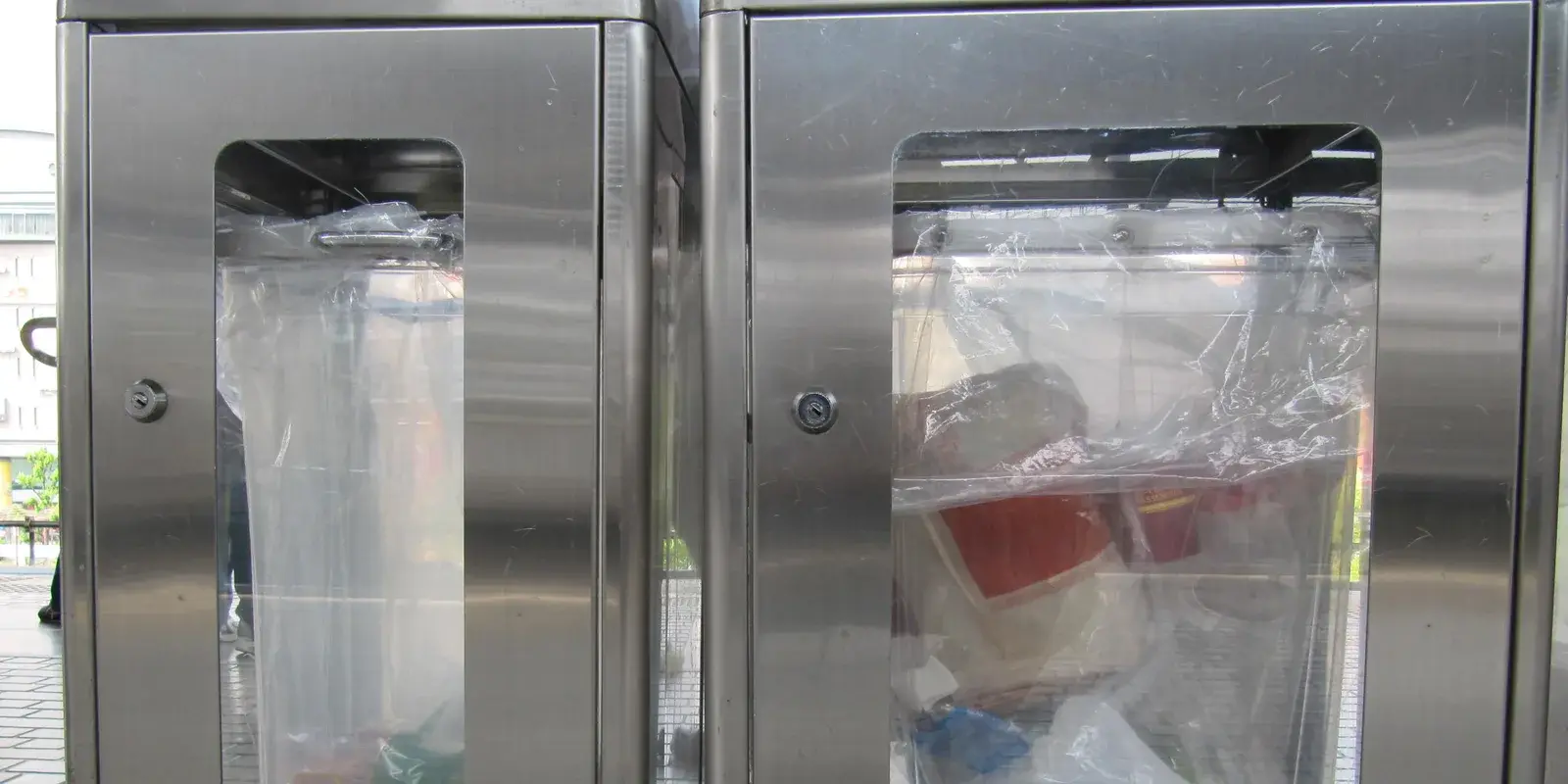
No Trash Cans, No Problem: How "Carry Your Trash" Earns You Respect
What you'll learn in this article:
- Why Japan has almost no public trash cans (it wasn't always this way)
- What 232 Japanese people actually feel when visitors carry their trash
- The unwritten rules of convenience store bins, and what the staff really think
Why are there no trash cans in Japan? Public bins were removed after the 1995 Tokyo subway sarin attack as a security measure. Today, "not enough trash cans" is the No. 1 complaint from foreign visitors at 17.2%, according to a FY2025 Japan Tourism Agency survey. We read what 232 Japanese people wrote about how they feel. Many are quietly grateful when visitors carry their trash, while some feel embarrassed that Japan doesn't make it easier.
If you've been walking around Tokyo clutching an empty coffee cup for the last thirty minutes, wondering where on earth to throw it away, you're not doing anything wrong. You've just discovered one of the most surprising things about Japan: there are almost no public trash cans.
This isn't something to stress about. It's actually one of those cultural quirks that, once you understand it, makes you appreciate Japan even more. And the best part? When you carry your trash instead of leaving it behind, Japanese people genuinely notice, and they're quietly grateful.
We collected 232 real opinions from Japanese people across three topics: carrying your trash home, the lack of public trash cans, and the etiquette of using convenience store bins. The goal was to find out what they actually think, what frustrates them, and what they wish visitors knew.
Quick Guide
| Situation | What Japanese People Said | |
|---|---|---|
| 🟢 Relax | Carrying your trash with you | Japanese people notice and appreciate it. Many carry a folded plastic bag in their pocket for exactly this reason. You don't need to be perfect. Just making the effort counts. |
| 🟡 Good to know | Can't find a trash can | Japanese people struggle with this too. The Japan Tourism Agency found it's the No. 1 complaint from visitors. Convenience stores are your best friend: most have bins inside. |
| 🔴 Worth noting | Convenience store trash cans | These are meant for items bought at that store. Tossing a small bottle? Generally fine. Bringing in bags of outside garbage? That crosses a line. The staff deal with enough already. |
The one thing to remember: Japan's "carry your trash" culture is about a shared sense of responsibility that runs deep, the same quiet consideration you'll see in how Japanese people line up. And honestly, once you get used to tucking a small bag into your pocket, you'll find it strangely freeing. No hunting for bins. No wondering which slot is for which type of waste. Just carry it, toss it at your hotel, done.
How We Gathered These Voices
We collected 232 Japanese-language responses across three trash-related topics: carrying your trash home (84 responses), the lack of public trash cans (80 responses), and convenience store trash can etiquette (68 responses). Sources include public Japanese Q&A sites, forums, and social posts, along with articles from Tokyo Shimbun, Business Insider Japan, CNN Japan, and other Japanese media.
A quick note: This isn't a controlled scientific survey. It's a collection of what real Japanese people said in their own words, in their own language, on public platforms. Most English-language guides simply tell you "carry your trash." We wanted to show you why, and just how much Japanese people are thinking about this topic themselves.
🟢 Carrying Your Trash: What Japanese People Actually Feel
The honest answer: they notice, and many of them are quietly moved.
Of 84 responses about visitors carrying their trash, the feelings were complex, and more self-reflective than you might expect.
When we looked at what Japanese people said, three distinct feelings emerged: gratitude, acceptance ("that's just normal"), and, surprisingly, a kind of apologetic embarrassment that Japan doesn't make things easier for visitors.
"It makes us happy"
Many Japanese people expressed genuine warmth when they saw visitors respecting the carry-your-trash culture:
日本に2週間弱バケーションに来た人が、日本を訪れる際の基本心得みたいのを紹介してて好感持った。「地元民にリスペクト払え、ゴミ捨てるな、公共の場ではマナーを守り騒ぐな」 Someone who came to Japan for about two weeks made a video introducing basic tips for visiting Japan, and I really liked it. "Respect the locals, don't litter, be mindful in public spaces."
自分が知る限り日本行った海外勢 日本きれい過ぎてゴミのポイ捨てに対して罪悪感を芽生えさせて帰ってくる From what I've seen, people from abroad who visit Japan come back feeling guilty about littering — because Japan is just too clean.
道路やトイレなどが清潔に保たれていることが'当たり前'だと思える幸せに気づきました I realized how lucky we are that clean roads and restrooms feel "normal" to us.
"It's just what you do"
For many Japanese people, carrying your trash isn't a virtue. It's simply how things work, and the way this habit gets passed down is genuinely fascinating:
学生だったころ、ポイ捨てしない派が多数で、怒った「する派」の学生が「出先でごみ箱がなかったらどうするんだ!」といったところ、しない派の学生が「え?袋に入れて持ち帰るよね」と全員鞄から畳んだビニール袋を出した When I was a student, the "no littering" side was the majority. When a "littering is fine" student got angry and said "What do you do when there's no trash can?!", every single person in the anti-littering group pulled a folded plastic bag out of their bag.
わたしのカバンからも畳んだビニール袋出てきます。子連れはゴミよく出るしねぇ A folded plastic bag comes out of my bag too. When you have kids, there's always trash.
少なくとも日本人は学校の遠足時に「ゴミは持ち帰りましょう」と教育されている At the very least, Japanese people are taught on school field trips: "Let's carry our trash home."
That folded-bag moment is worth pausing on. Many Japanese people carry a small plastic bag in their pocket or purse as a matter of routine. It's not a conscious environmental statement. It's muscle memory from childhood.
"We're sorry it's so hard"
Here's what might surprise you most: a significant number of Japanese people feel embarrassed that their country makes it so difficult for visitors to throw things away.
これだけ国を挙げてインバウンドを推進しその利益を享受しておきながら、受け入れ体制を整えずに日本のマナーを押し付けるだけ The country is aggressively promoting inbound tourism and profiting from it, yet all we do is push our manners onto visitors without building the infrastructure to support them.
このゴミはこの区分でいいのか聞いてくる外国人の友人がいる。それでも「外国人はゴミ捨てルールは守らない」と言われてしまう I have a foreign friend who asks me which category their trash goes in. And yet people still say "foreigners don't follow trash rules."
こうなると完全に生育歴を含んだ文化の違いで、社会性や思いやりとかの問題じゃない At this point, it's purely a cultural difference rooted in upbringing — not a matter of social awareness or consideration.
That last one is important. Many Japanese people understand that carrying your trash home is a culturally specific habit rather than a universal moral standard. They're not judging you for not knowing. They're pleasantly surprised when you do.
💡 What surprised us most
A significant number of Japanese people don't blame visitors at all. They feel embarrassed that Japan promotes tourism while making something as basic as throwing away trash so difficult.
🟡 Where Are All the Trash Cans? A Problem Japanese People Know About
This isn't just a tourist complaint. Japanese people are frustrated too.
Of 80 responses about the lack of public trash cans, nearly half sided with visitors, and many Japanese people admitted they struggle with the same problem.
According to a FY2025 Japan Tourism Agency survey, "not enough places to throw away trash" was the No. 1 complaint from foreign visitors, cited by 17.2% of respondents (down from 21.9% the year before). Japanese people themselves are deeply divided on this issue, and many of them agree with you.
The history: Why the trash cans disappeared
Japan didn't always lack trash cans. In fact, public trash cans were installed across Tokyo for the 1964 Olympics to clean up the city. So what happened?
In 1995, the Aum Shinrikyo cult carried out the Tokyo subway sarin gas attack, killing 13 people and injuring thousands. In the aftermath, trash cans in train stations and public spaces were rapidly removed as a security measure: they could be used to conceal dangerous objects. In 2024, Tokyo Metro removed all 239 trash cans from its stations. Private railways like Seibu and Odakyu followed suit.
サリン撒かれてから、ゴミ箱撤去が始まったんだよ After sarin was released, the trash can removal started.
ゴミ箱の撤去は地下鉄サリンや米同時多発テロで危険物の隠し場所になるという理由で進みました。そんな民族性ありませんよ、昔はポイ捨て当たり前だったんです Trash can removal happened because of the subway sarin attack and 9/11 — they could be used to hide dangerous items. It's not some innate national trait. Littering used to be completely normal here.
That second quote is fascinating: the idea that "Japanese people have always been this tidy" is actually a myth that Japanese people themselves will tell you about. Before 1995, littering was common. The combination of security concerns, rising environmental awareness, and civic education gradually created today's carry-your-trash culture.
Japanese people are divided on this
The debate within Japan is lively. There are broadly two camps, and both have strong opinions:
"We need more trash cans":
日本の民も困っています Japanese people are struggling with this too.
ゴミ箱を町のあちこちに置こう。私もゴミを捨てる場所にいつも悩む Let's put trash cans all over town. I'm always struggling to find a place to throw things away too.
飲み物や、おにぎりやサンドの類を売っておきながらゴミ箱を設置しないのは、なんか倫理に反してる感じがする Selling drinks, onigiri, and sandwiches without providing a trash can feels somehow unethical.
"The current system works fine":
何年もゴミ箱なしでやってこれたんだから、これが答えだよ We've managed without trash cans for years. That's your answer.
ゴミ箱がなくても日本人はゴミを持ち帰る。それは日本人の民度の高さの表れだが、外国人にそれを求めるのは難しい Japanese people carry their trash home even without trash cans. That reflects our civic mindset — but it's hard to expect that from people from other countries.
The cost nobody talks about
Here's something most visitors don't realize: maintaining public trash cans is genuinely expensive. In Osaka's Dotonbori shopping district, the local merchants' association installed 10 trash cans as an experiment in 2023, and it cut littering in half. But the ongoing cost? About 1 million yen (roughly $7,000 USD) per month, paid by the merchants themselves. According to one estimate, maintaining just 3 trash can stations costs 18 million yen (about $120,000 USD) per year.
It's not that Japan doesn't want trash cans. It's that someone has to pay for them, maintain them, and empty them. And right now, that cost falls on local businesses and residents, not the government.
🔴 The Konbini Trash Can Dilemma
This is the gray zone, and knowing the unwritten rules makes all the difference.
Of 68 responses about convenience store trash cans, the majority were analytical rather than emotional, reflecting a genuine dilemma with no easy answer.
For many visitors, convenience stores (konbini) are the only place to find a trash can in Japan. And yes, most konbini do have bins. But there's an unwritten code that's worth understanding.
The basic rule
Convenience store trash cans are there for items bought at that store. Your Lawson coffee cup goes in the Lawson bin. That's the intended use.
法律的には「ゴミ箱を設置しているコンビニで出たゴミ以外のものを捨てたら違反」だそうです Legally speaking, throwing away anything that wasn't generated by purchases at that convenience store is technically a violation.
The reality (it's more relaxed than you'd think)
In practice, most convenience store staff are more forgiving than the strict rule suggests:
コンビニ袋程度なら黙認してます、またゴミになるものを買っていきますからゴミの入れ替えと言う感覚です If it's just a konbini bag's worth, we look the other way. They usually buy something that'll become trash anyway, so it's like a trash exchange. (Convenience store worker)
多分片手で握れるぐらいのやつなら大丈夫。たまにボストンバッグぐらいの大きさのゴミをもってくるバカがいるんだわ If it fits in one hand, it's probably fine. The problem is the people who show up with a Boston bag's worth of garbage.
花粉症でティッシュを捨てる場所がない。駅降りて駅前のコンビニにコソッと捨てたけど I have hay fever and there's nowhere to throw away tissues. I sneaked into a konbini near the station and quietly tossed them.
The tissue example is from a Japanese person. Even locals sometimes use konbini bins for non-store items. They just do it discreetly and in small amounts.
What actually bothers the staff
The problem isn't you throwing away a water bottle. It's what happens at scale:
毎日毎日、すごいゴミの量です。他のコンビニのお弁当、某ハンバーガーショップの食べたあとに残るもの、車で来店して、前日の1日分の大量のゴミをコンビニに捨てていく Every single day, the amount of trash is incredible. Bento boxes from other convenience stores, fast food bags, people driving up and dumping an entire day's worth of car garbage. (Convenience store worker)
飲み残したコーヒーのカップやアイスコーヒーの氷が入ったままのカップをそのままごみ箱に捨てるお客さんが多すぎて。ごみ箱内で倒れてゴミ袋の底に液体流れ出てるの最悪なんだよな So many customers throw away coffee cups with liquid still in them, or iced coffee cups with ice still inside. When they tip over inside the bin and liquid pools at the bottom of the trash bag... it's the worst. (Convenience store worker)
コンビニ店員です。なぜコンビニにゴミ箱を設置する必要があるのでしょうか?ゴミ捨てが本当に面倒くさいです I'm a convenience store worker. Why do we even need trash cans? Dealing with the garbage is honestly exhausting.
💬 What do you think?
Japanese readers: How do you feel about this?Visitors: Have you experienced this in Japan?
Share your voice →What to do: If you buy something at a konbini, you can absolutely use their trash can. If you have a small piece of outside trash (a tissue, a bottle), most staff won't mind if you toss it while buying something. But don't bring in bags of garbage, don't dump liquids into the bin, and if you see a sign saying trash cans are for store purchases only, respect it. The staff are dealing with more than you'd think, and if you've ever wondered who actually pays for that konbini bin, the answer is a quiet little story of its own.
The Cultural Engine: Why Japan Works This Way
So how does a country function without public trash cans? It's not magic. It's the result of three cultural forces working together.
Mottainai (もったいない): The Value in Everything
Mottainai is often translated as "what a waste," but it runs much deeper than that. It's the feeling that everything (including a plastic bag, a wrapper, a paper cup) carries value and deserves to be handled with care, not carelessly discarded. This mindset naturally leads to carrying things home rather than tossing them at the nearest opportunity.
50年前はファストフードがなく、お弁当箱を持ち帰るのが当たり前だったため日本人は抵抗が少ない Fifty years ago there was no fast food, and bringing your bento box home was just what you did — so Japanese people have less resistance to carrying things back.
The bento box tradition is worth noting. For generations, Japanese people packed lunches in reusable containers and carried them home. The habit of carrying things with you, full or empty, is literally built into the culture.
Personal Responsibility vs. Infrastructure
One of the most fascinating aspects of this debate is how Japanese people frame it: is trash management a matter of personal virtue or system design?
日本のいわゆる外国人との共生問題で決まって出てくるのが「ゴミ捨て問題」… 見方を変えればいかに日本のゴミ捨て制度のUIが酷くて、ユーザー個人の努力に依存しているかってことかもしれない The "trash problem" always comes up in discussions about coexisting with foreigners in Japan... If you look at it differently, it might just show how terrible Japan's trash disposal system UI is — and how much it depends on individual effort.
ポイ捨てをする人が最も非難されるべきなのは当然だけど、その行為を助長するような社会の構造にも問題があるって話でしょ? Of course the people who litter deserve the most blame — but isn't the point that the social structure itself encourages it?
That "system UI" metaphor is brilliant. Japan's trash system works beautifully for people who grew up in it. For everyone else, it's an interface designed for expert users with no onboarding tutorial.
💡 The perfect metaphor
Japan's trash disposal system is like software designed for expert users, with no onboarding tutorial. It works beautifully for people who grew up in it. For everyone else, the "interface" is invisible.
"We weren't always like this"
Here's something Japanese people themselves will point out: the idea that Japan has always been spotlessly clean is a recent invention.
確かに30年ぐらい前までは街中にゴミが散乱していて、行政が地方の財源でその街路ゴミを処理しなければならなくなった It's true that up until about 30 years ago, trash was scattered all over the streets, and local governments had to use their budgets to clean it up.
バブル時代までポイ捨てが常識だった。駅前は踏まれたガムの痕で黒い斑点だらけ Littering was normal until the bubble era. Station plazas were covered in black spots from stepped-on gum.
日本人はもっと積極的にポイ捨てしていった方がいいのかもしれない Maybe Japanese people should actually start littering more.
That final quip is tongue-in-cheek. The point is that because Japanese people are so compliant about carrying their trash home, there's no pressure on the government to actually install more bins. Some Japanese commenters argue that their own good behavior is being taken advantage of.
💡 The myth of "Japan has always been clean"
Littering was completely normal until the bubble era. Station plazas were covered in black spots from stepped-on gum. Today's carry-your-trash culture isn't ancient tradition. It's a social achievement of the last 30 years.
What Japanese People Actually Want You to Know
After reading all 232 responses, the message that comes through most clearly isn't "follow the rules." It's something more nuanced. Here are the themes that kept appearing:
They know this is unusual, and that you didn't sign up for it.
ゴミ持ち帰りマナーは世界的には一般的でない The custom of carrying your trash home is not common globally. (Kyoto City Environmental Beautification Division)
何百万何千万という観光客にマナーを学ばせるなんて非現実的 Teaching manners to millions and millions of tourists is unrealistic.
They handle it the same way you'd handle it.
観光立国日本!←ゴミ箱の設置もまともに出来ずゴミ溢れるクソ国家。ゴミ箱なさすぎて握力壊れるかと思うぐらいゴミ握りしめて観光した "Tourism nation Japan!" — a country that can't even install proper trash cans and overflows with garbage. I gripped my trash so hard during sightseeing I thought my hand would break.
Yes, that's a Japanese person complaining about their own country's trash can shortage. You are not alone.
The real ask is simple.
日本語は別に学ばなくて良いけどマナーは守って欲しい You don't need to learn Japanese — but please follow the manners.
ゴミは持って帰ってもらうという方向しか無い。スマートで現実的な方法が具体的に示されていれば、多くの方はそれに従って頂けるのではないでしょうか The only direction is for people to carry their trash home. If we provide smart, practical methods, most people will follow them.
The practical method? A small plastic bag. That's literally it. Tuck one in your pocket or daypack before you head out. When you have trash, put it in the bag. When you pass a convenience store, you can usually throw it away. Or toss it at your hotel. Problem solved, respect earned.
More Japanese Perspectives
Curious about other aspects of daily life in Japan? These articles explore what Japanese people actually think, based on hundreds of real voices.
- Why Japanese Trains Are Silent: 177 Japanese people explain the unwritten rules of train etiquette, and why they know their silence is unusual.
- Do Japanese People Actually Care How You Hold Chopsticks?: 163 Japanese people share the honest truth about chopstick etiquette. Spoiler: there's really only one thing worth knowing.
Share Your Experience
Had a moment with Japan's trash can situation, funny, frustrating, or surprisingly zen? We'd love to hear it. Your story helps build a bridge between cultures.
Share your experience on Voice Box →
Sources
Primary Research Data
- WMJS trash culture research data (232 Japanese-language responses collected April 2026)
- Carrying trash home: 84 responses
- Lack of public trash cans: 80 responses
- Convenience store trash can etiquette: 68 responses
Statistical Data
- Japan Tourism Agency: Visitor Survey, FY2025 (17.2% cite "not enough trash cans" as top complaint, down from 21.9% in FY2024)
- CNN Japan / JNTO: 22% of visitors cited lack of trash cans as their biggest frustration, exceeding "few English speakers" (15%) and "crowded tourist spots" (13%)
- Tokyo Metro: Removed all 239 station trash cans in January 2024
- Dotonbori Merchants' Association: 10 trash cans installed in 2023 reduced littering by 50%, at a cost of approximately 1 million yen/month (reported 2025)
- YOLO JAPAN survey (2019, 72 countries, 513 respondents): "Trash separation" ranked No. 1 among Japanese customs foreigners want to adopt globally (29%)
Opinion Collection Sources
The following sources were used to collect Japanese people's opinions and sentiments. These are not cited as factual authorities but as platforms where real Japanese people expressed their views on trash culture.
Carrying trash home:
- Public Japanese Q&A sites, forums, and social posts: first-hand opinions on carrying your trash home
- https://encount.press/archives/625385/
- https://www.tokyo-np.co.jp/article/448703
- https://prtimes.jp/story/detail/ErQP64Iljkx
Lack of public trash cans:
- Public Japanese Q&A sites, forums, and social posts: first-hand opinions on the lack of public trash cans
- https://www.joqr.co.jp/qr/article/71879/
- https://www.nikkei.com/article/DGXZQOUF071IM0X01C23A0000000/
Convenience store trash can etiquette:
- Public Japanese Q&A sites, forums, and social posts: first-hand opinions on convenience store trash can etiquette
- https://www.cnn.co.jp/travel/35233754.html
- https://www.tokyo-np.co.jp/article/448703
- https://www.businessinsider.jp/article/2512-shibuya-waste-problem/
- https://newspicks.com/news/15716430/body/
- https://s.mxtv.jp/mxnews/article/chiiki/1bxl3vg99995x72dz.html
- https://conveni-now.com/column/conveni-garbage-can/
- https://radichubu.jp/makozuba/contents/id=38680
Note on Quotations
Quotes from online platforms have been lightly edited for readability (fixing typos, formatting for clarity). The meaning and intent of each comment remain unchanged. Original sources are linked above.
WMJS is written in Japan, in English, with AI help. We check every page, but English is not our first language. If a sentence reads oddly, tell us. One sentence is enough.
Thank you. A person reads every note.
How well do you know Japan?
Built from 635 public posts by Japanese people
Want to know more? Ask Japanese people
Have a follow-up question about this topic? We'll ask real Japanese people.
Voice Box →