
Bitchu-Matsuyama Castle — Why the Castle Is the Whole Mountain, Not the Keep at the Top
Bitchu-Matsuyama Castle
By Kei · Born and raised in JapanThe Meaning
Stand in front of most of Japan's famous castles and you are looking at concrete. Osaka, Nagoya, and dozens of others were rebuilt in steel and concrete in the twentieth century, after war and fire took the originals. Bitchu-Matsuyama is not one of them. The small wooden tower waiting at the top of this mountain is real: its timber raised between 1681 and 1683, never torn down, never rebuilt. Out of all the castles in Japan, only twelve still keep their original main keep standing, and this is the only one of those twelve that still stands on a mountaintop. Its dark counterpart on the plain, the black keep at Matsumoto, and the white masterpiece at Himeji, are two of the others, but neither asks you to climb a forested mountain to reach it.
Here is the thing to settle before you start, because it changes everything about the day. The keep at the top is small: about eleven metres tall, the lowest of all twelve surviving keeps. If you come expecting a great tower to loom over you the way Himeji does, you will be briefly puzzled. So turn the idea around. The keep is not the castle. The castle is the whole mountain you are about to climb: the ruined gates, the switchbacks, and above all the great rough walls of stacked stone that ring the slope. The little wooden keep at the summit is the last word of a long sentence written in stone: the period at the end. What you came to read is the climb.
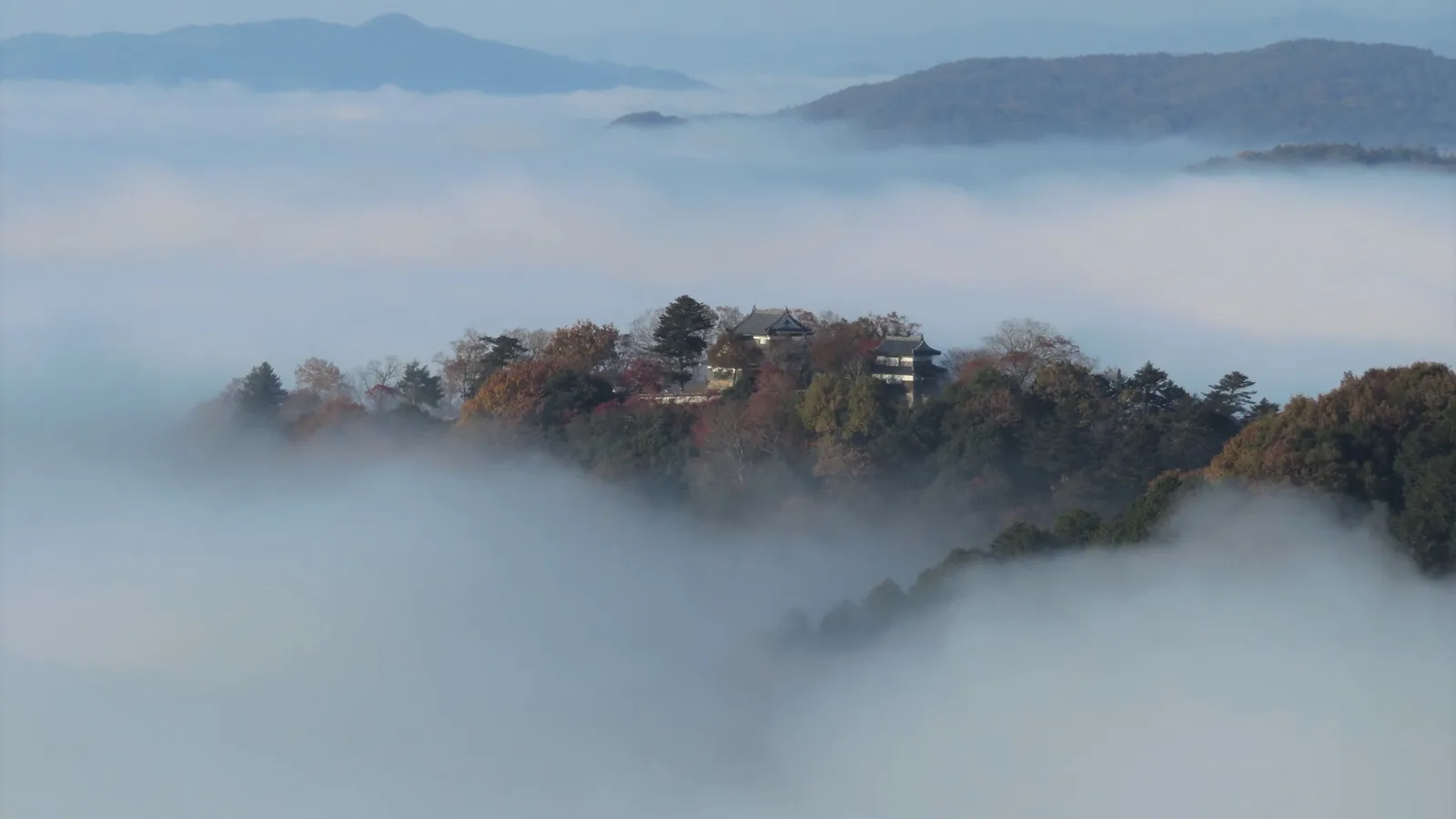
That is why photographs of this place can mislead you. They show either a tiny tower or a castle floating on a sea of cloud, and both leave out the part that does the work: the forty minutes of walking up through the trees and the walls, which give your legs an understanding no picture can. You feel, going up, how nearly impossible this hill would have been to take. The mountain itself was the true defence, far more than the building ever was.
And the castle is still here by a quieter kind of luck than survival in battle. When Japan abolished its feudal domains, the 1873 order that closed the country's castles reached this one too, and for half a century it was simply left on its mountain "to fall into ruin," in the words of the city's own record. What saved it was not an emperor or an army. It was the town below. From 1928 the people of Takahashi began repairing it with their own donations; in 1937 they formed a society to preserve it; and in 1939 the town spent its own money to take the weathered keep apart and rebuild it timber by timber. The castle you climb to today is one that an ordinary town decided, twice over, not to lose.
So the way to understand Bitchu-Matsuyama is not "a small castle with a famous view." It is a mountain that became a fortress, a fortress that was almost forgotten, and a keep that its own neighbours carried back from ruin. Keep that in your legs as you climb, and the smallness at the top stops being a disappointment and becomes the point.
What Happens When You're There
Step 1: Before Dawn and the Sea of Clouds
If you have come in the cold half of the year, your day may start in the dark. On clear, still mornings when the night has turned sharply colder than the day before, fog pools in the valley of the Takahashi River and the castle appears to float on a white sea. This is the image that put Bitchu-Matsuyama on the map; and the first honest thing to know is that you cannot see it from the castle. The floating view is from a separate peak, the Unkai Observatory, reached before dawn by car or taxi up a different road entirely. You stand on one mountain to watch the castle ride the cloud on another.
The second honest thing is that it is not promised. The sea of clouds forms only when the weather agrees (clear sky, a wide drop between the day's warmth and the dawn's chill, and almost no wind), and even then it can be too thin to lift the castle or too thick to show it. The season runs roughly from late September into early April, and the fog is densest from late October to early December; the city keeps a live camera and a forecast running so you can weigh your odds the night before. Go if the morning looks right, and treat what you get as a gift rather than a guarantee. The castle itself, climbed in plain daylight, rewards any day you come.
Step 2: The Climb
From the small city of Takahashi, the castle is a journey of its own, and this is deliberate even now: no car drives to the door. From Bitchu-Takahashi Station you ride partway up the mountain to a staging point called Fuigo-toge, the eighth station, and from there you walk: about twenty minutes up a path of uneven stone steps through the trees. (Exactly how you reach Fuigo-toge, whether by taxi, a shared sightseeing taxi, or a shuttle in the busy season, is in the Good to Know section below; the climb itself begins here.)
Take it at your own pace. The steps are stone, a little loose in places and slippery after rain, and they are steep enough that most people are breathing hard before the walls come into view. None of that is a flaw to apologise for: it is the same slope that made this an unwise place to attack, felt from the inside. If your legs complain, you are in good company. Japanese visitors twice your age stop on the same steps, hands on knees, and so do the children. The mountain has never been in a hurry, and there is no reason for you to be either.
Step 3: The Stone Walls
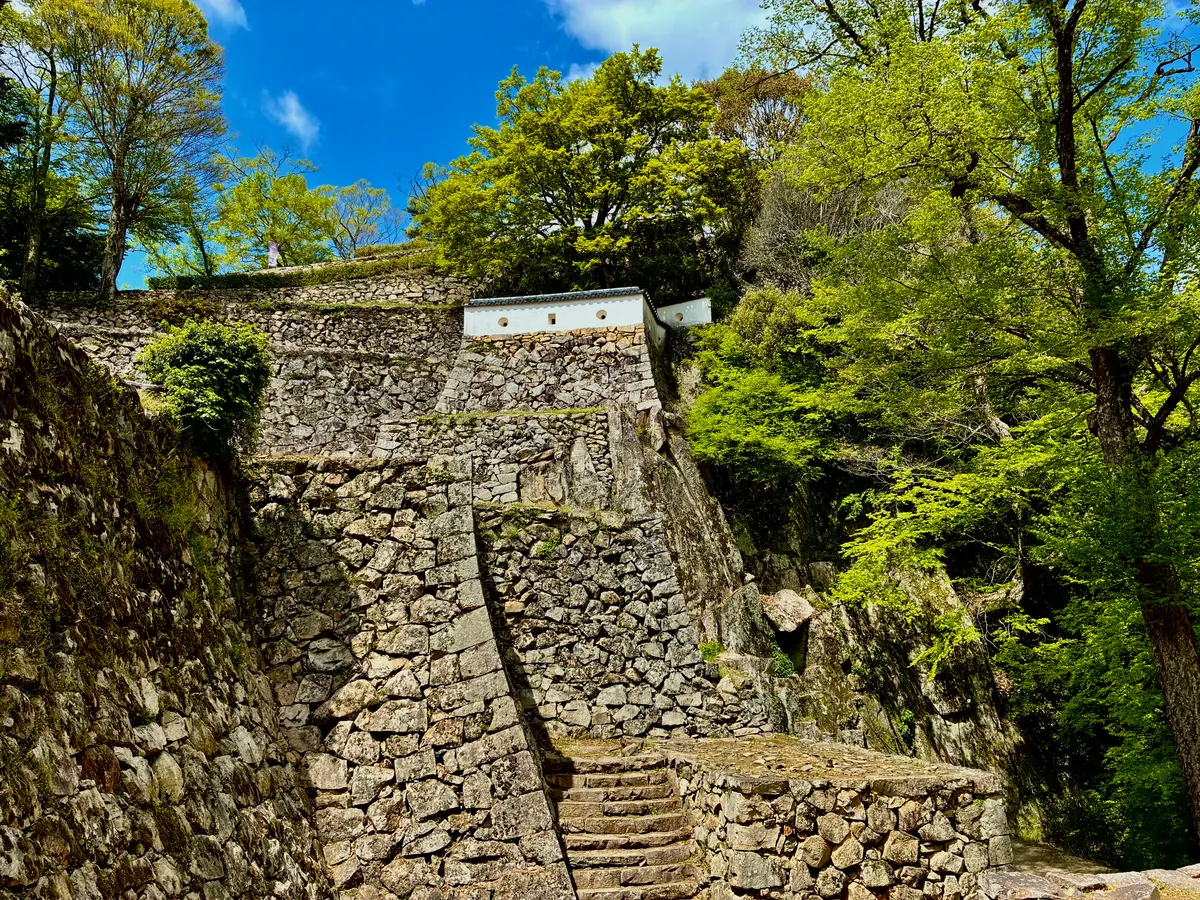
Then the walls begin, and this is the part the guidebooks undersell. As you climb, you pass the bare foundations of vanished gates and, rising out of the slope on every side, great walls of stone: not the neat, fitted blocks of a lowland castle, but rough natural stones stacked as they came, a rugged method called nozura-zumi. They follow the contour of the mountain, ring above ring, using the hill's own shape as part of the defence. Japanese castle lovers have a half-joking word for the swoon these walls produce, and you do not need to be one of them to feel it. This is the spectacle. The grandeur the small keep does not provide, the stone provides in full.
Stop somewhere on the way up and look back down through the trees the way the walls face. Everything was arranged so that anyone climbing in anger would be slowed, funnelled, and watched from above the whole way. You are doing freely, and a little out of breath, what the mountain was shaped to make impossible. By the time the keep finally shows itself above the last wall, you understand it not as the castle but as the thing the castle was built to protect.
Step 4: The Smallest Keep
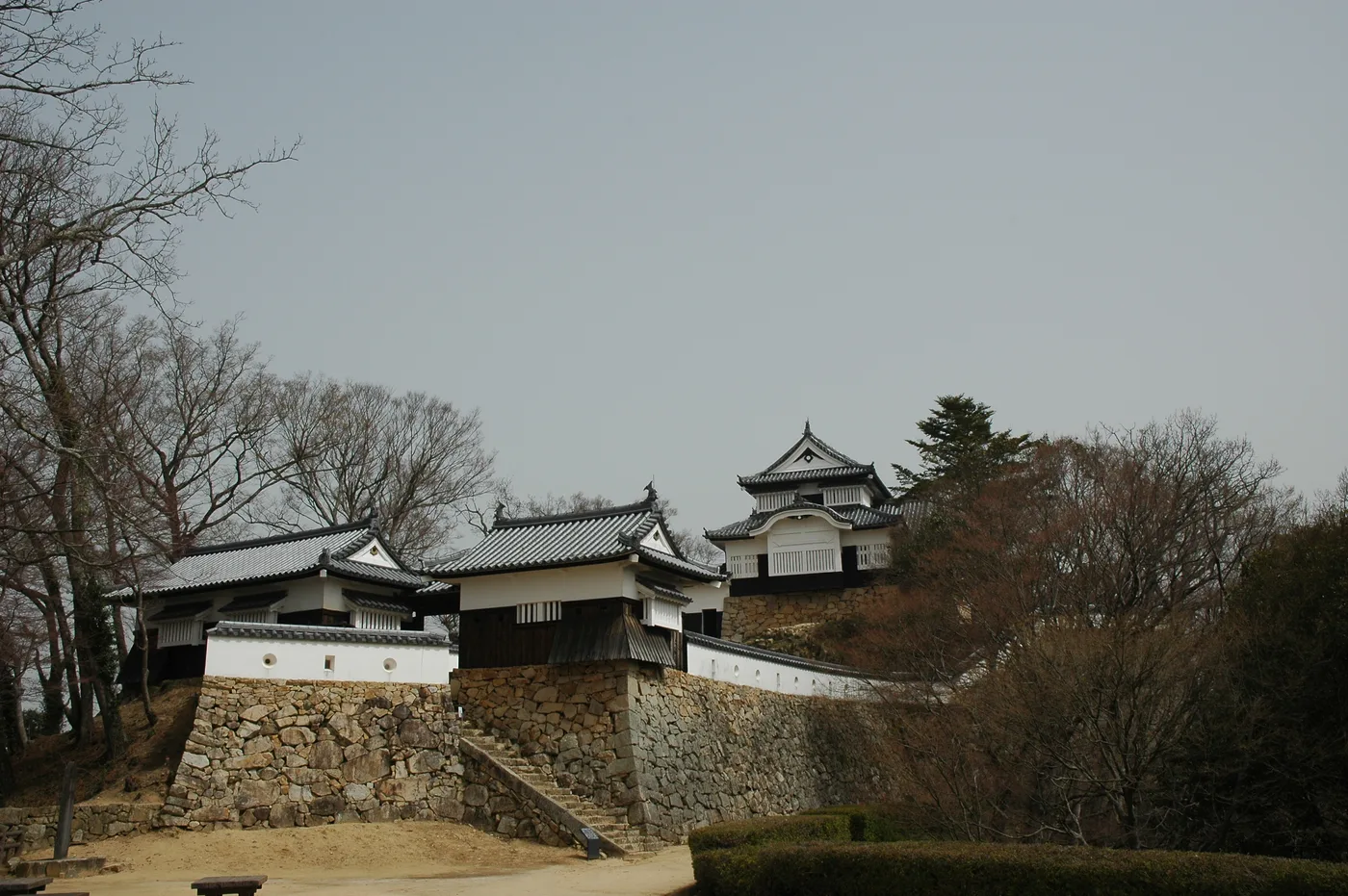
At the top stands the keep itself: two storeys, plain dark timber, about eleven metres tall, the smallest of all twelve originals, and all the more moving for it. Step inside (shoes off, as in a Japanese home: you carry them with you, and you are walking on floors that are part of the real, four-hundred-year-old building) and there is little to see but wood, light, and the structure of the thing. That bareness is honest. This was never a palace; it was the watchtower and the last redoubt at the crown of the hill, and it is preserved as it was, not dressed up for visitors. The wood you put your hand near was worked by the carpenters of the 1680s and taken apart and saved again by the townspeople of the 1930s. Stepping onto an old, cared-for floor in your socks is the same small courtesy that runs through the Japanese habit of removing shoes indoors: you leave the mountain path outside, because what you are standing on is real and someone is keeping it.
You may also be met by the castle's resident. Since the floods of July 2018, a ginger cat named Sanjuro has lived here, and the town has given him the only title that fits: neko-joshu, the Cat Lord of the Castle. He patrols, he naps in the sun, he poses with anyone patient enough. If he is out, it is a small piece of luck; if he is asleep somewhere out of sight, the climb was never about the cat. Either way, the keep he guards is the one its neighbours refused to let fall.
Step 5: Walking Back Down
Coming down the stone steps is its own small test: the descent is often harder on the knees than the climb, so take it slowly and let the people behind you set their own pace. As you go, try the whole day on once more. You climbed a mountain that was shaped to keep people out, walked among walls a town saved from ruin, and stood beside the smallest of Japan's surviving keeps; and if the morning was kind, you watched it float on a sea of cloud from the peak across the valley. None of it was handed to you. You walked up and earned the lot, and you carry a little of the mountain back down to the station with you.
Good to Know
Hours. The castle keep is open daily, with seasonal hours: from April to September, 9:00–17:30 (last entry 17:00); from October to March, 9:00–16:30 (last entry 16:00). It is closed December 29 to January 3. Note that the mountain shuttle's last run up is earlier still (16:30 in the warm season, 15:30 in the cold), so don't leave the climb to the late afternoon. Last verified: 2026-06. Confirm current hours on the official castle site before you rely on them.
Admission. Adults ¥500; elementary and junior-high students ¥200. If you plan to see more of the castle town, the combined "explorer" tickets are good value: a three-site ticket (castle plus the samurai residences and Raikyu-ji garden) is ¥1,000, and a five-site ticket is ¥1,500. Last verified: 2026-06.
Getting there. Bitchu-Matsuyama sits above the small city of Takahashi in Okayama Prefecture. Take the JR Hakubi Line: the Yakumo limited express runs from Okayama to Bitchu-Takahashi in about 35–40 minutes. It pairs naturally with a day in nearby Kurashiki. (For passes, IC cards, and how the limited expresses fit together, see getting around Japan.) Last verified: 2026-06.
Getting up the mountain. No private car reaches the keep; everyone starts from Fuigo-toge, the eighth station, then walks about 20 minutes up. From Bitchu-Takahashi Station your choices are: a taxi (about 10 minutes, roughly ¥1,700 one way, the most reliable option, and it can go all the way to Fuigo-toge whether or not the shuttle is running); a shared sightseeing taxi (about ¥1,000 per person, departures at set times, reserve at least a day ahead through the Takahashi tourist information centre, the easiest option for solo travellers); or, in the busy sea-of-clouds season, a shuttle bus up from the Shiromachi castle-town car park (during which time private cars are not allowed on the upper one-way mountain road). The cheapest route (the city loop bus to the Matsuyama-jo trailhead) leaves you a steep 50-minute walk and is for the fit only. Last verified: 2026-06. Check current schedules with the tourist information centre before you go.
Seeing the sea of clouds. The floating-castle view is from the Unkai Observatory on a neighbouring peak, not from the castle, and you go before dawn by car or taxi. The season runs roughly late September to early April, with the densest fog from late October to early December, and it needs a clear sky, a sharp overnight temperature drop, and little wind. In season there is a dedicated pre-dawn shared taxi to the observatory; because times and booking deadlines change, arrange it the day before through the tourist information centre rather than turning up and hoping. The city runs a live camera and a next-morning forecast to help you decide whether the dawn is worth the early start. Last verified: 2026-06.
The climb itself. From Fuigo-toge it is about 20 minutes up uneven stone steps: wear trainers or walking shoes, as the steps can be slippery after rain. In sea-of-clouds season the pre-dawn air is near or below freezing, so dress warmly and bring a hand warmer; the mountain can have snow and ice from December to February.
Photography. At the observatory in season, the best dawn spots fill with photographers all waiting for the same minute of light, so set up without crowding others and share the rail. (More on reading the room at popular photo spots.)
The castle town. Save time for Takahashi itself: a preserved street of samurai residences, the serene garden at Raikyu-ji temple, and a strikingly modern station. It is a quiet, little-visited corner of Japan, and being welcomed somewhere off the usual trail is part of what makes the trip: something we explore in where you're most welcome in Japan.
Official website: bitchumatsuyamacastle.jp/en
If Things Don't Go as Planned
The keep is smaller than you pictured. Almost everyone has this moment near the top, so it helps to expect it: at about eleven metres, this is the lowest of Japan's twelve surviving keeps. The grandeur here is the mountain and its great stone walls, well beyond the tower; the keep is the quiet last note to a much longer song. Read the climb as the castle and the smallness turns from a letdown into the most honest thing about the place.
You climbed the castle but didn't see it floating. That view is never from the castle itself: it is from the Unkai Observatory on a separate peak, at dawn, in the right weather. If the floating shot is what you came for, it is a different trip on a different morning, and the two don't have to happen on the same day. The castle in plain daylight is the full experience; the sea of clouds is a bonus on top of it.
The sea of clouds didn't appear. It often doesn't: it needs clear skies, a big overnight temperature drop, and calm air all at once, and even regulars miss it. Check the city's live camera and forecast the night before to improve your odds, and hold the dawn lightly. The walls, the climb, and the quiet are there every morning, with or without the cloud.
The way up the mountain is confusing. There are genuinely several options that change by day and season, which is why it feels fiddly. Keep it simple: if you are unsure, a taxi from the station straight to Fuigo-toge is the one that always works. If you are travelling alone and watching costs, reserve the shared sightseeing taxi a day ahead. Either way you finish with the same 20-minute walk.
You're going alone at dawn, and worried about the cold or the wildlife. Pre-dawn in season is cold enough to want a hand warmer and a proper jacket, and Mt. Gagyu has wild monkeys, as the city's own notices mention. They are a normal part of the mountain, not a danger to plan around: keep a calm distance, don't show or offer food, and don't crowd them. Plenty of solo visitors make the dawn trip; arranging the shared taxi the day before means you are not finding your own way up an unlit road. (More on how safe, and how kind, rural Japan tends to be.)
You only have one day, from Okayama or Kurashiki. That is enough. Bitchu-Takahashi is only about 35–40 minutes from Okayama, and the castle (climb, walls, keep and town) makes a comfortable day, easily paired with Kurashiki's old canal quarter. If the sea of clouds isn't in season, skip the pre-dawn leg entirely and simply climb the castle in the morning; you will have lost nothing that matters.
Sources:
- Takahashi City: Bitchu-Matsuyama Castle, History (沿革): Founding in 1240 (Enō 2) by Akiba Saburō Shigenobu; the present keep built 1681–1683 (Tenna era) under Mizunoya Katsumune; abolished by the 1873 (Meiji 6) decree and "left to fall into ruin"; repaired by the town of Takahashi from 1928, with a preservation society formed in 1937 and the town-funded dismantling and repair of the keep in 1939–1940
- Takahashi City: Bitchu-Matsuyama Castle, Important Cultural Property (重要文化財): The keep is the only surviving original keep on a mountain castle; its height is about 11 m, the lowest of the surviving keeps; two-storey tower-type construction; the keep, two-tiered turret and earthen wall designated in 1941
- Takahashi City: Bitchu-Matsuyama Castle, Sea-of-Clouds Observatory (雲海展望台): The observatory on a neighbouring peak (the float view is not from the castle); conditions and season for the sea of clouds; live camera and forecast; notice of wild monkeys on the mountain
- Bitchu-Matsuyama Castle Official (Takahashi City Tourism Association): General Information: Seasonal opening hours and last entry, closed dates, admission (¥500 adult / ¥200 student) and combined tickets, the mountain shuttle's last departures
- Bitchu-Matsuyama Castle Official: Sanjuro, the Cat Lord of the Castle: Sanjuro arrived after the July 2018 heavy-rain disaster and was officially named the castle's Cat Lord in December 2018
- Okayama Prefecture Tourism: Bitchu-Matsuyama Castle Access Guide: Routes up the mountain from Bitchu-Takahashi Station: taxi (about 10 minutes,
¥1,700) to Fuigo-toge, shared sightseeing taxi (¥1,000/person, reservation required), the peak-season shuttle and the private-car restriction; the ~430 m mountaintop setting - JNTO (Japan National Tourism Organization): Bitchu Matsuyama Castle: Official English overview of the "mountain castle in the sky," one of Japan's twelve original keeps
- JR-West (JR Odekake Net): Yakumo Limited Express: The Hakubi Line Yakumo limited express serving Bitchu-Takahashi from Okayama
Image credits: Hero and thumbnail by Jogungagon (CC BY-SA 4.0) and the keep by Reggaeman (CC BY-SA 3.0), both via Wikimedia Commons; the stone walls are a CC0 (public-domain) image via Wikimedia Commons. All cropped and resized.
WMJS is written in Japan, in English, with AI help. We check every page, but English is not our first language. If a sentence reads oddly, tell us. One sentence is enough.
Thank you. A person reads every note.
Real voices
Is it worth it?
Were you there? Share your photos.
Your photo could appear in this guide — with your name and a link to your profile.
Submit a photoRelated Articles


Getting Around Japan: The Tiny Things That Earn You a Nod

Why Removing Your Shoes Makes Japanese People Smile
More guides in Chugoku
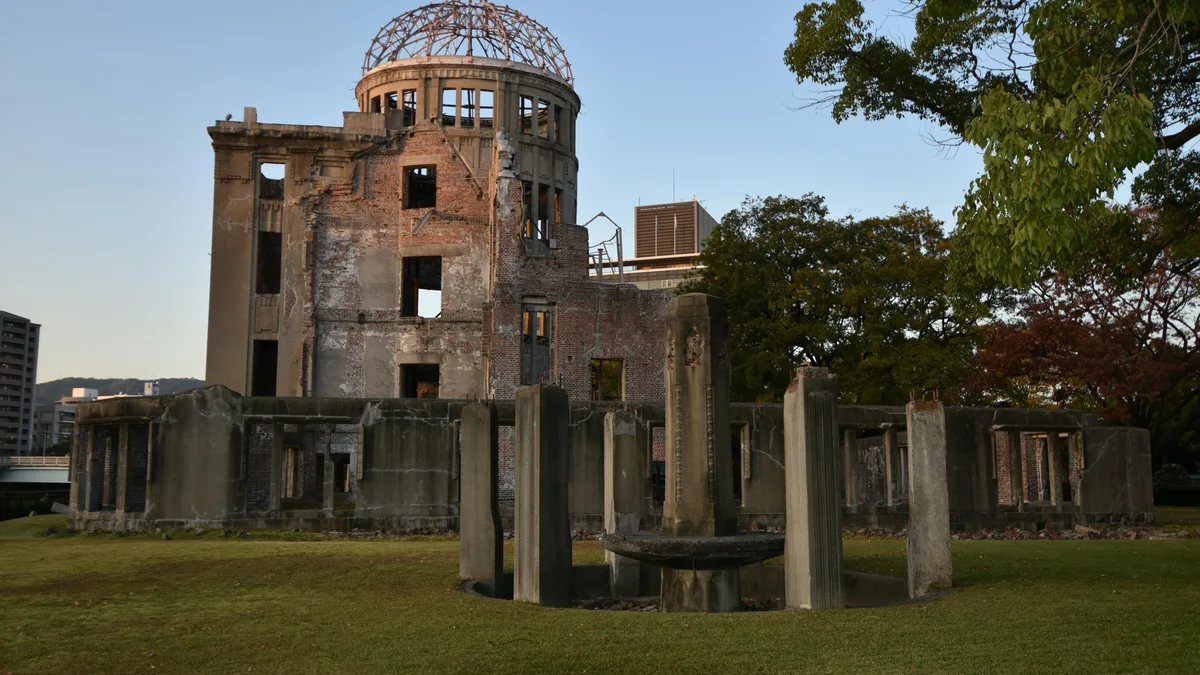
Hiroshima Peace Memorial Park — How to Visit Quietly and with Respect
An audio guide to Hiroshima's Peace Memorial Park, verified against official sources: the Atomic Bomb Dome, the Cenotaph and Flame of Peace, the Children's Monument and its paper cranes, and the Peace Memorial Museum — with hours, access, paper-crane etiquette, and how to visit this place of remembrance quietly and with respect.
Hiroshima Peace Memorial Park
Visiting Miyajima, the Island That Built Its Shrine on the Sea
Is Miyajima worth visiting? We weighed 165 traveler voices: 58% say worth it, only 7% felt let down. The floating torii shrine built on the tidal flats off Hiroshima, how to read the tide, which ferry to take, and Mount Misen, with an audio guide.
Itsukushima Shrine
Izumo Taisha, Where Japan's Gods Gather to Tie the Threads Between People
Is Izumo Taisha worth the detour? We weighed 60 traveler voices: 52% say yes for the shrine and its quiet, 43% say it depends on how you plan the day, and Japanese worshippers are warmer at 61%. The four claps, where the giant rope actually hangs, and the month Japan's gods are said to gather, with an audio guide.
Izumo Taisha (Izumo Oyashiro)