
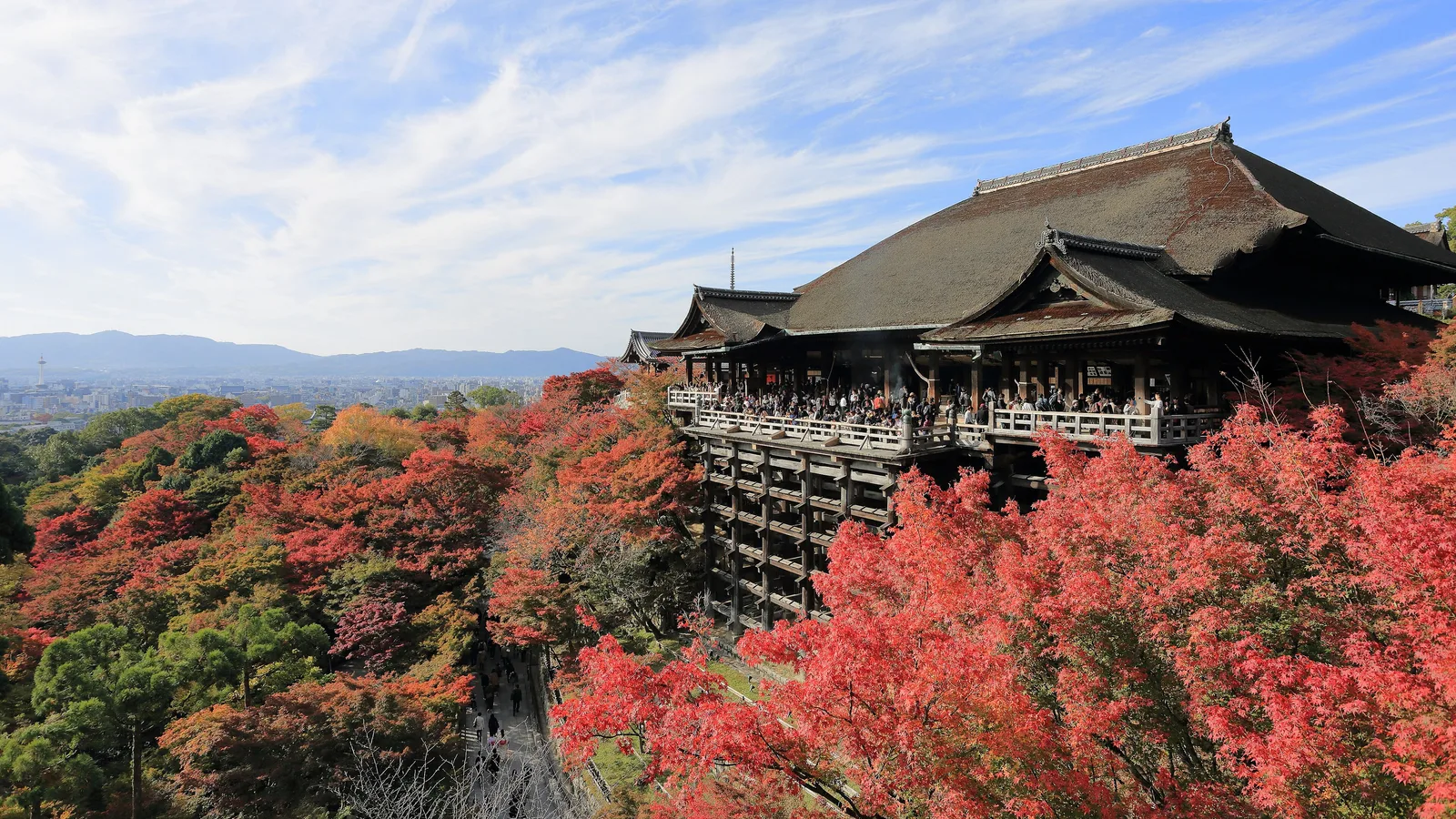
Kiyomizu-dera: Why People Climb a Hill to Stand on a Cliff and Make a Wish
Kiyomizu-dera Temple
By Kei · Born and raised in JapanIs Kiyomizu-dera worth it? By the voices we gathered, yes, and the deciding factor is timing rather than the temple itself: of 55 international visitors who had actually stood on the stage, weighted by how much each account resonated with fellow readers, 48% called it worth it outright and another 38% said it depends entirely on when you go; Japanese visitors reviewing the same temple rate it even more warmly, at 76%. The gate opens at 6:00 every day, year-round, and the single most-repeated advice from people who have been is to take that opening or one of the three annual night illuminations rather than the midday hours. Admission is ¥500 for the main hall and stage. What visitors and locals actually said, hard moments included, is further down this page.
The Meaning
By tradition, in the year 778, a monk named Kenshin followed a dream northward and found a waterfall of clear water running down a wooded slope in eastern Kyoto. He named the place Kiyomizu: "pure water." Twelve centuries later, that name still holds. The waterfall has never once run dry.
Most people come for the famous wooden stage, the broad veranda that juts out over the hillside. Few realize it was built to face inward rather than to look out. The main hall enshrines the Eleven-Headed, Thousand-Armed Kannon, a figure of boundless compassion, and the stage was a platform for offering sacred dance and music to her. For most of its history, the people standing on it had their backs to the view; the breathtaking panorama of Kyoto was simply the side that didn't matter.
That single fact reframes everything. At its heart, Kiyomizu-dera is less a viewpoint than a place where people come to make a wish in front of an unseen Kannon, on a stage that hangs in mid-air.
The stage is so woven into how Japanese people think that it produced a phrase used across the whole country. To jump off the stage of Kiyomizu means to make a bold, irreversible decision, the way an English speaker might say "to take the plunge." The expression has a real history behind it. The temple's own records, kept in a sub-temple called Jojuin, note 234 leaps from the stage between the Edo period and the 1860s, and an official survival rate of roughly 85 percent, because the slope below was then thick with soft earth and trees. These were not acts of despair. They were desperate prayers: people believed that if they survived the leap, the Kannon would grant their wish. The practice was banned in the Meiji era, and today a railing keeps everyone safely on the veranda. But the phrase remained, because the feeling behind it is real. People still come here at the edge of a difficult decision.
What Happens When You're There
Step 1: Climbing the Slope
You do not arrive at Kiyomizu-dera. You climb to it. There is no station at the gate. From the nearest bus stop or train station, the last stretch is on foot, up a stone-paved hill. That climb is the beginning of the visit rather than an obstacle before it.
The lanes you ascend (Kiyomizu-zaka, Sannenzaka, Ninenzaka) are not ordinary tourist streets. Together they form a nationally designated Preservation District for Groups of Traditional Buildings, recognized by Japan's Agency for Cultural Affairs in 1976. The wooden machiya shopfronts, the slope of the tiled roofs, the worn stone underfoot: all of it is protected as a living approach to the temple, a monzen-machi or "town before the gate."
The shops sell pickles, pottery, and sweets. The air smells of grilling rice crackers. It feels entirely worldly, and that is the point. In Japan, the sacred and the everyday have always shared the same ground. The slope carries you gradually from one to the other. By the time you pass through the great vermillion Niomon Gate at the top, the city has fallen away behind you, and you are somewhere else.
There is even a quiet meaning hidden in the name. Sannenzaka is often written with characters that can be read as "the slope where birth comes peacefully," a reference to pilgrims who once climbed it to pray for a safe childbirth at a small pagoda within the grounds. People have walked up this hill carrying real hopes for a very long time.
Step 2: Stepping onto the Stage
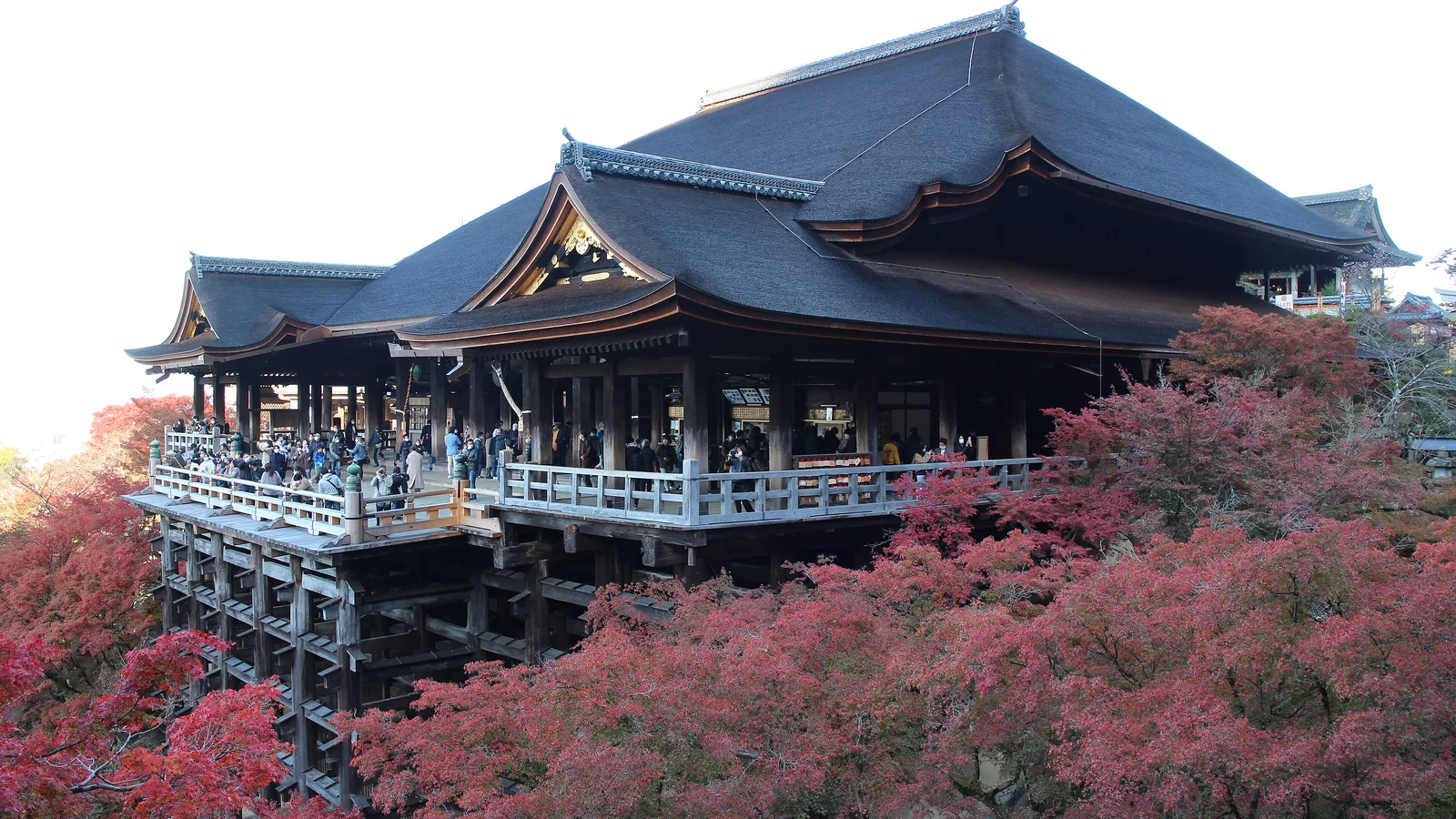
Pass beneath the Niomon Gate and the three-story pagoda, and the path leads you into the main hall. Then the floor opens out, and you are standing on the stage.
Look down through the boards. The veranda stands about 13 meters above the slope (roughly the height of a four-story building) and is held up by 18 great pillars cut from zelkova trees more than 400 years old, the largest of them around 12 meters tall. Not a single nail joins them. The entire structure, called kake-zukuri, is locked together by interlocking wooden joints alone, a technique that has let it ride out earthquakes for centuries. The stage floor itself is 166 cypress planks laid across roughly 200 square meters, relaid during a twelve-year restoration. The hall you stand in was rebuilt in 1633, and it is registered as a National Treasure.
Before you reach the open veranda, look for a small hall nearby where, for a hundred yen, you can descend into total darkness. This is the Tainai-meguri: the "womb passage." You feel your way forward through pitch black, one hand on a string of large beads, until you reach a single faintly glowing stone, turn it, make a wish, and climb back out into the light. It is meant to feel like being born again. Almost no guidebook mentions it, and most visitors walk straight past.
Out on the stage, watch what people actually do. Even in a dense crowd, even with phones raised, there is a moment (small, easy to miss) when a person reaches the railing, looks out over the valley, and goes quiet. The hands come together before the camera does. No one teaches this. You are welcome to simply notice it. A slight bow at a threshold, the kind that is barely visible but always registered, belongs to the same instinct.
Step 3: Choosing the Water
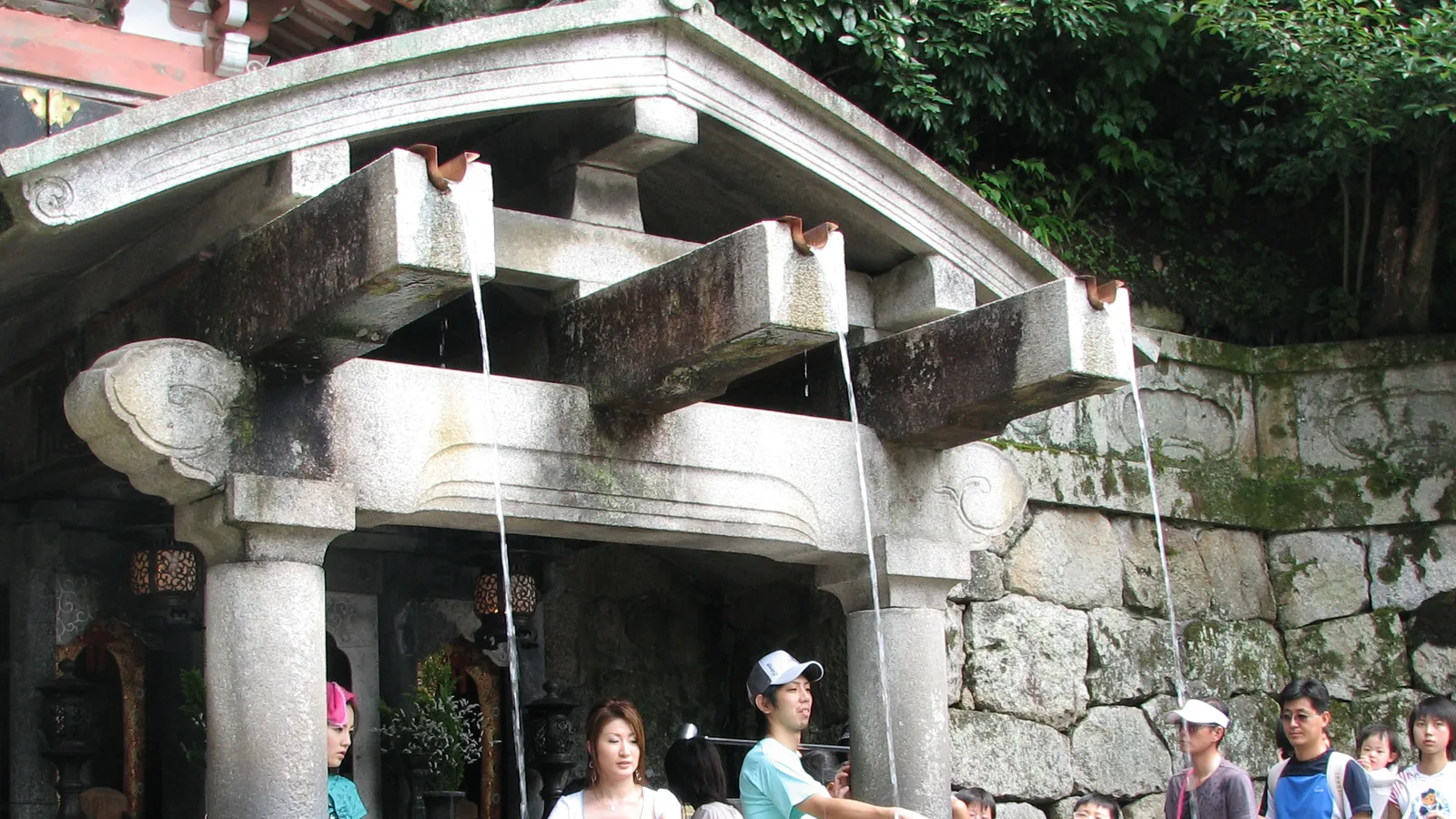
Follow the path down from the stage and you arrive at the source of it all: the Otowa Waterfall, the spring of pure water that gave the temple its name. It divides into three thin streams, falling about four meters into a pool. The water has not stopped flowing in over twelve hundred years.
Visitors line up, take one of the long-handled ladles, and catch the water to drink. And here is the small custom that says a great deal about Japan. The three streams are said to carry different blessings, but you are not meant to drink from all three. Choosing more than one is considered greedy. You pick a single stream, receive a single ladleful, and that is enough.
The temple itself is careful about what those blessings are. It does not lock each stream to a fixed promise. Its own writing treats the popular pairings (success in study, in love, in long life) as one of many interpretations passed down over the centuries, and reminds visitors that the water's power depends on the sincerity of the one who drinks it rather than on which stream they chose. So the meaningful act isn't picking the "right" water so much as choosing one thing and letting the rest go. (What Japanese people quietly notice when visitors approach a shrine or temple is rarely the form; it is the sincerity.)
Step 4: Walking Back Down
The way out leads west, past a gate that faces the setting sun. For centuries, monks gathered here at dusk to meditate on the light sinking toward the western paradise. If you have timed your visit for late afternoon, this is where the day's last gold pools on the stone.
As you descend the slope you climbed earlier, notice that Kiyomizu-dera is almost always, in some corner, under repair. Scaffolding, fresh timber, a roof being re-thatched. Many visitors are disappointed to find their favorite view wrapped in netting. But this isn't decay so much as how the building stays alive. A wooden temple is meant to be renewed, beam by beam, across generations, the way Japan's most sacred shrine is deliberately rebuilt from scratch every twenty years keeps its tradition unbroken. The stage you stood on has been rebuilt more than once. Seeing the work in progress means seeing 1,250 years of care still happening, right now.
Down at the bottom, the city returns: the buses, the crossing signals, the convenience stores. The wish you made on the stage comes down the hill with you. That is the whole shape of a visit here: you climb up carrying something, you stand for a moment at the edge, and you carry it back down a little differently.
What Visitors Honestly Say
Before you plan the day, it helps to hear from people who have already made the climb. We gathered the voices of international travelers who have actually stood on the stage, and read them for one question: was it worth it? Weighted by how strongly each opinion resonated with other readers, here is how they fell:
The biggest single group didn't say yes or no; they said it depends on when you go, and spent their whole comment working out the timing. "At 8:30 a.m. you'll mostly see independent travelers and small guided groups; big tour buses usually [come later]," one wrote. "I went there at around 8am and it was not crowded. By 3pm, it was crowded," said another. The let-downs, almost without exception, trace back to the same clock rather than the temple itself: "2pm on a Monday… so packed I couldn't move. Not worth my time," one visitor reported.
Japanese visitors, reviewing the same temple in their own words, land even more warmly:
Most Japanese visitors simply treasure it. "The fresh greenery was very soothing. There are lots of maple trees so I want to come in autumn too. There are cherry blossoms as well, so I want to come in spring!" one wrote. The two red bars land at the same size, 14% for international visitors and 14% for Japanese visitors, and the same cause sits behind almost all of it: the peak-hour crush. "Even before you enter, a traffic jam of people," one local wrote. The clock catches everyone equally, which is exactly why timing, not the temple, is the real answer to whether it's worth it.
The full picture, the disappointments included and the timing that avoids them, is in Is Kiyomizu-dera Worth It?
Good to Know
Getting there: There is no station at the temple gate. The final stretch is a 10-minute walk uphill, and that is normal. From Kyoto Station, take city bus 206 or 100 to the Gojo-zaka or Kiyomizu-michi stop (flat fare ¥230), then walk up the slope. From the Gion area, bus 207 reaches the same stops. From Keihan Railway, it is about a 25-minute walk from Kiyomizu-Gojo Station. On weekends, the Kyoto City "sightseeing express" bus (EX100/EX101) runs from Kyoto Station to Gojo-zaka in about 10 minutes. There is no visitor parking. (For the bigger picture of trains, buses, and IC cards, see getting around Japan.)
Hours: Open daily from 6:00. Closing is usually 18:00, extended to 18:30 in the height of summer. During the spring, summer, and autumn special night viewings, the grounds reopen in the evening until 21:30 (last entry 21:00). Night-viewing dates change every year, so confirm them on the official site before relying on them.
Admission: ¥500 for adults, ¥200 for elementary and junior-high students, for the main hall and stage. The grounds and approach are free to walk. Last verified: 2026-05.
Time needed: Allow about 60–90 minutes for the temple itself. If you also walk the Sannenzaka and Ninenzaka approach properly (which you should), plan on a relaxed half-day for the whole hillside.
Best time to visit: The gate opens at 6:00, and the first hour is the quietest by far. Arriving early isn't only about beating the crowds; it is also when the temple is closest to its everyday self, before the day fills up. Note that the souvenir shops along the slope don't open until around 9:00, so early visitors pray first and shop on the way down. The hillside is at its most crowded on spring and autumn weekends and during the night viewings, not because of any one group of visitors but simply because a famous place on a narrow slope funnels everyone along the same path. For how Japan thinks about its busiest sights, see is Japan overtouristed; for choosing your season, see the best time to visit Japan.
What to wear: Comfortable shoes with grip. The stone slopes are steep and become slippery in rain, and a rented kimono, while beautiful, makes the climb harder.
Photography: Permitted throughout. On the stage and along the slopes, step to the side before stopping for a photo so the people behind you can keep moving, a small courtesy that keeps a crowded place pleasant for everyone. (More on reading the room at popular photo spots.)
Jishu Shrine: The matchmaking shrine within the grounds, famous for its pair of "love stones," has been closed for a multi-year restoration of its halls since 2022. Confirm whether it has reopened before counting on it.
Last verified: 2026-05
Official website: kiyomizudera.or.jp/en
If Things Don't Go as Planned
The stage is wrapped in scaffolding. Something at Kiyomizu-dera is almost always under repair, because the temple is constantly renewed rather than left to age. The classic photo angle may be blocked, but the experience (the climb, the stage, the water, the view) is intact. You are seeing a 1,250-year-old building being kept alive.
It is far too crowded to enjoy. Come back at opening time, 6:00, or stay until the last hour before closing. The difference is dramatic: early visitors regularly describe near-empty paths and a completely different atmosphere. The crowd is a function of timing rather than of the place itself.
You can't tell which waterfall stream to drink from. It genuinely does not matter, and the temple says as much: the blessings are a matter of sincerity rather than of picking correctly. Choose any one of the three, drink a single ladleful, and don't try for all three. That restraint is the custom.
The climb is harder than you expected. Take the slope slowly; there is no rush, and the shops and tea houses along the way are part of the experience rather than a detour. If you have limited mobility, the temple has been recognized for its accessibility improvements, but the approach is still a real hill, so allow extra time.
You came for the love stones at Jishu Shrine. They are inside the grounds but closed for restoration. Rather than a loss, treat it the way the temple does: a sacred building is being carefully rebuilt so the next generations can use it too.
You're unsure how to pray at the main hall. There is no test. A quiet moment with your hands together, facing the hall, is completely enough. Sincerity matters far more than form.
Sources:
- Kiyomizu-dera Temple Official Website (English): Founding (778), the Kannon enshrined, the stage structure (13 m, 18 zelkova pillars, no nails), 1633 main hall, the "jump off the stage" expression
- Kiyomizu-dera Official: Otowa Waterfall (Japanese): Three streams, ~4 m drop, water that has never run dry, blessings treated as faith-dependent rather than fixed
- Kiyomizu-dera Official: the "leaping" records (Japanese): Jojuin temple diary, 234 recorded leaps, ~85% survival, prayer (not despair), Meiji-era ban
- Kiyomizu-dera Official: Hours & Access (Japanese): Opening hours, night viewings, bus routes 206/100/207, the uphill approach
- Agency for Cultural Affairs: Kyoto Sannenzaka Preservation District: 1976 designation as a Preservation District for Groups of Traditional Buildings
- UNESCO: Historic Monuments of Ancient Kyoto: 1994 World Heritage inscription that includes Kiyomizu-dera
- JNTO: Kiyomizu-dera: Visitor overview, the uphill approach, waterfall etiquette
- Keihan Railway: Kiyomizu-dera: Access from Kiyomizu-Gojo Station, admission (¥500 / ¥200)
- Is Kiyomizu-dera Worth It? (WMJS): The two visitor-voice gauges reproduced in "What Visitors Honestly Say" (55 international voices, 48/38/14; 111 Japanese voices, 76/10/14) and the verbatim visitor quotations
Image credits: Hero and thumbnail by Martin Falbisoner (CC BY-SA 4.0); the wooden stage by Suicasmo (CC BY-SA 4.0); the Otowa Waterfall by Hu Totya (CC BY-SA 3.0), all via Wikimedia Commons.
WMJS is written in Japan, in English, with AI help. We check every page, but English is not our first language. If a sentence reads oddly, tell us. One sentence is enough.
Thank you. A person reads every note.
Real voices
Is it worth it?
Were you there? Share your photos.
Your photo could appear in this guide — with your name and a link to your profile.
Submit a photoRelated Articles
Visiting Temples and Shrines: What Japanese People Notice

The Power of a Small Bow: Why a Simple Nod Makes Japanese People Smile

More guides in Kansai
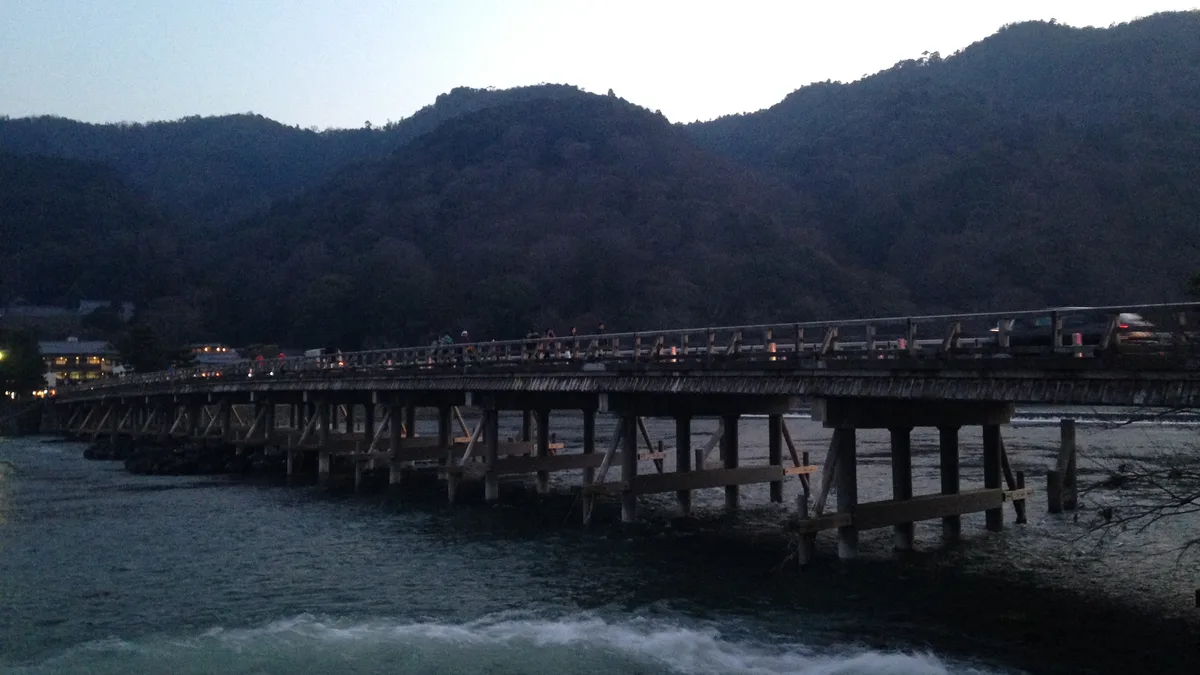
Arashiyama — Why Japan Lists This Bamboo Grove Among the Sounds Worth Saving
An audio cultural guide to Arashiyama in Kyoto, verified against official sources. Understand why Japan lists the bamboo of Sagano among the sounds it wants to keep, how the Moon-Crossing Bridge earned its name, and how to walk the river, the grove, and Tenryu-ji's borrowed-mountain garden away from the crowds.
Arashiyama
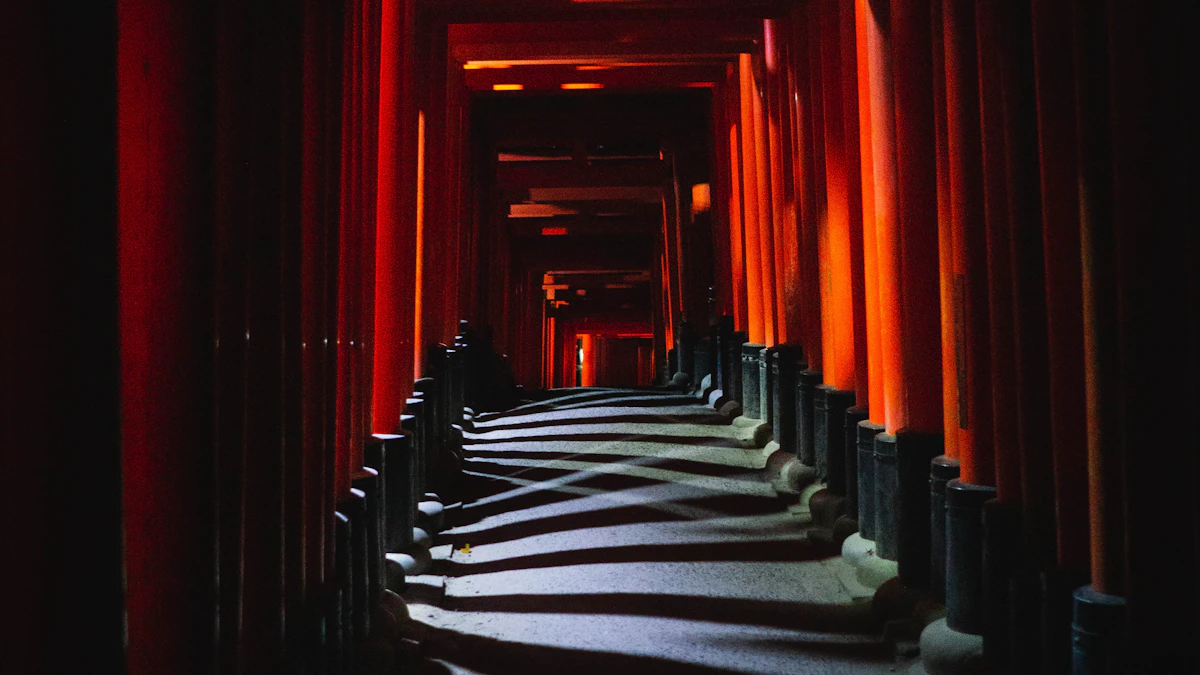
Fushimi Inari Taisha: Ten Thousand Gates, Each One a Thank-You
The ten thousand vermilion gates at Fushimi Inari are thank-you notes you can walk through. A cultural audio guide verified against official sources: why the foxes are messengers not gods, why the summit has no view, and how to walk past the crowds.
Fushimi Inari Taisha
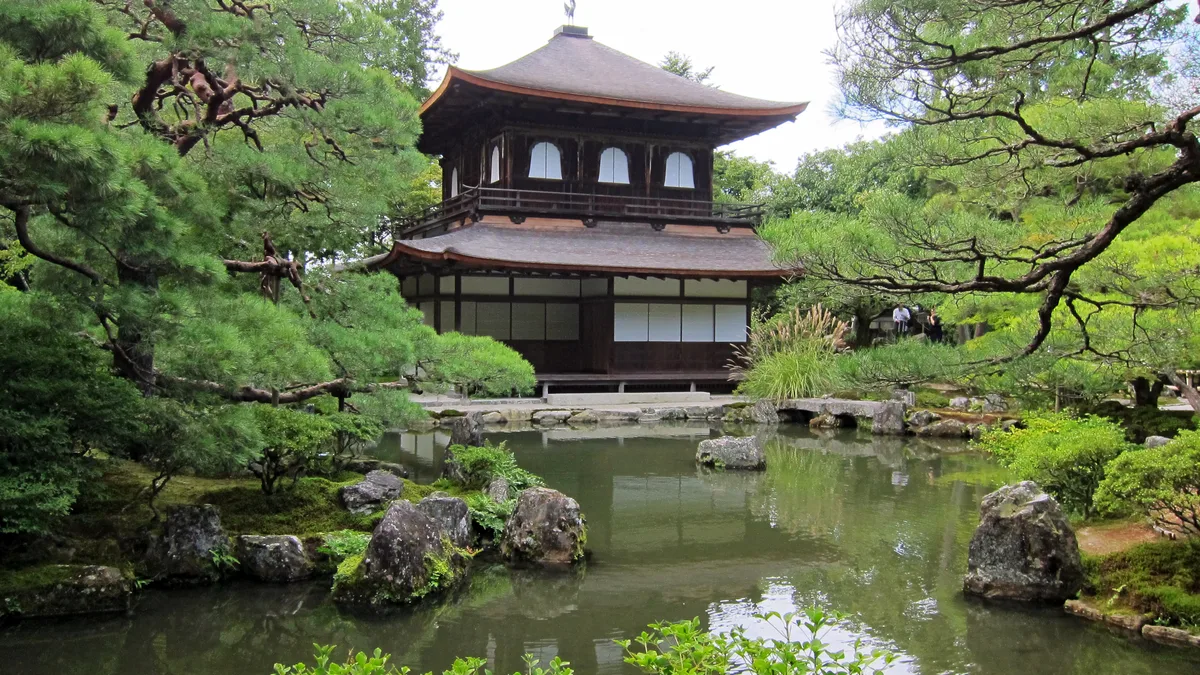
Ginkaku-ji — Why the Silver Pavilion Has No Silver, and Why Japan Finds That Beautiful
Why the Silver Pavilion has no silver — a free audio guide to Ginkaku-ji, Kyoto, verified against official temple sources. Higashiyama culture and the art of restraint, the sea of silver sand, hours, admission (1,000 yen), access from Kyoto Station, and the Philosopher's Path.
Ginkaku-ji (Jishō-ji)
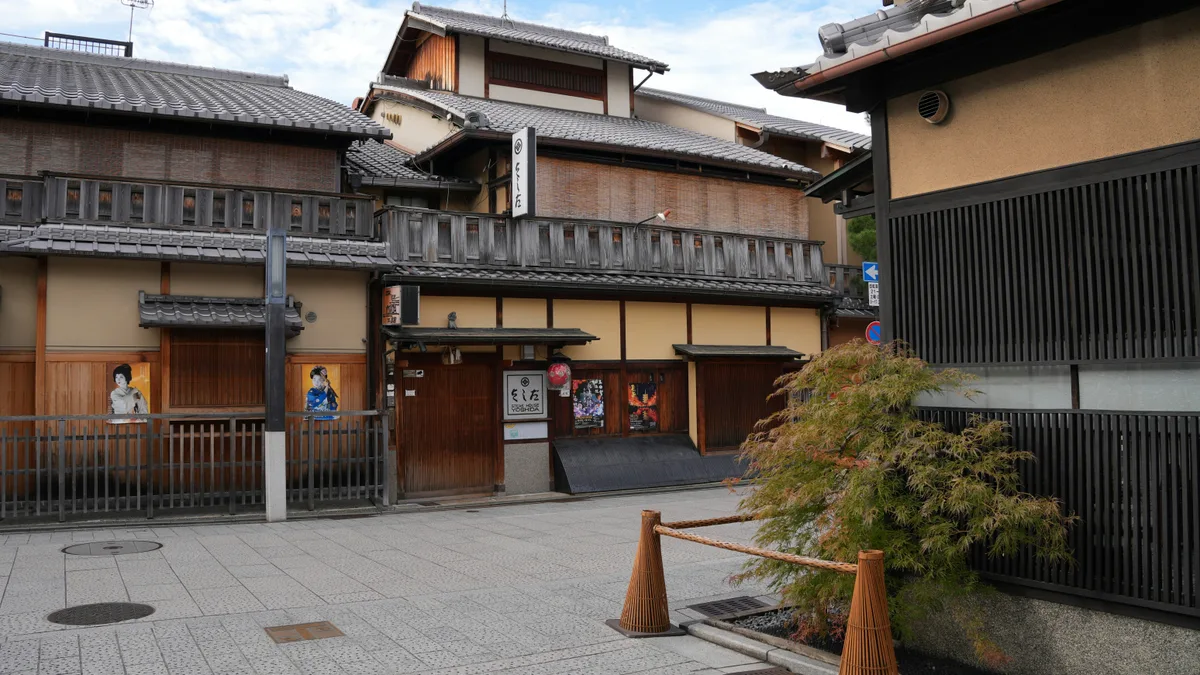
Gion — Walking Kyoto's Flower District, a Town That Is Still Lived In
An audio guide to Kyoto's Gion flower district: what geiko and maiko really are, the walk from Yasaka Shrine through Hanamikoji to the Shirakawa canal, when to go, and how to enjoy a town still lived in.
Gion