
Visiting Miyajima, the Island That Built Its Shrine on the Sea
Itsukushima Shrine
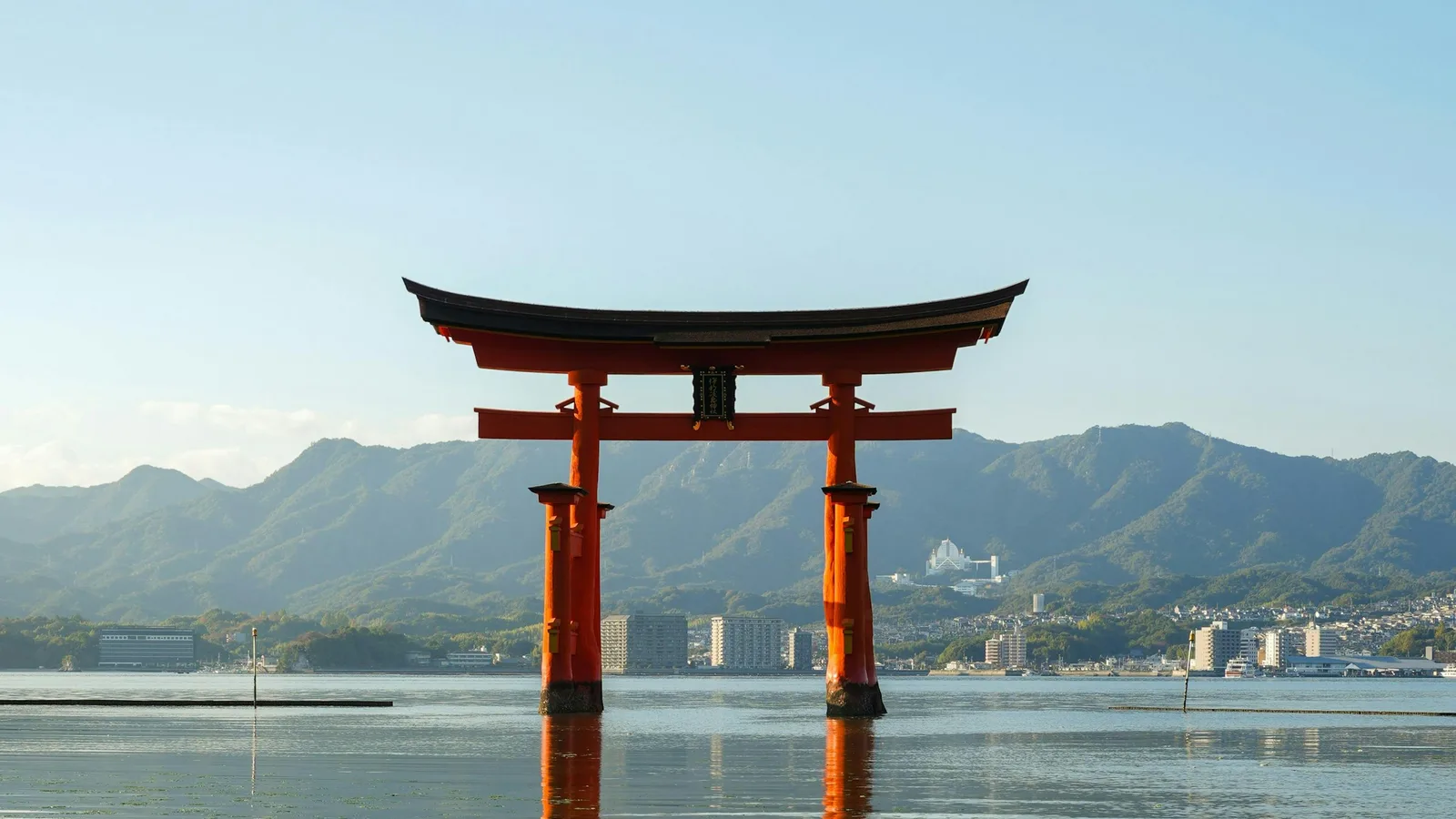
By Kei · Born and raised in JapanIs Miyajima worth visiting? By the voices we gathered, yes, and the tide is what decides your day: of 165 international travelers who actually made the trip, weighted by how much each account resonated with fellow readers, 58% called it worth it and only 7% felt let down, while Japanese visitors and locals land warmer still, with just 4% disappointed. It is a great vermillion shrine and torii gate built directly on the tidal flats off Miyajima island in Hiroshima Bay; check the tide table for your date (the shrine appears to float above about 250 cm, and you can walk to the gate's base below about 100 cm), take about ten minutes on the ferry from Miyajimaguchi, and budget half a day for the shrine and gate, a full day if you add Mount Misen. What those voices actually said, including the one mismatch you can avoid, is further down this page.
The Meaning
There is a question almost everyone asks when they first see the great vermillion gate of Miyajima standing in the water: why on earth build it out there?
The answer is the whole point of the island.
Miyajima, formally Itsukushima, has been revered since ancient times not as a place that holds a god, but as a place that is one. The island itself was the deity. According to the shrine's own account, it was founded in 593, the year Empress Suiko took the throne. A man named Saeki no Kuramoto, who governed the island, received a divine oracle and, led by a sacred crow, sailed around the island with three goddesses: Ichikishimahime, Tagorihime, and Tagitsuhime, the daughters revered as protectors of seafarers and the nation. Seeking where they should settle, they chose, in the shrine's words, "this place where the tide ebbs and flows."
That phrase explains everything. If the island itself is sacred ground, then building on it (driving posts into the body of a god) was unthinkable. So the shrine was raised instead on the tidal flats, in the narrow margin that belongs to neither land nor sea. Until around the early thirteenth century, there was simply no place on Miyajima for ordinary people to live; the island was a god, and people came only to worship. In the days of Taira no Kiyomori, the warlord who rebuilt the shrine in its current over-the-water form in 1168 in the elegant shinden-zukuri style of Kyoto's aristocracy, the proper way to arrive was to pass beneath the great gate by boat, and only then enter the shrine.
So when you cross the water to Miyajima, you are not commuting to a viewpoint. You are doing, in your own small way, what worshippers have done for over eight hundred years: approaching a god by sea.
And here is the second thing no photograph prepares you for. The sea is never still. The shrine and its gate look completely different depending on the hour: floating on a mirror of water at high tide, standing on bare sand you can walk across at low tide. Most guides will tell you to come at high tide for the "real" view. We would gently disagree. Both are the real Miyajima. The island has simply chosen to show its face through something that changes twice a day, and part of its quiet lesson is that you take the version it gives you.
What Happens When You're There
Step 1: Crossing the Water
You reach Miyajima the way everyone always has: by boat, from the pier at Miyajimaguchi.
There are two ferry companies here, and first-time visitors often worry about choosing the wrong one. You can stop worrying. Both the JR West Miyajima Ferry and the Miyajima Matsudai Kisen cross the same stretch of water in about ten minutes, for the same fare, to the same place. Tap your IC card, or hand over two hundred yen, and step aboard whichever is leaving first.
There is one small thing worth knowing. During the daytime, the JR ferry runs what is called the Ōtorii route: it loops in close to the great gate so you can see it rise straight out of the sea from the deck. It costs nothing extra and takes no longer. If the timing works, stand toward the front and watch the gate grow from a red speck into something three storeys tall.
This is the moment the island begins. As the small bow many Japanese people give without thinking signals at any shrine gate, arriving by water through the torii was, for centuries, how you announced to the deity that you had come with respect. You are not the first to feel slightly underdressed for the occasion. That feeling is the right one.
Step 2: The Gate on the Sea
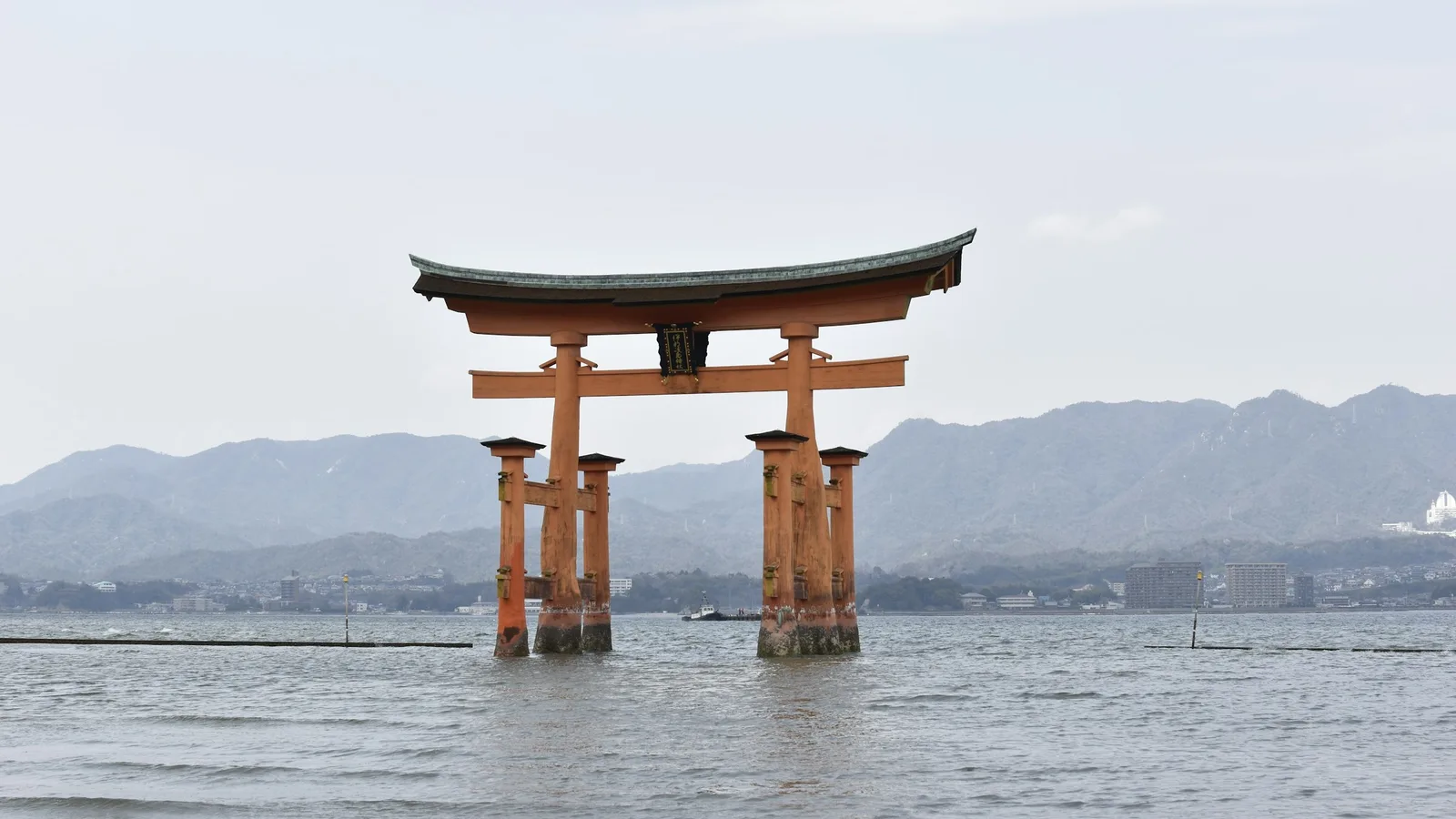
Up close, the great gate is stranger and more wonderful than its photographs. It is a ryōbu torii, braced front and back by four legs. Its two main pillars are single trunks of natural camphor wood, the kind cut from trees more than five hundred years old. It rises about sixteen and a half metres and weighs roughly sixty tonnes. And yet nothing holds it down. It is not buried or bolted or anchored. Its box-shaped top beam is packed with around four tonnes of small stones, and it stands, has stood through centuries of typhoons, by its own enormous weight, resting on a bed of pine piles driven into the seabed. The current gate is the ninth to occupy the spot; this one was raised in 1875.
Now, the tide.
At high water (when the level rises above about two hundred and fifty centimetres) the sea reaches the gate's feet and the whole structure appears to float, the shrine behind it seeming to drift on the surface. At low water (below about one hundred centimetres) the sea withdraws entirely, and you can walk out across the wet sand to stand directly beneath the gate and lay your hand on a pillar wider than your arms can reach.
Travel guides crown the floating view as the one to chase. But ask the people who live here and you will hear something gentler: these are not a winner and a loser. They are the island breathing in and breathing out. One day you are given a gate that floats; another day you are given a gate you can touch. If you arrive and the water isn't where you hoped, you have not missed Miyajima. You have met a different Miyajima, and the quiet Japanese art of accepting what the day hands you turns out to be exactly the right frame of mind to bring here. The tide you got is the meeting you were meant to have.
(If you want both, it is genuinely possible. The tide cycles roughly twice a day, and on many dates there is a window above 250 centimetres and a window below 100. The local tourist association even publishes a tide table so you can plan it. More on that below.)
Step 3: Walking the Floating Shrine
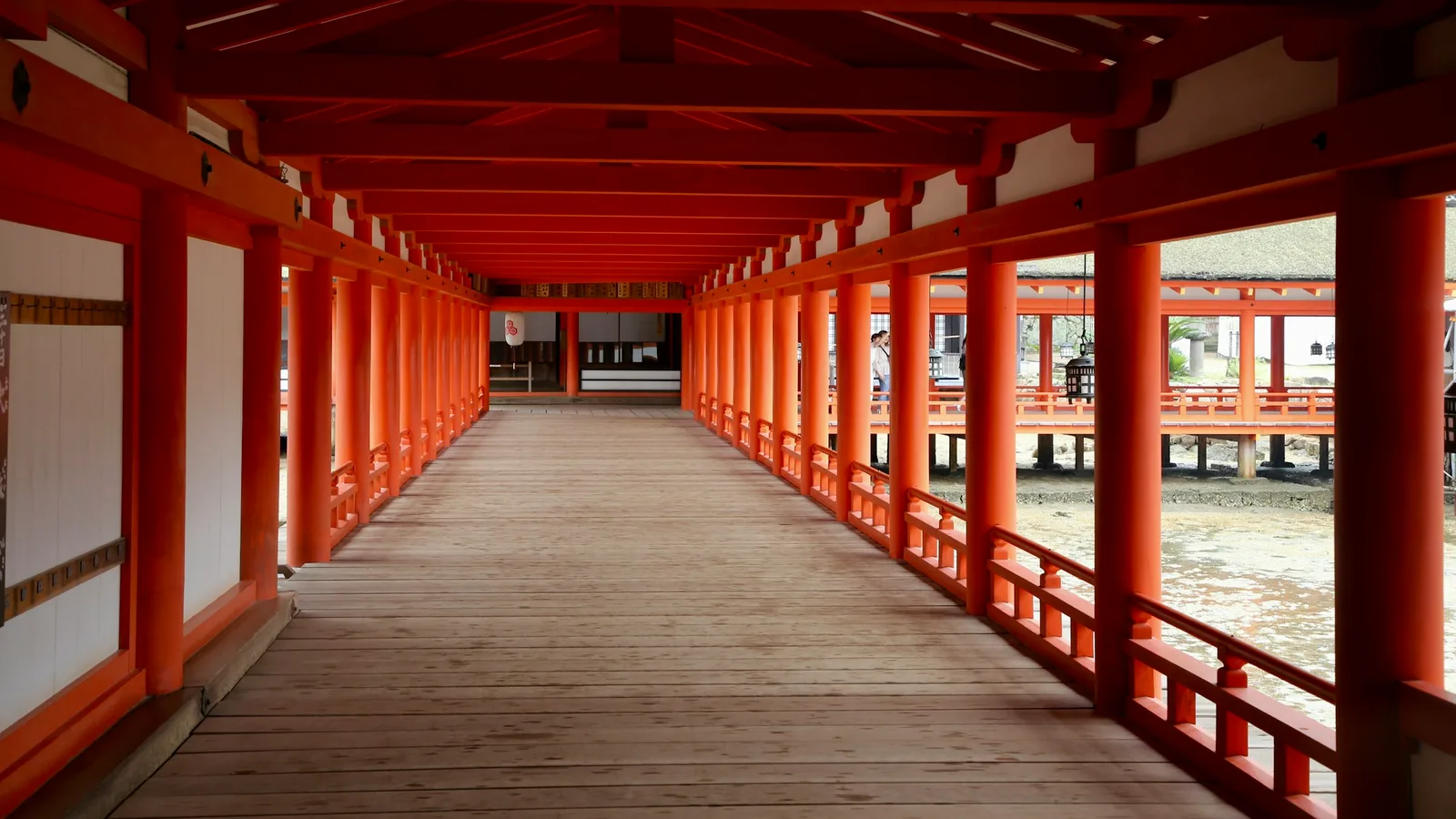
Inside the shrine, you walk on the sea.
The vermillion corridors and halls are raised on pillars above the tidal flat, connected by long covered walkways. The main buildings are a National Treasure, and the open-air Noh stage here is the only one in Japan built over the water. But the detail to look for is underfoot. The floorboards of the corridor are laid with small gaps between them. This is not age or neglect; it is design: at high tide, when the sea presses up from below, the gaps let the water rise through and the pressure escape, so the building bends with the sea instead of fighting it. A structure that has survived eight centuries in salt water did so by refusing to be rigid.
You do not need to be religious to walk here well. If you choose to pray at the main hall, the gesture most visitors make is simple: two bows, two claps, a moment of stillness, one bow. There is no wrong way to do it. (We keep a short guide to what Japanese people quietly notice when visitors enter shrines and temples if you'd like to feel more at ease.) What matters is only that you slow down. The whole island was built around the idea that some places deserve to be approached rather than simply visited.
Step 4: Up to Mount Misen
Most visitors never look up from the shore. But the gate and the shrine are only the lower half of Miyajima's sacredness.
Rising behind them is Mount Misen, 535 metres high, the peak of the island and, in its own right, a holy mountain. In the year 806, the monk Kūkai opened it as a training ground for esoteric Shingon Buddhism, and at its foot stands Daishō-in, the oldest temple on the island. So Miyajima holds two devotions at once: a Shintō shrine standing on the sea, and a Buddhist mountain standing over it, the kind of layering that, in Japan, has rarely been felt as a contradiction.
You can reach the top two ways. The Miyajima Ropeway carries you most of the way in a rare two-stage system (a string of small gondolas, then a larger cable car) in about fourteen minutes; from the upper station it is a further thirty-minute climb on foot to the actual summit. Or you can walk the whole way from sea level on one of three old pilgrim trails, ninety minutes to two and a half hours through forest the world heritage listing protects alongside the shrine. Either way, the reward at the top is the same: a view of the Seto Inland Sea scattered with islands, and the sudden understanding of what UNESCO meant when it called this place a trinity of architecture, sea, and mountain: "the physical manifestation of humankind's worship of nature." The shrine on the water is only part of the story; the rest of it waits up here.
Step 5: The Quiet After the Crowd
As you come back down to the town, Miyajima turns ordinary again, in the best way. The single street behind the shrine smells of grilled oysters (the island's pride) and of momiji manjū, the little maple-leaf-shaped cakes that were invented right here, for a Momijidani inn, and now come in more than a hundred fillings.
You will also meet the deer. About five hundred wild deer live on Miyajima, and they have been treated as the island's sacred messengers for centuries. But unlike Nara, this is not a place where you buy crackers and feed them. The opposite: please don't. Feeding drew the deer into the town, where they grew too many and too bold, and where the plastic and paper they swallowed made them ill. The island now lets them stay wild, at a respectful distance. So keep your maps, tickets, and snacks tucked away, and let them be deer. Here, the kindness is leaving them alone.
And then, in the late afternoon, something happens that day-trippers never see. The crowds thin, the last tour groups file back to the pier, and the island exhales. If you cross back to Hiroshima, you take a good day with you. But if you stay the night in one of the island's inns, you get the other Miyajima: the one where the shops are shut, the lanterns come on, and you are nearly alone with a sacred island and the sound of the rising tide. There is little to do. That is the entire point.
Floating or walkable, clear or grey, crowded or empty: the Miyajima you met is the real one. The island only ever shows you one face at a time. Receiving it is the whole pilgrimage.
What Visitors Honestly Say
Before you plan the trip, it helps to hear from the people who have already made it. We collected 165 voices from international travelers who had actually been, weighted by how strongly each resonated with fellow readers, and this is how they fell:
The green band is emphatic in a way few places manage. "My answer is an emphatic DEFINITELY SHOULD GO. Miyajima is probably my favorite place on all of planet earth," wrote one traveler. The thin red band describes one avoidable mismatch, and it is always the same one: the wrong tide. "I was highly disappointed by my own trip to Itsukushima because I did not check the tides and saw it at low-tide, when I had really wanted to see it at high-tide," wrote another. Knowing the tide table before you board the ferry is most of the cure.
Japanese visitors and locals, reviewing the same shrine in their own words, land even more warmly:
What they treasure is knowing the island well enough to meet it on its own terms. One wrote, after years of visits: "It was my third visit, but for the first time I hit the low-tide window and could go right up close to the torii gate. It looked completely different." Their small red band is rarely the tide itself; it is timing at the busiest hours, and the fix is the one locals repeat: "During the day it's packed with people and more people, but if you get up early in the morning, it's quiet and the crowds are sparse."
The full picture, the letdowns included and what prevents each one, is in Is Miyajima Worth It?
Good to Know
Getting there: From Hiroshima Station, take the JR Sanyō Line (toward Iwakuni) to Miyajimaguchi (about 28–30 minutes), then the ferry across (about 10 minutes), roughly 45 minutes and about 620 yen in total. A cheaper, slower alternative is the Hiroden streetcar to Hiroden-Miyajimaguchi (a flat 240 yen), then the ferry, about 80 minutes in all. Planning the wider trip is easier with our notes on getting around Japan.
The two ferries: Two companies, JR West Miyajima Ferry and Miyajima Matsudai Kisen, run the Miyajimaguchi–Miyajima crossing. Both take about 10 minutes and cost 200 yen one way for adults (100 yen for children); IC cards work on both. Either is fine. In the daytime (Miyajimaguchi departures roughly 9:10–16:10, tide permitting), the JR ferry runs its Ōtorii route close to the great gate at no extra charge. If you hold a Japan Rail Pass or a JR West pass, the JR ferry is included.
The Miyajima Visitor Tax: Since October 2023, a visitor tax of 100 yen per person is charged when you travel to the island (not on the way back), normally added to your ferry fare. Preschool children are exempt, and the tax is not covered by rail passes. It goes toward maintaining the island most people come precisely to see.
Reading the tide: The Miyajima Tourist Association publishes an official tide table. The two numbers that matter: the shrine and gate appear to float when the tide level is above about 250 cm, and you can walk out to the base of the gate when it drops below about 100 cm. Ignore the "high tide / low tide" labels and just check those levels for your date. To reach the sand, take the steps down at Mikasahama (near the shrine entrance) or Nishi-Matsubara (near the exit); the shrine's own interior does not lead down to the sand.
Itsukushima Shrine: Open year-round, generally from 6:30 a.m., with closing between 5:00 and 6:00 p.m. depending on the season. Admission is 300 yen for adults (200 for high schoolers, 100 for elementary and junior-high students), or 500 yen combined with the Treasure Hall.
Mount Misen: The ropeway runs about 9:00 a.m.–4:00 p.m. (last descent around 4:30 p.m.); the round trip is 2,000 yen for adults, 1,000 yen for children, plus the 30-minute walk each way from the upper station to the summit. Daishō-in temple is open 8:00 a.m.–5:00 p.m. Note: the ropeway stops on some days for scheduled maintenance (it was running normally when we checked on 13 October 2026), and the Reikadō hall on Mt. Misen is currently closed and being rebuilt after a fire; the trails, summit, ropeway, and Daishō-in's other halls have reopened and are operating normally. Check the official sites for the latest.
Time needed: Half a day covers the shrine, the gate, and the town; a full day adds Mount Misen; an overnight gives you the quiet, empty island. The tourist information center at the pier hands out a free guide map.
Last verified: 2026-06
Official websites: Itsukushima Shrine · Miyajima Tourist Association
If Things Don't Go as Planned
You arrived at low tide and the gate isn't "floating." You haven't missed anything; you've been handed the rarer experience. Walk out across the sand and stand beneath the gate; you can see the camphor pillars and the pine-pile foundation up close, which the high-tide crowd never will. Wear shoes you don't mind getting muddy.
You're confused about which boat to take. For the island itself, you want the regular ferry from Miyajimaguchi (either company). A separate sightseeing river cruise runs from near the Hiroshima Peace Memorial Park; that's a scenic extra, with its own schedule and price, and it isn't the way most people cross. When in doubt, head to Miyajimaguchi pier.
You're worried about missing the last ferry. The JR ferry from Miyajimaguchi runs from early morning until late at night, far later than the sightseeing cruise, so an evening on the island is easy to manage. Just check the return times before you settle in for dinner.
A deer is eyeing your map (or your lunch). Don't feed it, and tuck away anything paper or edible; they're bold and will help themselves. Keep a little distance and you'll have a lovely encounter rather than a tug-of-war. It isn't rudeness; it's how the island keeps its deer healthy.
It's raining, or the crowds are heavy. Wet vermillion against a grey sea is its own quiet beauty, and the shrine's covered corridors keep you dry. For crowds, the island empties dramatically after about 4:30 p.m. and before the morning ferries; the early and late hours are when Miyajima feels most like itself. (A few thoughts on photographing busy spots without getting in anyone's way may help.)
You only have a few hours. Don't try to add Mount Misen. The shrine, the gate, and a slow walk through the town are a complete visit on their own. The mountain will keep for next time.
Sources:
- Itsukushima Shrine: Official Website (History / Admission): Founding (593), Saeki no Kuramoto and the founding legend, "where the tide ebbs and flows," Kiyomori's 1168 reconstruction, the corridor's floorboard gaps, hours and admission fees
- Itsukushima Shrine: Great Torii Restoration (Japanese): 2019–2022 restoration completed December 2022
- Miyajima Tourist Association: Official Site (O-torii / Itsukushima Shrine / Tide / Deer / Courses): Great Torii dimensions and pile foundation, tide thresholds (float ≥250 cm / walk-out <100 cm), tide table, deer policy, model courses, momiji manju origin
- Miyajima Tourist Association: Tide Table: Official daily and annual tide levels
- Japan Tourism Agency / MLIT: The Great Torii (multilingual database): ~60 tonnes, camphor pillars from 500-year-old trees, stands by its own weight
- Hatsukaichi City: Miyajima Visitor Tax: 100 yen per visit since 1 October 2023, collection method, exemptions
- JR West Miyajima Ferry: Official: Fares, the Ōtorii route, rail-pass coverage, the 100-yen visitor tax
- Miyajima Ropeway: Official: Two-stage system, ride time, fares, hours
- Daishō-in Temple: Official: Founded 806 by Kūkai, current Reikadō reconstruction notice
- The Official Guide to Hiroshima (Dive! Hiroshima): Historical etiquette of approaching the shrine by boat through the torii
- Cabinet Office, Government of Japan: "Highlighting Japan": The island itself worshipped as a god; no land to live on until the early 13th century
- UNESCO World Heritage Centre: Itsukushima Shinto Shrine (ref. 776): Inscribed 1996; the architecture–sea–mountain trinity; "the physical manifestation of humankind's worship of nature"
- Is Miyajima Worth It? (WMJS): The two visitor-voice gauges reproduced in "What Visitors Honestly Say" (165 international voices, 58/35/7; 70 Japanese voices, 75/21/4) and the verbatim visitor quotations
Photos: sourced under free commercial-use licenses; see captions where attribution applies.
WMJS is written in Japan, in English, with AI help. We check every page, but English is not our first language. If a sentence reads oddly, tell us. One sentence is enough.
Thank you. A person reads every note.
Real voices
Is it worth it?
Were you there? Share your photos.
Your photo could appear in this guide — with your name and a link to your profile.
Submit a photoRelated Articles
Visiting Temples and Shrines: What Japanese People Notice

The Power of a Small Bow: Why a Simple Nod Makes Japanese People Smile

Staying at a Ryokan: What Your Host Wishes You Knew
More guides in Chugoku
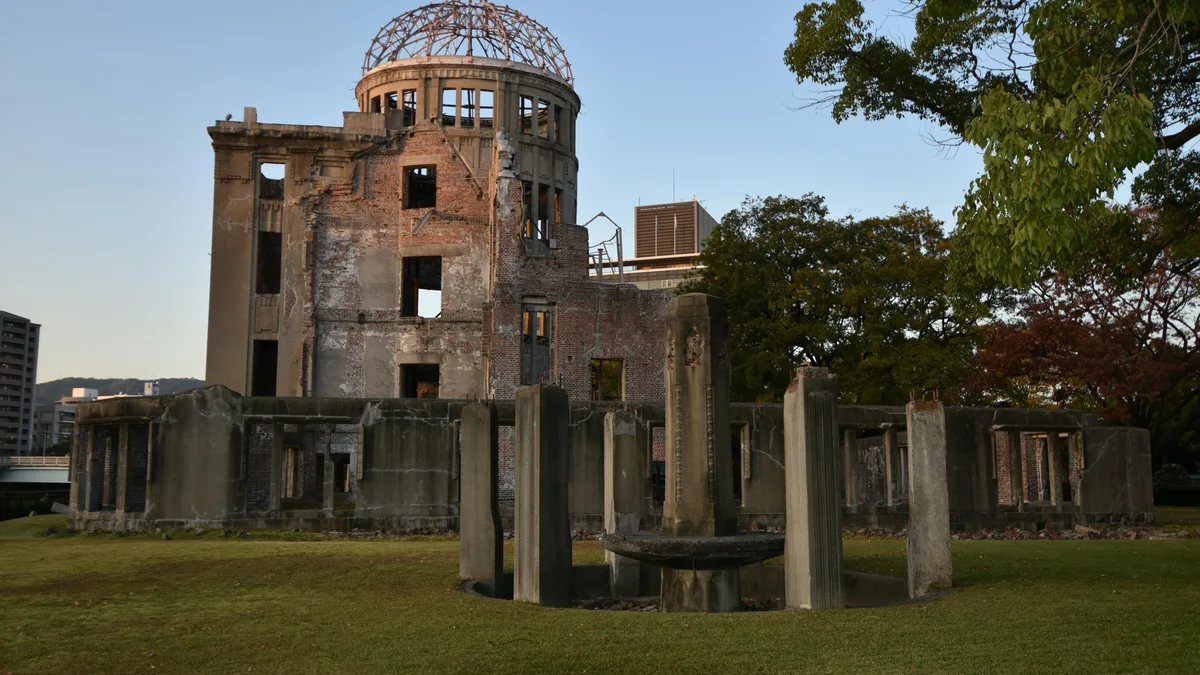
Hiroshima Peace Memorial Park — How to Visit Quietly and with Respect
An audio guide to Hiroshima's Peace Memorial Park, verified against official sources: the Atomic Bomb Dome, the Cenotaph and Flame of Peace, the Children's Monument and its paper cranes, and the Peace Memorial Museum — with hours, access, paper-crane etiquette, and how to visit this place of remembrance quietly and with respect.
Hiroshima Peace Memorial Park
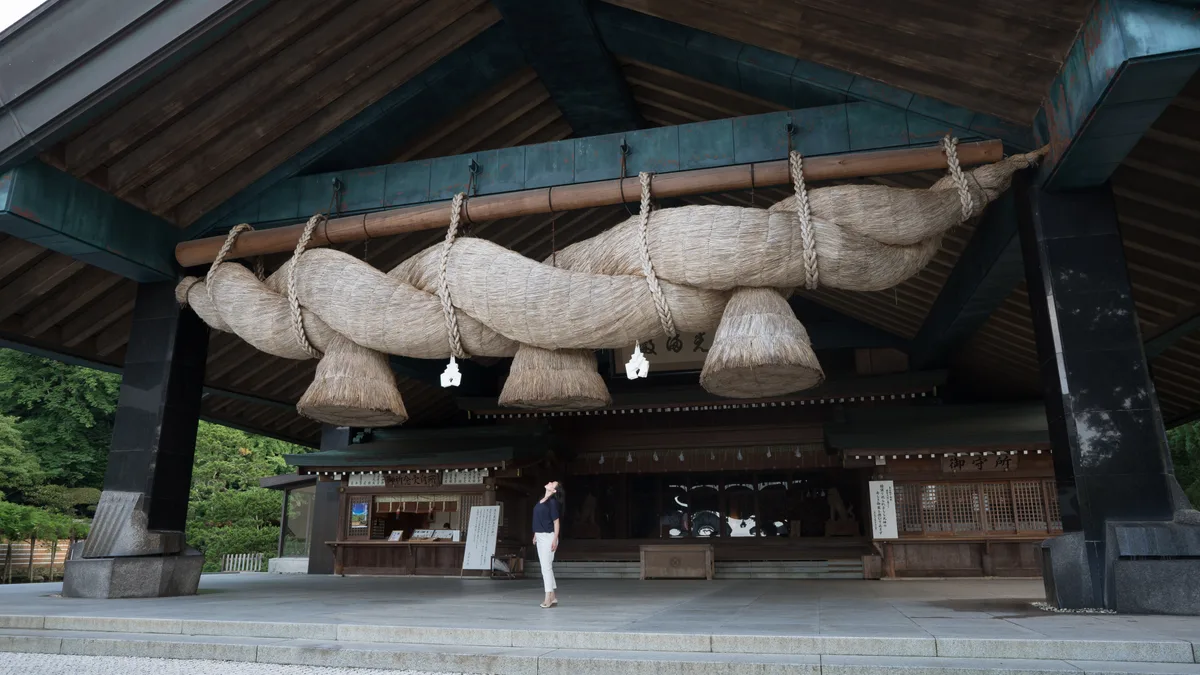
Izumo Taisha, Where Japan's Gods Gather to Tie the Threads Between People
Is Izumo Taisha worth the detour? We weighed 60 traveler voices: 52% say yes for the shrine and its quiet, 43% say it depends on how you plan the day, and Japanese worshippers are warmer at 61%. The four claps, where the giant rope actually hangs, and the month Japan's gods are said to gather, with an audio guide.
Izumo Taisha (Izumo Oyashiro)
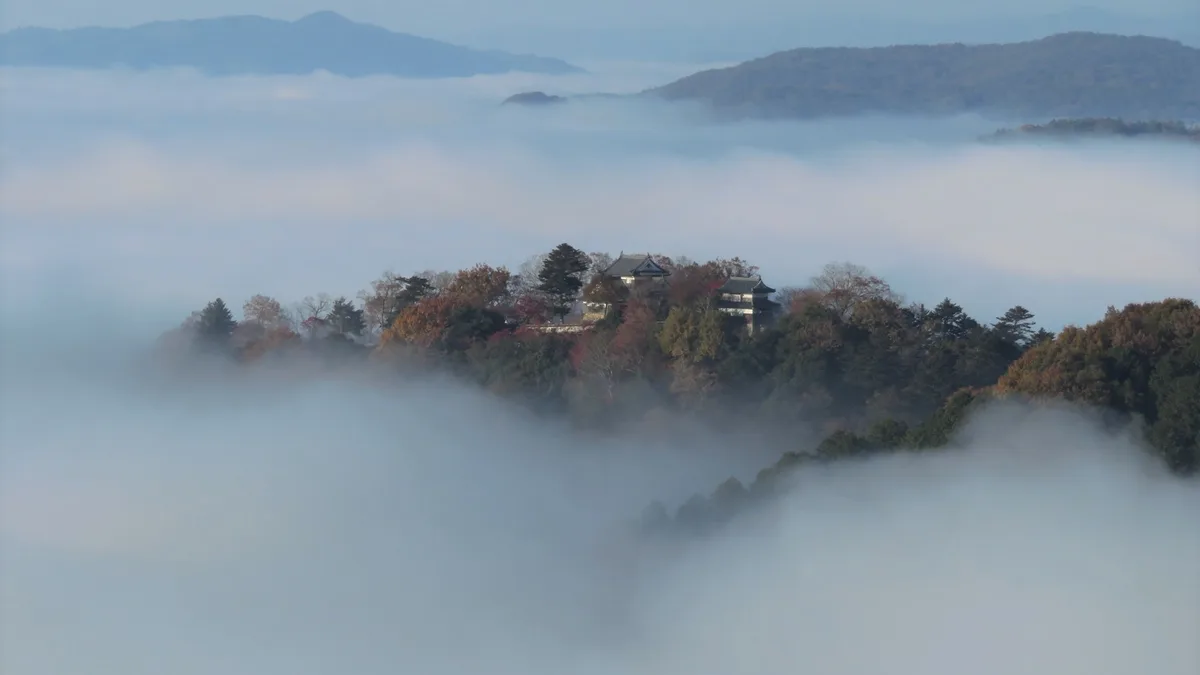
Bitchu-Matsuyama Castle — Why the Castle Is the Whole Mountain, Not the Keep at the Top
A cultural audio guide to Bitchu-Matsuyama Castle, verified against official sources — Japan's only original keep still standing on a mountaintop, why the climb itself is the castle, how the town saved it, and how to visit (and catch the sea of clouds).
Bitchu-Matsuyama Castle