
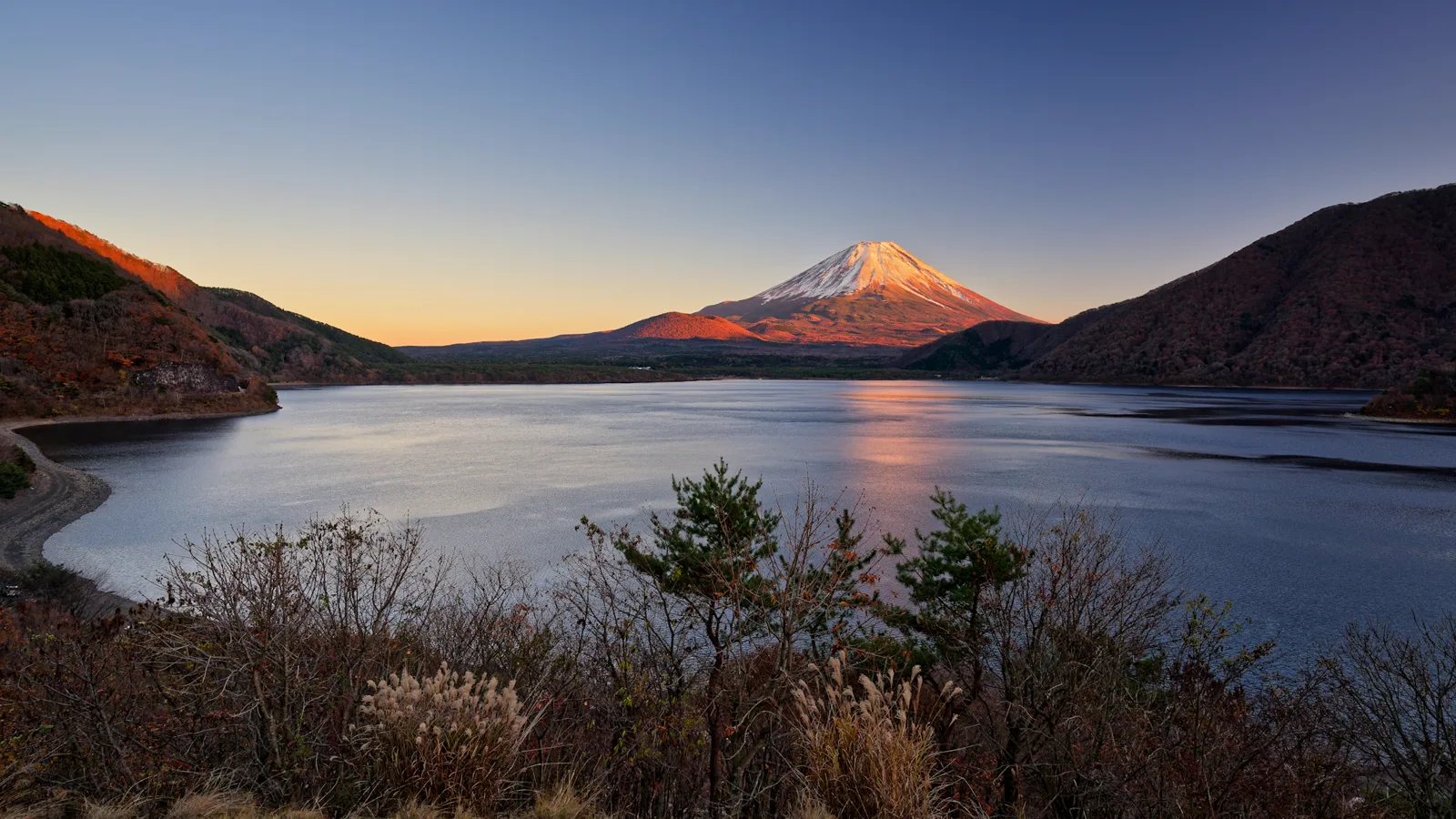
Visiting Mount Fuji, the Mountain That Hides for Half the Year
Mount Fuji
By Kei · Born and raised in JapanIs Mount Fuji worth seeing? By the voices we gathered, yes, though the mountain itself is rarely the problem. Of 53 international travelers who made the trip, weighted by how much each account resonated with fellow readers, 36% saw it clear and called it unforgettable, 53% called it a gamble worth timing right, and only 11% felt let down. Japanese visitors who know how to pick the morning land far warmer, at 64%. Fuji itself was visible on just 136 mornings in all of 2025; a clear dawn, chosen well, is closer to a decision than to luck. What visitors actually said, including the mornings that went wrong, is further down this page.
The Meaning
Fuji City sits at the foot of the mountain, and since 1990 it has recorded, three times a day, whether Mount Fuji can be seen at all. In 2025, the whole mountain stood clear in the morning sky on only 136 days. In June, the rainy month, it appeared just twice.
This is the first thing worth knowing about Fuji: the country that loves it most often cannot see it. And yet, when the clouds part (from a train window, a city rooftop, an aeroplane seat), Japanese people who have lived their whole lives within sight of the mountain still look up. They still reach for their phones. A mountain that is hidden half the year is, somehow, the most watched thing in Japan.
To understand why, it helps to know that for most of its history, Fuji was not a mountain people climbed. It was a mountain people revered from a distance. When Katsushika Hokusai made his Thirty-six Views of Mount Fuji (a series so loved he extended it to forty-six prints), he rarely put the mountain in the centre. In The Great Wave, Fuji is a small triangle, far behind the curling water. Two centuries later, that same wave, with Fuji still inside it, rides on the back of the 1,000-yen note in nearly every wallet in Japan.
It was also a mountain people worshipped by climbing. In the Edo period, ordinary townspeople formed Fujikō, pilgrimage clubs that pooled their savings so members could ascend Fuji in white robes, the dress of a journey toward death and rebirth. Those too old, too young, or too poor to go built fujizuka, miniature Fujis, in their own neighbourhoods, and climbed those instead.
In 2013, UNESCO did not list Fuji as a wonder of nature. It listed it as a cultural one, under the name "Fujisan, sacred place and source of artistic inspiration," inscribed for two things at once: for being worshipped, and for being seen. This guide follows both. You do not need to reach the summit to meet this mountain. Most people never do.
What Happens When You're There
Step 1: Looking for Fuji, where and when it appears
Start with the honest part, because it spares you the most disappointment: Fuji is shy. The dry, still air of winter and the early morning, before the day's heat builds cloud, give you the best odds; the warm, humid summer (the very season people climb it) is among the worst for seeing it from afar. If you have one chance, make it a clear morning between late autumn and early spring.
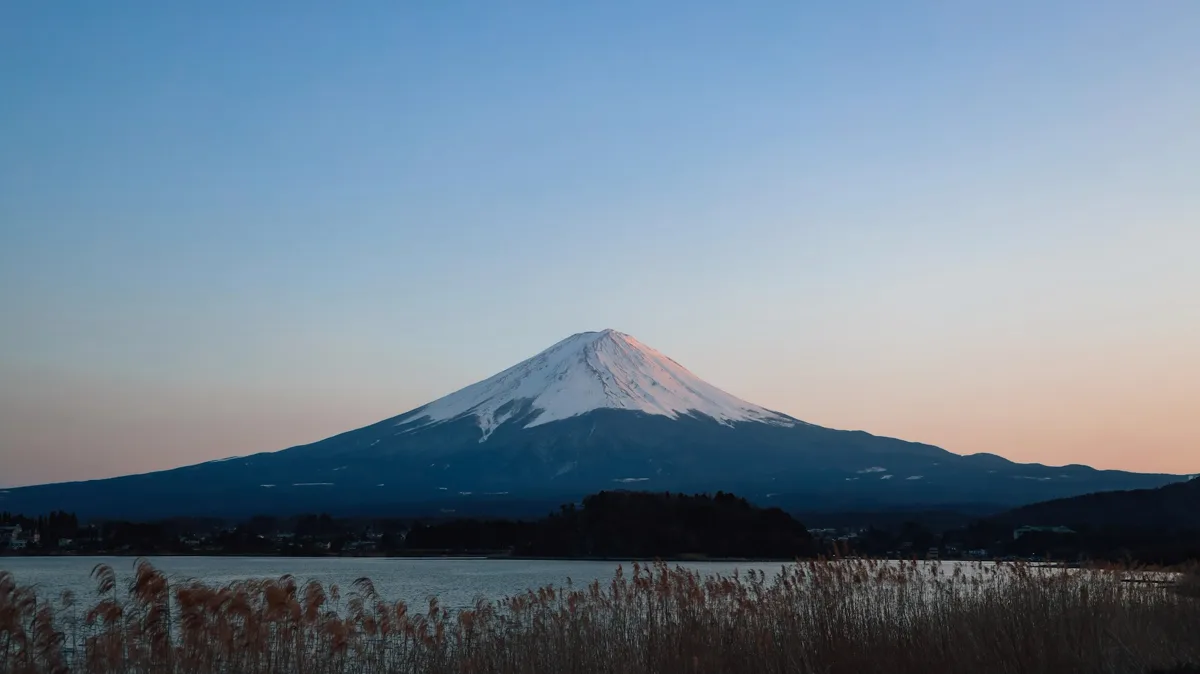
When it does appear, it appears in famous frames, and they sit close together on the northern, Yamanashi side. Lake Kawaguchiko is the easiest to reach of the Fuji Five Lakes; on a still, clear day the mountain lays a mirror image of itself across the water: Sakasa-Fuji, the upside-down Fuji. Lake Yamanaka, the largest and closest of the five, is where, from mid-October to late February, the setting sun balances on the summit in a few minutes of fire called Diamond Fuji. Above the town of Fujiyoshida, Arakurayama Sengen Park holds the single most photographed composition in Japan: a five-storey vermillion pagoda (built as a memorial to the war dead) with Fuji rising behind it, reached by 398 stone steps. (In cherry-blossom season it draws a crowd; a moment's care about where you stand and where others are trying to stand is part of the courtesy of the place.)
There are quieter frames too. At Oshino Hakkai, eight spring-fed ponds hold water so clear it looks like glass: snowmelt that fell on Fuji and spent decades filtering down through the mountain's porous lava. On the southern, Shizuoka coast, Miho-no-Matsubara lines roughly five kilometres of shore with pines, with Fuji across the bay, the exact view the woodblock master Hiroshige painted, and a registered part of the World Heritage site. East of the mountain, Lake Ashinoko offers another: on a clear day Fuji rises across the water beside the red torii of Hakone Shrine, the quiet climax of a whole day's loop by train, ropeway, and boat through Hakone. And if you take the Tōkaidō Shinkansen between Tokyo and Osaka, sit on the right-hand side heading west: about forty minutes out of Tokyo, near Shin-Fuji, the mountain fills the window for a few unrepeatable seconds.
Step 2: The Fifth Station, touching the mountain without climbing it
Halfway up Fuji's northern flank, at 2,305 metres, the road simply ends. This is the Fuji Subaru Line Fifth Station, and a bus reaches it in about an hour from Kawaguchiko: no climbing, no permit, no climbing season required. For most of the year, snow permitting, you can stand on the mountain itself, above the cloud line, and look down on the lakes you were looking up from yesterday.
There is a small red torii gate here, and a shrine. Many Japanese visitors pause and give a slight bow before passing through (a gesture barely large enough to notice, but noticed all the same), because the torii marks the same thing it has always marked: the line where the ordinary world ends and a sacred one begins. From the Fifth Station, the gentle Ochūdō path traverses the mountain's side rather than its summit, and on a clear day it opens onto Lake Kawaguchiko, Lake Yamanaka, and the far Japan Alps.
For a great many visitors, this is the whole visit, and it is a complete one. You have been on Fuji. You have stood where the pilgrims rested. You did not need to suffer for it.
Step 3: The Climb as a kind of prayer
The climbing season is short: roughly the first week of July to the tenth of September, the only weeks the snow is gone and the huts are open. Four trails reach the summit, and they have different characters: Yoshida (from 2,305 m, the most popular, with the most huts), Fujinomiya (2,400 m, the shortest and steepest), Subashiri (2,000 m, quiet and forested low down), and Gotemba (1,440 m, the longest and emptiest). Most climbers start in the afternoon, sleep a few hours in a mountain hut, and rise in the dark to reach the top for sunrise.
That timing is not a modern convenience. The sunrise seen from Fuji's summit has its own name, goraikō, borrowed from a Buddhist word for the moment the Buddha comes to welcome a soul. People did not climb Fuji to conquer it. They climbed it to stand, cold and breathless, at the place where heaven felt nearest, and to watch the light arrive.
Climbing today comes with rules, and they are easy to misread as bureaucracy. Since 2025, every climber pays a ¥4,000 fee; the Yoshida trail closes its gate once 4,000 people have passed in a day; and the gates shut overnight unless you have booked a hut, so no one climbs straight through the night without rest. None of this is meant to keep you away. It exists so that the mountain, and the people strung out across it in the dark, can outlast the crowds that its own fame now brings. The reasoning behind those numbers is its own, longer story, and a surprising number of the people who live beside Fuji are glad of them.
Step 4: The Summit, a sanctuary above the clouds
In both the legal and the spiritual sense, the top of Fuji belongs to a shrine. Everything on the mountain above the eighth station belongs to Fujisan Hongū Sengen Taisha, the head of more than 1,300 Sengen shrines across Japan, granted to it in 1606 by Tokugawa Ieyasu. The shrine's summit hall, the Okumiya, stands near the crater rim, and the deity here is Konohanasakuya-hime, the blossom princess, whom the shrine names as the form taken by Asama-no-Ōkami, the great spirit of the volcano.
For centuries, reaching the top was only the middle of the rite. Pilgrims would then walk the entire rim of the crater, a circuit called ohachimeguri, "going around the bowl," passing the eight peaks that ring the hollow where the mountain once burned. Here you walk the rim of a volcano and look in; far to the south, on Kyushu, there is a volcano you walk down into instead, a caldera so vast that a whole town farms the floor of it. The highest of Fuji's peaks, Kengamine, at 3,776 metres, is the true roof of Japan. If you make it here, you are not the first to feel that the air itself asks for a kind of respect. If you would like to know what Japanese people quietly hope visitors will feel at a place like this, there is a gentler way to read the moment than as a photo stop.
Step 5: Coming back down, and carrying Fuji with you
Going down is its own surprise. On the Gotemba trail there is the Ōsunabashiri, a long run of volcanic sand you can half-stride, half-slide down for kilometres. Wherever you descend, watch the signs: on the Yoshida side, the down-trail splits from the Subashiri one near the eighth station, and tired legs take the wrong fork every year.
And then the mountain gives something back. The same snow that made the climb cold becomes, decades later, the glass-clear water of Oshino's ponds and the silk threads of Shiraito Falls. The cold you endured is, quite literally, the water you will drink at the bottom.
Whether you climbed or only looked, you may go home without ever having seen the summit clearly at all. June, remember, offered just two clear mornings. The Japanese have a quiet way of holding this: not as failure, but as next time. The mountain that hides is the same mountain that, one ordinary morning when you least expect it, will be standing in the window, and you, too, will look up. You did not need it to be perfect. It rarely is. That is part of why people keep watching for it.
What Visitors Honestly Say
Before you plan the trip, it helps to hear from the people who have already made it. We gathered 53 voices from international travelers who had actually gone to see Fuji, weighted by how much each account resonated with fellow readers, and this is how they fell:
That huge middle band is the whole story: for most visitors, Fuji is a gamble, not a clear yes or no. "The chances of a clear view of Fuji are like 50-50," one wrote, "if you plan it on your own by booking train/bus, then you can make it flexible." The people in the red band nearly always describe the same trap, and it is never the mountain itself: "We did it on a day when it was misty and never got to see Fuji, so it was a total waste of time and money," one wrote of a rushed van tour.
Japanese visitors and locals, reviewing the same viewpoints in their own words, land even warmer:
The two red bars sit almost exactly together, 11% and 10%, and for almost exactly the same reason: cloud, and the wrong morning. What differs is the middle. Japanese reviewers read like people who already know the trick, because they keep coming back and pick their day. "I deliberately came in winter, when Mt. Fuji is easy to see," one wrote. Another put the whole gauge into a single line: "If clouds cover Mt. Fuji you won't get the picture-postcard scene, so you really must watch the weather. Worth a look if the sky is clear."
The full picture, the let-downs included and what prevents each one, is in Is Mount Fuji Worth It?
Good to Know
Getting to the Fuji Five Lakes (the main viewing base): From Tokyo, the Fuji Excursion limited express runs Shinjuku to Kawaguchiko Station in about 1 hour 55 minutes; it sells out, so book ahead. Highway buses from Shinjuku reach Kawaguchiko in around two hours. By rail you can also take the JR Chūō Line to Otsuki, then transfer to the Fujikyū Railway (note: the Japan Rail Pass is not valid on the Fujikyū line).
Getting to the Shizuoka side: Via the Tōkaidō Shinkansen to Shin-Fuji or Mishima Station, then local bus.
The Fifth Station, without climbing: Buses run from Kawaguchiko or Fujisan Station to the Fuji Subaru Line Fifth Station (2,305 m) in about an hour, for most of the year; snow can close the road in deep winter. The summer private-car restriction does not stop the buses.
To climb: The season is roughly early July to 10 September. A mandatory ¥4,000 fee applies on every route; the Yoshida trail has a daily cap of 4,000 climbers and overnight gate closures, and Shizuoka's trails require registration, either in advance through the prefecture's official app or on site. Dates, fees, and rules change yearly; confirm on the official climbing site, and see the full picture of the limits and what they fund before you go.
To see it, not climb it: Aim for a clear morning from late autumn to early spring; winter air is driest. This is the opposite of the climbing season, one of the genuine trade-offs of timing a trip to Japan.
On the Shinkansen: Heading Tokyo → Osaka, Fuji is on the right; window seat E in ordinary cars. Watch around Shin-Fuji, roughly 40–45 minutes from Tokyo.
What to wear if you climb: Even in midsummer the summit can sit near freezing before dawn. Proper boots, layers, rain gear, a headlamp, and water are not optional; mountain huts and toilets often take cash and 100-yen coins only.
Last verified: 2026-10
Official climbing website: fujisan-climb.jp/en
If Things Don't Go as Planned
You arrived and Fuji is hidden in cloud. This is the most common Fuji experience. Check a live mountain webcam before you commit to a long trip out, and if you can, stay a night near Kawaguchiko: a second morning roughly doubles your odds, and dawn is when the mountain is clearest.
It is the wrong season to climb. That is fine; it may be the right season to see. The Fifth Station bus runs most of the year, the lake views are best in the cold months, and you lose nothing that matters.
You only have a day from Tokyo. A clear-morning day trip to Kawaguchiko and the Fifth Station gives you the lakes, a shrine, the mountain underfoot, and the classic frames: no climb, no overnight.
The Chureito Pagoda viewpoint is crowded. It usually is, especially in blossom season. Come early, and take your turn at the rail gently; everyone there wants the same photograph, and a little patience is the local currency.
You are unsure whether you need a reservation just to visit. You do not. The fee, the cap, and the registration apply only to people climbing past the Fifth Station gate onto the trail. To see Fuji, ride the lakes, or stand at the Fifth Station, you simply turn up.
The summit feels too hard, or you run low on time or breath. Turning back is not failure here, and never has been. The pilgrims measured the climb in devotion, not in summits, and so can you. The mountain will still be there, and so, with luck, will the next clear morning.
Sources:
- UNESCO World Heritage Centre: Fujisan, sacred place and source of artistic inspiration (#1418): Official inscription name and year (2013), criteria (iii)(vi), 25 component sites, Asama-no-Ōkami at the summit, ohachimeguri
- Fujisan Hongū Sengen Taisha: Official site: Deity Konohanasakuya-hime / Asama-no-Ōkami, head shrine of 1,300+ Sengen shrines, the 1606 grant of the land above the 8th station, the summit Okumiya
- Mt. Fuji Official Climbing Website (Council for the Promotion of Appropriate Use of Mt. Fuji): Four trails and elevations, 2026 season dates, the ¥4,000 fee, the Yoshida 4,000-per-day cap, overnight gate closures, equipment
- Mt. Fuji Official Climbing Website: Restrictions on climbing Mt. Fuji, Shizuoka routes (2026): Registration, the rules course and the hiking fee, through the prefecture's FUJI NAVI app or on site; Subashiri from 1 July, Fujinomiya and Gotemba from 10 July
- JNTO: Mt. Fuji Guide: Elevation (3,776 m), last eruption (1707), climber numbers, viewpoint and access framing
- Fuji City (Shizuoka): Mount Fuji visibility record: Days the whole mountain was visible at 08:00 (136 in 2025; June, 2; February, 22)
- Yamanashi Tourism: Fuji Five Lakes: Lake Kawaguchiko and Yamanaka, Diamond Fuji dates, Oshino Hakkai
- Official Miho-no-Matsubara site: World Heritage component (2013), the ~5 km pine-grove coastline
- Bank of Japan: Current banknotes: Hokusai's Great Wave on the reverse of the 1,000-yen note (2024 series)
- Is Mount Fuji Worth It? (WMJS): The two visitor-voice gauges reproduced in "What Visitors Honestly Say" (53 international voices, 36/53/11; 99 Japanese voices, 64/26/10) and the verbatim visitor quotations
Photos: sourced under free commercial-use licenses; see captions where attribution applies.
WMJS is written in Japan, in English, with AI help. We check every page, but English is not our first language. If a sentence reads oddly, tell us. One sentence is enough.
Thank you. A person reads every note.
Real voices
Is it worth it?
Were you there? Share your photos.
Your photo could appear in this guide — with your name and a link to your profile.
Submit a photoRelated Articles
More guides in Chubu
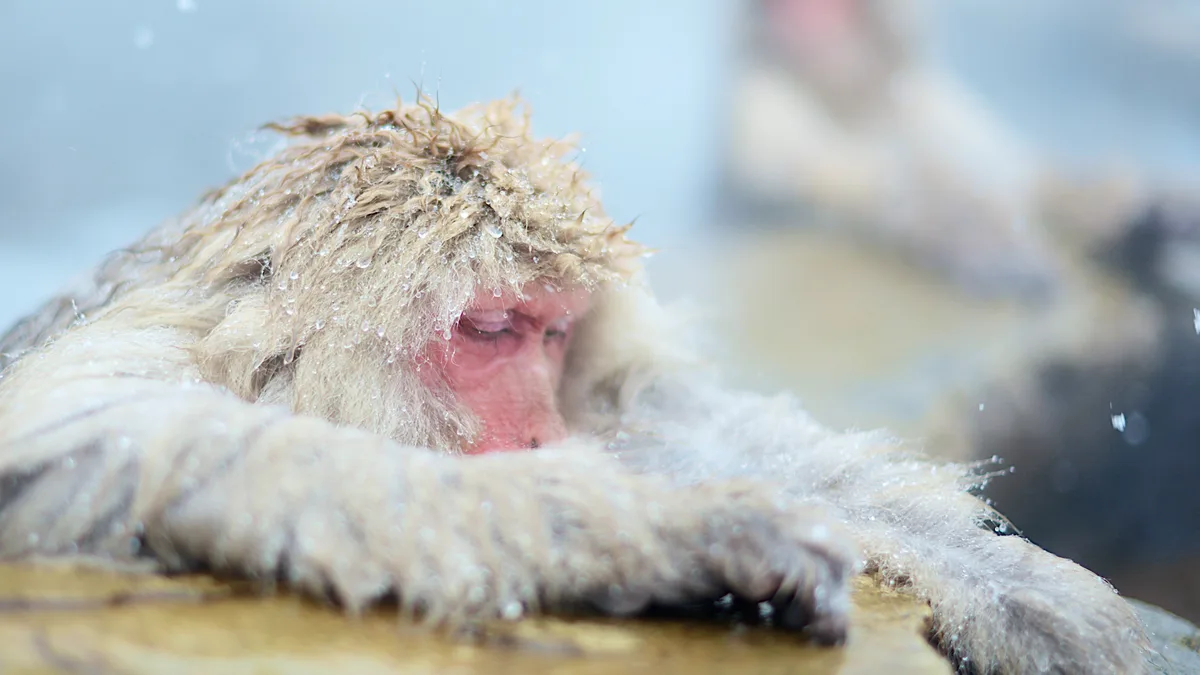
Visiting Jigokudani Snow Monkey Park, and Why the Monkeys Bathe Only When It's Cold
Is Jigokudani Snow Monkey Park worth visiting? We weighed 70 traveler voices: 38% call it a highlight, another 42% say yes in winter, and Japanese locals rate it warmer at 64%. Wild macaques bathe only in the coldest months, Dec-Feb, to survive the cold, not to charm you. The walk in, hours, and the one season mistake to avoid, with an audio guide.
Jigokudani Yaen-koen (Snow Monkey Park)
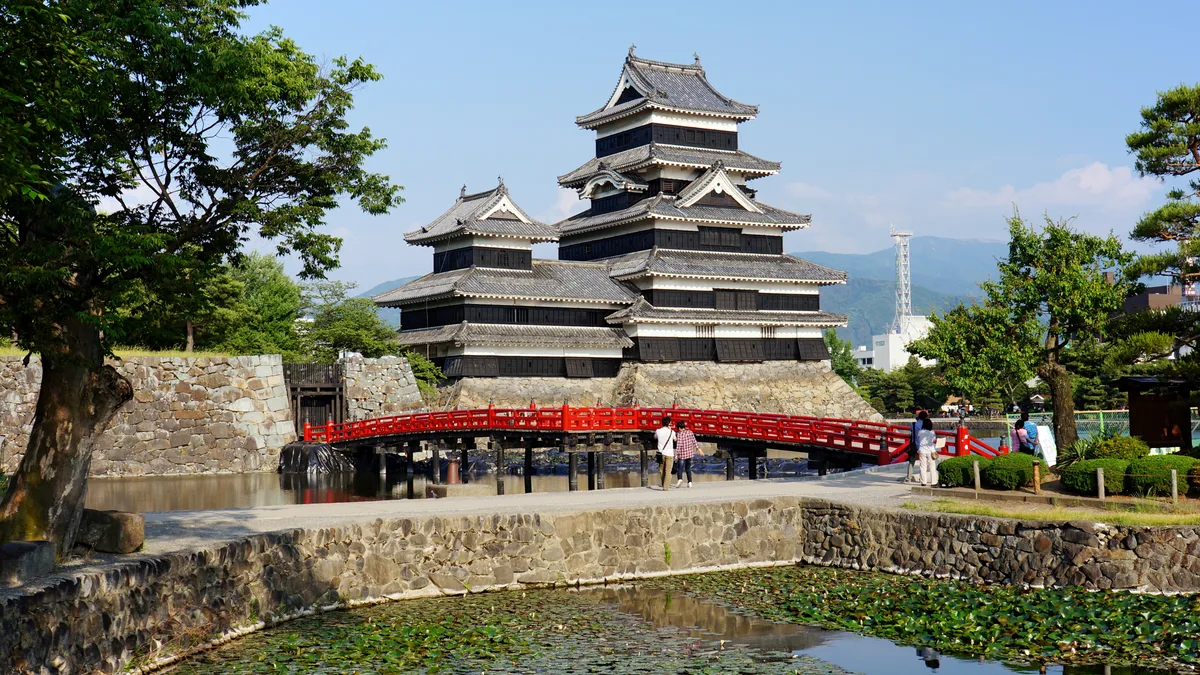
Matsumoto Castle — Why a Fortress Built for War Has a Room for Watching the Moon
A cultural audio guide to Matsumoto Castle, verified against official sources — one of Japan's twelve original wooden keeps, why a black war-fortress on the plain grew a moon-viewing tower, plus hours, tickets and how to climb it well.
Matsumoto Castle
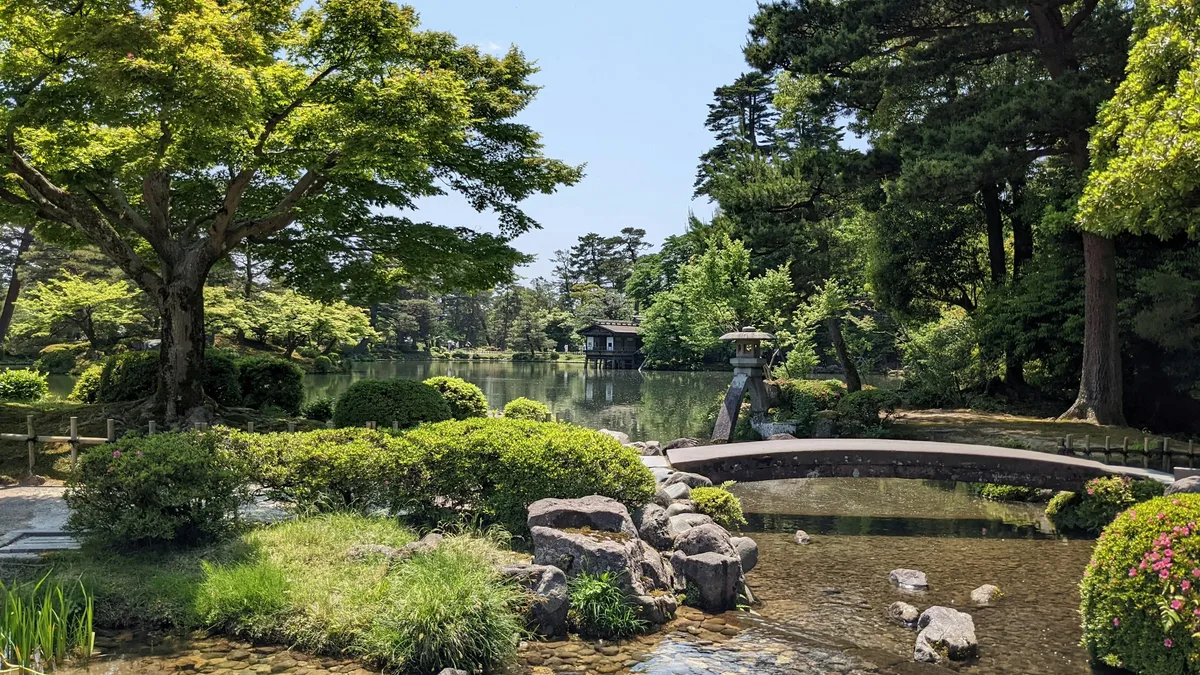
Kanazawa — The Castle Town That Turned a Fortune Into Gardens and Gold Leaf, Not Armies
A cultural audio guide to Kanazawa, verified against official sources — why the Maeda domain spent a million-koku fortune on gardens, gold leaf and crafts instead of armies, plus Kenroku-en hours, access and how to visit well.
Kanazawa
Ghibli Park: A Forest You Walk Into, Not a Theme Park You Ride
Ghibli Park is a forest you walk into, not a theme park you ride. What the tickets really unlock, how to reserve, and how to enjoy it even if you are not a fan.
Ghibli Park