
Gion — Walking Kyoto's Flower District, a Town That Is Still Lived In
Gion
By Kei · Born and raised in JapanThe Meaning
Before you learn a single name, listen for a sound: the hollow knock of wooden clogs on stone, somewhere down a lane you cannot quite see. That sound belongs to someone walking to work.
Gion is not a building with opening hours; it is a hanamachi, a "flower town," one of the districts where Kyoto's traditional performing arts are still practiced as a living profession. It grew up at the gate of Yasaka Shrine, which for most of its history was called Gion-sha; the neighborhood took its name from the shrine, and the shrine has watched over the streets below it from the eastern hills for centuries.
The women you may have come hoping to see are not "geisha," at least not by that word. In Kyoto they are geiko, the local reading of the same characters, and a maiko is a young woman still training to become one. Kyoto's own cultural authorities describe them simply: bearers of traditional dance, music, and hospitality. Becoming a geiko takes five or six years of training in dance, shamisen, song, and manners, and it is a calling a woman can practice for the rest of her life. They are artists at work rather than performers placed here for visitors.
That single shift, from "a place to see geisha" to "a town where artists live and work," changes everything about the next hour. You are not entering an attraction; you are walking, quietly, through somebody's neighborhood.
What Happens When You're There
Step 1: Yasaka Shrine and Shijo, the doorway to the town
Most walks into Gion begin at the vermilion gate at the eastern end of Shijo Street. This is the West Gate of Yasaka-jinja, the shrine the whole district was named for. It is the gate the most people pass through, although the shrine's formal main entrance is the South Gate, a little further around.
Yasaka is one of Kyoto's oldest shrines; its own records give two founding accounts, one in the seventh century and one in the ninth, both well before the capital itself moved to Kyoto in 794. For more than a thousand years it has been a place people came to pray against plague and misfortune; its summer festival, the Gion Matsuri, began as exactly that kind of prayer. The grounds are open through the day and there is no gate to buy a ticket at. Many Japanese visitors give a small, almost invisible bow as they pass under the gate, and if you would like a fuller sense of what is quietly appreciated when you enter a shrine, we have a separate guide. Nothing is asked of you here. But beginning at the shrine the town grew around is the right way in.
Step 2: Hanamikoji, stone, lattice, and the lanes that are not yours
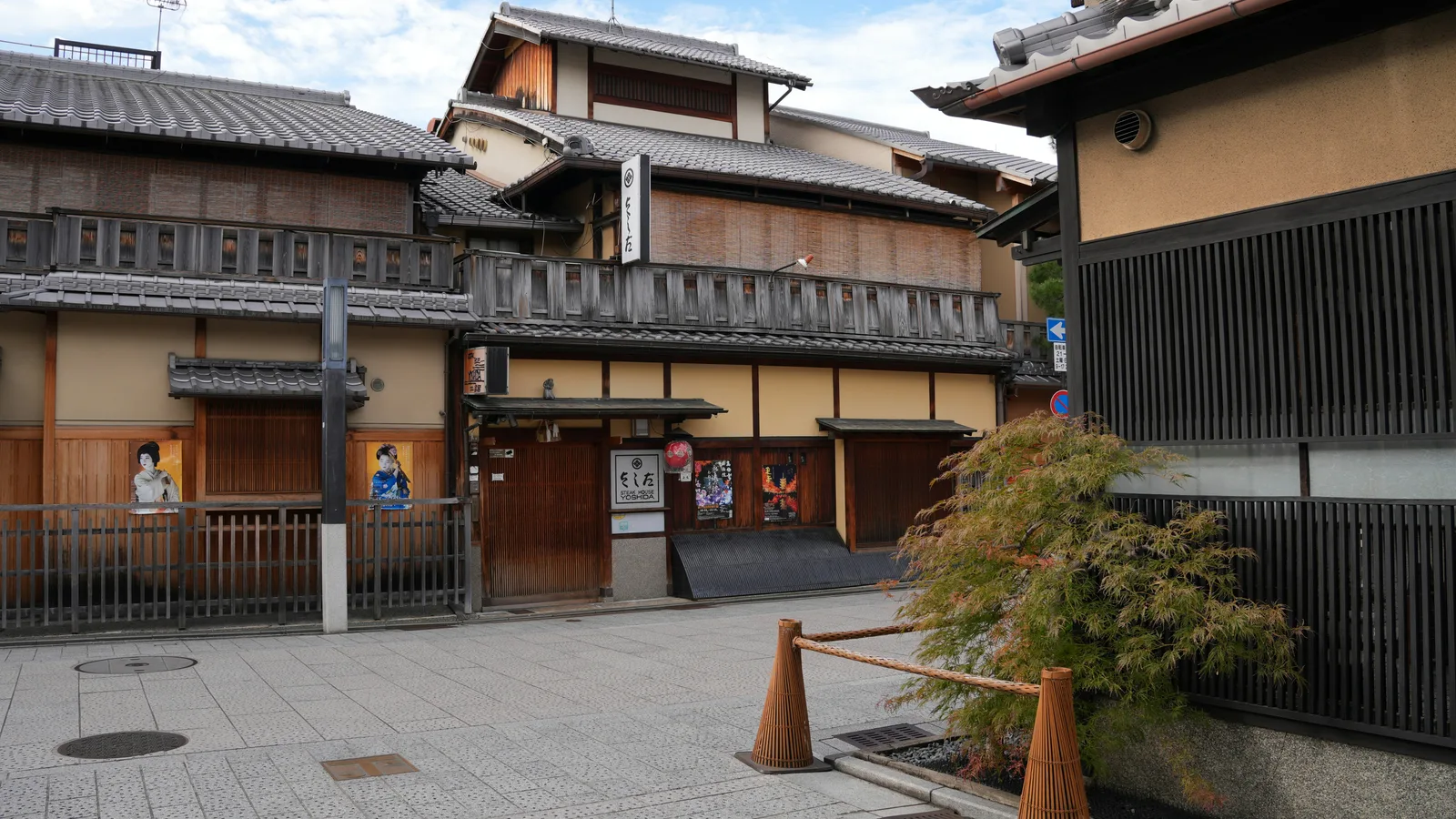
Walk south from Shijo and you reach Hanamikoji, the stone-paved street that is the picture most people carry of Gion. Read the buildings as you go. The deep-red wooden lattice across the ground floors is bengara-gōshi; the blinds hung beneath the projecting eaves above are sudare; the low, curved bamboo screens at the foot of the walls are inuyarai. These are ochaya (teahouses), the places where geiko and maiko entertain invited guests at private banquets. The quarter just north of here, around Shinbashi, is protected at the national level as a preservation district of this teahouse architecture.
You cannot simply walk into an ochaya. The houses work, by long tradition, on introduction: a first-time guest needs to be brought by someone the house already knows. This is not pride aimed at outsiders. Many Japanese people have never been inside one either; the world behind those lattices is closed to almost everyone.
A few of the narrow lanes that open off Hanamikoji are private, homes and workplaces, and small signs there ask visitors not to enter or take photographs. The line to hold in your mind is simple: the main paved street is yours to enjoy, and the little lanes branching off it are someone's doorway. Kyoto's own message to visitors puts it plainly: this is not a theme park, but a place where people live their daily lives. If you would like to understand the feeling behind those signs, we have written separately about what it is like to be photographed without being asked and how courtesy works at Japan's most photographed places.
And if you came hoping to meet a maiko: you may not, and that is normal. Many of the figures in full kimono and white makeup you see by day are visitors enjoying transformation experiences rather than working geiko. A real geiko or maiko, if you do glimpse one, is on her way to an appointment: she is in motion rather than pausing for a photo. The thing that is genuinely appreciated is to simply let her pass: no following, no stepping into her path, no camera lifted to her face. Kyoto's official guidance says it without any anger: the geiko and maiko are not mascots.
Step 3: Shirakawa and Tatsumi Bridge, the Gion of water
Head north, back across Shijo, and Gion changes its voice. Here a narrow canal, the Shirakawa, runs beside a row of teahouses, with willows trailing over the water. A small stone bridge, named Tatsumi-bashi, crosses it, and beside the bridge stands a tiny shrine, Tatsumi Daimyōjin. The people of this part of Gion look after it, and geiko and maiko are sometimes seen pausing there, hands together, to wish for skill in their art.
This is the quietest, and many would say the most beautiful, corner of the whole district. Come early, soon after dawn, and you may have the willows and the water almost to yourself, the lanes still closed and silent, the light low across the stone. It is a different place entirely from the crowded afternoon street a few minutes away.
Step 4: Walking back as the lanterns are lit
Stay until dusk and the town turns on. Lanterns painted with the names of the houses begin to glow behind the lattices. This is also when the lanes grow busy in their own way: early evening is when geiko and maiko leave their houses for the night's appointments, and the working town comes quietly to life around you.
That is the feeling to carry out with you. You did not visit a stage set. You walked, for an hour or two, through a town that was simply getting on with its evening, a place that has kept its work, its streets, and its quiet for a very long time, and that welcomes the visitor who treats it as what it is. Thank you for walking with us.
Good to Know
What Gion actually is: Gion is a district, not a single street or a site with a ticket gate. Roughly, it runs east from the Kamo River and Shijo Street to Yasaka Shrine, with Kennin-ji temple to the south and the Shirakawa canal and Shinbashi to the north. The famous stone street is Hanamikoji, but the prettiest stretch is often the Shirakawa canal, so if one lane feels underwhelming, you simply have not seen Gion yet.
Getting there: The closest stations are Keihan "Gion-Shijo" (about a 5-minute walk to Yasaka Shrine) and Hankyu "Kyoto-Kawaramachi" (about 8 minutes). From Kyoto Station, city buses run to the "Gion" stop; on weekends and holidays the EX100 sightseeing express bus reaches Gion in about 17 minutes (500 yen for adults, 250 yen for children). The flat city-bus fare is 230 yen. For the bigger picture, see getting around Japan.
When to visit: Early morning, around dawn, is quietest and most beautiful (empty lanes, soft light), but the teahouses and most shops are closed, and you will not see geiko, who do not work at that hour. Dusk, when the lanterns are lit, is the most atmospheric, though the lanes are busiest then.
Time needed: A walk through the main sights takes one to two hours. Add a meal, a tea ceremony, or a performance and it becomes a half-day.
Photography: The main public streets are fine to photograph. The private lanes are marked with signs asking you not to enter or photograph, and these are worth honoring. Do not photograph geiko or maiko without asking.
Seeing the arts respectfully: You cannot drop into a teahouse, but you do not need an introduction to see the performing arts themselves. Gion Corner stages short introductory performances of Kyoto dance and other traditional arts. In spring, Gion Kobu's Miyako Odori, held every year since 1872, and, in autumn, Gion Higashi's Gion Odori are public dance performances by geiko and maiko.
Nearby: Yasaka Shrine (grounds open through the day, no entry fee). Kennin-ji, the oldest Zen temple in Kyoto, sits at the southern end (last entry 16:30, closes 17:00; 800 yen for adults, 500 yen for students). Maruyama Park, once part of the shrine's own grounds, is a famous cherry-blossom spot just to the east.
Gion Matsuri: Yasaka Shrine's festival runs through the whole of July, with the great float processions in the middle of the month. Exact dates and street closures change every year, so check the shrine's or the city's official pages before you go. If you'll be in Kyoto for it, here's what Kyoto locals really think when you come to watch.
Last verified: 2026-06
Official information: Yasaka Shrine · Kyoto City Tourism, Gion manners
If Things Don't Go as Planned
You reached Gion and felt there was "nothing there." You were probably on the wrong stretch. The plain section many map apps drop you at is not the heart of it; walk to Hanamikoji and then north to the Shirakawa canal and Tatsumi Bridge, the part most people remember best.
You heard Gion is "closed to tourists." It is not. Only certain private lanes are restricted. The main streets, Yasaka Shrine, the Shirakawa canal, and the shops and restaurants are all open and welcoming.
You did not see a single maiko. That is the usual outcome rather than a failure. Real geiko and maiko are few, and they are working rather than strolling for photographs; many of the kimono-clad figures you see by day are visitors in transformation experiences. Treat a real sighting as a piece of luck rather than the point of the visit.
It was far more crowded than the photographs suggested. Come at opening light, or stay until the lanterns are lit; the middle of the day is busiest. The Shirakawa side is usually calmer than Hanamikoji.
You are not sure which lanes you may enter. Use one simple rule: the wide, paved public streets are fine; any narrow lane with a sign, a gate, or the feel of a private doorway is not. When in doubt, stay on the main street and you cannot go wrong. The wider question of how a place this visited protects itself is part of why those lines exist.
You wanted to experience the arts but cannot get into a teahouse. You do not need to. Book Gion Corner, or time your visit to one of the public odori dance seasons, and you can watch the same arts performed properly, in a setting made for guests.
Sources:
- Yasaka Shrine Official Site: History (two founding accounts, both pre-794), enshrined deity (Susanoo-no-Mikoto), the Gion name and gate town, festival origins, grounds open through the day
- Kyoto City Tourism (DMO Kyoto), A Message from Southern Gionmachi: Official visitor guidance; geiko/maiko terminology; "not a theme park, but a place where people live their daily lives"; "not mascot characters"
- Kyoto City Tourism, Gion & Higashiyama area: Walking route (Shirakawa, Tatsumi Bridge, Hanamikoji), area geography, Yasaka at the eastern end
- JNTO, Gion & Higashiyama: Visitor framing; Hanamikoji; Kennin-ji as the oldest Zen temple in Kyoto
- Ookini Zaidan (Kyoto Traditional Musical Art Foundation): Geiko and maiko definitions and training stages; the five hanamachi; Miyako Odori; Gion Corner
- Kyoto City "Kyoto wo Tsunagu" Intangible Cultural Heritage: Geiko and maiko as bearers of traditional art and hospitality; the five hanamachi
- Agency for Cultural Affairs, Important Preservation Districts for Groups of Traditional Buildings: Gion Shinbashi (teahouse town, designated 1976)
- Kennin-ji Official Site: Founding (1202, Yōsai), opening hours and admission
- Kyoto City Transportation Bureau, Sightseeing Express Bus: EX100 route and fare; flat city-bus fare
- Gion Shopping District Promotion Association, Tatsumi Daimyōjin: Tatsumi Daimyōjin and the Shirakawa/Shinbashi area
Photos: sourced under free commercial-use licenses; see captions where attribution applies.
WMJS is written in Japan, in English, with AI help. We check every page, but English is not our first language. If a sentence reads oddly, tell us. One sentence is enough.
Thank you. A person reads every note.
Real voices
Is it worth it?
Were you there? Share your photos.
Your photo could appear in this guide — with your name and a link to your profile.
Submit a photoRelated Articles

"Excuse Me, Can You Take My Photo?": What Japanese People Really Think
Visiting Temples and Shrines: What Japanese People Notice
More guides in Kansai
Arashiyama — Why Japan Lists This Bamboo Grove Among the Sounds Worth Saving
An audio cultural guide to Arashiyama in Kyoto, verified against official sources. Understand why Japan lists the bamboo of Sagano among the sounds it wants to keep, how the Moon-Crossing Bridge earned its name, and how to walk the river, the grove, and Tenryu-ji's borrowed-mountain garden away from the crowds.
Arashiyama
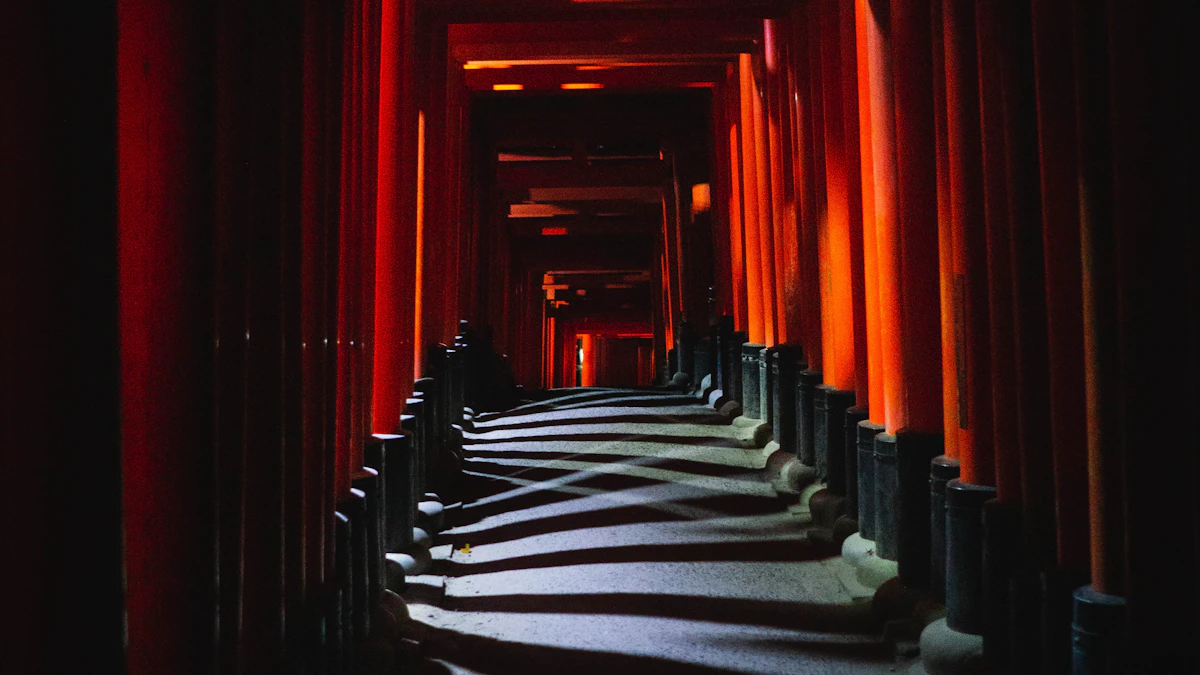
Fushimi Inari Taisha: Ten Thousand Gates, Each One a Thank-You
The ten thousand vermilion gates at Fushimi Inari are thank-you notes you can walk through. A cultural audio guide verified against official sources: why the foxes are messengers not gods, why the summit has no view, and how to walk past the crowds.
Fushimi Inari Taisha
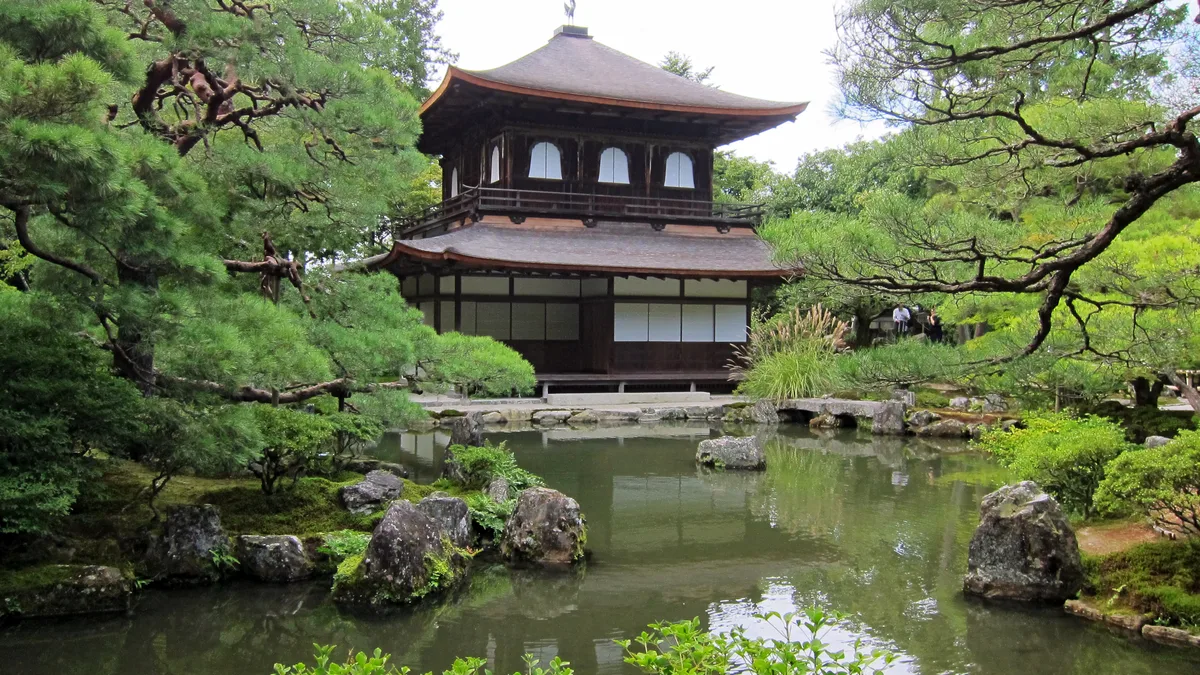
Ginkaku-ji — Why the Silver Pavilion Has No Silver, and Why Japan Finds That Beautiful
Why the Silver Pavilion has no silver — a free audio guide to Ginkaku-ji, Kyoto, verified against official temple sources. Higashiyama culture and the art of restraint, the sea of silver sand, hours, admission (1,000 yen), access from Kyoto Station, and the Philosopher's Path.
Ginkaku-ji (Jishō-ji)
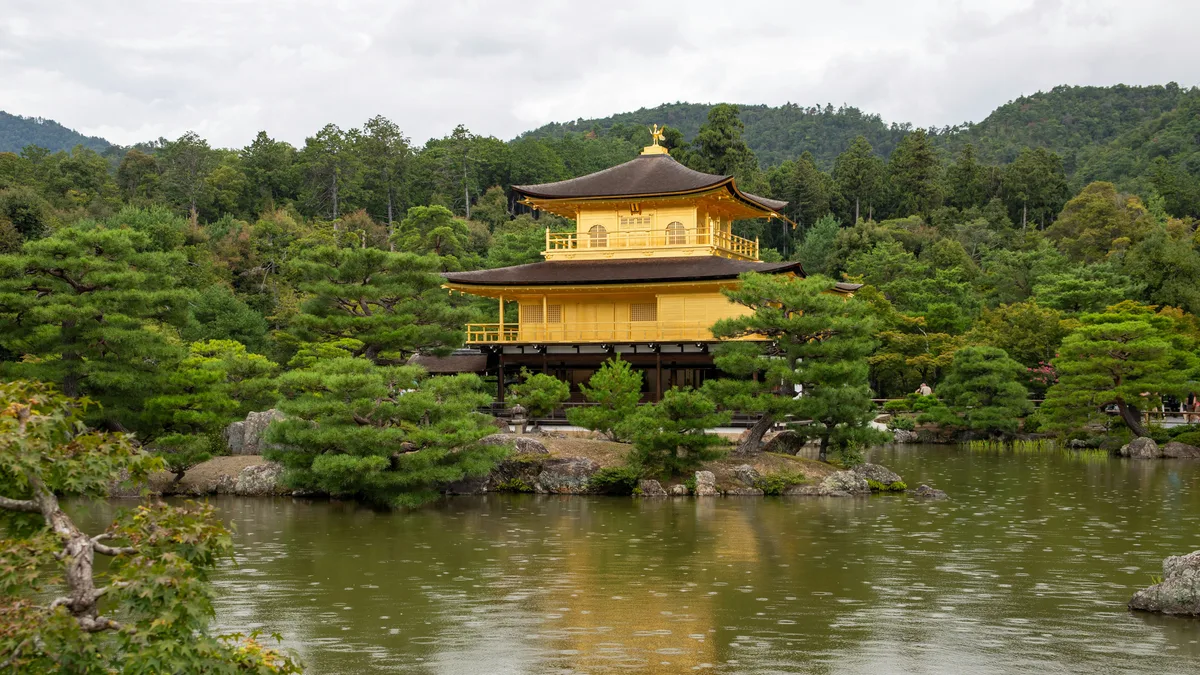
Kinkaku-ji — Why Everyone Stops at the Same Spot to Photograph the Golden Pavilion
An audio cultural guide to Kinkaku-ji, Kyoto's Golden Pavilion, verified against official temple sources. Why you view it from across the pond, what the gold really means, plus hours, admission, and access from Kyoto Station.
Kinkaku-ji (Rokuon-ji)