
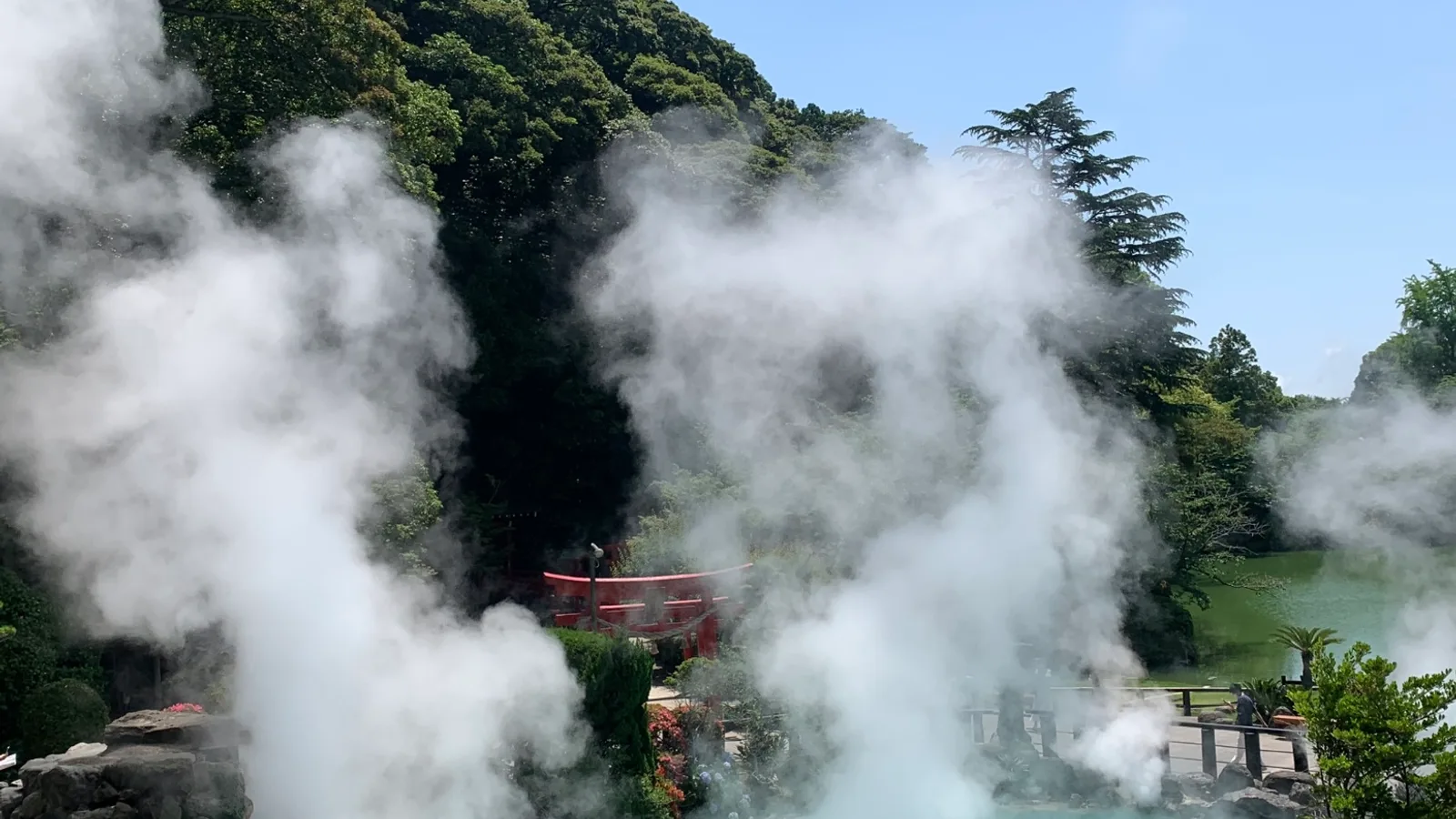
Visiting Beppu Onsen, the Town Where the Earth Boils Just Beneath Your Feet
Beppu Onsen (Kannawa)
By Kei · Born and raised in JapanIs Beppu worth it? By the voices we gathered, yes, though the reason takes most first-time visitors by surprise. Of 102 international travelers who made the trip, weighted by how much each account resonated with fellow readers, 46% called it worth it for the baths, the steam, and the boiling town, 44% said it depends on whether you came for a look or a soak, and 10% felt let down. Japanese visitors, reviewing the very same seven hells in their own words, are far warmer at 72%. Nearly every doubt traces back to treating the seven hells as a checklist instead of giving real hours to the ordinary baths. What visitors actually said, the disappointed included, is further down this page.
The Meaning
Walk through Beppu on a cold morning and you will see the town breathing. Steam rises from grates in the road, from the gaps between houses, from a pipe behind someone's laundry, from the hillsides above the rooftops: thin white columns lifting all over town at once. For a visitor it is a sight worth a photograph. For the people who live here, it is simply what the morning looks like. The ground beneath Beppu is hot, and it has never once stopped letting that heat escape.
Long before any of this was a destination, people kept their distance from it. In the districts now called Kannawa and Kamegawa, boiling water, scalding mud, and roaring steam broke out of the earth, places, it is said, that people could not approach and learned to shun. The oldest record of this region, the Bungo Fudoki, written more than 1,300 years ago, already noted these springs. And people gave the fiercest of them a name that held all of that distance in a single word. They called them jigoku: hells.
That word is the key to the whole town. Japan's hot-spring story is usually told as one of pleasure: sinking into warm water and letting the day fall away. Beppu tells the older half first: before the comfort came the awe. Some of the water here is simply too hot to enter, close to the boiling point, and a thing you cannot step into is a thing you look at, and respect, before you do anything else with it.
And there is a great deal of it. According to a survey by Japan's Ministry of the Environment, current as of March 2025, Oita Prefecture has more hot-spring sources (around 5,094) and a greater volume of rising water than any other prefecture in the country. Beppu, the city at the heart of it, accounts for roughly 2,831 of those sources on its own. Stand anywhere in this town and water is moving, hot, just beneath your feet. What the people of Beppu did with all of it, too much heat and far too fierce to simply bathe in, is the quiet story of the place. They learned to look at it, to fear it, and then to put it to work: to cook with it, to warm sand and bodies and homes with it. In Beppu, a hot spring is not a treat you travel to. It is the ground you live on.
What Happens When You're There
Step 1: Arriving in a Town That Steams
You can reach Beppu by air, by rail, or by road, and each way ends the same: with steam. The trains of the Nippo Line run down the east coast of Kyushu to Beppu Station; the limited express from Hakata curves through the mountains and along the sea to get here. However you come, the moment the town opens up in front of you, you will notice the hillsides to the north exhaling, soft continuous plumes drifting up from among the houses, as if the whole slope were gently simmering.
Most of what you will want to see is not at the station but up the hill, in Kannawa, the district where the steam is thickest. A local bus carries you up there in about twenty minutes, and the ride is the first lesson Beppu teaches. The steam does not gather politely in one tourist spot. It comes up beside the road, behind a vegetable garden, between two parked cars, out of a drain at a crossing. You begin to understand that you have not arrived at an attraction. You have arrived in a town that happens to sit on top of one.
It helps to slow down here. In many hot-spring towns the steam is something kept out of sight, piped quietly to the baths. In Kannawa it is the air itself. Locals carry net bags of eggs and vegetables toward the public steam vents the way people elsewhere carry groceries to a kitchen. Watch for a few minutes and the town stops looking strange and starts looking, simply, busy: a place getting on with its ordinary day, on a stove the size of a mountain.
Step 2: The Hells You Look At, Not Bathe In
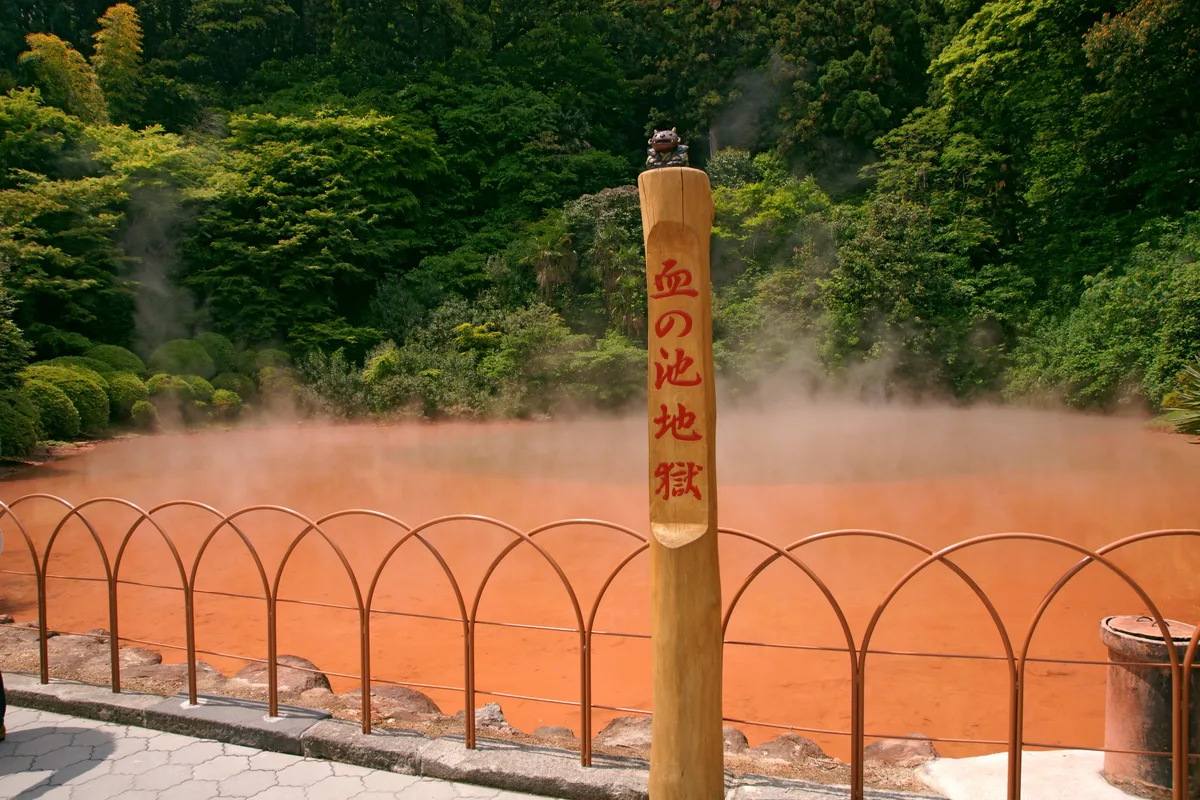
This is what most people come to Beppu to see, and it is also the thing most people misunderstand before they arrive. The jigoku meguri, the "hell tour," visits seven springs scattered across Kannawa and Kamegawa, and you do not get into a single one of them. They are far too hot; the water sits near the boiling point. You walk up, you look, and you step back. After centuries of soaking in hot water, the Japanese built a whole sightseeing route around water you are not allowed to touch, and that contradiction is exactly the point.
(A note for the confused: these are not the famous snow monkeys of Nagano, whose valley is also called Jigokudani. No animal bathes here. In Beppu, jigoku means the boiling springs themselves.)
Each of the seven has its own character. Umi Jigoku, the "sea hell," is a wide pond of startling cobalt blue, near 98°C, the color drawn out of dissolved iron in the water. Chinoike Jigoku, the "blood pond hell," is a pool of red, scalding clay stained by the minerals beneath it, and the oldest of them all, noted in that same thousand-year-old chronicle as the aka-yu, the red spring. Tatsumaki Jigoku, the "spout hell," is a geyser that erupts at intervals with enough force that a stone roof has been set over it to keep the water from flying far overhead. Four of the seven (the sea, the blood pond, the spout, and the pale-blue Shiraike) are designated National Places of Scenic Beauty, recognized in 2009 for the strange colors and shapes the earth makes here on its own.
You do not have to see all seven, and you may find you do not want to. The combined ticket tempts you to treat them as a checklist, seven stamps to collect before the bus leaves, and many visitors do exactly that, then wish they had lingered at one. If what moves you is the raw fact of a boiling earth, the natural pools (the blue, the red, the spouting steam) are where that fact is loudest. Stand at the rail of Umi Jigoku in the cold air, watch a column of steam climb off water hot enough to cook in, and you are not collecting a sight. You are standing where the ground itself is at a rolling boil, exactly as people did when they decided the only honest name for it was hell. The heat has a source: Beppu's boiling water and the living volcano of Mount Aso, a few hours inland, are two faces of the same Kyushu fire: the water the earth warms here, and the great caldera still smoking there.
Step 3: When Steam Becomes Dinner
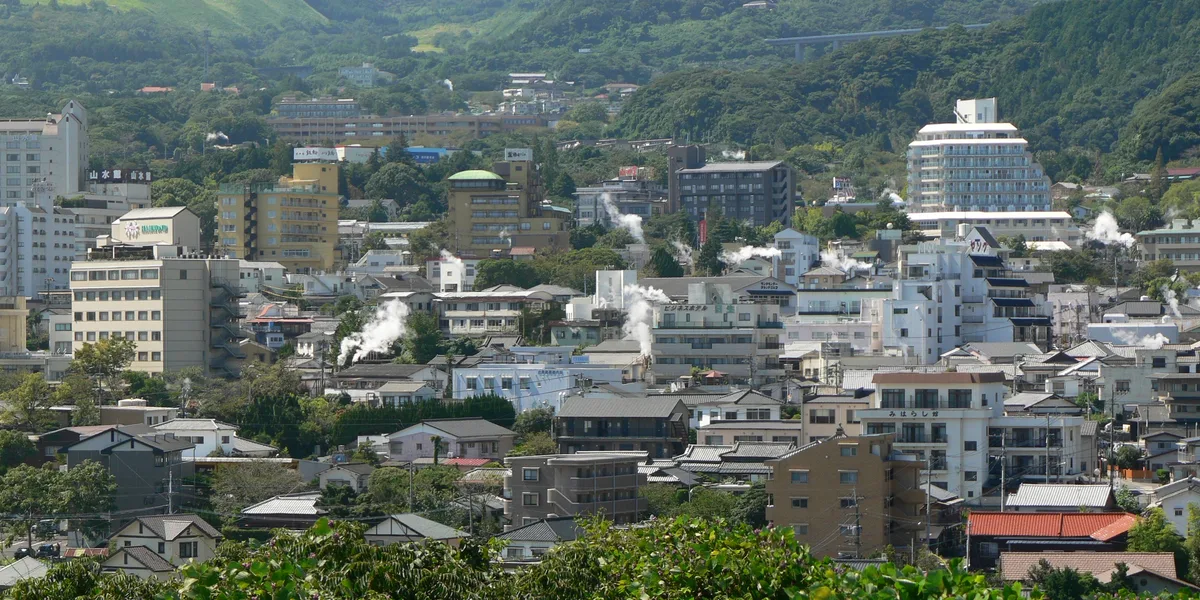
Here is where Beppu turns its fearful word into an ordinary one. A short walk through Kannawa brings you to small workshops where the same steam that earned the springs their name is doing the cooking. At Jigoku Mushi Kobo, the "hell-steaming kitchen," you buy eggs, vegetables, seafood, or meat, set them in a basket, and lower them into a stone vent in the floor. A burst of natural steam, close to 100°C, rises around the food. You close the lid, wait, and a few minutes later lift out a meal cooked by the planet.
This way of cooking is centuries old and was never invented for tourists. The name of one of the seven springs, Kamado Jigoku, the "cooking-pot hell," is told to come from a time when offerings of rice for a local shrine's festival were steamed over the vents right here. The steam baths, the cooked eggs sold at corner stands, the vegetables softening in a neighbor's basket: in Kannawa, the boiling ground works as the kitchen rather than a spectacle fenced off behind glass.
To see how far that goes, climb to the Yukemuri Observatory above the district, especially toward dusk on a weekend, when the rising steam is lit from below. From up there the plumes are not coming from a few famous pools. They are coming from everywhere: from baths, from kitchens, from workshops drying mineral crystals, from homes. The view is striking enough that the steamscape of Beppu was named an Important Cultural Landscape of Japan in 2012, one of the rare times the country has protected not a building or a garden but the way a whole town lives with the earth. Stand there long enough and a question tends to arrive on its own: in most places, people build their towns near the useful land and keep the dangerous ground at arm's length. Why did the people of Beppu build their lives directly on top of the part of the earth they once called hell?
Step 4: Buried in Warm Sand
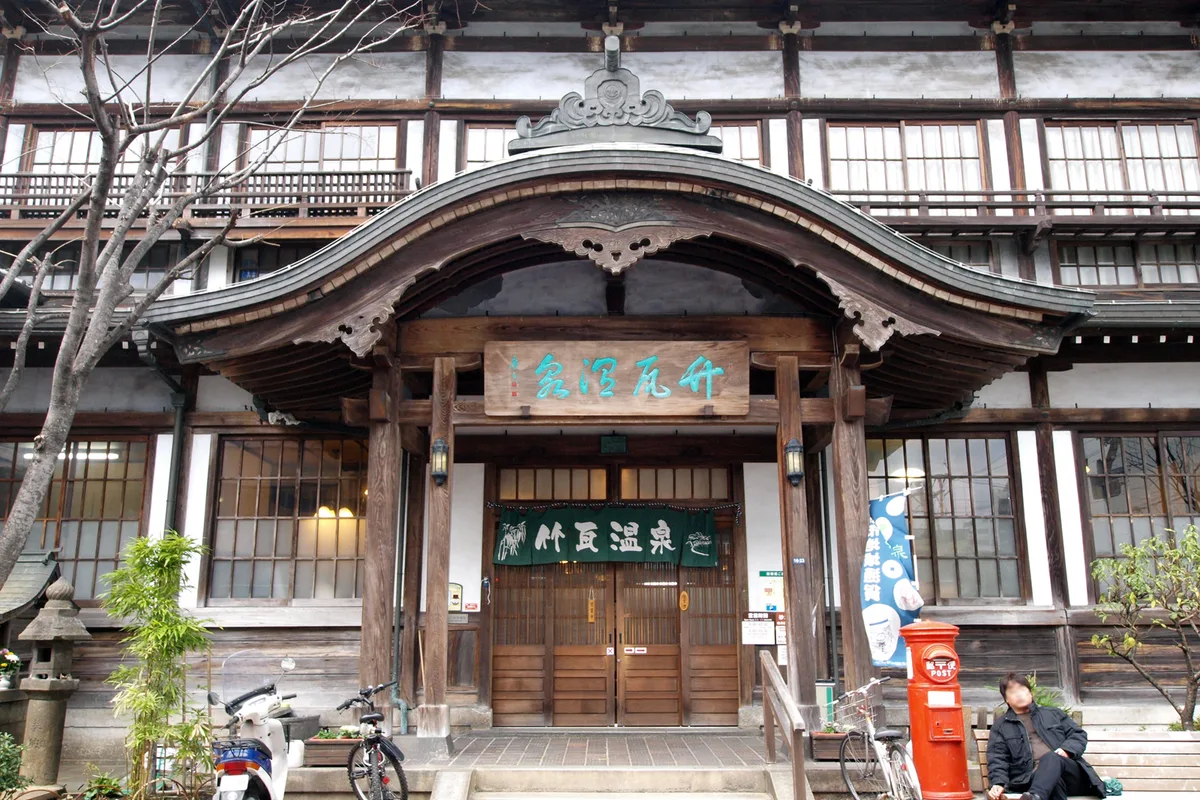
There is one more thing Beppu does with its heat, and it is the gentlest. Near the old downtown stands Takegawara Onsen, a public bathhouse first opened in 1879, its grand wooden roof a symbol of the town, one of those beloved historic bathhouses, like the ancient Dōgo Onsen in Matsuyama, that Japan keeps in everyday use rather than behind glass. Inside, beyond the ordinary baths, is the sunayu, the sand bath. You change into a light cotton yukata, lie down in a shallow trench, and an attendant shovels warm, hot-spring-heated sand over you until only your head is free. The weight settles across your chest and legs; the heat works up from below and down from above; and for about fifteen minutes there is genuinely nothing to do but lie still and breathe. Most people are surprised by how heavy it feels, and then surprised again by how quickly they stop minding.
Do not worry about getting it wrong, and know that you are in good company if you feel unsure. Japanese visitors trying the sand bath for the first time are just as uncertain about what to wear and how it will feel; the yukata is provided, you keep it on, and the attendant will show you exactly where to lie. The same gentle uncertainty applies to the soaking baths waiting across the town. If you have wondered what is actually going through everyone's mind in a Japanese bath (the rinsing, the small towel, the etiquette no one says aloud), that is its own quiet world worth understanding. If you have tattoos, Beppu tends to be more relaxed than many places, though it still varies by bath, so it is worth knowing how tattoos and onsen fit together in Japan and asking at the door.
The reward for staying the night is the part of Beppu that the day-trippers miss. Pick a base in any of the Beppu Hatto (the eight historic hot-spring districts the town is built from, Kannawa among them) and after the steam tour and the sand, you can finally do the simplest thing of all: lower yourself into the water Beppu is famous for, cooled to a temperature meant for a human body. Many travelers stay in a ryokan, where the welcome itself is part of the night and follows its own quiet customs worth knowing.
Step 5: A Town Built on Boiling Water
Leave early the next morning, before the buses fill, and walk back up through Kannawa one more time. The steam is at its best when the air is coldest: thicker, whiter, rising in slow ropes you can follow with your eyes from a drain at your feet all the way up the hillside. There is no ticket gate for this part. It is just the town, waking up, doing what it has done every morning for longer than anyone can remember.
By now the strangeness has worn off, and what is left is the question the whole town quietly asks. Everywhere else, people treat a boiling, steaming, scalding patch of earth as something to fence off and fear. The people of Beppu feared it too; they named it hell and kept away. And then, slowly, they moved in. They cooked their eggs in it, warmed their old bones in its sand, raised their children in the smell of sulfur and the sound of escaping steam, and turned the most dangerous ground they knew into the most ordinary home they had. You do not have to see all seven hells to understand Beppu. Walk once through the steam on a cold morning, and you have already felt the whole of it: a town that looked at the boiling earth, decided not to be afraid of it forever, and made a life on top of the heat.
What Visitors Honestly Say
Before you decide how much of Beppu to give to the hells and how much to the baths, it helps to hear from people who already made the trip. We gathered 102 voices from international travelers who had been to Beppu, weighted by how strongly each account resonated with fellow readers, and this is how they fell:
The middle bar is almost as large as the "worth it" bar, and it carries the real answer: most of that 44% are not undecided about Beppu, they are telling you which Beppu to come for. "The Beppu Hells are the least interesting places in the entire city," one repeat visitor wrote, adding after a return trip, "I focused on eating local food and enjoying the hot springs, and I much preferred that experience." Even the most-upvoted comment on the hells themselves settles for a sight rather than a soak: they are, as one traveler put it, "way too hot to bathe in, but super cool to see."
Japanese visitors and locals, reviewing the same seven hells in their own words, land far warmer:
Where a handful of foreign travelers wonder whether the whole place was worth it, the Japanese reviewers almost never do. "You really feel the Earth is alive," wrote one visitor in his sixties, watching the springs bubble at 98°C. Their neutral band is mostly small and fixable things rather than doubt about the town itself: one wrote, "I bought the combined ticket and at first thought I'd made a mistake, but it gradually got more and more fun."
The full picture, the animal-hell complaints and the exact fix included, is in Is Beppu Worth It?
Good to Know
Getting there: Beppu sits on the east coast of Kyushu, in Oita Prefecture, and is well connected by train. From Hakata (Fukuoka), the JR limited express Sonic reaches Beppu Station in roughly two hours and twenty minutes; advance online fares can be much cheaper than buying on the day. Highway buses (the Toyonokuni service) run from central Fukuoka to Beppu Kitahama in about the same time for less money. By air, note that Oita Airport is some distance up the coast, not in the city; an airport bus reaches central Beppu in about 50 minutes. For the bigger picture of trains, passes, and transfers, see getting around Japan.
Reaching the steam and the hells: Most of what you have come for is up the hill in Kannawa, well away from the station. Local buses from the west side of Beppu Station reach the Kannawa and Umi Jigoku area in about twenty minutes. A My Beppu Free one-day bus pass covers the city's main routes, including the hell district, and usually costs less than a couple of separate trips. If you would rather not navigate the buses at all, a guided "hell tour" sightseeing bus runs from Beppu Station and includes the entrance ticket, though it costs noticeably more.
The hells (jigoku meguri): A single combined ticket admits you to all seven hells and is valid over two consecutive days; there is no need to buy anything online in advance; the counter at any of the hells sells it on the spot. The hells are generally open 8:00–17:00, year-round. Five of them (Umi, Shiraike, Onishibozu, Oniyama, Kamado) cluster within walking distance of one another in Kannawa; the remaining two (Chinoike and Tatsumaki) are a few kilometers away in Kamegawa, reached by a short bus or taxi hop. Seeing all seven on foot and by bus takes the better part of a half-day.
Steaming your own food: At Jigoku Mushi Kobo in Kannawa you rent a steam vent (a basic pot starts at a small fee for the first fifteen minutes) and buy ingredients on site, or bring your own. It is first-come, with no reservations, and is generally open from late morning into the evening, closed one Wednesday a month. There are free public foot-baths and a foot-steaming spot nearby.
The sand bath: Takegawara Onsen in the old downtown offers the indoor sand bath (sunayu) for a modest fee, with a yukata provided; it does not take reservations, so you simply sign in at the counter, and only a small number of people can be buried at once, so arriving near opening avoids the longest waits. A separate beach sand bath operates up the coast at Kamegawa; check its official page for current hours and operation. Nearby Kannawa Mushiyu offers a different experience again: being steamed while lying on a bed of medicinal herbs, a custom said to date to 1276.
The steam view: The Yukemuri Observatory above Kannawa is free and open through the day and evening; the rising steam is lit up on weekend and holiday nights. It sits in a residential neighborhood, so it is a place to keep your voice low. The plumes look most dramatic on cold, clear mornings and evenings.
When to go and how long: Beppu is a year-round town, but the steam is at its most beautiful when the air is cold, so autumn through early spring rewards an early start. The hell tour and a steam meal fill a comfortable half-day; staying a night lets you do the thing the springs were ultimately made for: actually bathing, in one of the eight Beppu Hatto districts, and catch the steam at dawn and after dark. Many travelers pair Beppu with its quiet inland twin, Yufuin, a still basin town whose mornings are made of drifting mist rather than roaring steam, a short train ride over the hills, and split their Oita trip between the two moods. Beyond Kyushu, hot water takes very different shapes elsewhere in Japan: Hakone near Tokyo turns a hot-spring visit into a mountain loop by train, cable car, ropeway and boat, while Kinosaki Onsen on the San-in coast turns it into an evening of walking between seven public baths in a cotton robe. Beppu's own version is neither a loop nor a stroll between baths, but a town that simply lives on top of the heat. High in Gunma's mountains, Kusatsu Onsen takes a spring too hot to enter and lets it cool in the open air, in long wooden troughs across its central square. A day trip works, but it leaves the quietest, warmest part of Beppu behind.
Last verified: 2026-06
Official websites: beppu-jigoku.com (the hells), beppu-tourism.com (Beppu tourism), and city.beppu.oita.jp (municipal facilities and hours)
If Things Don't Go as Planned
You came to bathe in the hells. Many people do, and it is the most common surprise in Beppu: the seven hells are for looking at, not for soaking in: the water is near boiling. You have lost nothing. The town is full of ordinary hot springs cooled to a comfortable temperature, there are free foot-baths beside the steam kitchens, and the experience the hells are really offering, standing at the edge of a boiling earth, is one you can only have by staying out of the water.
The hells felt touristy. Some of the springs are dressed up with gardens, gift shops, and exhibits, and not all of it will be to your taste. If it is the bare power of the place you want, lean toward the natural pools (the cobalt blue, the blood red, the spouting steam) and give the rest a glance. And remember that the hells are Beppu's signboard, not its substance. The real town is the steam coming off the hillside and the eggs cooking in the public vents, and that costs nothing to walk through.
There was a long wait for the sand bath. Only a handful of people can be buried at once, so peak hours back up quickly. Arriving near opening time is the simplest fix; if the wait is still long, the warm soaking baths and the steam kitchens nearby are a fine way to spend the time, and the sand will feel even better afterward.
The sulfur smell is strong. It comes and goes with the spot and the wind, and it is part of why the place earned its name. Most visitors stop noticing it within a few minutes. If a particular spring is too much, the open-air steam view above town is all fresh air and distance.
You have tattoos and aren't sure where you can bathe. Beppu has a reputation for being more relaxed about this than many onsen towns, but it still varies from bath to bath, so a quick question at the entrance saves any awkwardness. We cover how tattoos and hot springs fit together in Japan on its own, including the simple options that work almost anywhere.
You were looking for the snow monkeys. That is a different place entirely: the wild monkeys who bathe in a hot spring are at Jigokudani in the mountains of Nagano, far to the northeast. Beppu's jigoku are the boiling springs themselves, and no animal bathes in them.
Sources:
- Beppu Jigoku Association: Official (Japanese): The seven hells and their characteristics, the origin of the name jigoku (kept as a told tradition), the four hells designated National Places of Scenic Beauty (2009), combined ticket, hours (8:00–17:00, year-round), and the Kannawa/Kamegawa split
- Beppu Jigoku Association: Admission (Japanese): Combined-ticket pricing and two-day validity, sold at any of the hells
- Beppu City Official: Beppu Hatto Guide (Japanese): Definition of the eight Beppu Hatto hot-spring districts and their official names
- Beppu City Official: The Yukemuri (Steam) Cultural Landscape (Japanese): "Beppu no Yukemuri / Onsen-chi" selected as an Important Cultural Landscape (2012-09-19); steam used for cooking and mineral production
- Beppu City Official: Jigoku Mushi Kobo Kannawa (Japanese): Steam-cooking workshop: vent rental fees, ingredients, first-come (no reservation), hours, monthly closure
- Beppu City Official: Takegawara Onsen (Japanese): Historic bathhouse (1879), indoor sand bath fee and hours, no reservations, small capacity
- Beppu City Official: Kannawa Mushiyu (Japanese): Herbal steam bath said to date to 1276, fee and yukata rental, seasonal hours
- Beppu Tourism (Beppu City Tourism Association): Official: Model courses, the Yukemuri Observatory, the beach sand bath (SHONINPARK Sand SPA), seasonal framing and English-facing descriptions
- Ministry of the Environment: Hot Spring Use Survey (Japanese): National figures: Oita Prefecture first in source count (~5,094) and discharge volume (current as of March 2025)
- JNTO: Beppu Onsen (English): Beppu Hatto as a group of eight hot-spring towns; standard English terms (the hells of Beppu, jigoku meguri, sand bath, steam) and visitor-facing overview
- Is Beppu Worth It? (WMJS): The two visitor-voice gauges reproduced in "What Visitors Honestly Say" (102 international voices, 46/44/10; 90 Japanese voices, 72/20/8) and the verbatim visitor quotations
Image credits: Umi Jigoku / Sea Hell (hero): CC0 / public domain via Wikimedia Commons. Chinoike Jigoku / Blood Pond Hell: photo by 663highland, CC BY 2.5, via Wikimedia Commons. Kannawa steam townscape: photo by Hisagi, CC BY-SA 3.0, via Wikimedia Commons. Takegawara Onsen: photo by 大分帰省中, CC BY 3.0, via Wikimedia Commons.
WMJS is written in Japan, in English, with AI help. We check every page, but English is not our first language. If a sentence reads oddly, tell us. One sentence is enough.
Thank you. A person reads every note.
Real voices
Is it worth it?
Were you there? Share your photos.
Your photo could appear in this guide — with your name and a link to your profile.
Submit a photoRelated Articles
What Japanese Bathers Actually Think When You Walk In
Staying at a Ryokan: What Your Host Wishes You Knew

Getting Around Japan: The Tiny Things That Earn You a Nod
More guides in Kyushu
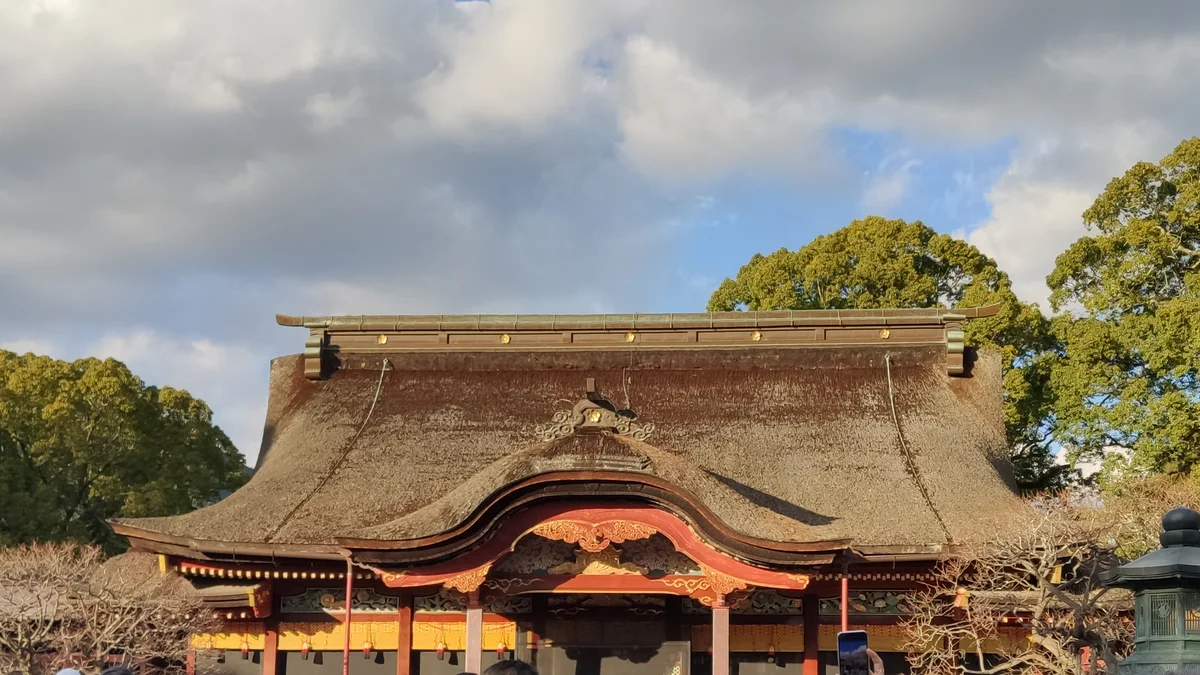
Visiting Dazaifu Tenmangu, the Shrine Where a Wronged Scholar Became a God
Is Dazaifu Tenmangu worth visiting? We weighed 49 traveler voices: 56% say worth it, and Japanese visitors land warmer at 77%. Free entry, getting there from Fukuoka, the umegae mochi and flying-plum legend, plum-blossom timing, and the Kyushu National Museum next door, with an audio guide.
Dazaifu Tenmangu
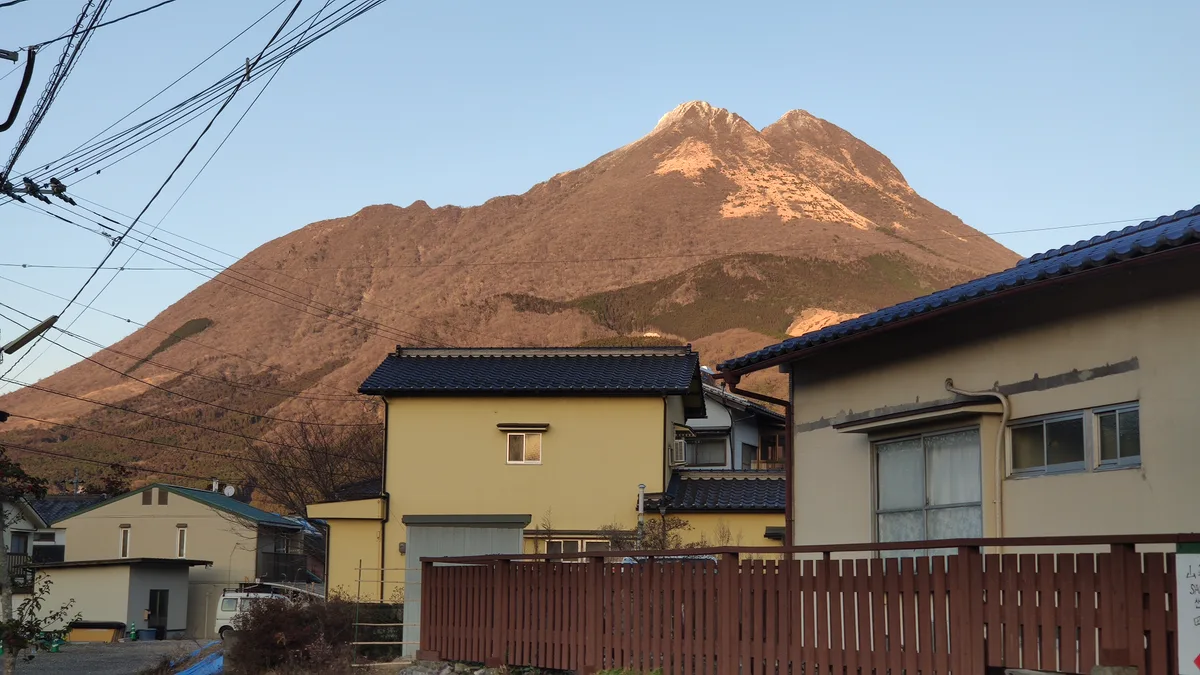
Yufuin: A Town to Walk Slowly, and a Mist That Waits for Morning
An audio cultural guide to Yufuin, verified against official sources. A hot-spring town you walk rather than watch, where the famous morning mist on Lake Kinrin belongs to those who stay the night, how it differs from Beppu, and how to actually get there on the Yufuin no Mori train.
Yufuin (Lake Kinrin)
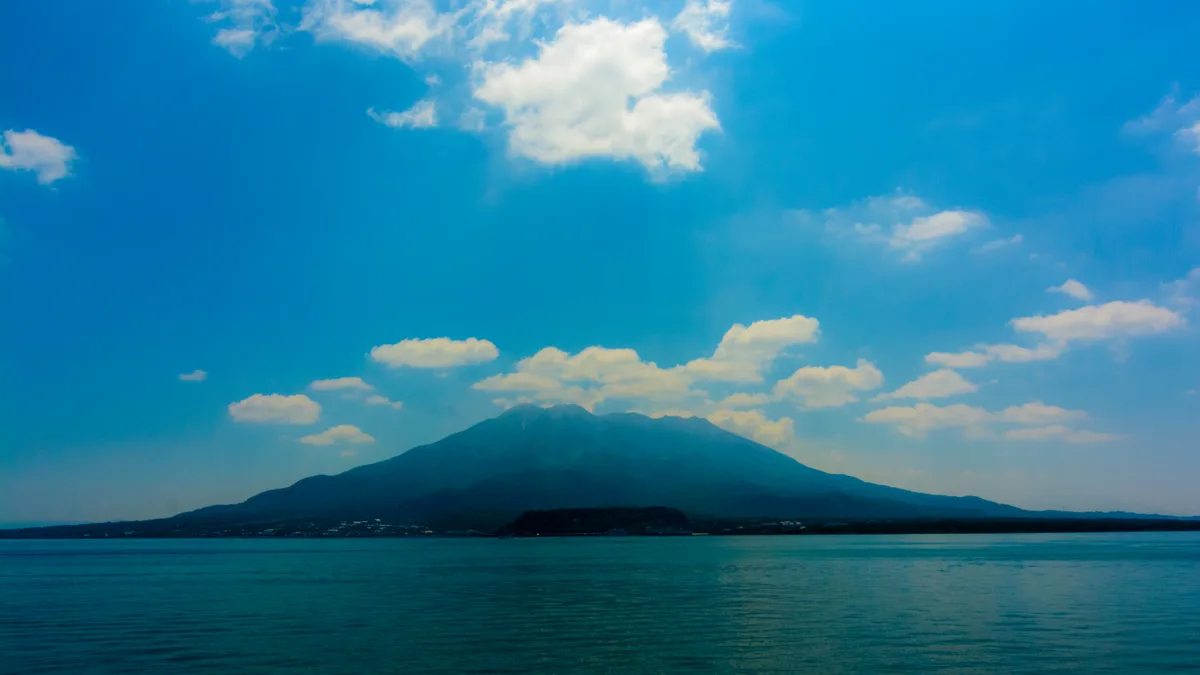
Kagoshima — The City That Lives With a Volcano
Kagoshima lives with an active volcano across the bay. An audio guide to Sakurajima: ash read like weather, a ferry to the mountain, a garden built around it.
Sakurajima
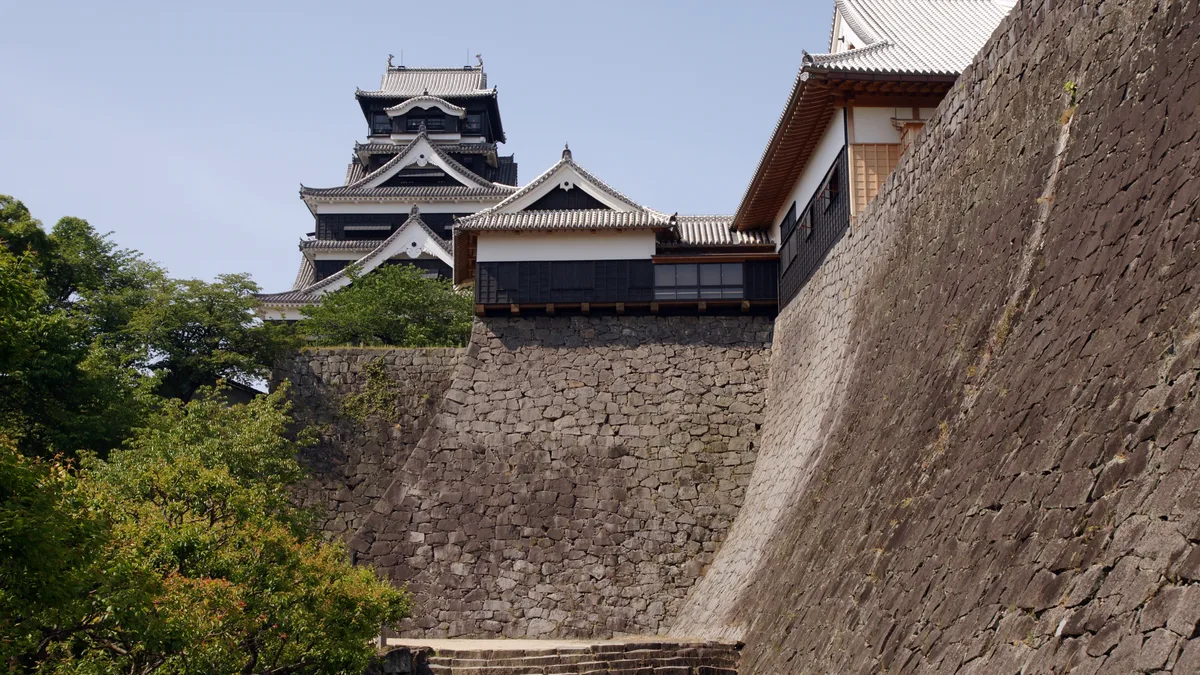
Kumamoto Castle — A Fortress Being Put Back Together, One Numbered Stone at a Time
An audio guide to Kumamoto Castle — a fortress still being rebuilt after the 2016 earthquake. The miracle stone wall, the elevated walkway over the live repair, plus hours, tickets and access.
Kumamoto Castle