
Hiroshima Peace Memorial Park — How to Visit Quietly and with Respect
Hiroshima Peace Memorial Park
By Kei · Born and raised in JapanThe Meaning
There is a moment, somewhere near the entrance to the park, when visitors stop talking. No sign asks them to. The guides do not hush anyone. But the voices drop, the pace slows, and a group that was laughing on the streetcar a few minutes ago walks the rest of the way in something close to silence. If you watch for it, you can see it happen to almost everyone: to foreign travelers, to Japanese families, to school children who were restless until the gravel paths began. This is the first thing worth knowing about the Hiroshima Peace Memorial Park: it is not, in the way you have come to most places in Japan, a sight to be seen. It is a place people come to be quiet in.
For most Japanese people, this is not an ordinary destination. Many were brought here once on a school trip and have carried the memory ever since; many folded paper cranes as children; many pause, every year on the morning of August 6th, wherever they happen to be. What they hold toward this place is not the curiosity of tourism. It is a steady, quiet respect, the kind you give not to a monument but to something closer to a grave, and to a hope. You do not have to arrive already feeling it. But knowing that the people around you do will change the way the whole morning feels.
The city itself is clear about what this place is for now. Hiroshima describes the park and its museum not as a record of the past to be judged, but as a place to wish for peace and to hand that wish, intact, to the people who come after, "No More Hiroshimas," in the museum's own words. That is the spirit the park was built in, and the spirit in which it is kept. You are not being asked to study a tragedy. You are being invited to stand, for a little while, in a place a whole city has set aside for remembering gently, and to add your own quiet to it.
What Happens When You're There
Step 1: The Dome
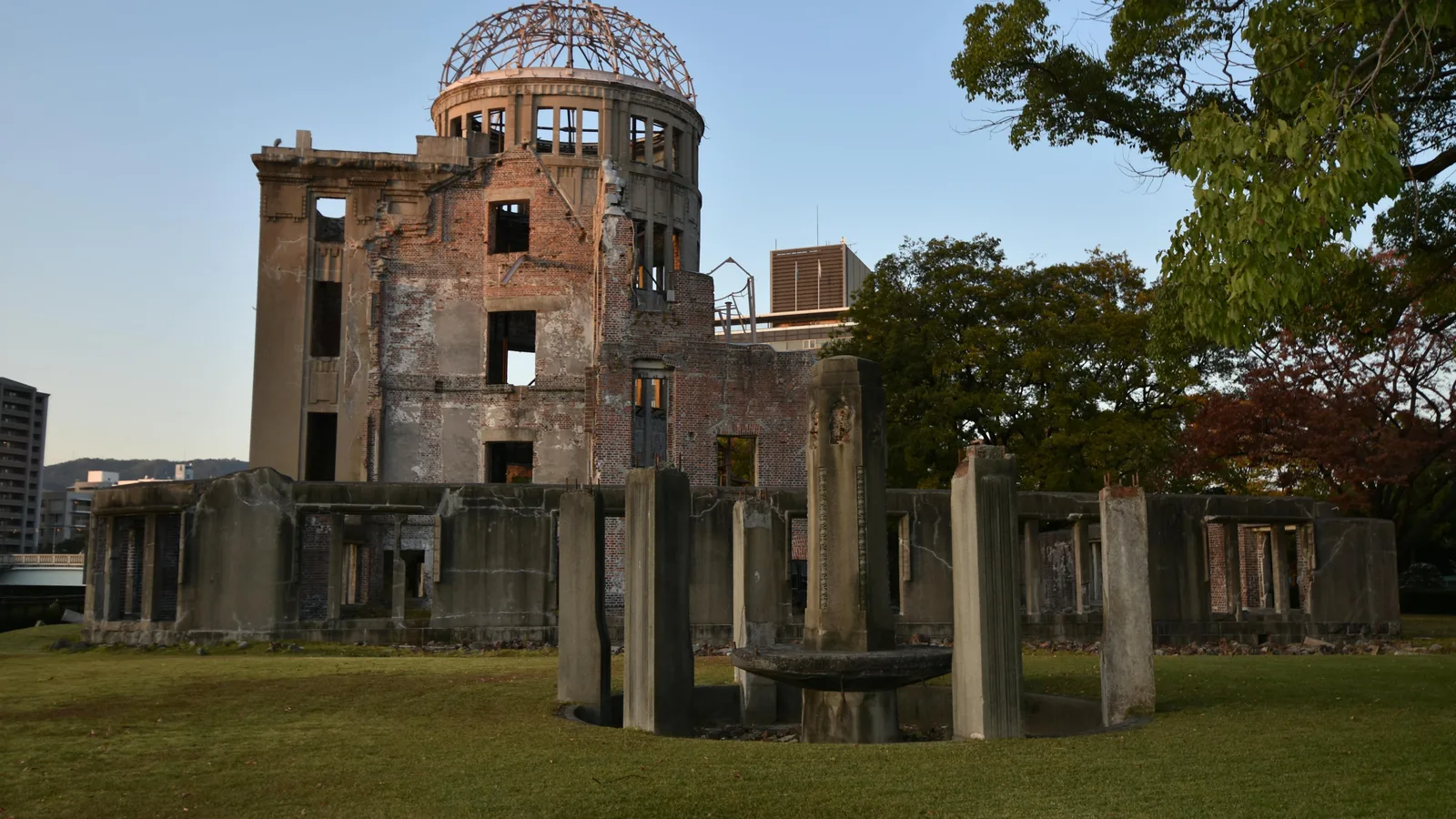
Most visits begin here, at the building everyone recognizes: a ruin of brick and bare steel on the bank of the Motoyasu River, its dome reduced to an open metal frame against the sky. Before it was a ruin it was the Hiroshima Prefectural Industrial Promotion Hall, finished in 1915 to a design by a Czech architect, Jan Letzel, a handsome riverside hall for exhibitions and commerce, one ordinary building among many in a busy neighborhood. It is the only thing from that neighborhood still standing.
It has been left, deliberately, exactly as it was: braced quietly with steel and resin over the years so that it does not fall, but never repaired, never finished, never tidied into something easier to look at. In 1996 it was added to the UNESCO World Heritage List under the name Hiroshima Peace Memorial, described there as a symbol of the hope for a world free of nuclear weapons. You cannot go inside, and you are not meant to: the dome is viewed from the path and from across the river, behind a low fence, and there is no entrance to look for. Walk the riverbank and around it, and let it be what it is: not a building you tour, but one you stand in front of.
People photograph the dome, and that is expected; it may be the most photographed structure in the city. The only thing locals quietly notice is the spirit of the picture. A photograph of the dome, of the river, of the sky through the broken frame: these are taken by the thousands, and no one minds. It is the bright, grinning, thumbs-up pose in front of it that can land wrong here, not because anyone will say so, but because this was a street where people lived. A moment's thought about how and where you point the camera is the whole of the etiquette, and it is enough.
Step 2: The Cenotaph and the Flame
From the dome, the park opens southward into a long, deliberate line. Stand in the right spot and three things fall into a single sightline: the dome behind you, a low stone arch in the middle distance, and beyond it the pillars of the museum. This is not an accident of landscaping. The whole park was laid out along this axis by the architect Kenzo Tange, so that the eye travels in one unbroken line from the ruin, to the place of remembrance, to the place of learning.
The stone arch is the Cenotaph, formally the Memorial Monument for Hiroshima, City of Peace. Shaped like a simple saddle, it shelters a register of names, and it is positioned so that when you stand before it and bow, you are looking through its arch straight at the distant dome. Between the two, a flame burns low in a wide bronze basin: the Flame of Peace, lit in 1964 and kept burning ever since, with the stated wish that it be put out only on the day the last nuclear weapon is gone from the earth. Its base is shaped like two cupped hands, palms open to the sky.
Here you will see what the park is really for. People come to the Cenotaph one after another, stop, and bow: a small, quiet bow of the kind Japanese people give and quietly notice, some with hands pressed together, some just lowering the head for a moment. There is no required form, no plaque telling you what to do. If you would like to pay your respects, you simply stand before the arch, perhaps bow, and be still for a breath or two. You do not need to do it perfectly, or to know the right words, or to believe any particular thing. Standing quietly and meaning it is the whole of it, and it is, in its way, an act of omoiyari, of consideration for the people around you and for those being remembered. No one is watching to grade you. Most people, when they reach this spot, find they grow still without deciding to.
Step 3: The Children's Monument
A little way west of the Cenotaph stands a monument you will know before you reach it, because of the color. At its foot, in long glass cases, are paper cranes: thousands upon thousands of them, in every shade, folded into strings and wreaths and great hanging curtains of color, and they are replaced as fast as they fill, because more arrive every single day. Around ten million paper cranes are brought or sent to this one spot each year, from schools and families and travelers all over the world. The monument they surround is the Children's Peace Monument, raised with donations gathered by school children from across Japan.
The cranes are here because of one girl. Her name was Sadako Sasaki. She was two years old in Hiroshima in 1945, and some years later, as a child, she fell ill with leukemia. While she was sick she folded paper cranes, one after another, in the belief that they might make her well; she kept folding them through her illness, and she died in the autumn of 1955. After her death, her classmates began a call to build a monument, not only for her, but for all the children, and it grew into the statue that stands here now, a girl holding a folded crane above her head. The fuller story is told, gently and in her own city's words, at the museum and on the city's pages; it is not ours to dramatize. But standing before the cases of cranes, you understand the simple thing they say. A folded paper crane is a small wish for someone to be well, and for a long time now the world has been folding them and sending them here, by the millions, and it has not stopped.
If you have brought cranes of your own, many people do, having folded them at home or in a classroom before the trip, you are welcome to leave them. You simply place them with the others at the monument, and there is a book nearby where you can write who they are from. The city keeps every one.
Step 4: The Museum
At the southern end of the axis, raised on open pillars, is the Hiroshima Peace Memorial Museum. It is the one part of the park you pay to enter, a few hundred yen kept deliberately low so that anyone can come, and it is where the quiet of the park deepens into something else. Inside, the museum does not argue or accuse. It simply shows what was here: belongings, photographs, the ordinary objects of ordinary lives. It is, by design, a difficult place to walk through, and it says as much about itself; its purpose, in its own words, is to convey what happened and to carry the wish for peace forward, so that there are "No More Hiroshimas."
It is worth saying plainly, because so many people worry about it: you may find this hard, and that is not a failure of composure. Visitors cry here. People stop at a display and need a moment before they can go on; some step outside for air and come back, and some do not come back, and all of that is allowed. The people who tend this museum have said, in so many words, that being moved is exactly what the place is for. You do not need to brace yourself, or hold yourself together, or get through every room. Go at your own pace, give your attention where you can, and let it affect you as it will. That is not disrespect. That, here, is the respect.
This is also a place where remembering is actively passed on. As the years go by and the people who lived through it grow fewer, Hiroshima has trained a generation of successors: ordinary people, some of them the children and grandchildren of survivors, who have learned the accounts in order to keep telling them. They give talks, free and open to anyone, in Japanese and in English. If your visit happens to fall when one is speaking, sitting down to listen is one of the most quietly worthwhile things you can do here. You receive the story the way it is meant to be received: simply, and in silence.
Step 5: Walking Out in Silence
When you leave, you cross back out through the park the way you came (past the flame, the arch, the dome) and the city closes in again around you: streetcars, a coffee shop, the ordinary afternoon. Hiroshima today is a lively, open, easy-to-love city, and it will be waiting for you the moment you step out of the park. But most people walk those last few hundred meters more slowly than they walked in, and a little more quietly, carrying something they did not arrive with.
What you carry out is not, in the end, a set of facts; you can read the history anywhere. What this place gives you is harder to name: the particular feeling of a city that chose, after everything, not to wall off its grief or turn it into a grievance, but to lay it out along a green axis by a river, plant trees around it, keep a flame lit, and invite the whole world to come and be quiet here. It is not a place that asks you to judge the past. It is a place that asks you to help carry a wish into the future: the same wish folded into all those paper cranes, the same one the city has been holding, patiently, for a very long time.
You came to a ruin by a river, and stood before a curtain of cranes, and grew quiet without being told to. Somehow that quiet, and the people you shared it with, are the things you take home. Thank you for walking with us.
Good to Know
Three different places, three different rules: this is what confuses people most. The Peace Memorial Park itself is an open city park: it is free, unfenced, and has no opening hours, so you can walk through it at any time of day or night. The Atomic Bomb Dome, inside the park, is viewed from the outside only: it is a preserved ruin, and there is no way in, by design. The Peace Memorial Museum, at the south end of the park, is the one ticketed, time-limited part: it has opening hours, a small admission fee, and a last-entry time. Keep those three straight and the rest is simple.
The museum: hours and cost. Admission is ¥200 for adults, ¥100 for high-school students, and free for junior-high age and younger; visitors aged 65 and over pay ¥100 (bring your passport). The museum opens at 7:30 in the morning year-round; closing time shifts with the season: 19:00 from March through November, 18:00 from December through February, and 20:00 in August (later still on August 5th and 6th). Last entry is 30 minutes before closing. It closes December 30–31 and for a few days in mid-February for exhibit changes. Last verified: 2026-06. Check the official site for your exact dates.
Beat the crowds at the museum. This is one of the most visited museums in Japan, well over a million visitors a year, and at busy times the queue and the galleries can become very crowded, crowded enough to break the quiet you came for. The museum strongly recommends buying a timed ticket online in advance (available in many languages, up to 90 days ahead). The calmest times are right at opening, or in the last hours before closing. Last verified: 2026-06.
Time needed. Allow at least half a day. Walking the park's main monuments (the Dome, the Cenotaph, the Flame, the Children's Monument) takes an unhurried hour or so; the museum takes most people one to three hours, and it asks for more time than you expect. Hiroshima genuinely rewards staying overnight rather than rushing through on a day trip; if you can, give it an evening and a morning.
Getting there. From Hiroshima Station, the simplest way is the streetcar (Hiroden): take line 2 or line 6 to the Genbaku Dome-mae stop, about 17 minutes, a flat ¥240 fare. The "Hiroshima Meipuru-pu" sightseeing loop bus also stops at the park (¥220 a ride, or a ¥400 day pass). Hiroshima Station sits on the Sanyo Shinkansen, roughly an hour from Hakata and about an hour and a half from Shin-Osaka. From Hiroshima Airport, an airport limousine bus reaches the Hiroshima Bus Center, a short walk from the park, in under an hour (¥1,500). For the wider picture of trains, streetcars, and passes, see getting around Japan. Last verified: 2026-06.
Combining with Miyajima. The island of Miyajima, with its famous "floating" shrine gate, pairs naturally with the park, and many people do both in one day: typically the park in the morning, Miyajima in the afternoon. From Hiroshima Station, the JR Sanyo Line reaches Miyajimaguchi in about 30 minutes (¥420), and a ferry crosses to the island in about 10 minutes (¥200, plus a ¥100 island visitor tax). Streetcar line 2 also runs all the way from the Dome stop to the Miyajimaguchi ferry pier. Last verified: 2026-06.
If you want to offer paper cranes. You may place cranes at the Children's Peace Monument yourself, freely: just leave them with the others, and sign the book if you wish. If you have folded cranes at home and cannot bring them, the city accepts them by post and will offer them on your behalf; bundle them with a name tag (kept within about 150 cm long and 25 cm wide) and send them to the Hiroshima Peace Culture Foundation. Check the city's official page for the current mailing address and details before you send, and contact them in advance if you are sending more than ten thousand. Last verified: 2026-06.
Around August 6th. On the morning of August 6th, the city holds its Peace Memorial Ceremony in the park, and the central area is given over to it from early morning: access is restricted, security checks apply, and the usual free wandering and photography are limited for those hours. At 8:15 the whole city falls silent for a minute. If you are in Hiroshima around that date, know that the park will be busiest and most restricted on the 6th itself; the quietest visits are on other mornings. Last verified: 2026-06.
A little cash helps. As elsewhere in Japan, the streetcar, the ferry, and smaller shops are easiest with some cash in your pocket, though the museum and larger places take cards.
Last verified: 2026-06
Official websites: Peace Memorial Museum · City of Hiroshima: Peace
If Things Don't Go as Planned
The museum was so crowded you could barely move. This is the most common disappointment, and it has a simple fix for next time: come at opening (7:30) or in the last hour or two before closing, and book a timed ticket online beforehand. Midday, especially when tour buses arrive from Osaka and Kyoto, is the crush. If you are stuck in a crowd now, the park outside is always open and never sold out; step out to the Cenotaph, the flame, and the river, where the quiet you came for is easier to find.
You're worried it will be too sad, or too much to handle. It is a heavy place, and it is honest about that. But you are allowed to take it gently: you do not have to see every room, you can step outside whenever you need to, and feeling moved, even to tears, is nothing to be embarrassed by here. It is, if anything, what the place is for. Go at your own pace and let it be what it is.
You're traveling with children and aren't sure it's appropriate. Local schools bring children here on field trips, so you will likely see Japanese kids in the galleries, and the park itself is open and gentle. Whether the museum's exhibits are right for your child is your call (some parts are frank), but you can walk the park and the Children's Monument, which speak to children directly, and choose how far into the museum to go. Our notes on traveling in Japan with kids may help you plan the day around everyone's energy.
You feel uneasy about visiting because of where you're from. Many travelers, especially from countries tied to the war, quietly wonder whether they are welcome here. You are. This is not a place of blame; the city's message is for the whole world and points firmly toward the future. No one checks where you are from, and a respectful visitor is exactly who this place hopes will come. If anything, coming and standing quietly is itself the thing the city is asking for.
You went looking for a way into the dome and couldn't find one. There isn't one, and you haven't missed anything. The Atomic Bomb Dome is preserved exactly as it stands and is meant to be seen from the outside: from the path and from across the river. Walk a slow loop around it; the view from the far bank, with the dome reflected in the water, is the one most people remember.
You only have an hour between trains. An hour is enough to walk the central axis (the Dome, the Cenotaph and flame, the Children's Monument) and to feel why the place matters, even if you cannot do the museum justice. But if Hiroshima moves you, treat that hour as a reason to come back and stay longer. It is a city, and a feeling, that rewards the unhurried.
Sources:
- Hiroshima Peace Memorial Museum: Official (English): The museum's stated purpose and "No More Hiroshimas" message, online-ticket guidance, free Talks by A-bomb Legacy Successors
- Hiroshima Peace Memorial Museum: Hours and Admission (English): Seasonal opening hours, last entry, closed days, and admission fees
- Hiroshima Peace Memorial Museum: Outline of the Facilities (English): Main and East buildings, Kenzo Tange, museum history
- Hiroshima Peace Memorial Museum: Genbaku Dome / Industrial Promotion Hall (English): The hall's completion in 1915 and architect Jan Letzel
- City of Hiroshima: Peace Memorial Park (Japanese, park ledger): Park area (122,100 m²), free admission, always open, opened 1956
- City of Hiroshima: Paper Cranes and the Children's Peace Monument (English): Sadako Sasaki, the monument raised by donations, and roughly ten million cranes offered each year
- City of Hiroshima: Sending Paper Cranes (Japanese): How to offer cranes in person and by post, bundle size, and contact details
- City of Hiroshima: Peace Memorial Ceremony (English): The August 6th ceremony, the moment of silence, and access restrictions
- City of Hiroshima: North-South Line and monuments (English): The Museum-Cenotaph-Dome axis and the official monument names
- UNESCO World Heritage Centre: Hiroshima Peace Memorial (Genbaku Dome): 1996 inscription, the official name and description, and viewing from outside only
- Hiroshima Peace Tourism: Flame of Peace: Lit on August 1, 1964; its form and stated wish
- Hiroden: Streetcar Fares (English): Flat ¥240 fare to Genbaku Dome-mae and to Miyajimaguchi
- Dive! Hiroshima: Official Hiroshima & Miyajima travel portal (English): Park access, the one-day Hiroshima + Miyajima model course, and the sightseeing loop bus
- JNTO: Atomic Bomb Dome (English): Official visitor framing, access, and the museum's annual visitor figure
- JR West Miyajima Ferry: Fares (English): Ferry fare and the Miyajima visitor tax
Photos: sourced under free commercial-use licenses; see captions where attribution applies.
WMJS is written in Japan, in English, with AI help. We check every page, but English is not our first language. If a sentence reads oddly, tell us. One sentence is enough.
Thank you. A person reads every note.
Real voices
Is it worth it?
Were you there? Share your photos.
Your photo could appear in this guide — with your name and a link to your profile.
Submit a photoRelated Articles

The Power of a Small Bow: Why a Simple Nod Makes Japanese People Smile

Getting Around Japan: The Tiny Things That Earn You a Nod
More guides in Chugoku
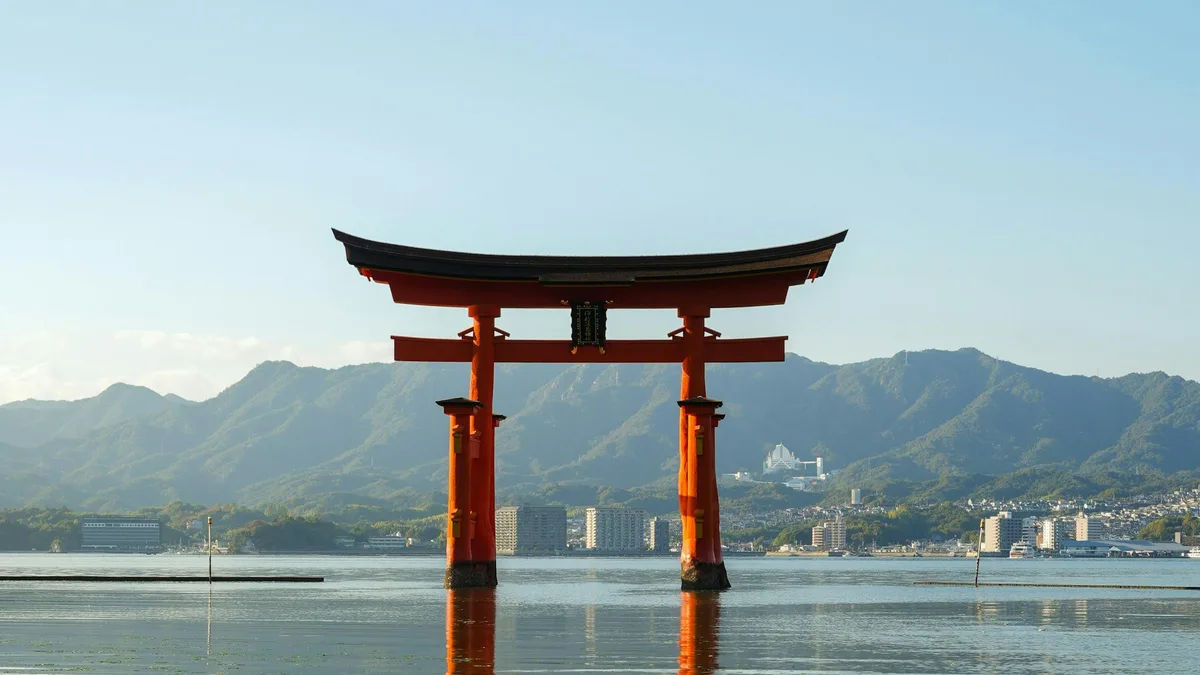
Visiting Miyajima, the Island That Built Its Shrine on the Sea
Is Miyajima worth visiting? We weighed 165 traveler voices: 58% say worth it, only 7% felt let down. The floating torii shrine built on the tidal flats off Hiroshima, how to read the tide, which ferry to take, and Mount Misen, with an audio guide.
Itsukushima Shrine
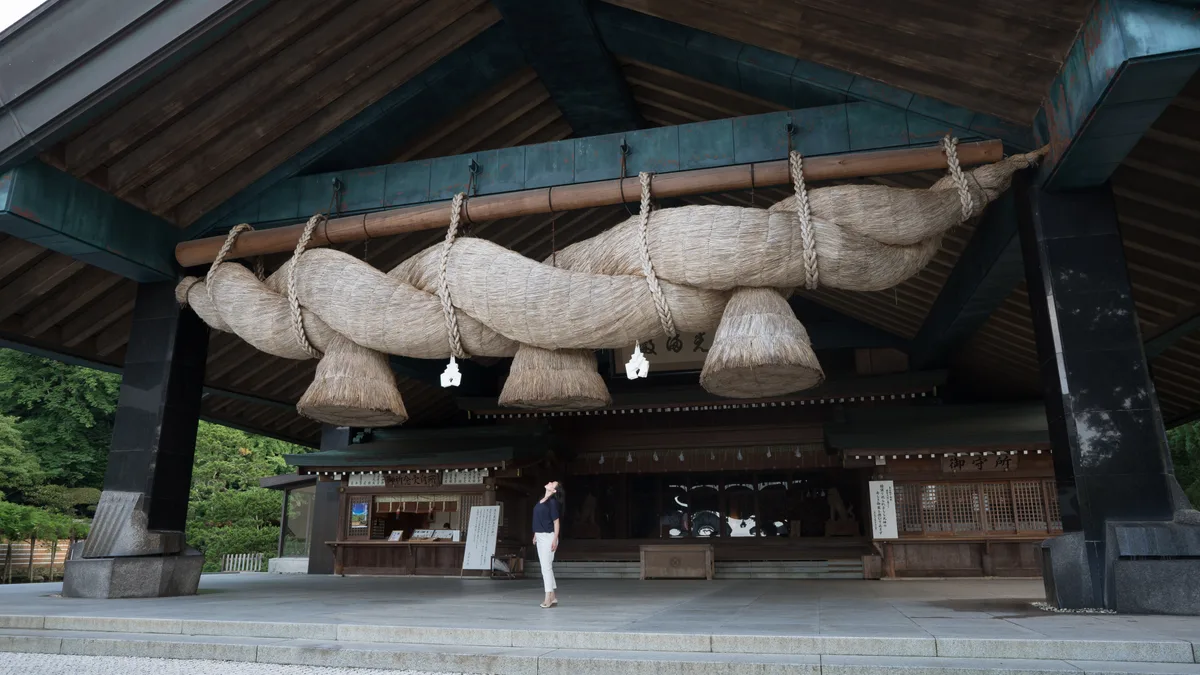
Izumo Taisha, Where Japan's Gods Gather to Tie the Threads Between People
Is Izumo Taisha worth the detour? We weighed 60 traveler voices: 52% say yes for the shrine and its quiet, 43% say it depends on how you plan the day, and Japanese worshippers are warmer at 61%. The four claps, where the giant rope actually hangs, and the month Japan's gods are said to gather, with an audio guide.
Izumo Taisha (Izumo Oyashiro)
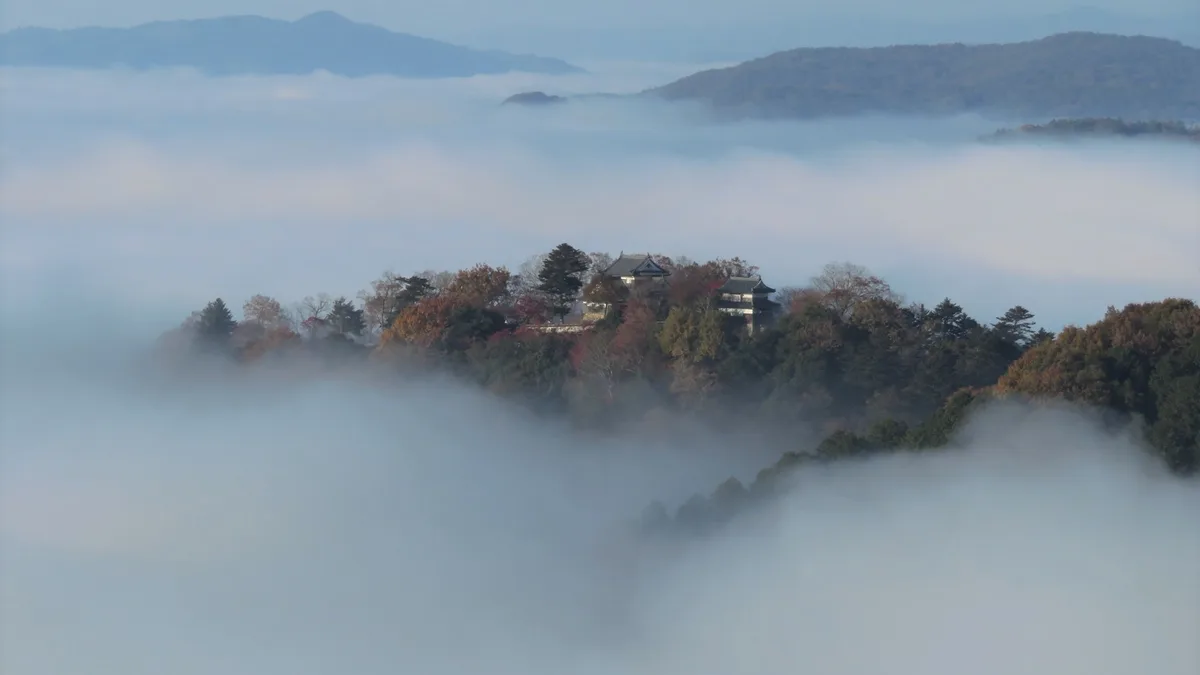
Bitchu-Matsuyama Castle — Why the Castle Is the Whole Mountain, Not the Keep at the Top
A cultural audio guide to Bitchu-Matsuyama Castle, verified against official sources — Japan's only original keep still standing on a mountaintop, why the climb itself is the castle, how the town saved it, and how to visit (and catch the sea of clouds).
Bitchu-Matsuyama Castle