
Shibuya — The Crossing No One Directs, and the Dog Who Never Stopped Waiting
Shibuya
By Kei · Born and raised in JapanThe Meaning
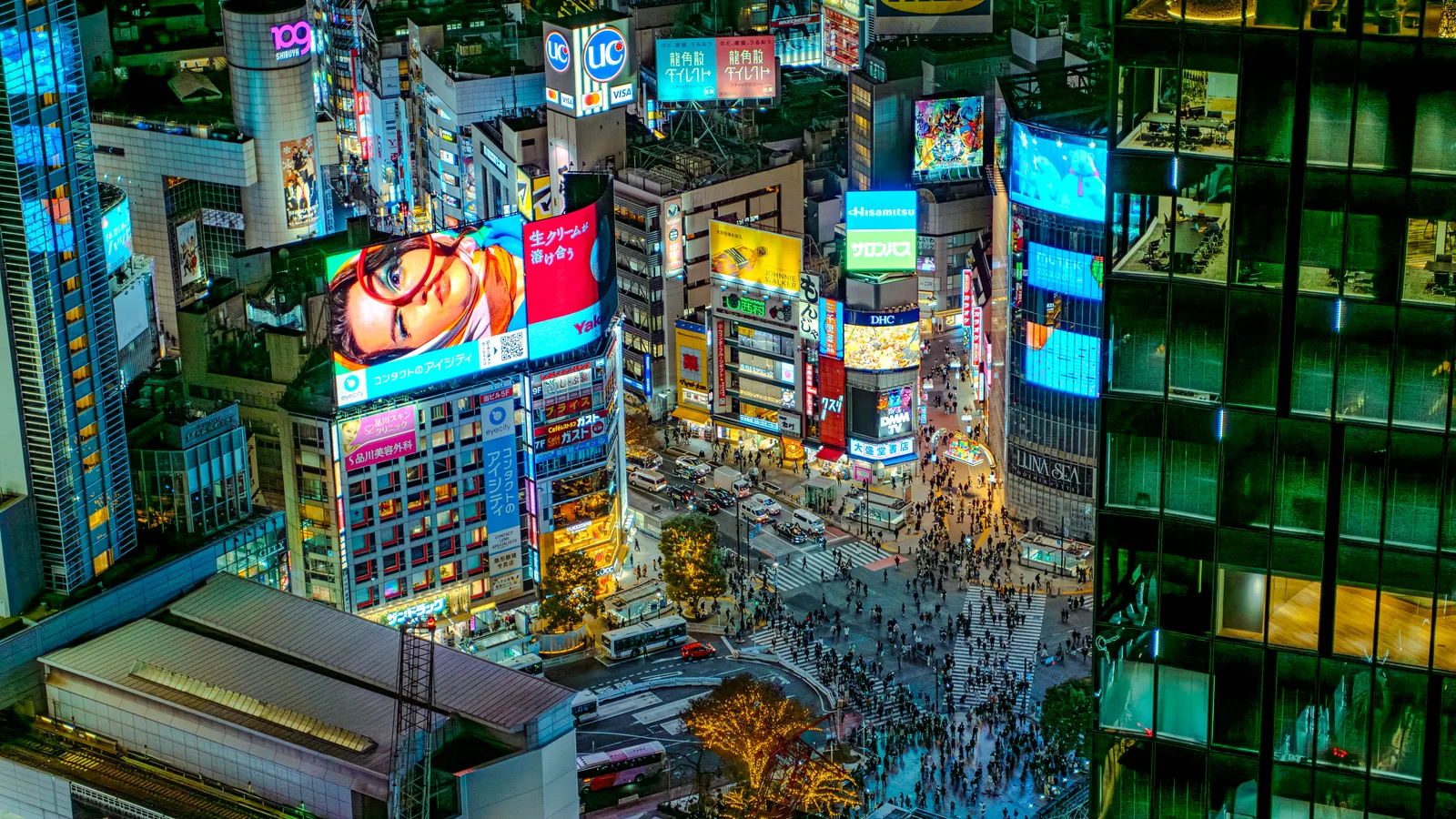
Most people come to Shibuya for one image: a sea of strangers pouring across a single intersection from every direction at once. It is the picture the whole world keeps of Tokyo. And the strange thing, the thing you feel before you can name it, is that no one is in charge of it, and almost no one collides.
Tokyo's own tourism office describes the Shibuya Scramble Crossing, with a kind of wonder, as "essentially five separate crossings" where everyone sets off together and yet they "seldom crash into each other." When the lights turn red in every direction, more than a thousand people step off the kerbs at the same moment: by the count of Japan's national tourism organization, as many as 2,500 of them do in the two minutes the signal allows. There is no traffic officer in the middle waving people on. There is no system you can see. There is only a crowd, reading itself.
This is the quiet heart of what Shibuya has to show you. A few stops away, Harajuku is the street where the feeling of being watched switches off, and Meiji Jingu is the forest where the noise of the city stops. Shibuya is their opposite and their twin: here, nothing switches off. Everyone is reading everyone, all the time, at speed, and out of all that watching, order simply appears.
And then, on the corner, small and easy to miss, there is a bronze dog.
His name was Hachiko, and the city built its busiest meeting point around him on purpose. To understand Shibuya, you start not with the crossing, but with him, because the same thing is true of both. The crossing is thousands of people quietly keeping faith with one another for a few seconds. The dog kept faith for years.
What Happens When You're There
Step 1: The Dog Who Waited
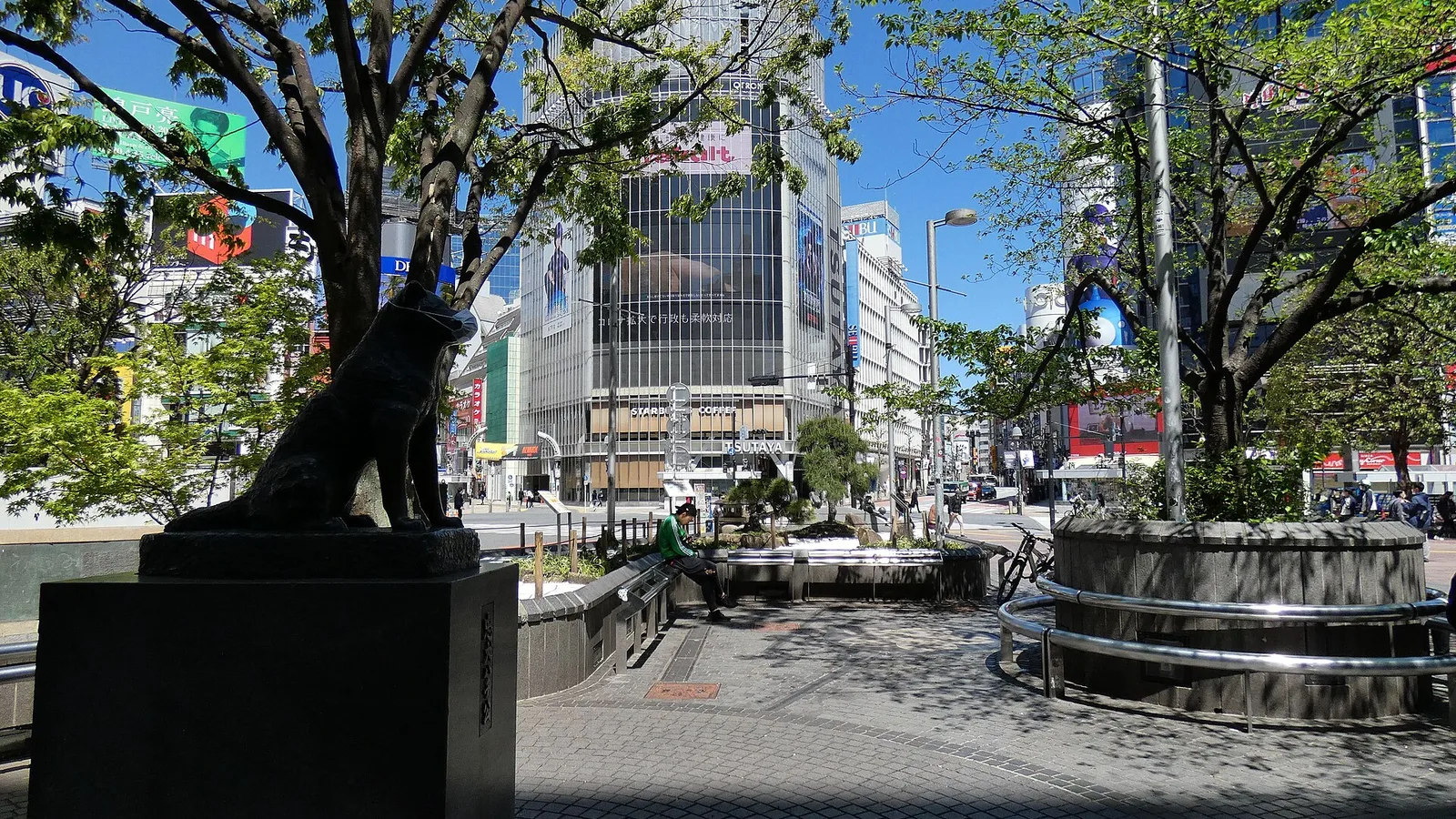
Come out of Shibuya Station through the Hachiko Exit, the one Japan's tourism office tells you to aim for because it is the easiest to find and the natural place to meet someone, and he is right there, worn shiny on the nose and paws by decades of hands.
Honestly, the bronze itself is unremarkable at first glance. Tokyo's official guide says so itself: the statue "may not appear particularly impressive." All of its weight is in the story.
Hachiko was a purebred Akita, born in November 1923 in Odate, in the snow country of Akita, and brought to Shibuya as a puppy by Professor Hidesaburo Ueno of Tokyo Imperial University, a scholar who founded an entire field of agricultural engineering in Japan. Each morning the dog walked the professor to this station; each evening he came back to meet him here. They had barely a year and a half together. In May 1925, Professor Ueno collapsed at work and died.
The dog did not understand that no one was coming. His master had died in the spring of 1925; Hachiko outlived him by nearly ten years, and in all that time he kept returning to this same station, at the hour of the evening trains, to wait. People who passed through Shibuya every day came to know him. In April 1934, while he was still alive, the city raised a bronze statue of him on this spot, and Hachiko himself came to the unveiling. He died less than a year later, on the 8th of March, 1935, and was laid to rest beside the professor he had waited for.
There is a detail the guidebooks tend to skip, and it is the most Japanese part of the whole story. The dog became world-famous; the man he loved was almost forgotten. The University of Tokyo found this quietly unbearable, and in 2015 it raised a second statue on its own campus: the two of them reunited at last, the professor reaching down, Hachiko leaping up in joy, no longer a dog waiting alone. So there are two Hachikos now. The one in Shibuya is still waiting. The one at the university has finally been met.
Stand at the Shibuya statue for a moment and watch who gathers there. Friends, couples, families, all of them telling someone I'll meet you at Hachiko. A whole city chose, as the place it returns to again and again, a small statue of faithfulness and remembering.
Step 2: Crossing the Scramble
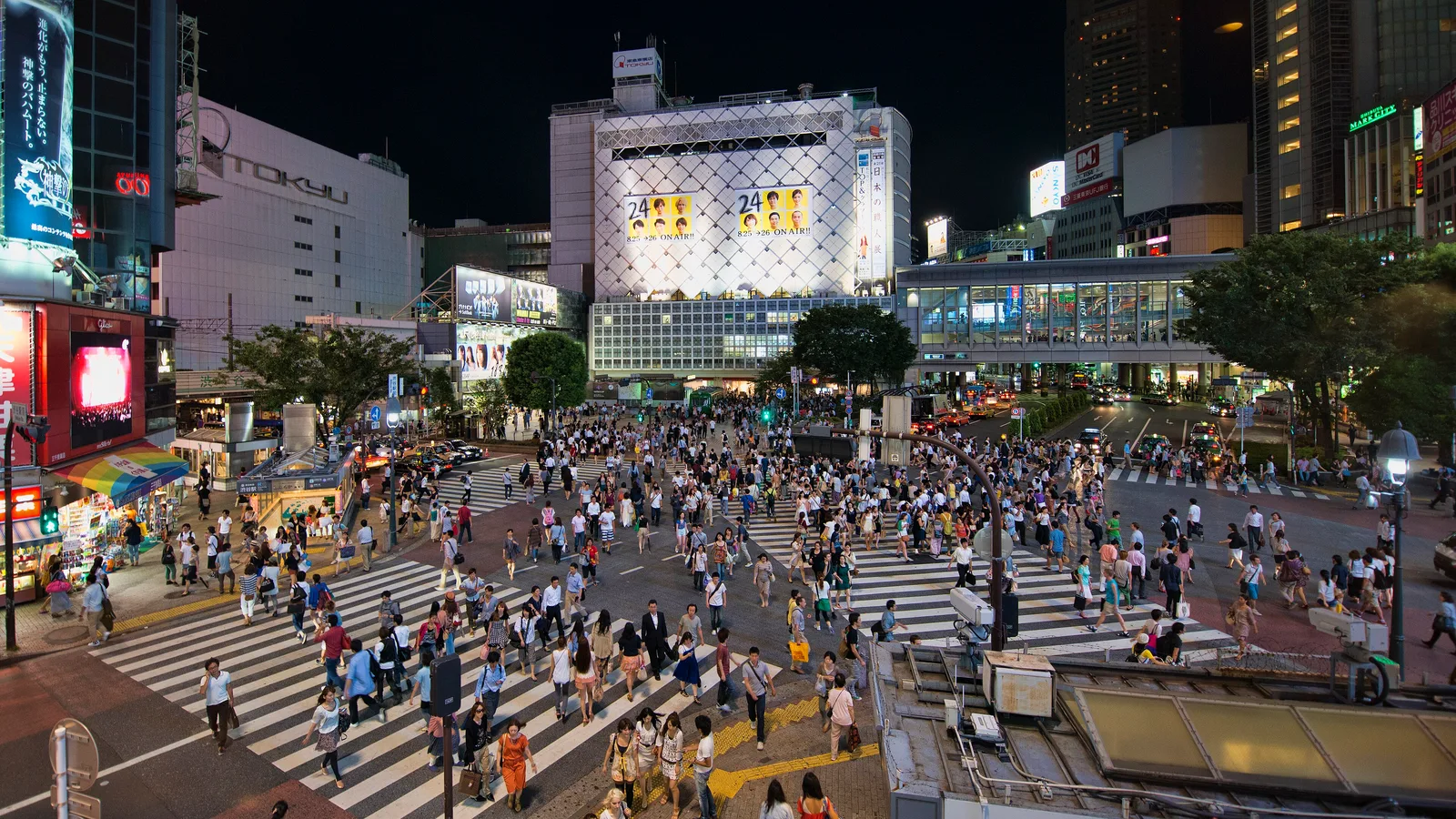
Now turn toward the noise, and cross.
The signal holds you on the kerb with a hundred other people; the screens overhead blaze; and then every light goes red at once and the whole crowd steps forward together. For a few seconds you are inside it, walking straight at people walking straight at you, and somehow threading past every one of them without a touch, or with only the lightest brush of a shoulder.
Watch what you are actually doing, because you are doing something remarkable without being taught. You are not staring at the person coming toward you; you are reading the gap beside them. You are matching the pace of the crowd, not fighting it. You are giving way a half-step here, taking a half-step there, a thousand tiny courtesies traded in silence. No one decided the pattern. It is the same unspoken sense that decides which side of the escalator you stand on, the same quiet habit of reading the room and leaving space for others that runs underneath so much of life in Japan. The crossing is simply the most concentrated, most visible few seconds of it anywhere on earth.
If it overwhelms you, you are in good company; first-timers from elsewhere in Japan feel it too. Two small kindnesses keep the flow gentle for everyone. If you need to stop, to check your phone, to find your group, step to the edge first rather than halting mid-stream, the way you would ease out of a fast lane. And if you want the photo, the warm way to get it is from above rather than from a standstill in the middle; the etiquette of filming in busy places is mostly common sense, and the crossing is, after all, a place real people are trying to get across.
Step 3: The View from Above
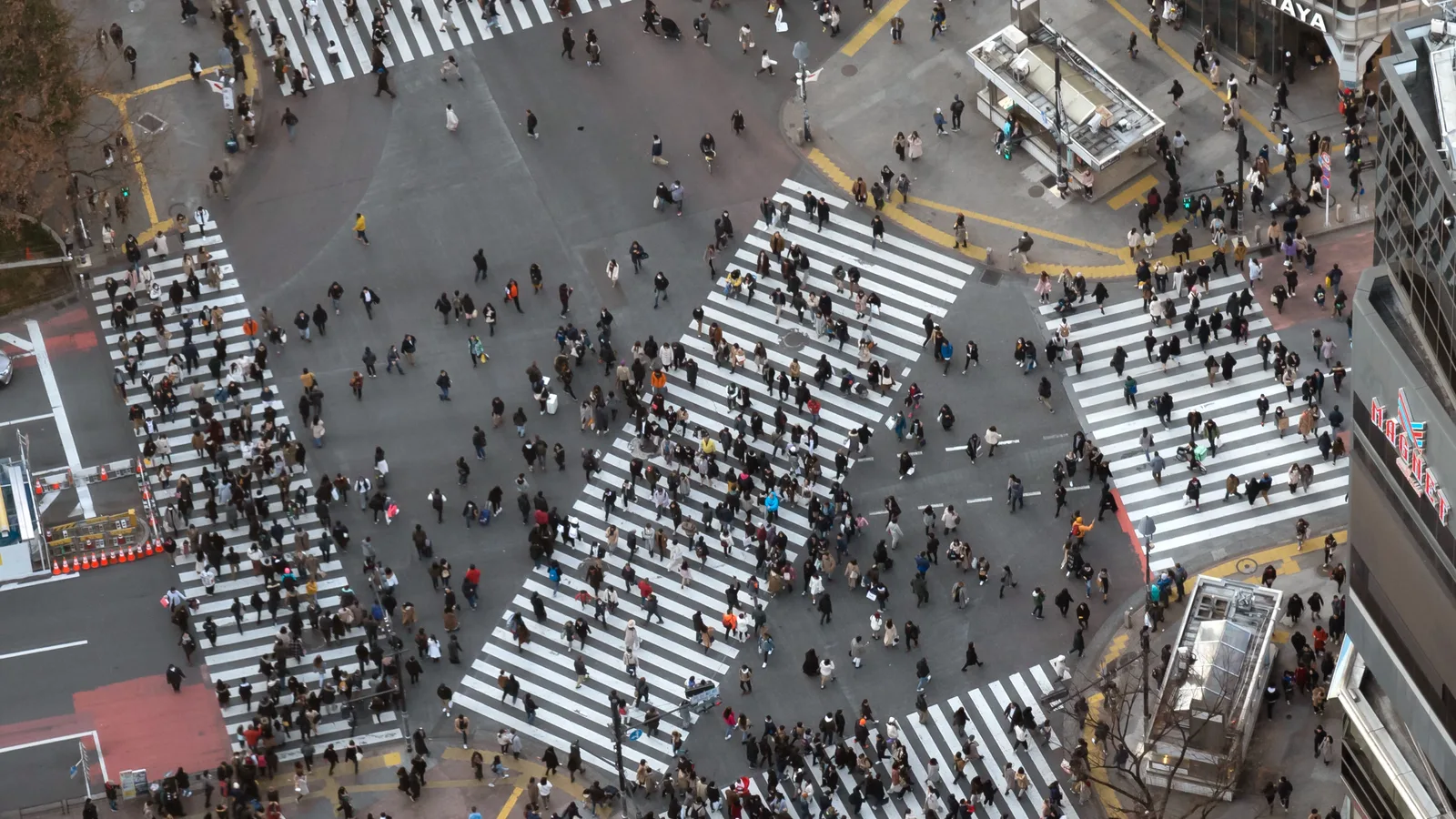
Here is the secret the first-timers learn too late, and the cure for the most common disappointment in all of Shibuya.
Down in the crowd, the crossing is a crush. People step off the train expecting something cinematic and find, at street level, just a very busy intersection, and leave a little let down. But the crossing rewards watching far more than standing inside it. Go up, and the crush turns into a pattern.
The grandest way up is Shibuya Sky, the open-air rooftop deck on top of Shibuya Scramble Square, 229 meters straight above the station you just left. From there the crossing is a small bright square far below, and you can see the thing you could not see while you were in it: the surge, the pause, the surge again, a crowd breathing in and out on a forty-odd-second cycle, each wave dissolving into the next without a snag. You do not have to pay for the height, either; Tokyo's tourism office also points visitors to the café windows above the crossing and the station walkway nearby, where the same choreography plays for free.
Whichever way you look down on it, give it two or three full cycles. What looked like chaos from the kerb reveals itself as something closer to a tide, and the "it's just a crosswalk" feeling quietly turns into the realization that you have been watching thousands of strangers cooperate, perfectly, without a word or a leader, over and over, all day long.
Step 4: Center-Gai and the Side Streets
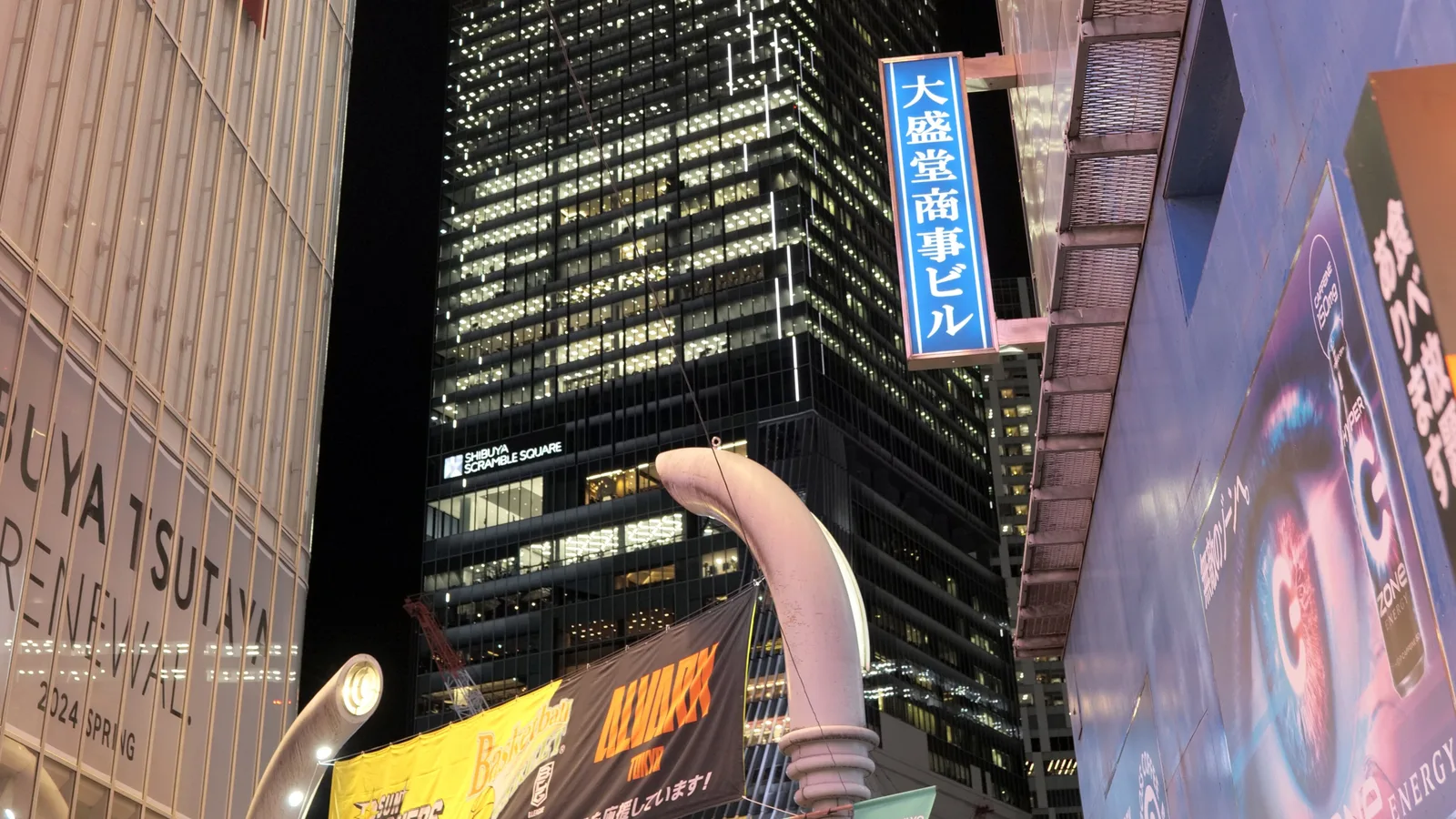
Step off the crossing into Center-Gai, the pedestrian street that Tokyo's tourism office calls the central hub of the city's youth culture, and Shibuya stops being a photo and becomes a place people actually live in.
This is where Shibuya parts ways with its neighbor. Harajuku, one stop up the line, is about how you look; Shibuya is about sound and motion: fast fashion and chain diners giving way, as you head up toward Dogenzaka, to record shops, tiny basement music venues, and clubs that book famous DJs and stay open until the trains start again. It is loudest and most itself at night, when the vertical signs come on in every color. Locals do not come here to gaze at the crossing. They come to change trains, to eat, to meet a friend at Hachiko and disappear into the streets behind it.
You do not need a plan for this part. The fun of Center-Gai is to wander up one of its side lanes and see where the neighborhood quietly gets stranger and more interesting the further you go from the screens.
Step 5: The Quiet Beside the Roar
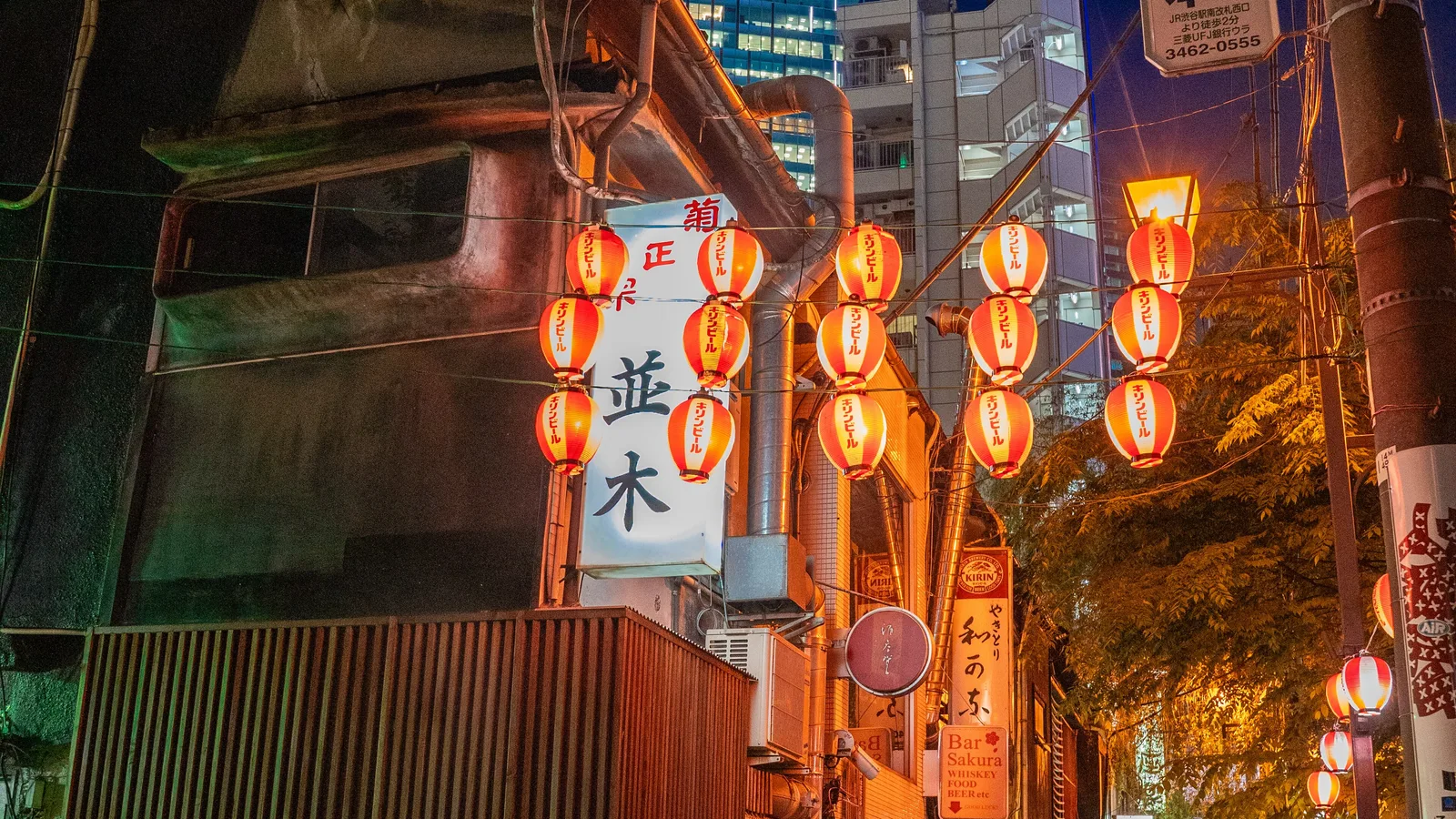
The last thing Shibuya wants to show you is that it knows how to be quiet, and keeps its quiet places close.
A two-minute walk from the loudest crossing in the world is Nonbei Yokocho, "Drunkards' Alley," a cluster of lanes from the early 1950s lined with bars so small that some seat only four or five people at a time, knee to knee with whoever is already there. A few minutes the other way, Miyashita Park lifts a long green deck of lawn and shops up above the street, a rooftop calm laid over the rush. The city that pours a thousand people across an intersection every two minutes also tucks, just behind it, rooms where you can hear a single conversation.
That is the whole shape of Shibuya, if you let it show you: the crowd and the corner, the roar and the bronze dog. People arrive, read one another across the asphalt for a few perfect seconds, meet the friend who was waiting, and slip off into the lanes, and tomorrow they will do it again, faithfully, the way they always have.
Thank you for walking with us.
Good to Know
Getting there: Shibuya Station is one of Tokyo's great hubs, served by nine lines: the JR Yamanote, Saikyo and Shonan-Shinjuku lines; the Tokyo Metro Ginza, Hanzomon and Fukutoshin lines; the Tokyu Toyoko and Den-en-toshi lines; and the Keio Inokashira line. For the crossing and the dog, aim for the Hachiko Exit (Hachiko-guchi), which Japan's tourism office names as the closest to both and the city's classic meeting point. From Shinjuku it is about seven minutes on the Yamanote Line; from Tokyo Station about twenty-three. For more on the trains, see getting around Japan.
One stop from Harajuku: Harajuku is the very next station toward Shinjuku on the Yamanote loop, and the two areas are about a twenty-minute walk apart along Meiji-dori and Omotesando, easy to pair into one day.
The crossing: Free, always open, directly outside the Hachiko Exit. It is busiest in the evening and on weekends. The best views are from above: Shibuya Sky, or the café windows and station walkways that overlook it.
Shibuya Sky: The rooftop observation deck sits 229 meters up, on top of Shibuya Scramble Square, directly connected to the station. It is open from 10:00 to 22:30 (last admission 21:20), and the standard adult ticket booked online is 2,700 yen for entry before 15:00 and 3,400 yen after; same-day tickets at the counter cost a little more. Timed-entry tickets are date-and-time specific and the sunset slots sell out first, so book ahead, and note that the open-air rooftop can close at short notice in strong wind or rain. If your card is not accepted on the official site, several authorized ticket platforms also sell timed entry. Last verified: 2026-06; always check current prices, hours and rooftop status on the official site before you go.
Finding Hachiko: The statue is just outside the Hachiko Exit, beside the crossing. Come earlier in the day if you want a photo without a queue, and don't be surprised that he is small.
A half-day: A relaxed loop runs Hachiko → the crossing → up for the view → Center-Gai → Nonbei Yokocho, about two to three hours. Add Harajuku and the forest of Meiji Jingu and you can have Tokyo's loudest corner and its quietest one in a single day.
The station: Shibuya Station is in the middle of a years-long rebuild, and it is a genuine maze; even Tokyoites get turned around in it. Follow the signs for the Hachiko Exit and don't worry if it takes a few minutes to surface.
Official tourism info: gotokyo.org: Shibuya
If Things Don't Go as Planned
"It's just a crosswalk." This is the most common letdown, and it is almost always a matter of where you stood. The crossing is underwhelming from inside the crowd and astonishing from above. Don't judge it from the kerb; go up to Shibuya Sky, or to one of the free café and walkway viewpoints, and watch a few full cycles. The wonder is the pattern, not the asphalt.
The Shibuya Sky rooftop is closed. The open-air deck shuts at short notice in wind, rain, or thunder, which disappoints visitors who came for the famous rooftop. The indoor gallery on the floor below still gives you the view through glass. Check the live rooftop status on the official site before you book, and if the weather looks marginal, keep your plans flexible.
You can't get a sunset ticket. Sunset slots at Shibuya Sky are the first to sell out, often weeks ahead. If they're gone, a daytime or full-night slot is still spectacular, or take the free view from the café and walkway viewpoints over the crossing instead. There is no bad time to look down on Shibuya.
You can't find Hachiko, or the right exit. With the station being rebuilt, exits move and signage changes. The reliable move is to follow signs to the Hachiko Exit; the statue and the crossing are both just outside it. If you surface somewhere else, station staff will happily point you the right way.
You lose your group mid-crossing. It happens to everyone in a crowd that size. The calm fix is to keep walking to the far side rather than stopping or turning back: stopping mid-crossing is the one thing that snarls the flow, so keep moving and regroup on the pavement. Hachiko is the city's meeting point for exactly this reason; agree to meet there if you're separated.
The crowd feels too close. In a crush of thousands, people pass within inches and shoulders sometimes brush, and it can read as rudeness if you're not used to it. It isn't. Tight margins and the occasional light contact are simply how a crowd this dense keeps moving; no one means anything by it, and no one is looking at you. If the density is too much, the side streets behind Center-Gai empty out fast.
Sources:
- GO TOKYO (Tokyo Convention & Visitors Bureau): Shibuya: Shibuya as the center of modern Japanese culture; the wave of people flooding the crossing every two minutes; access times (Shinjuku 7 min, Tokyo Station 23 min); Shibuya Sky described at "about 230 meters"
- GO TOKYO: Shibuya Scramble Crossing: "upwards of 1,000 people" crossing the multi-cornered intersection at a time; free; directly outside the Hachiko Exit
- GO TOKYO: Explore Shibuya (walking route): the crossing as "essentially five separate crossings" where everyone sets off at once and they "seldom crash into each other"; model route from the station via Hachiko and the crossing
- GO TOKYO: Hachiko Statue: Professor Ueno's sudden death from a cerebral hemorrhage; Hachiko as a nationwide symbol of loyalty; the statue "may not appear particularly impressive"; a fitting meeting point
- GO TOKYO: SHIBUYA SKY: open-air rooftop observation deck 229 meters above ground atop Shibuya Scramble Square; hours 10:00–22:30 (last admission 21:20); adult online tickets 2,700 / 3,400 yen; directly connected to the station
- GO TOKYO: Shibuya Center-Gai: the central hub of Tokyo's youth culture; fashion, record shops, music venues and clubs; best seen at night; head toward Dogenzaka for more
- GO TOKYO: Yokocho alleyways guide: Nonbei Yokocho ("Drunkards' Alley") dating to the early 1950s, beside Shibuya Station, with bars seating only four or five people
- GO TOKYO: Miyashita Park: a rooftop park complex above the street, about three minutes' walk from Shibuya Station
- JNTO (Japan National Tourism Organization): Shibuya Crossing: 1,000–2,500 people crossing every two minutes at peak; the "scramble" name (pedestrians cross from all directions); the Hachiko Exit as the closest; Shibuya Station opened 1885, took its modern form in 1932, now served by nine lines, with nearly 3 million passengers a day
- JNTO: Shibuya: the Hachiko Exit as the recognizable exit and meeting spot closest to the crossing
- SHIBUYA SKY (official site): the three zones (SKY GATE, SKY GALLERY, SKY STAGE rooftop); hours; the open-air rooftop's weather closures
- SHIBUYA SKY: tickets (official): timed-entry online tickets, counter prices, rooftop rules
- Shibuya City Library: About Hachiko: citing the official city history (Shinshu Shibuya Kushi): born November 1923 in Odate; Professor Ueno's death in May 1925; the first statue unveiled 21 April 1934 with Hachiko present; his death in March 1935; the original statue melted down in 1944; the current statue (by the original sculptor's son) unveiled 15 August 1948
- University of Tokyo: Statue of Professor Hidesaburo Ueno and His Companion, Hachiko: the 2015 reunion statue on the Yayoi Campus depicting professor and dog reunited
- University of Tokyo: Hachiko and UTokyo: Hachiko born 1923, died 1935; the project to restore the memory of his owner, Professor Ueno
- JACAR (Japan Center for Asian Historical Records, National Archives of Japan): Newsletter No. 46: Hachiko's death on 8 March 1935; his taxidermy mount on display at the National Museum of Nature and Science
Image credits, all via Wikimedia Commons: Shibuya Scramble Crossing from above at dusk (hero), photo by David Kernan, CC BY 4.0; the crossing from the station (thumbnail), photo by Flyinace2000, CC BY-SA 2.0; the Hachiko statue, photo by Asanagi, CC0; crossing the scramble at night, photo by chensiyuan, CC BY-SA 4.0; the crossing from above, photo by Sei F, CC BY-SA 2.0; a Shibuya street at night, photo by Hyppolyte de Saint-Rambert, CC BY 4.0; Nonbei Yokocho, photo by Dick Thomas Johnson, CC BY 2.0.
WMJS is written in Japan, in English, with AI help. We check every page, but English is not our first language. If a sentence reads oddly, tell us. One sentence is enough.
Thank you. A person reads every note.
Real voices
Is it worth it?
Were you there? Share your photos.
Your photo could appear in this guide — with your name and a link to your profile.
Submit a photoRelated Articles

Getting Around Japan: The Tiny Things That Earn You a Nod
"Excuse Me, Can You Take My Photo?": What Japanese People Really Think
More guides in Kanto
Visiting Akihabara, Tokyo's Electric Town Where You're Allowed to Love What You Love
Is Akihabara worth visiting? We weighed 149 traveler voices: 29% say yes outright, 44% say it depends on whether you love anime, games or electronics, and Japanese reviewers land warmer at 69%. How the district is laid out, getting there, and who it's for, with an audio guide.
Akihabara (Electric Town)
Visiting Harajuku, Where You Can Wear Anything and No One Turns to Look
Is Harajuku worth it? We counted 99 traveler voices: 64% say yes once you skip Takeshita Street's crush for Cat Street and Omotesando. Crepes, kawaii fashion, getting there, and how to walk it well, with an audio guide.
Harajuku
Visiting Meiji Jingu, Where 100,000 Trees Were Planted to Make a Forest That Tends Itself
Is Meiji Jingu worth visiting? We weighed 70 traveler voices: 75% say worth it, and Japanese locals rate it even higher at 82%. Free, a 70-hectare forest planted entirely by hand in 1920, home to the Great Torii and Kiyomasa's Well in the Inner Garden, with an audio guide.
Meiji Jingu
Visiting Senso-ji, Tokyo's Oldest Temple
Is Senso-ji worth visiting? We weighed 125 traveler voices: 54% say worth it outright. Hours, free admission, how long you need, and why the crowd has always been part of the prayer, with an audio guide.
Senso-ji Temple