
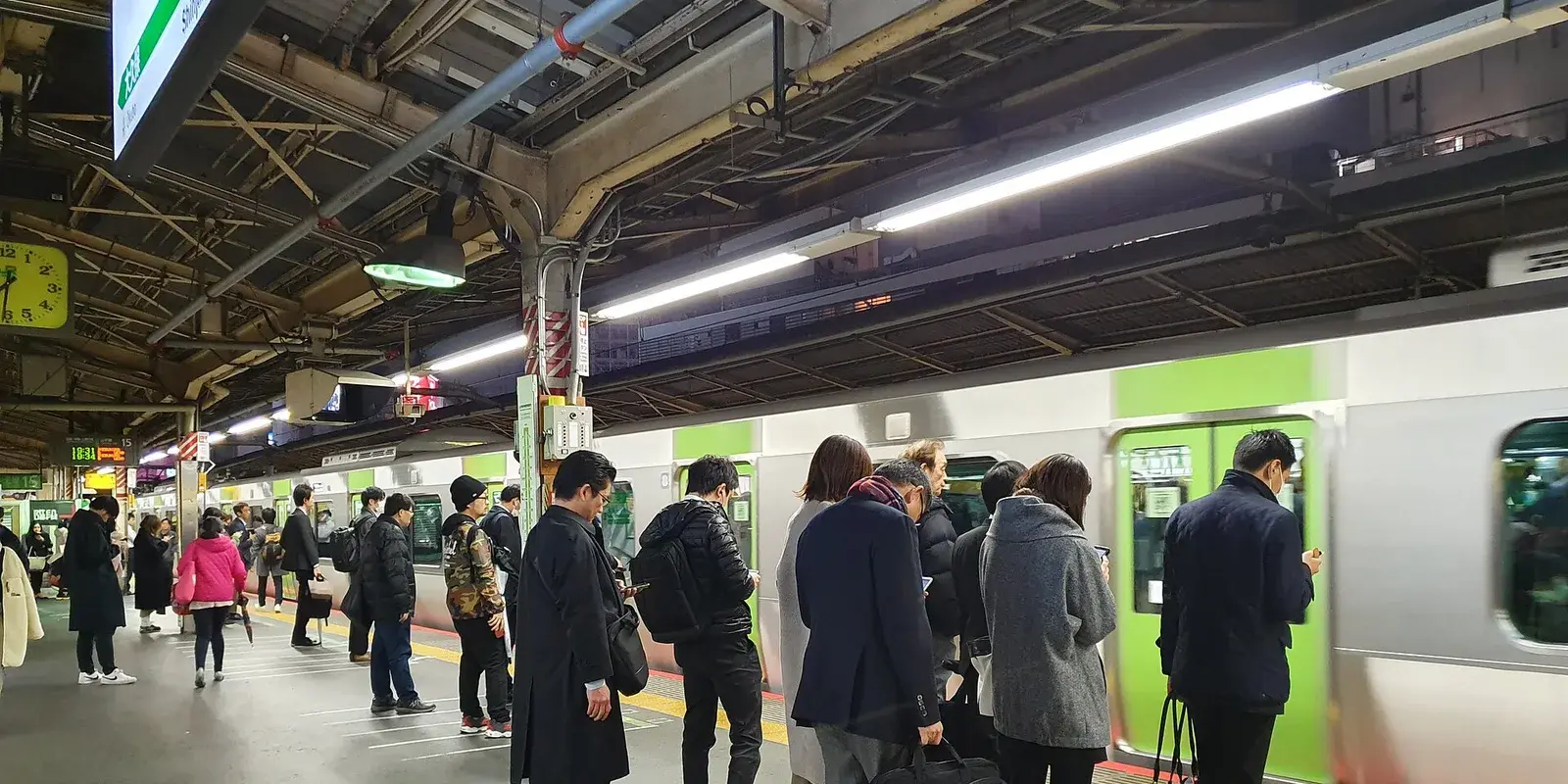
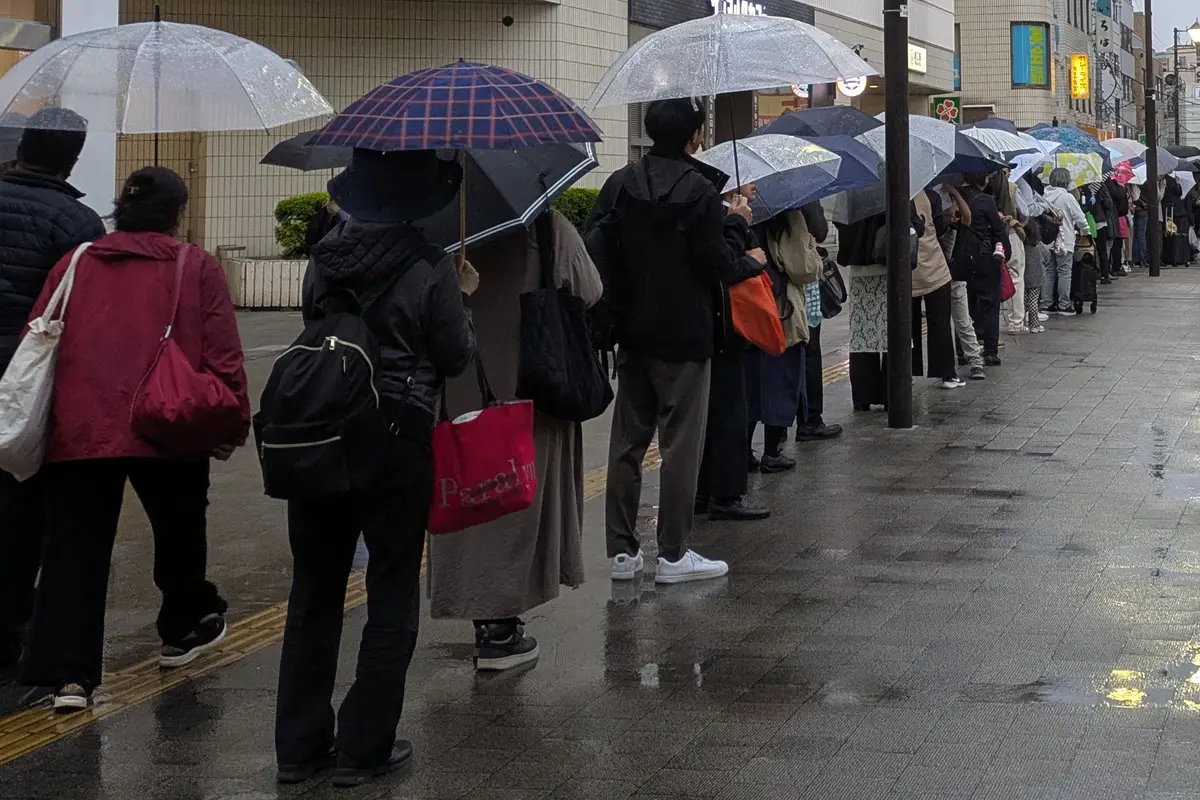
Why Lining Up Matters More Than You Think in Japan
What you'll learn in this article:
- What 382 Japanese people said about queuing, cutting in line, and what happens when you apologize
- Why Japanese people notice everything, even when they say nothing
- The one word that fixes almost any queue mistake: sumimasen
You've probably heard that Japanese people are incredible at lining up. And it's true: orderly queues form everywhere, from train platforms to ramen shops to convenience store registers. It's one of those things visitors notice within the first hour.
But here's what most guides won't tell you: this isn't just about following rules. When you line up in Japan, you're participating in something that genuinely matters to the people around you. And the best part? You don't need to memorize anything. Just joining the line is enough to earn real warmth.
We collected 382 real opinions from Japanese people about queuing, from the frustration of being cut in line, to how they feel when visitors line up naturally, to what happens when someone accidentally skips the line and says "sorry." The results might surprise you.
Quick Guide
| Situation | What Japanese People Said | |
|---|---|---|
| 🟢 Relax | Just line up naturally | 65% of Japanese people felt positive when they saw visitors queuing properly. Negative responses? Zero. Just joining the line earns you genuine warmth. |
| 🟢 Relax | Accidental cut? Say "sumimasen" | 77% of Japanese people forgive an accidental cut-in when you show you didn't mean it. One word changes everything. |
| 🟡 Good to know | Let people off first | Trains, elevators, buses: wait for people to exit before you board. This is deeply ingrained and Japanese people really notice when visitors do it. |
| 🔴 Worth noting | Cutting in line | In our 87 responses about cutting in line, 71% expressed genuine frustration. Most still won't say a word, and silence doesn't mean "it's fine." |
The one thing to remember: Queuing in Japan isn't about memorizing rules. It's about omoiyari, consideration for the people around you. Just being aware of whether there's a line, and joining the back of it, is genuinely all it takes. And if you mess up? A quick "sumimasen" makes almost everything okay.
Why does lining up matter so much in Japan? We collected 382 public posts by Japanese people. The data is striking: 65% felt positive when visitors queued properly, and 0% felt negative. Meanwhile, 71% are genuinely frustrated by cutting in line, but 77% forgive an accidental cut when you say "sumimasen." The gap tells you everything: just joining the queue earns real warmth, and one word fixes almost any mistake.
How We Gathered These Voices
We collected 382 Japanese-language responses about queuing culture. Four of those topics carry the temperature gauges in this article: cutting in line (87 responses), letting people off first on trains and elevators (83 responses), foreigners who line up properly (66 responses), and reactions to accidental queue-cutting with an apology (66 responses), which comes to 302 responses. A fifth topic, generational attitudes toward queuing culture, adds the remaining 80. We gathered these voices from public Japanese Q&A sites, forums, and social posts, along with reporting from Mynavi News, Diamond Online, and other Japanese media.
A quick note: This isn't a controlled scientific survey, it's a collection of what real Japanese people said in their own words, in their own language, on public platforms. Most English-language guides simply say "line up properly in Japan." We wanted to show you what's actually going on beneath the surface, and why a little awareness goes a long way.
First, the Biggest Surprise
Something about Japanese queuing culture escapes most visitors completely: Japanese people notice everything, they just don't say anything.
A Mynavi survey found that 71.7% of Japanese people cannot bring themselves to confront someone who cuts in line. Not because they don't care, because they can't. The social cost of confrontation is simply too high. Note what that 71.7% measures: how many people stay quiet, which is a separate question from how many feel annoyed.
めっちゃ腹立つけど言えなくてもやもや… I get really frustrated but I can't say anything, so I just stew in it...
我慢してる。どこに変な奴が潜んでいるか分からない。 I just endure it. You never know what kind of person they might be.
ムカつくけどやっぱり怖くて注意できない It makes me angry, but honestly I'm scared to say anything.
This is the gap visitors need to understand. In many countries, if nobody says anything, it probably means nobody cares. In Japan, silence is the default response to almost everything, including things that genuinely bother people. The fact that no one spoke up doesn't mean you didn't just step on a cultural nerve.
But here's the flip side, and this is the part that matters most: when Japanese people see visitors lining up naturally, the positive response is overwhelming. Of 66 responses about foreigners who queue properly, 65% were positive. Negative responses? Literally zero.
In the voices we collected ourselves, 71% of the 87 responses about queue-cutting expressed frustration, while 0% of the 66 responses about visitors queuing properly were bothered. That 71% is our own count of how people feel, separate from Mynavi's 71.7% figure for how many stay silent. The gap tells you everything you need to know about how much this matters.
What Actually Matters: The Temperature Gauge
Not every queuing situation carries the same weight. Some things genuinely bother people. Some earn you quiet respect. And one small word can turn a mistake into a moment of connection. Here's what 382 Japanese people wrote.
🔴 Cutting in Line
This genuinely bothers people, even though they probably won't tell you.
Of 87 responses about queue-cutting, the feelings were overwhelmingly negative. This was the strongest reaction across all four topics.
The most common response wasn't anger directed outward. It was frustration turned inward. Japanese people are upset and unable to say anything about it. That combination creates a unique kind of stress.
割り込みは注意する。自分の後ろに並んでる人にも迷惑になるから。 I speak up about cutting. It's not just about me — it's unfair to everyone behind me too.
心を荒めたくないからできるだけ気にしない I try not to let it bother me — I don't want it to poison my mood.
すみません、並んでますよって声かけるよ I say "excuse me, there's a line" — gently.
That last approach, the gentle, non-confrontational nudge, is the most Japanese way of handling it. Many people described using variations of the same phrase: "sumimasen, narandemasu yo" (excuse me, we're lining up). It's polite, it preserves everyone's dignity, and it gives the other person an easy exit.
One detail stood out: the concept of daihyou-machi (代表待ち), having one person hold a spot in line while others join later. Multiple Japanese people singled this out as a major manner violation, equivalent to cutting in line. It's worth knowing because this practice is perfectly normal in many countries.
What to do: Look around before approaching a counter, register, or boarding area, even at convenience stores, where the line might not always be obvious. If there's a line, join the back of it. If you're genuinely not sure whether there's a queue, ask, or simply watch for a moment. That's genuinely all it takes.
🟡 Letting People Off First
This one is deeply ingrained, and Japanese people really notice it.
In Japan, the rule at trains, elevators, buses, and shops is always the same: people exiting come first. It's so fundamental that many Japanese people don't even think of it as a "rule." It's just how shared spaces work.
Of 83 responses about the "let people off first" practice:
電車だけじゃありませんよ。エレベーターだってお店から出る時だって出る人優先です。 It's not just trains. Elevators, leaving a shop — people exiting always go first.
JRが国鉄と呼ばれていた頃からの電車のマナーです。ラッシュの時とかは降りる人が先じゃないと奥に押し込まれて降りられなくなる This has been train etiquette since the days when JR was still called "the National Railway." During rush hour, if people don't exit first, those inside get pushed to the back and can't get off.
The practical reason is simple: it's physically more efficient. If people try to board while others are exiting, everyone gets jammed in the doorway. But beyond efficiency, Japanese people see it as basic consideration: you're acknowledging that the person trying to get out was there before you.
And here's the visitor-relevant part: when a foreigner steps to the side and waits for people to exit, Japanese people notice. Multiple responses described a "おっ、わかってるな" ("oh, they get it") reaction, a quiet moment of recognition that the visitor understands how things work here.
What to do: At train doors, elevator doors, and shop entrances, step to the side and wait for everyone to exit before entering. As you get around Japan by train, you'll notice markings on the ground showing where to stand: line up on either side of the door markers, leaving the center clear for exiting passengers.
🟢 When Visitors Line Up Naturally
This is where it gets genuinely heartwarming.
Of all four topics we researched, this one produced the most lopsided result: 65% positive, 35% neutral, 0% negative. Not a single Japanese person expressed a negative reaction to seeing visitors queue properly.
昨日の浅草寺の提灯前からの中継でも提灯と写真撮るのに外国人は自然と並んで待ってるし、中に入る時も手を合わせてから入っていく In yesterday's broadcast from Sensoji temple, foreigners were naturally lining up to take photos with the lantern, and they even put their hands together before entering.
ディズニー行ったらちゃんと順番守ってるだけで感動したよ I went to Disney and was genuinely moved just seeing everyone following the queue properly.
接客業だけど外国人観光客はマナーがいいよ。日本人はこちらが「いらっしゃいませ」と声かけしたりしても何かにつけて黙ってる I work in customer service, and foreign tourists actually have great manners. Japanese customers won't even respond when we greet them.
That last one is a reminder that Japanese people don't idealize their own behavior. Multiple responses pointed out that "manner violations" aren't a foreigner thing. They're a people thing. Many Japanese people specifically noted that visitors often have better manners than some domestic customers.
郷に入れば郷に従えで、マナーを尊重してこちらのルールに合わせてくれる外国人なら別にいいよ "When in Rome, do as the Romans do" — if foreigners respect the manners and adjust to our rules, that's totally fine with me.
💡 The warmest number in this article
65% positive. 35% neutral. 0% negative. Of every Japanese person who commented on foreigners lining up properly, not one had a negative reaction. Just joining the queue (no special knowledge needed) earns you genuine warmth.
🟢 The Power of "Sumimasen": What Happens When You Accidentally Cut In
Here's the most reassuring section of this entire article: even if you mess up, a single word fixes almost everything.
Of 66 responses about accidental queue-cutting followed by an apology, the results were overwhelmingly forgiving:
That means 77% of Japanese people will let it go, as long as you show that it wasn't intentional. The key dividing line? Intent. Japanese people can tell the difference between someone who didn't know and someone who doesn't care.
割り込みした方私に気づいて「オーソーリー」と謝罪してくれた。一言あるだけで全然気持ちが違う The person who cut in noticed me and said "oh sorry." Just one word made all the difference in how I felt.
あ、悪気なかったんだなって思えた I could tell they didn't mean it — and that made it okay.
悪気がないなら許せる。わざとじゃなくて、気づいて謝ってくれるなら全然OK If there's no ill intent, I can forgive it. If it wasn't on purpose and they apologize when they realize — totally fine.
ルールを伝えれば直してくれる外国人がほとんど。知らないだけなんだよね Most foreigners fix their behavior once you tell them the rule. They just didn't know.
And here's a story that captured something beautiful about how Japanese people handle these moments:
「お急ぎですか?」と聞いたら、男性は割り込んだことに気づいて「ごめんなさい」と言って最後尾に並び直した。 I asked, "Are you in a hurry?" — and the man realized he'd cut in line, said "I'm sorry," and went to the back of the queue.
これは素敵対応!相手に恥をかかせないで気づかせるって最高じゃない? What a wonderful approach! Making someone realize their mistake without embarrassing them — isn't that the best?
That question ("Are you in a hurry?") is quintessentially Japanese. Instead of confrontation, it offers the other person a face-saving exit. It says: "I noticed, but I'm giving you a chance to correct it gracefully." Multiple commenters called this approach "genius."
💡 The 77% rule
77% of Japanese people forgive an accidental queue cut when you show you didn't mean it. The dividing line isn't perfection, it's intent. A quick "sumimasen" turns a mistake into a moment of connection.
The Cultural Engine: Why This Runs So Deep
So what makes Japanese queuing different from the rest of the world? It's not laws: there's no legal requirement to queue. It's a shared cultural operating system built on ideas that go far deeper than "good manners."
Omoiyari (思いやり): Consideration for Others
Omoiyari is the Japanese value of proactively thinking about how your actions affect other people, often before they even notice. Queuing is one of its most visible expressions: by standing in line, you're silently saying "your time matters as much as mine." It even shapes how popular places manage crowds: the timed, reserved entry at attractions like teamLab's digital-art museums is essentially queuing arranged in advance, so that everyone gets the space to enjoy it.
This explains why queue-cutting bothers Japanese people so deeply. It's not just about fairness. It's a visible rejection of the shared understanding that everyone's time has equal value.
The Silence Gap
This is perhaps the most important thing for visitors to understand: not saying anything is not the same as not caring.
In many cultures, social feedback is immediate: if you do something wrong, someone will tell you. In Japan, the feedback loop is silent. People notice, they feel strongly, but they won't speak up. A Mynavi survey found that 71.7% of Japanese people cannot bring themselves to confront someone who cuts in line. Again, that 71.7% counts silence, and it sits alongside the 71% in our own responses who said queue-cutting frustrates them.
The reasons are deeply cultural: fear of confrontation, concern about causing a scene (meiwaku, inconveniencing others by creating conflict), and the belief that the other person should be able to figure it out on their own (kuuki wo yomu, reading the air). It's the same instinct that makes Japanese trains so remarkably quiet, people adjust their behavior based on the atmosphere, not because someone told them to.
「もしもし、列の後ろはこちらですよ」と指し示すのがベスト。相手に「あっ、間違えました」という顔ができる逃げ道を与えてあげる The best approach is to say "excuse me, the back of the line is over here" while pointing. It gives the other person an escape route — a chance to make an "oh, my mistake" face.
This quote perfectly captures the Japanese approach to conflict: resolve the situation while preserving everyone's dignity.
A Generational Perspective
Here's something that might surprise you: in posts about generational differences in queuing behavior, the dominant view wasn't "young people don't queue anymore." It was the opposite.
Multiple voices across platforms pointed out that older Japanese people actually cut in line more frequently than younger generations. Service industry workers specifically noted that younger customers tend to be more polite and patient.
若い子はまだ周りを意識するこころがあるから、割り込みなんてしないんだろう Young people still have that awareness of others around them — that's probably why they don't cut in line.
This challenges the common narrative of "declining manners." Japanese queuing culture isn't eroding. If anything, younger generations have internalized it even more deeply than their parents.
What Japanese People Actually Want You to Know
After reading all 382 responses, the clearest message wasn't "follow the rules." It was something much more welcoming:
They know you might not be used to this, and that's okay.
周りの行動見てそれに倣うって言う概念無いの?と思うこともあるけど、まあ旅行中は周り見る余裕ないよね Sometimes I think "can't they just watch what others are doing and follow?" — but honestly, when you're traveling, you don't have the mental bandwidth to observe everything.
ちゃんと守っている外国人もたくさんいると思う。一部の人だけ見て全体を判断するのはよくない I think there are plenty of foreigners who follow the rules properly. It's not fair to judge everyone based on a few.
They don't expect perfection. They appreciate effort.
The 77% forgiveness rate for accidental cutting tells you everything. Japanese people aren't looking for perfect queue behavior from visitors. They're looking for awareness, the simple recognition that there's a shared space and other people in it.
And they know this works both ways.
接客業だけど外国人観光客はマナーがいいよ I work in customer service, and foreign tourists actually have great manners.
Multiple Japanese people pointed out that manner issues aren't unique to visitors. Japanese commuters themselves violate queuing norms every day: pushing into train doors, cutting in supermarket lines, ignoring elevator etiquette. The idea that visitors are uniquely problematic simply doesn't hold up in the data.
More Japanese Perspectives
Curious about other aspects of daily life in Japan? These articles explore what Japanese people actually think, based on hundreds of real voices.
- Why Japanese Trains Are Silent: 177 Japanese people share the real story behind train silence, including why they know their quiet is globally unusual.
- Do Japanese People Actually Care How You Hold Chopsticks?: 163 Japanese people share the honest truth about chopstick etiquette. Spoiler: there's really only one thing worth knowing.
- The Power of a Small Bow: Why a light nod, not a perfect 45-degree bow, is all it takes to make someone smile.
Share Your Experience
Had a queuing moment in Japan, funny, awkward, or surprisingly smooth? We'd love to hear it. Your story helps build a bridge between cultures.
Share your experience on Voice Box →
Sources
Primary Research Data
- WMJS queuing research data (382 Japanese-language responses collected April 2026)
- Cutting in line: 87 responses
- Letting people off first: 83 responses
- Foreigners who line up properly: 66 responses
- Accidental cutting with apology: 66 responses
- Generational attitudes: 80 responses
Statistical Data
- Mynavi News (2020): 71.7% of Japanese people cannot confront someone who cuts in line
Opinion Collection Sources
The following sources were used to collect Japanese people's opinions and sentiments. These are not cited as factual authorities but as platforms where real Japanese people expressed their views on queuing culture. A large share of these voices came from public Japanese Q&A sites, community forums, and social posts. Those platforms are described here as categories rather than linked thread by thread, so the links below cover the named-media portion of each topic.
Cutting in line:
- https://news.mynavi.jp/article/20171129-547502/
- https://www.moneypost.jp/744726
- https://www.moneypost.jp/1189846
- https://www.lettuceclub.net/news/article/168447/
- https://president.jp/articles/-/67142?page=1
- https://diamond.jp/articles/-/345364
- https://www.mag2.com/p/news/216071/2
Letting people off first:
- https://www.asoblock.net/contents/tokyo-train-manner
- https://hint-pot.jp/archives/226799
- https://otonanswer.jp/post/17478/
- https://www.nippon.com/ja/japan-topics/g02256/
- https://grapee.jp/552362
- https://matcha-jp.com/jp/118
- https://www.tsunagujapan.com/ja/wow_01650/
- https://livejapan.com/en/in-tokyo/in-pref-tokyo/in-ikebukuro/article-a0003657/
Foreigners who line up properly:
- https://tripeditor.com/442994
- https://bunkaru.jp/japanese-queuing-culture/
- https://haa.athuman.com/media/japanese/culture/2243/
- https://hint-pot.jp/archives/226799
- https://j.people.com.cn/n3/2017/0328/c94473-9196147.html
- https://gentosha-go.com/articles/-/24108
- https://j-net21.smrj.go.jp/qa/development/Q1038.html
Accidental cutting with apology:
Generational attitudes:
- https://www.j-cast.com/2014/11/15220967.html?p=all
- https://sirabee.com/2018/10/09/20161824701/
- https://www.insightnow.jp/article/8309
- https://www.highness-co.jp/churakubou/detail/57
- https://president.jp/articles/-/67142?page=1
- https://gendai.media/articles/-/131264?page=2
- https://www.moneypost.jp/1189846
- https://j.people.com.cn/n3/2017/0328/c94473-9196147.html
Note on Quotations
Quotes from online platforms have been lightly edited for readability (fixing typos, formatting for clarity). The meaning and intent of each comment remain unchanged. Original sources are linked above.
Prefer just the numbers? The counts behind this topic live on one page: Cutting in line: what Japanese people actually say, in numbers.
WMJS is written in Japan, in English, with AI help. We check every page, but English is not our first language. If a sentence reads oddly, tell us. One sentence is enough.
Thank you. A person reads every note.
How well do you know Japan?
Built from 635 public posts by Japanese people
Want to know more? Ask Japanese people
Have a follow-up question about this topic? We'll ask real Japanese people.
Voice Box →