
Shinjuku — The City of Doors That Look Closed, and How Each One Opens
Shinjuku
By Kei · Born and raised in JapanThe Meaning
Almost everything famous about Shinjuku looks, at first, like it might be shut to you.
It begins with the station. By the count of Guinness World Records, Shinjuku Station is the busiest railway station on earth, averaging 2,704,703 people a day in 2022, across five different railway companies sharing one impossible knot of platforms. The next busiest station in the world, the Gare du Nord in Paris, handles around 600,000. So the first thing Shinjuku shows a visitor is a wall of exits and signs and moving people, and a small voice that says: you will get this wrong.
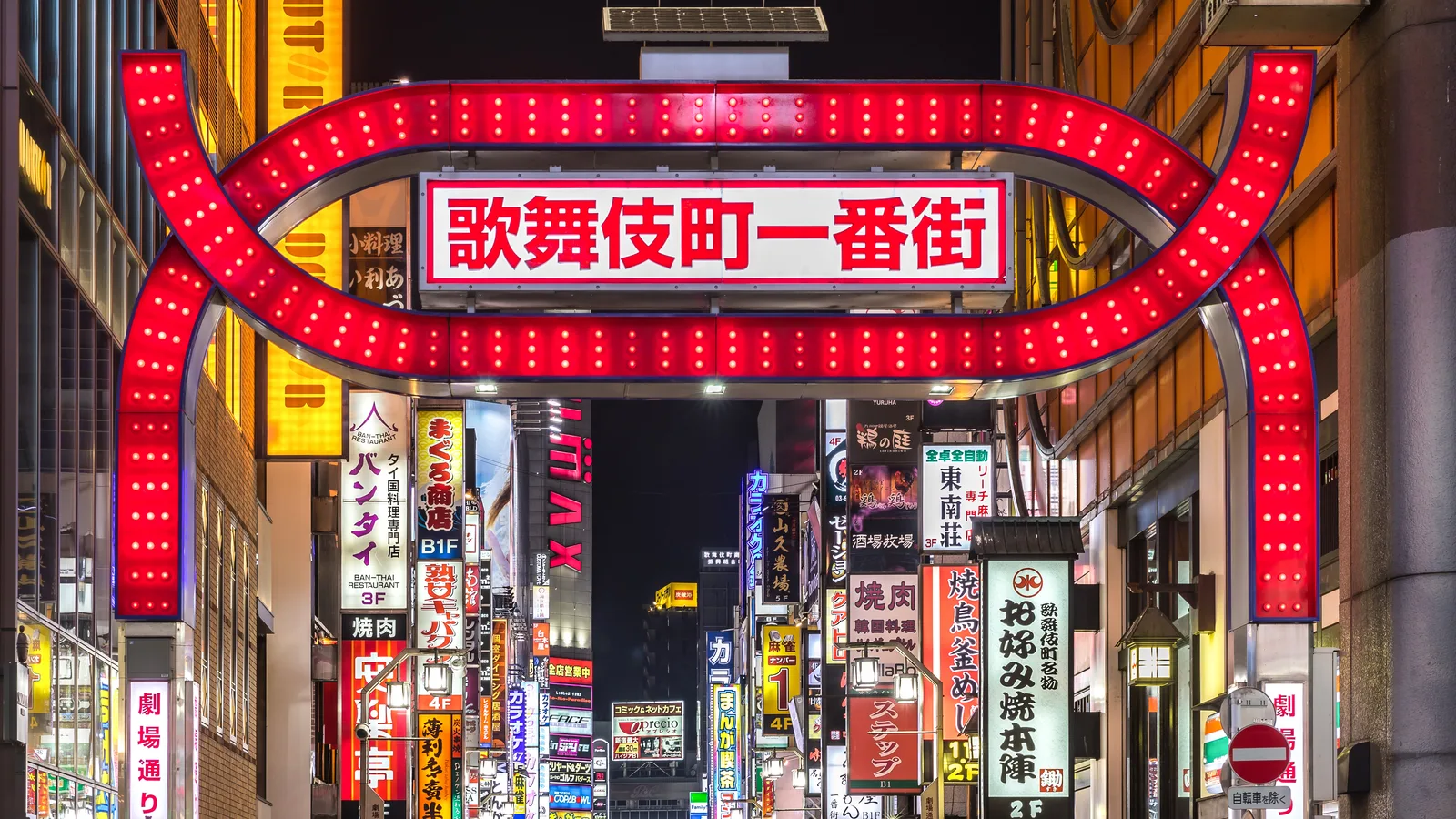
Then the night begins, and the doors only seem to multiply. Kabukicho, the entertainment quarter, is a canyon of neon that can look, to someone arriving from a quieter country, faintly dangerous. Omoide Yokocho is an alley so narrow two people can barely pass, full of smoke and the backs of strangers. And in Golden Gai, a warren of bars the size of walk-in closets, you stand in front of a sliding door you cannot see past, with no idea whether the room behind it wants you in it.
Here is the quiet truth the whole night turns on: none of these doors is as closed as it looks. The station opens the moment you stop reading the map and follow one sign to one named exit. Kabukicho is, in the words of Japan's own tourism organization, "the most densely packed, neon-burning, lively yet safe downtown area in Asia." And the closet-sized bar will, more often than not, slide its door open and make room for one more, if you have the small courage to try it.
What makes Shinjuku itself is how much it folds into one short walk. Within a few minutes of that overwhelming station there is an emperor's garden of almost total silence; a government tower that gives away its finest view for free; the busiest crowd in the world moving in near-quiet; and a lane where a stranger pours your drink with his own hands. Stillness and overload, the grand and the tiny, the public and the intimate: Shinjuku keeps them all, side by side, without blinking.
And by the end of the night you may notice that the free view the city hands you from 202 meters up, and the drink a stranger pours you in a ten-square-meter bar, are somehow the same gesture: a welcome that looks, from the outside, like it could be closed, and isn't.
What Happens When You're There
Step 1: The View the City Gives Away
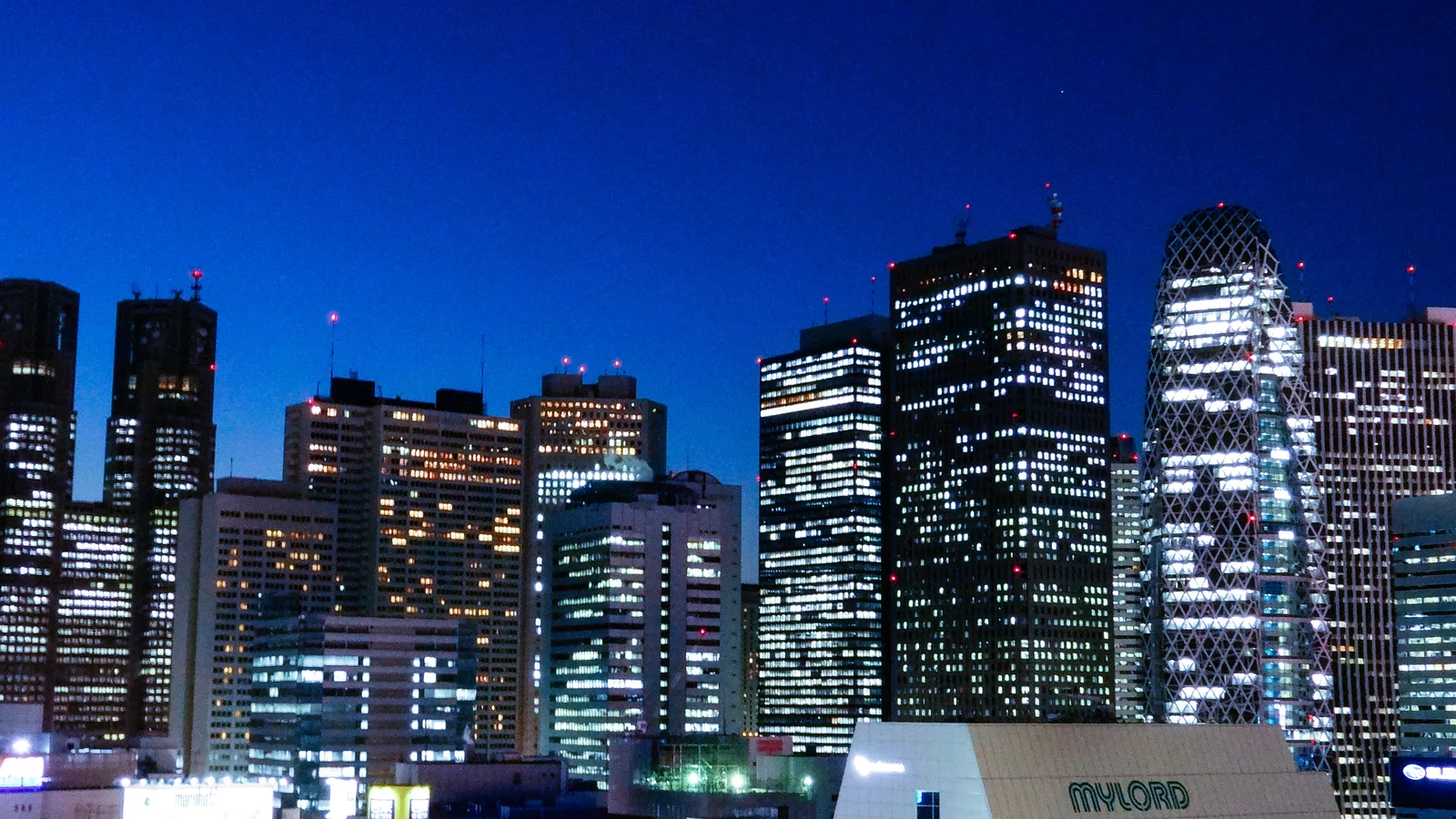
Before you walk down into the night, go up, and let the city orient you.
A few minutes west of the station rise the twin towers of the Tokyo Metropolitan Government Building, the seat of the government of Tokyo. Near the top of one tower, on the 45th floor at a height of 202 meters, are two observatories, and the thing worth knowing before you queue is that admission is free. No ticket, no timed slot. You ride a dedicated elevator up from the first floor, and the whole lit sprawl of the city is simply handed to you. On a clear evening you can see Tokyo Skytree across the river, the dark gap of Tokyo Bay, and sometimes, low on the horizon, the silhouette of Mount Fuji.
Stand at the glass at dusk and you can read the rest of your night before you walk it: the black rectangle of quiet to the south is the garden; the river of light below is the station you just left; and the dense, restless glow to the east is where you're going. It is the cheapest, highest, most generous welcome a city ever offered a stranger: a tower built for governing, opening its best window to anyone who walks in. Hold on to that feeling, because you will meet it again tonight at the other end of the scale, in a room the size of this elevator.
Step 2: Smoke and Elbows
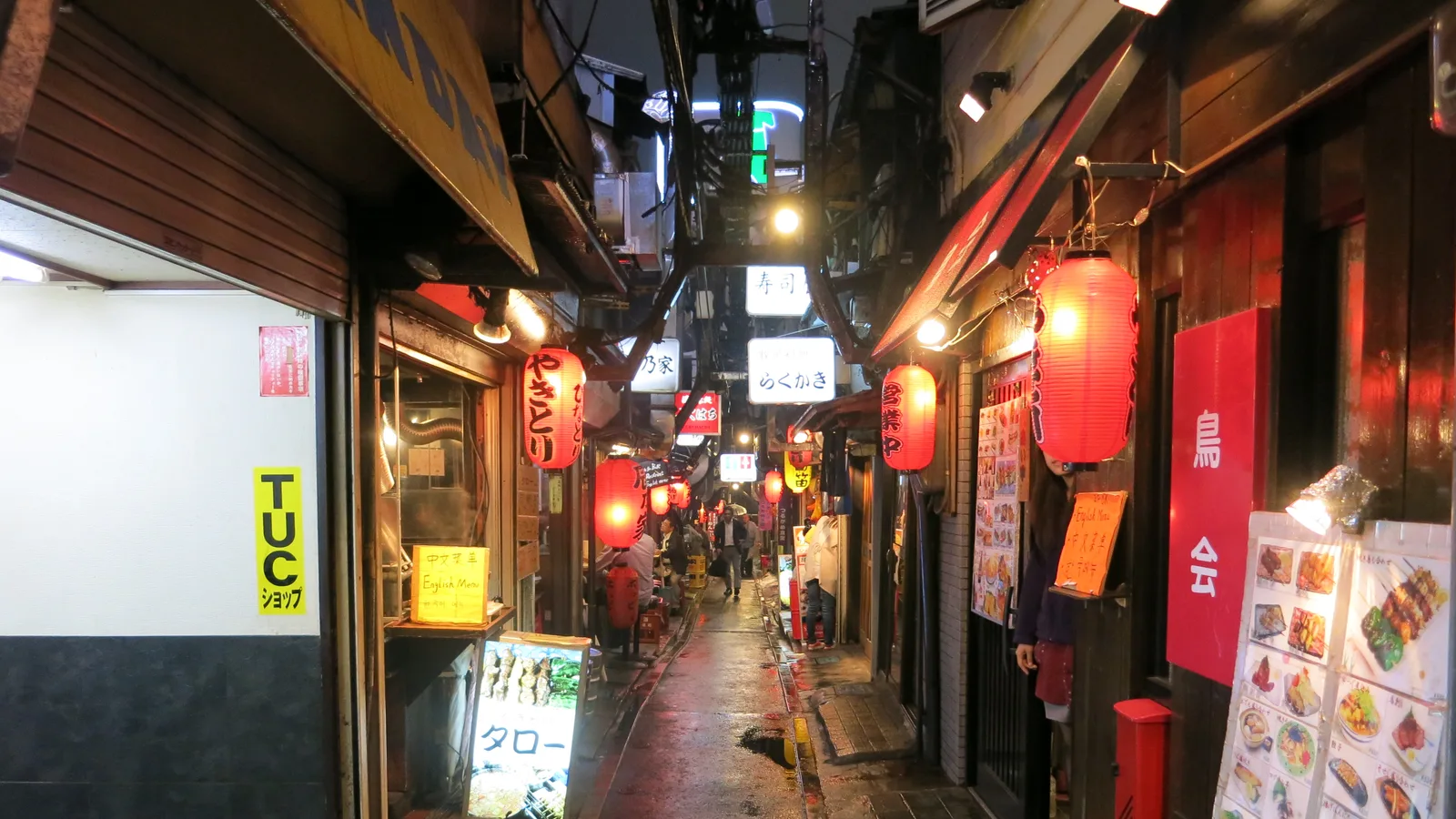
Come back down, walk toward the station, and just beside the tracks on the west side you'll find a gap between two buildings you could easily miss. Look for the dimly lit green sign, the red lanterns, and the drift of smoke. This is Omoide Yokocho, known as "Memory Lane."
The alley is so narrow that, in the words of Tokyo's tourism office, it "barely fits two people across." Down its length are tiny yakitori joints, grilled chicken skewers and beer, each seating only five or six people at a counter. It grew out of the rubble around the west exit around 1946, when the postwar city was in ruins and an open-air market of street stalls took root here; the lane has kept its hunched, smoky, lantern-lit shape ever since.
You don't reserve a seat. You duck under a half-curtain, find a stool, and order what the person next to you is having. Your elbow will touch a stranger's; your jacket will smell of smoke afterward, honestly. That closeness is the entire point of the place, the same closeness people have shared here for some seventy-five years. Most stalls work in cash, so carry some yen, and you'll be fine.
Step 3: The Canyon That Looks Dangerous
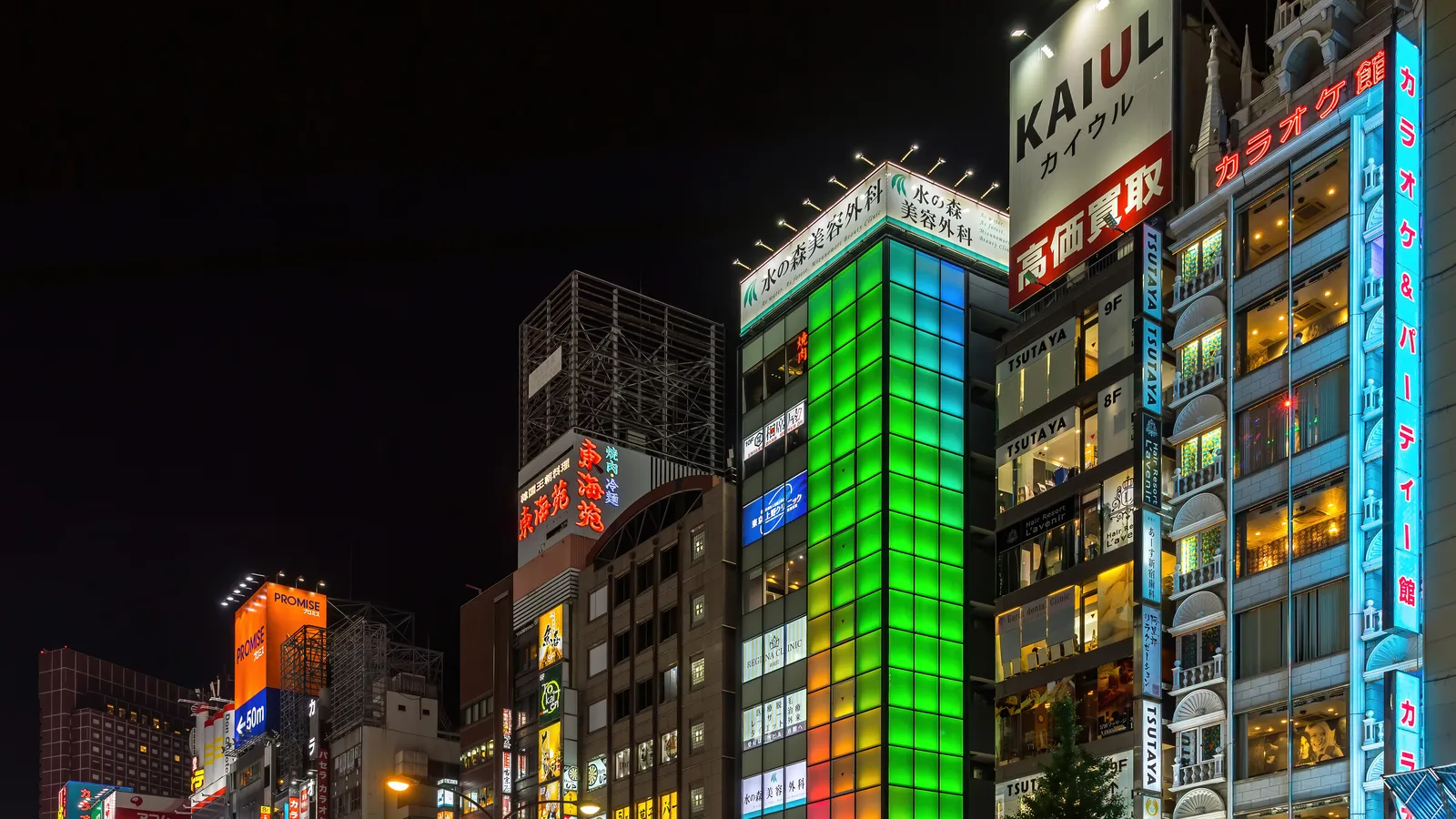
Now cross under the tracks to the east side, and walk into the light.
Kabukicho is, by the Tokyo Metropolitan Police's own description, "one of the largest entertainment districts in Japan": izakaya and karaoke and cinemas and hotels stacked into a few sleepless blocks. Japan's tourism organization calls Shinjuku "the town that doesn't sleep," then adds, gently, "more accurately, it passes out for a couple of hours late morning." Find the big boulevard and the giant Don Quixote store that marks the main street, look up, and you may meet a Godzilla head roaring silently over the rooftops, one of Kabukicho's newest residents, perched on the cinema-and-hotel tower. Nearby, the Tokyu Kabukicho Tower, opened in April 2023, lifts the whole spectacle skyward.
It can look like a place to be wary of. So here is the reassurance, from the people whose job it is to keep the area safe rather than from us: the danger here is mostly to your wallet, not to you. Walking the bright main streets, eating where prices are posted, photographing the neon: all of it is ordinary and fine. The one rule that prevents nearly all trouble is the one the Tokyo police put plainly: some street touts "may take you to places that rip you off," so even if they approach you, do not follow them. Japan's tourism body says the same in fewer words: "Ignore the touts." A real bar doesn't need to recruit you off the pavement. Choose your own door, the one with a price you can read before you sit, and the night stays warm. (If you'd like the wider picture of why Japan feels as safe as it does, hundreds of residents say the same thing in their own words.)
Step 4: The Door That Looks Closed
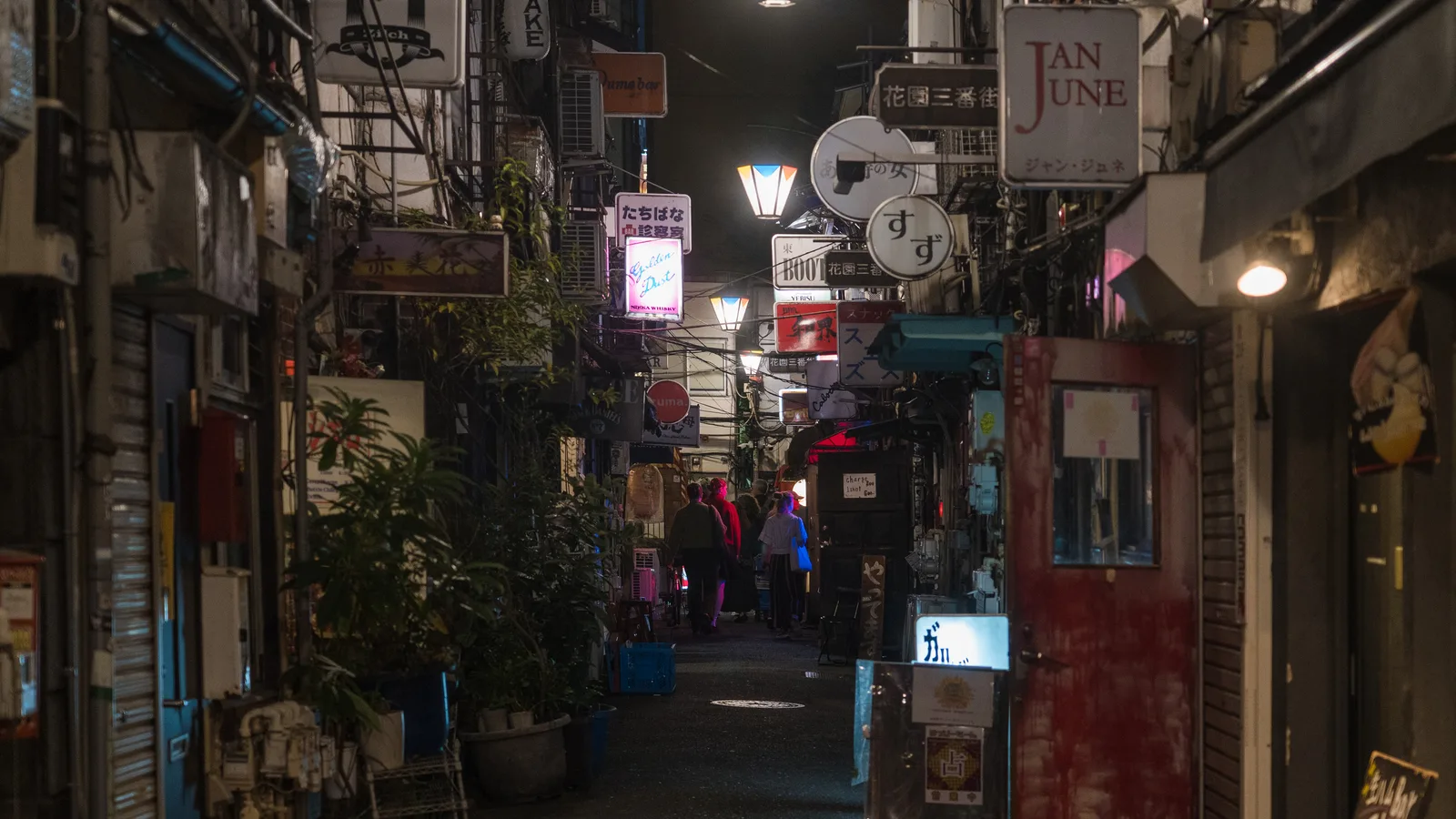
On the eastern edge of Kabukicho, the neon suddenly drops away into something much older and much smaller. Six little lanes, packed with around 280 bars, each one a single room, many seating only five or six people. This is Golden Gai.
It began in 1947, in the same hard postwar years as the alley by the tracks, and it has kept the atmosphere it had in the early 1950s while the city around it rebuilt itself into towers. Each bar is its own world: a film-lovers' bar, a punk bar, a bar lined floor to ceiling with one owner's obsession, and behind most of the doors is a master or a mama, the single person who runs the place like a living room they happen to charge admission to.
And that is the door that looks closed. You usually can't see inside; some doors carry a small kaiinsei, or "members only," sign, and the warnings online make the whole street sound like an exam. Here is what's actually true: the nervousness you feel at that door is not a foreign feeling. The Japanese people who talk about Golden Gai say the same thing: more than four in ten admit that the door takes courage for them, too. The small seat charge that surprises people isn't a trick; it's the rent on a ten-square-meter room, the price of being a guest for the evening. And language is far less of a wall than you fear. The honest, encouraging picture, who is welcome, what the charge means, and why owners say foreign visitors saved this street, is its own story, told through 183 Japanese voices.
For tonight, the moves are simple. Look for a door that's open, or shows an "English OK" sign, or posts its prices. Go in ones, twos, or threes; the rooms are too small for a crowd. Don't worry that you don't speak the language; a smile and a kanpai travel further than fluency. Don't photograph the inside of a bar without asking: in a room this intimate, that's the one piece of etiquette that matters most. Then slide the door, and let the master set the pace. The welcome isn't won by being cultured or cool. It's won by having the courage to open the door, and being kind once you're inside.
Step 5: Home on the Last Loop
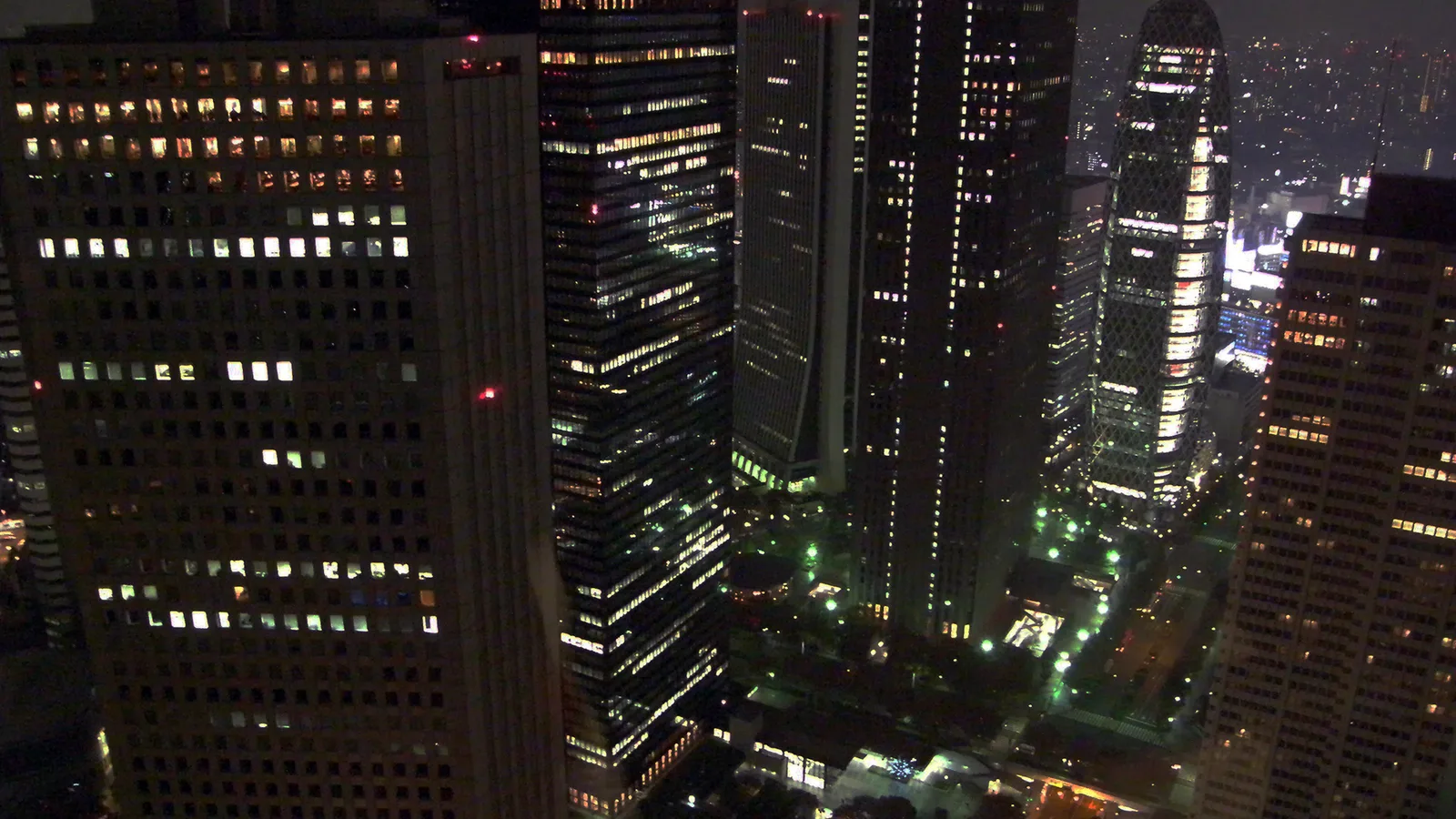
Late, you find your way back to the station, the same impossible knot you were afraid of at the start of the night, now just the quiet ride home on the loop.
And somewhere on the platform it might occur to you what the evening actually was. You passed through the busiest station on earth and it let you through. You stood at the top of a government tower that asked nothing of you and gave you the whole city. You ducked into a lane of smoke older than your grandparents, and into a room the size of a cupboard where, for the price of a seat, a stranger learned your name. The free view from 202 meters up, and the drink poured by hand in ten square meters, the public welcome and the private one, turned out to be the same single kindness, wearing different clothes.
Shinjuku is the city of doors that look closed. The whole secret of it is that you only have to try them.
Thank you for walking with us.
Good to Know
Getting there, and getting out. Shinjuku Station is served by five railway companies (JR East, the Tokyo Metro and Toei subways, and the Odakyu and Keio lines), which is part of why it is the busiest station in the world, and why it has a reputation for so many exits that even Tokyoites take a wrong one now and then. The calm trick that locals use is simple: don't navigate by compass, navigate by your named exit or destination, and follow only those signs; and when leaving a platform, head out the same way you came in. As a rough map of the night, the West side has the government-tower observatory and Omoide Yokocho; the East side has Kabukicho and Golden Gai; the South side has Shinjuku Gyoen and the Busta Shinjuku bus terminal. For trains, IC cards, and the wider how-to, see getting around Japan.
Tokyo Metropolitan Government Building observatory. Two observatories sit on the 45th floor at 202 meters, reached by a dedicated elevator from the 1st floor of Main Building No. 1, and admission is free. General hours are 9:30–22:00 (last entry 21:30). The North deck closes on the 2nd and 4th Mondays of the month and the South deck on the 1st and 3rd Tuesdays (the South deck also tends to keep shorter hours), plus occasional inspection days; the open decks can also shut at short notice in bad weather. Last verified: 2026-06. Check current hours, deck status (@tocho_tenbou) and any closures on the official site before you go.
Shinjuku Gyoen (the daytime calm beside the noise). A few minutes from the station's south side lies one of Tokyo's great gardens: 58.3 hectares of formal, landscape and Japanese-traditional grounds, with around 900 cherry trees. It began as a feudal lord's land granted to the Naitō family in 1591, became an imperial garden completed in 1906, and was opened to the public in 1949. Admission is ¥500 for adults, ¥250 for seniors (65+) and students, and free for children 15 and under. Closing time changes with the season: roughly 16:30 in winter, 18:00 in spring and late summer, and 19:00 at the height of summer, with last entry 30 minutes before, and it is closed on Mondays and over the New Year, though it opens daily during cherry-blossom and chrysanthemum seasons. One rule surprises people, so plan around it warmly: alcohol is not allowed inside. This is the quiet exhale to take before the night, not during it. Last verified: 2026-06. Confirm seasonal hours and fees on the official site.
Kabukicho, calmly. The district is lively and, in Japan's official tourism words, "lively yet safe." Enjoy the bright main streets, the landmarks, restaurants with posted prices, and the neon. The single piece of advice the Tokyo police give is the only one you really need: don't follow the people who approach you on the street offering cheap drinks or a "good bar": choose your own place, one whose prices you can read at the door.
Golden Gai. Tiny bars, most seating five or six, many with a small seat charge that is a seat fee rather than a scam. Go in groups of one to three, carry cash, look for an open door or an "English OK" / posted-price sign (a "members only" sign simply means move along, with no offense given or taken), and ask before photographing inside. What it's really like to be welcomed there is covered, voice by voice, in our guide to Golden Gai's welcome.
Omoide Yokocho. A two-minute walk on the west side of the station; tiny yakitori counters, smoke, red lanterns, and mostly cash; bring some yen. Smaller groups and a willingness to sit elbow-to-elbow make it shine.
Cash. Many of Shinjuku's smallest, best rooms still run on cash; it's worth carrying some for the night. More on when you'll need it in cash or card in Japan.
How long, and when. The night is the main act here. A brisk walk-through takes an hour or so; doing it properly (a sunset from the observatory, a bite in the alleys, a bar or two) is a relaxed half-day into the evening.
A Tokyo day, and a Tokyo night. Shinjuku is the loud, warm end of the city. For the bright daytime opposite, Shibuya and Harajuku are a few stops away on the Yamanote loop, and the forest hush of Meiji Jingu sits right between them: a single loop holds Tokyo's quiet and its roar.
Official tourism info: GO TOKYO: Shinjuku
If Things Don't Go as Planned
You're completely lost in the station. Everyone is, at first: it's the busiest station on earth. Stop trying to read the whole map. Pick the name of where you're going (an exit, a line, "Kabukicho," "Gyoen"), follow only those signs, and if in doubt, the staff at any gate will point you the right way. The trick locals swear by: leave a platform the same direction you entered it.
Someone on the street is offering cheap drinks or a "great little bar." This is the one thing to simply walk past. The Tokyo police and Japan's tourism body say the same plainly: don't follow touts off the street, because the places they steer you to charge far more than they're worth. You're not being rude; a real bar doesn't recruit on the pavement. Keep walking toward the bright main streets and pick a place whose prices you can read at the door; there's a 24-hour police box in Kabukicho if you ever want a fixed point to head for.
A Golden Gai door looks members-only and you've lost your nerve. You're in very good company: more than four in ten Japanese people say that door takes courage for them, too. Look for one that's open, shows an "English OK" or "beginners welcome" sign, or posts a price. A kaiinsei / "members only" sign just means that one's not for walk-ins tonight; move to the next, no harm done. The owner mostly just hopes you'll be brave enough to come in and kind once you do.
The observatory or a deck is closed. The open decks shut at short notice in wind or rain, and the North and South decks each close on set days of the month. If one deck is shut, the other is often open; check @tocho_tenbou for live status. And the view costs nothing, so there's no harm in trying again another evening, or taking it in from a different height altogether.
Shinjuku Gyoen closed earlier than you expected, or you brought wine. The garden's last entry is early (30 minutes before a seasonal closing time), and alcohol isn't allowed inside. Neither is a problem if you treat the garden as the daytime calm and save the drinking for the bars after dark. Come in the morning or early afternoon, leave the toast for Omoide Yokocho.
It's too smoky or too cramped in the alleys. Omoide Yokocho and Golden Gai are tiny on purpose, and that's not for everyone on every night. Step out to a counter with a little more air, try one of the wider lanes, or trade the alley for a restaurant on Kabukicho's main streets. The closeness is the charm, but there's no rule that says you have to love it the first time.
Sources:
- Guinness World Records: Busiest railway station: Shinjuku Station as the world's busiest railway station (including subways), 2,704,703 average daily passenger throughput in 2022; the Gare du Nord in Paris (~600,000/day) as the closest competitor; operators served (JR East, Keio, Odakyu, Toei Subway, Tokyo Metro)
- Tokyo Metropolitan Government: Observatories: two observatories at a viewing height of 202 meters; free admission; access by the observatory elevator from the 1st floor of Main Building No. 1; short-notice weather closures (@tocho_tenbou)
- GO TOKYO: Tokyo Metropolitan Government Building: observatories on the 45th floor at 202 m; free; general hours 9:30–22:00 (last entry 21:30); North deck closed 2nd/4th Mondays, South deck closed 1st/3rd Tuesdays; views of Tokyo Skytree, Tokyo Bay and sometimes Mt. Fuji
- 国民公園協会 (National Parks Foundation): Shinjuku Gyoen: area 58.3 hectares; three garden styles (Formal, Landscape, Japanese Traditional); seasonal hours
- 国民公園協会: Shinjuku Gyoen history: Naitō family granted the land in 1591; completed as an imperial garden in 1906 (opening attended by Emperor Meiji); opened to the public in 1949
- Ministry of the Environment: Shinjuku Gyoen admission & rules: admission ¥500 adults / ¥250 seniors (65+) and students / free for children 15 and under; seasonal closing times; closed Mondays and Dec 29–Jan 3; open daily in cherry-blossom and chrysanthemum seasons; alcohol prohibited inside
- GO TOKYO: Shinjuku Gyoen National Garden: around 900 cherry trees; an escape beside the city center
- GO TOKYO: Shinjuku Golden Gai: around 280 bars across a six-row block of alleys; each seating only five or six; formerly a postwar red-light district that retains its early-1950s atmosphere; a few minutes from the station's east exit, adjacent to Kabukicho
- 新宿ゴールデン街商店街振興組合 (Shinjuku Golden Gai Shopping District Association): origin in 1947 as a postwar black-market and red-light area; over ~70 years of history; around 280 establishments
- GO TOKYO: Omoide Yokocho: "Memory Lane"; an alley barely two people across; yakitori counters seating five or six; dimly lit green sign, smoky stalls and red lanterns; about 2 minutes from Shinjuku Station (1 Nishi-Shinjuku)
- Omoide Yokocho official: history: origin around 1946 as a postwar black-market lane by the west exit
- Tokyo Metropolitan Police: Safety tips for entertainment districts: Kabukicho as "one of the largest entertainment districts in Japan"; warning that street touts may take you to places that rip you off, and that even if they approach you, you should not follow them
- JNTO (Japan National Tourism Organization): Kabukicho: "the most densely packed, neon-burning, lively yet safe downtown area in Asia"; "Ignore the touts"; the Godzilla head; the Don Quixote store marking the main street
- JNTO: Shinjuku: "the town that doesn't sleep, more accurately, it passes out for a couple of hours late morning"; Kabukicho as the nightlife heart
- GO TOKYO: Tokyu Kabukicho Tower: opened April 14, 2023; one of the largest complexes of its kind in Japan
- GO TOKYO: Tokyo at Night: Shinjuku "stays lively all night long," from the tiny bars of Golden Gai to the venues of Kabukicho
Image credits, all via Wikimedia Commons: the Kabukicho neon gate (hero & thumbnail), photo by Basile Morin, CC BY-SA 4.0; the Nishi-Shinjuku skyline at dusk, photo by Dick Thomas Johnson, CC BY 2.0; Omoide Yokocho's lantern-lit lane, photo by Douglas Paul Perkins, CC BY 3.0; the neon facades of Kabukicho, photo by Basile Morin, CC BY-SA 4.0; a lane in Golden Gai at night, photo by Alexkom000, CC BY 4.0; the night view over Shinjuku from the Tocho observatory, photo by Tomi Mäkitalo, CC BY-SA 3.0.
WMJS is written in Japan, in English, with AI help. We check every page, but English is not our first language. If a sentence reads oddly, tell us. One sentence is enough.
Thank you. A person reads every note.
Real voices
Is it worth it?
Were you there? Share your photos.
Your photo could appear in this guide — with your name and a link to your profile.
Submit a photoRelated Articles
Is Shinjuku's Golden Gai Welcoming to Foreigners?


Is Japan Safe? What Japanese People Want You to Know
More guides in Kanto
Visiting Akihabara, Tokyo's Electric Town Where You're Allowed to Love What You Love
Is Akihabara worth visiting? We weighed 149 traveler voices: 29% say yes outright, 44% say it depends on whether you love anime, games or electronics, and Japanese reviewers land warmer at 69%. How the district is laid out, getting there, and who it's for, with an audio guide.
Akihabara (Electric Town)
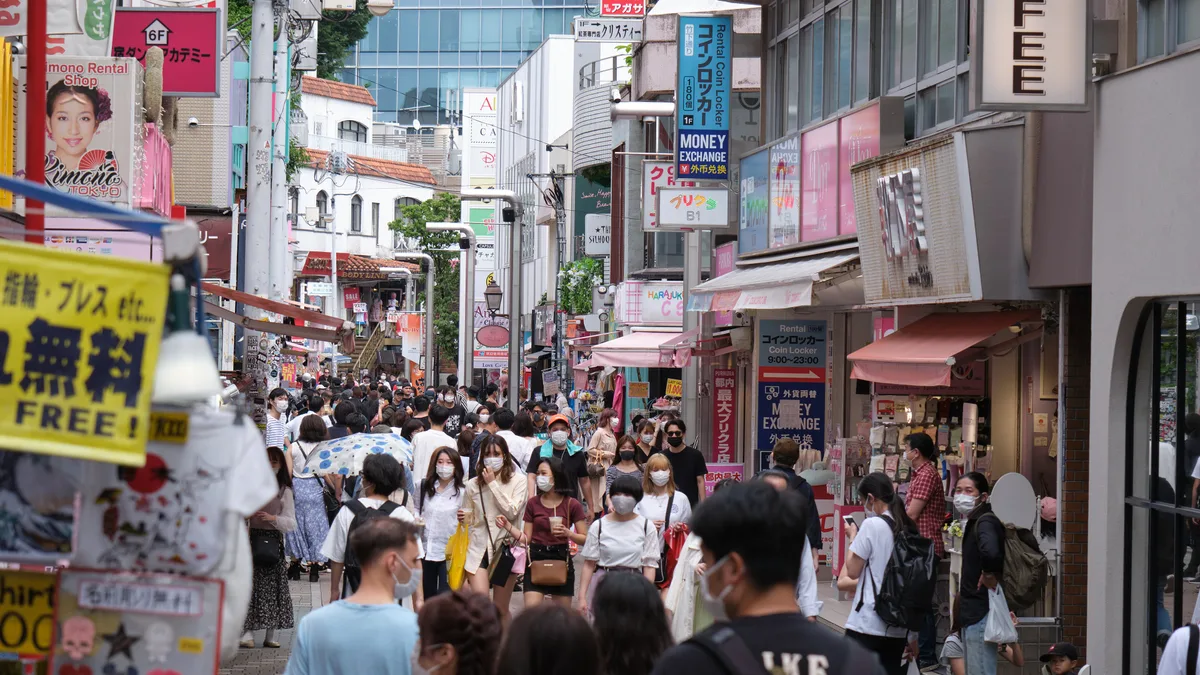
Visiting Harajuku, Where You Can Wear Anything and No One Turns to Look
Is Harajuku worth it? We counted 99 traveler voices: 64% say yes once you skip Takeshita Street's crush for Cat Street and Omotesando. Crepes, kawaii fashion, getting there, and how to walk it well, with an audio guide.
Harajuku
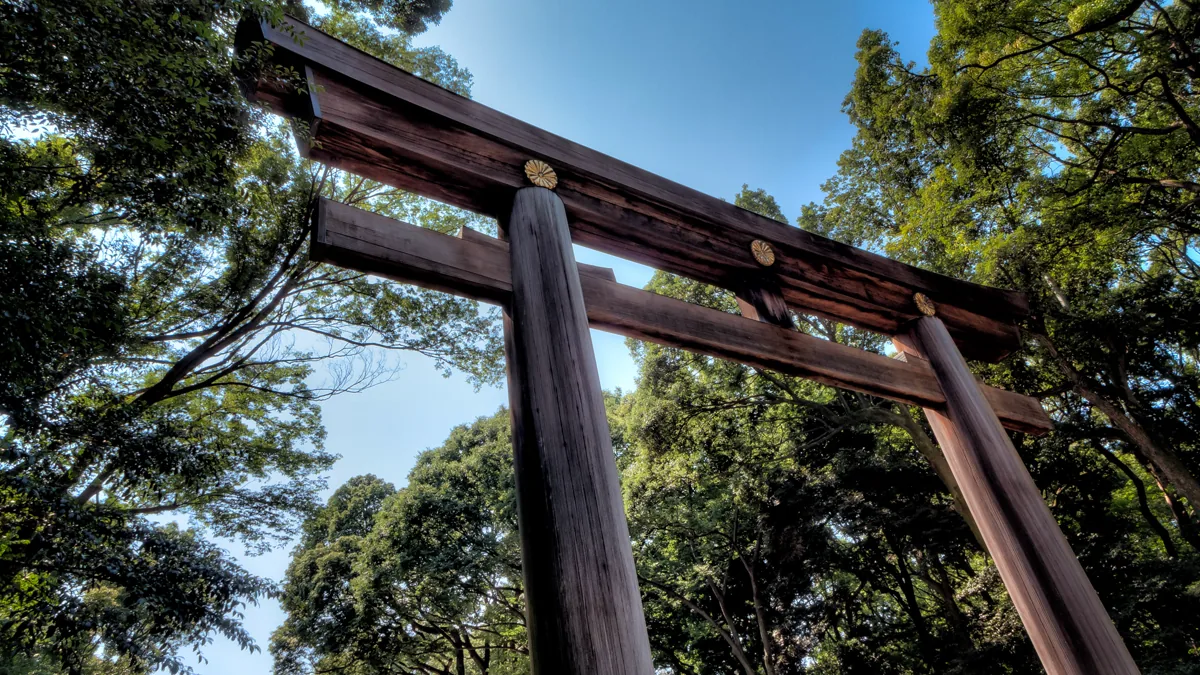
Visiting Meiji Jingu, Where 100,000 Trees Were Planted to Make a Forest That Tends Itself
Is Meiji Jingu worth visiting? We weighed 70 traveler voices: 75% say worth it, and Japanese locals rate it even higher at 82%. Free, a 70-hectare forest planted entirely by hand in 1920, home to the Great Torii and Kiyomasa's Well in the Inner Garden, with an audio guide.
Meiji Jingu
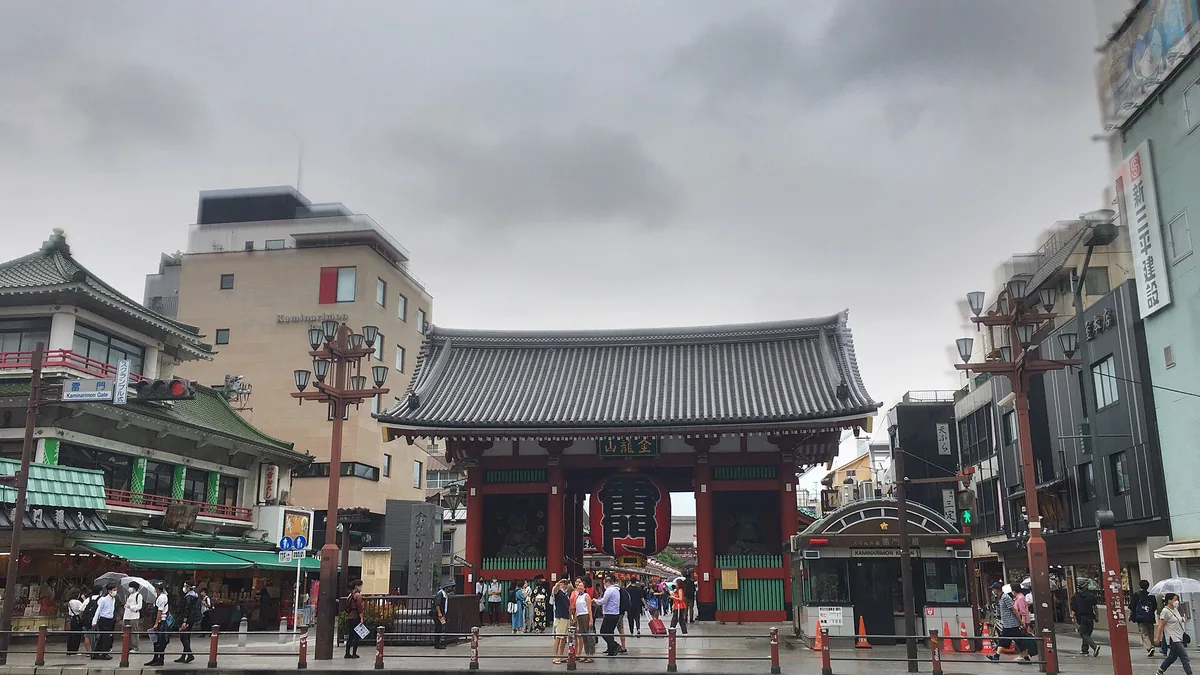
Visiting Senso-ji, Tokyo's Oldest Temple
Is Senso-ji worth visiting? We weighed 125 traveler voices: 54% say worth it outright. Hours, free admission, how long you need, and why the crowd has always been part of the prayer, with an audio guide.
Senso-ji Temple