
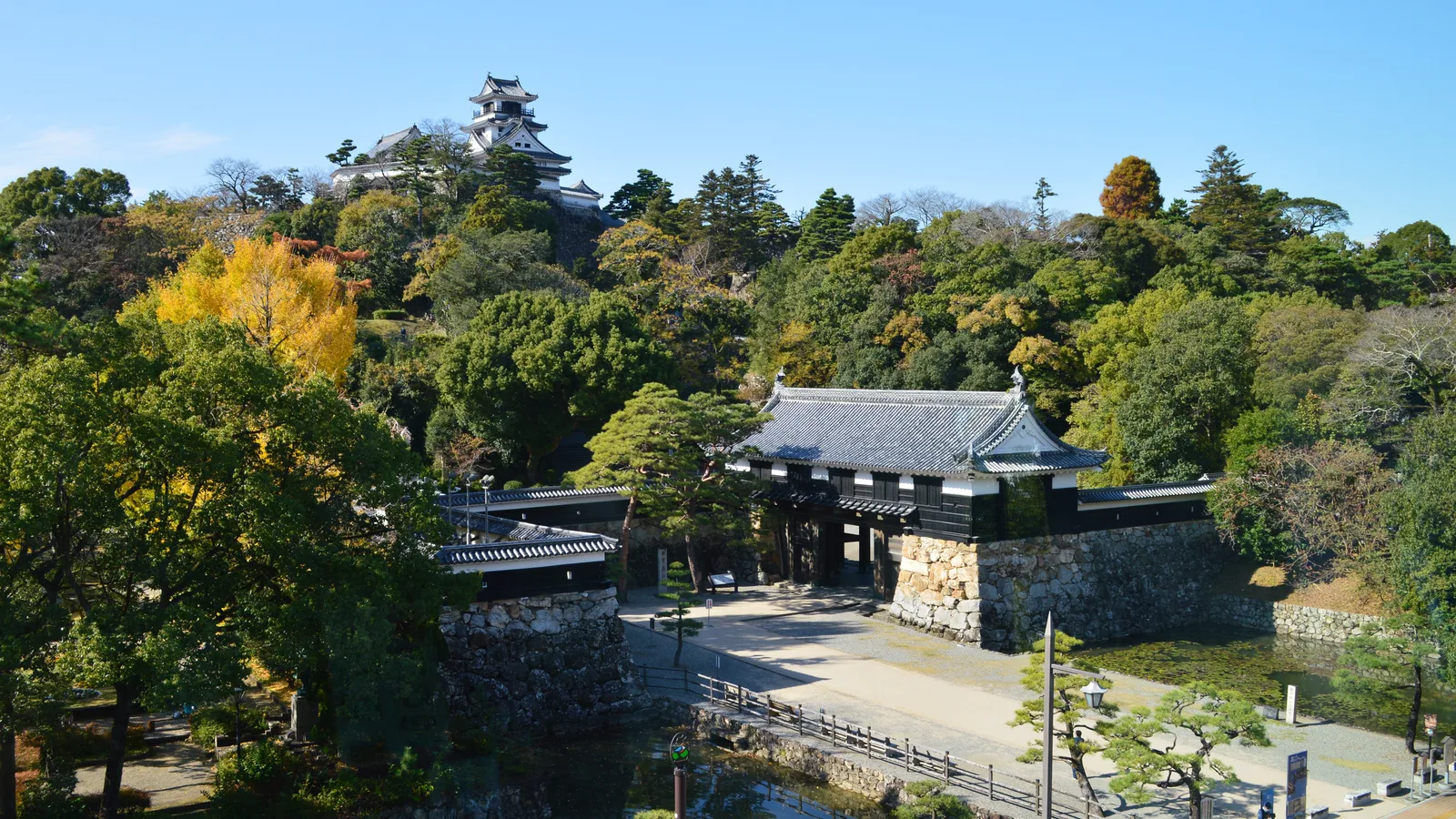
Kochi Castle — Where the Whole Castle Survived, Not Just the Tower
Kochi Castle
By Kei · Born and raised in JapanThe Meaning
When you visit an "original" Japanese castle, you are almost always visiting one building: the tower. The great keep stands on its hill, and you climb it and look out, but the place where the lord actually lived, the palace where the domain was governed day to day, is long gone. Even at the greatest of them, Himeji, the famous white keep stands magnificently empty, because the palaces that surrounded it no longer exist. Out of all the castles in Japan, only twelve still keep their original main keep standing at all; almost everything else a traveler calls "a castle" is a twentieth-century replica in concrete. The twelve survivors are precious. But they are, nearly all of them, a lonely tower on an empty hill.
Kochi is the one exception. Here, the whole inner castle survived, not just the keep, but the honmaru goten, the palace at the heart of the castle, standing exactly where it always stood and joined directly to the tower. The castle's own keepers put it plainly: this connected form, keep and palace together, "survives only at Kochi Castle." Fifteen of its buildings (the keep, the palace, the gates, the turrets, the loopholed walls) are all designated Important Cultural Properties, and together they are the only complete group of original main-castle buildings left in the country.
That one fact changes what you are walking toward. At Kochi you do not only climb a war-tower and look out. You walk through the actual rooms where people lived and a province was run, and then up into the keep that guarded them. You see the part of a castle that everywhere else has vanished.
And like all of the twelve, this is real Edo-period wood, never rebuilt in concrete, though "survived" is a gentler word than the history deserves. In 1727 a great fire swept the castle town and took almost everything, the keep included; only the main gate came through it. What you walk today was built back over the twenty-five years that followed, in the old way, with the present keep finished in 1749. So the castle did not merely escape time. It burned, and a domain spent a quarter of a century putting it back, whole (palace and tower and all), and then kept it standing for the next three centuries.
It began, by tradition, not with conquest but with a quiet kindness, and we will come to that inside the palace. For now, hold the one idea that makes Kochi different from every other castle you will ever visit: here, the home survived.
What Happens When You're There
Step 1: The Living Approach
If you come on a Sunday, the road to the castle is a market before it is a road. Otesuji, the wide street running straight east from the castle's main gate, fills with stalls (vegetables and fruit, garden plants, forged knives and tools, hot food) for nearly a kilometer, around three hundred sellers in a single line. It has happened every Sunday since 1690. Around seventeen thousand people walk it on a good day. Most castles, when their fighting days ended, became quiet monuments with a hush around them. Kochi's front door never went quiet. For more than three hundred years the approach to the castle has been the place where the town buys its dinner.
That openness is very much the character of Tosa, the old name for this region. Kochi people have a word, okyaku, that means not "guest" but "a gathering": a party you pull friends, relatives, and even passing strangers into, to eat and drink together. The road to the castle, lined with sellers and shoppers, is that same spirit made into a street. (Some places in Japan welcome an outsider more openly than others; Kochi is one of them.)
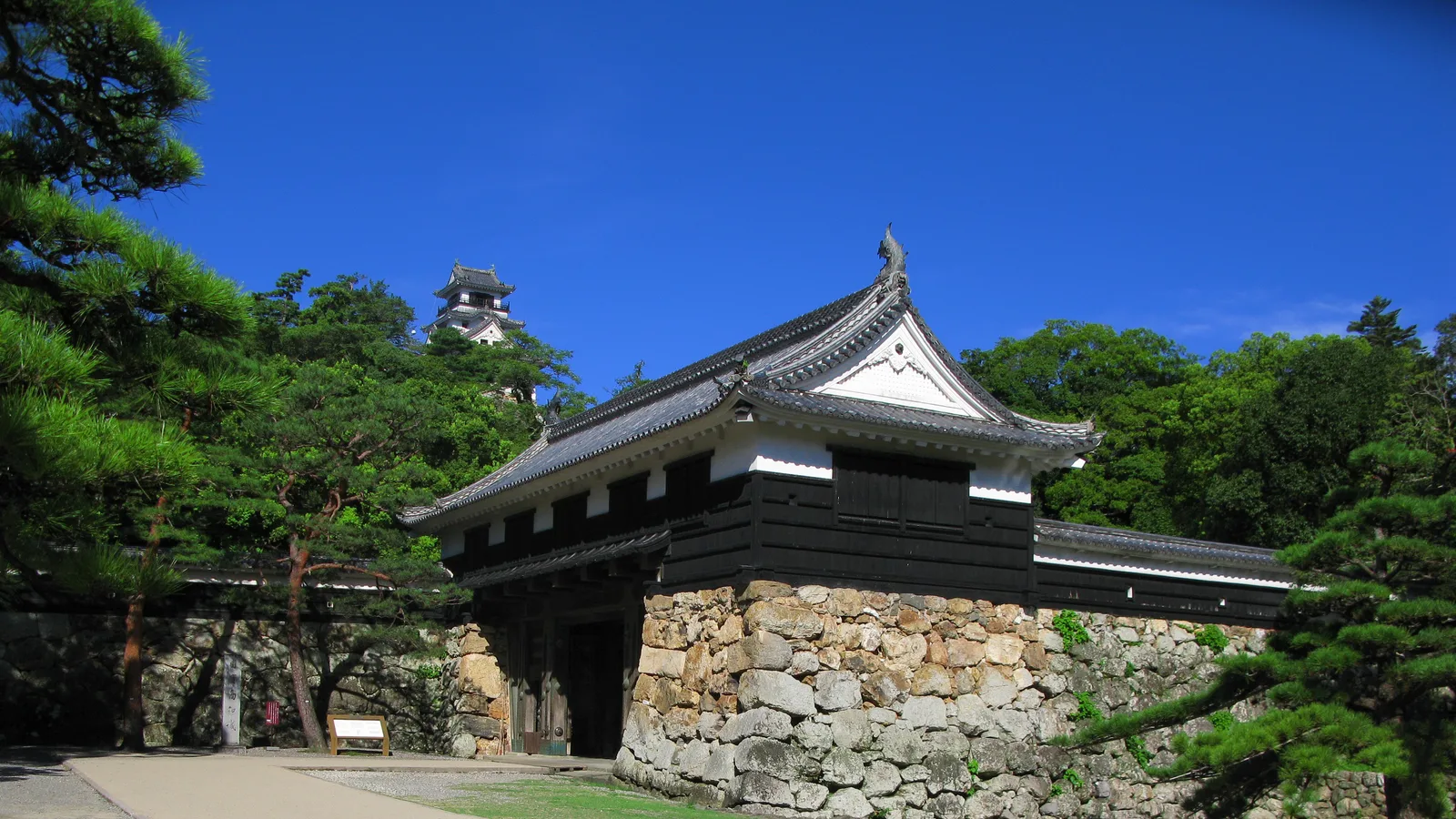
Then you reach the gate. The Otemon is the one structure that came through the great fire of 1727, and it still does the thing it was built to do: it holds the eye. Stand just inside it and look up, and the white keep rises perfectly above the dark gate, the two framed together in a single view. This is rarer than it looks: only three castles in Japan still keep both their original main gate and their original keep standing in line like this: Kochi, Hirosaki far to the north, and Marugame across the mountains. Everyone stops here, in the same spot, to take the same photograph. It is worth it.
Step 2: Reading the Rain
From the gate you climb gently, through the grounds, up stone-walled terraces toward the keep. As you go, look at the tops of the great stone walls, and you will start to notice something that almost no other castle has: stone spouts, like long troughs, jutting out from the wall heads and pointing away into the air. These are ishidoi, stone gutters, and there are sixteen of them built into the castle. The one on the main bailey still works today.
They are there because of the sky. Kochi is one of the wettest places in all of Japan, and a castle built of earth and stacked stone has a real enemy in heavy rain: water running down the wall faces soaks the packed core behind them, loosens it, and in time can bring a whole rampart down. The builders here did not fight that. They answered it. The stone gutters gather the rain off the upper ground and throw it clear of the walls, so the water never gets the chance to do its slow damage. It is a small, unglamorous piece of engineering, and it tells you something true about this place: a castle also has to survive its own climate for centuries, staying dry, warm, and standing long after the fighting ends. The form of Kochi is, in part, simply an answer to its rain.
Watch, too, for the smaller defensive details that survived here when they vanished almost everywhere else: the iron spikes, the shinobi-gaeshi, set to turn back anyone trying to climb in, and the Tsumemon, a gate built as a covered bridge across the dry moat between the second bailey and the main one, the only one of its kind left in the country. You pass through history that exists, now, nowhere else.
Step 3: The Palace That Stayed
At the top you come to the honmaru, the main bailey, and to the reason Kochi is unlike any other castle in Japan. Here, beside the keep, stands the palace: the Kaitokukan, the original honmaru goten. You take off your shoes at the entrance and walk in.
This is the moment most visitors do not expect. Everywhere else, you would now be inside a bare military tower. Here you are inside rooms: tatami floors, carved transoms above the sliding doors, a formal study with its writing alcove, the quiet light of a palace that looks out onto its own small garden. This is where the lords of Tosa actually lived and held court; this is where the business of governing a province was done. Walk it slowly. The wood beneath your socks is the real thing, rebuilt after the fire and kept ever since, worn smooth by three hundred years of feet. (Taking your shoes off here is the same instinct that runs all through Japanese life, you are stepping onto something old and cared for, and you leave the street outside.)
And here is the story we left in the entrance. By long tradition, this whole castle exists because of a wife. Its founder, Yamauchi Kazutoyo, was a minor warrior in his early years, too poor to afford the fine horse a man of ambition needed. His wife, Chiyo, had been given some money by her mother "for a matter of great importance," and had told no one she kept it. When the chance came, she quietly brought it out and bought her husband a magnificent warhorse. The horse caught the eye of the warlord they served, the recognition lifted Kazutoyo's career, and that rising path ended, after the great battle of Sekigahara in 1600, with the Yamauchi being granted the whole province of Tosa, and building this castle. It is one of the most beloved married-couple stories in Japan, taught for generations as naijo no ko, "the merit of the support given behind the scenes." There is a statue of Chiyo and her horse in the castle grounds, so the legend stands here in bronze. Like all such stories, the details shift in the retelling, but it is worth knowing, standing in these rooms, that the people who first told it chose to remember the castle as something built on a quiet, unseen kindness, rather than on a conquest.
Step 4: Climbing the Keep
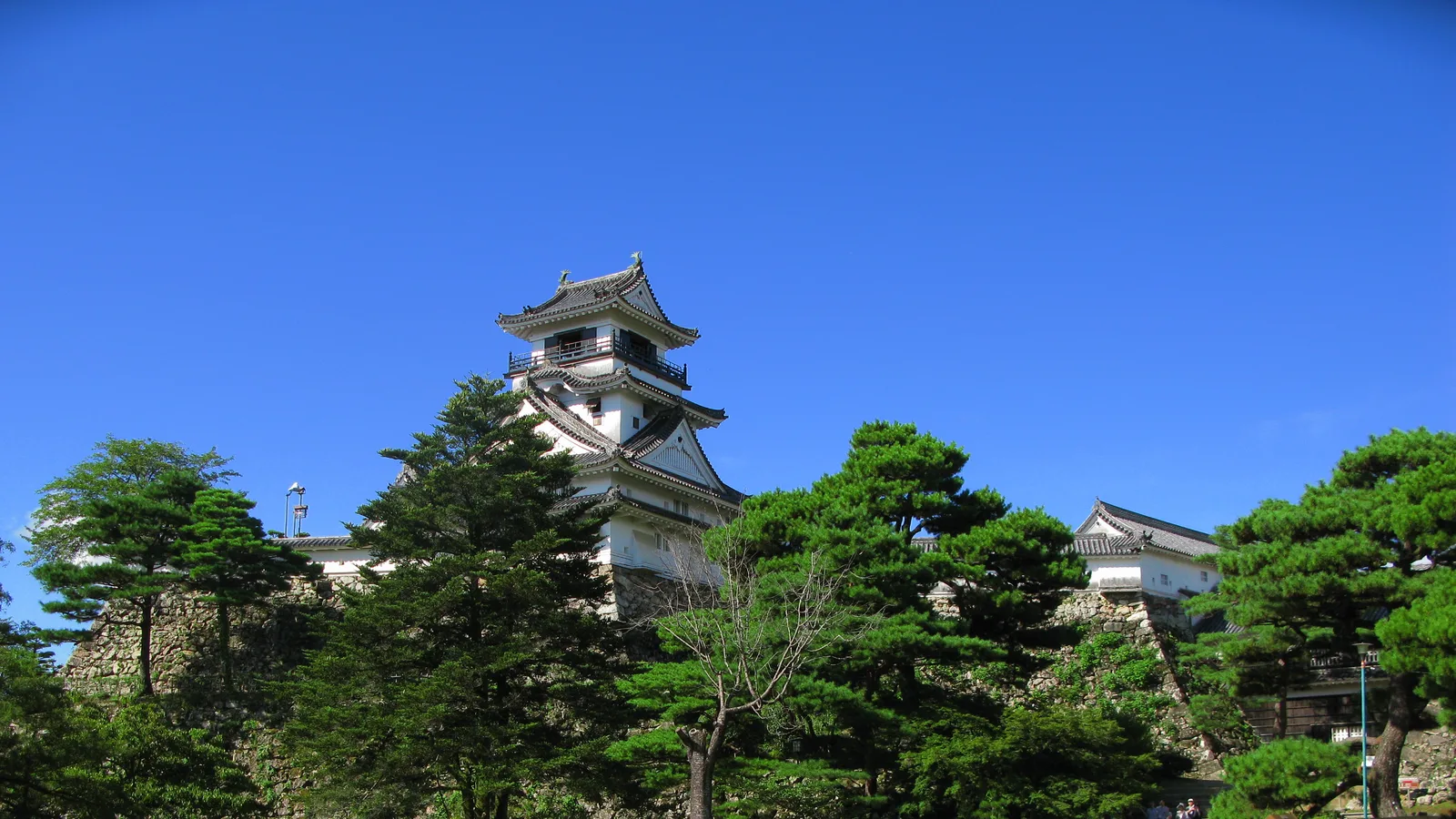
From the palace you step across to the keep itself and climb. Be honest with yourself about what that means: there are two climbs at Kochi, and people often blur them. The first is the gentle uphill walk through the grounds you have already done. The second is this: the inside of the tower, where the stairs are steep and narrow, closer to ladders than staircases, and barefoot or in socks on smooth old wood. There are handrails, and no shame at all in taking it slowly; Japanese visitors, schoolchildren, and grandparents all pause to catch their breath on these same steps.
The keep is a bōrō-style tower, a watchtower raised over the rooflines, and at the very top it does something most keeps do not: a railed wooden gallery, the mawari-en, runs right around the outside of the top floor, so you can step out into the open air and walk a full circle above the city. From up here Kochi spreads out below you, the rooftops and the green hills that ring the town, the same view the lords of Tosa once kept watch over.
You may notice the top floor is mostly bare, and at almost any other castle that emptiness would be the whole truth of the building: the lord never lived in the tower; the keep was the watchtower and the last redoubt, never a home. But you already know what makes Kochi different. The home is not missing here. You walked through it ten minutes ago, downstairs. At Kochi, uniquely, the empty watchtower and the lived-in palace still stand side by side, the way they always did.
Step 5: Walking Back Down
Come back down the steep stairs slowly (most people find the descent harder on the knees than the climb) and let those behind you set their own pace. Cross back through the palace grounds, down through the terraces and their stone gutters, and out under the Otemon gate, where the keep frames itself above you one last time.
If it is a Sunday, you walk back out into the market. If it is not, you walk back into an ordinary, friendly Kochi street, and either way, you are leaving a castle that did something none of the others managed. It did not just keep its tower. It kept its whole self (the palace and the keep, the gates and the walls, the rooms where people lived and the rain-gutters that keep it standing), burned once, rebuilt entire, and held onto for three hundred years, with its front door still open to the town. You carry a little of that out with you.
Good to Know
Hours. Kochi Castle is open daily from 9:00 to 17:00, and the detail that catches people out is the last admission at 16:30, half an hour before closing. Hours are extended during Golden Week and the Yosakoi Festival in early August. The castle is closed from December 26 to January 1. Last verified: 2026-06. Confirm current hours on the official site before you rely on them.
Admission. Adult (18 and over) admission is ¥500; visitors under 18 with student ID enter free, as do holders of a disability handbook or the prefectural elderly handbook. One ticket covers both the keep and the Kaitokukan palace. A combined ticket with the Kochi Castle Museum of History across the road is also available. Cards and transit IC are accepted. Last verified: 2026-06.
Getting there is the real question, and it is worth it. Kochi sits on the far side of Shikoku, and many itineraries skip it for that reason. Don't let the distance decide for you: this is the most complete original castle in Japan, in a city known for its food and its unhurried welcome, and it rewards the trip. To reach Kochi without a car: fly into Kochi Ryoma Airport (an airport bus reaches the city in about 30 minutes for ¥900); or take the Sanyo Shinkansen to Okayama, then the JR limited express Nanpu across the Seto Ohashi bridge and through the Oboke gorge to Kochi, about 2.5 hours; from Takamatsu, the limited express Shimanto takes a little over two hours. From Matsuyama (the natural stop before Kochi on a castle tour), note there is no direct train: the simplest through route is the JR Shikoku "Nangoku Express" highway bus, about three hours, ¥4,000, with five departures a day. (For how passes, IC cards, and Shikoku's trains and buses fit together, see getting around Japan.) Last verified: 2026-06.
In the city. From central Kochi, take the Tosaden streetcar (the oldest streetcar system still running in Japan) to the Kochijo-mae stop (a flat city fare of ¥230; a one-day pass is ¥500). From the stop it is about a 15-minute walk up to the keep, including the climb through the grounds. From JR Kochi Station it is roughly 25 minutes on foot, or a short bus ride.
How long to allow. The castle is compact; the official guidance is that an hour is enough to see it unhurried. Allow about an hour to ninety minutes for the palace, the keep, and the gate view together, and half a day if you add the Sunday market and the history museum.
The two climbs, and shoes. Inside the keep and the palace you remove your shoes and walk in socks on bare wood, so wear socks and shoes that are easy to slip on and off. The keep's interior stairs are genuinely steep and ladder-like; the walk up through the grounds is gentler. You do not have to climb the keep to enjoy Kochi: the grounds, the Otemon gate view, and the palace are the heart of it (more on this below if stairs are a concern).
The Sunday Market. The Nichiyo-ichi runs every Sunday (except January 1–2 and August 10–12) along Otesuji, straight from the castle's Otemon gate, roughly 6:00 to 14:00. If you are not in Kochi on a Sunday, you have not missed your chance to eat well: Hirome Market, a covered hall of food stalls near the castle, is open daily and is the easiest place to try Tosa's signature dish, katsuo no tataki: bonito seared over a straw flame.
Photography. The classic shot is the keep framed above the Otemon gate, from just inside the gate. Everyone stops in the same place for it, so step to one side before raising your camera so others can keep moving. (More on reading the room at popular photo spots.)
Rain. Kochi is one of the rainiest places in Japan, so a wet visit is likely rather than unlucky. The stone paths get slippery, so take the stairs with care, but the castle was, quite literally, built for the rain, and the stone gutters are part of what you came to see. Covered shopping arcades and Hirome Market nearby make easy rain shelters.
Official website: kochipark.jp
If Things Don't Go as Planned
The stairs are steeper than you expected, or you're visiting with someone who can't manage them. This is the most common worry at Kochi, so it helps to separate two things. The walk up through the grounds to the main bailey is a gentle slope. The stairs inside the keep are the steep, ladder-like part, and you do not have to climb them to have a real visit. The Otemon gate and its framed view, the stone walls and gutters, and even the Kaitokukan palace are reached without the keep's interior stairs, and they are the most distinctive things here. Many visitors enjoy the grounds and the palace and skip the keep climb entirely, and leave perfectly satisfied.
You're not in Kochi on a Sunday. The big 300-year street market only runs on Sundays, but Hirome Market (a covered food hall near the castle) is open daily, and for many people it is the real heart of eating in Kochi. You can have the local food and the friendly crowd any day of the week.
It's raining. It often is; Kochi is among the wettest places in the country. The grounds get slippery, so take the stone steps slowly, but a rainy day is the authentic Kochi, and the castle's own answer to the rain, those stone gutters, is one of its quiet wonders. The nearby covered arcades and Hirome Market are good places to wait out a downpour.
You're wondering whether the trip into Shikoku is worth it. Kochi is genuinely out of the way, and that puts a lot of travelers off. But the thing waiting at the end of the journey is the only castle in Japan where the whole original heart survives (tower and palace, lived-in and intact) in a city with some of the warmest hospitality and best food in the country. Give it a night rather than rushing it as a day trip, and the distance stops feeling like a cost.
It feels smaller than you imagined. Kochi is not a vast, towering fortress like Himeji, and some visitors note that. But size was never the point here. What makes Kochi extraordinary is not how big it is but how complete it is: the one place where you can still walk a whole Edo-period castle, not just the tower. Read it for what survived, not for how high it reaches.
You're confused by all the different buildings and tickets. It is simpler than it looks: a single castle ticket covers everything inside the grounds, including both the keep and the Kaitokukan palace. The Kochi Castle Museum of History is a separate building across the street, with its own admission (or a combined ticket), and Hirome Market and the Sunday Market are free public spaces in the town nearby.
Sources:
- Kochi Castle Official Website: Highlights (見どころ): The honmaru palace connected to the keep surviving "only at Kochi Castle"; the Otemon-and-keep framed view; the Tsumemon as the only surviving gate of its kind in Japan; the surviving shinobi-gaeshi spikes and other defensive details
- Kochi Castle Official Website: History (歴史): Yamauchi Kazutoyo entering Tosa and beginning construction (1601), the castle completed (1611), the great fire of 1727 that left only the Otemon, the rebuilding from 1729, the present keep completed in 1749, full completion in 1753
- Kochi Castle Official Website: Important Cultural Properties (重要文化財): The fifteen structures designated Important Cultural Properties (keep, Kaitokukan palace, storehouse, gates, turrets, and loopholed walls)
- Kochi Castle Official Website: Keep Architecture (天守の構造): The watchtower-style keep and the mawari-en railed gallery around the top floor
- Kochi Castle Official Website: Overhead Map & Stone Gutters (俯瞰マップ): The ishidoi stone gutters built for Kochi's heavy rainfall, sixteen within the castle, the main-bailey gutter still in use
- Kochi Castle Official Website: Fees & Hours (利用料金): Opening hours 9:00–17:00 with last admission 16:30, closed December 26–January 1, adult admission ¥500 and under-18 free, one ticket for keep and palace
- Kochi Castle Official Website: Access (交通アクセス): Address, the Tosaden streetcar to Kochijo-mae, parking and approach to the keep
- Kochi City: Kochi Castle Cultural Property Record: Official statement that Kochi is the only castle in Japan where the entire honmaru palace survives; the cultural-property designations
- Kochi City: Sunday Market (日曜市): The market held since 1690, over 300 years, along Otesuji from the Otemon gate, about 1 km and roughly 300 stalls, about 17,000 visitors a day, hours roughly 6:00–14:00
- Agency for Cultural Affairs: National Cultural Properties Database: Important Cultural Property designation of the Kochi Castle structures (designated 1934) including the Kaitokukan
- JNTO (Japan National Tourism Organization): Kochi Castle: Kochi as one of Japan's twelve surviving original castles and the only one keeping both its original tower and the lord's palace intact, the compact grounds, the rare single-frame gate-and-keep view
- JR Shikoku: Limited Express Nanpu (Okayama–Kochi): The Okayama–Kochi limited-express route via the Seto Ohashi bridge and Oboke gorge
- JR Shikoku Bus: Nangoku Express (Matsuyama–Kochi): The direct Matsuyama–Kochi highway bus (about three hours, five services a day) where no direct train runs
- Tosaden Kotsu: Streetcar Fares: The ¥230 flat city fare (revised from ¥200 in November 2024) on Japan's oldest surviving streetcar system
- Japan Tourism Agency Multilingual Database: Yamauchi Kazutoyo and Chiyo: The tradition of Chiyo's hidden savings and the warhorse (naijo no ko), associated with the founder of Kochi Castle
Image credits: Hero and thumbnail by Saigen Jiro (CC0) via Wikimedia Commons. The Otemon gate with the keep beyond, and the keep seen from the Sannomaru, by 京浜にけ (CC BY-SA 3.0) via Wikimedia Commons (cropped and resized).
WMJS is written in Japan, in English, with AI help. We check every page, but English is not our first language. If a sentence reads oddly, tell us. One sentence is enough.
Thank you. A person reads every note.
Real voices
Is it worth it?
Were you there? Share your photos.
Your photo could appear in this guide — with your name and a link to your profile.
Submit a photoRelated Articles


Getting Around Japan: The Tiny Things That Earn You a Nod

Why Removing Your Shoes Makes Japanese People Smile
More guides in Shikoku

Naoshima — The Island That Art Brought Back to Life
A walking guide to Naoshima, the Seto Inland Sea art island — Kusama's pumpkins, the underground Chichu Art Museum, and houses turned into art in a living village.
Naoshima Island
Ritsurin Garden — The Masterpiece Japan Left Off Its Famous List, Because Its Best View Is the Walk
An audio cultural guide to Ritsurin Garden in Takamatsu, verified against official sources. Understand why this daimyo strolling garden — a Special Place of Scenic Beauty with three Michelin stars — is not on Japan's famous list of three great gardens, which station to actually get off at, and why its masterpiece is the walk, not any single view.
Ritsurin Garden
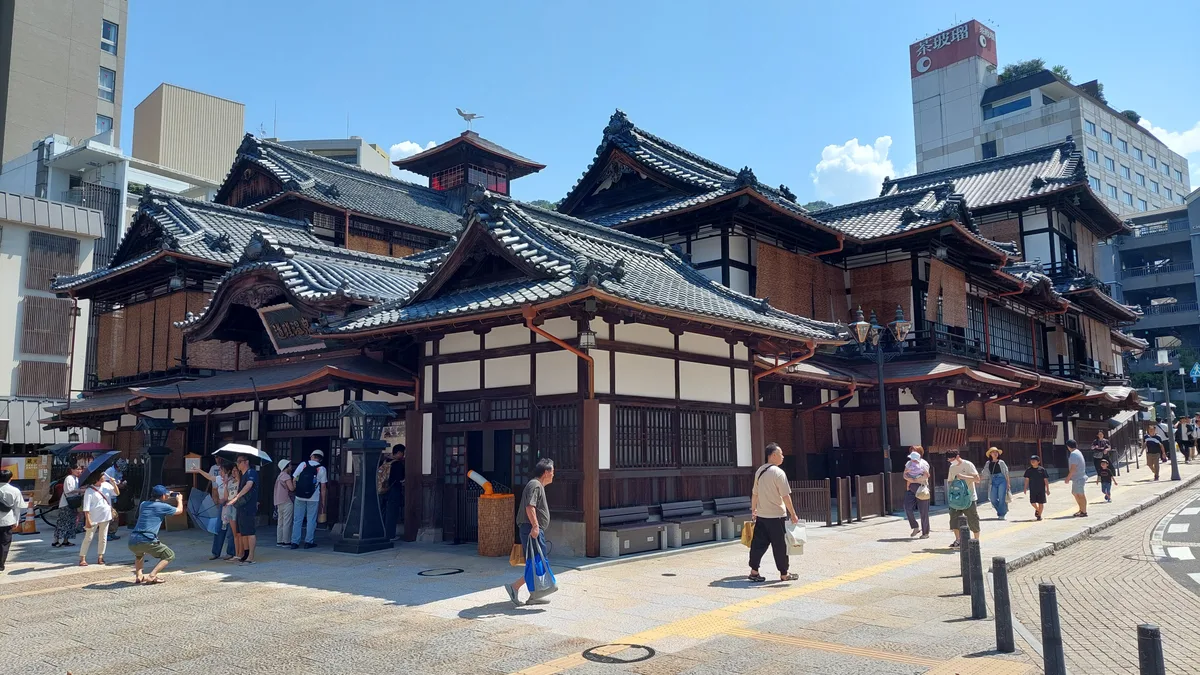
Dōgo Onsen — The 3,000-Year-Old Bath You Step Into, Not Just Look At
An audio cultural guide to Dōgo Onsen in Matsuyama, verified against official sources. Understand why this 3,000-year-old wooden bathhouse — a National Important Cultural Property you can actually bathe in — was repaired without closing, which of the three bathhouses and Honkan tickets to choose, and how the stories of Botchan and Spirited Away wrap around a bath the locals still use.
Dōgo Onsen (Matsuyama)