
Yufuin: A Town to Walk Slowly, and a Mist That Waits for Morning
Yufuin (Lake Kinrin)
By Kei · Born and raised in JapanThe Meaning
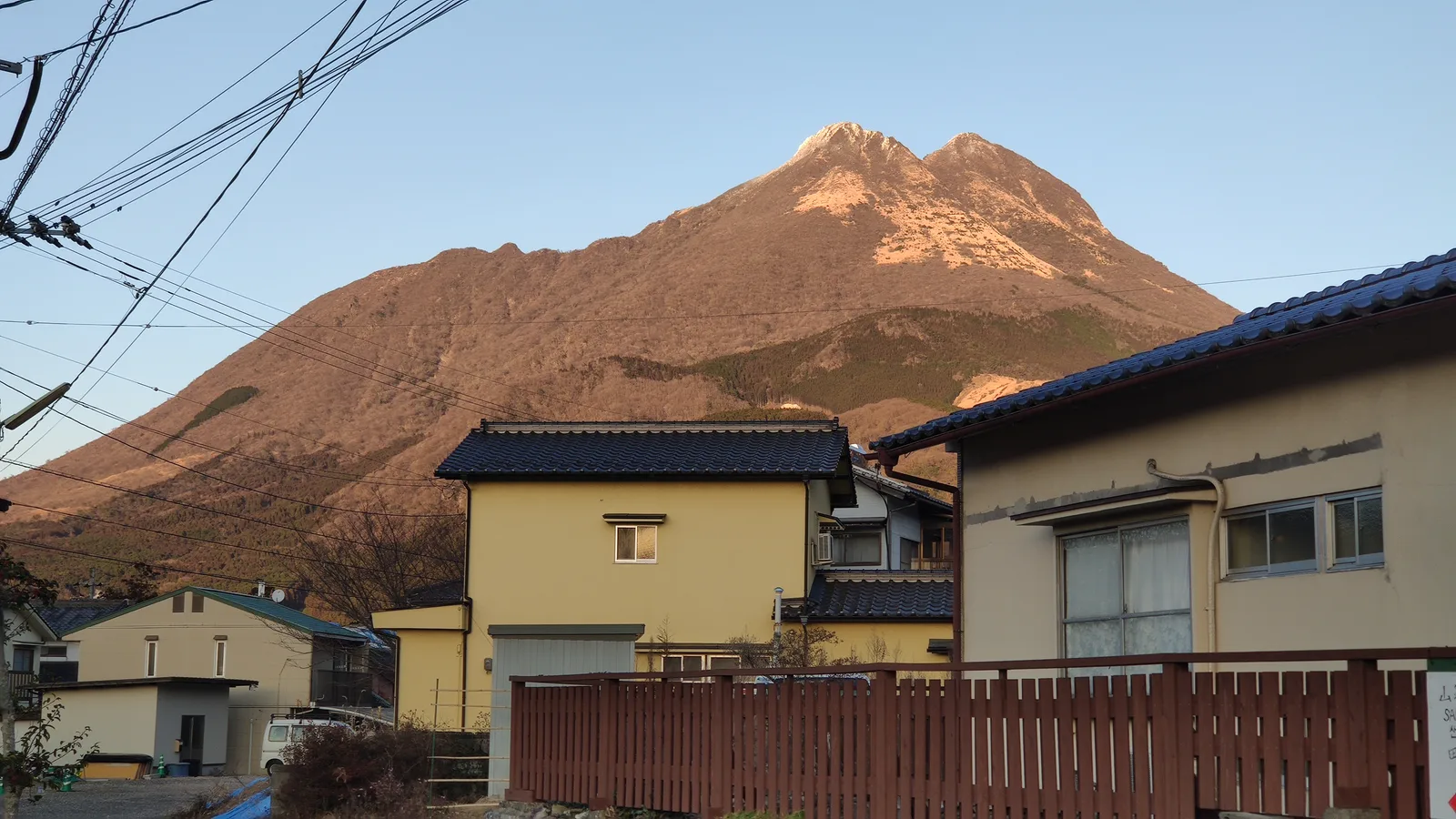
Come out of Yufuin Station and the first thing the town gives you is a mountain. Mount Yufu stands at the head of the basin, an active volcano of 1,583 metres with two peaks set close together, so that from the streets it reads as one mountain split at the top, and almost every lane in the town ends with it. The people who settled here saw that shape long before they built a single shop. Yufuin is a small hot-spring town laid out on the floor of a green basin, with that twin-peaked mountain in front of you and rice fields never far behind the buildings.
It would be easy to arrive expecting the kind of hot-spring town where the water itself is the spectacle. Yufuin works very differently, and that difference is much of the reason to come. Down on the coast an hour away, Beppu puts its hot springs on show: steam pouring out of the streets, ponds of coloured boiling water you pay to stand and look at, the earth plainly at work. Beppu is a place you go to see hot water. Yufuin, over the mountains, is a place you go to walk beside it. The town holds no single great sight to tick off and move on from. What it offers instead is a lane of small shops leading down to a little lake, a mountain that changes all day with the light, and a set of quiet inns where the point of the whole visit is the hours you spend doing very little.
That the town looks and feels this way is neither an accident nor especially old. Through the second half of the twentieth century, as resort money moved through the Japanese countryside, Yufuin kept turning it away. A plan to dam its valley was stopped in the 1950s. A golf course, and then a safari park, were both kept out. When a national resort law in the 1980s sent developers looking for land, the town answered by writing its own rules, and today two municipal landscape plans, one covering the Yunotsubo Street area and one covering the whole Yufuin basin, hold the height of the buildings and the openness of the fields in place by law. The unhurried, small-town feeling you come here for is something the town chose, and defended, across fifty years.
And it wears two faces, which is the last thing to know before you arrive. By day the main lane fills, and it fills hard: souvenir stalls, sweets, crowds moving slowly shoulder to shoulder. Some visitors walk that one street, decide the place is a tourist trap, and go home. What they miss is the Yufuin that appears once the day trippers leave. The shops shut early. The lane empties. And in the cold months, if you have stayed the night, you can walk down to the lake before dawn and find mist rising off the water in the grey light with no one else there. The crowded lane and the silent morning are the same town. One of them you can have on a day trip. The other waits for the people who stay.
What Happens When You're There
Step 1: Arriving in the Basin
Most visitors come from Fukuoka, and the journey is part of what sets the tone before you arrive. From Hakata Station a limited express called the Yufuin no Mori, the "Yufuin Forest," runs across Kyushu to the basin in a little over two hours. It is a green tourist train built with high windows for watching the hills go by, and it is popular enough that every seat is reserved, so a place has to be booked before you board rather than found on the day, ideally as far ahead as you can manage. If it is full, or not running that day, an ordinary limited express called the Yufu covers the same line. The wider logic of Japanese trains, passes and reservations is worth reading before you set out.
You can also arrive from the other side. Beppu and Yufuin sit on opposite flanks of the same mountains, near on the map but slow by rail, since the train loops around by way of Oita and takes about an hour and a quarter. Many people see the two towns as a pair, which is the sensible way to take them: the coast with its steaming hells, then the basin with its quiet. Come from Fukuoka or come from Beppu, but try to arrive by mid-morning, because the town changes so completely between its crowded noon and its empty dawn that a single daytime hour is the least of what it has to give.
Step 2: The Lane to the Lake
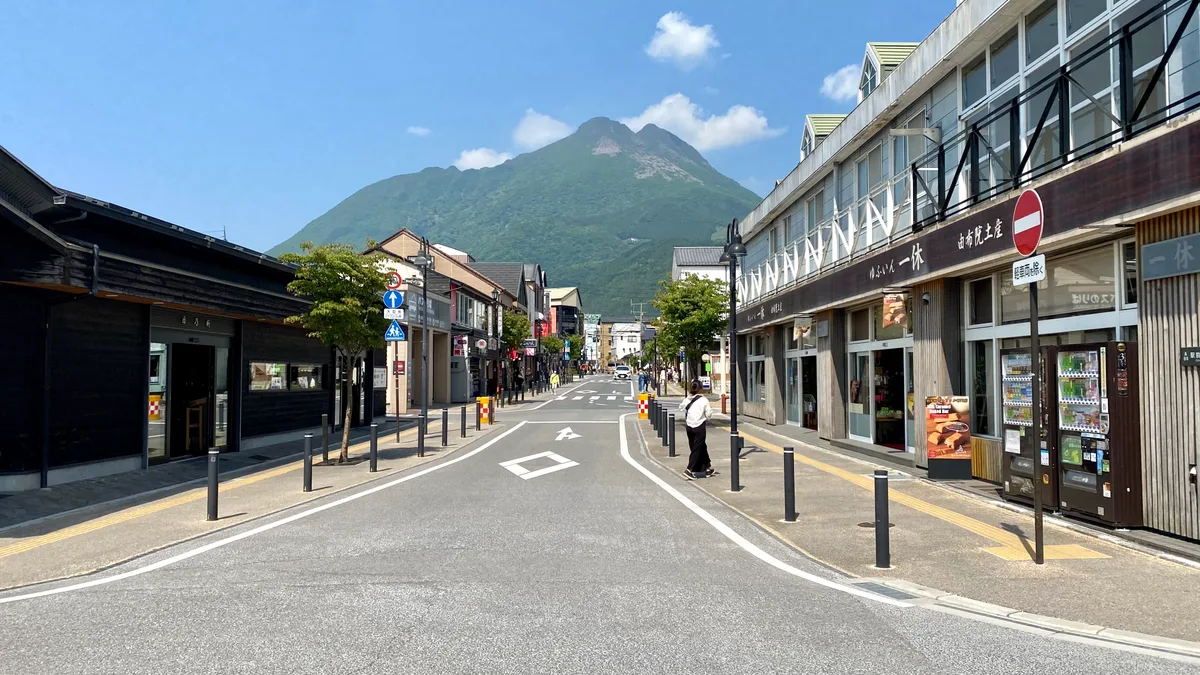
From the station, one route organises the whole visit. You walk straight out along the front street to a small bridge, and from there the Yunotsubo Street begins: about eight hundred metres of souvenir shops, sweet stalls and small galleries sloping gently down toward the lake, with Mount Yufu ahead of you on a clear day. This is the busy heart of Yufuin, and it is worth describing plainly. In the middle of the day it is crowded, and it is commercial, and this stretch is what people mean when they come away calling the town a tourist trap.
Two things are worth knowing about that crowd. The first is that it is concentrated: it thins the moment you turn off the main lane into a side path, or come early, or walk back through in the evening after the shops have closed. The second is that the grazing and browsing is genuinely part of what the street is for. Yufuin is a place people come to eat as they wander, croquettes and puddings and grilled snacks taken slowly along the lane, and taken on those terms, as a street made for ambling rather than a sight to be impressed by, the crowd matters far less. The busy noon is one true face of Yufuin, and the town keeps its other faces for the quieter hours at either end of the day.
Step 3: The Inn, and the Evening It Buys
This is where a day trip and an overnight stay quietly part ways. The question nearly every visitor asks about Yufuin, in a dozen languages, is whether it is worth sleeping here rather than passing through, and the honest answer turns entirely on what you want from the place. If you want the shops, the lake and a good lunch, a day is plenty. If you want the town itself, you stay.
What staying buys is not more sightseeing. It is an evening. Many of Yufuin's inns are ryokan built for stillness, some with their own open-air baths facing the mountain, and the shape of a night here is old and deliberate: you arrive in the afternoon, soak, eat a long dinner brought to you course by course, sleep, and wake without hurry. The whole quiet ritual of a ryokan that feeds you and bathes you and lets you wake slowly is the real thing you are paying for, more than any single sight. If you have ever wondered what everyone around you in the water is actually thinking, that unspoken world of the Japanese bath is worth understanding first, though many inns keep a private bath if you would rather soak on your own. Around five o'clock the shops along the lane begin to close, the day's crowd drains back toward the station, and the town you may have been doubting an hour earlier grows quiet around the people who stayed.
Step 4: The Mist on the Lake
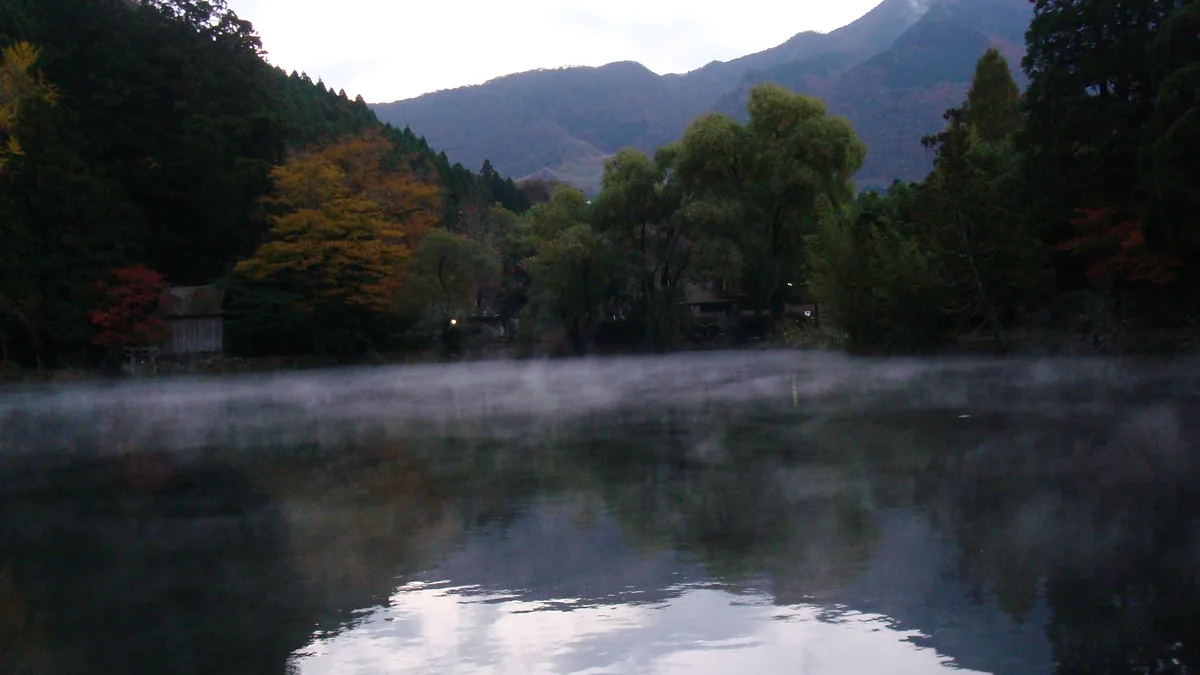
Wake before dawn, in autumn or winter, and walk down to Lake Kinrin. The lake is small, only a few minutes to circle, and there is a plain physical reason it became the emblem of the town. Both hot-spring water and cold spring water feed into it, so it holds more warmth than the air above it, and on a cold, still morning the warm surface meets the cold air and mist lifts off the whole lake in a slow white drift. A Confucian scholar gave it its name in 1884, watching the low sun catch the scales of its fish and calling it the "golden-scale lake." But the hour it is loved for is the far end of the day from that, the first grey light, when the mist is on the water, the shops are shut, and there is almost no one on the path.
This is the part of Yufuin a day cannot reach, for reasons of the clock and the calendar rather than any secrecy. The mist needs the cold and the stillness of an autumn or winter dawn, and dawn falls hours before the first train of day visitors arrives. Come in summer, or come at noon, and Lake Kinrin is a pleasant pond ringed with cafés. On a cold morning, having slept nearby, that same water is the reason people tell you to stay. Be ready for it to be withheld: a warm night, or a windy one, and the mist will not come at all. But the walk down to the water in the early quiet is its own reward with or without it, and the odds are best on the coldest, clearest mornings of the year. Japanese travellers watch the forecast for that mist exactly as anxiously as you will.
Step 5: Under Mount Yufu
Leave the way you came, back along the lane toward the station, with the mountain in front of you the whole way. By now Mount Yufu has likely shown you several faces of its own: clear at dawn, lost in cloud by mid-morning, out again by afternoon. People climb it, on trails made for beginners and seasoned walkers alike and opened each year on the second Sunday of May, but you do not have to climb it to feel why the town is arranged around it. It is simply always there, closing off the end of every street, the fixed thing this small basin gathers itself beneath.
Stand a moment before you go, and the question the town quietly poses answers itself. Why come all this way to a place with no one great sight, a single lane of shops and one small lake, and sleep here, when the photographs are already on your phone? Because the sight was never the point. You came to walk slowly under a mountain, to eat as you wandered, to soak and sleep and wake in a basin that decided, on purpose, to stay small and green. If the mist came, you were lucky. If it did not, you still went down to the water in the quiet before anyone else, and on a cold Yufuin morning that is enough to have been here. Thank you for walking with us.
Good to Know
Getting there: Yufuin sits in a mountain basin in Yufu City, Oita Prefecture, in northern Kyushu. The usual approach is from Fukuoka: the Yufuin no Mori limited express runs from Hakata Station to Yufuin Station in a little over two hours (around ¥6,130 including the reserved seat). It is entirely reserved, runs only a few times a day and not on every date, and is popular, so book as far ahead as you can; if it is full, the ordinary Yufu limited express follows the same line. From Beppu, the train loops around via Oita in about an hour and a quarter, and a direct bus over the hills is the quicker option. From Oita Airport, an airport bus reaches Yufuin Station in about 55 minutes (around ¥2,000). Timetables and fares change, so confirm the current ones before you travel. For the wider picture, see getting around Japan.
Day trip or overnight? You can visit Yufuin as a day trip and have a good day: the lane, the lake, a leisurely lunch, and the mountain overhead. But the town's quietest and, to many, its best hours, the early evening after the shops close and the mist-lit dawn at the lake, belong to those who stay, because the day's crowd and the last trains leave in the late afternoon and evening. If the still, empty Yufuin is what draws you, plan to sleep here. An overnight stay in a good inn can be expensive, especially at peak times, and is worth booking well ahead.
The lane, and when to walk it: The Yunotsubo Street is at its most crowded in the middle of the day. It is calmest early in the morning, in the evening after the shops shut, and a few steps off the main lane onto any side path. If the crowds are not what you came for, walk the street early or late and spend the busy midday hours at the lake, in a café, or up toward the quieter edges of the basin.
Lake Kinrin and the morning mist: Lake Kinrin is about a 30-minute walk from Yufuin Station at the far end of the Yunotsubo Street, and roughly 400 metres around. Fed by both hot-spring and cold water, it stays warm enough that on cold, still mornings in autumn and winter, mist rises from its surface around dawn. The mist depends on cold, calm weather and is never guaranteed; it does not appear on warm or windy mornings, or in summer. To have a chance of seeing it you generally need to stay overnight nearby, since it forms before the first day visitors arrive.
Bathing: Yufuin's hot springs are among the most abundant in the country; by the national tourism agency's account the town has the second-highest onsen water flow in Japan. This is not a bath-hopping town like some onsen resorts, though. The main soak here is the bath at your inn, and many ryokan also open their baths to day visitors for a fee. There is a small, rustic communal bathhouse by Lake Kinrin (thatched-roofed and mixed-gender), but its details vary and are best confirmed locally on the day. Bring cash for any public or day-use bath.
Mount Yufu: The twin-peaked mountain over the town, an active volcano of 1,583 metres, can be climbed on trails suited to beginners and experienced walkers, with the season opening formally on the second Sunday of May. Even if you do not climb, it is the backdrop to almost every view in the basin, clearest in the early morning and often veiled in cloud later in the day.
When to go: The famous morning mist on Lake Kinrin is an autumn-and-winter phenomenon, best on the coldest, clearest mornings. Autumn brings colour to the basin and the slopes of Mount Yufu; the green seasons are gentler and less crowded at the lake. Any season rewards an early start and an overnight stay. For how the seasons shape a Japan trip more broadly, see the best time to visit Japan.
Yufuin or Yufu? You will see both spellings. In everyday administration the area is written Yufuin-cho within Yufu City, while the station, the hot springs and the tourist brand use the spelling Yufuin. Both are correct and refer to the same place; the difference is a quirk of a twentieth-century town merger rather than a sign of two separate destinations.
Language: Signs and menus along the main lane are used to international visitors, and you can enjoy the town, the lake and a ryokan stay with very little Japanese, though a few words are always welcome.
Cash: Some smaller inns, baths and shops here prefer cash, and ATMs are fewer than in a city, so carry enough for your stay.
Last verified: 2026-07
Official websites: Yufuin tourism (Yufu City Tourism Bureau, Japanese) and Visit Oita (Oita Prefecture, English); train details at JR Kyushu, Yufuin no Mori; English overview at JNTO.
If Things Don't Go as Planned
You came for the day and the town felt like a tourist trap. This is the most common disappointment at Yufuin, and it comes from seeing only the crowded middle of the Yunotsubo Street at its busiest hour. The town has another face entirely, and it appears early and late rather than at noon. If you only have a day, walk the lane first thing in the morning or in the evening after the shops shut, turn off it onto the side paths, and spend the busy midday at the lake or in a café. If the still, empty Yufuin is really what you want, the honest answer is to stay a night.
The morning mist never came. Even in winter, Lake Kinrin's mist depends on a cold, still dawn, and a warm or windy morning simply will not produce it. It helps to expect this rather than count on it: the mist is a gift, not a guarantee, and the coldest, clearest mornings give the best odds. The walk down to the lake in the early quiet, before anyone else is about, is worth doing whether or not the mist obliges.
The Yufuin no Mori was fully booked. The scenic train sells out, especially in autumn and on weekends, because every seat is reserved and there are only a few services a day. If you cannot get a seat, the ordinary Yufu limited express runs the same route, and from Beppu the bus or the local train reaches Yufuin without a special reservation. The scenic train is a lovely way to arrive, but it is not the only way, and missing it does not cost you the town.
You have tattoos and are unsure about the baths. A small public bath may ask you to cover a tattoo, and rules vary from place to place, but this is rarely a real problem in Yufuin, because the main soak is your own inn's bath and many ryokan offer a private or family bath you can book. Ask at check-in; it is almost always solvable. For the fuller picture, here is how tattoos and onsen fit together.
You are trying to choose between Beppu and Yufuin. You do not necessarily have to. They sit on opposite sides of the same mountains and answer different moods: Beppu is loud, steaming and dramatic, a place to see the earth at work, while Yufuin is quiet, green and slow, a place to walk and stay. Many travellers do both, often a night on the Beppu coast and a night in the Yufuin basin. If your time allows only one, choose by what you want more: the spectacle of the water, or the stillness beside it.
One street felt too small to be worth the trip. Yufuin rewards a slower measure than the number of sights. If the shops and the lake feel thin, the missing half is the evening and the early morning, the ryokan dinner and bath, the mist-quiet dawn, none of which a passing day trip includes. And if it is the soak-and-stroll evening you are drawn to more than Kyushu specifically, Kinosaki Onsen near Kyoto and Osaka offers a kindred night in a whole town you wander in a yukata, bath to bath.
Sources:
- Yufuin tourism (Yufu City Tourism Bureau, Japanese): Lake Kinrin named in 1884 by the Confucian scholar Mori Kuso and its autumn-to-winter early-morning mist; the Yunotsubo Street as roughly an 800-metre main lane from the front bridge to the lake; the horse-drawn carriage as a Yufuin specialty of over fifty years; area access and the YUFUiNFO information centre
- Visit Oita, Lake Kinrin (Oita Prefecture, English): Lake Kinrin's 400-metre circumference, its warmth from mixed hot-spring and cold-water inflow, the resulting winter-morning steam, and the roughly 30-minute walk from Yufuin Station
- Visit Oita, Mount Yufu (Oita Prefecture, English): Mount Yufu as a 1,583-metre active volcano with twin peaks, climbing trails for both beginners and experienced walkers, and the mountain-opening ceremony on the second Sunday of May
- Yufu City, landscape planning (Japanese): the two municipal landscape plans under the Landscape Act (the Yunotsubo Street area, effective 2008, and the Yufuin basin, effective 2013) and the city landscape ordinance that regulate building and scale
- JR Kyushu, Yufuin no Mori (Japanese): the limited express from Hakata to Yufuin (a little over two hours, around ¥6,130 including the reserved seat), all seats reserved and reservation required, a few services a day on a calendar of operating dates, and the Yufu limited express as its substitute (timetable revised 14 March 2026, information as of 15 May 2026)
- JNTO, Lake Kinrin (English): the English framing of Lake Kinrin and its morning mist, the nineteenth-century naming by a Confucian scholar, and Yufuin's onsen among the highest-flowing in Japan
- Oita Kotsu, Oita Airport bus (Japanese): the airport bus between Oita Airport and Yufuin Station, about 55 minutes for around ¥2,000
Hero and thumbnail photo: Drivephotographer, CC0, via Wikimedia Commons. Yunotsubo Street photo by ほっきー, CC BY-SA 4.0, via Wikimedia Commons. Lake Kinrin morning-mist photo by Tzu-hsun, Hsu, CC BY-SA 4.0, via Wikimedia Commons.
WMJS is written in Japan, in English, with AI help. We check every page, but English is not our first language. If a sentence reads oddly, tell us. One sentence is enough.
Thank you. A person reads every note.
Real voices
Is it worth it?
Were you there? Share your photos.
Your photo could appear in this guide — with your name and a link to your profile.
Submit a photoRelated Articles

What Japanese Bathers Actually Think When You Walk In


Staying at a Ryokan: What Your Host Wishes You Knew

Getting Around Japan: The Tiny Things That Earn You a Nod
More guides in Kyushu
Visiting Dazaifu Tenmangu, the Shrine Where a Wronged Scholar Became a God
Is Dazaifu Tenmangu worth visiting? We weighed 49 traveler voices: 56% say worth it, and Japanese visitors land warmer at 77%. Free entry, getting there from Fukuoka, the umegae mochi and flying-plum legend, plum-blossom timing, and the Kyushu National Museum next door, with an audio guide.
Dazaifu Tenmangu
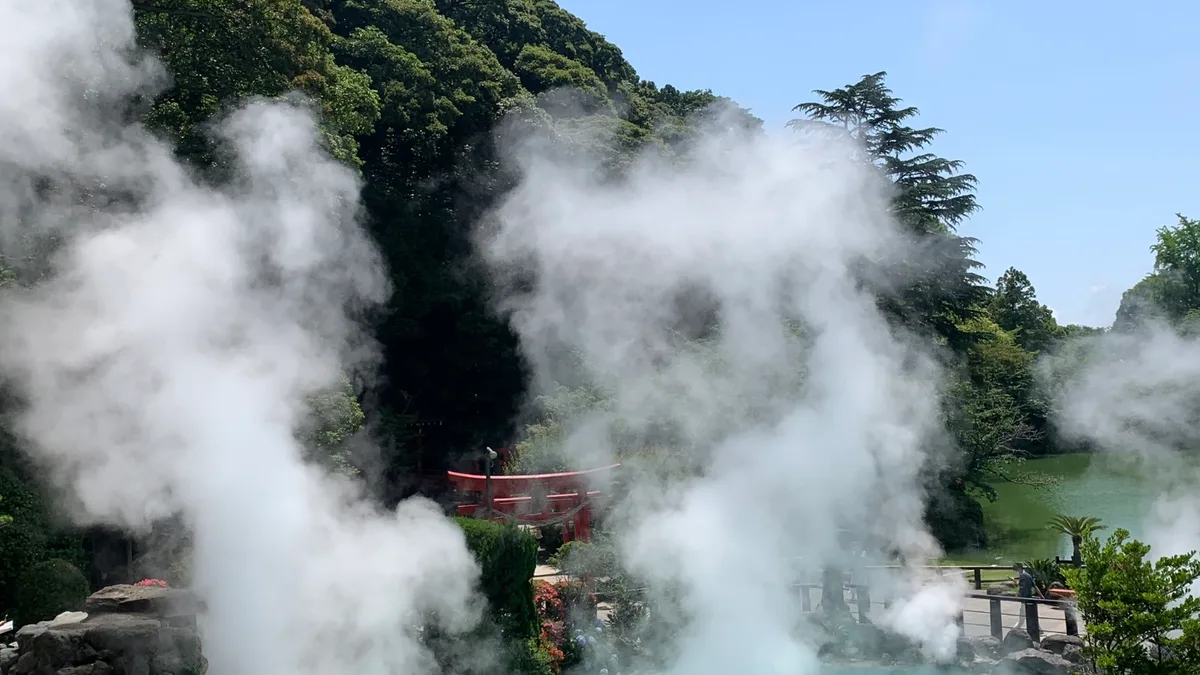
Visiting Beppu Onsen, the Town Where the Earth Boils Just Beneath Your Feet
Is Beppu worth it? We weighed 102 traveler voices: 46% say yes for the baths and boiling town, 44% say it depends on why you came, and Japanese reviewers are far warmer at 72%. The seven hells you look at but don't bathe in, steam-cooked eggs, the sand bath, and Beppu Hatto, with an audio guide.
Beppu Onsen (Kannawa)
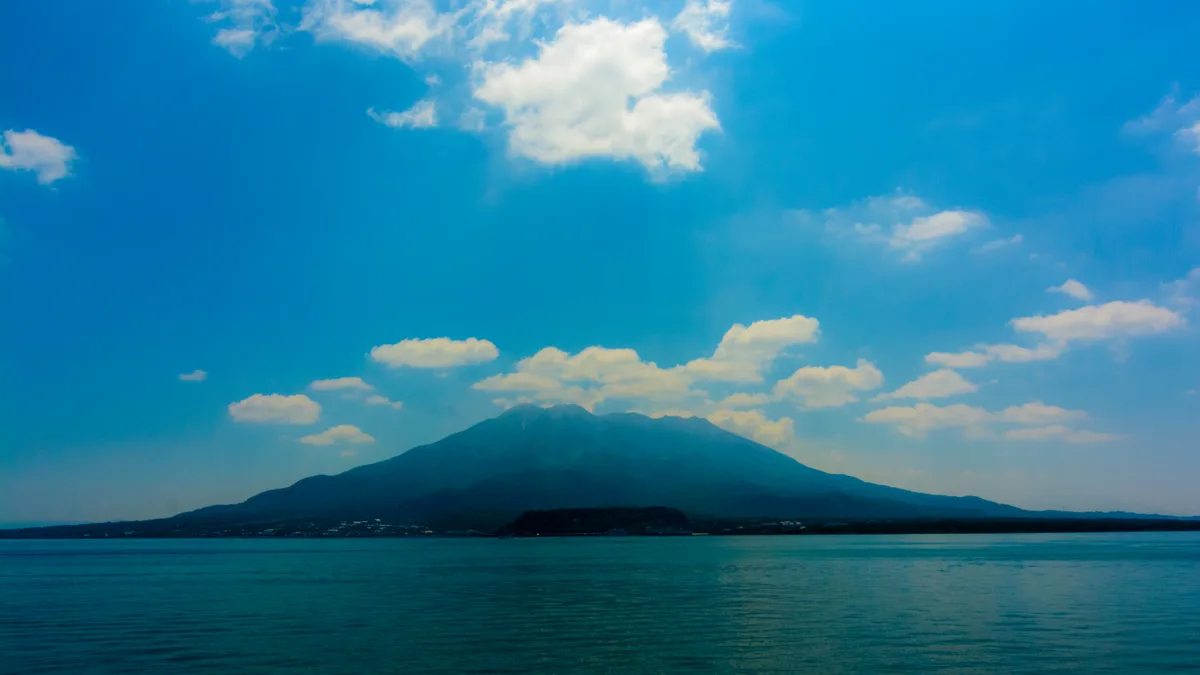
Kagoshima — The City That Lives With a Volcano
Kagoshima lives with an active volcano across the bay. An audio guide to Sakurajima: ash read like weather, a ferry to the mountain, a garden built around it.
Sakurajima
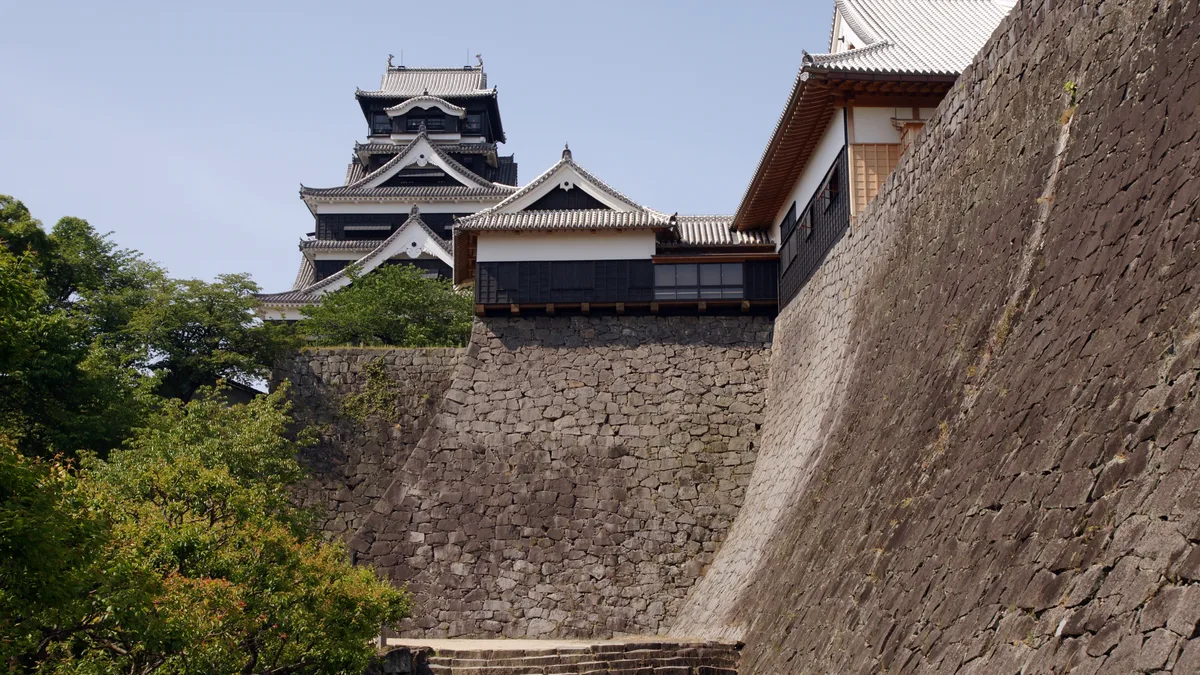
Kumamoto Castle — A Fortress Being Put Back Together, One Numbered Stone at a Time
An audio guide to Kumamoto Castle — a fortress still being rebuilt after the 2016 earthquake. The miracle stone wall, the elevated walkway over the live repair, plus hours, tickets and access.
Kumamoto Castle