
Osaka Castle — The Tower Osaka Built Three Times
Osaka Castle
By Kei · Born and raised in JapanThe Meaning
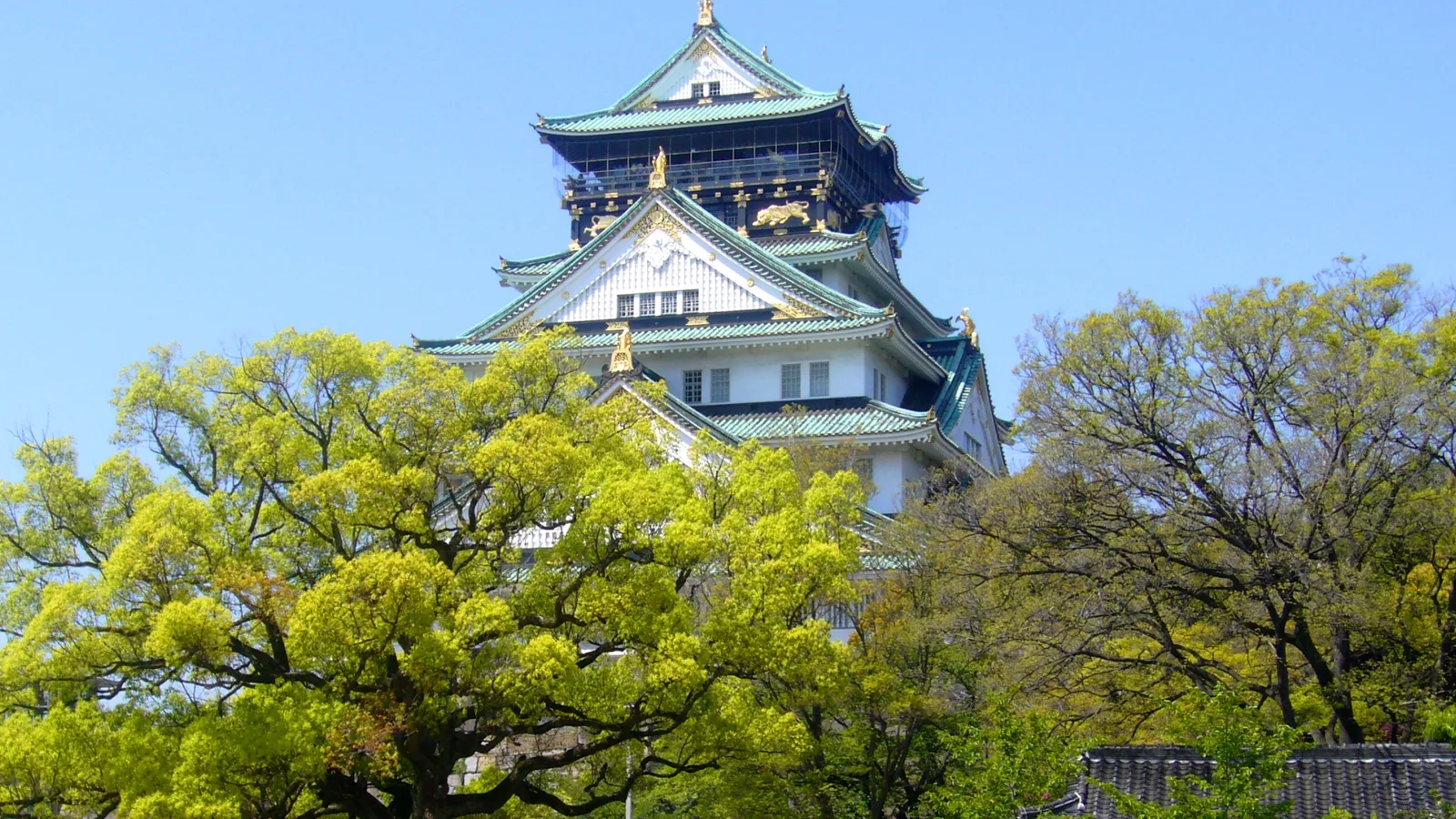
Come at the tower from across the water, from the wide plaza on its southern side, and let it do what it was rebuilt to do: rise white and gold above the moat, five tiers of curved roofs, a pair of golden fish glinting at the very top. It is the most photographed building in the city — the face Osaka puts on its postcards, its sweets, even its manhole covers. And almost everyone standing here, certain they are looking at the castle Toyotomi Hideyoshi built, is gently mistaken.
This is the third tower to stand on this hill. Hideyoshi — a man born to a farming family who rose, in one lifetime, to rule all of Japan — raised the first one here beginning in 1583, and it was lost within a generation. The Tokugawa shoguns built another in its place; lightning took that one in 1665, and for the next two hundred and sixty-six years this hill carried no tower at all. The one in front of you went up in 1931. It is built of steel and reinforced concrete. Inside it has an elevator and a museum. By any strict measure of authenticity, it is not the original — and the people of Osaka, who know this perfectly well, love it anyway.
That quiet contradiction is what this walk is really about. Because the more honest way to see what stands before you is this: the wooden tower has burned and been raised again, but the moat at your feet and the great stone walls that hold this hill are four centuries old and entirely real. In Japan, a castle was never only its tower. The tower is the symbol; the earth and stone are the castle. Osaka lost the symbol and chose, each time, to raise it once more — the last time with coins and notes gathered from ordinary citizens, in the space of a single year. Walk in knowing that, and the concrete stops being a disappointment. It becomes the point.
What Happens When You're There
Step 1: The Moat and the Stones
You will feel the size of this place before you see the tower. Osaka Castle is not a building; it is a park of a hundred and five hectares, and from whichever station you arrive — and there are several — the keep is a fifteen- to twenty-minute walk away, across bridges and up gentle slopes. Many people cross the first broad band of water, see it shining, and assume they have arrived. That is only the outer moat. The castle keeps unfolding: a second moat, another wall, another gate, each one drawing you further in than you expected.
Slow down at the walls, because this is where the real age of the place lives. The stones are enormous — fitted together without mortar, some of them the size of a small house. Near the Sakura Gate stands the largest of all, known as the tako-ishi, the "octopus stone": a single granite face of close to sixty square meters — roughly thirty-six tatami mats — weighing an estimated hundred and eight tons, the largest stone in the whole castle. It was quarried in Bizen, in what is now Okayama, more than a hundred kilometers away, and laid here in 1624 by Ikeda Tadao, the lord charged with rebuilding this part of the castle after the war that ended the Toyotomi line. No machine placed it. It was floated across the sea on rafts and dragged into position by ranks of laborers whose names no record kept — the same anonymous, patient effort that lies behind so much of what visitors admire in Japan. The tower above them is a reconstruction. The wall they built has not moved in four hundred years.
Step 2: Crossing to the Keep
Cross the inner moat by the bridge the old maps call Gokuraku-bashi, and the tower finally stands clear above you — close enough now to read its details. The white plaster walls. The black-and-gold trim. The pair of golden shachihoko, the mythical fish that ride the roof ridge, said to ward off fire. On a still day the whole structure hangs upside down in the moat below, and this is the angle every photograph wants; if you stop on the bridge to take it, step aside so the people behind you can pass and shoot too — the moment is better shared than guarded.
Stand here and the numbers are worth knowing, because they carry the story. The tower rises about fifty-five meters, five tiers on the outside and eight floors within. But the year that matters most is 1931. After more than two and a half centuries with no tower, the mayor of Osaka, Seki Hajime, proposed in 1928 that the city rebuild it — and the response startled everyone. Donations poured in from the citizens of Osaka, and the target of one and a half million yen, an immense sum in the depths of a global depression, was met in roughly half a year. They chose to build it not in wood but in the newest material of the age, steel and reinforced concrete, so that this time it could not burn. Of all that money, the tower itself cost a little over four hundred and seventy thousand yen; the rest went to the buildings and grounds around it. It was the first castle tower in Japan raised by modern construction — and from the beginning it was meant to be a museum. Why a whole city would empty its pockets, in hard times, to rebuild a tower it knew was no longer the original is a question Japan answers less by character than by quiet, shared habit: you look after the symbol because the symbol is held in common.
Step 3: Inside the Tower
Here is the thing it is kindest to tell you before you climb: the inside is not an old castle. There are no creaking timber floors, no lord's chambers preserved under glass. There is an elevator — it carries anyone up to the fifth floor, and visitors who need it all the way to the top — and there are eight floors of a well-made history museum. This surprises people, and a few feel briefly cheated by it. You don't have to. You only have to know what you came up for, which is not a time machine but a story.
And the story is genuinely good. The exhibits walk you through the life of Hideyoshi, from his ordinary birth to the height of his power; a great painted folding screen of the castle's fall is reborn as a lit miniature you look down upon; a full-size replica of his famous golden tea room glows on one floor. At the top, the eighth-floor observation deck stands about fifty meters up and opens the whole city to you — the moats below drawn in clean dark lines, the modern towers of Osaka pressing right to the edge of the green. Nearly three million people came up here last year, more than ever before. Read the building as what it is — not the tower Hideyoshi knew, but the place a city built to keep his story, and its own, where everyone can reach it — and you will not feel short-changed. You will feel let in.
Step 4: The Park Below
Come back down and step away from the ticket gate, and the castle quietly changes character. The tower is the part that costs money and keeps hours; everything around it — the hundred and five hectares of moats and walls and lawns and tree-lined paths — is an open public park, free to anyone, day or night. This is the layer most guidebooks skip, and the one the people of Osaka actually live in. On any ordinary morning you'll find joggers tracing the moats, office workers eating lunch on the stone steps, grandparents walking slowly under the pines, children running where armies once mustered.
The seasons turn this everyday park into something the whole city comes out for. To the keep's west, the Nishinomaru Garden — a separate, ticketed lawn of about three hundred cherry trees — becomes one of Osaka's great spots to sit beneath the blossom with the tower behind it. In late winter, a grove of more than twelve hundred plum trees colors the air before anything else has woken. None of it asks anything of you. If Dotonbori, across the city, is Osaka turned up loud — neon and street food and crowds — this is the same city with the volume down: the quiet, green, unhurried Osaka that its own people keep for themselves. Most visitors only look up at the tower. The ones who stay a while come to understand that the park is the castle, and the castle was always meant to be lived in.
Step 5: Looking Back at the Tower
Before you leave, wait for the light to go. As dusk settles, floodlights find the tower and it turns to warm ivory against a darkening sky, and the moat picks it up and holds it, doubled and trembling on the water. The park stays open; you can stand here long after the ticket gate has closed, with the lit keep almost to yourself.
Look back at it once more and hold the two truths together, the way Osaka does. This is not the tower Hideyoshi built, nor the one the Tokugawa built. It is steel and concrete, raised in living memory, with an elevator inside. And it is loved without reservation — rebuilt by the grandparents of people now walking these paths, with money they gave freely when they had little to spare, because some things a city decides to carry forward whether or not they are the original. You came expecting a castle and found something rarer: a place that tells you the plain truth about itself and is cherished all the more for it. For one evening, looking up at a tower a city built three times, you stood inside that long act of keeping. Thank you for walking with us.
Good to Know
The two layers — park and tower: This is the single thing worth understanding before you come. Osaka Castle Park is a vast public park (about 105.6 hectares) that is free and open at all hours — the moats, the stone walls, the gates, the lawns, the jogging paths. The tower (the keep) is a separate, ticketed history museum with its own opening hours. A third space, the Nishinomaru Garden, is a ticketed lawn with the best cherry-blossom views. You can have a wonderful half-day here without paying a yen; the ticket is only for going up inside the tower.
Tower hours & admission: The keep is open 9:00–18:00 (last entry 17:30), closed December 28–January 1. Admission is ¥1,200 for adults, ¥600 for high-school and university students (with ID), and free for junior-high age and younger. Entering the park is free. Last verified: 2026-06 — confirm current hours and fares on the official site.
Nishinomaru Garden: Open 9:00–17:00 (March–October), 9:00–16:30 (November–February), closed Mondays; ¥300 for adults, free for junior-high age and younger. Hours extend into the evening during the cherry-blossom season. Last verified: 2026-06.
Getting there: The park is large and every station leaves you a 15–20 minute walk from the keep, so don't be alarmed by the distance. The closest stations are Osakajōkōen and Morinomiya on the JR Osaka Loop Line, and Tanimachi 4-chōme, Temmabashi, and Morinomiya on the Osaka Metro; Keihan trains also stop at Temmabashi. For step-free access toward the keep, the route in from the Ōtemon gate (near Tanimachi 4-chōme) is the gentlest. For the wider picture of trains, IC cards, and passes, see getting around Japan.
Best time of day: Arrive at opening, around 9:00, to climb the tower before the lines and the heat build — by late morning on a busy day the ticket queue can run long. Late afternoon into the evening is for the park and the floodlit tower; remember the keep's interior closes at 18:00, so the night view is an outdoor one.
How long to allow: The museum inside takes most people 50–60 minutes; with the walk in, the moats, the great stone walls and a turn through the park, a relaxed visit is a half-day. There's a small gold-leafed boat that circles the inner moat in about twenty minutes if you'd like to see the walls from the water.
Accessibility: An elevator carries everyone to the fifth floor; the fifth-to-eighth-floor climb is by stairs, but visitors who need it can use the elevator on every floor, and a small number of wheelchairs are lent free at the tower. Free audio guides are available in English.
If Things Don't Go as Planned
You got inside and realized it's a modern museum, not an old castle. You're not the only one — this surprises a great many visitors, Japanese ones included. The current tower was rebuilt in 1931 in steel and concrete, and its interior was always meant to be a museum. The trick is to come up for the story — Hideyoshi's life, the painted screen, the view from the top — rather than for preserved period rooms, which were never here to begin with. And remember that the truly old part of the castle is outside and free: the four-hundred-year-old moats and stone walls.
You crossed a moat and thought you'd arrived, but the tower was still far off. The castle is built in rings, and the first water you reach is only the outer moat. Keep walking inward — across the next bridge, through the next gate — and the keep will rise ahead of you. The whole approach is part of the design; give yourself the fifteen or twenty minutes it takes.
The queue for the tower is long. Come right at opening (9:00) or in the later afternoon, and consider buying your ticket online in advance to skip the purchase line. If the wait still looks daunting, the park, the walls, and the views from the bridges cost nothing and ask for no ticket — many people find these the best part anyway.
You came at night hoping to go up. The tower is beautifully floodlit after dark, but its interior closes at 18:00, so an evening visit is for the outside: the lit keep, the reflection in the moat, the quiet park. It's well worth it — just plan the climb for daytime.
You're here with children, or someone who can't manage stairs. The park is open, flat in many places, and easy to roam, and the tower's elevator reaches the fifth floor for everyone and every floor for those who need it. The gentlest walk up to the keep comes in from the Ōtemon gate side. For a longer day out with little ones, traveling Japan with kids has more on pacing and breaks.
It felt crowded. Osaka Castle is one of the city's most-visited places, and the area right around the keep can fill up at midday. The park is large enough to leave the crowd behind — walk out along a quieter stretch of moat, or come early or late. If the question of crowds in Japan is on your mind generally, it's a more nuanced picture than it first seems.
Sources:
- Osaka Castle Museum (Official) — Tower hours and admission (revised April 2025), floor-by-floor exhibits, elevator and accessibility, the 1931 reconstruction history, annual visitor figures
- Osaka Castle Museum — 90th Anniversary History (Official) — Mayor Seki Hajime's 1928 proposal, citizen donations reaching ¥1.5 million in half a year, tower construction cost (¥471,409), steel-reinforced-concrete reconstruction completed 1931
- Osaka Castle Park (Official Park Management) — The park as a free, always-open space; Nishinomaru Garden hours and admission; park facilities and access
- Osaka Official Tourism Guide (OSAKA-INFO) — Osaka Castle Main Keep — Tower height (about 55 m), five tiers and eight floors, golden ornaments, reconstruction timeline, walking time from the stations
- Osaka Official Tourism Guide (OSAKA-INFO) — Osaka Castle Park — Park area (105.6 hectares), cherry trees of the Nishinomaru Garden, plum grove (1,245 trees)
- Japan Agency for Cultural Affairs / MLIT Multilingual Database — Tako-ishi (Octopus Stone) — The castle's largest stone: dimensions, surface area, and estimated weight
- JNTO (Japan National Tourism Organization) — Osaka Castle — Visitor framing, the castle grounds as a green space in the city, seasonal flowers
Hero image: the keep of Osaka Castle, by ttshr1970 via Wikimedia Commons (CC BY 3.0).
WMJS is written in Japan, in English, with AI help. We check every page, but English is not our first language. If a sentence reads oddly, tell us. One sentence is enough.
Thank you. A person reads every note.
Real voices
Is it worth it?
Were you there? Share your photos.
Your photo could appear in this guide — with your name and a link to your profile.
Submit a photoRelated Articles
"Excuse Me, Can You Take My Photo?": What Japanese People Really Think

Getting Around Japan: The Tiny Things That Earn You a Nod

More guides in Kansai
Arashiyama — Why Japan Lists This Bamboo Grove Among the Sounds Worth Saving
An audio cultural guide to Arashiyama in Kyoto, verified against official sources. Understand why Japan lists the bamboo of Sagano among the sounds it wants to keep, how the Moon-Crossing Bridge earned its name, and how to walk the river, the grove, and Tenryu-ji's borrowed-mountain garden away from the crowds.
Arashiyama
Fushimi Inari Taisha: Ten Thousand Gates, Each One a Thank-You
The ten thousand vermilion gates at Fushimi Inari are thank-you notes you can walk through. A cultural audio guide verified against official sources: why the foxes are messengers not gods, why the summit has no view, and how to walk past the crowds.
Fushimi Inari Taisha
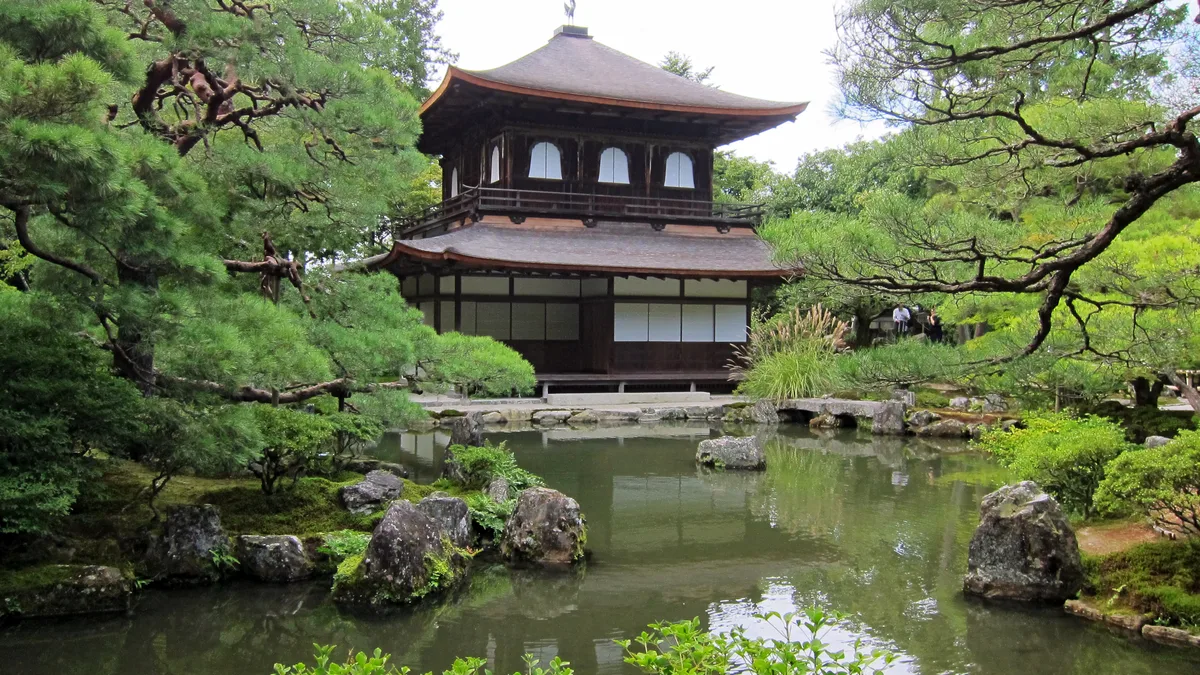
Ginkaku-ji — Why the Silver Pavilion Has No Silver, and Why Japan Finds That Beautiful
Why the Silver Pavilion has no silver — a free audio guide to Ginkaku-ji, Kyoto, verified against official temple sources. Higashiyama culture and the art of restraint, the sea of silver sand, hours, admission (1,000 yen), access from Kyoto Station, and the Philosopher's Path.
Ginkaku-ji (Jishō-ji)
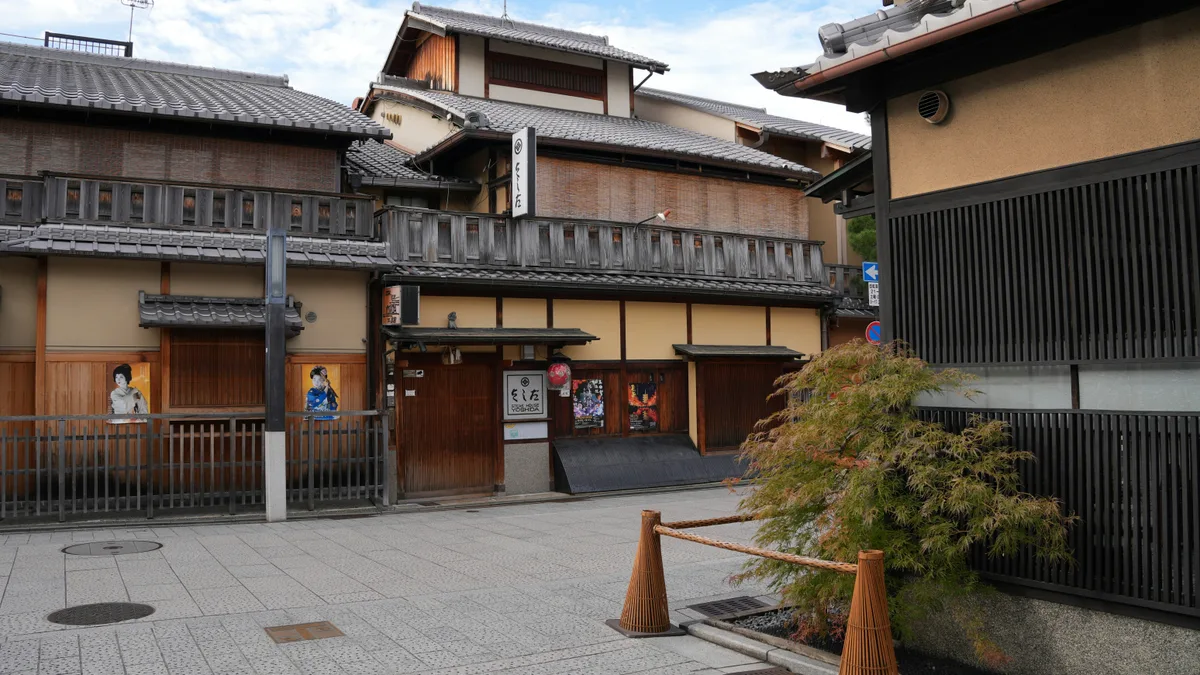
Gion — Walking Kyoto's Flower District, a Town That Is Still Lived In
An audio guide to Kyoto's Gion flower district: what geiko and maiko really are, the walk from Yasaka Shrine through Hanamikoji to the Shirakawa canal, when to go, and how to enjoy a town still lived in.
Gion