
"Excuse Me, Can You Take My Photo?": What Japanese People Really Think
What you'll learn in this article:
- What 290 Japanese people said about tourist photography: from warm moments to real frustrations
- Why your polite photo request makes Japanese people happy (but also a little nervous)
- The language mix-up that turns a kind offer into total confusion
- When photography crosses a line, and the one Japanese concept that explains why
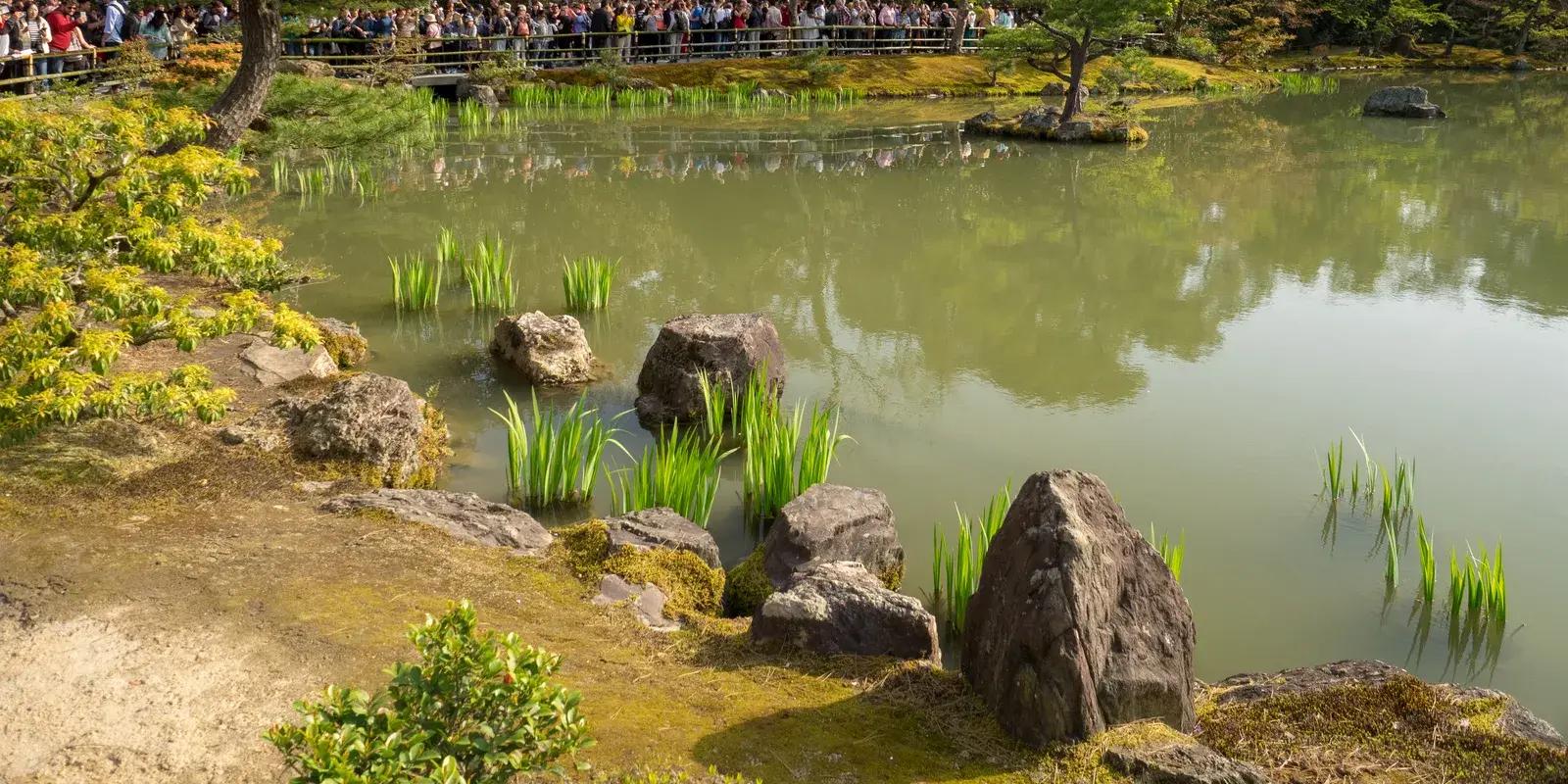
You're at Kinkaku-ji. The light is perfect. You want a photo (a real one, not a selfie), and there's a friendly-looking Japanese person nearby. But you hesitate. Will I be bothering them? Do they even want to be asked?
Here's the good news: most Japanese people are happy to help. Their main worry? Not your request: it's their own English. And that gap between your hesitation and their hidden willingness is one of those small, beautiful misunderstandings that happens every day at tourist spots across Japan.
But photography in Japan isn't all warm moments. There's a flip side that most travel guides never mention, and understanding both sides will make your experience (and theirs) much better.
We collected 290 real opinions from Japanese people across four photography situations to find out what they actually think.
What do Japanese people think about tourist photography? We read what 290 Japanese people wrote about four scenarios. Most are happy to take your photo: their main worry is getting the English countdown right. But 79% feel distressed when photographed without permission, and 78% are frustrated by visitors who hog photo spots. The dividing line is simple: ask first, share the space, and say "arigatou." A camera pointed with permission creates connection. Without it, it feels like something is being taken.
Quick Guide
| Situation | What Japanese People Said | |
|---|---|---|
| 🟢 Relax | "Can you take my photo?" | Most people are happy to help. Their main worry is their English, not your request. Just hand over your phone with a smile; that's all it takes. |
| 🟡 Good to know | Offering to take someone's photo | Your kindness might get lost in translation. A camera-clicking gesture speaks louder than "Shall I take your photo?" Words fail; pantomime works. |
| 🔴 Be aware | Staying at a photo spot too long | Japanese people share spaces instinctively. A quick shot and a step aside earns you quiet respect, more than any perfect angle ever could. |
| 🔴 Worth knowing | Taking photos without asking | This genuinely, deeply bothers Japanese people. A simple nod or gesture of "May I?" changes everything. |
The one thing to remember: In Japan, photography isn't just about cameras. It's about consideration. The same act (pointing a camera at someone) can create a warm connection or cause real discomfort, depending entirely on whether you asked first.
How We Gathered These Voices
We collected 290 Japanese-language responses across four photography-related topics: being asked to take a photo (60 responses), offering to take someone's photo and language barriers (65 responses), photo spot behavior (95 responses), and unauthorized photography (70 responses). Sources include public Japanese Q&A sites, forums, and social posts, as well as articles from Nikkan SPA!, Bunshun Online, Diamond Online, Nikkei, and other Japanese media.
A quick note: This isn't a controlled scientific survey. It's a collection of what real Japanese people said in their own words, on public platforms. Most English-language guides simply tell you "don't take photos without asking." We wanted to show you why, and how much warmth is waiting on the other side of a simple request.
"Can You Take My Photo?": The Moment That Makes Them Smile
The honest answer: most Japanese people are happy when you ask.
Of 60 responses about being asked to take photos, the majority were positive, and many were enthusiastic. But there's a twist that makes this uniquely Japanese: the anxiety isn't about your request. It's about their English.
旅行先の現地の人と写真を撮る、って普通じゃないですか。記念みたいなもんでしょ。 Taking a photo with a local at your travel destination? That's totally normal. It's like a souvenir.
初めは心配でドキドキでしたけど、楽しくていい経験になりました。 I was nervous and my heart was pounding at first, but it turned out to be fun — a great experience.
「いいな!」と思って、目に留めてもらえたことは、すごく嬉しいです。 When someone thinks "oh, nice!" and notices you — that's genuinely lovely.
The nervousness, it turns out, isn't only yours. Japanese people get anxious too, about their English.
飲食店でアルバイトをしていて、外国人に写真撮影を頼まれた時の掛け声がわからなくて困りました。 I work part-time at a restaurant, and when a tourist asked me to take their photo, I panicked because I didn't know the right countdown phrase in English.
「スリー、ツー、ワン」とシャッター押したのですが、他の方が撮ってるのを見たときワンツースリーでした。どちらが正解だったのでしょうか? I counted "three, two, one" and pressed the shutter. But then I saw someone else counting "one, two, three." Which one was right?
英語が苦手です。観光地でカメラを携帯しているため、頻繁に声がかかります。 I'm not great at English. I carry a camera at tourist spots, so people ask me all the time.
That last person? They get asked all the time, and they keep saying yes. That's the Japanese response in a nutshell: willing, warm, and quietly worried about getting the English wrong.
💡 The real anxiety
When you ask a Japanese person to take your photo, their biggest worry isn't "is this annoying?" It's "will I get the English countdown right?" People genuinely agonize over whether to say "three, two, one" or "one, two, three." Hand over your phone, smile, and let them figure out the rest. They'll nail it.
What works: Just hand over your phone with a smile. Point at the shutter button if you want. And when they're done, a "thank you" (or better yet, an arigatou gozaimasu with a small bow) will make their day. As one person put it:
「なんたらかんたらピクチャー プリーズ」と同時にスマホを差し出されたので、これは写真撮ってくれって事だな!と理解し「OK!OK!」と返事しました。 They said something like "blah blah blah PICTURE PLEASE" and held out their phone, so I figured — ah, they want a photo! "OK! OK!" I said.
「アリガトウゴザイマシタ」とカタコトの日本語でお礼されました。 They thanked me in broken Japanese — "arigatou gozaimashita." That made me smile.
"Shall I Take Your Photo?": When Kind Intentions Get Lost in Translation
This one might surprise you, and it's something Japanese people themselves find funny in hindsight.
You see a Japanese couple struggling with a selfie at a scenic overlook. You walk up and offer: "Shall I take your photo?" Simple enough, right?
Except here's what often happens on the receiving end: total confusion. And sometimes, panic.
Of 65 responses about being approached by foreigners in English:
The language barrier creates moments that are equal parts awkward and endearing:
おもいっきり英語で話しかけられた事あるけど私英語まじでわからないので「ノー!スピーク!イングリッシュ!」って言ったら「ハハハ!オーケーオーケー!」って言われた Someone spoke to me in full-on English and I absolutely couldn't understand, so I shouted "NO! SPEAK! ENGLISH!" — and they just laughed and said "Hahaha! OK OK!"
ソーリーソーリーと言って逃げる I just say "sorry, sorry" and run away.
緊張しすぎて、「アイアムカレッジ」(私は大学です)と言ってしまった I was so nervous I blurted out "I am college" (meaning: I am a university).
英語がひとつも思い浮かばなくて申し訳なくなった I couldn't think of a single English word and felt terrible about it.
And here's a beautiful detail: the phrase many well-meaning visitors use, "May I take a picture?", actually causes a specific misunderstanding:
May Iで質問すると「私があなたの写真を撮っていいですか」になってしまいますね。これは提案ではなく撮影許可になってしまいます。 When you ask "May I...?", it becomes "Can I take a photo OF you?" — which sounds like asking for permission to photograph them, not offering to help.
The statistics paint a vivid picture: 45.8% of Japanese people have declined to engage with foreigners in English (Speak Japan, 2025). The top reason? "I didn't have confidence to communicate" (76.5%). And yet (here's the gap that makes this story hopeful), the same survey found that 70% of foreign visitors say Japanese people's English is actually quite understandable.
自分の英語が伝わると考える日本人は約1割に過ぎないが、実際には7割の訪日外国人が「日本人の英語は意外と理解しやすい」と評価している Only about 10% of Japanese people think their English gets through — but 70% of foreign visitors say "Japanese English is surprisingly understandable."
💡 The confidence gap is bigger than the language gap
Only 10% of Japanese people believe their English gets through. But 70% of visitors say Japanese English is surprisingly understandable. The real barrier isn't vocabulary. It's confidence. And that's why gestures often work better than words.
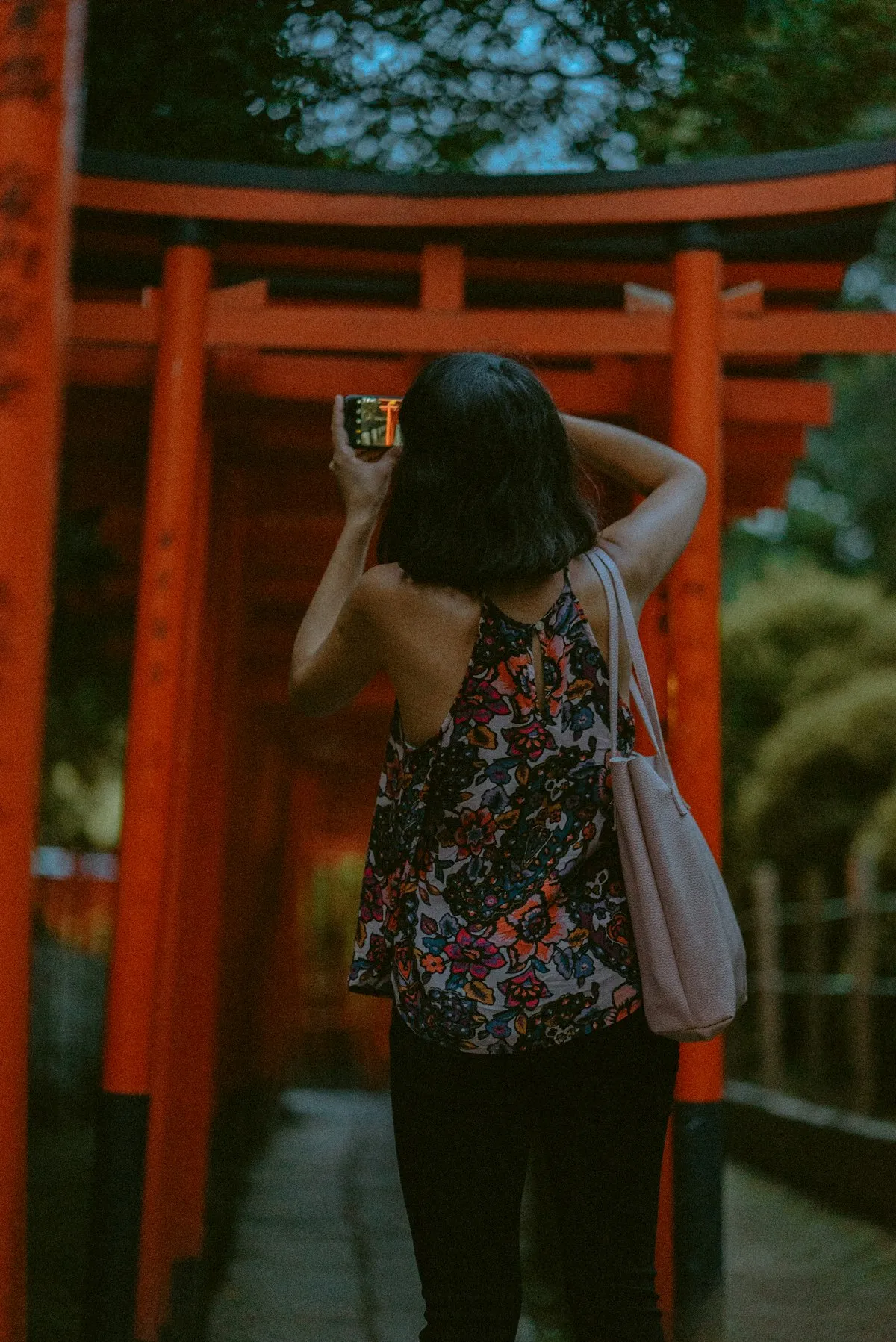
What works: Skip the English. If you want to offer to take someone's photo, just point at their phone, then point at them, and mime pressing a shutter button. Pantomime is universal. As one Japanese person put it:
単語ばかりでも身振りを交えたノリのいい子の説明の方が通じることが多い Even with just random words, an energetic person using gestures gets understood more often.
対話って、ハートなんだな Communication is really about heart.
💬 What do you think?
Japanese readers: How do you feel about this?Visitors: Have you experienced this in Japan?
Share your voice →The Photo Spot Everyone's Waiting For
This is where the warmth cools, and Japan's shared-space values come into sharp focus.
You've found the perfect spot at Fushimi Inari (that iconic tunnel of orange torii gates). Or you're at the single pond-side spot where everyone photographs the Golden Pavilion at Kinkaku-ji, each person waiting for the very same frame. The light is just right. You pose. Your friend takes a shot. Then another angle. Then a different pose. Then maybe a video...
Meanwhile, behind you: a growing line of people waiting their turn. In Japan, this hits a cultural nerve.
Of 95 responses about photo spot behavior:
撮影スポット独占して同じ角度で何回も何回も自撮り写真撮ってる人達多くない? Aren't there way too many people who hog photo spots and take the same selfie from the same angle over and over?
長く撮影してない?終わるまで待とうとしたけど諦めて帰った人もいた Don't you think they take too long? I tried waiting until they finished, but some people just gave up and left.
人気スポットだから可愛い景色なのは分かるけど写真撮るのに必死な大人達が子供達に遠慮させて陣取ってるの見ると悲しくなる I get that it's a popular spot with beautiful scenery, but seeing adults so desperate for photos that children have to step back and wait — that makes me sad.
One quote captured the underlying value with precision:
何枚撮っても使うの一枚ならパッと撮ってパッとどいて欲しい If you're only going to use one photo anyway, just take it quickly and step aside.
This isn't just about photo manners. It connects to a deep Japanese instinct: yuzuriai (譲り合い), the practice of mutually yielding. At a photo spot, just as in a queue, the cultural expectation is: take your turn, be quick, and make room for the next person.
Several people noted that this isn't only a foreign tourist issue:
迷惑撮影してるのは外国人だけじゃなく日本人もいる It's not only foreign tourists doing this — Japanese people do it too.
日本人だって海外行ったら知らぬ間に迷惑観光客になってると思うよ Japanese people probably become annoying tourists too when they travel abroad — without even realizing it.
But the core frustration is real, especially at well-known locations. Multiple responses mentioned specific hotspots: the Mt. Fuji Lawson convenience store view, Gion in Kyoto, the Slam Dunk crossing in Kamakura, the famous scramble crossing in Shibuya, the narrow bamboo path at Arashiyama, Keage Incline, and the moat-side cherry tunnels of Hirosaki Castle during cherry blossom season.
観光地でウェディングフォトを撮っている人がいますが、はっきり言うと邪魔です。大体の人たちが長々と時間を使って撮影スポットを占領しているし、順番は抜かすし People taking wedding photos at tourist spots — honestly, they're in the way. They spend forever occupying the best spots and skip the line.
ゆっくり眺めて雰囲気味わいたいのに、撮影で長々と占領されている I just wanted to take in the view and enjoy the atmosphere, but the spot was occupied by people shooting photos forever.
What works: The Japanese approach is: take a quick photo, check it, and step aside. If you need another shot, step back and wait for a gap. This isn't about rushing. It's about sharing. And ironically, the less time you spend blocking others, the more positively they'll feel about you being there.
観光地なのでどこからとっても邪魔とは思いません。みんないろんな視点からいろんな思い出を残そうとしているし、そこは譲り合い It's a tourist spot — I don't think anyone's truly "in the way." Everyone's trying to capture memories from different angles. That's what yuzuriai (mutual yielding) is for.
"They Just Pointed a Camera at Me"
This is where the data speaks loudest, and where most travel guides are silent.
Being photographed without permission is, for many Japanese people, deeply distressing. Of all four photography topics we studied, this generated the strongest negative response.
Of 70 responses about unauthorized photography:
The voices here are powerful. Former maiko (apprentice geisha) in Kyoto have spoken publicly about what they face daily:
私が現役の頃も盗撮されることは日常茶飯事でしたよ When I was active, being secretly photographed was an everyday occurrence.
急いでいるのに外国人観光客の方に道をふさがれて通れなかったり、追いかけ回されたりすることもよくありましたね I'd be in a hurry, but tourists would block my path or chase me — that happened all the time.
ひどいときは袖をつかまれて、着物が破れたこともあります In the worst cases, people would grab my sleeve and my kimono got torn.
It's not just maiko. People wearing kimono at tourist spots (often just regular visitors enjoying a rental experience around temples like Senso-ji in Asakusa) describe similar encounters:
浅草で着物着て歩いてたら、外国人にいきなりカメラ向けられた。声もかけずに。モデルじゃないんだけど… I was walking in Asakusa wearing a kimono, and a tourist just pointed their camera at me without a word. I'm not a model...
敷地内に侵入して撮影したり、ゴミを置いていったり。商店街や電線に富士山を入れて撮るのが人気らしく、住宅街にある私の家の前でも撮影する人が増えました People trespass to take photos, leave trash behind. Apparently it's popular to capture Mt. Fuji with power lines and shopping streets, and now more people are shooting in front of my house in a residential area.
Several responses highlighted concerns about children:
大阪の都市部、外国人が凄く多いのよね。制服を着た小学校の子ども達が集団でいると、珍しいから、写真撮ろうとするんですわ In central Osaka, there are so many tourists. When they see groups of elementary school kids in uniform, they try to photograph them because it's "unusual."
The legal and cultural framework behind this discomfort has a name: shōzōken (肖像権), the right to one's own image. While not a single statute, it's a deeply held Japanese principle.
事前に声をかけて撮影許可を取るのが肖像権的に完全クリーン Asking permission before taking a photo is the only way to be completely clear on portrait rights.
「人の嫌がることはしちゃイケない」っていう、もう、根源的な価値観でいいと思うんですよね "Don't do things that make people uncomfortable" — I think that fundamental value is really all you need to know.
In response to ongoing issues, Kyoto's Gion district formally banned photography of maiko and geisha on private streets, with a ¥10,000 penalty for violations.
💡 Shōzōken, the right to your own image
Japan holds a concept called shōzōken (肖像権), the right to one's own image. It's not just a legal technicality; it reflects a deep value: your image belongs to you. A camera pointed without permission doesn't feel like appreciation. It feels like something being taken. A nod, a smile, or a gesture of "may I?" turns the same camera into a bridge instead of a barrier.
What works: If someone catches your eye (a person in a beautiful kimono, a street vendor, a child in a cute school uniform), catch their eye first. A smile and a questioning gesture toward your camera takes two seconds. Most people will say yes. Some will even pose. And the photo you get will be infinitely better than a stolen one, because the person in it will be smiling at you rather than looking away in discomfort.
The Cultural Engine: Why Photography Feels Different in Japan
So what ties all of this together? Why does the same camera create warmth in one situation and distress in another?
Asking vs. Taking
The thread running through all 290 responses is strikingly simple: it all comes down to whether you asked.
Ask someone to take your photo → warmth. Offer to take theirs → confusion that often turns to gratitude. Take a quick shot and step aside → no problem. Point a camera at someone without asking → distress.
The dividing line isn't the camera. It's the communication.
Kuuki wo Yomu (空気を読む): Reading the Air
Just like on trains, the concept of "reading the air" applies to photography. At a bustling tourist spot or a popular temple ground, cameras are expected. A great landmark like the white-and-gold keep of Osaka Castle mirrored in its moat, or the walls of Kumamoto Castle being rebuilt stone by stone after the 2016 earthquake, practically invites the shot. At an immersive digital-art museum like teamLab, photography is positively encouraged, because the work itself is built to be filmed. On the art island of Naoshima, the rule flips the other way: many of its indoor museums ask you to put the camera away entirely, so the art becomes something you walk through rather than capture. The same expectation greets you at Ghibli Park, where photography is restricted through much of the grounds and permitted only in designated spots, so putting the camera away becomes part of how you experience the place rather than record it. Even in a buzzing district like Akihabara, the neon streets and storefronts are made to be shot, but many shops forbid photos inside, and the costumed staff handing out flyers are working people, not props, so a quick "may I?" still matters. And at a great shrine (the wooded approaches of Meiji Jingu in Tokyo, or Ise Jingu, where cameras come down at the threshold of the inner sanctuary), the line shifts once more: the grounds are yours to photograph, but the nearer you draw to the sacred heart, the more naturally the camera rests, just as the original Golden Hall at Hiraizumi sits behind protective glass, where photography of its interior is not permitted. And among the famously photogenic deer of Nara Park, the kindest photo is the one that doesn't keep a hungry deer waiting: show it the cracker, let it come, and take the shot in the moment rather than holding the pose for one more frame. With truly wild animals (the snow monkeys of Jigokudani, for instance), the same restraint means never crowding them or pushing a lens toward their faces for a shot. In a strolling garden, the line shifts again: at Ginkaku-ji, the raked "sea of silver sand" and its sculpted cone are meant to be photographed from the edge of the one-way path, where you take your frame and move on rather than stepping onto the sand itself. On a quiet residential street, it's the opposite. Wander the photogenic lanes of Kobe's Kitano district, where every other historic foreign house frames a perfect shot, and you'll find that many of those handsome buildings are still lived-in homes, and the crowded mountain overlooks above the city ask the same patience as any popular viewpoint. The same is true on the lattice-fronted streets of Takayama's Sanmachi old town, where the merchant houses you're framing are often somebody's front door, with families still living behind the dark wooden slats. It is even truer in the thatched farmhouse village of Shirakawa-go, where the postcard-perfect gassho roofs shelter around 500 people who live there, so most homes, gardens, and laundry lines in any photo belong to real residents going about their day. A person posing at a landmark is inviting photos. A person walking to the grocery store is not.
The Shared-Space Instinct
Japanese public spaces operate on a principle of mutual consideration. Photo spots aren't "first come, first served"; they're shared. The expectation isn't that you shouldn't take photos; it's that you should be aware of who's waiting behind you.
This connects directly to what Japanese people wrote about queuing, about train silence, about convenience stores: the common thread is omoiyari (思いやり), consideration for others that doesn't need to be spoken.
What Japanese People Actually Want You to Know
After reading all 290 responses, the overwhelming message isn't "stop taking photos." It's something much more nuanced:
They want to help you, and they wish they could do it better. This mirrors what we found when we looked into whether Japanese people actually want to meet visitors: the willingness is real, but it's often held back by language anxiety.
写真撮りましょうか?と英語で言ったら、NO, Thank You!と、言われた。そこまでくると潔くていいのね I tried offering "shall I take your photo?" in English and they said "No, thank you!" That level of straightforwardness is actually refreshing.
よく声をかけてくれるのは嬉しいけど、いつもどこから来たの?って聞くのやめーや、わたしゃ日本人や!笑 I appreciate people approaching me, but please stop asking "where are you from?" — I'm Japanese! (laughs)
They know photography is part of travel, and they do it too.
観光地なのでどこからとっても邪魔とは思いません。みんないろんな視点からいろんな思い出を残そうとしている It's a tourist spot. Nobody's truly in the way. Everyone's trying to capture memories from their own angle.
And they just ask for one simple thing: a moment of connection before the shutter clicks.
事前に声をかけて撮影許可を取るのが肖像権的に完全クリーン Just asking first is all you need to do.
That's it. Not a rulebook. Not a list of prohibitions. Just: ask first, share the space, and don't forget to say arigatou.
More Japanese Perspectives
Curious about other aspects of daily life in Japan? These articles explore what Japanese people actually think, based on hundreds of real voices.
- Why Japanese Trains Are Silent: 177 Japanese people share why train silence isn't a rule. It's a shared instinct.
- Do Japanese People Actually Care How You Hold Chopsticks?: 163 Japanese people share the honest truth. Spoiler: there's really only one thing worth knowing.
- Why Lining Up Matters More Than You Think: The connection between queuing and the same shared-space values that shape photo etiquette.
Share Your Experience
Had a funny photo moment in Japan? Helped someone, or been helped? We'd love to hear it. Your story helps build a bridge between cultures.
Sources
Data Collection
290 Japanese-language responses were collected across four photography-related perspectives: being asked to take a photo (60 responses), language barriers when offering to help (65 responses), photo spot behavior (95 responses), and unauthorized photography (70 responses).
Sources by Platform
Public Q&A Sites, Forums & Social Posts
- Public Japanese Q&A sites, forums, and social posts: first-hand opinions on tourist photography, language barriers at photo spots, and being photographed without permission.
News Media & Articles
- https://nikkan-spa.jp/1999984
- https://nikkan-spa.jp/2101623
- https://nikkan-spa.jp/2098701
- https://nikkan-spa.jp/2046933
- https://diamond.jp/articles/-/315046
- https://encount.press/archives/482653/
- https://encount.press/archives/793669/
- https://shueisha.online/articles/-/250618
- https://bunshun.jp/articles/-/15281
- https://www.excite.co.jp/news/article/shueishaonline_254347/
- https://www.nikkei.com/article/DGXMZO36299280Q8A011C1CC0000/
- https://www.nikkei.com/article/DGXMZO51409670V21C19A0LKA000/
- https://www.ktv.jp/news/feature/240529-maiko/ (Gion private-street violation penalty: ¥10,000; written without thousand-separators, that is 10000 yen)
- https://www.tokai-tv.com/tokainews/feature/article_20250807_41608
- https://grapee.jp/2158952
- https://www.moneypost.jp/547147
- https://president.jp/articles/-/43688
- https://www.itmedia.co.jp/news/articles/1803/17/news017.html
- https://news.mynavi.jp/article/20120607-a143/
Blogs & Personal Sites
- https://ameblo.jp/katchang-2020/entry-12796690978.html
- https://ameblo.jp/amazingmaki/entry-12690587872.html
- https://ameblo.jp/biaggio922/entry-12829618468.html
- https://zbnr-hp.com/photo-obstacle/
- https://kawaguchiko-haisha.jp/news/violation-of-manners-caution/
- https://fo-cus.jp/archives/2704
- https://camera.one-cut.net/entry/streetsnap
- https://daretokublog.net/visitor_photo/
- https://share-photography.com/foreign-tourists-1/
Public Q&A Sites, Forums & Social Posts
- Public Japanese Q&A sites, forums, and social posts: first-hand opinions on photo-spot behavior and street photography of strangers.
Surveys & Research
- https://seikatsusoken.jp/diginography/15790/
- https://www.planet-van.co.jp/shiru/from_planet/vol51.html
- https://www.lisalisa50.com/research20170904.html
- https://prtimes.jp/main/html/rd/p/000000154.000006827.html
- Speak Japan survey (Speak Japan LLC, March 2025, n=400 Japanese + 130 foreign visitors): https://prtimes.jp/main/html/rd/p/000000017.000116340.html
- https://mag.sendenkaigi.com/kouhou/201710/web-lisk-24h/011511.php
- https://www.kitamura.jp/photo/express/2010/ex596.html
Note on Quotations
Quotes from online platforms have been lightly edited for readability (fixing typos, formatting for clarity). The meaning and intent of each comment remain unchanged. Original sources are linked above.
WMJS is written in Japan, in English, with AI help. We check every page, but English is not our first language. If a sentence reads oddly, tell us. One sentence is enough.
Thank you. A person reads every note.
How well do you know Japan?
Built from 635 public posts by Japanese people
Want to know more? Ask Japanese people
Have a follow-up question about this topic? We'll ask real Japanese people.
Voice Box →