
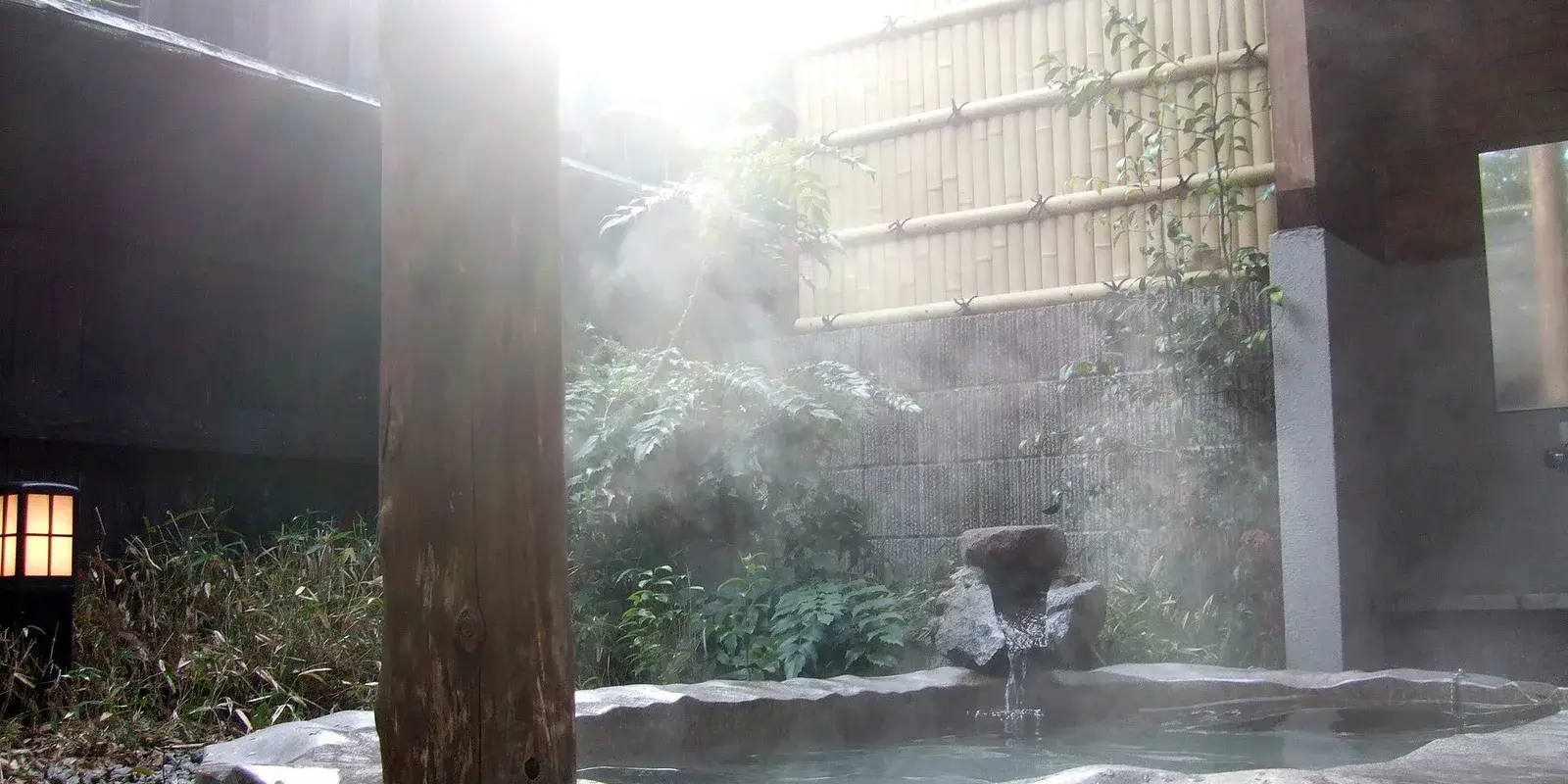
Onsen and Tattoos: A Gentle Guide to What's Actually Changing
What you'll learn in this article:
- What 393 Japanese people said about tattoos at onsen: across stickers, small tattoos, towel covers, private baths, and how feelings differ by generation
- Why the rule exists, why it's actually changing faster than most guidebooks say, and where you can relax
- The one choice that basically everyone (traditionalists, Gen Z, ryokan owners, tattooed Japanese people themselves) agrees on
Can you visit a Japanese onsen with tattoos? We collected 393 public posts by Japanese people, and the answer is yes, with one smart choice. Of the posts about private baths (kashikiri), 47% were positive, the clearest consensus across all topics. For small tattoos, 41% are fine with it, and foreign visitors receive more grace. Many "no tattoo" signs function as reassurance rather than enforced policy. Opinion is shifting fast: under-30s skew positive.
Let's get the most useful thing out of the way first: you can absolutely enjoy Japan's onsen even if you have tattoos. It just takes one or two decisions in advance. The picture is more flexible than old guidebooks suggest, and the Japanese people who run and use these baths are, for the most part, a lot kinder about this than the signs at the entrance imply.
What's trickier is the landscape. Policies vary by facility. Feelings vary by generation. And the rules that exist are often framed in terms of something that has very little to do with you: a historical association between tattoos and organized crime in Japan. We collected 393 real voices from Japanese people across five angles of this topic to help you see the real terrain beyond the warning signs.
Quick Guide
| Situation | What Japanese People Said | |
|---|---|---|
| 🟢 Relax | Private baths (kashikiri rotenburo / family baths) | Widely accepted as "the smart choice." 47% positive, the clearest consensus across all five topics. Book one at your ryokan and nobody loses sleep. |
| 🟡 Good to know | Small, discreet tattoos | Many Japanese people say "if it's small, I don't mind," and several add they're noticeably more relaxed about foreign visitors. But policy varies a lot by facility. |
| 🟡 Good to know | Tattoo cover stickers | Works at a growing number of facilities; some even sell them at the front desk. Opinions cool quickly if the sticker visibly peels, shows through, or ends up floating in the water. |
| 🔴 Worth noting | Wrapping with a full bath towel | Creates a second etiquette problem: dipping a towel in the bath water is its own manner violation in Japan. Most people say "just book a private bath instead." |
| 📊 Generation | Opinion is shifting, but not as cleanly by age as you'd expect | A widely-discussed survey showed 20-and-unders skew positive while 30-and-ups skew negative. But we found 10-year-olds who hate tattoos and 48-year-old grandmothers who have them. The pattern is real; the stereotype is not. |
The one thing to remember: When in doubt, go kashikiri (private bath). It's the single choice everyone (traditionalists, younger Japanese people, ryokan owners, and tattooed Japanese people themselves) basically agrees on. Everything else is a judgment call you don't need to make.
How We Gathered These Voices
We collected 393 Japanese-language responses across five topics related to tattoos at onsen: stickers and cover patches (83 responses), small "one-point" tattoos (76 responses), wrapping with towels (62 responses), using private or family baths (91 responses), and how attitudes differ by generation (81 responses). Sources include public Japanese Q&A sites, forums, and social posts, along with news articles from Chunichi Shimbun, VICE Japan, and Maidona News, among others.
A quick note: This isn't a controlled scientific survey. It's a collection of what real Japanese people said in their own words, in their own language, on public platforms. Most English-language guides either say "tattoos banned" or list "tattoo-friendly onsen." We wanted to show you the texture of what Japanese people actually think, which turns out to be a lot warmer, more conflicted, and more in flux than the simple version suggests.
First, the Biggest Surprise
Before we get to the temperature data, here's something nobody tells you: the signs at the entrance don't always match how things actually work on the inside.
A Japanese ryokan manager, writing anonymously online, put it plainly:
私の働いているホテルなら、刺青・タトゥーお断り。ですが、見かけても何も言いません。うるさく騒ぐ一般客へのアピールのために一応、お断りにしているだけであって、クレームがあっても特に何もしません。 At the hotel where I work, we technically say "no tattoos." But if we see someone with one, we don't say anything. The "no tattoos" sign is mostly there to reassure noisy customers who might complain — in practice, even if a complaint comes in, we don't really do anything about it. (Ryokan manager)
And a former hot springs town resort manager added something similar:
刺青(タトゥー)の人が、問題を起こした事は一度もありません。それよりも、塩の匂いのする温泉でレジオネラ菌がコロニーを作る方が怖いです。 In all my time working here, I've never once had a problem caused by a person with a tattoo. Honestly, I'm more worried about legionella in the saltwater baths than about tattoos. (Former front desk manager)
Even one of Japan's most famous onsen towns operates this way:
城崎温泉の外湯はタトゥーが入っている方も入浴が許可されているらしいですが、この言葉すこし間違いが?・・・許可・・・していません。見て見ないふり。 People say Kinosaki's public baths "allow" tattooed guests, but the word isn't quite right. They don't "allow" it — they just look the other way. (Hyogo resident)
Others put it in writing: the three large day-use baths in Kusatsu Onsen say in their FAQs that they do not turn away guests with tattoos.
None of this means you should ignore signs or rules. But it does mean the emotional temperature at most onsen is much lower than the warning language suggests. When Japanese people write that they "don't mind" tattoos, they're often the same people who might not speak up about it in real life. They've grown accustomed to seeing discreet tattoos and moving on with their day.
💡 The gap between the sign and reality
Many "no tattoo" signs function more like a reassurance to anxious customers than an actual policy the staff enforces. A ryokan manager's honest admission: "Even if a complaint comes in, we don't really do anything." The emotional temperature is usually much lower than the warning implies.
What Actually Matters: The Temperature Gauge
Here's where the 393 voices land when you break them down by approach. Not everything is weighted equally: some situations Japanese people are genuinely relaxed about, and one creates more problems than it solves.
🟢 Private Baths (Kashikiri Rotenburo and Family Baths)
The honest answer: this is the clearest "yes" in the data.
Of 91 responses about guests (including tattooed guests) using private baths instead of large communal baths, the temperature was strongly positive. Nearly half of responses were supportive, and even most critics framed private baths as a reasonable accommodation.
Most supporters saw private baths as a practical, low-stress solution:
家族風呂でいいじゃん Family baths are a perfectly fine answer.
貸切風呂を利用すれば良いのでは? Why not just use a private bath?
What surprised us was how many tattooed Japanese people themselves volunteered that they already do this:
自分は背中一面に入れていますが、旅館に行っても大浴場は入りません。部屋にある風呂に入ります。 I have a tattoo covering my entire back. When I stay at a ryokan, I just don't use the big public bath — I use the one in my room.
温泉は客室露天、プールはラッシュガード普段は洋服で隠れています。 For onsen, I use the room's private rotenburo. For pools, I wear a rash guard. Day-to-day, my clothes cover everything. (Tattooed Japanese woman)
This matters a lot. The "use a private bath" approach isn't just a rule imposed on tattooed visitors. It's the same solution most tattooed Japanese people have already settled on for their own comfort. You're not being relegated to a second-class experience. You're joining a quietly popular choice.
And one ryokan staffer gave a lovely window into what "private bath consideration" can look like in practice, recounting a couple with full back pieces who came wrapped in bath towels for modesty:
お風呂ですからそうした格好で入浴されると困りますと伝えると、「これだよこれ!」とバスタオルの下に隠されていた、背中一面桜吹雪のような刺青を見せて下さいました。「ああ、うちは刺青されたいても問題ないですよ」と応えると、大変喜んでくれました。どこの温泉へ行っても断られることばかりで、自衛策としてこんな格好をするようになったと話して下さいました。 When I told the man he couldn't wear a towel in the bath, he pulled it away to show me a magnificent cherry-blossom piece across his entire back — "this is why." When I told him our ryokan didn't have a problem with tattoos, he was overjoyed. He told me he gets turned away everywhere else and had started wearing towels to protect himself. (Mixed-bath ryokan staff)
Not every critic agreed with the "private baths only" approach, though. Some saw it as insufficiently welcoming:
特定の銭湯に限定してるんだから、シールなしで入湯できるようにしたってよくないか。 If we're already limiting this to specific bathhouses, can't we just let tattooed people in without any stickers or workarounds?
So "private bath" isn't a universal cure, but it's as close to one as exists. For most visitors, booking a ryokan with in-room or bookable private baths (say, in a historic onsen town like Dōgo Onsen in Matsuyama) removes the entire question.
What to do: Look for ryokans or hotels that offer kashikiri buro (貸切風呂, private reservable bath) or kyakushitsu rotenburo (客室露天風呂, in-room outdoor bath). If you're new to the ryokan experience altogether, our guide to staying at a ryokan covers the full picture of what to expect. Prices range from free to a modest per-session fee, and vary by facility. Many mid-range ryokan include at least one booking in the stay price. In a hot-spring region like Hakone, where the loop is lined with inns, in-room and bookable baths are common enough that the question rarely has to come up. You can also search "tattoo friendly onsen." There's now a whole ecosystem of facilities that explicitly welcome tattooed guests. Some hot-spring towns lean this way too: Beppu, which tends to be more relaxed about tattoos than most, though it still varies bath by bath. A handful go even further: in towns like Kinosaki Onsen, where every one of the town's seven public baths welcomes bathers with tattoos, the question mostly disappears (just check your own inn's private bath, since those can set their own rules). In a small, intimate onsen town like Ginzan Onsen, where the main bath is the one at your inn, many of the inns offer a bookable private bath, so the question often comes down to your own ryokan rather than the town. The same holds in Yufuin, where many ryokan are built around their own private open-air baths, so a room with its own bath sidesteps the communal question entirely. And if you're flexible on dates, visiting during the months Japanese people most hope you'll come means lower prices and more availability for private baths.
🟡 Small, Discreet Tattoos
The honest answer: it really does depend on size, and foreign visitors get more grace.
Of 76 responses about small or "one-point" tattoos at onsen, opinion was almost evenly split between "fine" and "not fine," with a clear pattern: size and context matter a lot.
Many Japanese people were explicit about the size distinction:
小さめで目立たなければ気にしない If it's small and not noticeable, I don't mind.
ワンポイントなら全然大丈夫です。 A one-point tattoo is totally fine.
ワンポイントだけのタトゥーをしてる女の子は見た事あります。全身とか背中一面だと怖い。 I've seen girls with just a small one-point tattoo. A full sleeve or a whole back piece — that's scary. But just a small one is different.
And here's something that might reassure you if you're a visitor: multiple Japanese people said they're more relaxed about foreign tattoos than Japanese ones. This came up consistently across platforms:
外国人が彫ってるのは何とも思わないけど日本人が彫ってると「うわぁ…」 If a foreigner has tattoos, I don't really think anything of it. If a Japanese person has them, my reaction is more like "oh…"
外国人でタトゥーに対する文化が違ったりワンポイントだったりしたら許容できる。 If it's a foreigner from a culture where tattoos are normal, or if it's just a small one-point, I can accept it.
Why the difference? Because Japanese people know the cultural meaning is different abroad. A tattoo on a foreign visitor reads as "self-expression" or "art," the same way it reads in the visitor's own country. A tattoo on a Japanese person, for older Japanese people especially, can still carry echoes of irezumi: the traditional full-body tattoos associated with organized crime. The same ink means different things.
Not everyone agrees, though. Plenty of responses rejected the size distinction entirely:
許せません。どんなのでも許せません。 I can't accept it. Not any size, not any kind.
タトゥー入れたら温泉もプールもNGって分かってて入れたんでしょ?なんで不当差別になるの? If you got a tattoo, you knew onsen and pools wouldn't let you in — so how is this "unfair discrimination"?
And one often-cited argument from a strict user:
「このくらいならいいでしょ」という意見が通るとキリがなくなる Once you accept "this much is fine," there's no end to it.
The facility side sometimes faces this same dilemma. A Japanese online thread from an onsen worker explained:
見分けがつかないから、シールも禁止だし、小さい大きいも、区別するのも難しいので、一律禁止にしています We can't tell them apart, and drawing a line between "small" and "big" is impossible — so we just ban everything.
What to do: Small, discreet tattoos are accepted at a growing number of facilities. But don't assume. If you have a small tattoo, check the facility's website; many explicitly say "tattoo OK" or "stickers available." If you can't find anything online, email or call ahead. The Japanese word you're looking for is タトゥーOK (tattoo OK). Also look for places that advertise 入れ墨OK or phrases like タトゥーフレンドリー.
💬 What do you think?
Japanese readers: How do you feel about this?Visitors: Have you experienced this in Japan?
Share your voice →🟡 Tattoo Cover Stickers and Bandages
The honest answer: increasingly accepted, but not magic.
Of 83 responses about covering tattoos with special stickers, medical tape, or large bandages, opinion was slightly tilted toward caution, but the distribution was surprisingly even.
The positive voices appreciated the consideration:
マナー守ってる They're following the manners.
隠せばOKになる時代はきつつあると思います I think the era where "as long as you cover it, it's OK" is slowly becoming the norm.
違和感がない、そもそもなにか貼っているのに気がつかない という状態ならば、みなさんあまり気にもとめないのではないでしょうか If the sticker looks natural — if people don't even notice you're wearing anything — nobody's going to care.
Some facilities now actively sell these stickers at the front desk:
最近できた大阪の空にわ温泉は、タトゥー隠しシール売ってたw ベージュの。 The new Sora Niwa Onsen in Osaka actually sells tattoo-cover stickers at reception. Beige ones.
The negative voices were specific and practical. The most common concerns were:
1. The sticker is visible anyway:
テープから透けて見えてすごく不快でした You could see it through the tape. Really uncomfortable.
2. The sticker comes off and floats in the water:
肌色のテープを貼って入ってる女の子がいて、剥がれて湯船に浮いてるの見たときは、汚いって思ったわ。 I saw a girl with skin-colored tape, and when it came off and was floating in the bath, that felt dirty.
3. The tape itself is an etiquette issue:
医療用テープでの入浴はマナー違反(粘着性物質が浴槽に付着の可能性) Soaking with medical tape on is its own manner violation — the adhesive can get into the tub.
There's also a cultural debate about the "omotenashi sticker" programs that some cities (like Kumamoto) offer specifically for foreign visitors. Reactions were mixed:
いい取り組み! Great initiative!
「外国人に限り」許されるの?日本人だとおもてなしされないの? Is this "only for foreigners"? Japanese people don't get this hospitality?
What to do: If you want to try a sticker, choose one that (1) is actually skin-tone matched to your skin, (2) is waterproof and well-adhered, and (3) fully covers the tattoo. Japanese facilities that provide their own stickers are the safest bet, because there you know the facility has pre-approved this approach. Avoid the image of a sticker drifting loose. That's the specific outcome most Japanese people find off-putting. If the tattoo is too large for a reasonable-sized sticker, skip this option and book a private bath instead.
🔴 Wrapping with a Bath Towel
The honest answer: this is the one approach that creates more problems than it solves.
Of 62 responses about using bath towels or modesty wraps to cover tattoos in communal baths, reactions were sharply negative. The central problem isn't the hiding. It's that wrapping the body with a bath towel and then going in the water runs into a second, separate etiquette rule that's deeply felt in Japan.
The core issue is a Japanese bathing rule that surprises many visitors: you're not supposed to put your towel in the bath water. The small towel you bring into the bathing area is for washing and for modesty while walking, but when you enter the actual bath, it goes on your head or on the side of the tub. Never in the water.
A commercial bathhouse operator explained the real reason:
タオルを浴槽に浸ける事を禁止しているのは…実は繊維片による循環濾過装置のフィルターの目詰まりの方が深刻。一回交換すると、ン十万だかン百万だったか…何か篦棒な出費になるそうです。 We forbid soaking towels in the bath because — actually, the bigger issue is fiber getting into the circulation filters. Replacing them costs several hundred thousand to over a million yen.
So when someone covers a tattoo with a bath towel and steps into the water, Japanese bathers often see two manner problems at once: the covered tattoo and the towel in the bath:
正直に言うと汚いな…とは思っちゃいます。テープとかって端に埃が付いていたりするので、汚いまま入ってんなーって。 Honestly, I do find it a little gross. Tape edges collect dust, so I think "they're just getting in like that…" (Tattooed Japanese woman)
Interestingly, several tattooed Japanese people themselves were critical of the towel-wrap approach. This is a case where the community most affected is policing itself:
テープで隠して入ってる人いるけど、なんかそれでも嫌。タトゥー入れる時に温泉に一生入らない覚悟でいれてほしい。 People do tape themselves up and go in, but something about it still bothers me. I want people who get tattoos to just accept they can't use onsen.
私タトゥーいれたけど、温泉やプール等入れないって承知の上でいれたよ。隠してまで温泉やプールに入るのはカッコ悪い I got a tattoo, but I did it knowing I couldn't use onsen or pools. Hiding it just to get in feels lame.
There is a narrow "right way" to use a towel. Several tattooed Japanese bathers described it:
脱衣所から浴場に入る時にフェイスタオル持っていきますよね。それを肩から掛けてうまい具合に隠れるようにしています。 I take a face towel with me from the changing area to the washing area, and drape it over my shoulder so the tattoo is discreetly hidden.
湯船に入る時はなるべく端っこで・・・ When I get in the bath, I always use the corner.
The key is: the towel covers you while walking and washing, but gets removed (or goes on your head) before you enter the water. That's a very different thing from wrapping yourself in a large towel and soaking. For a fuller picture of how Japanese bathers feel about sharing the bath with visitors, see our article on what Japanese bathers actually think.
What to do: Don't use a wrap-around bath towel in the water as your tattoo solution. If you're committed to a communal bath, use a cover sticker instead. If the tattoo is too large for a sticker, book a private bath. This is exactly what tattooed Japanese bathers themselves recommend to each other.
💡 The clearest signal in the data
Some of the strongest voices against tape- and towel-hiding came from tattooed Japanese people themselves. When the community most affected by a rule is the one recommending private baths to each other, the signal is unusually clear.
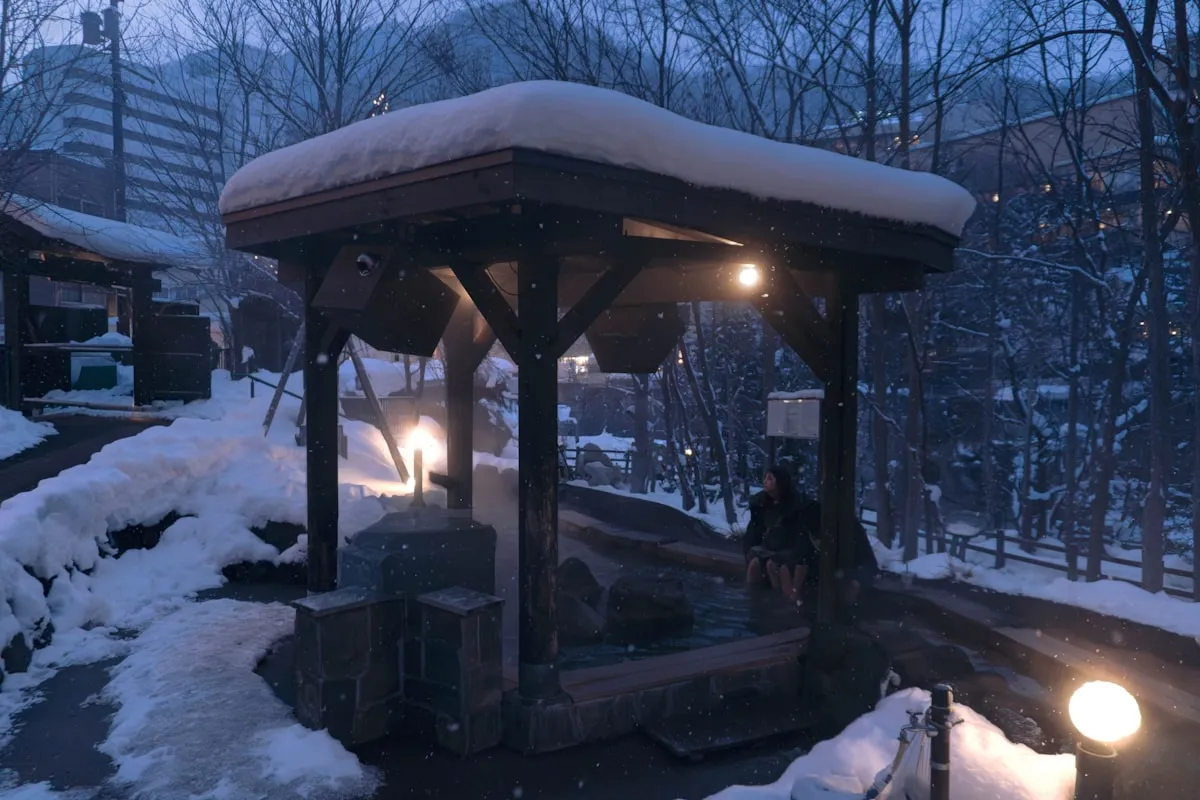
📊 The Generation Gap: Why It's Not Simple
The honest answer: opinion is shifting, but age is a trend, not a rule.
The most careful breakdown we found came from repeated analysis of Japanese public opinion data. For example, a widely-discussed survey showed a flip at age 30: people under 30 skewed positive toward tattoos, people 30 and older skewed negative. A Chunichi Shimbun article on a Gifu prefectural survey reported the same pattern: "positive opinions came mostly from young women; negative opinions were concentrated among older respondents."
What surprised us: the individual stories often break the pattern. We found:
A 10-year-old who's critical of tattoos:
10代だけど20代の人おかしい人多すぎ。10代でもタトゥー冷たい目で見てるし I'm a teenager, and I think a lot of 20-somethings are weird. Even among teenagers, plenty of us look coldly at tattoos.
A 48-year-old whose mental model hasn't shifted:
48歳の私はやっぱり入れ墨の感覚は抜けない I'm 48 and I still can't shake the "irezumi" instinct — tattoos still register to me as what they did when I was growing up.
A 40-something grandmother who just got her first tattoo:
40代後半の私は3年ほど前に孫ができたころに彫りました。現在「おばあちゃん」です。 I'm in my late 40s. I got my tattoo about three years ago, around when my grandchild was born. I'm a grandma now, and I love it.
A 60-something man who just defers to the facility's call:
施設がOKならそれで良い If the facility is OK with it, that's fine with me. (60-something Japanese man, Maidona News survey)
The trend is real, and it genuinely is shifting. An inbound-tourism analyst summed it up:
親世代(60歳前後)はタトゥーと強いネガティブな関連性を持つ人が多く、30-40代以下の人はタトゥーを必ずしも怖いものや反社会的なものと見ていません The parents' generation (around 60 years old) often has a strong negative association with tattoos. People in their 30s–40s and younger don't necessarily see tattoos as scary or anti-social. (Riki Taguma, inbound tourism consultant)
And one of the most cited summaries we found was explicitly forward-looking:
現在の20代以下の層が温泉・プールを積極的に利用する様になる頃と考えると…約20〜30年後には風潮が変わる可能性はありますね By the time people who are currently under 30 are the main users of onsen and pools, the atmosphere may have changed significantly. Probably 20–30 years from now.
So the rule of thumb for now: in rural areas and at traditional ryokans where the clientele skews older, you'll encounter stricter enforcement. At modern urban bathhouses, resort facilities, and places explicitly targeting younger customers, things are noticeably more relaxed. And if you meet a single person from either end of the spectrum who surprises you (like the 48-year-old grandma with her first tattoo), remember that the averages are real, but the individuals don't follow them.
The Cultural Engine: Why Tattoo Bans Exist (And Why They're Fading)
Where the rule came from
The tattoo ban at Japanese baths wasn't invented to exclude foreign visitors. It existed long before mass tourism. Its origin is tangled with Japan's historical relationship to irezumi, the traditional full-body tattoo style long associated with the yakuza, Japan's organized crime groups. For much of the postwar era, visible tattoos on a Japanese adult strongly signaled one kind of person, and bathing facilities used the "no tattoos" rule as a proxy for "no yakuza."
One anonymous commenter online captured the logic in almost mathematical form:
怖い人は[タトゥー]を入れてることが多いから、怖い人を婉曲的に表現しよ。怖い人が[温泉]に来るのは[禁止] "Scary people often have tattoos. So we use 'tattoos' as an indirect way to refer to scary people. Scary people are not allowed at onsen."
The rule is a proxy. It was never really about tattoos themselves.
What's changing, and why it's changing faster than guidebooks say
Three things are pushing the shift:
1. Tattoos as fashion in Japan. A generation of Japanese people now has small, non-irezumi tattoos as style choices. Japanese domestic tattoo rates are still low (around 2%), but they've grown enough that the old "visible tattoo = yakuza" equation no longer fits daily life. Several of the people whose posts we collected pointed out that ryokans whose staff now include tattooed younger workers have had to quietly soften their enforcement.
2. Inbound tourism. Japan's 2025 inbound tourism numbers keep setting records, and a meaningful share of those visitors have tattoos. Facilities that entirely ban tattoos are, in effect, turning away a growing slice of their best customers. Several major chains (Hoshino Resorts, Oedo Onsen Monogatari, and others) now explicitly allow tattoos covered by their approved stickers.
3. A generational clock. The age-30 flip in public opinion means that today's 20-somethings will be the age-50 cohort making facility decisions in 25 years. The structural pressure is all in one direction.
One X user captured the view from the younger end of that shift:
流石に今タトゥー禁止してる温泉は、ヤクザ映画全盛だった頃の「常識」に囚われすぎやろな Honestly, onsen that still ban tattoos today are stuck in the "common sense" of the Yakuza-movie era.
A note about how the rules feel vs. how they operate
There's a structural difference between how Japan's onsen rules feel to visitors and how they actually operate; one that shows up across many Japanese cultural rules:
日本人は「許可されたこと以外やらない」ポジティブリスト思考。外国人は「禁止されたこと以外やっていい」ネガティブリスト思考。暗黙ルールが伝わらない構造的原因。 Japanese people follow 'positive list' thinking — don't do anything unless it's explicitly allowed. Many people abroad follow 'negative list' thinking — anything goes unless explicitly banned. That's the structural reason unwritten rules don't translate. (Diamond Online)
The onsen tattoo rule is an artifact of positive-list thinking. "Tattoos are not on the list of explicitly allowed things, so… let's not." But as Japanese society shifts, more and more places are adding tattoos to the list: sometimes with stickers, sometimes with private baths, sometimes with simple quiet acceptance. You're not fighting the system by showing up with a tattoo; you're arriving at a system that's mid-way through updating itself.
💡 The rule isn't about you
Japan's onsen tattoo rule is a cultural proxy, not really about tattoos themselves, but about a specific historical association. Finding a good onsen experience isn't about arguing with the rule; it's about finding the growing number of places that have already finished updating.
What Japanese People Actually Want You to Know
After reading all 393 responses, the most common themes weren't the ones you'd expect from English-language guides. Here's what came through again and again:
The people actually running onsen are warmer than the signs suggest.
Ryokan managers, bathhouse workers, and hotel front desks were consistently the most relaxed voices in our data. They've seen tattoos for decades, they know the difference between a visiting tourist with a small piece and a group of yakuza, and many of them wrote point-blank that tattoo customers have never caused them a problem.
The rule is shifting, and people know it.
Multiple Japanese commenters acknowledged, in the same breath as their personal preferences, that the rule as currently structured is unsustainable. Several facility operators wrote that they'd like clearer guidance at the industry level. A significant number of the younger people whose posts we collected described the rule as a leftover of an earlier era.
Foreign visitors actually receive more grace, not less.
This was one of the strongest themes in the data. Many Japanese people (across age groups) said they distinguish between Japanese tattoos and foreign tattoos, and are more forgiving of the latter because the cultural meaning is different. As one commenter wrote simply:
明らかに外国人で、その国の文化と思しき物は気にならない。 If someone is clearly a foreigner and their tattoo seems to be from their own culture, I don't mind at all.
Private baths are the most universal answer.
If you take away only one thing, let it be this: the kashikiri (private bath) option makes nearly every tension in this topic disappear at once. It's the answer the data keeps pointing back to, regardless of which subtopic you start from. Several tattooed Japanese people also wrote that they prefer private baths for their own comfort. It's not a fallback, it's a perfectly good first choice.
And nobody expects you to know all of this.
Many of the people whose posts we read explicitly noted that foreign visitors can't reasonably be expected to know the irezumi history, the positive-list logic, or the regional variations in enforcement. The attitude across most of the voices we collected was closer to "here's how to navigate this gently" than "how dare you."
More Japanese Perspectives
Curious about other aspects of daily life in Japan? These articles explore what Japanese people actually think, based on hundreds of real voices.
- Why Japanese Trains Are Silent (And Why Riders Love It): 177 Japanese people explain the cultural logic behind Japan's unusually quiet trains.
- No Trash Cans, No Problem: 232 Japanese voices on the "carry your trash" culture, including why many of them are embarrassed by it.
- Do Japanese People Actually Care How You Hold Chopsticks?: 163 Japanese people share the honest truth about chopstick etiquette.
Share Your Experience
Had a moment at a Japanese onsen: wonderful, awkward, or unexpectedly welcoming? We'd love to hear it. Your story helps build a bridge between cultures.
Share your experience on Voice Box →
Sources
Primary Research Data
- WMJS onsen-and-tattoos research data (393 Japanese-language responses collected April 2026)
- Tattoo cover stickers: 83 responses
- Small / one-point tattoos: 76 responses
- Wrapping with bath towels: 62 responses
- Private baths / kashikiri solutions: 91 responses
- Generation differences: 81 responses
Statistical and Analytical Sources
- Chunichi Shimbun: Gifu Prefecture tattoo policy survey: https://www.chunichi.co.jp/article/501500
- VICE Japan: Interview with Miho Kawasaki, founder of Tattoo Friendly: https://www.vice.com/ja/article/tattoo-friendly/
- Maidona News: Reader survey on onsen tattoo policy: https://maidonanews.jp/article/14864149
- Riki Taguma (inbound tourism consultant) analysis
- Kusatsu Tourism Public Corporation: FAQ for Otakinoyu, Goza no yu and Sainokawara (guests with tattoos are not turned away at the three day-use baths): https://onsen-kusatsu.com/ohtakinoyu/faq/
Opinion Collection Sources
The opinions in this article were collected from public Japanese Q&A sites, forums, and social posts, where real Japanese people expressed their views on tattoos at onsen. These are not cited as factual authorities, but as places where everyday opinions were shared on each topic:
- Stickers and cover patches: first-hand opinions on covering tattoos with stickers and patches
- Small / one-point tattoos: first-hand opinions on small, discreet tattoos
- Wrapping with bath towels: first-hand opinions on using towels to cover tattoos
- Private baths / kashikiri: first-hand opinions on using private and family baths
- Generation differences: first-hand opinions on how attitudes differ by age
Note on Quotations
Quotes from online platforms have been lightly edited for readability (fixing typos, formatting for clarity). The meaning and intent of each comment remain unchanged. Original sources are linked above.
Prefer just the numbers? The counts behind this topic live on one page: Tattoos in onsen: what Japanese people actually say, in numbers.
WMJS is written in Japan, in English, with AI help. We check every page, but English is not our first language. If a sentence reads oddly, tell us. One sentence is enough.
Thank you. A person reads every note.
How well do you know Japan?
Built from 635 public posts by Japanese people
Want to know more? Ask Japanese people
Have a follow-up question about this topic? We'll ask real Japanese people.
Voice Box →