
Hirosaki Castle — The Keep That Came Back Smaller, and the Cherry Trees Its Old Retainers Planted
Hirosaki Castle
By Kei · Born and raised in JapanThe Meaning
Most of the famous castles you can visit in Japan are younger than the trains that bring you to them. Osaka, Nagoya, Kumamoto: their great towers fell to war and fire, and were rebuilt in the twentieth century in steel and concrete. Out of every castle in the country, only twelve still keep an original wooden keep, raised before the modern age and never torn down. Eleven of those twelve stand in central and western Japan. Hirosaki is the only one in the whole of the north.
So you have come a long way, to the far end of Honshu, deep in the old Tsugaru country, to stand in front of a real one. And the first surprise is how small it is. The keep is a modest three-story tower, not the towering fortress the words "original keep" might promise. There is a reason for that, and the reason is the first thing this castle has to teach you: Hirosaki is a castle that keeps being remade.
It did not start small. When the lord Tsugaru Nobuhira finished his castle here in 1611, a great five-story keep stood over it. In 1627 lightning struck that keep, the fire reached the gunpowder stored inside, and the whole tower was lost. For nearly two centuries the castle had no keep at all. The tower you see now was built in 1810, and because the shogunate of that late, peaceful age no longer allowed lords to raise new keeps, it was permitted only as a gosankai yagura, a "three-story turret," a keep in everything but name. They could not have back what they lost. So they built a smaller one, in a different corner of the grounds, and called it a turret, and kept the castle alive.
That is one remaking. There are two more, and you will walk through both. The cherry trees that now make this the most famous blossom ground in the north were not here when the castle was a fortress; they were planted later, by the very men who had served the lord, after the castle lost its purpose. And the keep itself, right now, is not standing on its own foundation. For the first time in the castle's four-hundred-year history, the great stone wall beneath it has been taken apart and rebuilt, stone by stone, and to do it, the people of Hirosaki rolled the entire wooden tower bodily off its base and set it down to one side, where it waits today to be moved back. You have arrived at a castle in the middle of being remade once again. Keep that in mind as you cross the moat. You are not looking at a monument that was finished long ago. You are looking at a place that each generation has had to mend, and re-plant, and carry; that is exactly what makes it worth the long way north.
What Happens When You're There
Step 1: Through the Otemon, Across the Moats
You come to the castle through the Otemon, the great two-story gate that has been the main entrance for four hundred years, and almost at once you are walking beside water. Hirosaki keeps something most castles lost long ago: its full set of moats, three rings of them, with earthen ramparts and old gates and turrets still standing between them. This is the rare castle where the shape of a castle survives: not just a tower, but the whole defended ground around it.
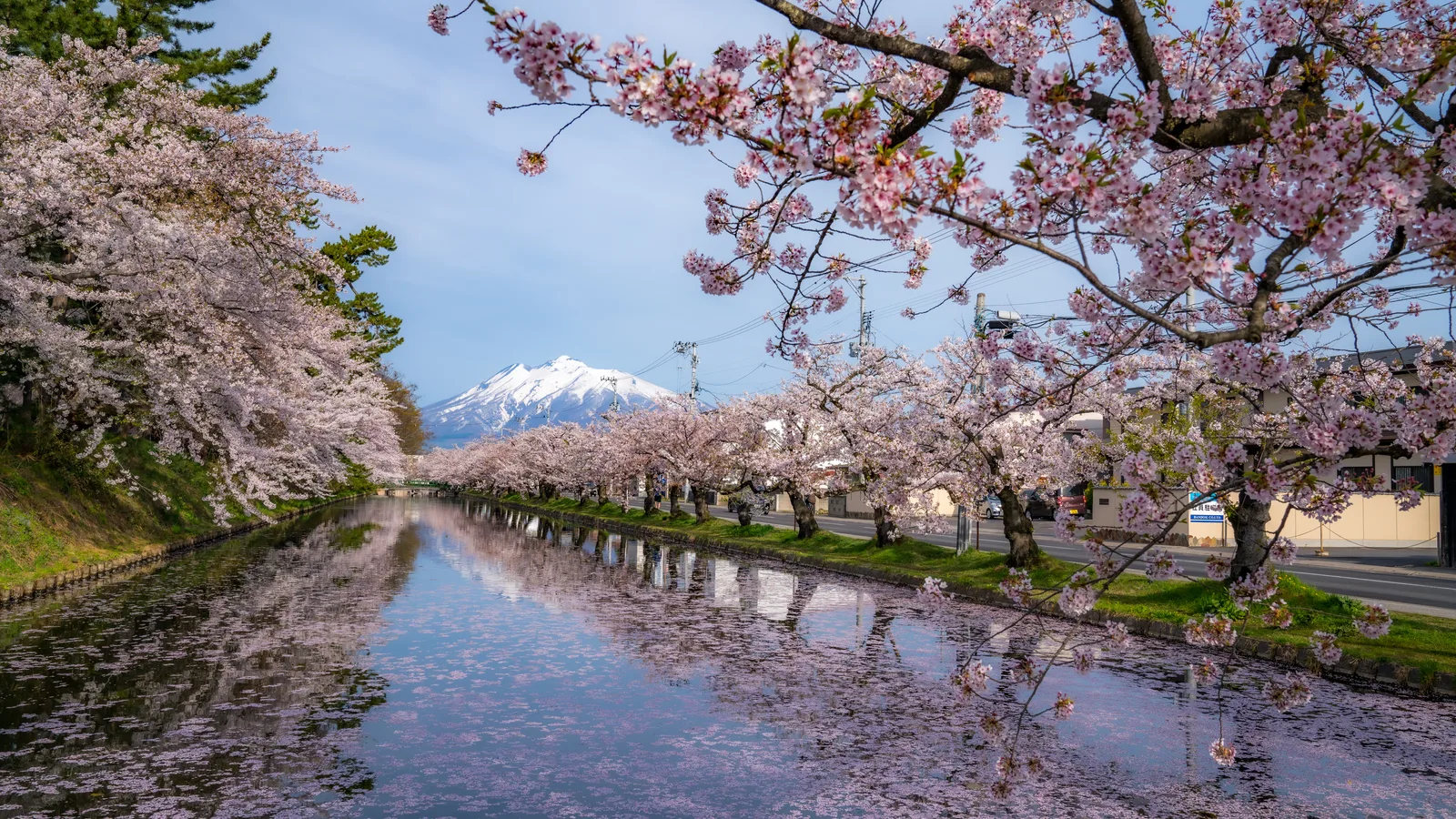
And over that water lean the cherries. Along the West Moat they arch from both banks until their branches almost touch above the surface, and you walk the length of a long pink tunnel with the water bright below you. There are around 2,600 cherry trees in this park, of more than fifty kinds, and in the days after the bloom peaks the petals come down all at once and gather on the moat into a thick, drifting carpet the people here call hana-ikada ("flower rafts"). It is the single image the castle is known for, and it is the image of an ending: the blossom is most famous here in the act of falling.
Stop for a moment before you go further in, because there is something easy to miss in all this beauty. Most of the grounds you are walking are free. The wide park, the moats, the cherry tunnels: you simply walk in. This is not only a monument; it is the city's everyday park, where people in Hirosaki come to sit and walk and eat under the trees, the way they have for over a century. And that is the clue to the trees themselves. None of this was here when the castle was a working fortress. Someone planted every one of these trees, on purpose, after the fighting was over. Walk on, and meet the people who did.
Step 2: The People Who Planted the Trees
The first cherries came early: by one account the Tsugaru clan brought twenty-five wild kasumizakura up from Kyoto as far back as 1715, and set them among the moats and the houses of the lord's retainers. But the park as you see it now begins with a harder moment. In 1871 the old domains were abolished across Japan, and a castle like this one lost its reason to exist overnight: no lord, no garrison, no war to prepare for. It could easily have been left to rot, as many castles were.
Instead, the people who had served it kept it alive by planting trees. In 1882 a former retainer of the Tsugaru domain named Kikuchi Tateharu gave a thousand Somei-Yoshino cherry saplings to the grounds, and others followed, until the bare fortress slowly became a forest of blossom. There is a quiet kind of devotion in that: the men who had defended the castle with arms now defending it with cherry trees, giving a place built for war a reason to be loved in peacetime.
And then Hirosaki did something only Hirosaki would think of. This is apple country (Aomori grows more apples than anywhere in Japan), and the park's gardeners began pruning the cherry trees the way the local orchards prune their apple trees, which goes against everything most growers believe about cherries. The result is startling: the branches carry nearly double the blossom of an ordinary cherry, and the trees live far longer than they should. A Somei-Yoshino is usually reckoned to last around sixty years; here more than three hundred of them are over a century old, and the oldest, planted in that first gift of 1882, is still flowering, the thickest Somei-Yoshino trunk in all of Japan. A dedicated team of "cherry keepers," the sakuramori, tends them still, every tree in the park numbered and cared for one by one. When you stand under the densest blossom you will ever see, you are not looking at luck. You are looking at four generations of people who decided this castle should keep being beautiful, and pruned it, tree by tree, until it was.
Step 3: The Small Keep That Came Back
Cross toward the inner bailey, the Honmaru, and there it is: the three-story keep, dark-timbered and modest, standing at the southeast corner of the ground. After the great five-story tower burned in 1627, this is what the ninth Tsugaru lord, Yasuchika, finally built in 1810 to replace it, not on the original keep's spot in the southwest, but here in a different corner, and only with the shogunate's permission to call it a turret rather than a keep.
Knowing that changes how you see it. The smallness is not a disappointment; it is the honest shape of what happened. A domain that had lost its grandest tower, in an age when it was no longer allowed to build another, raised the keep it was permitted to raise, where it was able to raise it. And it has stood ever since, through the end of the samurai age, through the wars of the twentieth century that took so many other keeps, so that this small tower is now the only original castle keep left standing anywhere in the Tohoku region, and one of just twelve in the country. It was made a National Important Cultural Property in 1937, along with three of its corner turrets and five of its gates: not a single famous tower, but a whole surviving castle, kept intact by people who would not let it go. Look at it not as a small castle, but as a castle that came back at all.
Step 4: The Castle Off Its Wall
Then you notice something that no photograph of this place prepared you for. The keep is not standing where it should be.
In 2015 the engineers found that the great stone wall beneath the keep (the ishigaki, the dry-stacked stone base that had held the tower for two centuries) was bulging and beginning to fail. To repair it they had to do something extraordinary: rather than dismantle the wooden keep, they lifted the whole four-hundred-ton tower and slid it bodily about seventy-eight meters inward, intact, onto a temporary stand, using a traditional building craft called hikiya, house-moving. Then, with the keep safely aside, they took the stone wall apart piece by piece, recording where every stone belonged, and rebuilt it from the ground up. The last of its 2,185 stones was set back in place at the end of 2024. And now, in 2026, the slow work of rolling the keep back onto its rebuilt foundation has begun.
So this is what you actually see: a castle caught in the middle of mending itself. The keep stands a little apart from its own base; the great wall below is new-old, every stone returned to its place by hand. You cannot go inside the tower; it is closed for the restoration, and will stay closed for several more years. But standing here and understanding why is worth more than any climb. This is the oldest instinct in how Japan keeps its wooden heritage: not to freeze a building behind glass, but to take it carefully apart and put it back together, so that the same structure can go on standing for another few hundred years. The city did not hide the work away, either. They built viewing decks and panels so that anyone who comes can watch the wall being rebuilt and the keep being moved, turning what could have been a closed construction site into something you can only witness once in a lifetime, because no one alive will likely see this castle moved again. You came expecting a finished tower and a famous photograph. What you found instead is the truer thing: the moment of the mending itself.
Step 5: Mount Iwaki, and the Way Back
Walk to the western edge of the inner ground before you go, and look out past the castle. On a clear day a single great mountain stands on the horizon: Iwaki-san, a cone of an old volcano, snow still on its summit late into the cherry season. People here call it Tsugaru Fuji, their own Fuji, and it has been the holy mountain of this country far longer than the castle has stood. From up on the Honmaru the city falls away and the mountain rises clean above it, the white peak, the spring sky, and the pink of the blossom in one frame, though even this is in flux just now, as the works reshape the ground, and the exact view shifts year by year while the keep finds its way home.
Then you go back the way you came, out across the moats and through the Otemon, under the cherry tunnel one more time. Think about what you walked through. A keep that burned and came back smaller. Cherry trees planted by the men who lost their castle, and kept alive by the pruning of apple farmers across a hundred years. A stone wall taken apart by hand and rebuilt, with the whole tower rolled aside to do it. None of this is a place that was finished and then preserved. It is a place that each generation has chosen, again, to mend and re-plant and carry forward, and for one quiet morning, walking it slowly, you were part of the keeping too.
Good to Know
The keep is mid-restoration: read this first. Hirosaki Castle is in the middle of a once-in-generations stone-wall repair. The keep was rolled about 78 meters off its foundation in 2015; the stone wall beneath it was rebuilt (the last stone set in late 2024); and the keep is now being moved back onto it, work the city expects to carry out during 2026. The inside of the keep is closed to visitors. It closed in November 2025 and will stay closed for the multi-year restoration, into the early 2030s. You can still see the keep's exterior up close, walk the whole park and its moats, and watch the restoration from viewing decks. The classic photograph (the keep on its corner with the moat and Mount Iwaki behind) is altered while the works continue. None of this stops Hirosaki from being worth the trip; it just makes it a different, rarer visit. Last verified: 2026-06. Confirm the current stage on the official castle park site before you go.
Hours. The paid inner areas (the Honmaru and Kita-no-Kuruwa, by the keep) are open daily 9:00–17:00 from April 1 to November 23, with hours extended to 21:00 during the cherry festival. From November 24 to March 31 the inner areas are free to enter, but the keep interior is not open. Last verified: 2026-06.
Admission. Most of Hirosaki Park is free to enter, all year. Only the inner Honmaru / Kita-no-Kuruwa area charges admission: ¥320 for adults, ¥100 for children. A combined ticket covering the inner area plus the Botanical Garden and the Fujita Memorial Garden is ¥520 / ¥160. If you see a far larger price advertised (some travelers have been startled by figures in the tens of thousands of yen), that is a reserved banquet seat or a tour package for the festival, not the price of walking in to see the blossom. Last verified: 2026-06.
Getting there. Hirosaki is a long way north, and that is part of the experience. From Tokyo, take the Tohoku Shinkansen (Hayabusa) to Shin-Aomori (about 3 hours 10 minutes), then the Limited Express Tsugaru about 30 minutes to Hirosaki Station (local trains take 30–40). The Hayabusa is fully reserved-seating, with no non-reserved cars, so book ahead: seats sell out fast around the cherry season and Golden Week (late April to early May). Because the round trip from Tokyo runs over four hours each way once you add the local legs, most travelers stay overnight in Aomori or Hirosaki rather than day-tripping. From Hirosaki Station it is about a 30-minute walk to the park, or a ride on the Dotemachi loop bus (long known as the "100-yen bus," now ¥150 cash / ¥130 by IC card) about 15 minutes to the Shiyakusho-mae stop, a few minutes' walk from the Otemon gate. (For rail passes, IC cards and how the trains connect, see getting around Japan.)
Cherry blossom season. The Hirosaki Cherry Blossom Festival runs in late April into early May; in 2026 it ran April 10 to May 5, moved up a week for an early bloom. The exact dates shift each year with the bloom forecast and are announced closer to the season, so check the official festival page for the current year's dates before you go. Hirosaki blooms late; it is one of the last places in Japan the cherry front reaches, and full bloom holds only about a week. Last verified: 2026-10. The festival lights the trees from sunset to about 22:00, you can row a boat on the West Moat among the blossom (around ¥1,500 an hour during the festival), and the hana-ikada "flower rafts" usually fill the moats for a few days in the second half of the bloom, once the petals start to fall. The far north's slow front means that even an early or late trip can work: see the best time to visit Japan for reading the bloom.
Other seasons. The park is not only a spring place. Late October into early November brings the Chrysanthemum and Autumn Foliage Festival, when roughly a thousand maples and the 2,600 cherries turn together; and every February the Snow Lantern Festival fills the grounds with snow lanterns and small kamakura snow huts, the keep floodlit above the white. Whenever you come, dress warm: this is the deep north, the air stays cold well into the cherry season, and mornings and evenings are colder still (what to wear in Japan).
Crowds. Over two million people visit during the cherry festival, and the park on a sunny festival afternoon, especially over Golden Week, is genuinely packed, with roads jammed and car parks full. The single best fix is to come early; before about seven in the morning the cherry tunnels are quiet and astonishing, and to arrive by train and the loop bus rather than by car. (More on the crowds, gently.)
Photography. The famous views (the West Moat cherry tunnel, the hana-ikada on the water, the keep with Mount Iwaki behind) draw everyone to the same few spots. Step aside before you raise your camera so others can keep moving, and let the petals fall on their own rather than shaking a branch for the falling-blossom shot. (More on reading the room at popular photo spots.)
Around the castle. Hirosaki rewards an unhurried day or two. The old samurai quarter of Nakacho, with its preserved warrior houses, is a short walk north of the park, and the city keeps a striking run of early-modern Western-style buildings from its days as a regional center. Many travelers also use Hirosaki as the base for Mount Iwaki and the Tsugaru countryside.
Official website: hirosakipark.jp
If Things Don't Go as Planned
You came for the keep and it's closed / sitting in the wrong place. This catches almost everyone, because the photographs were all taken before the restoration. The keep interior is closed for the multi-year stone-wall repair, and the tower itself has been moved off its base. But you can still see it close up from outside, the whole moated park and its cherries are open, and the restoration itself (the rebuilt wall, the displaced keep, the move back onto its foundation) is something you can watch from viewing decks and will likely never see again. It is a rarer visit than the postcard, not a lesser one.
You think you've missed the bloom. You may not have: Hirosaki is among the last places in Japan to bloom, so a trip that feels "too late" for Kyoto or Tokyo can land here exactly right. And even past the peak there is plenty: the hana-ikada petal rafts fill the moats once the blossom starts to fall, the late weeping and double cherries (yaebeni-shidare and others) carry color toward the end of the festival, and the night illumination and Mount Iwaki are beautiful whether or not the trees are at their fullest. If you can, give the peak a couple of nights' margin; bad weather can close a season early.
The fee at the gate is far higher than you expected. Walking into Hirosaki Park to see the blossom is free, and the inner Honmaru area is only ¥320 for an adult. Any much larger price you see online is a festival banquet seat or a tour product. It isn't what you need to enjoy the cherries.
Getting here from Tokyo feels too far for a day. It is. The trip runs over four hours each way once you add the local train from Shin-Aomori. Plan to stay the night in Hirosaki or Aomori rather than turning straight around; from Aomori the castle is under an hour away, an easy half-day. If you're chasing the cherry front north, Hirosaki pairs naturally with the late blooms of Tohoku as the final stop on a cherry-blossom trip.
The crowds and the cold. A festival afternoon is busy and the parking is unpredictable; come before seven in the morning, or arrive by train and the loop bus, and the early park is a different, quiet place. And dress warmer than you would further south: even in cherry season the northern mornings and the night-blossom hours are cold.
The keep looks small and you expected something grand. It is a modest three-story tower, rebuilt in 1810 after the original five-story keep burned. But what makes Hirosaki rare is the whole castle surviving as one piece: an original keep, three of its corner turrets, five of its gates, and three rings of moat, the only original keep left in all of Tohoku. Read it as a complete, living castle rather than a single great tower, and the smallness becomes the point. For another of Japan's twelve originals, the black keep at Matsumoto makes a fine companion.
Sources:
- Hirosaki Park Official: The Keep (Gosankai Yagura): history and structure. The five-story keep complete in 1611, lost to a lightning fire in 1627; the present three-story keep built in 1810 under the ninth Tsugaru lord Yasuchika and permitted only as a gosankai yagura ("three-story turret"); the only surviving Edo-period keep in Tohoku
- Hirosaki City Official: Hirosaki Castle Keep (National Important Cultural Property). The three-tier, three-story keep with copper-tiled roof standing at the southeast corner of the Honmaru; a typical late-Edo keep and the only surviving example in Tohoku; Important Cultural Property designation
- Hirosaki City Official: Honmaru stone-wall repair project (updated 2026-06). The keep moved about 77.62 m by hikiya in 2015; the stone wall (the keep base and part of the Honmaru's east face, about 100 m, and ~17 m of the south face) dismantled and rebuilt; the final stone (2,185 in all) reset on 2024-12-19; the keep to be moved back (~78 m) onto the rebuilt wall, with the broader preservation work continuing through the early 2030s
- Hirosaki Park Official: Keep interior viewing suspended for restoration. The keep interior closed from late November 2025 for the move-back and seismic/preservation work; it will reopen only once the project is complete
- Hirosaki Park Official: The cherry trees of Hirosaki (the "Hirosaki method"). Apple-orchard pruning techniques applied to the cherries for denser, lower blossom; more than 300 trees over a century old despite the usual ~60-year lifespan; the sakuramori keepers' team
- Hirosaki Park Official: 2026 cherry calendar. Around 2,600 cherry trees of 52 varieties; the 2026 festival dates (April 10 – May 5); bloom and hana-ikada timing
- Hirosaki Park Official: Admission and hours. Free park; inner Honmaru / Kita-no-Kuruwa admission ¥320 adult / ¥100 child; combined ticket ¥520 / ¥160; hours and seasonal extensions
- JNTO (Japan National Tourism Organization): Hirosaki Cherry Blossom Festival. Around 2,600 trees of more than 50 varieties; the apple-tree pruning that gives nearly double the blossom; West Moat cherry tunnel; night illumination
- JNTO: Hirosaki Park in Cherry Blossom Season (Japan's Local Treasures). The hana-ikada "flower rafts" on the moat; the trees' origin in a 1715 requisition of 25 kasumizakura from Kyoto; every tree numbered and individually tended
- JNTO: Hirosaki Park Cherry Blossoms (oldest Somei-Yoshino). The oldest Somei-Yoshino in the park, planted in 1882
- JNTO: Hirosaki Castle. Built in 1611 by lord Nobuhira of the Tsugaru clan; the only castle keep in Tohoku built in the Edo period; access from Shin-Aomori (about 30 minutes); the keep closed through much of winter
- Hirosaki Convention & Visitors Bureau: Access. Tohoku Shinkansen Hayabusa to Shin-Aomori (~3 h 10 min); Limited Express Tsugaru to Hirosaki (~30 min); the Dotemachi loop bus; Aomori Airport bus
- Amazing AOMORI (Aomori Prefecture): Hirosaki Cherry Blossom Festival. Over 2 million visitors during the festival; night illumination 18:30–22:00; West Moat sakura tunnel; moat boats; the 100-yen loop bus route
- Amazing AOMORI (Aomori Prefecture): Mount Iwaki. The 1,625 m compound volcano of the Tsugaru plain, nicknamed "Tsugaru Fuji"
Image credits: Hero and thumbnail by mko294 (CC BY 4.0) via Wikimedia Commons (cropped and resized).
WMJS is written in Japan, in English, with AI help. We check every page, but English is not our first language. If a sentence reads oddly, tell us. One sentence is enough.
Thank you. A person reads every note.
Real voices
Is it worth it?
Were you there? Share your photos.
Your photo could appear in this guide — with your name and a link to your profile.
Submit a photoRelated Articles

Getting Around Japan: The Tiny Things That Earn You a Nod
"Excuse Me, Can You Take My Photo?": What Japanese People Really Think
More guides in Tohoku
Hiraizumi — A Prayer in Gold, in a Capital That Vanished
An audio cultural guide to Hiraizumi and Chuson-ji's Golden Hall (Konjikido), verified against official sources. Why a lord covered a hall in gold as a prayer for peace, why it alone survived a capital that once rivaled Kyoto, why you cannot photograph it — and how to visit Chuson-ji and the Motsu-ji Pure Land garden, from Ichinoseki.
Chuson-ji & Hiraizumi
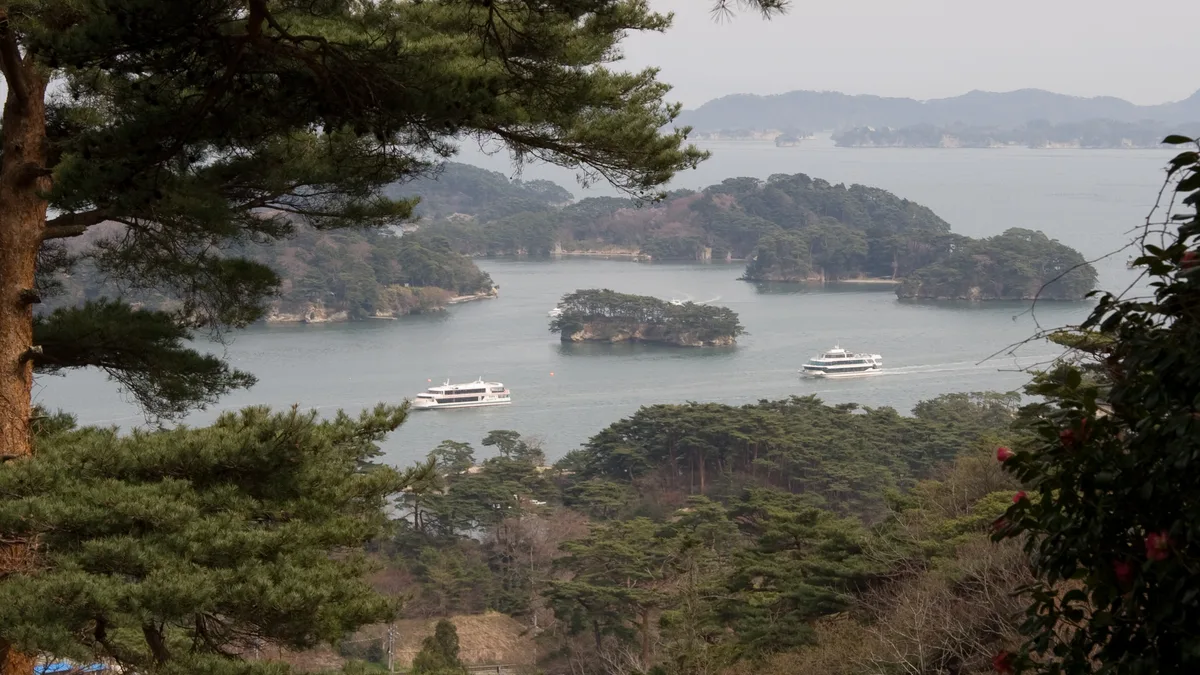
Visiting Sendai & Matsushima, A Bay Beyond Words and the Lord Who Planted Its Trees
Is Matsushima worth visiting from Sendai? We weighed 49 traveler voices: 71% say worth it, and Japanese reviews rate the bay even warmer at 84%. One of Japan's Three Views, a 40-minute ride from Sendai to Matsushima-Kaigan Station, with a bay cruise past 260 pine islands and the cedar-built Zuiganji temple, with an audio guide.
Sendai & Matsushima
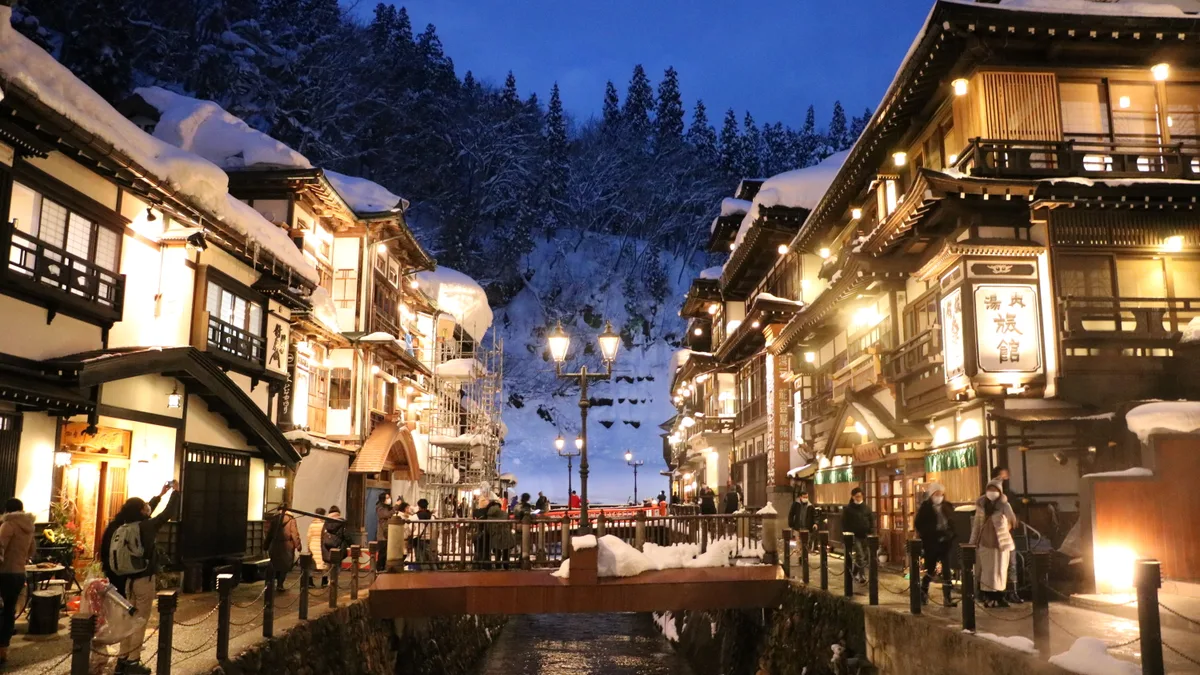
Ginzan Onsen — Where the Gas Lamps, and the Night, Belong to Those Who Stay
An audio cultural guide to Ginzan Onsen, verified against official sources. Understand why this lamp-lit Taisho-era street is a living village rather than a film set, why the famous snow-and-gas-lamp night belongs to those who stay over, how the silver mine became a hot spring, and how to actually get there in winter.
Ginzan Onsen (Ginzan River)