
Fushimi Inari Taisha: Ten Thousand Gates, Each One a Thank-You
Fushimi Inari Taisha
By Kei · Born and raised in JapanThe Meaning
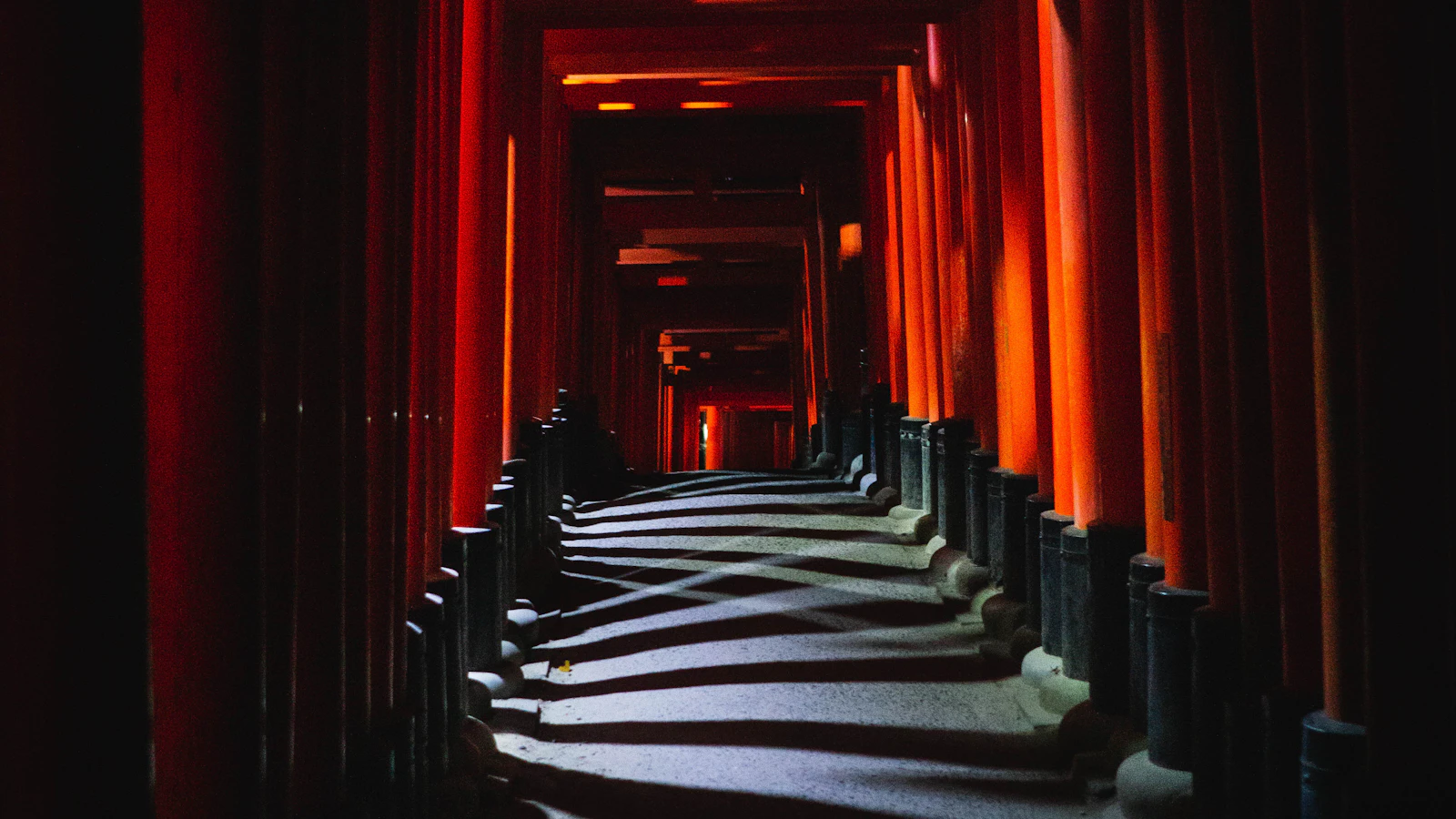
Most people meet Fushimi Inari as an image before they ever meet it as a place: a tunnel of vermilion gates curving up a hillside, glowing. It is one of the most photographed sights in all of Japan. What the photograph cannot tell you is that you are looking at roughly ten thousand thank-you notes.
Each of those gates, called a torii, was paid for and raised by someone. A family. A sushi shop. A company. Turn around at the far side of any gate and you will see its back painted with a name and a date. Some are freshly lacquered, some are fading, some lean with age. Together they climb the whole of a sacred mountain, and every one of them marks a wish that a real person carried here.
The shrine is dedicated to Inari Ōkami, the deity of rice, and in old Japan rice was never only food. It was wealth, it was tax, it was the measure of a good year. So the god of the harvest quietly became the god of prosperity of every kind, and the merchants and makers of Japan took Inari as their own. There are about thirty thousand Inari shrines across the country, more than any other kind of shrine, and this mountain in southern Kyoto is the head of them all. It has stood here since the year 711.
The gates hold a piece of gentle wordplay. The Japanese verb for passing through a gateway, tōru, is also the word for a wish getting through and being granted. So people raise a torii to pray that a wish will pass through, or in gratitude that one already has. When you walk beneath them, you are walking through other people's answered prayers. Understand that, and the tunnel stops being scenery and becomes something closer to a conversation.
What Happens When You're There
Step 1: Before the Gates, the working shrine most visitors hurry past
Step out of Inari Station and the great vermilion gate is right in front of you. Almost everyone walks straight through the main courtyard toward the famous tunnel, and in doing so they pass the actual heart of the place without slowing down.
Take a moment at the Rōmon, the towering entrance gate, given to the shrine by the warlord Toyotomi Hideyoshi in 1589. Beyond it stands the main hall, rebuilt in 1499 and now an Important Cultural Property, a shrine where people have prayed continuously for centuries. This is where a Japanese visitor pauses first: a coin, two bows, two claps, a wish, one more bow. If you would like to do as they do, a small bow is understood everywhere in Japan, and no one expects you to get every step perfect.
You will notice foxes everywhere, carved in stone, guarding the halls. It is worth knowing what they are, because it is almost universally misread. The fox is not the god. The shrine itself is careful about this: the fox is Inari's messenger, an unseen white spirit that carries prayers between people and the deity. Look at what each one holds in its mouth. A key, for the storehouse where rice was kept. A jewel. A scroll. A sheaf of rice. Each stands for something Inari looks after: wealth, spirit, wisdom, harvest. The vermilion that colors the whole shrine is the same idea turned into a color. Red wards off harm and stands for the abundance the god provides. It is protection wrapped around the path rather than mere ornament.
Step 2: The Senbon Torii, walking through answered prayers
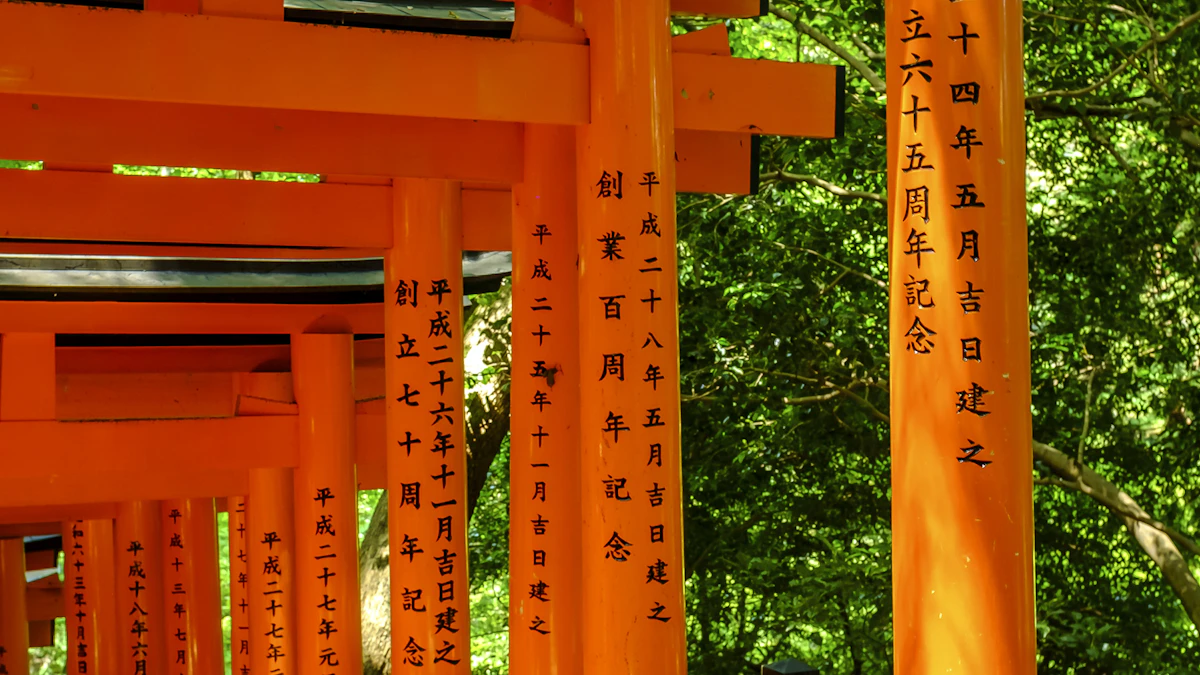
Behind the main hall the path narrows and the gates crowd in overhead, set so densely that daylight turns to a warm red glow. This is the Senbon Torii, the "thousand gates." The number is poetry rather than arithmetic. The shrine counts around ten thousand gates across the whole mountain, and here at the beginning they simply stand shoulder to shoulder.
For a short stretch the path splits into two parallel tunnels. It genuinely does not matter which you take, because they rejoin a moment later, so there is no wrong turn to fret over. Keep to one side rather than the middle as you walk, the way the local visitors do, and pause before you step through the first gate. The center of the path is left clear as a courtesy to the deity. These small gestures matter more for the intention behind them than for getting them exactly right, and they are quietly noticed.
There is one thing worth preparing for. The photographs that likely brought you here, the ones with an empty glowing corridor, are almost all taken before dawn, or with patience and a tripod. Between mid-morning and late afternoon this section is a slow, shuffling river of people. That is not the shrine letting you down, only the most popular stretch of a place that millions come to, and the friction of the crowded photo moment is easier to hold lightly once you understand it. The relief comes quickly, and it is the quiet secret of the whole visit: keep walking. Twenty minutes past the tunnel, most of the crowd is simply gone.
Step 3: The Stone That Answers, the Okusha and the omokaru-ishi
The Senbon Torii delivers you to the Okusha Hōhaisho, a worship hall set against the mountainside and often called the inner shrine. Many visitors here take a fox-shaped ema, a small wooden plaque, and draw their own fox face on it before writing a wish. It is a warm, human thing to do, and the racks of hand-drawn foxes, no two alike, are worth a look on their own.
Just behind the hall stands a pair of stone lanterns, and here is a ritual almost everyone walks past without knowing. These are the omokaru-ishi, the "heavy-light stones." You make a wish, then lift the round stone cap on top of a lantern. If it feels lighter than you expected, your wish is said to come easily. If it feels heavier, the road ahead will be harder. It costs nothing and asks for nothing but a moment of honesty with yourself about what you are hoping for. Whatever the stone tells you, it is a kinder oracle than most.
This is also where you decide how far to go. Above the Okusha, the mountain begins in earnest.
Step 4: Climbing the Mountain, where the crowd ends and the meaning begins
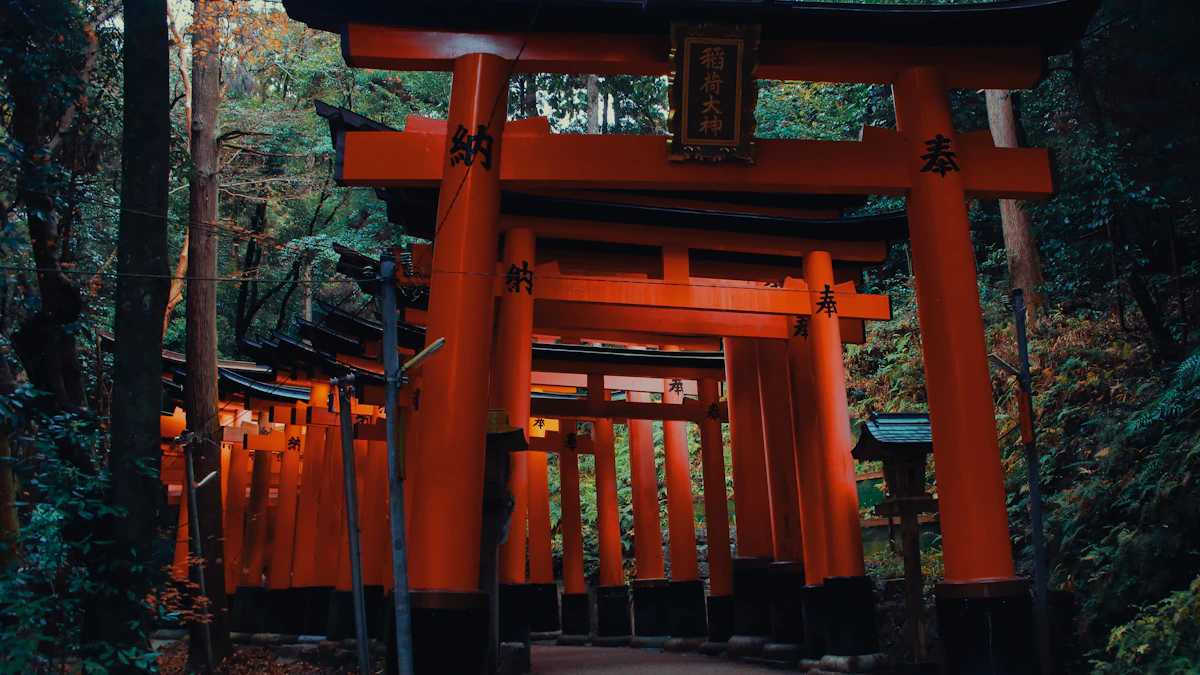
To climb Mount Inari is to do what pilgrims here have done for more than a thousand years, since the court lady Sei Shōnagon wrote of how the ascent left her breathless. Kyoto people have a verb for it, o-yama suru, "to do the mountain." The summit is 233 meters high, and the full loop takes most walkers two to three hours at an unhurried pace.
You do not have to reach the top, and it helps to know why. About halfway up is a clearing called Yotsutsuji, where the trees fall away and Kyoto opens out below you. This is the finest view on the mountain, and it is not at the summit. Many people, Japanese visitors included, rest here, take in the city, and turn back content. There is no failure in that.
If you do go higher, it helps to know what you are climbing toward. The summit offers no grand view. It is a small shrine among dense trees, and travelers who expect a lookout are sometimes puzzled to arrive and find only quiet. That quiet is the whole point. The upper mountain is not a viewing platform but the home of the deity, and its slopes are scattered with thousands of small private altars called otsuka, raised by worshippers over generations. Up here the gates grow older and greener with moss, the crowd has thinned to almost no one, and the loudest sound is your own footsteps. People come this far not for a photograph but to stand, for a little while, inside a god's mountain. Whatever you believe when you begin the climb, the walk itself is real, and so is the calm waiting at the end of it.
Good to Know
Getting there: Fushimi Inari is one of the easiest major sights in Kyoto to reach. Take the JR Nara Line from Kyoto Station to Inari Station, about five minutes and two stops away, and the shrine's great gate is directly across from the exit. The trip is covered by the Japan Rail Pass. Alternatively, the Keihan Main Line stops at Fushimi-Inari Station, about a five-minute walk to the west (limited express trains do not stop there). The shrine strongly recommends arriving by train rather than by car. For the wider network, see our guide to getting around Japan.
Hours and cost: There is no admission fee, and the mountain paths have no gate, which is why you will find people walking them before dawn and long after dark. The prayer and amulet offices are open roughly 8:30 to 16:30. Last verified: 2026-07.
When to visit: The lower Senbon Torii is busiest from mid-morning to late afternoon. For the emptiest gates and the softest light, arrive before about 7:00, or come in the evening when the lanterns are lit and the tour groups have left. Rain is no reason to stay away, since an overcast sky makes the vermilion glow and thins the crowds. Kyoto City publishes an hourly congestion forecast with a live camera for exactly this shrine, worth a look the night before you go. For the bigger seasonal picture, see the best time to visit Japan.
What to wear: This is a real climb of 233 meters on stone steps, not a flat stroll, so wear comfortable walking shoes. In summer the humidity, more than the incline, is the hard part, so carry more water than you think you will need. About halfway up there are tea stalls for a drink or a rest.
What to eat: The approach and lower slopes are lined with stalls, and the local specialties tie back to the foxes. Look for inari-zushi, sweet rice packed into pouches of fried tofu, and kitsune udon, "fox udon," both named for the fried tofu said to be the messengers' favorite food. Most stalls close by evening.
How long to allow: The main shrine and the Senbon Torii take about 30 to 45 minutes. Walking up to Yotsutsuji and back is around 1.5 to 2 hours. The full summit loop is 2.5 to 3 hours. Fushimi Inari sits in southern Kyoto and rewards a relaxed half-day rather than a rushed hour.
A companion read: If you are still deciding whether to come at all, what visitors and the people who pray here actually say about Fushimi Inari lays out both sides honestly.
If Things Don't Go as Planned
You arrived to enormous crowds. Do not judge the shrine by the packed lower tunnel. The crowd lives almost entirely in the first few hundred meters. Keep walking past the Okusha, and within about twenty minutes you will have stretches of the mountain nearly to yourself.
You could not get an empty photo. That is completely normal at any ordinary hour. The famous solitary gate shots are made before dawn or high up the mountain. Walk higher, where the crowds thin, and you will find quiet gates all to yourself without ever setting a 5:00 alarm.
You are tired, hot, or short on time. Turning back at Yotsutsuji is not giving up. You have already walked the finest gates and seen the best view of the city, and the quiet summit will still be there next time.
You reached what felt like the top, and it was underwhelming. You may have stopped just short. The true summit shrine is often a couple of minutes farther up than where people naturally quit, through a last cluster of older gates. And if a small wooded shrine is not the grand finale you pictured, that is simply the mountain being honest about what it is.
You clapped the wrong number of times, or forgot a step. No one is keeping score, and Japanese worshippers lose the thread too. The feeling behind the gesture matters far more than the sequence. A quiet bow covers almost everything.
You are visiting after dark. The gates are lit, beautiful, and far emptier, but bring a small light for the upper trail, expect the food stalls to be closed, and know that wild boar occasionally appear on the mountain at night. If you meet one, do not approach it and do not run. Give it room and move on calmly.
Sources:
- Fushimi Inari Taisha Official Website, English: Founding in 711, the five deities collectively known as Inari Ōkami, the fox as messenger rather than the deity, roughly ten thousand torii, and vermilion as both an amulet against evil and a sign of abundance
- Fushimi Inari Taisha Official FAQ, English: Around ten thousand torii across the mountain, about thirty thousand Inari shrines nationwide with this as the head shrine, and the shrine's own note that the "three great Inari" cannot be officially fixed
- Fushimi Inari Taisha, History: Enshrinement in 711, the Hata clan origin, the Rōmon gate given by Toyotomi Hideyoshi in 1589, and the main hall rebuilt in 1499
- Fushimi Inari Taisha, Mount Inari and the Okusha: The Okusha Hōhaisho and the omokaru-ishi "heavy-light stone" custom
- Fushimi Inari Taisha, Rites and Festivals: The Hatsuuma festival on the first Day of the Horse, the Motomiya festival, and the ritual calendar
- JNTO, Fushimi Inari Taisha Shrine: Mount Inari at 233 meters, the two-to-three-hour mountain circuit, and access from Inari Station
- Kyoto City Official Travel Guide, Fushimi Inari Taisha: The Hata clan founding, access times, and the hourly congestion forecast for the shrine
Photos: sourced under free commercial-use licenses; see captions where attribution applies.
WMJS is written in Japan, in English, with AI help. We check every page, but English is not our first language. If a sentence reads oddly, tell us. One sentence is enough.
Thank you. A person reads every note.
Real voices
Is it worth it?
Were you there? Share your photos.
Your photo could appear in this guide — with your name and a link to your profile.
Submit a photoRelated Articles
Visiting Temples and Shrines: What Japanese People Notice
"Excuse Me, Can You Take My Photo?": What Japanese People Really Think

The Power of a Small Bow: Why a Simple Nod Makes Japanese People Smile

More guides in Kansai
Arashiyama — Why Japan Lists This Bamboo Grove Among the Sounds Worth Saving
An audio cultural guide to Arashiyama in Kyoto, verified against official sources. Understand why Japan lists the bamboo of Sagano among the sounds it wants to keep, how the Moon-Crossing Bridge earned its name, and how to walk the river, the grove, and Tenryu-ji's borrowed-mountain garden away from the crowds.
Arashiyama
Ginkaku-ji — Why the Silver Pavilion Has No Silver, and Why Japan Finds That Beautiful
Why the Silver Pavilion has no silver — a free audio guide to Ginkaku-ji, Kyoto, verified against official temple sources. Higashiyama culture and the art of restraint, the sea of silver sand, hours, admission (1,000 yen), access from Kyoto Station, and the Philosopher's Path.
Ginkaku-ji (Jishō-ji)
Gion — Walking Kyoto's Flower District, a Town That Is Still Lived In
An audio guide to Kyoto's Gion flower district: what geiko and maiko really are, the walk from Yasaka Shrine through Hanamikoji to the Shirakawa canal, when to go, and how to enjoy a town still lived in.
Gion
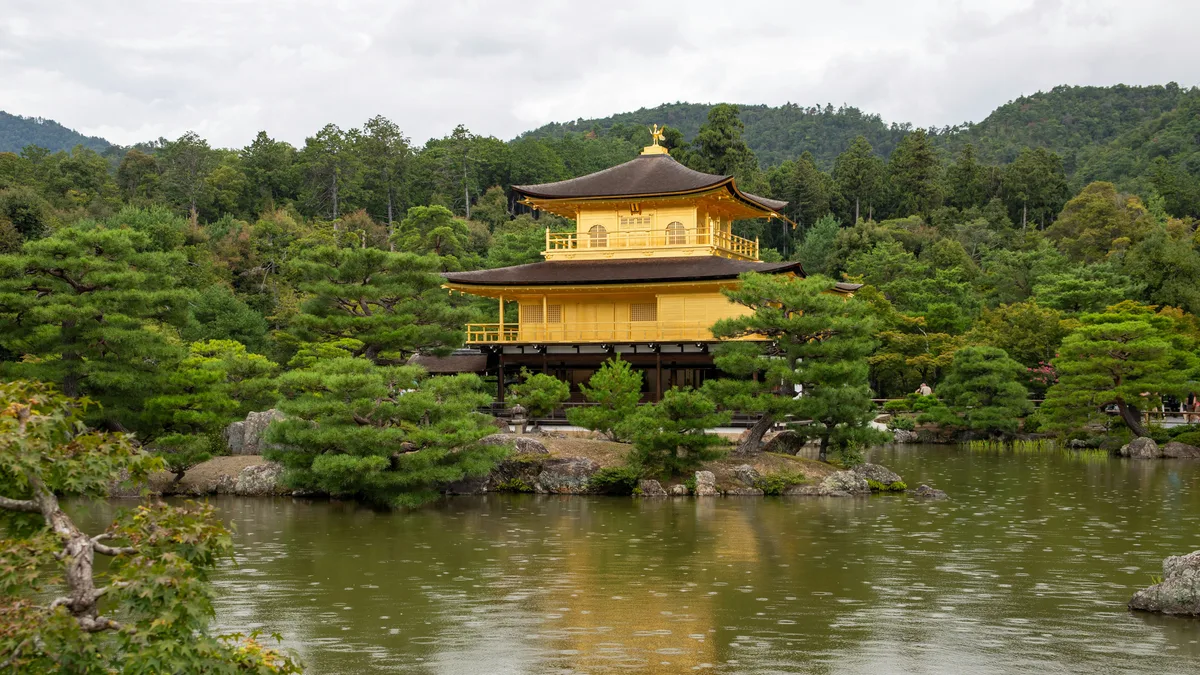
Kinkaku-ji — Why Everyone Stops at the Same Spot to Photograph the Golden Pavilion
An audio cultural guide to Kinkaku-ji, Kyoto's Golden Pavilion, verified against official temple sources. Why you view it from across the pond, what the gold really means, plus hours, admission, and access from Kyoto Station.
Kinkaku-ji (Rokuon-ji)