
Is Osaka Castle Worth It? What Visitors and Osaka Itself Will Tell You
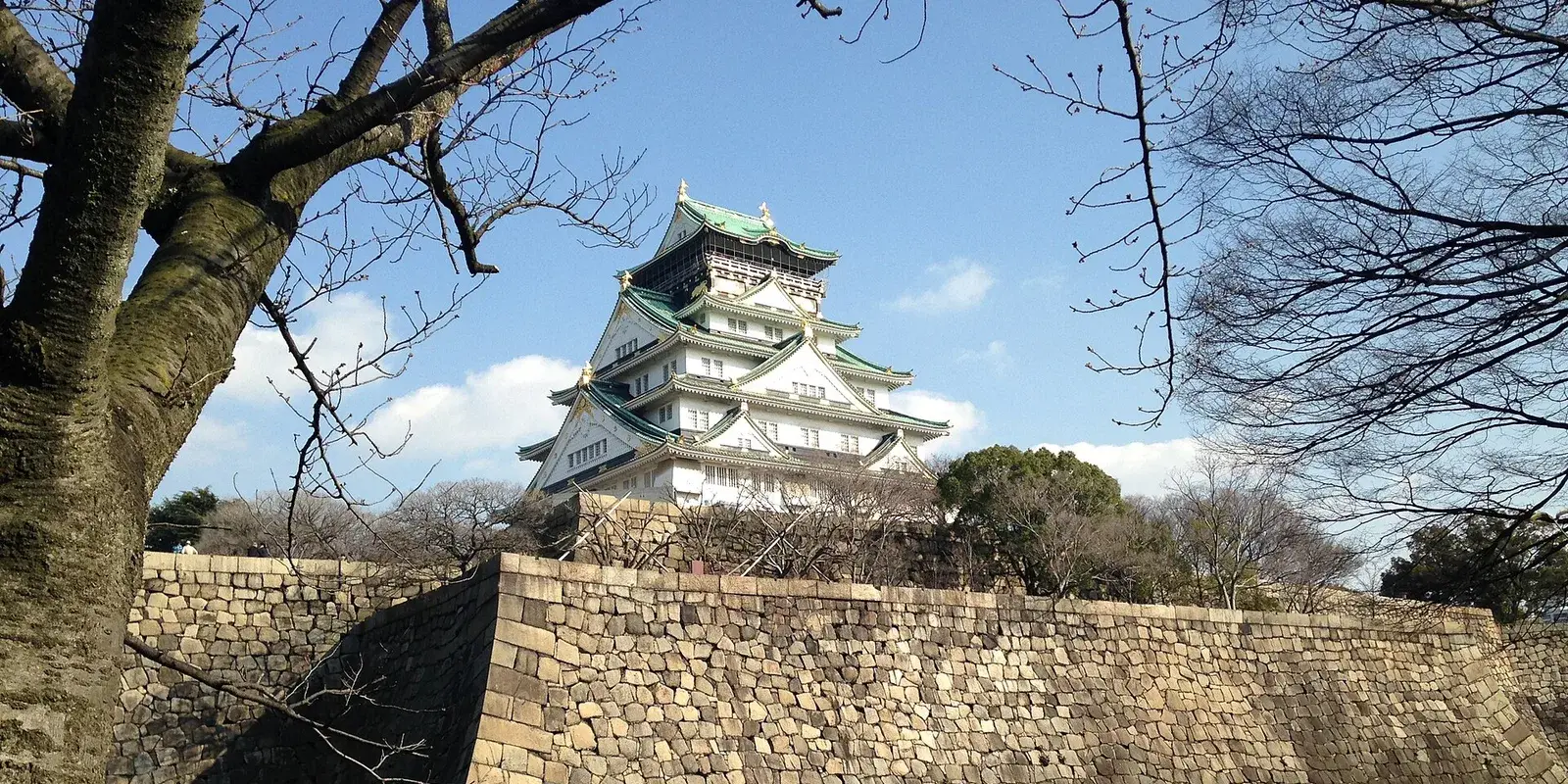
You have seen the tower already: white and gold above the moat, five tiers of curved roofs, a pair of golden fish on the ridge. It is the face Osaka puts on its postcards. So you arrive half-picturing yourself climbing creaking wooden floors where a warlord once walked, and a real share of visitors come back down feeling cheated.
Here is the short answer, in the words of people who have actually been: yes, it's worth your time, but probably not for the reason you came, and the one thing that disappoints people is almost entirely avoidable once you know it.
Is it worth it? (in visitors' own words)
We gathered the voices of international travelers who have actually been to Osaka Castle and asked, in effect, was it worth it? Weighted by how strongly each opinion resonated with other readers, here is how they fell:
This is one of the most divided gauges we have ever drawn, and the division is the whole story. Look at the red band: at roughly one in four, it is far larger than for most famous sights. And nearly every let-down voice names the same single thing. "You are basically paying ¥1,200 for an observation deck," wrote the most-upvoted of them all. Another put it more precisely: "It's a fine museum, but it's not a castle, and that's what a lot of people expect when they go to a castle." The disappointment is rarely about the place. It is about the gap between what people picture and what is actually inside.
Now look at where the green and the middle land: together, the clear majority. The travelers who came away happy tend to say the reward was never the interior at all. "I love the park, and the castle is a cool backdrop," one wrote; "skip going inside- not worth it, but the castle itself is quite stunning (because/even though it's a reproduction)." Another, to someone in two minds: "Spend a quick ten minutes to take in the view and take a few photos for memories. Spare yourself from regrets years later." And the inside keeps its defenders, too: "When I went, the castle museum was the highlight, with great narration and curation of Hideyoshi's life." The outside and the view win most people over; the ticketed inside is the coin-flip.
How the people who live with it feel
Here is the tell that makes the whole page click. We gathered the reviews Japanese visitors and locals write about the very same castle, and they are let down far less often.
Hold the two red bars side by side. The visitors' is roughly one in four; the Japanese one is closer to one in eleven. That difference isn't loyalty; it's information. Japanese visitors walk up to that tower already knowing it is a 1931 reconstruction with an elevator and a museum inside, so they are rarely surprised by it. "Reconstructed though it is, and with an elevator inside though there may be," one wrote, "a castle that has been the stage of history for the Toyotomi and the Tokugawa still has a different kind of power." The presence is real to them precisely because they brought the right expectation.
And the small red band they do leave is the honest, load-bearing part of this page, because it points at exactly the same thing the visitors flag. "You can mostly go up by elevator, and the inside is almost entirely a museum," one admits, "so if you think of it as a castle it lacks atmosphere and is disappointing." The most affecting one knew the facts and still felt it: "Even though I knew it wasn't an original keep, the giant stones leading up to it got me excited. The view and the exhibits were splendid. But the gap with what I'd hoped for was unavoidable, and I went home unsatisfied." When locals who came in fully informed still feel that pull, it tells you the feeling is real rather than visitors being precious. And it tells you how to disarm it: come for what is genuinely here.
What is genuinely here (and most of it is free)
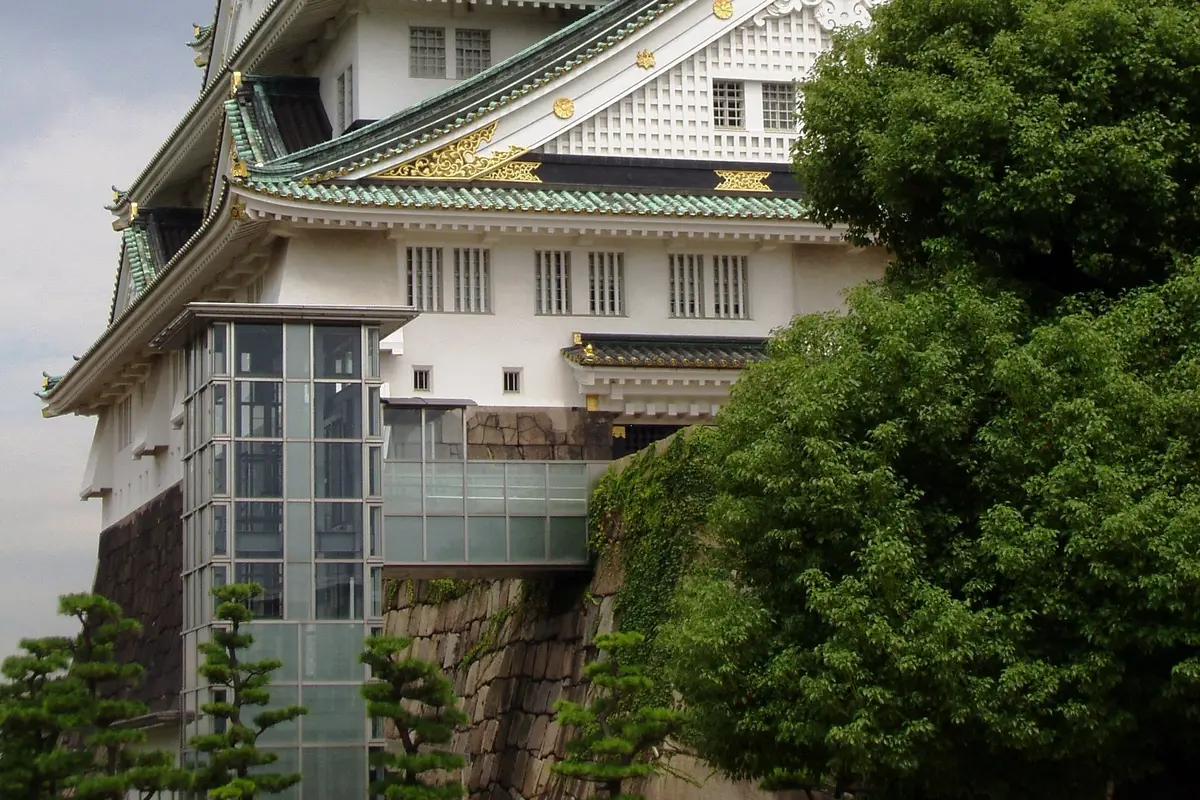
The single most useful fact about Osaka Castle is the one the disappointed visitors didn't have. The tower you photograph is the third to stand on this hill, rebuilt in 1931, after Hideyoshi's original was lost with the fall of the Toyotomi, and its Tokugawa successor was struck by lightning in 1665, leaving the hill with no tower at all for 266 years. The citizens of Osaka paid for the new one themselves, the full sum raised in about half a year even as hard times set in, and they built it in steel and reinforced concrete so that this time it could not burn. It has been a history museum since the day it reopened. That is not a flaw to apologize for; it is the point: a whole city emptied its pockets to raise a symbol it knew was no longer the original.
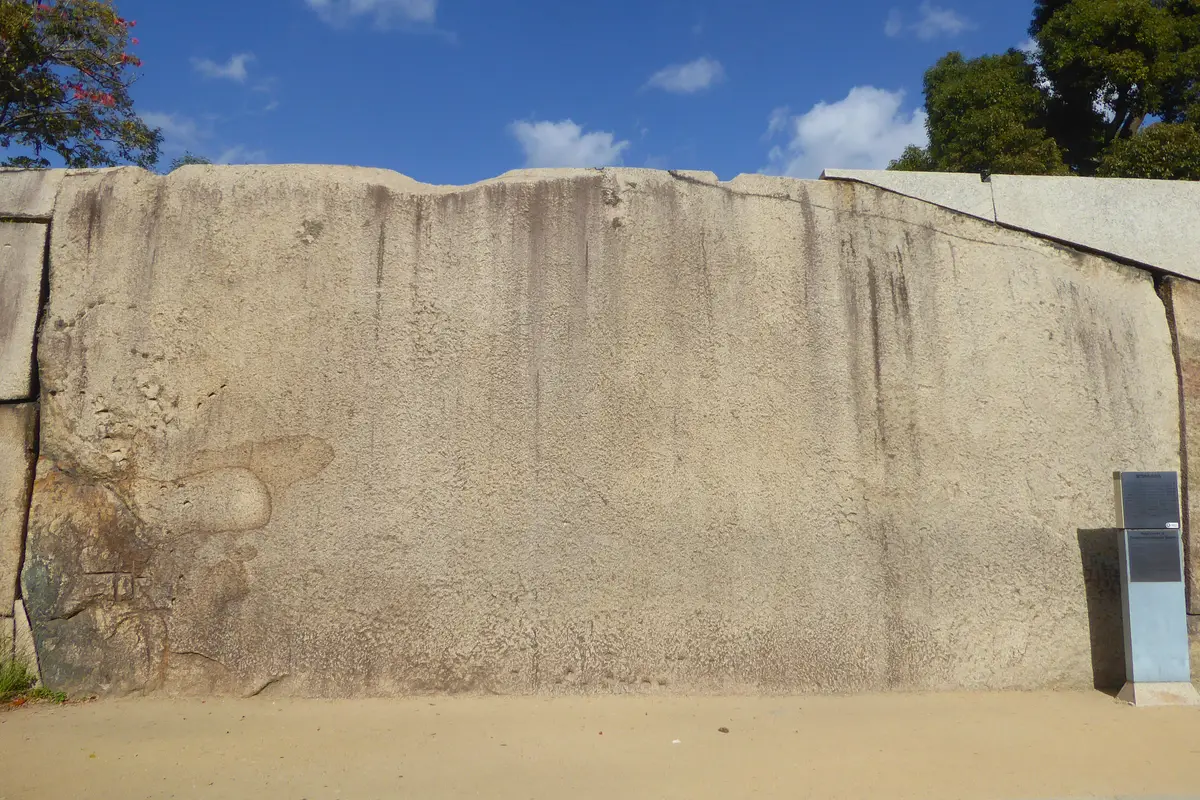
And the actual old castle is still here, outside and free. The moats, the gates, and the colossal stone walls are Tokugawa-era work, designated a national Special Historic Site. Near the Sakura Gate stands the Tako-ishi, the "octopus stone": a single granite face of about 60 square metres, weighing an estimated 108 tons, the largest stone in the castle, floated across the sea and dragged into place in 1624 without a single machine. The wooden tower has burned and fallen twice; that wall has not moved in four centuries. All of it sits inside a 105-hectare public park that is free and open at any hour.
What to do once you're there
Everything above resolves into a handful of moves that the voices, and the castle, both reward.
- Decide about the inside with open eyes. The keep is a well-made history museum: Hideyoshi's life, a great painted folding screen of the castle's fall, and an eighth-floor observation deck that opens the whole city to you. Adult admission is ¥1,200 (high-school and university students ¥600, junior-high age and younger free), and an elevator carries you up. Go up for the story and the view, not for preserved period rooms; there were never any here to begin with.
- If a preserved wooden castle is what your heart is set on, that is Himeji, one of Japan's twelve surviving original keeps, about an hour west by train. Plenty of travelers do both and love each for what it is.
- You can have a wonderful visit without a ticket. The grounds, the moats, the great walls, and the bridges cost nothing. The most-upvoted advice from people who'd been is simply to take in the view, photograph the tower, and move on happy.
- Beat the one real friction: the queue. The recurring gripe in the reviews is the ticket line rather than the castle. Buy your ticket online in advance, or arrive right at the 9:00 opening; both let you walk past the wait. Midday in the cherry-blossom and autumn-leaf seasons is the busiest; early mornings and weekdays are calm.
- Give yourself the walk. Every station leaves you a 15–20 minute walk away, and the first water you reach is only the outer moat; keep going inward, across the next bridge and through the next gate. For trains, IC cards and passes, see getting around Japan.
- Stay for the light. At dusk the tower is floodlit and hangs doubled in the moat, and the park stays open long after the keep's interior closes at 18:00, so plan the climb for daytime and the photograph for the blue hour. The often-missed reflecting pond and the Nishinomaru lawn give the cleanest shot.
So, is it worth it? Around a quarter of visitors will tell you they were let down, almost all of them for paying to go inside expecting something the building never claimed to be. And the people who live with it, who come in knowing exactly what it is, mostly walk away glad. Bring their knowledge with you: a city's act of devotion, wrapped around a museum, standing on a real four-hundred-year-old castle you can walk for free, and Osaka Castle tends to meet you the way it meets them.
Deciding which famous places actually earn a slot on a short trip? Start with what actually matters in Japan, and for the full walk among the moats, the great stone walls and the floodlit tower, the Osaka Castle audio guide is just below.
Sources
- Osaka Castle Museum (Official): tower hours (9:00–18:00, last entry 17:30) and admission (adults ¥1,200; written without thousand-separators, that is 1200 yen; high-school and university students ¥600; junior-high age and younger free); the 1931 citizen-funded reconstruction; the keep has been a museum since it was rebuilt; the grounds as a national Special Historic Site.
- Osaka Castle Museum: 90th Anniversary History (Official): Mayor Seki Hajime's 1928 proposal; citizen donations reaching the target in about half a year; the steel-reinforced-concrete reconstruction completed in 1931.
- Osaka Official Tourism Guide (OSAKA-INFO): Osaka Castle Main Keep: the current tower as the third, built in 1931 after 266 years without one; about 55 m, five tiers and eight floors; the eighth-floor observation deck; the elevator and museum interior.
- Osaka Official Tourism Guide (OSAKA-INFO): Osaka Castle Park: the park's area (about 105.6 hectares) and grounds.
- Osaka Castle Park (Official Park Management): the park as a free, always-open public space.
- Japan Agency for Cultural Affairs / MLIT Multilingual Database: Tako-ishi (Octopus Stone): the castle's largest stone: about 60 m² of surface and an estimated 108 tons, set in the Tokugawa-era rebuild.
- JNTO (Japan National Tourism Organization): Osaka Castle: the castle grounds as a green space in the city, and visitor framing.
- JNTO (Japan National Tourism Organization): Himeji Castle: Himeji as one of Japan's twelve remaining original castles, the contrast for travelers who want a preserved wooden keep.
WMJS is written in Japan, in English, with AI help. We check every page, but English is not our first language. If a sentence reads oddly, tell us. One sentence is enough.
Thank you. A person reads every note.
How well do you know Japan?
Based on 51,218+ real Japanese voices
Want to know more? Ask Japanese people
Have a follow-up question about this topic? We'll ask real Japanese people.
Voice Box →