
Visiting Nara Park, Where Japan's Sacred Deer Have Bowed for a Thousand Years
Nara Park
By Kei · Born and raised in JapanIs Nara Park worth visiting? By the voices we gathered, yes: of 100 international travelers who made the trip, weighted by how much each account resonated with fellow readers, 65% called it worth it, and Japanese reviewers rate the park even more warmly at 80%. It is a free, open city park, home to more than 1,400 wild sacred deer, that pairs naturally with the Great Buddha at Todai-ji and the lantern path to Kasuga Taisha. Plan at least half a day, most bites happen from feeding mistakes rather than aggression, and Kintetsu-Nara Station puts you a five-minute walk from the first deer. What visitors actually said, including the honest hard moments, is further down this page.
The Meaning
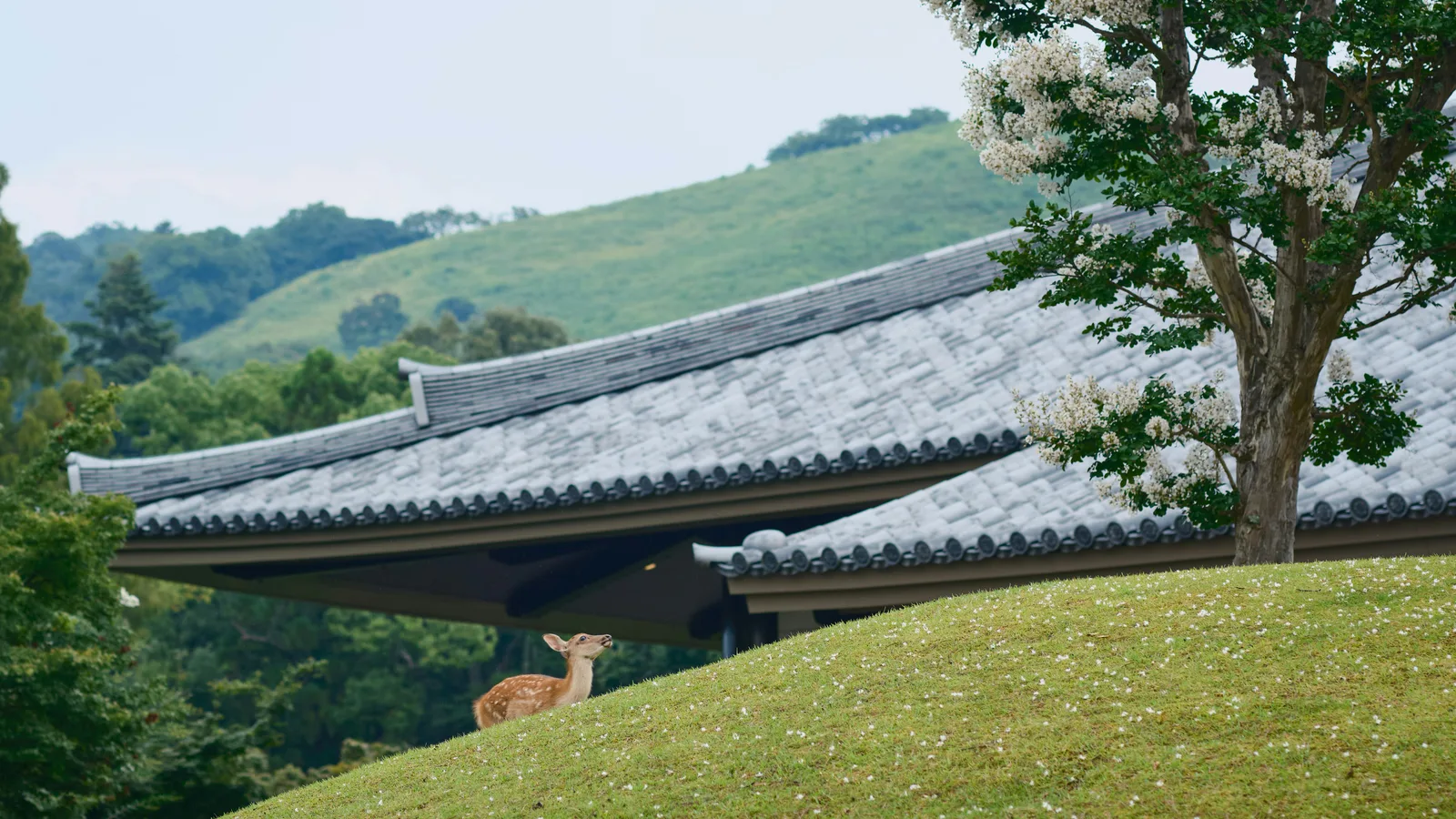
You will be a few minutes from the station, still half-expecting a fenced enclosure, when a deer steps out of the shade and looks at you: calm, unhurried, entirely unafraid. It is not penned. There is no keeper, no gate, no line painted on the grass to say where the wild ends and the park begins. The deer simply lives here, in the middle of a city of three hundred thousand people, and it has decided you are worth a moment's attention. For most visitors this is the small shock of Nara: the animals are not an exhibit you have come to see. You have walked into the place where they live. More than fourteen hundred of them roam this single park, counted one by one each summer by the society that protects them, which makes Nara one of the very few places on earth where this many large wild animals share the middle of a working city with the people who live there.
This is the thing worth understanding before you go. The deer of Nara are not quite wild and not quite tame, and the gap between those two words is filled, here, by something older than either. For more than twelve hundred years the people of this place have called these animals shinroku, the deer of the gods, their messengers. The story goes back to the year 768, when, by the legend the great shrine of Kasuga Taisha still keeps, a deity named Takemikazuchi came from a far province to settle on the sacred mountain that rises behind the park, riding on the back of a white deer. From that arrival, the deer of Nara were no longer ordinary animals. They were the company of a god, and to harm one was unthinkable. Hunting was forbidden in the forests around the shrines, and stayed forbidden, century after century, while empires rose and fell around them.
You can see the result with your own eyes, but you can also read it in the deer themselves. A study by researchers at Fukushima University, published in 2023, found that the deer of Nara Park carry a distinct genetic lineage, one that has stayed separate from the deer in the surrounding hills for more than a thousand years, precisely because this small population was protected as sacred while the rest were not. The deer in front of you is, in a real and measurable sense, a living descendant of that first act of reverence. It is not a metaphor. It is biology, shaped by faith.
So here is what this guide asks of you. Do not come to Nara only to feed a deer and take a photograph of it bowing, though you will likely do both, and there is no shame in it. Come understanding that you are stepping, for an afternoon, into a relationship that other people have been tending for twelve centuries. The deer will be a little pushy, a little undignified, entirely real. And somewhere behind that ordinary, hungry animal nosing at your sleeve is one of the longest unbroken acts of stewardship anywhere in the world. The kindest thing you can do is to walk into it gently, and leave it intact for the person behind you.
What Happens When You're There
Step 1: The First Bow
You will probably meet the deer before you mean to, but the encounter you came for begins at a stall.
Scattered through the park are small wooden stands selling shika senbei, deer crackers, stacked in flat bundles tied with a paper band. They are made of nothing but rice bran and flour: no sugar, no salt, nothing that could harm an animal. This matters more than it sounds, and it is the first quiet rule of the place. The crackers are the only food you should ever give a deer here. Bread, sweets, the snack in your bag: all of it can make these animals sick, and the park keeps no bins to throw anything away, because a deer will eat what it finds and a scrap of plastic can kill it. Part of what you pay for the crackers goes back to the society that looks after the deer. The small purchase is, in its way, the entrance fee to the relationship. It is also the near-opposite of how Japan tends its other famous wild animals: at Jigokudani, where the snow monkeys bathe in their own hot spring, visitors are asked to give nothing at all, and the bond is kept by distance rather than by a cracker in an open hand.
What happens next is the moment that has made Nara famous. Some of the deer, when they see the crackers in your hand, will lower their heads toward you, a deep, deliberate dip of the neck that looks, unmistakably, like a bow. Visitors laugh, delighted, and bow back, and the deer bows again, and for a few seconds the two of you are trading courtesies in the middle of a public park. Whether the deer is being polite or simply asking, in the only language it has, for the cracker you are holding, that is not a question this guide will answer for you. The people of Nara have spent twelve centuries declining to settle it, and you can stand in the same pleasant uncertainty. What is true is that the gesture rhymes with something deeply Japanese: here, even between a person and an animal, the exchange of a small thing begins with a lowering of the head.
A few small kindnesses make the whole encounter go gently, for you and for the deer. Once you have shown the crackers, give them out fairly quickly: a deer that is kept waiting, teased with food it cannot reach, grows impatient, and an impatient deer will nudge and tug. When the crackers are gone, open both your hands and show the deer your empty palms; they understand this gesture, passed down through generations of deer as surely as through people, and they will drift away to the next visitor. Keep an eye on bags, maps, and loose paper, which a curious deer may decide to taste. None of this is cause for fear. If you feel a flicker of nervousness the first time a deer presses close, you are in good company. Children who grow up in Nara feel it too; so do Japanese visitors from other cities. Nobody is born knowing how to stand among a herd of half-wild animals. You learn it, as everyone here has, in about ten minutes.
Step 2: The Road to the Giant
Follow the rising ground east, through the deer and the cedar shade, and the path leads you to something built on a scale that is hard to prepare for.
Tōdai-ji, the Great Eastern Temple, was raised in the eighth century by an emperor who wanted a single image to hold a fractured country together. Inside its main hall sits the Daibutsu, the Great Buddha: a seated bronze figure nearly fifteen meters tall, cast in the years around 749 and given its ceremonial eye-opening in 752. It has survived earthquake and fire and been recast more than once, and it is still one of the largest bronze Buddhas in the world. To stand at its feet and look up is to feel, briefly, very small and very welcome at the same time, which is rather the point.
The hall that shelters it, the Daibutsuden, is itself among the largest wooden buildings in the world, nearly fifty meters high. And the surprising thing, the thing the guidebooks rarely mention, is that the hall you see is the smaller version. The structure that burned in the wars of the past was wider still; when the people of Nara rebuilt it in the early eighteenth century, they could not afford the original width, and so the Great Buddha sits today in a hall humbler than the one first built for it. There is something very Japanese in that, too: a willingness to rebuild at the scale you can honestly manage, rather than not rebuild at all.
The deer come with you all the way to the gate. They graze on the lawns before the temple, they wander the approach, and they will follow a cracker up the very steps of one of the holiest buildings in the country, entirely unbothered by where they are. If you would like to understand the small courtesies that Japanese visitors observe at a place like this (the bow at the gate, the quiet inside), our guide to visiting temples and shrines travels well from here. But the deer themselves keep no such rules, and no one expects them to. They are the messengers; the temple is, in a sense, their house too.
Step 3: The Path of Lanterns
From Tōdai-ji, a long forested avenue curves south toward Kasuga Taisha, and it is on this walk, more than anywhere, that the meaning of the place settles over you.
The path is lined with stone lanterns, moss-grown, leaning, set there over the centuries by people praying for something or giving thanks for something. At the shrine itself, hundreds more hang in bronze along the eaves; in all, Kasuga keeps some three thousand lanterns, and twice a year, at the start of February and in the middle of August, every one of them is lit at dusk and the whole shrine flickers gold in the dark. Kasuga Taisha was founded in 768, the same founding that begins the deer's story, and it is from this shrine that the sacred mountain behind it, Mikasa, has been guarded as forbidden ground, its forest never cut, for so long that it is now one of the last primeval woods in any Japanese city.
Walk slowly here. The deer thin out as you climb, the crowds thin with them, and the avenue grows quiet under the trees. This is the part of Nara that the day-trippers, racing between the Buddha and the crackers, most often miss, and it is the part the people of Nara would most want you to feel. For more than twelve hundred years, someone has walked this path to tend this shrine, light these lanterns, and watch over these deer. You are walking the same ground, in the same direction, for a few minutes of a single afternoon. The continuity is the point. Nothing here is old in the sense of being finished; it is old in the sense of being kept.
Step 4: Walking Back Among Them
As the light lengthens, turn back the way you came, down through the lanterns and the lawns toward the town.
By late afternoon the deer have changed. The crackers have sold out, the crowds have begun to drain back toward the station, and the animals that were so insistent at midday are folding their legs to rest on the grass, chewing, watching the day end. This is the hour worth staying for. A deer asleep in the long evening light, with the mountain darkening behind it, asks nothing of you at all, and it is then, oddly, that you understand the place best. You came, most likely, for the bowing and the feeding, and you got it. But what you carry home is quieter: the sense of having walked, for an afternoon, inside a thing that people have been carefully keeping since the year 768, and of having left it exactly as you found it.
The deer of Nara have outlasted every one of the powers that protected them. The emperors are gone; the shrine remains, and so do the deer, and so does the simple agreement at the heart of it all: that some living things are worth protecting not for what they do for us, but for what they are. For one afternoon you were part of that agreement. You bought the right crackers and gave them gently, you carried your rubbish out so no deer would swallow it, you let a sleeping animal sleep. It is a very small contribution to a very long story. It is also exactly the contribution the story has always run on. Thank you for walking with us.
What Visitors Honestly Say
Before you plan the day, it helps to hear from the people who have already made the trip. We gathered 100 voices from international travelers who had actually been to Nara, weighted by how much each account resonated with fellow readers, and this is how they fell:
The thin red sliver is not an accident of the sample; it is close to the whole point. The few people who came away disappointed almost always describe something they could have sidestepped: midday crowds, or buying a stack of crackers and getting swarmed. One traveler summed up the fix in a single line: "Just do not buy the crackers and do not have food in your hand, and they won't have much interest in you anyway." Another, weighing Nara against the bigger cities: "Nara was my favorite place I visited. I'd personally skip Osaka for Nara."
Japanese visitors and locals, reviewing the same park in their own words, land even more warmly:
Notice that the red bar here is larger than the visitors' one. That is the most useful thing on this page: the Japanese reviews are more candid about the genuinely hard moments. One writes, after being knocked down, that "there are more and more aggressive deer now, even when you have no food." For them this is daily life rather than a special outing, and when the people who live with something tell you the downside plainly, that is worth more than a hundred five-star raves. The warmth is still the dominant note. "Bow, and they bow back!" one woman in her sixties wrote, delighted, before adding: "Word seems to have spread even among foreign visitors, and lots of people were doing it. Watching that was heartwarming."
The full picture, the letdowns included and what prevents each one, is in Are the Nara Deer Worth It?
Good to Know
The most important thing to know first: Nara Park itself has no opening hours. It is a large open city park, roughly five hundred hectares, established in 1880 and never closed. The deer roam it freely day and night. What do have hours and admission fees are the temples and shrines within the park (Tōdai-ji, Kasuga Taisha, Kōfuku-ji), and these are the times people most often confuse. The park is always open and free; the buildings inside it are not. Plan around the buildings.
Getting there: Nara makes an easy day trip from both Kyoto and Osaka, and the single most useful fact is which station you arrive at. Kintetsu-Nara Station sits at the western edge of the park, about a five-minute walk to the first deer. JR Nara Station is farther out, roughly a twenty-minute walk. From Kyoto, the Kintetsu line reaches Kintetsu-Nara in about 35 minutes by limited express; the JR Miyakoji rapid takes about 45 minutes. From Osaka (Namba), the Kintetsu rapid express runs to Kintetsu-Nara in roughly 35 to 40 minutes. Wherever you are based, Kintetsu generally lands you closest. For the bigger picture of trains, passes, and transfers, see getting around Japan. Last verified: 2026-06.
Hours and cost for the buildings inside the park: Tōdai-ji's Great Buddha Hall is open 7:30–17:30 from April to October and 8:00–17:00 from November to March; admission is around 800 yen for adults. Kasuga Taisha's grounds are free to enter (open roughly 6:30–17:30 in the warmer months, 7:00–17:00 in winter), with a separate special-worship area near the main sanctuary for about 700 yen. Kōfuku-ji's halls keep daytime hours with their own admissions; note that its famous five-story pagoda is under restoration and wrapped in scaffolding for an extended period. Because these times and fees shift with the season and with restoration work, check each temple's official site for your exact dates. Last verified: 2026-06.
The deer crackers (shika senbei): Sold only inside the park, at licensed stalls, in bundles for a few hundred yen; you cannot buy them outside, and the stalls close in the late afternoon, often selling out before that. They are made of rice bran and flour alone, with no sugar or salt, and part of the proceeds supports the deer's care. Give only these crackers, never your own food.
When to visit: Early morning is the gentlest time: the deer are active and calm, the temples uncrowded, the light soft on the lawns. Midday near the cracker stalls is the busiest and the most boisterous. Late afternoon, once the crackers are gone, the deer settle and the park grows peaceful again; if you can, stay for it.
Time needed: The deer and Tōdai-ji together make a comfortable half-day. Adding the walk to Kasuga Taisha, Kōfuku-ji near the station, and the Nara National Museum turns it into a full and unhurried day. Nara rewards the slow visitor; an hour spent rushing to feed a deer and leave is the surest way to miss what the place is.
Photography: The deer are wonderfully photogenic and entirely yours to photograph, but a deer pressed for a bow is a hungry deer, so give the cracker promptly rather than holding it up for the perfect shot, which is when nudging and nipping start. A little awareness of where and whom you photograph keeps a busy place pleasant for everyone in it.
With children: Nara is a joy with kids, and a herd of deer at a child's eye level is pure magic, but the deer are large, half-wild animals, and the same animal that bows can also butt or nip when it smells food. Keep crackers out of small hands until you are ready, let your child give them with you rather than alone, and stay close. Our notes on traveling Japan with children cover the wider rhythm of it. Stags are most assertive in the autumn rut; if a deer seems agitated, simply step away.
Last verified: 2026-06
Official sources: Nara Park official guide (Nara Prefecture) · Nara Deer Preservation Foundation
If Things Don't Go as Planned
A deer is being pushy, and it's a little alarming. This is normal, and it is almost always about food. If you are holding crackers, give them out; if you have none, open both hands wide and show your empty palms; the deer understand this and will move on. Keep food and loose paper out of sight in a bag. Stay calm and unhurried; sudden movement and noise excite the herd, while a steady, quiet manner settles them. You are not doing anything wrong, and you are not in danger; you are simply standing among animals that are bolder than they look.
My child is frightened by the deer. Very understandable: at a small child's height, a herd of deer is a wall of large faces. Pick the child up if it helps, move a little away from the cracker stalls where the deer are most eager, and let them watch the calmer deer grazing farther off before trying again. Many children go from terrified to delighted within ten minutes, once they see the deer are gentle when there is no food being waved about. Never let a frightened child hold crackers; that is what draws the crowding.
It's midday and the deer are everywhere and overwhelming. The intensity is highest right around the cracker stalls and the station entrance. Walk a few minutes deeper into the park (up the avenue toward Kasuga Taisha, or onto the wider lawns) and both the crowds and the most insistent deer thin out quickly. The farther you walk from the crackers, the calmer the deer become.
I wanted to feed a deer but the crackers are sold out. The stalls often run out by mid-afternoon and don't sell outside the park. If feeding is the highlight of your visit, come earlier in the day. And if you have missed it entirely, the deer are no less worth watching unfed; a deer dozing on the grass in the evening light is, many people find, the better memory.
I only have a few hours. Then keep it simple: walk from Kintetsu-Nara Station to the first deer, buy one bundle of crackers, and follow the rising path to Tōdai-ji and the Great Buddha. That single line (station, deer, Buddha) is the essence of Nara and takes about two hours at an easy pace. Everything else is a reward for staying longer, not a requirement.
Which station do I leave from for Kyoto or Osaka? If you can, return from Kintetsu-Nara: it is closest to the park and fastest to both cities. If you hold a JR Pass, JR Nara Station is the farther walk back but keeps your travel covered. Either works; the deer won't mind which way you go.
Sources:
- Nara Park Official Guide: Overview (Nara Prefecture, Japanese): Park area (511.22 ha), establishment in 1880, resident wildlife
- Nara Park Official Guide: The Deer (Nara Prefecture, Japanese): Sacred-deer legend, the deer as wild national natural monument, cracker ingredients (rice bran and flour, no sugar), the deer society's requests
- Nara Park Official Guide: How to Treat the Deer (Nara Prefecture, Japanese & English): Official etiquette, crackers as the only permitted food, why proceeds support protection, no rubbish bins in the park
- Nara Park Official Guide: FAQ (Nara Prefecture, Japanese): Deer present day and night, no bins, seasonal notes
- Nara Deer Preservation Foundation: Population Survey (Japanese): Annual survey count: 1,465 deer as of July 2025 (315 stags, 816 does, 334 fawns)
- Nara Deer Preservation Foundation: History of Protection (Japanese): The 768 legend of the white deer, designation as a national natural monument in 1957, the antler-cutting tradition from 1672
- Kasuga Taisha Official: About the Shrine (Japanese): Founding in 768, Takemikazuchi arriving from Kashima on a white deer to Mt. Mikasa, the sacred primeval forest, the deer as divine messengers
- Kasuga Taisha Official: Basic Information (Japanese): Opening hours, free main-sanctuary worship, special-worship admission
- Tōdai-ji Official: The Great Buddha Hall (Japanese): Great Buddha height (14.98 m), casting around 749 and eye-opening in 752, the hall as one of the largest wooden buildings in the world
- Tōdai-ji Official: Hours and Admission (Japanese): Seasonal opening hours and admission for the Great Buddha Hall
- JNTO: Nara Park (English): Official English visitor framing, the deer as sacred messengers, access from Kyoto and Osaka
- Nara City Tourism Association: Access (English): Verified travel times from Kyoto and Osaka, station-to-park walking distances
- Fukushima University: Press Release: Conservation of Nara Park Deer has Resulted in Unique Genetic Lineage (English): Genetic study (Journal of Mammalogy, 31 January 2023) finding the Nara deer's lineage kept distinct by more than a thousand years of religious protection
- Are the Nara Deer Worth It? (WMJS): The two visitor-voice gauges reproduced in "What Visitors Honestly Say" (100 international voices, 65/34/1; 70 Japanese voices, 80/12/8) and the verbatim visitor quotations
Photos: sourced under free commercial-use licenses; see captions where attribution applies.
WMJS is written in Japan, in English, with AI help. We check every page, but English is not our first language. If a sentence reads oddly, tell us. One sentence is enough.
Thank you. A person reads every note.
Real voices
Is it worth it?
Were you there? Share your photos.
Your photo could appear in this guide — with your name and a link to your profile.
Submit a photoRelated Articles

The Power of a Small Bow: Why a Simple Nod Makes Japanese People Smile
Visiting Temples and Shrines: What Japanese People Notice
"Excuse Me, Can You Take My Photo?": What Japanese People Really Think

Traveling Japan with Kids: What Parents Don't Know About How Japan Welcomes Children
More guides in Kansai
Arashiyama — Why Japan Lists This Bamboo Grove Among the Sounds Worth Saving
An audio cultural guide to Arashiyama in Kyoto, verified against official sources. Understand why Japan lists the bamboo of Sagano among the sounds it wants to keep, how the Moon-Crossing Bridge earned its name, and how to walk the river, the grove, and Tenryu-ji's borrowed-mountain garden away from the crowds.
Arashiyama
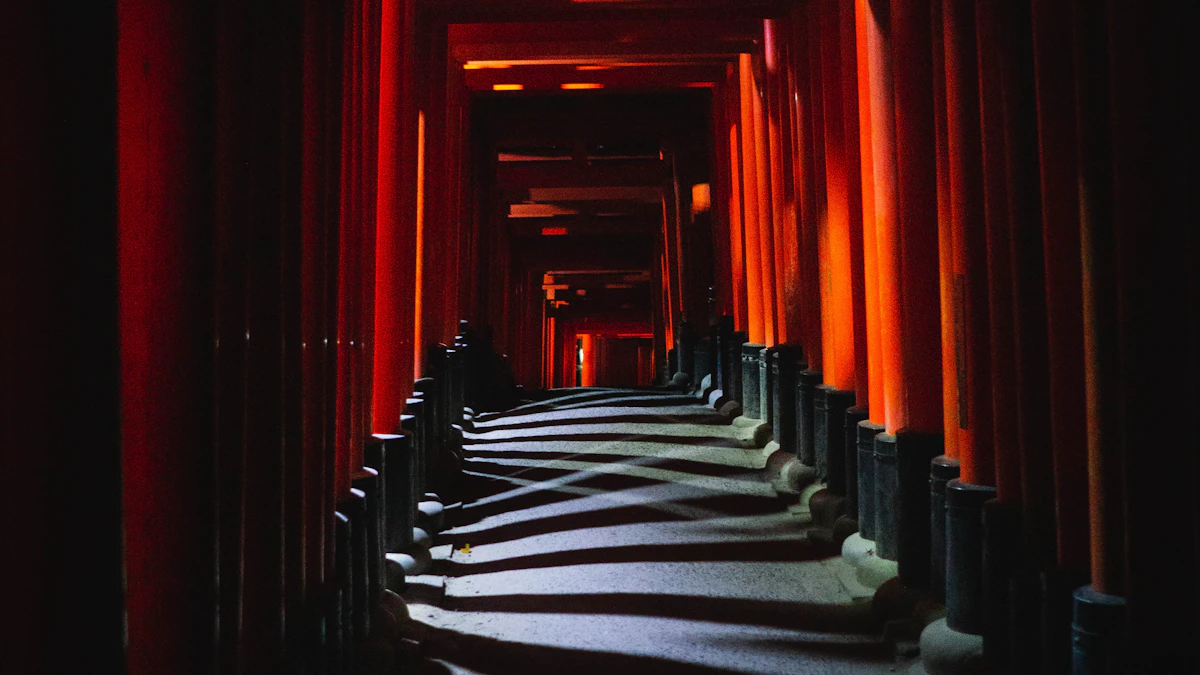
Fushimi Inari Taisha: Ten Thousand Gates, Each One a Thank-You
The ten thousand vermilion gates at Fushimi Inari are thank-you notes you can walk through. A cultural audio guide verified against official sources: why the foxes are messengers not gods, why the summit has no view, and how to walk past the crowds.
Fushimi Inari Taisha
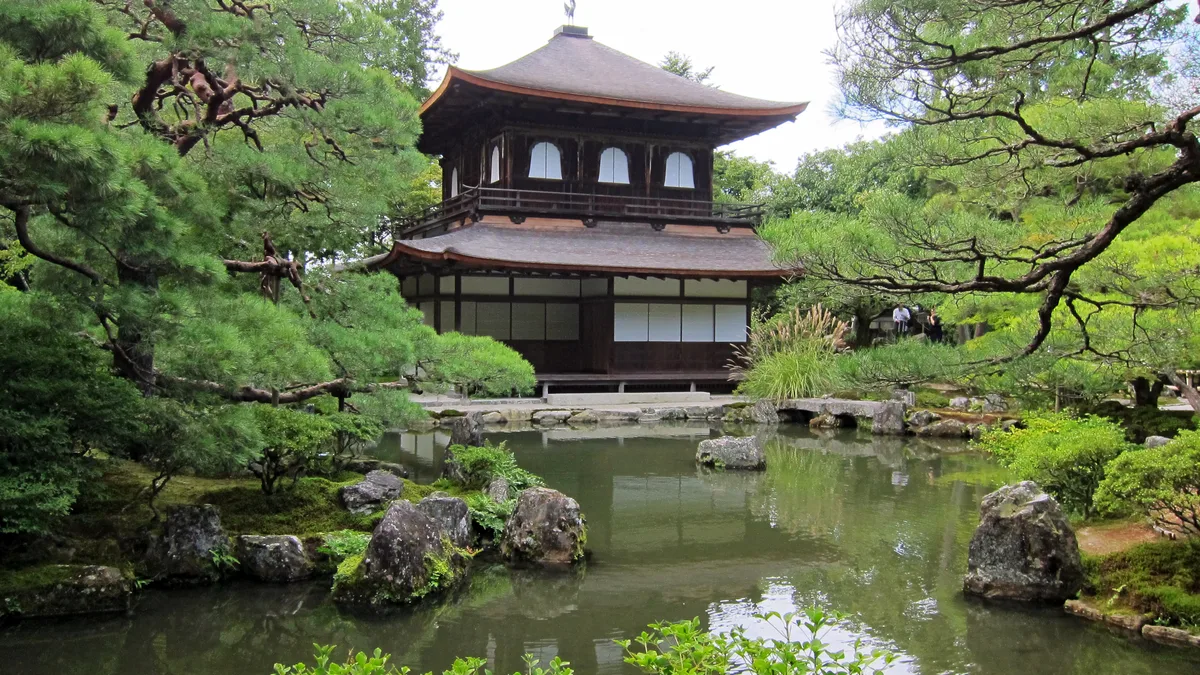
Ginkaku-ji — Why the Silver Pavilion Has No Silver, and Why Japan Finds That Beautiful
Why the Silver Pavilion has no silver — a free audio guide to Ginkaku-ji, Kyoto, verified against official temple sources. Higashiyama culture and the art of restraint, the sea of silver sand, hours, admission (1,000 yen), access from Kyoto Station, and the Philosopher's Path.
Ginkaku-ji (Jishō-ji)
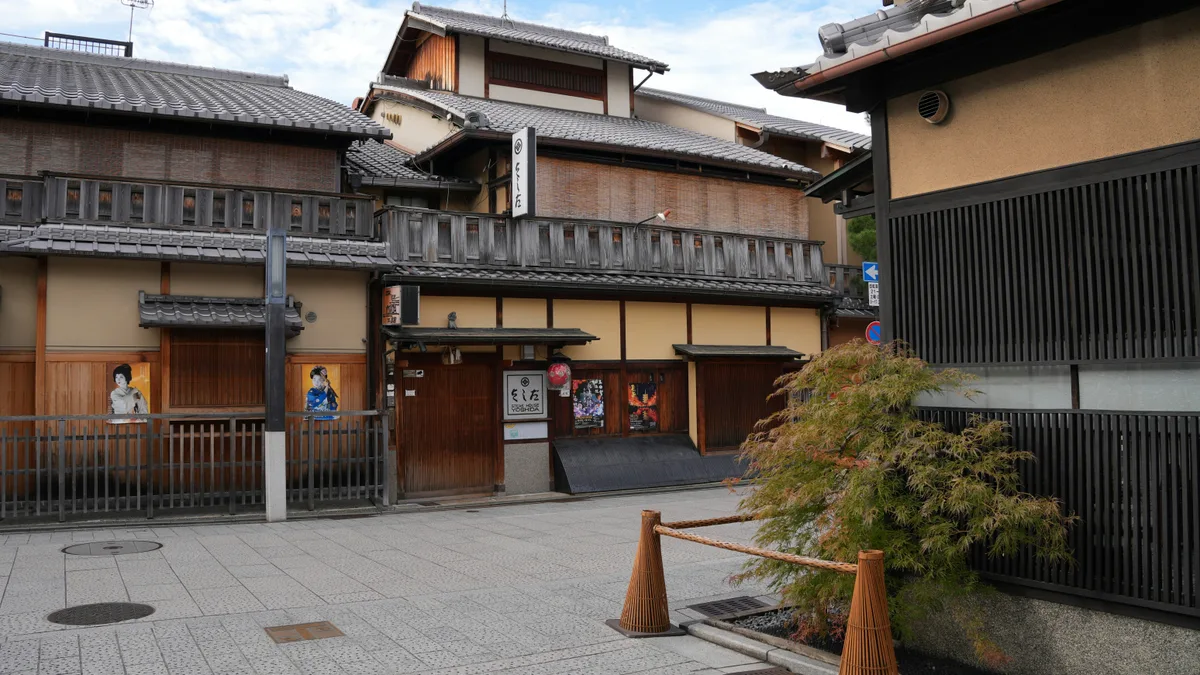
Gion — Walking Kyoto's Flower District, a Town That Is Still Lived In
An audio guide to Kyoto's Gion flower district: what geiko and maiko really are, the walk from Yasaka Shrine through Hanamikoji to the Shirakawa canal, when to go, and how to enjoy a town still lived in.
Gion