
Kinkaku-ji — Why Everyone Stops at the Same Spot to Photograph the Golden Pavilion
Kinkaku-ji (Rokuon-ji)
By Kei · Born and raised in JapanThe Meaning
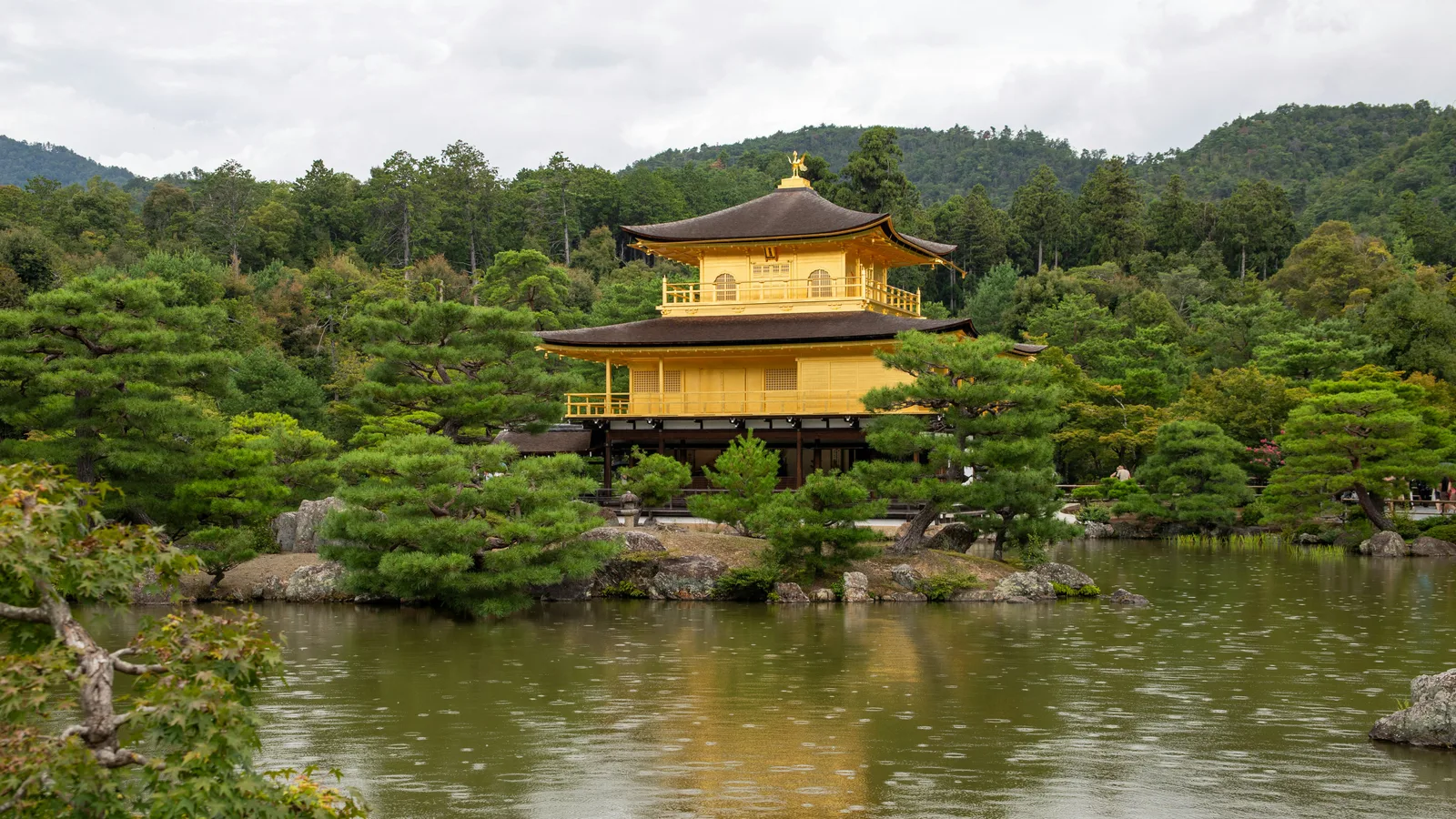
You will not go inside the Golden Pavilion. You will not climb its stairs or stand in its golden rooms. You will see it the way it was built to be seen: from across a pond, at a distance, reflected in still water.
For many visitors, this comes as a surprise. The building looks like a destination you are meant to enter. It is not. Kinkaku-ji is a shariden, a reliquary hall. Its top floor was made to hold relics of the Buddha. The temple's own account describes the founder's vision as an attempt to bring the Pure Land, paradise, into this world, as something you could stand before and look at.
The gold is not there to announce wealth. Pure gold leaf covers only the second and third floors, laid over lacquer, and what it does is reflect: morning light, the surface of the pond, the green of summer, the red of autumn maples, the white of snow. The building is never quite the same twice. On a still, clear day, a second pavilion appears upside-down in the water beneath it.
The temple's formal name is Rokuon-ji (the Deer Garden Temple), a Zen temple of the Rinzai school, and not Kinkaku-ji at all. "Kinkaku-ji," the Temple of the Golden Pavilion, is only a nickname, taken from its most famous building. Knowing that you are entering a working temple, not a monument, changes what the next forty minutes feel like.
What Happens When You're There
Step 1: The Approach (From sightseer to visitor)
The path in is short and quiet, lined with trees, before the gold ever appears. This is deliberate. You arrive as a sightseer and the approach asks you to slow down.
At the entrance, you pay to come in, but the temple calls it a shinō, an offering, rather than an admission fee. Kinkaku-ji and its sister temple Ginkaku-ji are both run by Shōkoku-ji, a head temple of Rinzai Zen, and in their system the slip you receive in return is treated less like a ticket and more like an ofuda, a paper talisman. The amount is small. What it marks is a shift: you are not buying entry to an attraction. You are being received as a guest at a temple.
Many Japanese visitors give a small, almost invisible nod as they pass through the gate. This small bow that Japanese people quietly notice is not required of anyone, but it is one of the easiest ways to show you understand where you are. If you would like a fuller sense of what is appreciated when you enter temples and shrines in Japan, we have a separate guide. Here, all you need to carry in is the awareness that this is a place of prayer first, and a photograph second.
Step 2: The Mirror Pond (Why everyone stops at the same spot)
You will round a corner and there it will be, across the water. And you will notice something: nearly everyone has stopped in the same place, raising their phones at almost the same angle.
This is not a failure of imagination. The pond is called Kyōko-chi, the Mirror Pond, and it covers roughly 6,600 square meters. The pavilion was positioned to be seen from its edge, reflected. There is, in truth, one place where the view is complete, and people gather there because the design leads them there. The photograph you take will look much like the one the person beside you takes, and like the ones taken here for generations. That sameness is part of the experience: a kind of quiet agreement about where the beauty is.
So take your one photo, and take it for yourself. The temple asks that photographs be kept as personal memories: snapshots for your own enjoyment are welcome, but it requests that visitors not photograph for the purpose of public posting, including social media. Knowing this, and keeping that single frame as something you carry home rather than something you upload, is itself a small courtesy.
Then, gently, step aside. The route runs one way and people are arriving behind you. The way crowds move through Japan's most photographed places has its own quiet rhythm: take your frame, then move on a step, and the people behind you get to stand where you stood and see the same view. If the crowd feels heavy, that is normal here: Kinkaku-ji is one of Japan's most visited places, and the question of whether Japan is "overtouristed" looks different from the edge of this pond, where the crowd is simply everyone agreeing the view is worth stopping for.
Step 3: Three floors, three worlds (Reading what you cannot enter)
Because you cannot go in, look up and read the building instead. Each of its three floors is built in a different style, and the layering is the whole point.
The first floor is Hossui-in, built in the shinden style of Heian-era palaces. The second is Chō'on-dō, in the buke style of the samurai houses. The third, Kukkyō-chō, is built like the hall of a Chinese Zen temple. One small building holds the aristocrat, the warrior, and the Zen monk, stacked on top of one another. Inside, though you will not see them, the floors were made to hold a Buddhist triad, a hall of Kannon, and the Buddha's relics at the very top.
Only the upper two floors wear gold. The roof above them is laid with thin cypress shingles, and at its peak stands a golden hōō (a phoenix) facing the morning sun.
The pavilion you are looking at is not the original. The first one stood for centuries until it was lost to fire in 1950; the building was rebuilt in 1955, and its lacquer and gold leaf were renewed in 1987. In Japan, a rebuilt sacred structure counts as the same pavilion, carried forward: the wood is new, but the form and the meaning are continuous. You are seeing something both old and recent at once, which is part of why it gleams the way it does, unlike the Golden Hall (Konjikidō) at Hiraizumi, completed in 1124 and surviving in its original gilded form.
Step 4: Beyond the pavilion (The garden most people walk too fast)
Most people photograph the gold and then quicken their pace toward the exit. The path, though, keeps going, and the temple grounds it crosses are themselves the protected treasure here.
The garden is a circuit, meant to be walked in one direction, and about 92,400 square meters of it is designated a Special Historic Site and a Special Place of Scenic Beauty, among the highest classifications Japan gives. As you climb gently away from the pond you pass Anmintaku, a pond said never to run dry even in drought, and Ryūmon-taki, a small waterfall with a single upright "carp stone" set in it, named for an old story in which a carp that climbs the falls becomes a dragon. Near the top of the path stands Sekkatei, a small thatched tea house built in the Edo period; its name means that the pavilion looks especially fine at sunset.
None of this is on the postcards. The visitors who slow down here often find that the part of the visit they remember best is the part almost no one photographs.
Step 5: The way out (A temple, after all)
As the path comes down, it passes Fudō-dō, a hall enshrining a stone image of Fudō Myō-ō. The image is a hidden Buddha, kept from view and shown to the public only twice a year: on February 3rd and August 16th. People stop here to pray. Many of them have just spent twenty minutes photographing a golden roof, and now they are bowing at a small dark hall, and they see no contradiction between the two.
That is the quiet lesson of Kinkaku-ji. The famous photograph and the act of prayer happen inside the same gate, on the same short walk. The gold pulls the crowds, and the crowds, almost without noticing, pass through a working Zen temple to reach it.
So if you came expecting more (more rooms, more time, more to do), consider that you may have already had the whole experience. You stood at the edge of a pond, you looked at something built to be looked at, and you carried away one frame of it. People have been doing exactly that, in exactly that spot, for a very long time. That is enough.
Good to Know
Before you go
What visitors answered
How long they waited to get in
93 people answered on Google Maps (October 2 – 14, 2026)
- No wait60
- Up to 10 min24
- 10–30 min7
- 30–60 min0
- 1 hr or more2
These are answers to the questions Google Maps asks alongside a review, counted from the newest reviews of this place in every language. They are counts of answers, not a survey, and waits change with the day and the season.
Getting there: From Kyoto Station, City Bus route 205 runs directly to the "Kinkakuji-michi" stop (flat fare: 230 yen for adults, 120 yen for children). From the stop, the entrance is about a 3–5 minute walk. To avoid the most crowded buses, Kyoto's tourism office suggests taking the Karasuma Subway Line from Kyoto Station to Kitaoji Station (about 15 minutes, 260 yen), then a bus (route 204 or 205) from Kitaoji to Kinkakuji-michi.
Hours: Open 9:00–17:00, every day of the year.
Admission (offering): 500 yen for adults (high school age and up), 300 yen for elementary and junior high students. There is no group discount.
Time needed: The route is a one-way loop and most visits take roughly 30–45 minutes. You cannot re-enter or walk back against the route, so take your photo at the pond before moving on.
You view it from outside. You do not enter the pavilion itself. The visit is a walk through the garden, viewing the building from across the pond and from the path instead of touring its interior.
Photography: Snapshots for personal enjoyment are permitted. The temple asks visitors not to photograph for the purpose of publishing, including social media, and not to use the grounds for commercial shoots. Tripods, group photo sessions, and drones are not allowed. There is no luggage storage on site.
When to visit: Arriving at opening (9:00) gives you the thinnest crowds and the calmest water for the reflection. Snow and autumn color transform the pavilion completely, and both draw the largest crowds.
A World Heritage Site: Rokuon-ji is one of the component sites of the "Historic Monuments of Ancient Kyoto," inscribed by UNESCO in 1994.
Last verified: 2026-05
Official website: shokoku-ji.jp/kinkakuji
If Things Don't Go as Planned
You expected to go inside and feel let down. You are not missing a hidden interior: there is no public interior to miss. Kinkaku-ji is meant to be viewed from across the water, the way a painting is meant to be viewed from in front of it. Once you stop looking for a door, the visit becomes what it was designed to be.
It is far more crowded than you hoped. The crowd thins the moment you leave the pond. Take your photo, step aside for the people behind you, and walk on toward the garden and the tea house, where far fewer people linger.
You finished in half an hour and feel it was too short. That is the normal length of this visit, not a sign you did it wrong. Slow your pace on the upper path past Anmintaku and Sekkatei; the second half of the loop rewards walking, not hurrying.
The weather is grey and the gold looks flat. The reflection needs still, bright air to appear, so an overcast day changes the experience. Snow and clear early mornings are when the pavilion looks most striking: if your schedule allows a flexible morning, that is the window to aim for.
The bus from Kyoto Station is packed. Take the Karasuma Subway Line to Kitaoji Station and switch to a bus there. It is the route Kyoto's own tourism office recommends for avoiding the worst of the crowding.
You only have a coin or card and the entrance. Bring cash for the offering and for the bus fare; small temples and city buses do not assume card payment.
Sources:
- Rokuon-ji (Kinkaku-ji) Official Site, Shōkoku-ji: History, three-floor architecture, gold leaf placement, garden features (Kyōko-chi, Anmintaku, Sekkatei, Fudō-dō), reliquary hall, 1987 renewal
- Kinkaku-ji Official: Access & Admission: Hours (9:00–17:00), offering amounts, one-way route
- Kinkaku-ji Official FAQ: Photography policy, no luggage storage, viewing structure
- Kyoto City Transportation Bureau: City Bus route 205, flat fare (230 yen)
- Kyoto City Tourism: Easy access to Kinkaku-ji from Kyoto Station: Subway + bus alternative route
- JNTO: Kinkaku-ji: Visitor framing, seasonal reflection on Kyōko-chi Pond
- Agency for Cultural Affairs: National Cultural Properties Database: "Rokuon-ji (Kinkaku-ji) Garden," Special Historic Site & Special Place of Scenic Beauty
- UNESCO World Heritage: Historic Monuments of Ancient Kyoto: 1994 inscription; Rokuon-ji as a component
Photos: sourced under free commercial-use licenses; see captions where attribution applies.
WMJS is written in Japan, in English, with AI help. We check every page, but English is not our first language. If a sentence reads oddly, tell us. One sentence is enough.
Thank you. A person reads every note.
Real voices
Is it worth it?
Were you there? Share your photos.
Your photo could appear in this guide — with your name and a link to your profile.
Submit a photoRelated Articles
Visiting Temples and Shrines: What Japanese People Notice
"Excuse Me, Can You Take My Photo?": What Japanese People Really Think

The Power of a Small Bow: Why a Simple Nod Makes Japanese People Smile
More guides in Kansai
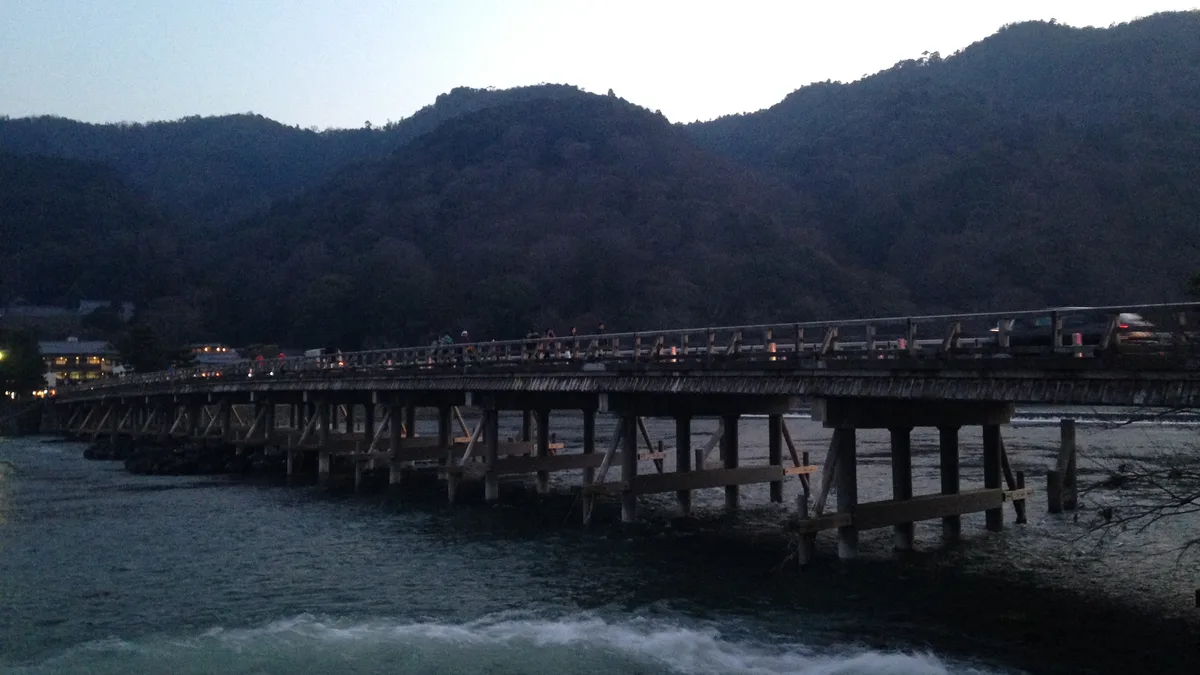
Arashiyama — Why Japan Lists This Bamboo Grove Among the Sounds Worth Saving
An audio cultural guide to Arashiyama in Kyoto, verified against official sources. Understand why Japan lists the bamboo of Sagano among the sounds it wants to keep, how the Moon-Crossing Bridge earned its name, and how to walk the river, the grove, and Tenryu-ji's borrowed-mountain garden away from the crowds.
Arashiyama
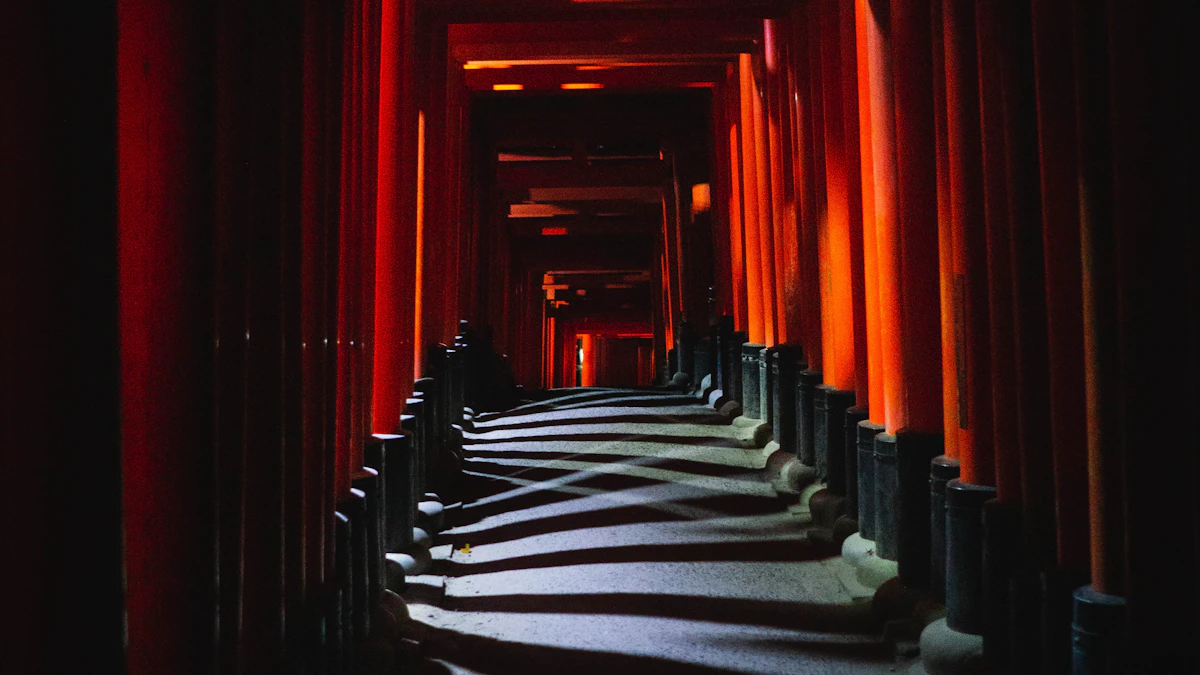
Fushimi Inari Taisha: Ten Thousand Gates, Each One a Thank-You
The ten thousand vermilion gates at Fushimi Inari are thank-you notes you can walk through. A cultural audio guide verified against official sources: why the foxes are messengers not gods, why the summit has no view, and how to walk past the crowds.
Fushimi Inari Taisha
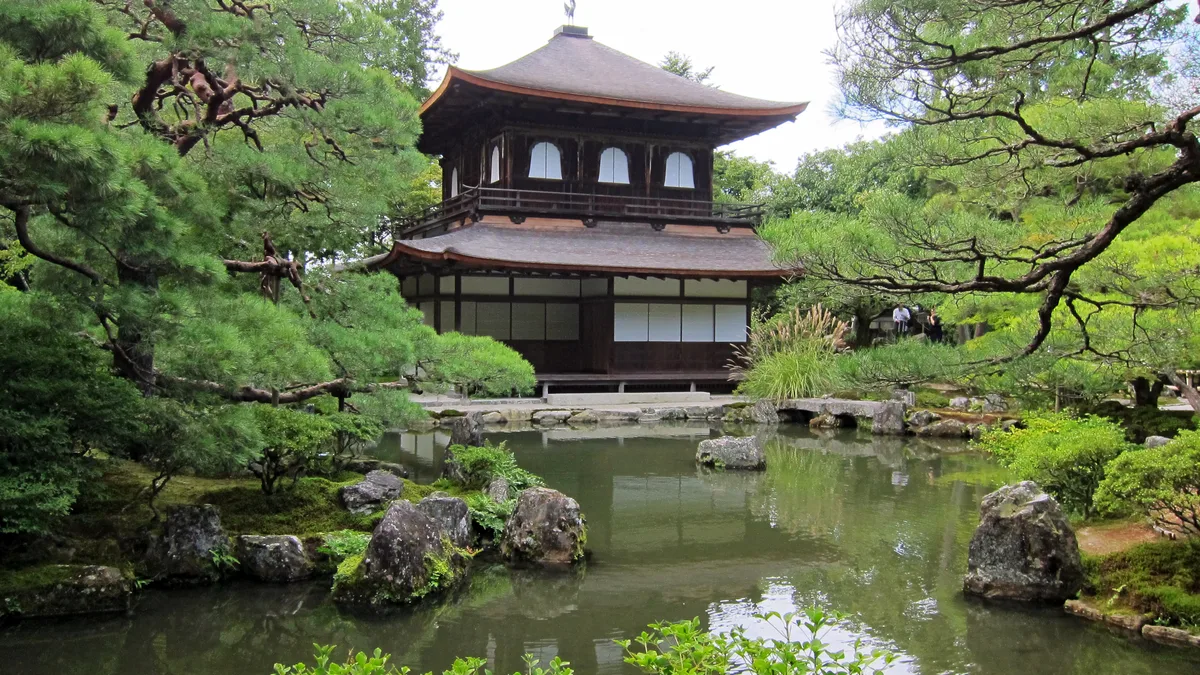
Ginkaku-ji — Why the Silver Pavilion Has No Silver, and Why Japan Finds That Beautiful
Why the Silver Pavilion has no silver — a free audio guide to Ginkaku-ji, Kyoto, verified against official temple sources. Higashiyama culture and the art of restraint, the sea of silver sand, hours, admission (1,000 yen), access from Kyoto Station, and the Philosopher's Path.
Ginkaku-ji (Jishō-ji)
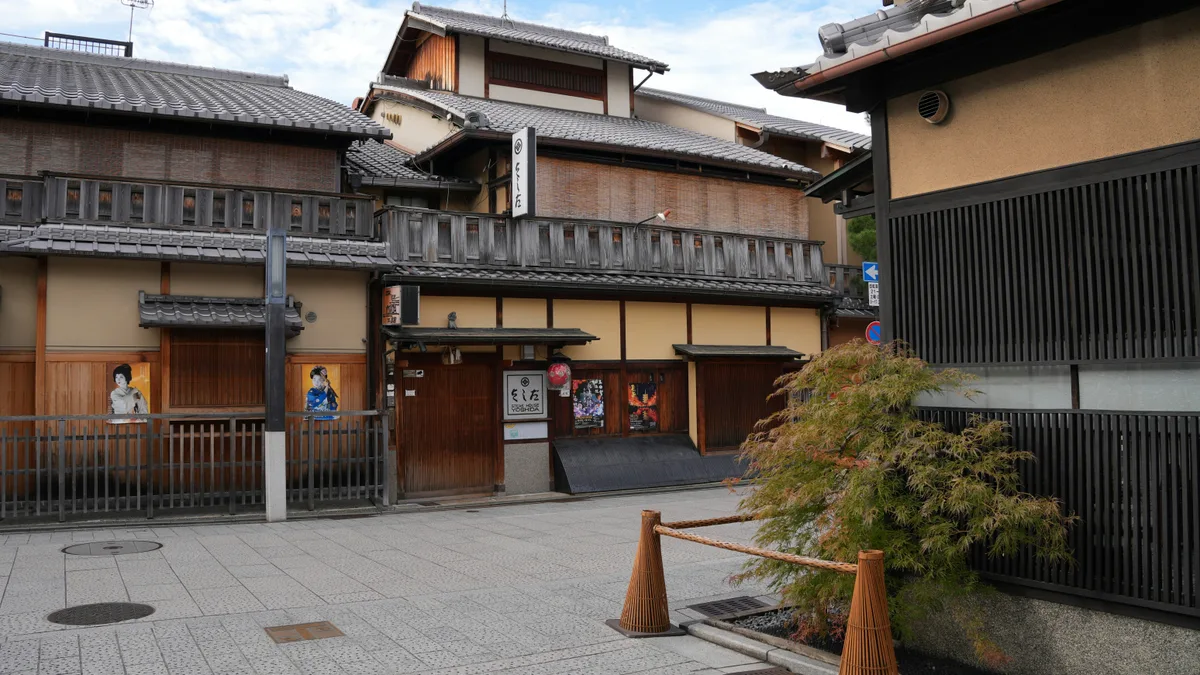
Gion — Walking Kyoto's Flower District, a Town That Is Still Lived In
An audio guide to Kyoto's Gion flower district: what geiko and maiko really are, the walk from Yasaka Shrine through Hanamikoji to the Shirakawa canal, when to go, and how to enjoy a town still lived in.
Gion