
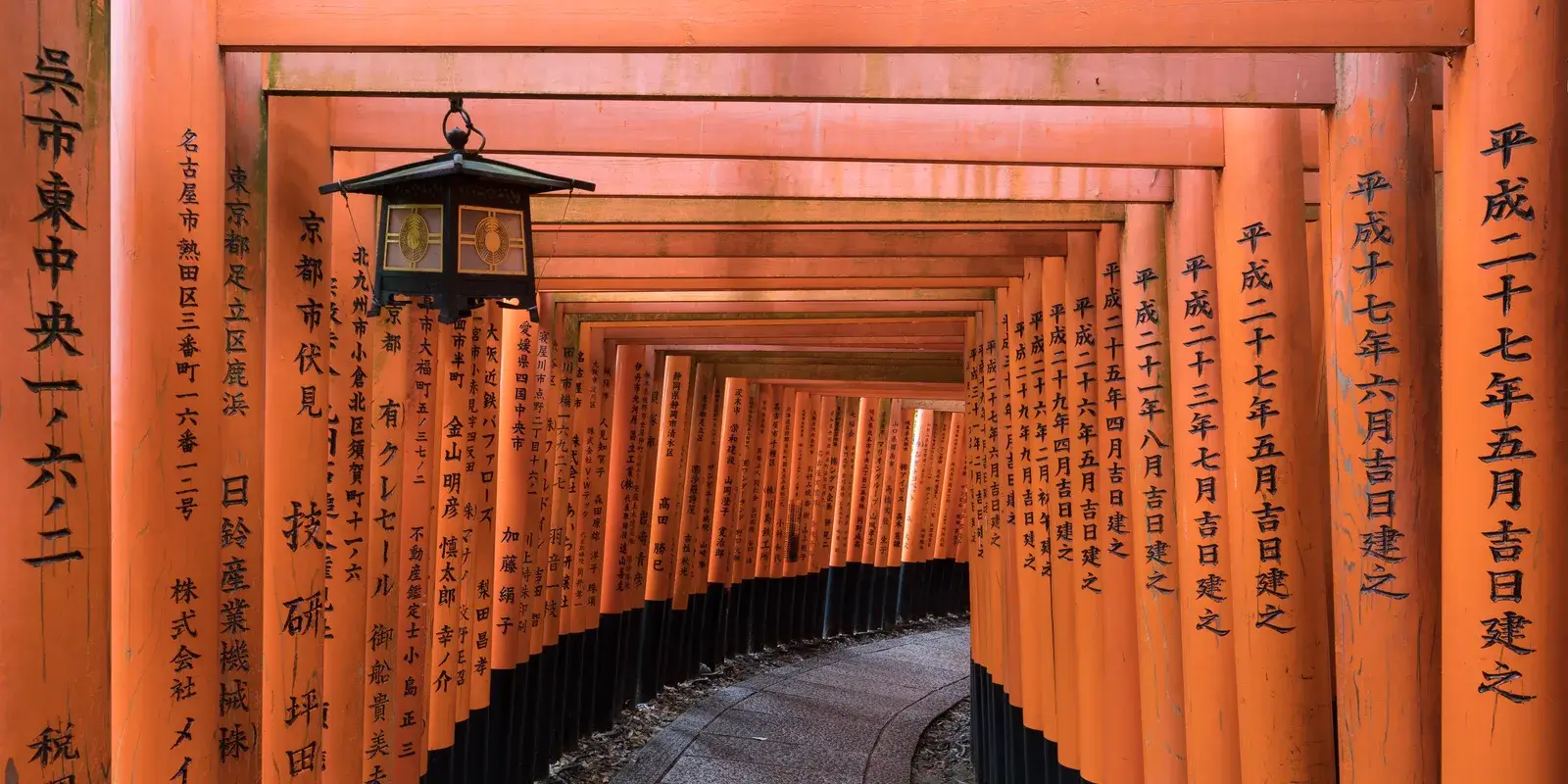
Visiting Temples and Shrines: What Japanese People Notice
What you'll learn in this article:
- What 298 Japanese people said about how visitors actually behave at shrines and temples
- Why most of the rules in your guidebook matter less than they sound
- The one thing that actually does bother Japanese visitors, and how to handle it gently
If you've ever opened a guidebook chapter about visiting a Japanese shrine, you've probably been buried under instructions: bow twice, clap twice, bow once. Wash your left hand first, then your right, then your mouth, then the ladle. Wear modest clothing. Drop in a 5-yen coin for good luck.
We collected 298 public posts by Japanese people about what they actually notice. Most of those rules? Far less important than they sound.
The short version? Japanese people watch your spirit, not your form. A foreign visitor stumbling through the temizuya purification fountain is not a problem. A foreign visitor in shorts and a tank top is not a problem. A foreign visitor dropping a 1-yen coin in the offering box is not a problem. There's only one thing that quietly does matter, and it's not on most guidebook lists.
Let's look at what they actually wrote.
Quick Guide
| What you might worry about | What Japanese People Said | |
|---|---|---|
| 🟢 Relax | Temizuya: the purification fountain | 62% said the form doesn't matter. Even Shinto priests say "neither incorrect form nor incomplete form removes a god's blessing." |
| 🟡 Worth knowing | Photography in sacred spaces | This is the one place to read the room. Take all the photos you like. What matters is what you point at and whether you block other worshippers. |
| 🟢 Relax | What you wear | 68% said regular clothes are completely fine. "Reality is everyone visits in casual clothes, even at Ise Shrine in summer." |
| 🟢 Relax | How much money to offer | 76% said the amount doesn't matter (positive + neutral combined). The "5 yen brings good luck" thing? A wordplay folk tale. |
The one thing to remember: Visiting a shrine or temple isn't about performing the right ritual. It's about being present and respectful. As one Shinto priest put it: the gods understand intent. If you carry that with you, you've already done the most important thing, and you can let the rest go.
What are the rules for visiting temples and shrines in Japan? We collected 298 public posts by Japanese people. The pattern: 62% say temizuya form doesn't matter, 68% say casual clothes are completely fine, and 70% say the offering amount is irrelevant. A working Shinto priest said even a wet towelette can replace the purification fountain. The only real concern is photography blocking worshippers. Japanese people watch your spirit far more than your ritual form.
How We Gathered These Voices
We collected 298 Japanese-language responses across five aspects of visiting shrines and temples: temizuya purification etiquette (63 responses), photography in sacred spaces (62 responses), what to wear (56 responses), the offering coin question (60 responses), and how all of this has changed across generations (57 responses). Sources include public Japanese Q&A sites, forums, and social posts, anonymous diary posts, shrine blogs, and statements from working Shinto priests and shrine officials.
A quick note: Think of this less as a controlled scientific survey and more as a collection of what real Japanese people said in their own words, on public platforms, often in conversations among themselves about whether they were "doing it right." The most striking thing? Japanese people are surprisingly relaxed about all of this. The strict version of shrine etiquette that English-language guides tend to present isn't really what most Japanese people experience or expect.
🟢 Temizuya: The Purification Fountain
The honest answer: get the spirit right, and the form is forgiven.
If you've watched a YouTube video about shrine etiquette, you probably saw the four-step temizuya sequence: left hand, right hand, mouth, then tilt the ladle to wash the handle. It looks elaborate. It feels like the kind of thing you could mess up.
Japanese people don't think you'll mess it up. And if you do, they don't really mind.
Of 63 responses about the temizuya:
62% of Japanese people said the form simply doesn't matter: they were either openly forgiving or said the spirit of cleansing was the only real point.
A blogger who writes about shrine pilgrimages put it perfectly:
手水舎とは『身を清めて神様と向き合う』といった意味合いを理解できていれば細かい作法は大きな意味をなさないと考えているから。要するに気持ちの問題だと考えます。もちろん、作法を完璧にできることに越したことはないですが、それを出来てないからといって、不浄だ穢れだ、という神様はいないと思うのです。 I think if you understand that the temizuya means "purifying yourself before facing the gods," the precise procedure doesn't really carry that much weight. It's a matter of the heart. Yes, doing the form perfectly is nice — but I don't believe in a god who would call you "impure" or "unclean" because you couldn't do it right.
That last line, I don't believe in a god who would call you unclean, is the actual Japanese view. Not the strict one in the guidebook.
A working Shinto shrine priest, answering a question from a non-Japanese visitor, was even more relaxed:
鳥居をくぐるときに軽く拝礼し、鈴を鳴らす。鈴はお祓い(お清め)の意味があります。参拝前に洗面所で手と口を水で清めておくことも推奨します。または、おしぼりを持参することも大切です。 Just bow lightly as you pass through the torii, then ring the bell — the bell carries the meaning of purification too. If there's no temizuya, you can wash your hands and rinse your mouth at any nearby restroom beforehand. Or carry a wet towelette. That works too. (Shrine priest)
Read that again. A wet towelette works too. This is from someone who runs a shrine.
For people who feel uncomfortable putting shrine water in their mouth (which is most foreign visitors, honestly), multiple Japanese voices said the same thing:
口をゆすぐ動作は恰好だけで十分です。 Just going through the motion of rinsing your mouth is enough.
唇に当てるくらいでも問題ありません。 Touching the water lightly to your lips is fine. (Iruma Shrine official blog)
指先を少し濡らす程度でも、清める気持ちがあれば十分伝わります。 Even just wetting your fingertips will convey your intent to purify, as long as the feeling is there.
The Japanese word that keeps appearing is kimochi: feeling, heart, intent. The form is a vehicle for that intent. If the intent is there, the vehicle can be a wet towelette. Every shrine carries its own version of the same idea. At Ise Jingu you purify your hands in the clear water of the Isuzu River and visit the outer shrine before the inner one, a local custom that grew out of the same quiet respect.
💡 Form follows feeling
The four-step temizuya routine looks intimidating, but Japanese people (including the people who run shrines) are remarkably relaxed about it. Wet your hands. If you can't comfortably rinse your mouth, just touch the water to your lips. If you skip a step, no shrine is going to revoke its blessing. The point is showing up with respect. Executing the sequence perfectly matters far less.
🟡 Photography: The One Place to Read the Room
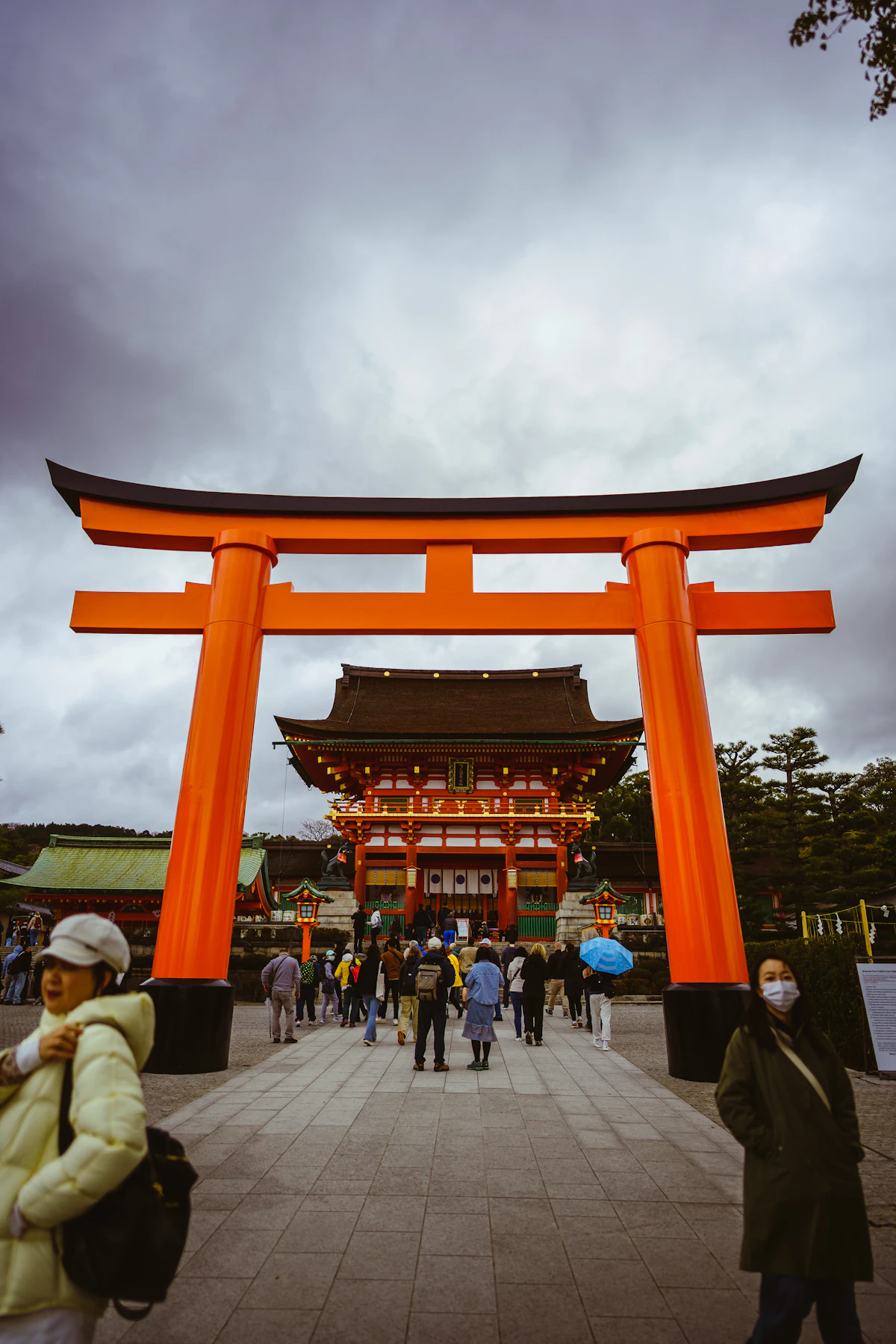
This is the place where Japanese people actually have strong opinions, but it's probably not what you'd guess.
Most travel guides treat shrine photography as a yes-or-no question. Japanese visitors don't see it that way. They see specific situations, with very different reactions.
Of 62 responses about photography in shrines and temples:
This is the only one of the four temple-and-shrine topics where most Japanese people had concerns. But notice what the concerns are about: almost none of them are about taking photos in general.
A Shinto shrine priest summarized the actual rule:
基本的に社殿の中は撮影禁止の神社がほとんどです。 At most shrines, the inside of the shaden — the worship hall — is off-limits for photography. (Shinto priest)
Outside? Different story. As one of the most upvoted answers in an online Q&A put it:
拝殿で本殿を撮影しなければ一部を除いて問題ありません。伊勢神宮だけは拝殿までの階段から先は撮影禁止です。お寺も同様に本尊は撮影しない方が良いです。外観や境内は問題ありませんね。 As long as you don't photograph the inner shrine through the worship hall, it's basically fine — with a few exceptions. Ise Shrine prohibits photography from the steps onward. Temples are similar: don't photograph the main image, but the exterior and the grounds are no problem.
So that's the first line: outside the buildings is generally fine. Inside the worship hall and the inner sanctuary is not. Some of Japan's most photographed shrines are built precisely to be admired from outside, like the shrine that stands on the sea at Miyajima, whose vermilion torii rises straight out of the tide at high water. And at some temples the rule is absolute: at the Golden Hall at Hiraizumi, the original gilded hall raised in 1124 and now kept sealed behind glass, photography is not permitted at all.
The second concern is more subtle: it's about where you stand. Japanese visitors notice when foreign visitors photograph buildings dead-center, from directly in front of the offering box. There's a reason:
神社の社殿を正面から撮影するのは良くないとされています。理由として、神道では『正中』(真ん中)を重視し、そこが神様の領域と考えられているためです。社殿の正面中央には神様やご神体が坐すため、正面から撮影することは『盗撮のようなもの』とされています。 Photographing a shrine building dead-on from the front is generally considered not okay. In Shinto, the centerline — called seichu — is considered the gods' space. Because the deity sits at the center of the shaden, photographing it from directly in front is treated almost like taking a photo someone hasn't agreed to.
The same idea applies to walking. The center of a path through a shrine, seichu again, is treated as the gods' lane. Walking off to one side, and stepping aside to take photos rather than centering yourself, is what Japanese visitors do without thinking. A small adjustment, easy to make.
A serving Shinto priest, answering a question about whether worshippers should worry about photos they'd already taken, was reassuring:
正面は『正中線』という神様を正面に見た時の重要な位置です。ただし許可が出ていたこと、悪意がないことを考慮すれば、写真を消す必要はない。神様も気持ちを理解している。 Yes, the front center — the seichu line — is a sacred position. But as long as photography was permitted and you had no ill intent, there's no need to delete photos. The gods understand intent. (Shinto priest)
The third concern, mentioned more often than anything else in our research, is the simplest: don't block people who came to pray.
撮るのは構いませんが、参道を塞いで邪魔してる人が多い。 I don't mind people taking photos, but a lot of them block the approach path and get in the way.
神聖云々より、人が嫌がることしないでくれよ。 Forget the "sacred" stuff — just don't do things that bother other people.
These were the voices that came up over and over. The frustration in our research wasn't really about photography, and it mirrors what we found in our broader look at photo etiquette at tourist spots. It was about long camera setups, wide selfie angles in the middle of busy shrine paths, and people treating a working place of worship like a photo studio while others were trying to pray behind them.
💬 What do you think?
Japanese readers: How do you feel about this?Visitors: Have you experienced this in Japan?
Share your voice →💡 The three quiet lines
Shrines aren't camera-free zones. Most of them welcome photos of the grounds, the architecture, the torii gates, your friends. The three quiet lines are: (1) don't photograph inside the worship hall, (2) step a little to the side rather than shooting from the dead-center "seichu" line, and (3) keep moving so worshippers behind you can pray. Stay aware of those, and Japanese visitors won't notice you at all. That, here, is the goal.
🟢 What You Wear: Far More Relaxed Than Guides Suggest
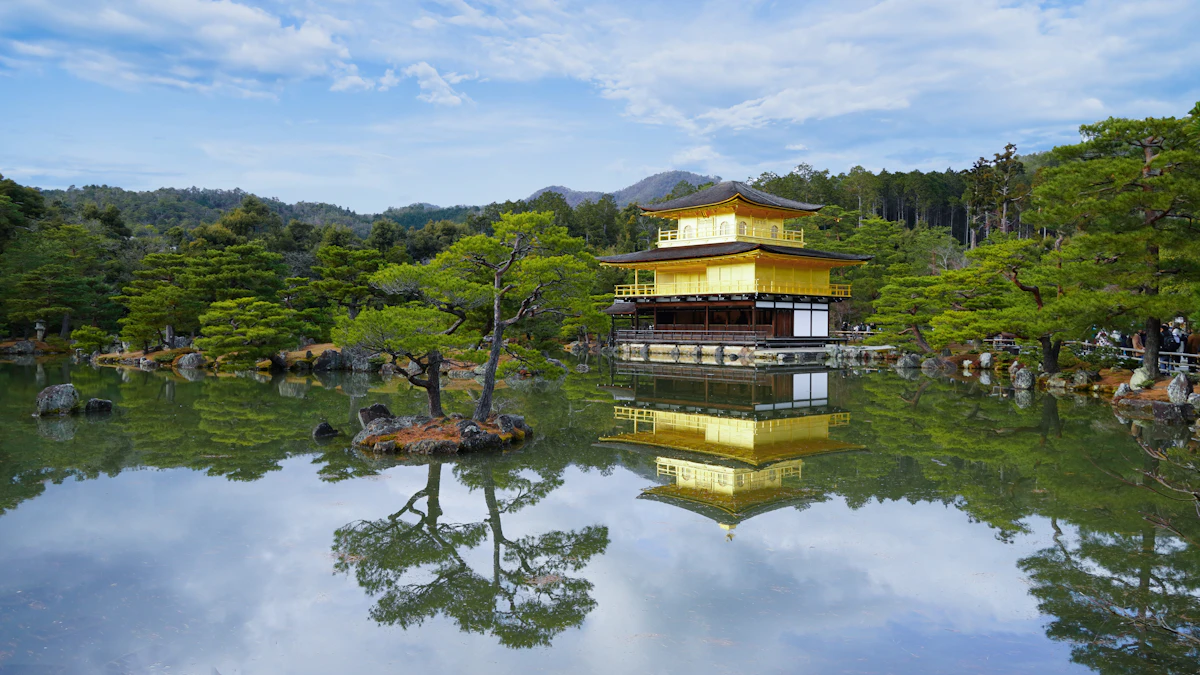
The honest answer: dress how you'd dress for a regular day out. That's what Japanese people do.
A surprising number of English-language guides recommend "modest dress" or even "long pants" for shrine visits. Japanese people who write about it sound almost confused by that advice.
Of 56 responses about clothing for shrine visits:
Two thirds of Japanese voices said casual clothes are fine. The most-upvoted answer to "Can I visit Ise Shrine in shorts and a t-shirt?" got straight to the point:
本当気を使うべきなのかもしれませんが、現実はみんなラフな格好で参拝していますよ。それに伊勢の夏は暑いですし。 You could argue you ought to dress up. But in reality, everyone visits in casual clothes. And summers in Ise are hot.
Another voice answered the ever-popular "are jeans okay?" question with refreshing bluntness:
ジーパンやTシャツがダメというのはどこにあるのか。そんなことを言う神社は存在しません。 Where exactly does it say jeans or t-shirts aren't allowed? No shrine actually says that.
And the deeper view, from someone who clearly thought about it for a moment:
別に、服が参拝するわけではないので問題はないでしょう。 Your clothes aren't the ones doing the praying. So they're not really the issue.
The 16% who did want some level of dressing up almost all said the same thing: it depends on the type of visit. Casual sightseeing visit? No code at all. A formal shoden sanpai (entering the inner shrine) or a paid prayer ritual? That's different: there you're expected to dress more formally, often a button-down shirt or even a suit. But that's not what tourists are doing. Tourists walk through the gate, drop a coin, clap twice, and walk on. For that, jeans and a t-shirt are exactly right.
The only line that came up consistently was extreme exposure:
過度に露出してなければ大丈夫ですよ。 As long as it's not extreme exposure, you're fine.
別に良いんじゃない、すごくセクシーとかでないなら… It's fine — unless you're going for really sexy, you know.
In other words: a tank top in summer is normal. A swimsuit would be weird. That's the actual line, and it's much further out than most guides imply.
A common Japanese voice, one of the gentlest in our research, captured the heart of it:
敬う気持ちがあればジーパンでもいいんじゃないですかね。 If you've got a respectful feeling in you, jeans are perfectly fine, I'd say.
💡 Your clothes aren't the ones praying
The dress code Japanese guidebooks describe applies to formal rituals: getting a paid blessing, entering the inner shrine, attending a wedding. Walking through a public shrine on a hot afternoon in shorts and a t-shirt is what Japanese visitors do. The only line is "extreme exposure," and it's well past anything tourists wear.
🟢 Offering Coins: The "5 Yen for Good Luck" Myth
The honest answer: any amount is fine. The wordplay is folklore rather than a requirement.
You've probably heard that you should drop a 5-yen coin in the saisenbako (offering box) because go-en sounds like "good fate." It's everywhere: in guidebooks, on travel blogs, on TikTok. Japanese people who mention it online are largely amused.
Of 60 responses about the offering coin amount:
Combined, 70% of Japanese people said either "the amount doesn't matter" or "it depends," leaning toward freedom. The most-voted answer cut through the wordplay directly:
特にそういう事は無いと思います。5円が良いとか25円が良いとか4129円がよいとか・・・。お金の金額の多少では無いと思います。 Honestly, I don't think any of that is real. 5 yen is good, 25 yen is good, 4,129 yen is good — none of it. The amount isn't the point.
A more pointed take, from a thread arguing about the 5-yen rule:
語呂合わせのご縁などは本当にバカらしい理屈で、従う必要のないものです。 The "go-en for good fate" wordplay is a genuinely silly piece of reasoning. You're under no obligation to follow it.
A voice that sounded like a Buddhist priest gave the cleanest framing:
お賽銭は気持ちですから、いただく側としてはいくらでもよいですが、布施行ですから、できるだけ入れるのがマナーです。 Offerings are about feeling, so any amount is fine from our side. But it's also a form of giving (fuse), so the polite thing is to give what you reasonably can. (Buddhist monk)
That's actually a perfect description of the Japanese view. Any amount is fine. Give what feels right. The "5 yen brings good luck" thing was always more of a wordplay joke than a religious instruction: a cultural pun that travel guides took literally.
The handful of voices that did care about the coin had two modern complaints. One was about throwing rather than placing. Buddhist temples in particular discourage hurling coins:
乱暴に投げ入れるということさえ無ければ、構わないと思います。 As long as you're not flinging it in violently, it's fine.
The other is purely practical. Some shrines have started posting signs asking people not to drop in 1-yen coins, because banks now charge handling fees that exceed the coin's value:
お賽銭に1円玉は御遠慮下さい。1円玉は銀行入金で1円以上の手数料が必要になり、お賽銭が無意味になります。 Please refrain from offering 1-yen coins. The bank handling fee exceeds 1 yen, which means the offering loses its value. (Shrine notice)
If you want a simple, real-Japan rule: a 10-yen, 100-yen, or 500-yen coin in the box, placed gently, with a moment of attention. That's better than a 5-yen coin tossed casually. The form is the heart, not the wordplay.
💡 The amount is folklore, the gesture is real
The 5-yen-for-go-en rule is an old pun that became a tourist meme. Japanese voices in our research treat it as charming but not real. What does seem to matter, to the small number who care at all, is how you offer the coin: place it rather than throw it, take a beat to be present, then ring the bell. Almost any coin will do.
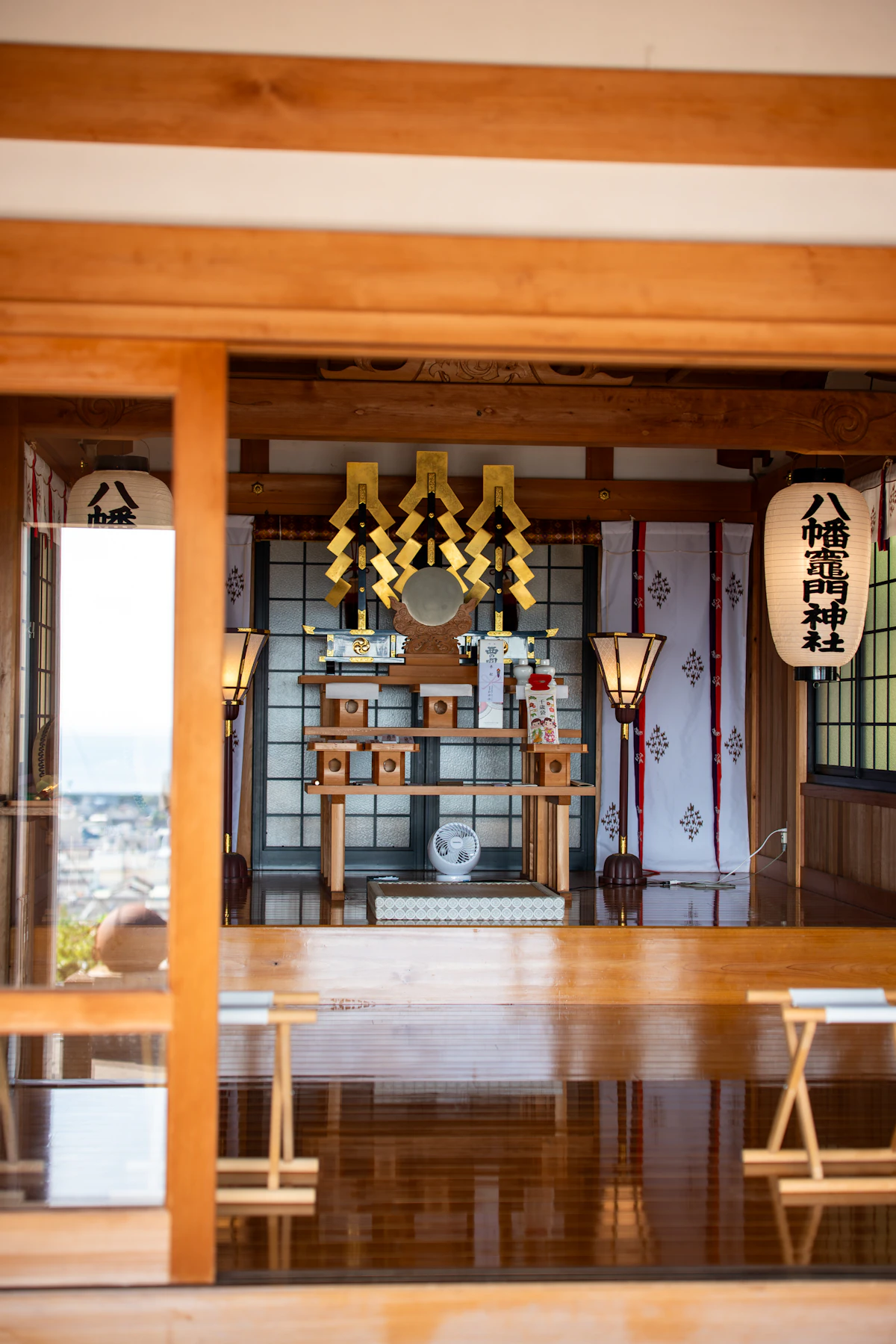
The Cultural Engine: Why Japanese People Are So Relaxed About All This
If you've read this far, you may be wondering: why are Japanese people so much more relaxed about shrine etiquette than the guidebooks suggest?
There's a surprising historical answer. And it explains a lot.
The Procedure You're Reading About Is Newer Than You Think
Most travel guides describe the "two bows, two claps, one bow" sequence as if it's been the standard Japanese practice for centuries. It hasn't. According to working Shinto priests and historical sources we found in our research, the unified ritual is largely a 20th-century creation, and the strict version many Japanese people now follow really only spread in the past 30 years.
A Shinto priest answering questions online explained:
基本、作法は自由です。平成の頃から「正しい作法はなに?」という問い合わせが多くなったので、それに応える形で神社でも参拝作法として「二礼二拍手一礼」を看板などで掲げるようになりました。 Originally, the procedure is free. In the Heisei era (1989 onward), shrines started getting more and more questions asking "what's the correct way?" So in response, shrines began posting "two bows, two claps, one bow" on signboards. (Shinto priest)
Another voice in the same thread filled in the older history:
江戸時代までは神社毎に作法は異なり、その種類は数千あったといわれています。明治期に二礼二拍手一礼に統一されました。 Up until the Edo period, every shrine had its own way of doing things — there were said to be thousands of variations. The "two bows, two claps, one bow" version was standardized during the Meiji era.
Several Japanese voices in their 40s and 50s wrote, independently, that they didn't grow up doing the ritual:
子どものころ二礼二拍手一礼してなかったな、と急に思い出して気になってしまいました。 I just suddenly remembered — when I was a kid, we didn't do "two bows, two claps, one bow." It started bothering me. (Visitor in their 40s)
やっぱりうるさく言い出したのは平成になってからみたい?少なくとも私の記憶違いではなかったことが分かってすっきり。 So it really did get strict only after the Heisei era? Glad to know my memory wasn't playing tricks on me. (Visitor in their 40s)
The polite, formal-feeling version of shrine etiquette that English-language guidebooks teach is, in many cases, a relatively recent reconstruction. That's why working Japanese priests sound so unbothered about whether tourists get it right: they know the ritual is younger than most of their visitors. A few famous shrines never adopted the standard at all. At Izumo Taisha in Shimane, you still bow twice, clap four times, and bow once, the shrine's own greeting, kept exactly as it has always been.
What Actually Matters in Japanese Religious Practice
Behind the loose attitude toward form is something Japanese culture takes very seriously: the difference between form (katachi) and heart (kokoro). The form is a vehicle. The heart is the cargo.
When a Japanese priest tells a tourist that a wet towelette can replace the temizuya, they aren't compromising. They're being precise about what the ritual is for: a moment of inward purification before approaching the sacred. If a wet towelette gives you that moment, the ritual has done its work.
And when a Japanese visitor at a shrine glances over and sees a foreign couple stumbling earnestly through the temizuya (pouring water on the wrong hand, touching the ladle to their lips uncertainly), what they see isn't failure. They see the right kokoro trying to find its katachi. It's the same pattern we found with trying to speak Japanese: the attempt itself is what Japanese people most warmly recognize. Trying is the highest form of respect.
作法を完璧にできないからといって、不浄だ穢れだ、という神様はいないと思うのです。 I don't believe in a god who would call you unclean just because you couldn't do the form perfectly.
That's the actual Japanese theology of shrine visits, in a single sentence. This same pattern (effort over perfection, heart over form) runs through What Actually Matters (And What Doesn't), which maps how much Japanese people care about each situation a visitor might face.
What Japanese People Actually Want You to Know
After reading all 298 responses, the common thread wasn't about correct rituals at all. It was something gentler:
Slow down. Be present. Don't worry about the form.
形にとらわれず、心を添えて祈れば充分です。 Don't get caught up in form. Add your heart to your prayer, and that's enough.
緊張せずリラックスして参拝して頂けたらいいなと思います。 I just hope visitors can relax and pray without feeling nervous.
一番良くないのは形式ばかり気にして神様への敬意を忘れてしまうこと。 The worst thing you can do is focus so hard on the form that you forget your respect for the gods.
The bottom line from Japanese voices, again and again: there is no shrine police. No one is grading you. The people who care most about your visit (the priests, the regulars, the people who actually run these spaces) are the most generous of all. They've watched Japanese visitors stumble through the form for decades. A foreign visitor doing the same is, if anything, more recognizable than they expected. And if you want to go deeper, spending a night on the sacred mountain of Koyasan, among the temple lodgings and the lantern-lit paths of Okunoin, is one of the quietest ways to feel the unhurried presence these voices keep describing. The same mountain reverence takes a different shape at the sacred mountain of Yoshino, where Kinpusen-ji stands as the head temple of Japan's path of mountain asceticism and its slopes wear their prayers as cherry blossom. A daytime version of that same stillness waits at the Zen garden of Tenryu-ji in Arashiyama, where you sit at the pond and the temple quietly borrows the mountain behind it into the view, or along the one-way garden path of Ginkaku-ji, the Silver Pavilion, where you follow the moss and sand at a walking pace and take in each building from the outside. And at the most photographed temple of all, Kinkaku-ji, the Golden Pavilion, the crowds quietly part around a small prayer hall that most visitors walk straight past: a reminder that even here, it is a place of prayer first. And in Nara Park, where the Great Buddha of Todai-ji and the lantern-lined paths of Kasuga Taisha share their grounds with the sacred deer, the same unhurried respect quietly extends even to the animals. And at the lavishly carved shrines of Nikko, where the first Tokugawa shogun is enshrined as a god beneath gates of gilded carving, the same quiet courtesies hold even amid all that gold. And at the shrine near Fukuoka where students come to pray for exam success, enshrining the Heian scholar Sugawara no Michizane as the god of learning, visitors stroke a bronze ox for wisdom and write their hopes on a wooden plaque. The prayer is concrete, but the heart behind it is the same one these voices keep describing. And at the shrine that sits inside the caldera of Mount Aso, where the mountain itself is the deity being honored, the same reverence reaches out to the living, smoking volcano that the shrine was built to face. If you're planning your first days in Japan and want to know what shrine visits, shoe-removal, and other small moments actually look like in practice, Your First Week in Japan covers those first-day situations with the same grounding in real Japanese voices.
If you want to make a Japanese priest smile, it's the same answer as with the small bow and chopsticks: show up with your heart in the right place. Pause for a moment at the offering box. Step to the side so others can pray. Say arigatou gozaimasu in your head. That matters infinitely more than whether you washed your left hand first.
More Japanese Perspectives
Curious about other small ways to show respect in Japan? These articles explore what Japanese people actually think, based on hundreds of real voices.
- The Power of a Small Bow: Why a simple nod, even an awkward one, lands more warmly than you'd expect.
- Why Removing Your Shoes Makes Japanese People Smile: The visceral feeling of shoes-off, and why even a clumsy attempt is endearing.
- "Excuse Me, Can You Take My Photo?": What Japanese People Really Think: How asking, offering, and stepping aside change everything about photography moments.
Share Your Experience
Had a moment at a shrine or temple? Awkward, beautiful, surprising. Maybe a priest who quietly helped you, or a moment when you realized the form mattered less than you thought? We'd love to hear it. Your story helps build a bridge between cultures.
Share your experience on Voice Box →
Sources
Primary Research Data
- WMJS shrines and temples research data (298 Japanese-language responses collected April 2026)
- Temizuya purification etiquette: 63 responses
- Photography in sacred spaces: 62 responses
- What to wear: 56 responses
- Offering coin amount: 60 responses
- Generational differences: 57 responses
Opinion Collection Sources
The following sources were used to collect Japanese people's opinions and sentiments. These are not cited as factual authorities but as platforms where real Japanese people expressed their views on visiting shrines and temples.
Temizuya purification etiquette:
- Public Japanese Q&A sites, forums, and social posts: first-hand opinions on temizuya purification etiquette
- https://sui-jinja.com/chouzuya/
- https://irumijinjya.jp/blog/temizu/
Photography in sacred spaces:
- Public Japanese Q&A sites, forums, and social posts: first-hand opinions on photography in sacred spaces
- https://www.yasaka-jinja.or.jp/news/%E5%A2%83%E5%86%85%E3%81%A7%E3%81%AE%E6%92%AE%E5%BD%B1%E3%81%AB%E3%81%A4%E3%81%84%E3%81%A6/
- https://www.chibajinja.com/information/2020_113_photo_ng.html
- https://inari.jp/request/
What to wear:
- Public Japanese Q&A sites, forums, and social posts: first-hand opinions on what to wear
- https://irumijinjya.jp/blog/mens-clothing-for-visiting-shrines-in-summer/
Offering coin amount:
- Public Japanese Q&A sites, forums, and social posts: first-hand opinions on the offering coin amount
Generational differences:
- Public Japanese Q&A sites, forums, and social posts: first-hand opinions on generational differences
- https://posfie.com/@tsubanya/p/uhMdgUB
Note on Quotations
Quotes from online platforms have been lightly edited for readability (fixing typos, formatting for clarity). The meaning and intent of each comment remain unchanged. Original sources are linked above.
WMJS is written in Japan, in English, with AI help. We check every page, but English is not our first language. If a sentence reads oddly, tell us. One sentence is enough.
Thank you. A person reads every note.
How well do you know Japan?
Built from 635 public posts by Japanese people
Want to know more? Ask Japanese people
Have a follow-up question about this topic? We'll ask real Japanese people.
Voice Box →