
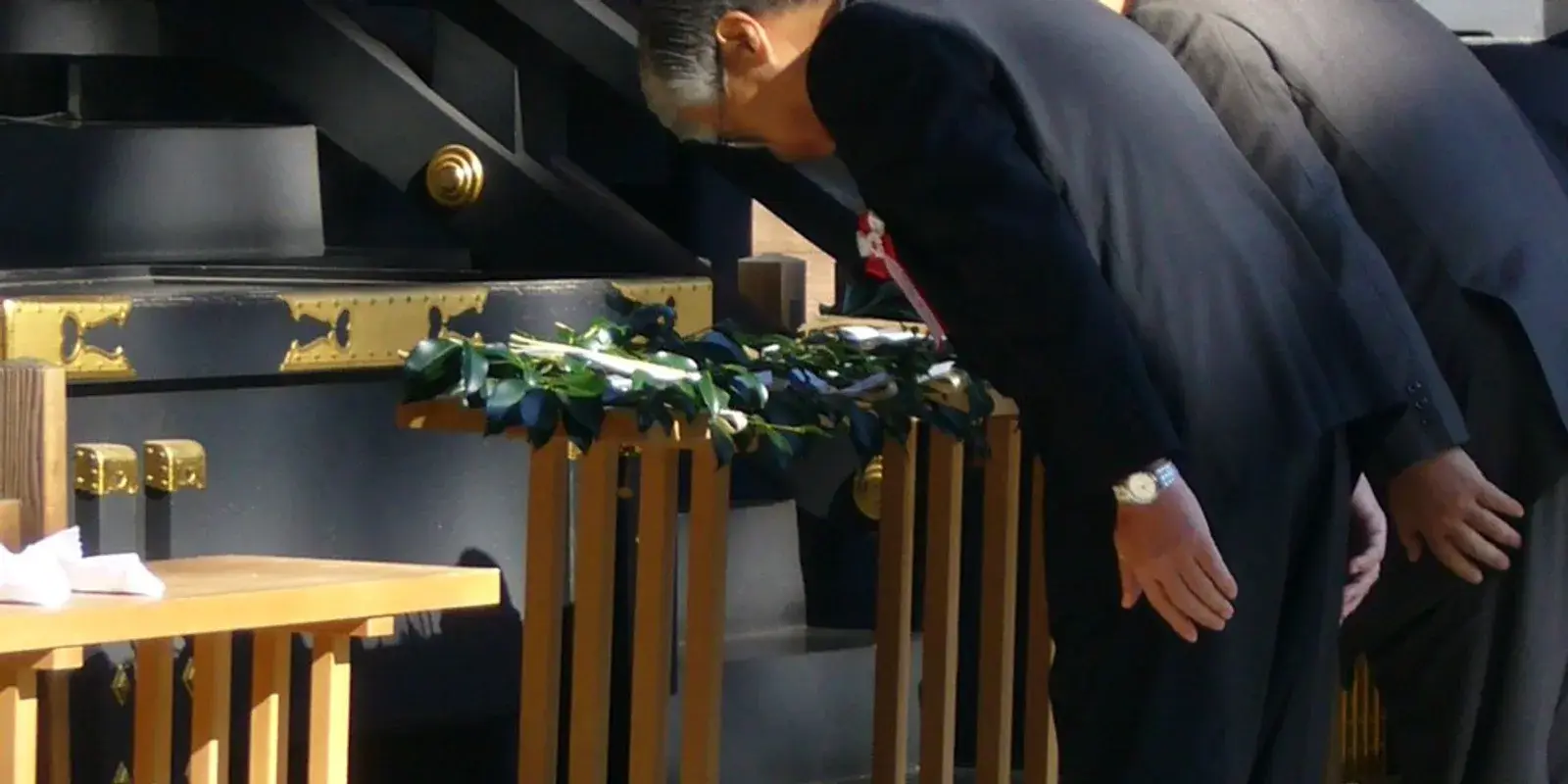
The Power of a Small Bow: Why a Simple Nod Makes Japanese People Smile
What you'll learn in this article:
- What 255 Japanese people said about light nods, "sumimasen," elevator bows, and the angle myth
- Why you don't need perfect bowing technique: a tiny head nod is enough
- How one American boss invented a "Japanese person detector" using nothing but a bow
If you've ever worried about bowing correctly in Japan (how deep, how long, how many degrees), take a deep breath. You can relax.
Here's the truth that travel guides rarely tell you: Japanese people don't care about your bowing technique. Not even a little. What they do notice, and what makes them smile, is the effort itself. A small nod. A light head tilt. A quiet "sumimasen." These tiny gestures, imperfect as they may be, carry enormous emotional weight.
We collected 255 real opinions from Japanese people about bowing, greetings, and everyday gestures, plus 95 more on how greeting culture is shifting across generations, to find out what they actually feel when a visitor makes even the smallest effort.
Do you need to bow correctly in Japan? We collected 350 public posts by Japanese people. The answer: forget the angles. 64% said they don't care about bow depth at all, and only 8% think angles matter. What moves them most is the effort itself: a light nod made 62% feel warm, and saying "sumimasen" earned a 75% positive response, the highest across all topics. A perfect bow is unnecessary. A small nod with genuine feeling is worth everything.
Quick Guide
| Gesture | What Japanese People Said | |
|---|---|---|
| 🟢 Just do it | A light nod | No technique needed. A small "peko" (head tilt) at a shop, restaurant, or on the street makes Japanese people feel warm. "It's the shortest, most powerful way to say 'I mean no harm.'" |
| 🟢 Magic word | Saying "sumimasen" | Even in broken Japanese, this one word opens doors. 75% of Japanese people said it makes them instinctively want to help. Don't worry about pronunciation. The effort is what counts. |
| 🟡 Nice touch | Elevator nods | Most people appreciate it, but it's not required. If you do it, many will think "that's very Japanese-like." If you don't, nobody minds. |
| 🟢 Don't worry | Bow angles (15°, 30°, 45°) | Travel guides obsess over this. Japanese people don't. "The depth of a bow is naturally decided by the depth of feeling." Nobody is measuring. |
The one thing to remember: A perfect bow is unnecessary. A light nod with genuine feeling behind it is worth more than a technically correct 45-degree bow with none. Across the posts, Japanese people overwhelmingly said the same thing: the gesture matters, the angle doesn't.
How We Gathered These Voices
We collected 350 Japanese-language responses across five topics: light nods and bowing (60 responses), saying "sumimasen" (60 responses), elevator greetings (72 responses), bow angles (63 responses), and generational differences in greeting culture (95 responses). Sources include public Japanese Q&A sites, forums, and social posts, news articles, and various Japanese blogs and media.
A quick note: This isn't a controlled scientific survey. It's a collection of what real Japanese people said in their own words, in their own language, on public platforms. Most English-language guides tell you how to bow. We wanted to show you how Japanese people feel when you do.
First, the Biggest Surprise: The Japanese Person Detector
Here's something that perfectly captures the power of a simple bow. At an international academic conference, an American boss had an unusual talent: he could always find the Japanese attendees in a crowd. When asked how, his answer was simple:
国際学会で的確に日本人を見つけて雑談してるアメリカ人上司に、「どうして日本人ってわかるんですか?」と聞いたら『簡単さ!お辞儀するだけでいいんだ。お辞儀し返してくれるのが日本人だよ』って。いつの間にか日本人発見器を発明してた。 "It's easy!" he said. "Just bow. The ones who bow back are the Japanese." He'd accidentally invented a Japanese person detector.
This went viral in Japan, not because people were offended, but because they found it hilarious and completely accurate. The replies confirmed it:
お辞儀されたら反射でお辞儀しちゃいますもんね When someone bows to you, you just bow back — it's a reflex.
会釈されると「誰だっけ?」と思いながらも会釈し返してしまいますからな〰️❗️ Even when someone nods at me and I'm thinking "wait, who is this person?" — I'm already nodding back.
This is the key insight: bowing in Japan isn't a performance. It's a reflex. And when a foreigner triggers that reflex with a light nod, something interesting happens: Japanese people feel an instant sense of connection.
💡 The Japanese person detector
"Just bow. The ones who bow back are the Japanese." An American boss's accidental discovery reveals the most fundamental truth about bowing in Japan: it's not a ritual. It's a reflex.
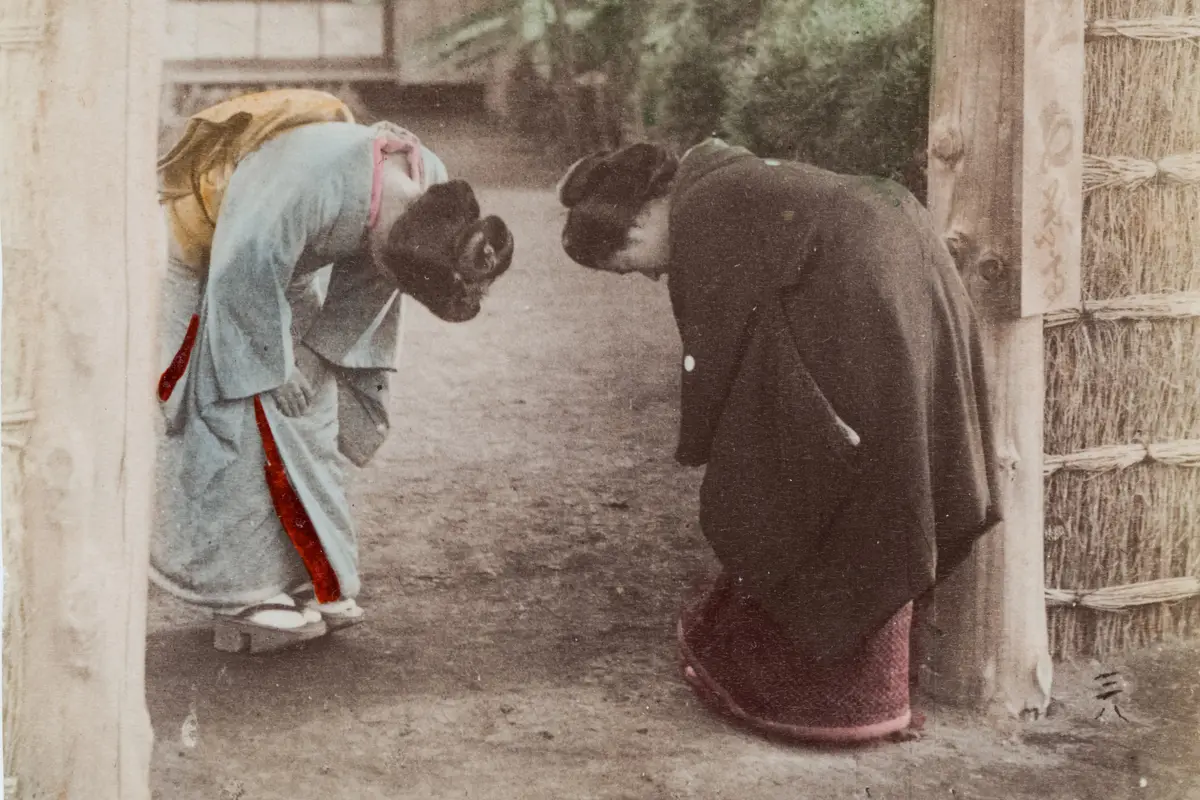
What Actually Matters: The Temperature Gauge
Not every greeting gesture carries the same emotional weight. Some will warm hearts. Others are nice but optional. Here's what 255 Japanese people wrote.
🟢 A Light Nod: The Simplest Gift
The honest answer: a small head nod is all it takes.
Of 60 responses about foreigners giving light bows and nods, the vast majority were positive, and many were deeply emotional. This was the most straightforwardly heartwarming topic across all four categories.
One person captured the essence of why bowing works so well:
頭を下げたり会釈をするのは、相手に敵意がないですよ、ということを理解させる、最短で最強の意思表示なんですよ。 Lowering your head or giving a nod is the shortest, most powerful way to tell someone "I mean you no harm."
And when foreigners pick up the habit, Japanese people notice, in the best way:
フランスで日本人同士でお辞儀をしあっていたら、近くのカフェのテラスに座っていた若いフランス人女性が目を輝かせて嬉しそうにこちらをじっと見ているのに気づきました。 When we were bowing to each other in France, I noticed a young French woman at a nearby café, watching us with her eyes lit up, looking delighted.
Here's something that might surprise you: according to a 2013 Mynavi survey of foreign residents in Japan, "bowing" was the No. 1 Japanese habit that foreigners unconsciously take home with them. Brazilians, Swedes, Indonesians, Chinese: people from all backgrounds reported bowing to strangers in their home countries and getting confused looks in return.
電話しながら何回もペコペコお辞儀。外国人には滑稽に映るようだが、私はとっても日本人らしくていいと思ふ♡ Bowing repeatedly while on the phone — it might look funny to foreigners, but I think it's wonderfully Japanese.
And from Singapore, an observation that Japanese people themselves found striking:
多人種国家のシンガポールの人に言われたのですが。『この人は、日本人』と断定出来るのは、お客さんなのにお辞儀をするだそうです。 Someone from Singapore told me: the way they can tell someone is Japanese is that they bow even when they're the customer.
The bottom line: you don't need to learn any technique. A small nod when you enter a shop, when you receive something, or when you pass someone in a narrow space: that tiny gesture carries more weight than you might imagine. It's the same principle behind removing your shoes at the door: Japanese people aren't looking for perfection, they're reading your intention.
🟢 "Sumimasen": One Word That Opens Every Door
This is the single most powerful word a visitor can learn. And you don't even need to pronounce it perfectly.
Of 60 responses about foreigners saying "sumimasen" in Japanese, 75% were positive, the highest positive rate across all topics. Something about hearing this word, even from a foreigner, triggers an immediate emotional response.
What makes "sumimasen" so powerful? A Japanese workplace culture expert explained it this way:
日本人は「すみません」という思いやりのサインが出てきたかどうかで、相手がこちらの気持ちを理解してくれるか、困難をともにできる仲間かどうかを確認したいのです Japanese people use "sumimasen" as a signal to determine whether you understand their feelings — whether you're someone they can count on.
In other words, "sumimasen" isn't just an apology or a way to get attention. It's a trust signal. It tells the listener: "I'm aware of you. I respect the space we share."
And the effect on Japanese people is almost automatic:
「すみません」を使うと、日本人は心理的に安心してしまうそう。外国人が「すみません」と挟んだ後にお願いをすると日本人ついつい助けてしまう When you use "sumimasen," Japanese people feel psychologically reassured. If a foreigner says "sumimasen" before making a request, Japanese people can't help but help them.
There's a deeper reason why this word carries such emotional weight:
何か親切をしてもらった時にでてしまう「すみません」は相手のことを先に思ってしまうがためにでてしまう言葉で、「(あなたに気を遣わせてしまって)すみません」という相手が主役のフレーズが先に出てきてしまう The "sumimasen" that comes out when someone does you a kindness — it's because you're thinking of the other person first. "I'm sorry for putting you to this trouble" — the other person becomes the main character.
Here's where it gets interesting: in English, receiving help usually prompts "thank you," and you're expressing your own gratitude. In Japanese, the instinct is "sumimasen," and you're acknowledging the other person's effort. It's the same appreciation, but the spotlight points in a different direction. You'll find that same humility in the meaning behind "itadakimasu", a word that thanks the food itself, not just the person who served it.
頑張って日本語を話している外国人、そして日本のルールやマナーなどを忠実に従おうとしている外国人を見ていると、いとおしい気持ちになる When I see foreigners trying hard to speak Japanese, or faithfully trying to follow Japanese rules and manners, I feel a sense of tenderness.
💡 Why "sumimasen" hits differently
In English, receiving help prompts "thank you," and you're expressing your gratitude. In Japanese, the instinct is "sumimasen," and you're acknowledging the other person's effort. Same feeling, different spotlight. When a foreigner uses "sumimasen," they're unconsciously speaking the Japanese emotional language.
One important nuance: Several voices noted that while tourists get a warm reception for basic Japanese, long-term foreign residents sometimes find the enthusiastic "日本語お上手ですね!" (Your Japanese is so good!) reaction tiring when they've been speaking Japanese for years. The appreciation is most genuine, and most appreciated, in brief encounters.
🟡 The Elevator Nod
Most people appreciate it. Some find it wonderfully Japanese. And a few wish it didn't exist.
Elevator greetings are where bowing culture gets interesting, because even Japanese people have mixed feelings about them. Of 72 responses about elevator bows and greetings:
The positive side is heartfelt. When someone holds the elevator button for others, the most upvoted comment on the topic was brutally simple:
言う 言わない選択肢がない There's no option NOT to say thank you.
And when foreigners bow in elevators, Japanese people notice the cultural fluency:
その姿が珍しいからだけだと思いますよ。私の知人で、日本在住歴の長い白人が数名いますが、全員、日本の生活になじみ、普通に日本式挨拶を交わします。こちらも、もう慣れてしまって違和感を感じません I think it stands out at first just because it's unusual. But I have several white friends who've lived in Japan for years — they all greet Japanese-style naturally now. We're so used to it that it doesn't feel unusual at all.
One person captured the philosophy perfectly:
自分が挨拶したいからする。返ってきたら嬉しい程度の考え方 I greet because I want to. If they greet back, that's a bonus.
But here's where it gets nuanced. About 21% of responses expressed discomfort with elevator greetings, and their reasons are surprisingly relatable:
言わない その人が勝手にやってるだけだし I don't say anything. They chose to hold the button on their own.
This voice was heavily downvoted (453 dislikes), but it represents a real minority view: not everyone in Japan loves the social pressure of elevator interactions. Some people genuinely find them stressful, and a few admitted to deliberately timing their walks to avoid sharing an elevator with neighbors.
One fascinating cultural observation:
英語圏(特にアメリカ)では、friendlyであることが、礼儀正しさより優先される In English-speaking countries (especially America), being friendly takes priority over being polite.
This helps explain why elevator interactions feel different across cultures. In the US, you might chat with a stranger in an elevator. In Japan, you bow silently. Neither is wrong. They're different cultural operating systems for the same small space.
What to do: If you're in a hotel elevator and feel like giving a small nod, go for it. Most people will appreciate it. But if it feels awkward, that's fine too. Nobody expects it from visitors, and plenty of Japanese people skip it themselves.
🟢 The Angle Myth: 15°, 30°, 45°... Seriously?
Travel guides teach exact bow angles. Japanese people think that's hilarious.
If you've ever read a travel guide that told you to bow at precisely 15 degrees for a casual greeting, 30 degrees for respect, and 45 degrees for deep apology, you're not alone. This framework is taught in virtually every English-language Japan guide. But what do Japanese people actually think about it?
Of 63 responses about bow angles:
The overwhelming consensus: nobody measures.
やはりお辞儀は、それを見ている人たちに対する思いの深さで、自然と決まってくるのではないでしょうか? Isn't the depth of a bow naturally decided by the depth of feeling toward the person you're facing?
Even professional manners experts (the very people who teach bow angles) acknowledge this:
マナーで大切なことは、相手への思いやりの心。「必ずこうすべき」という決まりはありません。自身で「これが最も伝わる角度と秒数だ」と思えたものが正解 What matters in manners is consideration for others. There are no fixed rules. Whatever angle and duration you feel communicates best — that's the correct answer.
角度をちょっと間違ったとしても、それが相手にあたえる印象の違いは少ない。実は角度というポイントより、印象を左右するのは、お辞儀の動きのタイミングです Even if you get the angle slightly wrong, the difference in impression is minimal. What actually affects the impression isn't the angle — it's the timing of the bow.
And here's something that might genuinely surprise you: many Japanese people actively mock the angle-obsessed approach:
部族の掟(社内ルール)を外部に持ち出すなよ Stop bringing your tribal rules (internal company policies) out into the real world.
A 2019 article listed "bow angle of 30 degrees" as one of the "Top 10 business manners unnecessary in the Reiwa era." And a columnist wrote one of the most biting criticisms:
あの長ったらしい90度のお辞儀には、心からの誠意が感じられない。頭さえ下げておけばいい――。そんな、お客を小馬鹿にしたパフォーマンス Those drawn-out 90-degree bows feel completely insincere. "Just lower your head and that'll do" — it's a performance that insults the customer.
And a concept that might completely reframe how you think about it:
行きすぎた礼儀はかえって相手に不信感、警戒心を持たせます Excessive courtesy actually breeds suspicion and wariness.
In Japanese, this is called ingin burei (慇懃無礼), literally "over-polite rudeness." A bow that's too deep, too formal, or too perfect for the situation doesn't impress people. It makes them uncomfortable.
As for foreigners specifically? The consensus couldn't be clearer:
基本的に外国人がそうしてくれるだけで日本人は良く思ってくれるはずで、多少場違いなお辞儀をしたって「外国人だから」という理由で大目に見てくれます Japanese people will appreciate a foreigner making the effort, period. Even if your bow is a little off, they'll overlook it because you're a foreigner.
例え作法を間違っていようとも、異国で敬意を表そうと努力する人は見ていて気持ちの良いものだ Even if the form is wrong, seeing someone try to show respect in a foreign land is a genuinely pleasant thing.
💡 The real rule about bow angles
"The depth of a bow is naturally decided by the depth of feeling." Japanese people don't measure angles. They read intention. A shallow nod with genuine warmth is worth infinitely more than a textbook-perfect 45-degree bow with none.
The Cultural Engine: Why Small Gestures Carry So Much Weight
So what makes a tiny head nod so powerful in Japan? It comes down to two cultural ideas that run beneath the surface of daily life.
The Reflex Theory
Bowing in Japan isn't learned like a skill. It's absorbed like a language. By the time Japanese people are adults, bowing back is as automatic as blinking. Several people described it using the exact same word: hansha (反射), a reflex.
This is why the "Japanese person detector" works. You can't not bow back. It's hardwired. And when a foreigner triggers this reflex, it creates an instant sense of "oh, we're on the same wavelength." It's not about the bow itself. It's about the mirror it creates.
The reflex runs so deep in this culture that even the famous deer of Nara Park seem to have picked it up: lowering their heads to ask for a cracker, and dipping them again when you bow back. Whatever the deer means by it, the gesture lives everywhere here, passed quietly from one generation to the next.
握手を求められれば握手を、お辞儀されたらお辞儀を、我を出さずとにかく相手に合わせるのが日本人 If someone offers a handshake, shake hands. If someone bows, bow back. Not asserting yourself, just matching the other person — that's the Japanese way.

The Effort Principle
Across all 255 responses on bowing and greetings, one theme appeared more than any other: effort matters more than execution. Japanese people aren't evaluating your technique. They're reading your intention.
This is why "sumimasen" from a foreigner hits so hard. It's not the pronunciation (which is often imperfect). It's the fact that you tried. You chose to use a Japanese word instead of defaulting to English. You met them halfway, and as we explored in our article about visiting temples and shrines, that willingness to engage with Japanese customs, even imperfectly, is what resonates most. At a shrine like Ise Jingu, where pilgrims pause to bow before crossing the bridge into the sacred grounds, that same small gesture quietly carries you across the threshold. And the gesture changes meaning with the place: a quiet bow at a place of remembrance like Hiroshima's Peace Memorial Park is simply a way of paying your respects in stillness. The same hush settles over visitors at Nagasaki's Peace Park, a second city that keeps such a place, and a quiet bow before the Golden Hall at Hiraizumi, where the Fujiwara lords lie enshrined, does the same. And at the gate of Kinkaku-ji, Kyoto's Golden Pavilion, the small nod many give as they pass through marks the quiet moment of arriving as a visitor rather than a sightseer. For a culture built on mutual consideration, meeting halfway is everything. That same principle runs through What Actually Matters, the full map of which gestures Japanese people truly notice. For a practical day-by-day walkthrough, see Your First Week in Japan.
The Generation Shift: Is Japan's Greeting Culture Changing?
We collected 95 additional responses specifically about generational differences in greeting culture, and the results challenged the common narrative.
The typical story goes: "Young people these days don't greet properly." But the data tells a more complex story.
そうかな?マンションの小学生も高校生もいつもきちんと挨拶してくれるよ...いつも無視するジジババもいるよ Really? The elementary and high school kids in my apartment building always greet me perfectly... It's the old folks who always ignore me.
牛丼店でアルバイトをしているが、若い顧客は食事後に『ごちそうさまでした』と挨拶して支払うのに対し、言葉もなくお金を投げるように置くのは中高年男性ばかりだ I work part-time at a beef bowl restaurant. Young customers say "gochisousama deshita" (thank you for the meal) when they pay. The ones who throw their money down without a word? All middle-aged men.
A Keio University professor offered perhaps the sharpest observation:
『近頃の若者』より、むしろ『近頃の年寄り』の方を検討すべき Rather than examining "young people these days," we should be examining "old people these days."
But there's also a structural reason why younger Japanese people may greet less, and it has nothing to do with manners:
今22で...小学校中学年か高学年くらいの頃から『挨拶してくる不審者がいます』って指導が出て挨拶しなくなりました I'm 22 now... Starting around 3rd or 4th grade, our school started warning us: "There are suspicious people who greet children." That's when I stopped greeting people.
Safety education taught an entire generation that strangers who say hello might be dangerous. It's not a values failure. It's a policy consequence. And according to survey data, over 60% of Z-generation workers say greetings are necessary. They just find them difficult.
💬 What do you think?
Japanese readers: How do you feel about this?Visitors: Have you experienced this in Japan?
Share your voice →What does this mean for visitors? Nothing changes. The core insight holds across all generations: a small gesture of acknowledgment (a nod, a bow, a "sumimasen") is universally appreciated. The younger generation may express it differently, but the warmth behind the gesture transcends age.
What Japanese People Actually Want You to Know
After reading 350 responses, the message was remarkably consistent. Here's what came through:
They know Japan's bowing culture is unique.
日本人も別にそんなにお辞儀してないよな?ちょっと頭を下げるくらいで腰から曲げるなんてビジネスシーンぐらいだろ To be honest, Japanese people don't bow that deeply either. A light head nod is normal — bending from the waist is really just for business settings.
They don't expect perfection from visitors.
例え作法を間違っていようとも、異国で敬意を表そうと努力する人は見ていて気持ちの良いものだ Even if the form is wrong, seeing someone try to show respect in a foreign land is a genuinely pleasant thing.
They value the feeling behind the gesture, not the gesture itself.
マナーで大切なことは、相手への思いやりの心。「必ずこうすべき」という決まりはありません。自身で「これが最も伝わる角度と秒数だ」と思えたものが正解 What matters in manners is consideration for others. There are no fixed rules. Whatever angle and duration you feel communicates best — that's the correct answer.
If you take one thing from this article, let it be this: you already know how to do this. A small nod when someone holds a door. A "sumimasen" when you bump into someone. A light head tilt when you leave a shop. You've been doing versions of these gestures your whole life. You just didn't know they'd mean so much in Japan.
More Japanese Perspectives
Curious about other aspects of daily life in Japan? These articles explore what Japanese people actually think, based on hundreds of real voices.
- Do Japanese People Actually Care How You Hold Chopsticks?: 163 Japanese people share the honest truth about chopstick etiquette. Spoiler: there's really only one thing worth knowing.
- Why Japanese Trains Are Silent: 177 Japanese people explain the real reason trains are so quiet, and why they actually love it.
- No Trash Cans, No Problem: 232 Japanese people share how they really feel about the "carry your trash" culture.
Share Your Experience
Ever had a moment in Japan where a small gesture made a big difference? Maybe you bowed at a convenience store and got the warmest smile back. Maybe a "sumimasen" opened a conversation you didn't expect. We'd love to hear it.
Share your experience on Voice Box →
Sources
Primary Research Data
- WMJS bowing and greeting research data (350 Japanese-language responses collected April 2026)
- Light nods and bowing: 60 responses
- Saying "sumimasen": 60 responses
- Elevator greetings: 72 responses
- Bow angles: 63 responses
- Generational differences: 95 responses
Statistical Data
- Cross Marketing (2024): ~70% of Japanese people greet daily; 80%+ among those in their 50s-60s (n=1,100)
- manebi (2022): 60%+ of Z-generation workers say greetings are necessary; 40% say they have no business manners they're confident in (n=300)
- BONX/at-jinji (2023): "Bow angle of 30 degrees" ranked in "Top 10 business manners unnecessary in the Reiwa era"
- Mynavi (2013): "Bowing" was the No. 1 Japanese habit adopted by foreign residents
Opinion Collection Sources
The following sources were used to collect Japanese people's opinions and sentiments. These are not cited as factual authorities but as platforms where real Japanese people expressed their views on bowing and greetings.
Light nods and bowing:
- Public Japanese Q&A sites, forums, and social posts: first-hand opinions on light nods and bowing
- https://news.mynavi.jp/article/20131115-a257/
- https://otonanswer.jp/post/51315/
- https://the-ans.jp/news/84347/
- https://tabizine.jp/article/246951/
- https://biz-journal.jp/2019/10/post_121885.html
- https://news.livedoor.com/article/detail/17147773/
- https://10mtv.jp/pc/column/article.php?column_article_id=3711
- https://1200irori.jp/content/learn/detail/case08
- https://mag.japaaan.com/archives/243331
- https://www.kateigaho.com/article/detail/41893
- https://yukashikisekai.com/?p=170915
- https://konnanewsnidekuwashita.com/blog-entry-4570.html
Saying "sumimasen":
- Public Japanese Q&A sites, forums, and social posts: first-hand opinions on saying "sumimasen"
- https://university.globalpower.co.jp/1372/
- https://attrip.jp/184699/
- https://fundo.jp/133140
- https://livejapan.com/ja/article-a0003856/
- https://bunkaru.jp/nihongo-jouzu/
- https://honichi.com/news/2017/01/26/nipponjinnokuchiguses/
- https://omotenashi.work/column/work-in-accommodation/9806
- https://logmi.jp/main/skillup/274441
- https://g-w.st/blog/?p=7548
- https://hapaeikaiwa.com/blog/2021/10/23/%E6%97%A5%E6%9C%AC%E3%81%AB%E3%81%84%E3%82%8B%E5%A4%96%E5%9B%BD%E4%BA%BA%E3%81%AF%E8%8B%B1%E8%AA%9E%E3%81%A8%E6%97%A5%E6%9C%AC%E8%AA%9E%E3%81%A9%E3%81%A1%E3%82%89%E3%82%92%E8%A9%B1%E3%81%97%E3%81%9F/
- https://news.yahoo.co.jp/articles/06ea3197f4d1c8e1f827c2a0f0e53d90f38df128
Elevator greetings:
- Public Japanese Q&A sites, forums, and social posts: first-hand opinions on elevator greetings
- https://news.careerconnection.jp/lifestyle/96535/
- https://news.mynavi.jp/article/20131115-a257/
- https://diamond.jp/articles/-/381589
- https://goodmanners.tokyo/meeting/%E3%83%9E%E3%83%B3%E3%82%B7%E3%83%A7%E3%83%B3%E3%81%AE%E3%82%A8%E3%83%AC%E3%83%99%E3%83%BC%E3%82%BF%E3%83%BC%E3%80%82%E6%8C%A8%E6%8B%B6%E3%81%A3%E3%81%A6%E3%81%99%E3%82%8B%EF%BC%9F/
- https://trilltrill.jp/articles/4108761
- https://yukashikisekai.com/?p=170915
Bow angles:
- Public Japanese Q&A sites, forums, and social posts: first-hand opinions on bow angles
- https://news.yahoo.co.jp/expert/articles/22b68869085151740ef8df610e37024ba7698b8b
- https://news.yahoo.co.jp/articles/b1db3381daf47f209c12b69c6d8bd962e7caa6ad
- https://www.j-cast.com/kaisha/2019/08/10364532.html?p=all
- https://www.dailyshincho.jp/article/2019/02220731/?all=1
- https://president.jp/articles/-/18845
- https://president.jp/articles/-/61721
- https://at-jinji.jp/blog/31884/
- https://4cs-i.com/blog/newscolumns/%E3%80%94%E6%8E%A5%E9%81%87%E3%83%9E%E3%83%8A%E3%83%BC%E3%80%95%E3%81%8A%E8%BE%9E%E5%84%80%E3%81%AE%E5%9F%BA%E6%9C%AC%E3%81%A8%E3%80%81%E6%B0%97%E6%8C%81%E3%81%A1%E3%81%8C%E4%BC%9D%E3%82%8F%E3%82%8B/
- https://www.palcoop.or.jp/kosodate/mclub/2021/04/post-151.html
- https://10mtv.jp/pc/column/article.php?column_article_id=3711
- https://mag.japaaan.com/archives/243331
- https://dic.pixiv.net/a/%E8%AC%8E%E3%83%9E%E3%83%8A%E3%83%BC
- https://bizisuke.jp/hint/20230130_6432/
- https://brog.i-career.co.jp/syazai-ojigi-kakudo/
- https://www.womanstaff.co.jp/work/2161/
- https://japanwonderguide.com/blog-japanese-ojigi/
- https://kaikore.blogspot.com/2017/11/howdoesbowingworkinjapaneseculture.html
- https://www.sunsuntv.co.jp/news/2026/04/2761713
Generational differences:
- Public Japanese Q&A sites, forums, and social posts: first-hand opinions on generational differences in greeting culture
- https://hidakashimpo.co.jp/?p=84426
- https://president.jp/articles/-/87460?page=1
- https://shueisha.online/articles/-/250818
- https://www.j-cast.com/2014/11/15220967.html?p=all
- https://www.cross-m.co.jp/report/trend-eye/20240321greeting
- https://prtimes.jp/main/html/rd/p/000000096.000028888.html
- https://select.mamastar.jp/418544/2
- https://kyushinjuku.com/greeting/
Note on Quotations
Quotes from online platforms have been lightly edited for readability (fixing typos, formatting for clarity). The meaning and intent of each comment remain unchanged. Original sources are linked above.
WMJS is written in Japan, in English, with AI help. We check every page, but English is not our first language. If a sentence reads oddly, tell us. One sentence is enough.
Thank you. A person reads every note.
How well do you know Japan?
Built from 635 public posts by Japanese people
Want to know more? Ask Japanese people
Have a follow-up question about this topic? We'll ask real Japanese people.
Voice Box →