
Is Kinkaku-ji Worth It? What Let People Down and What the Japanese See Instead
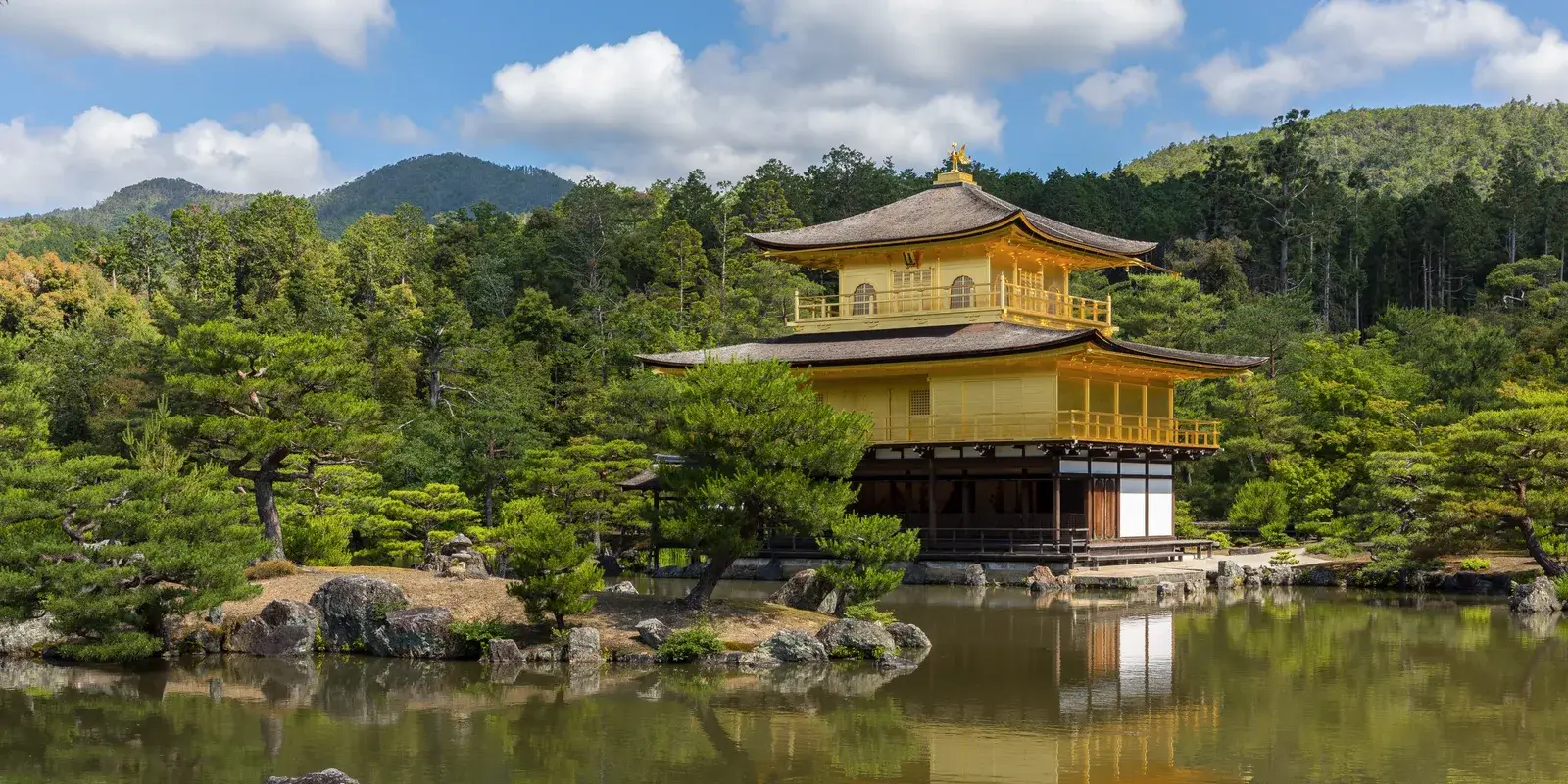
You have seen the photo a hundred times: a building covered in gold, doubled perfectly in still water. So you arrive at Kinkaku-ji ready to be moved, and instead you are funneled along a gravel path, shoulder to shoulder, you take the one photo everyone takes, and twenty-five minutes later you are at the exit thinking, that's it?
Here is the honest short answer, and the rest of this page is the long version: whether Kinkaku-ji lets you down comes almost entirely from what you walked in expecting. Arrive to tour a temple and you will feel cheated. Arrive to catch one golden reflection and you will get exactly, and only, that. It turns out to be enough.
Is it worth it? (international visitors, in their own words)
We gathered the voices of travelers from abroad who have actually stood at that pond, and read them with one question in mind: was it worth it? Weighted by how strongly each opinion resonated with other readers, here is how they fell, and this one is more divided than almost any place we have looked at.
That red bar is large, and we are not going to hide it. Kinkaku-ji is one of the most-named "overrated" spots in Japan-travel forums, and the let-down is real. But read what the disappointed actually say, and a pattern appears: every complaint is about mismatched expectations, and the building is never the actual complaint. "It looks calm," one wrote, "until you get there and five thousand other tourists are standing behind you with a camera too." Another: "I snapped some pictures, walked through the path, got to the exit and thought, 'That's it? Nothing else?'" A third was blunter: "it's gold but the rest of the grounds are nothing spectacular. It's only good for That Instagram Shot... Otherwise, I'd skip it and head over to Ryoanji."
Notice what isn't in there: nobody says the pavilion is ugly. They say it was crowded, it was quick, there was one photo spot, and they couldn't go inside. Those are all true. And, as you'll see, all of them are things you can plan around.
And the people who loved it tend to say the same small thing back. "Kinkakuji for the pics," one put it plainly; the temple is for the gold across the water rather than for wandering. "Very cool, can get crowded so go early," said another. One who came in the snow simply wrote that he had "never regretted" it.
How the Japanese see the very same temple
Now here is the layer most pages never show you: what Japanese visitors say, in their own reviews, about the identical building. It is almost a different place.
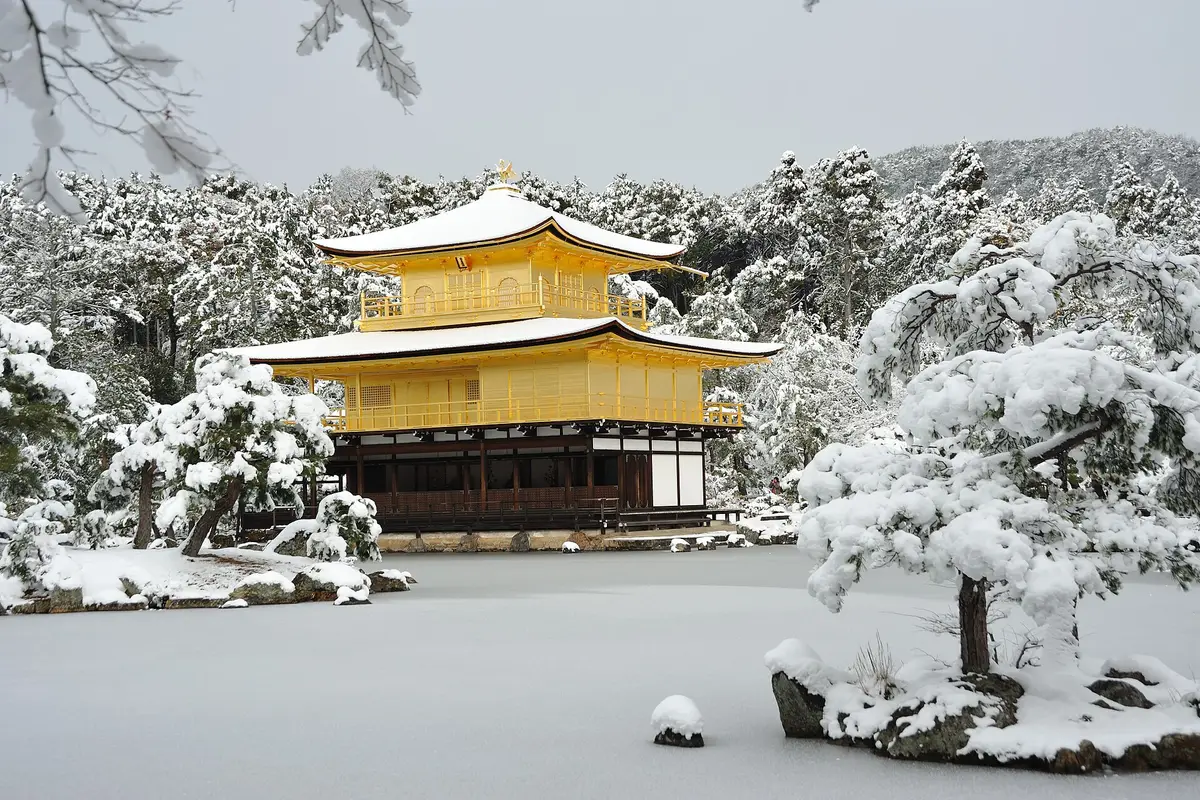
Forty-two percent let-down on one side; two percent on the other. That gap is the single most useful thing on this page, and it is not because Japanese visitors are easier to please. It is because they arrive knowing exactly what Kinkaku-ji is, and they come back to it across a lifetime. "My second visit since my school trip," one wrote; "as a student I only had eyes for the building, but now I noticed the pond and the scenery around it." Another, returning as an adult: "No matter how many times I see it, it draws a gasp." They do not expect rooms to tour or an afternoon to fill. They expect the gold in the water, the season around it, and in the season they prize most, "when it snows, I always stop by; the gold stands out all the more."
One traveler from abroad had already crossed the gap, and said it best: "I am amazed every time I hear that Kinkakuji was 'disappointed' or 'wasn't that great' for people. Sure it's crowded and the loop is short, but I have not come across another temple that is FULLY GOLD like Kinkakuji. It is insanely beautiful in photos too, especially on a blue sky day." Same crowds, same short loop: opposite verdict. The only thing that changed was what he expected.
What the let-down is really about
You cannot go inside, and that is by design. It isn't something you're missing. Kinkaku-ji is a shariden, a reliquary hall built to hold relics of the Buddha, and the temple's founding vision was to bring the Pure Land (paradise) into view as something you stand before and look at. You view it from across Kyōko-chi, the Mirror Pond, because that is where it was built to be seen. There is no public interior to tour. Once you stop looking for a door, the visit stops feeling incomplete.
There really is one photo spot, and everyone really is in it. Pure gold leaf covers the upper two floors, laid over lacquer, and what it does is reflect: the morning light, the pond, summer green, autumn red, winter white. The building is never quite the same twice, and on a still, clear day a second pavilion hangs upside-down in the water. The catch is that the complete view lives in one place at the pond's edge, so that is where the crowd gathers. The disappointment isn't the temple; it's standing in a scrum to photograph it at the wrong hour.
It is short because it is meant to be viewed, more like a photograph than a tour. The route is a one-way loop and most visits run 30–45 minutes. That is the correct length; nothing about the timing means you did something wrong. The trick is to stop treating those minutes as the whole plan.
How to Visit Kinkaku-ji the Welcomed Way
Almost everything in that red bar dissolves with a few simple moves.
- Go at 9:00 opening, or in the last hour. This is the single most-repeated piece of advice from visitors and locals alike: "can get crowded so go early." One Japanese reviewer arrived before the gate opened and, while everyone else dawdled, "had the photo spot almost to myself." The pavilion doesn't move; the crowd does.
- Pick your weather, and treasure the cold. The reflection needs still, bright air to appear, so a grey day flattens the gold. Snow and clear autumn mornings are when it is most striking, exactly what Japanese visitors plan their trips around. If your schedule allows one flexible morning in Kyoto, spend it here.
- Know you're here for the reflection, and take your one frame. "Kinkakuji for the pics," as a seasoned visitor said. Take the photo for yourself, then step aside: the route runs one way and people are arriving behind you, and the courtesy of moving on lets the next person stand where you stood. (The temple asks that photos stay personal keepsakes rather than commercial or public-posting shoots, and tripods and drones aren't allowed.)
- Don't make it a trek for one thing. Pair it. The most common "skip it" verdict comes from people who bused across the city for a single 30-minute stop. Don't. Kinkaku-ji sits in northwest Kyoto beside Ryōan-ji and its famous rock garden, with Kitano and the Kinugasa temple cluster close by. String them together and the morning becomes a half-day, and the "that's it?" feeling never arrives.
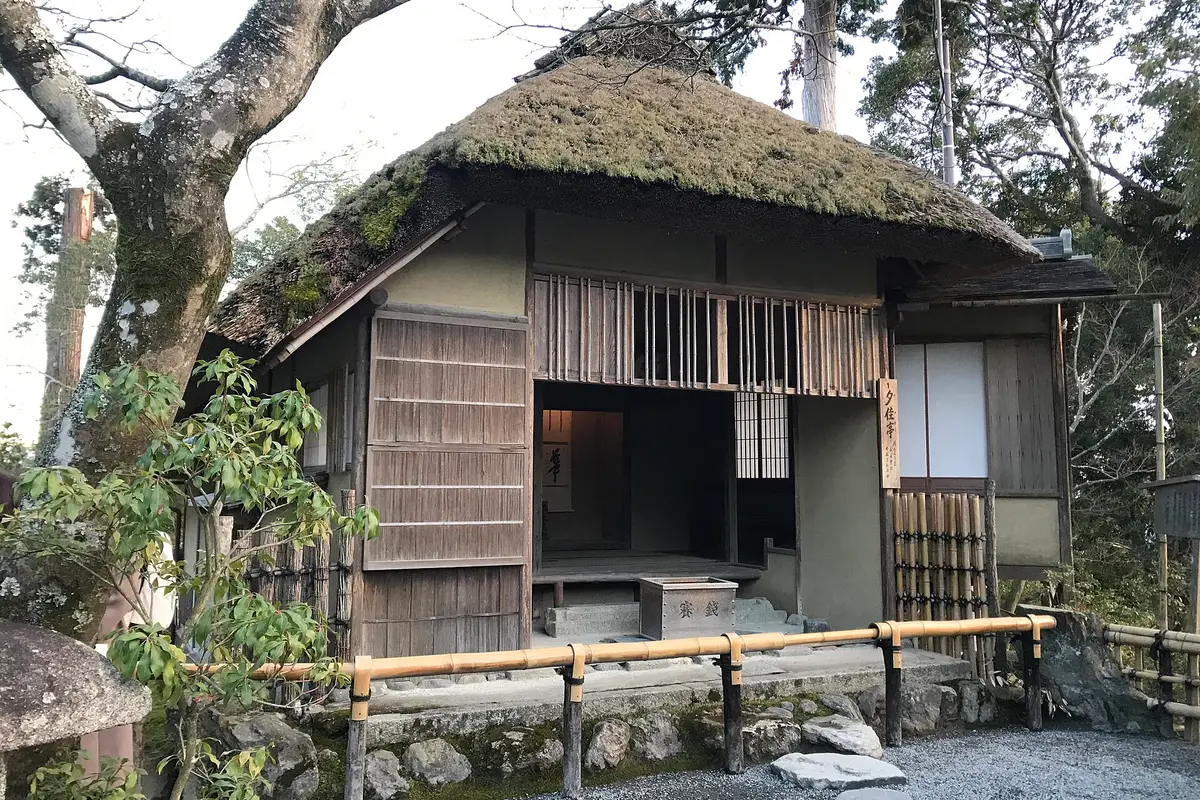
- Slow down on the back half. Most people photograph the gold and quicken toward the exit, but the garden beyond, a Special Historic Site and Special Place of Scenic Beauty, keeps going: Anmintaku, a pond said never to dry up, and Sekkatei, a little Edo-period tea house named for how fine the pavilion looks at dusk. The part almost no one photographs is the part the slow visitors remember.
Do these, and the day tends to go the way the gasping reviewers describe rather than the way the underwhelmed ones do.
And the "is it even the real one?" question
Some visitors arrive having heard the pavilion burned down, and wonder if they are looking at a replica. The fire is real history: a young monk set it alight in 1950, an event Yukio Mishima turned into one of Japan's most famous novels. The building you see was rebuilt in 1955, its gold leaf renewed in 1987. But in Japan a rebuilt sacred structure is not thought of as a copy. It is the same pavilion, carried forward: the wood is newer, the form and the meaning are continuous. That is also why it gleams the way it does. The Japanese reviewers, tellingly, never raise the question at all.
So: is Kinkaku-ji worth it? If you picture an afternoon inside a golden palace, no, and the forums will tell you so, loudly. But if you come at opening on a bright morning, take your one reflection across the Mirror Pond, and walk on to Ryōan-ji, you will have done exactly what a thousand years of visitors came to do, and what Japanese travelers quietly return for all their lives. Reset the expectation, and the gold meets you the way it meets them.
Still deciding which famous places actually earn a slot on a short trip? Start with what actually matters in Japan, and for the full walk past the Mirror Pond, the three golden floors, and the tea house almost no one reaches, the Kinkaku-ji audio guide is just below.
Sources
- Kinkaku-ji Official Site (Shōkoku-ji): the pavilion as a shariden (reliquary hall); gold leaf on the upper two floors; Kyōko-chi (Mirror Pond); the 1955 reconstruction and 1987 gold-leaf renewal; garden features (Anmintaku, Sekkatei); formal name Rokuon-ji.
- Kinkaku-ji Official: Access & Admission: hours 9:00–17:00 year-round; admission (offering) ¥500 adult / ¥300 student; the one-way route.
- Kinkaku-ji Official FAQ: you view the pavilion from outside (no public interior); photography policy.
- JNTO: Kinkaku-ji: visitor framing; the seasonal reflection on Kyōko-chi Pond.
- Kyoto City Tourism: Easy, less-crowded access to Kinkaku-ji: northwest-Kyoto location; pairing with Ryōan-ji and the subway-plus-bus route that avoids the worst crowding.
- Agency for Cultural Affairs: Rokuon-ji (Kinkaku-ji) Garden: the garden as a Special Historic Site and Special Place of Scenic Beauty.
- UNESCO World Heritage: Historic Monuments of Ancient Kyoto: 1994 inscription; Rokuon-ji as a component site.
WMJS is written in Japan, in English, with AI help. We check every page, but English is not our first language. If a sentence reads oddly, tell us. One sentence is enough.
Thank you. A person reads every note.
How well do you know Japan?
Based on 51,218+ real Japanese voices
Want to know more? Ask Japanese people
Have a follow-up question about this topic? We'll ask real Japanese people.
Voice Box →