
Mount Yoshino — The Mountain That Wears Its Prayers as Blossom
Mount Yoshino (Yoshinoyama)
By Kei · Born and raised in JapanThe Meaning
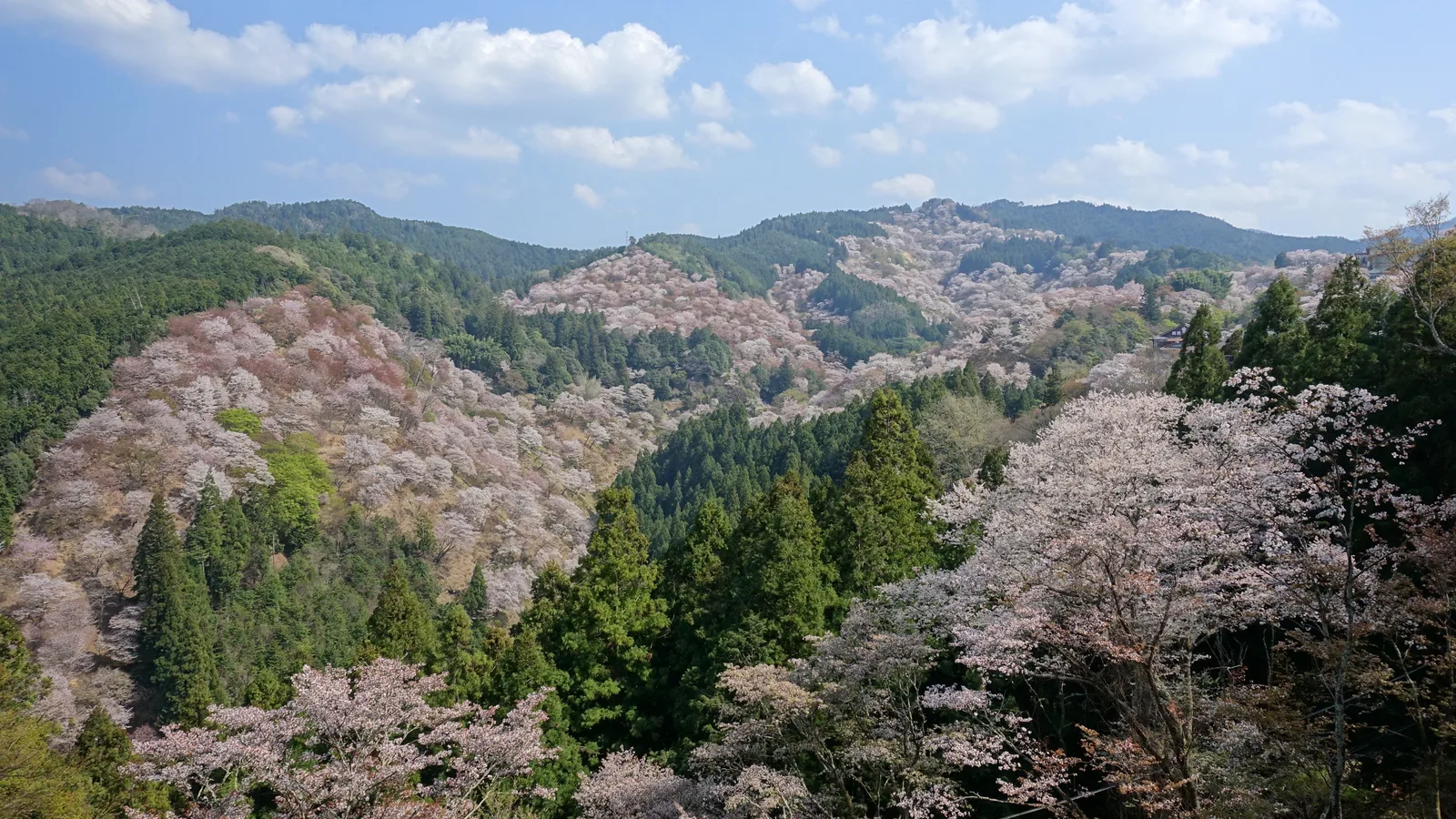
Every spring, a single mountainside south of Nara turns white with cherry blossom, some thirty thousand trees, climbing the slopes in a slow tide. Almost everyone who comes calls it Japan's most famous cherry-blossom place, and they are not wrong. But they are standing inside the answer to a question they never thought to ask: why are the trees here at all?
The mountain's own temple tells it this way. More than thirteen hundred years ago, an ascetic named En no Gyoja, the founder of Shugendo, Japan's path of mountain asceticism, is said to have meditated on this ridge until a fierce blue deity appeared to him: Zao Gongen, a guardian whose wrathful face, the temple explains, is really an expression of compassion. To fix that vision in the world, En no Gyoja is said to have carved the deity's image not from bronze or stone, but from the wood of a mountain cherry. And so, on this mountain, the cherry became a sacred tree.
That is the part the guidebooks leave out, and it changes everything you will see. Because the cherry was holy, pilgrims began to plant it. For century after century, believers donated cherry trees to Yoshino as an act of faith, a living offering left on the slope of the god who lived there. The thirty thousand trees are not landscaping. They are thirteen hundred years of prayer, made visible, one sapling at a time, until an entire mountain came to flower.
There is one more thing the mountain does that no single tree can. The cherries were set, over the centuries, in four broad bands at rising heights: Shimo, Naka, Kami and Oku-senbon, lower to deepest. Because higher ground stays colder longer, the bloom opens at the bottom first and climbs, over roughly three weeks, toward the top. The same wave that sweeps the whole country from the warm south to the cool north each spring, Yoshino performs in miniature, on one hillside, in slow motion. You don't just see the blossom here. You watch it move.
What Happens When You're There
Step 1: Up the Sacred Mountain: Leaving the world below
You arrive from the plain. From Osaka, a single Kintetsu train runs straight south to Yoshino Station, the city loosening into river valleys and wooded hills along the way; from Kyoto or Nara you change once and come in the same direction. Either way, the ordinary railway delivers you to the foot of the mountain and then politely stops, because the mountain is where the walking, and the climbing, begins.
From the station you have a choice that sets the tone of the day. You can walk up the old switchback slope into the lower groves in about twenty minutes, or you can ride the little cable car that hangs just beyond the station: the Yoshino Ropeway, the oldest of its kind still running in Japan, opened in 1929, hauling its twenty-eight passengers up to the first band of cherries in around three minutes. Both arrive at the same place: Shimo-senbon, the lower thousand, where the town and the blossom begin together.
Look closely at the flowers as you rise, because they are not the ones you may have met in Tokyo or Kyoto. The city's famous somei-yoshino are a pale pink and bloom on bare branches; Yoshino's are mostly shiroyama-zakura, the white mountain cherry, which opens its blossom and its first copper-green leaves at the same time. The effect is softer, paler, wilder: a hillside not of candy-pink clouds but of white smoke drifting up through the trees. It is the older face of the Japanese cherry, and it is the one the pilgrims planted.
Step 2: The Heart of the Mountain: Kinpusen-ji and the blue deity
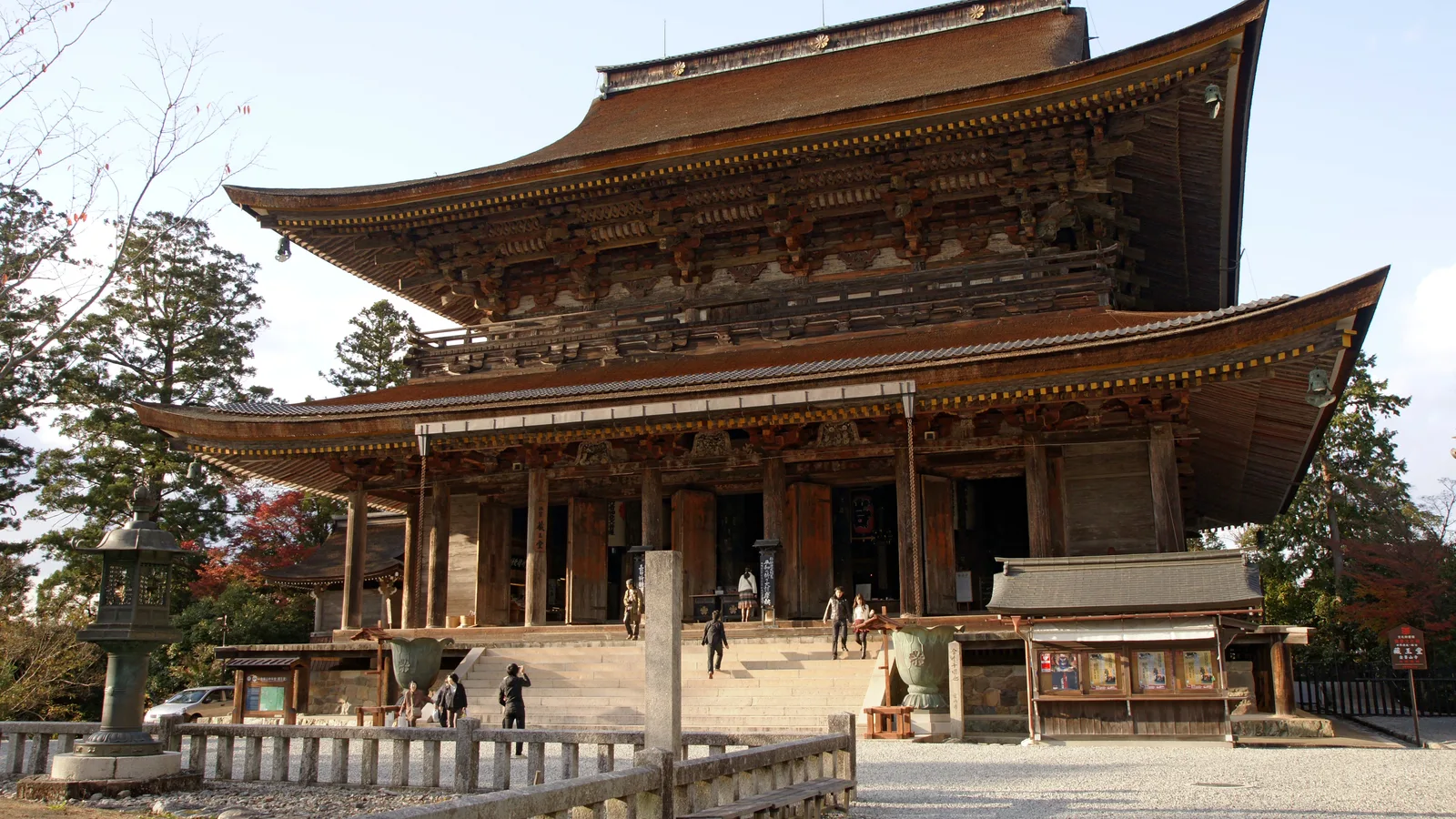
A short way up from the lower groves stands the building that explains the whole mountain: the Zaodo, the main hall of Kinpusen-ji, head temple of Yoshino's Shugendo. It is a staggering thing to come upon among the trees: a single wooden hall thirty-four meters tall, the second-largest traditional wooden building in all of Japan after the Great Buddha Hall at Todai-ji in Nara. The structure you see was rebuilt in 1592, and it is registered as a National Treasure and part of a UNESCO World Heritage site.
Inside, in the dim, wait the three figures En no Gyoja is said to have seen: three statues of Zao Gongen, each over seven meters tall, their bodies painted a deep blue-black. They are kept as hidden images, shown to the public only at certain times of the year, so you may or may not meet their gaze on the day you come. But standing beneath the hall that holds them, something quietly clicks into place. This is the deity the cherry was carved to embody. The blossom outside and the blue giant within are the same act of devotion, thirteen centuries apart. If you would like the simple form of how Japanese people approach a temple or shrine before you step in, we cover it on its own; here, a slow look and an unhurried pace are enough.
Kinpusen-ji is also a doorway. Behind it begins the Omine Okugake, the hardest of the old ascetic trails, which runs the spine of the mountains all the way south to Kumano, the path En no Gyoja is said to have walked and which mountain ascetics still walk today. Yoshino is its northern gate. You are standing not at a viewpoint but at the beginning of a thousand-year-old road.
Step 3: A Thousand Trees at a Glance: Yoshimizu and the great view
Walk on into Naka-senbon, the middle band, and the mountain offers up its single most famous sight. From the grounds of Yoshimizu Shrine, itself a World Heritage building, the slope falls away and rises again opposite, and the cherries of the middle and upper bands fill the whole frame at once. The Japanese name for the view says it plainly: hitome-senbon, "a thousand trees at a glance." By tradition the warlord Toyotomi Hideyoshi is said to have made this very spot his base for a celebrated cherry-viewing party in 1594.
It is worth pausing on what you are actually looking at. Every one of those thousand trees was, at some point, carried up and planted as an offering. The view is not a garden someone designed; it is the sum of countless small acts of faith, seen all together from one hillside. A little higher, in Kami-senbon, the Hanayagura lookout opens the widest view of all, back across the ridge, the town, and the white tide of blossom below.
This is also where the crowds gather, because everyone wants the same photograph. If you came for the quiet inside the spectacle, the answer is the hour: the slope that is shoulder-to-shoulder at midday is almost still in the first hour after dawn. A moment's awareness of the people around you while you take that photo goes a long way here.
Step 4: The Bloom Climbs the Mountain: reading the relay
Here is the thing about Yoshino that surprises every first-time visitor, and it is worth understanding before you fix your date. The four bands do not flower together. The bloom starts low, in Shimo-senbon, usually in early April, and then climbs through middle, upper, and finally the deep upper groves of Oku-senbon, which can run a week or more behind the base and often hold their flowers into mid-or-late April. On a single day in the season, you might find the lower slopes already drifting to green while the top is still in tight bud.
Travelers sometimes arrive anxious that they have mistimed it. Almost no one truly has. If the lower band is past, you simply walk higher into the bloom; if the famous middle view has gone to leaf, the deepest groves are very often just beginning. The mountain is built so that the season has somewhere to hide, and that, rather than a flaw, is the whole gift of the place. The locals know to read the bloom band by band, not all at once, and there are official day-by-day reports for exactly when each level is flowering (see the practical notes below). You don't need the whole mountain in bloom on your day. You need one band, and there is almost always one.
Step 5: The Quiet Top: Oku-senbon, and why the mountain leaves the question with you
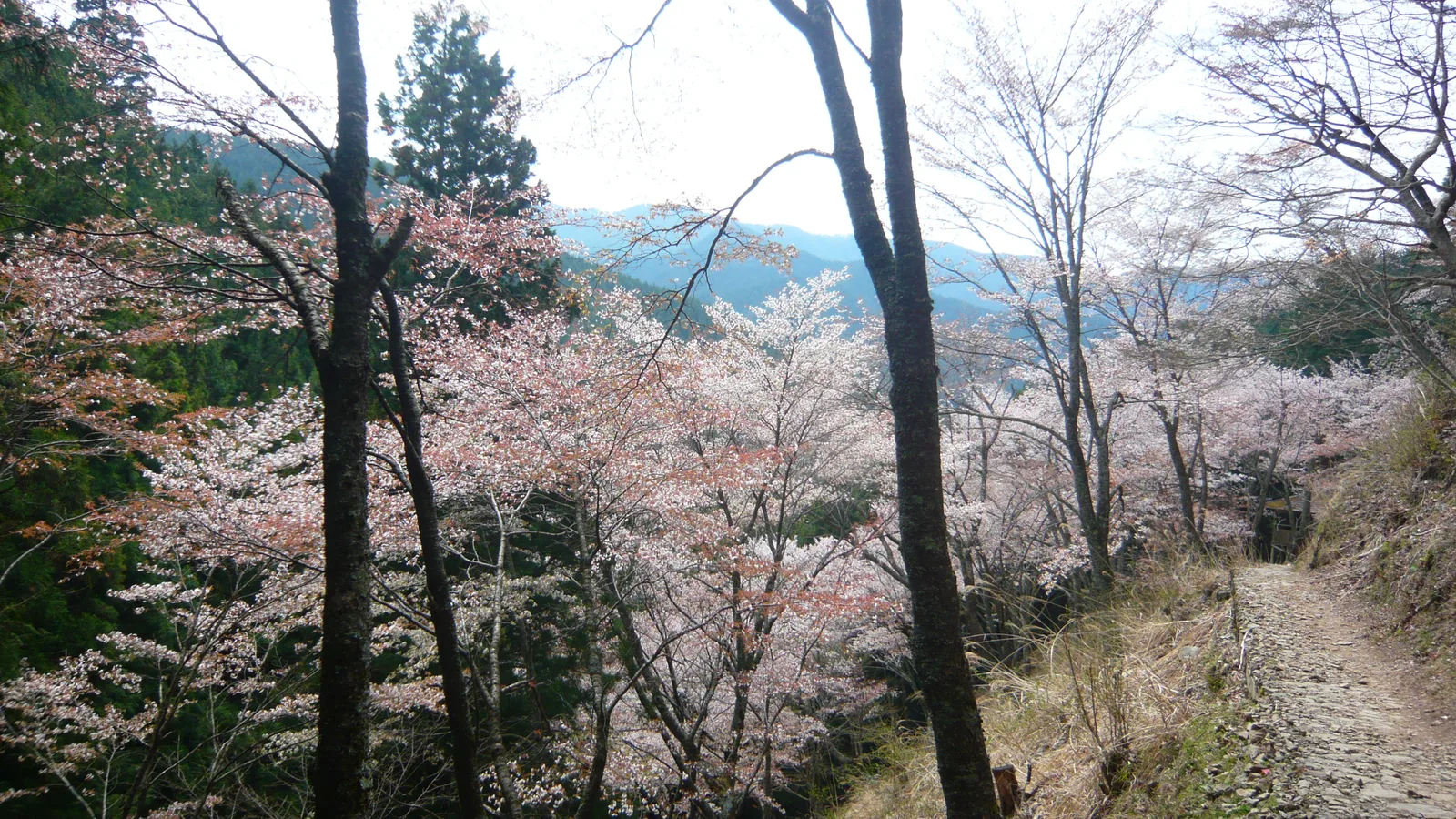
Keep climbing, past where most of the day-trippers turn back, and Yoshino changes character. Oku-senbon, the innermost thousand, is higher, cooler, and far quieter: the cherries thinner among the cedars, the paths emptier, the whole noise of the festival below falling away. This is where the poet-monk Saigyo is said to have built a small hermitage and lived for some years among these trees, eight and a half centuries ago, writing the cherry-blossom verses that Japan still knows by heart. Stand where he stood and it is easy to see why a person might stay.
And it is here, in the quiet at the top, that the question the mountain has been holding finally comes round. Why did a place of prayer, a hard ascetic mountain, a road of mountain monks toward Kumano, become the most beloved flower-viewing spot in the country? The temple would not separate the two. The blossom is the prayer; the prayer grew the blossom. The hundreds of thousands of people who climb here each spring for a photograph are, whether they know it or not, walking through thirteen centuries of devotion in full flower. The mountain does not explain this to you. It simply lets you stand inside it, and trusts you to feel the difference. The walk back down, into the trains, and the crowds, and the season that will be gone in a week, is a good time to carry the question with you.
Good to Know
Getting there: Yoshino sits at the end of the Kintetsu railway, south of Nara. From Osaka-Abenobashi a direct limited express reaches Yoshino Station in about 75 minutes; from Kyoto or Nara you change once at Kashiharajingu-mae and come in from there (roughly two hours from Kyoto). The sightseeing express Aoniyoshi's southern cousin, the Blue Symphony, runs Osaka-Abenobashi to Yoshino on most days except Wednesday and needs a reservation. Note that it, like all Kintetsu trains, is not covered by the Japan Rail Pass, since Kintetsu is a private railway. For the bigger picture of trains and transfers, see getting around Japan.
Book early, in both directions: In cherry season the reserved-seat limited expresses sell out as much as a month ahead (they open for booking one month before departure), so reserve as soon as you can, and reserve your return seat too. Without it, a long day on the slopes can end in standing the whole way back to Osaka or Kyoto. If the express is full, the ordinary trains (changing at Kashiharajingu-mae) still get you there.
Up the mountain: From Yoshino Station you can walk up the old slope to the lower groves in about twenty minutes, or take the Yoshino Ropeway (Japan's oldest, about a three-minute ride, around ¥500 one way) up to Shimo-senbon. The ropeway runs daily during the cherry season but on a reduced, day-of-the-week schedule the rest of the year (with a replacement bus on its off days), so check the operator's current calendar before you rely on it. In peak season, extra buses also run from the station up toward the middle and upper slopes; schedules and fares are posted on the town's official cherry-season transport page.
When to go, and reading the bloom: The bands flower in turn from the base upward, generally across early to late April, with Oku-senbon last. Because the timing shifts every year with the weather, don't bet your trip on a single date. Check the official day-by-day bloom reports from Yoshino Town and the Yoshino Tourist Association about a week out to see which band will be at its peak when you come. For the wider question of when in the year to visit Japan, we cover that separately.
Visiting Kinpusen-ji: The Zaodo hall is generally open 8:30–16:00, with an admission fee (around ¥800 in normal season, more during the special unveilings of the Zao Gongen statues in spring and autumn). The three statues are hidden images shown only at set times each year, so check the temple's site if seeing them matters to you. Dates and fees change, so confirm before you go.
Crowds and the early hour: A sunny weekend at full bloom is the most crowded the mountain gets. The single best move is to arrive early: the famous viewpoints that are packed by mid-morning are nearly empty in the first hour, and the early local trains are far calmer than the ones after nine. Staying overnight on the mountain (see below) buys you that dawn quiet without a pre-dawn journey.
Staying overnight: The mountain town has ryokan inns and temple lodgings strung along its single road, and a night here turns Yoshino into a different place: lantern-lit blossom in the evening, an almost empty mountain at first light, and a gentle rural pause after the cities. Book ahead for the season. A small honest note: this is a living, working hill town, not a frozen historical set, and power lines and everyday buildings share the view with the cherries. If you'd like to understand what staying at a ryokan is really like, we cover it on its own.
Off-season: Outside the bloom, Yoshino is a quiet mountain town with a sacred heart that never closes. The slopes turn to fresh green in summer (when you may glimpse white-clad Shugendo ascetics on their way to the trails), to autumn colour from late October into late November with none of April's crowds, and to deep stillness in winter. The cherries are the headline, but the mountain, its temple, its thousand-year road, is there all year.
How long you need: The lower and middle bands, with Kinpusen-ji and the Yoshimizu view, make a comfortable half-day of three to four hours on foot; adding the upper and inner groves stretches it toward a full day, plus roughly two hours' travel each way. You do not need to reach the very top to have seen Yoshino; many regulars will tell you the middle band is the heart of it.
Last verified: 2026-06
Official websites: Kinpusen-ji (temple) and Yoshino Tourist Association (bloom status & access)
If Things Don't Go as Planned
The bloom is past, or not yet open, on the band you'd planned to see. This is the most common worry at Yoshino, and the mountain is built for it. The four bands flower in sequence up the slope, so if the lower groves have gone to leaf, walk higher; the upper and inner bands run days to a week behind. Check the official day-by-day bloom reports before you go and aim for whichever band will be at its peak. You came for cherry blossom, and on this mountain there is almost always a band in bloom.
The limited express was sold out. Reserved seats vanish up to a month ahead in season, but you are not stuck. The ordinary Kintetsu trains, with one change at Kashiharajingu-mae, run the same route without a reservation. Just allow a little more time, and book your seats the moment your dates are firm, return trip included.
It's wall-to-wall people at the famous viewpoint. The crowds are real at peak bloom, and they are also beatable. The same slope is hushed in the first hour after dawn and busy by mid-morning, so the earlier you start the more of the mountain is yours. An overnight stay makes the early hour effortless. (For the bigger picture of Japan's busy spots and how locals navigate them, we look at that on its own.)
You can only come for the day, and the journey feels long. It is doable: the lower and middle bands hold the heart of Yoshino and fit comfortably into a daytime visit. Just reserve both train legs, start early, and don't feel you must reach Oku-senbon to have done it properly. The middle band and the Yoshimizu view are, for many, the best of the mountain.
You arrived outside cherry season and feel you've missed it. You've found a different Yoshino, not a lesser one. The temple, the great Zaodo hall, and the thousand-year pilgrim road are there all year, the summer slopes are green and quiet, and the autumn colour rivals the spring with none of the crowds. A bow at the hall and an unhurried walk are reward enough, and a simple bow at a temple gate is a small thing that means a lot here.
The town looks more ordinary than the photos promised. Yoshino is a living mountain village, not a preserved museum, so yes, there are power lines, shops, and everyday houses among the blossom. Read it not as a film set but as a place where people have lived alongside a sacred mountain for over a thousand years, and the everyday detail becomes part of what makes it real.
Sources:
- Kinpusen-ji: Official (English): En no Gyoja (634–701) and the founding of Shugendo, Zao Gongen, the Zaodo as the second-largest wooden building in Japan after Todai-ji (rebuilt 1592), statues shown only occasionally, Yoshino as the northern gate of the Omine ascetic route
- Kinpusen-ji: About / 蔵王堂・役行者・金剛蔵王権現 (Japanese): En no Gyoja carving Zao Gongen's image into a mountain cherry as the founding of the temple and of Shugendo (recorded as belief, "と伝えられています"), Zaodo as National Treasure (34 m), the three blue Zao Gongen statues, World Heritage status
- Kinpusen-ji: Three Great Festivals / 三大行事 (Japanese): the Hanaku-eshiki (April 10–12), which reports the full bloom of the sacred mountain cherry, Zao Gongen's sacred tree, to the deity
- Kinpusen-ji: Admission & Hours / 拝観料 (Japanese): Zaodo opening hours (8:30–16:00) and admission fees, including the special-unveiling rate
- Japan Tourism Agency: Multilingual Commentary Database: Yoshino (English): En no Gyoja carving Zao Gongen from cherrywood, cherries revered for their role in Shugendo's founding, later generations of believers continuing the tradition of donating sacred cherry trees, ~30,000 trees, shiroyama-zakura (white mountain cherry)
- JNTO / Travel Japan: Mt. Yoshino: ~30,000 cherry trees, the lower/middle/upper/inner sections, Yoshino as a central site of Shugendo, Yoshimizu Shrine and the area's shrines
- JNTO / Travel Japan: Kinpusenji Temple: three blue Zao Gongen statues about seven meters tall, the Zaodo as the second-largest wooden structure in Japan
- JNTO / Travel Japan: Sacred Sites and Pilgrimage Routes in the Kii Mountain Range (World Heritage): Yoshino and Omine as one of three sacred sites inscribed in 2004, the Omine Okugake pilgrimage route, the April ritual offering cherry blossoms
- Yoshimizu Shrine: Official (Japanese): the hitome-senbon ("a thousand trees at a glance") view over the middle and upper bands; Toyotomi Hideyoshi's 1594 cherry-viewing
- Yoshino Tourist Association: Official (Japanese): the four bands blooming in altitude order, ~30,000 trees of ~200 varieties, bloom-status reporting, access and the mountain walk
- Yoshino Town: Cherry-season information (Japanese): day-by-day bloom reports for each band, cherry-season buses and traffic information
- Yoshino Omine Cable (Yoshino Ropeway): Official (Japanese): Japan's oldest surviving ropeway (opened 1929), the Senbonguchi–Yoshinoyama line (~3 minutes, ~¥500 one way), seasonal and weekday operating calendar
- Kintetsu Railway: Blue Symphony / 青の交響曲 (Japanese): Osaka-Abenobashi–Yoshino direct service, runs except Wednesdays, reservation required
Image credits: Hero and thumbnail: photo by Luka Peternel (Wikimedia Commons, CC BY-SA 4.0). Kinpusen-ji Zaodo: photo by 663highland (Wikimedia Commons, CC BY 2.5). Oku-senbon path: photo by Nankou Oronain (Wikimedia Commons, CC BY-SA 3.0).
WMJS is written in Japan, in English, with AI help. We check every page, but English is not our first language. If a sentence reads oddly, tell us. One sentence is enough.
Thank you. A person reads every note.
Were you there? Share your photos.
Your photo could appear in this guide — with your name and a link to your profile.
Submit a photoRelated Articles
Visiting Temples and Shrines: What Japanese People Notice
Autumn Leaves in Japan: What Locals Really Feel When You Come for Koyo
More guides in Kansai
Arashiyama — Why Japan Lists This Bamboo Grove Among the Sounds Worth Saving
An audio cultural guide to Arashiyama in Kyoto, verified against official sources. Understand why Japan lists the bamboo of Sagano among the sounds it wants to keep, how the Moon-Crossing Bridge earned its name, and how to walk the river, the grove, and Tenryu-ji's borrowed-mountain garden away from the crowds.
Arashiyama
Fushimi Inari Taisha: Ten Thousand Gates, Each One a Thank-You
The ten thousand vermilion gates at Fushimi Inari are thank-you notes you can walk through. A cultural audio guide verified against official sources: why the foxes are messengers not gods, why the summit has no view, and how to walk past the crowds.
Fushimi Inari Taisha
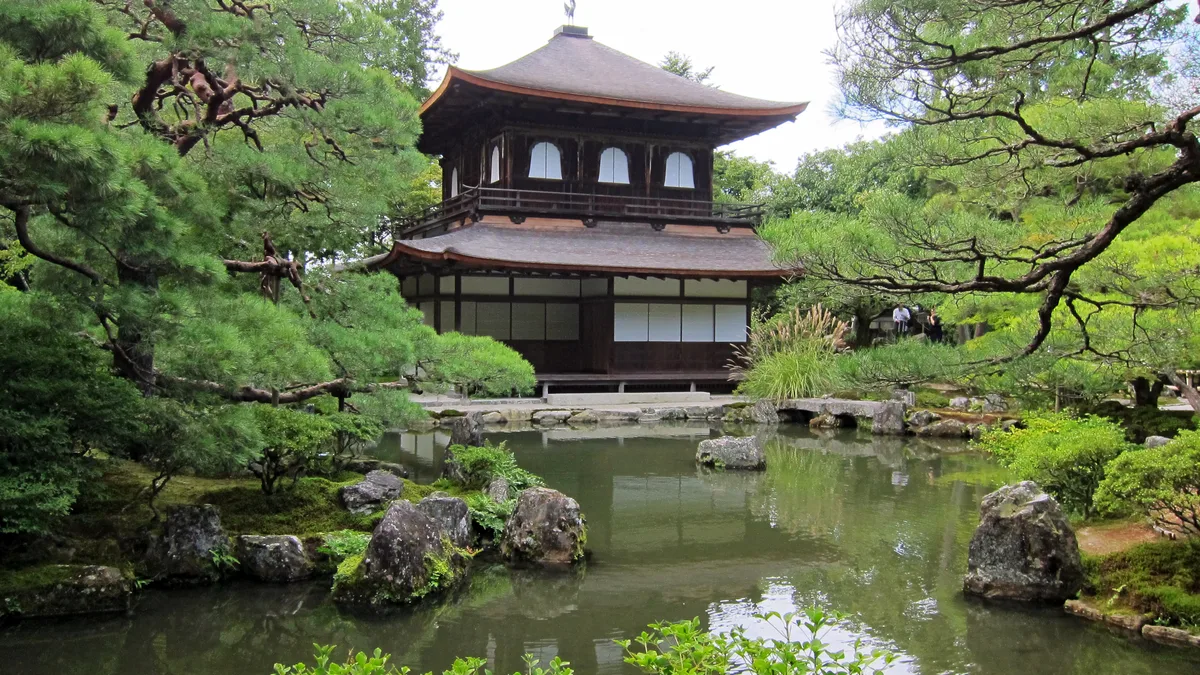
Ginkaku-ji — Why the Silver Pavilion Has No Silver, and Why Japan Finds That Beautiful
Why the Silver Pavilion has no silver — a free audio guide to Ginkaku-ji, Kyoto, verified against official temple sources. Higashiyama culture and the art of restraint, the sea of silver sand, hours, admission (1,000 yen), access from Kyoto Station, and the Philosopher's Path.
Ginkaku-ji (Jishō-ji)
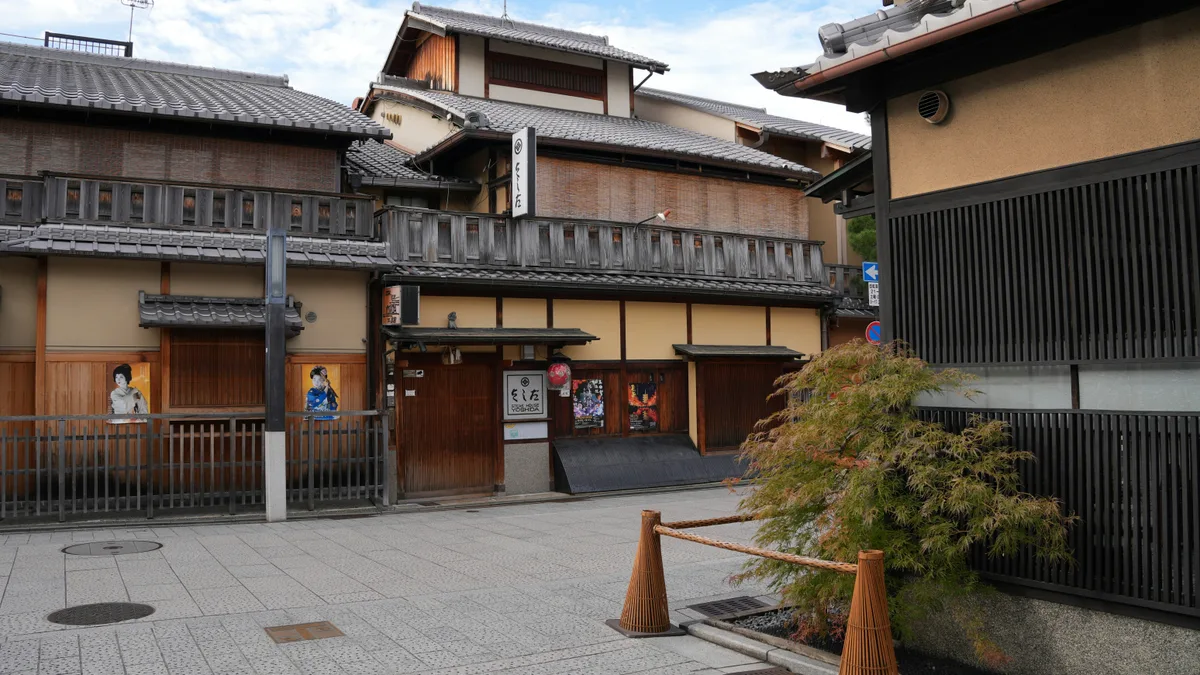
Gion — Walking Kyoto's Flower District, a Town That Is Still Lived In
An audio guide to Kyoto's Gion flower district: what geiko and maiko really are, the walk from Yasaka Shrine through Hanamikoji to the Shirakawa canal, when to go, and how to enjoy a town still lived in.
Gion