
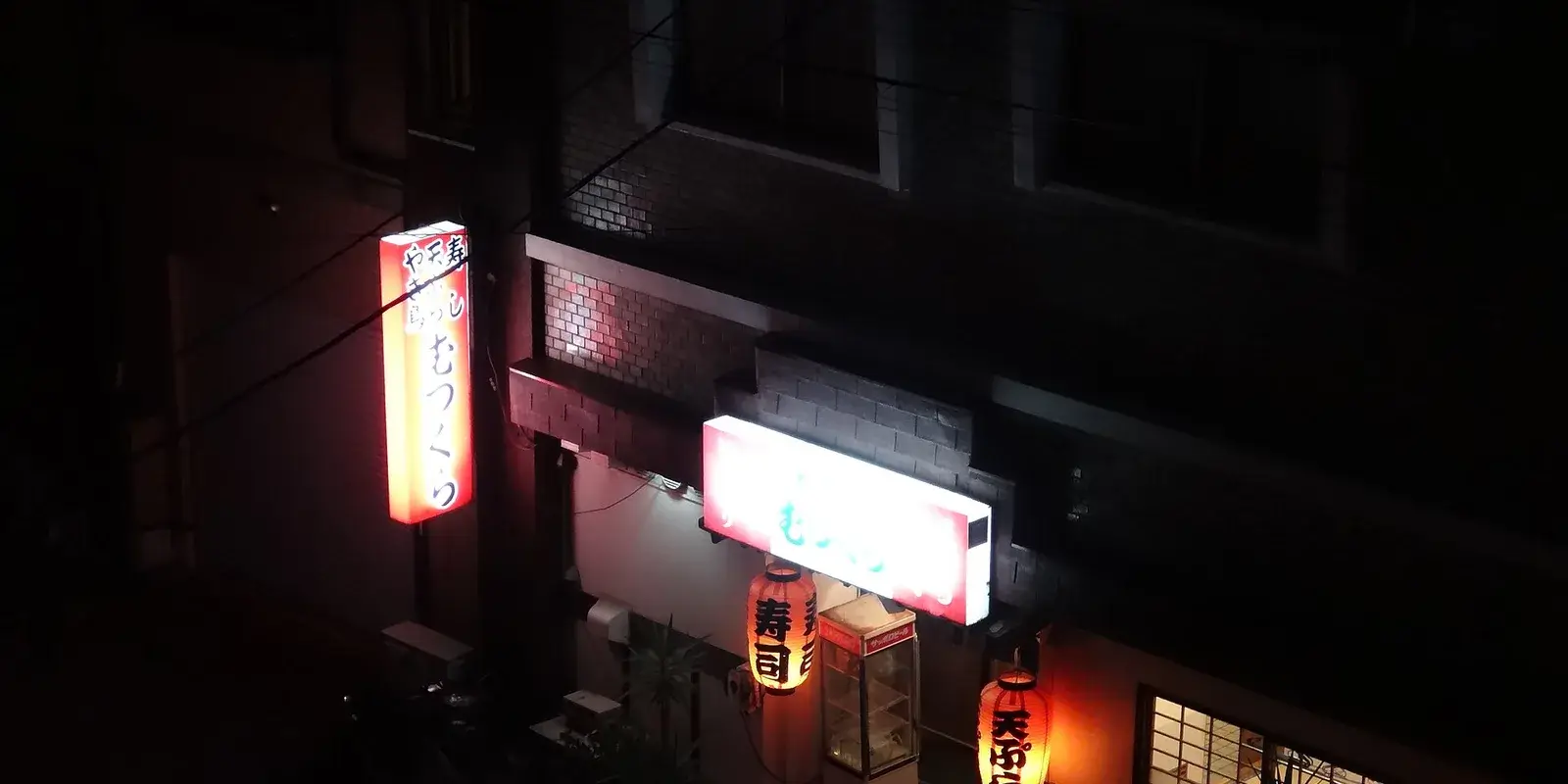
Your First Izakaya: A Friendly Guide to Japan's Favorite Way to Eat
What you'll learn in this article:
- What 381 Japanese people said about izakaya: entering, ordering, otoshi, and the "torirae beer" tradition
- Why even Japanese people get nervous walking into a new izakaya for the first time
- The four small things that determine whether your first izakaya feels welcoming or stressful
So you want to try an izakaya. Good choice. It's where Japan really relaxes. Conversations get louder, jackets come off, and food comes out one small dish at a time.
One thing nobody mentions: even Japanese people get nervous the first time they walk into an unfamiliar izakaya. The noren curtain hanging in the doorway, the warm light spilling out, the laughter inside: all of it can feel like walking into someone else's living room uninvited.
We collected 381 honest opinions from Japanese people across five izakaya situations: the first-step nerves, the mysterious otoshi appetizer, the rapid-fire ordering culture, the famous "torirae beer," and how attitudes are changing across generations. The results? Far warmer than you'd expect, and more relatable than you might think.
Let's walk through it together.
Quick Guide
| Situation | What Japanese People Said | |
|---|---|---|
| 🟢 Relax | Calling the staff with "Sumimasen!" | 65% of Japanese voices were positive. Staff are happy when you try. A nod and a small wave works just as well as shouting. |
| 🟡 Good to know | Otoshi (the small dish you didn't order) | This isn't a scam. It's a seat charge in disguise. Even Japanese people are split on whether they like it. The custom isn't going anywhere soon. |
| 🟡 Good to know | "Torirae beer" (let's start with beer) | Once a near-rule, now genuinely optional. 74% of Japanese voices were neutral or negative on the custom. Order whatever you want for round one. |
| 🟢 Relax | Standing nervously at the door | You're in good company. 49% of Japanese people in our data also said entering an unfamiliar izakaya makes them nervous. A famous Japanese actor admitted he still gets nervous too. |
The one thing to remember: An izakaya isn't a test. The staff aren't judging your Japanese, your drink choice, or your hesitation at the door. They're just glad you came in. The fact that you're reading this article already means you'll do fine.
What should you know before your first izakaya? We read what 381 Japanese people wrote. The most reassuring finding: 49% of Japanese people themselves feel nervous entering an unfamiliar izakaya. Otoshi is simply a cover charge served as food (usually under 600 yen), "toriaezu beer" is no longer mandatory (only 26% still defend it), and 65% of staff appreciate when you call out "sumimasen" or make eye contact. The izakaya is a shared moment of small courage, and the door opens from both sides.
How We Gathered These Voices
We collected 381 Japanese-language responses across five izakaya topics: the nervous first step (102 responses), reactions to otoshi (78 responses), staff and customer perspectives on ordering (74 responses), feelings about the "torirae beer" custom (72 responses), and generational differences (55 responses). We gathered these voices from public Japanese Q&A sites, forums, and social posts, along with reporting from Diamond Online, Maneypost, Sirabee, and Japanese restaurant industry publications.
A quick note: This isn't a scientific survey. It's a collection of what real Japanese people said in their own words, in their own language, on public platforms. Most travel guides explain how an izakaya works on the surface. We wanted to show you what Japanese people actually feel, including the surprisingly warm fact that they share many of the same nerves you do.
First, the Empathy Hub: Even Japanese People Feel This
Before we get into the practical stuff, here's the most important finding from our research, and the one that surprised us most.
Of 102 Japanese voices about entering an unfamiliar izakaya:
A well-known Japanese izakaya writer put it like this:
誰だって、初めて入る酒場は緊張します。「気になる店があったけど、勇気がなくて入れなかった」という話をよく聞きますが、当然のことだと思います。 Anyone gets nervous entering a bar for the first time. I often hear people say "there was a place I wanted to try, but I couldn't work up the courage." That feeling is completely natural. (Nayu Shiomi, izakaya writer)
A food illustrator confessed something even more striking:
自分みたいな人が行って良いお店なのか分からなくて、来店するまで1年かかりました。 I wasn't sure if someone like me would even be welcome there. It took me a full year before I finally went in. (Cucina Kameyama, illustrator)
A year. To go to a restaurant. In their own country.
Even the actor Takuzō Kadono, known for his deep love of izakaya, admitted that he still feels the hesitation:
知らない酒場はどうも入りづらいもの。怖い店主がいるのではないか。常連ばかりじゃないだろうか。場違いではないだろうか。 An unknown bar is genuinely hard to walk into. What if the owner is intimidating? What if everyone's a regular? What if I don't belong? (Takuzō Kadono, actor)
And here's the part that might be the most reassuring of all: it's not just customers feeling this way. Even bar owners feel it:
やっぱりね、一見のお客さんがくると緊張するんですよ、ぼくでも。どんな人なんだろう、なにを求めてるんだろうと、第一声を聞くまでは、神経を張り詰めます。 Honestly, when a first-time customer comes in, I get nervous too. I'm tense until they speak, wondering who they are, what they're looking for. (Izakaya owner)
So the next time you find yourself standing outside an izakaya, hesitating, know that the person inside might be hesitating too. And both of you are about to relax once you meet. This shared nervousness mirrors what we found in our article about whether Japanese people actually want to meet you: the answer, overwhelmingly, is yes.
💡 The bar door is a shared moment
49% of Japanese people say walking into an unfamiliar izakaya makes them nervous. The owners feel it too. The bar door isn't a barrier between insider and outsider. It's a shared moment of small courage that both sides cross together.
A Tip From a Japanese Regular
The actor Kadono offered one practical rule that might help:
ひとつ、自分のルールがあります。それは「のれんが掛かるまでは絶対に入らない」こと。のれんが掛かるということは「準備ができました」というお店の合図。 I have one personal rule: never go in until the noren curtain is hanging. The noren going up means "we're ready": the shop's signal. (Takuzō Kadono, actor)
If the noren is up, the shop is open and ready. If you see a place with no noren outside, give them a few more minutes. That single signal removes a lot of the guesswork.
A Belgian regular at Japanese izakaya offered another piece of warmth:
おしゃべり好きの店主や女将さんがいるお店ってあるじゃないですか。積極的に話しかけてくれると、私たちの緊張もほぐれるのでいいなって思います。 Some shops have chatty owners or okami-san (the woman of the house) who'll talk to you. When they reach out first, it really helps our nerves settle. (Gail, Belgian regular)
That's worth knowing. Many izakaya owners want to talk to you. They're just not sure if you want to talk back.
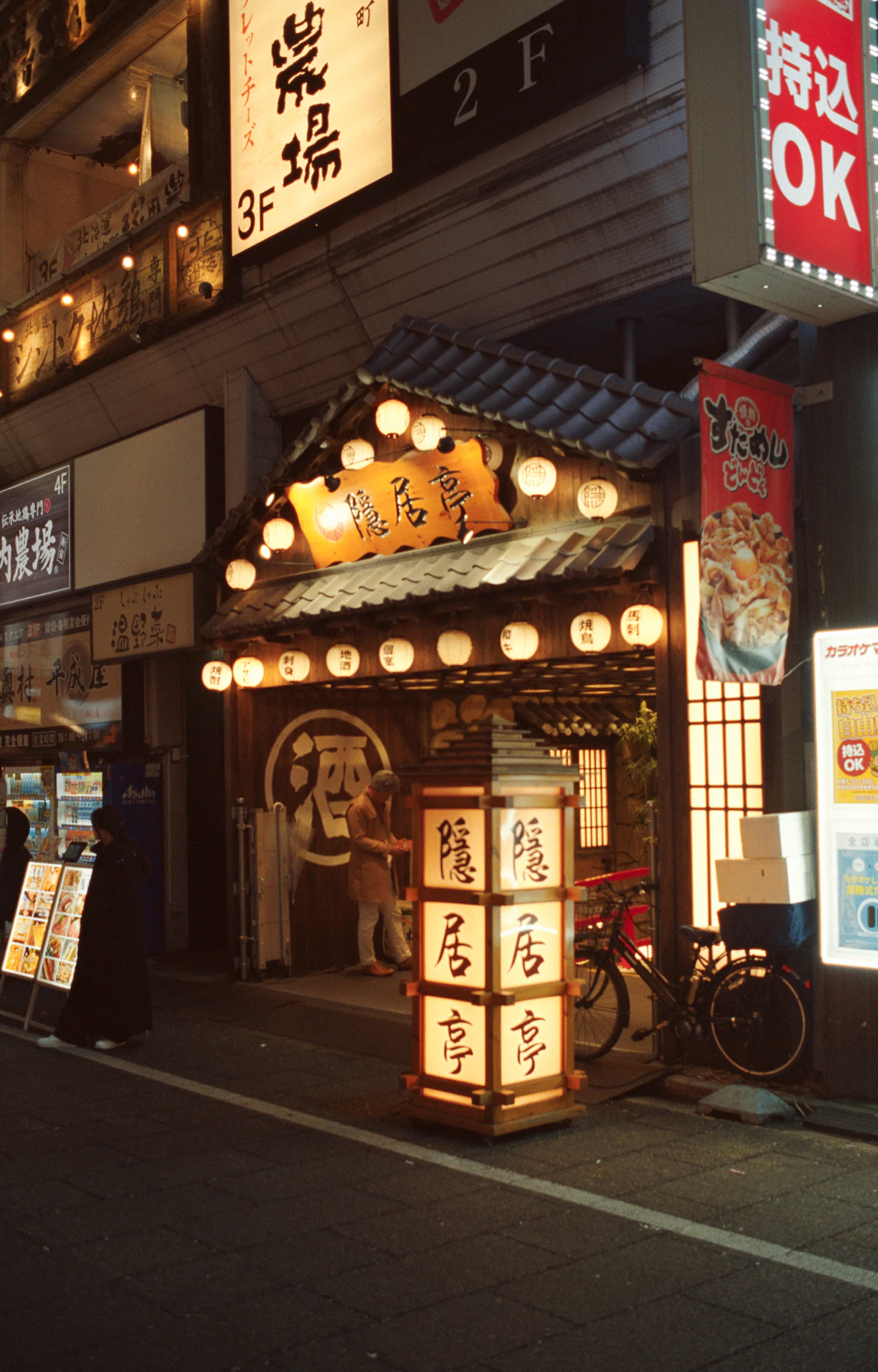
What Actually Happens Inside: The Temperature Gauge
Now that you've made it through the door, here's what's waiting for you. Three small situations, three different temperatures.
🟢 The "Sumimasen!" That Earns Goodwill
Calling out to staff is one of the most welcomed things a foreign customer can do.
You may have read that "Japanese staff won't come unless you call them." That's roughly true: Japanese restaurants generally expect customers to flag staff over rather than have a server hovering. The good news: the system is simpler than you'd think, and Japanese people overwhelmingly love when foreign customers participate.
Of 74 responses about calling staff and ordering:
65% positive. That's one of the warmest reactions across all our izakaya research. Restaurant workers themselves came forward to explain how the system actually feels from the inside:
飲食店勤務です。1.目があった時に頷く。2.軽く手を上げる このどちらかで呼ばれていると気づきます。 I work in a restaurant. (1) Nod when our eyes meet. (2) Raise your hand gently. Either of these tells me you need something. (Restaurant worker)
気取らない店だったら、大きめの声で「すいませ〜ん」と言えばいい。大きな声出すのが憚られる店だったら、店員に目を合わせて手を挙げる。これが基本ですね。 In a casual place, just call out "sumimaseeen" loud and clear. In a quieter place, catch the staff's eye and raise your hand. That's the basic rule.
There's even acoustic science behind it. A researcher from the Japan Acoustics Lab explained why some Japanese people prefer "onegai-shimasu" over "sumimasen":
「お願いします」を多用しています。母音の「お」ではじまるために音圧が稼げること、途中の「が」では「G」の子音にノイズとは異なる刺激があり、「すいません」よりも格段に気づいてもらえるようになりました。 I use "onegai-shimasu" a lot. It starts with "o" which projects further, and the hard "g" consonant cuts through background noise better than "sumimasen." (Sō Suzuki, Japan Acoustics Lab)
But honestly? Both work. The magic isn't in the exact word. It's in the eye contact. A magazine on Japanese hospitality summed up what staff are really watching for:
お客さんがこちらを見ているかどうかで判断してますね。声が聞こえて振り向いても、誰もこちらを見ていなければ誰が言ったのか分からないため、「気のせいかな?」と思ってしまうこともあります。 We judge by whether the customer is looking at us. If we hear a voice and turn but nobody's facing us, we genuinely wonder if we imagined it.
In other words: look at the staff member you want to call. They'll come. And if you want to know more about why words like "sumimasen" carry so much weight, our article on trying to speak Japanese dives deep into the reactions.
What about the things that do bother staff? A few patterns showed up. The biggest:
はい、めちゃくちゃやかましいです。飲食店員は「音」に反応します。聞こえていないのではなく「手が離せなくて行けない」という場合が多々あります。連打はただやかましいだけです。 Yes, hammering the call button is incredibly annoying. We hear it the first time — we just can't come right now. Pressing it repeatedly only makes it grating.
If your table has a call button, press it once. The staff heard you. They're coming.
Japan's izakaya culture has a depth that extends well beyond any single visit. The neighborhood counter bars that generations of locals have called their second living rooms are the subject of a quiet social transformation explored in what's happening to Japan's neighborhood izakaya. Understanding that history makes the warmth of a well-worn counter even more meaningful.
And here's something American customer V (a long-term resident in Japan) said about the experience overall:
居酒屋入ると、一人のスタッフがいらっしゃいませー!って言ったら、奥にいる人も全員いらっしゃいませー!って言うじゃん。最初のうちは慣れなくてびっくりしてたけど、今は嬉しいな。 When you walk into an izakaya and one staff member shouts "irasshaimase!" — every other staff member echoes it back. At first it shocked me, but now I love it. (V, American resident in Japan)
居酒屋のタッチパネル。あれは本当にすごいよ!ほとんどの料理が写真入りで表示されているから、どんな料理がくるか不安にならないよ。 The izakaya touch panel: it's incredible. Almost every dish has a photo, so you never have to wonder what's coming. (V, American resident in Japan)
If your izakaya has a touch panel, you've already won. Photos, English, and no Japanese needed.
💡 The trick isn't volume: it's eye contact
Restaurant workers say it again and again in their posts: a nod, a small raised hand, or a quiet "sumimasen" all work. The magic ingredient is making sure the staff can see that you're looking at them. That's the actual signal.
🟡 The Otoshi Mystery: That Small Dish You Didn't Order
You sit down. A small dish appears. You didn't order it. You'll be charged for it.
Welcome to otoshi (お通し), also called tsukidashi, one of the most genuinely confusing Japanese restaurant customs for foreign visitors. And here's something that might surprise you: many Japanese people aren't entirely happy with it either.
Of 78 responses about otoshi:
Almost half of Japanese people themselves dislike it. This isn't a foreign-customer problem. This is a system that even insiders quietly grumble about.
The grumbles are honest:
居酒屋のお通し代って無くならないんでしょうか?入っただけでお金を取られるって……場所代って……金額は一人300円〜500円でも私はボッタクリに近いものを感じます。 Does the otoshi charge ever go away? Just sitting down and being charged… A "seat fee"… Even at 300–500 yen per person, it feels close to a rip-off to me.
「次はお通し断ろう!」て思っても、絶対忘れる。 Every time, I tell myself "next time I'll refuse the otoshi!" — and every time, I forget.
穏やかなこと言ってるけど、内心はふざけんなって思ってる。 I'm being polite about it, but inside I'm thinking "are you kidding me."
But there's another side too. Some people actively enjoy otoshi:
客側はさりげなく出されたお通しに対して「おっ、楽しませてくれようとしているな」「小粋だねぇ」と感想を抱いたり When a thoughtful otoshi appears, you think "ah, they're trying to entertain me" — "how stylish."
居酒屋の自己紹介みたいなもので、けっこう楽しみにしている。 It's like the izakaya's introduction of itself — I genuinely look forward to it.
おしゃれは見えないところから」という言葉がありますが、お通しというおまけのような要素に力を入れている居酒屋は他の部分についてもしっかりしていますよ。 There's a saying — "elegance is in the unseen places." An izakaya that puts effort into the otoshi will get everything else right too.
So what is it, really? A patient Japanese commenter put it best:
お通しと言うのは、座席のチャージ料です。従って、お通しの料理を下げてもらっても良いですが、料金は取られます。 Otoshi is essentially a seating charge. You can ask them to take the dish back, but you'll still be charged the fee.
Translation for visitors: otoshi isn't an unordered dish you can decline. It's a cover charge served in edible form. Most izakaya in Japan have this. Most chain izakaya do not. Higher-end izakaya often charge more, though it's rare for otoshi to reach four digits, and they spend more on the dish itself.
Historically, the explainer continues, otoshi was originally free:
もともと「お通し」とは、お店のサービスで料金なんて取らないものでした。 Originally, otoshi was a free service from the shop — no charge at all.
That free-service version still exists in a few traditional places. But in most modern izakaya, it's the cover charge in disguise.
What to do: Just accept it as part of sitting down. The dish itself is usually a small portion of pickled vegetables, simmered tofu, edamame, or seasonal appetizers, and many are genuinely delicious. If you really don't want to eat it (allergies, dietary restrictions), it's okay to politely ask if it can be skipped, but be prepared that the charge may still apply at most places.
The good news: it's almost always under ¥600. Think of it as the price of admission to the rest of the meal, which, in Japan, is usually generously priced compared to your home country.
💡 Otoshi decoded
Otoshi isn't a scam. It's a cover charge that arrives as food. Even Japanese people are divided: about 47% find it annoying, about 29% genuinely look forward to it. The fact that you'll be charged isn't the surprise; the system itself is just a little hidden. Once you know what to expect, the friction disappears.
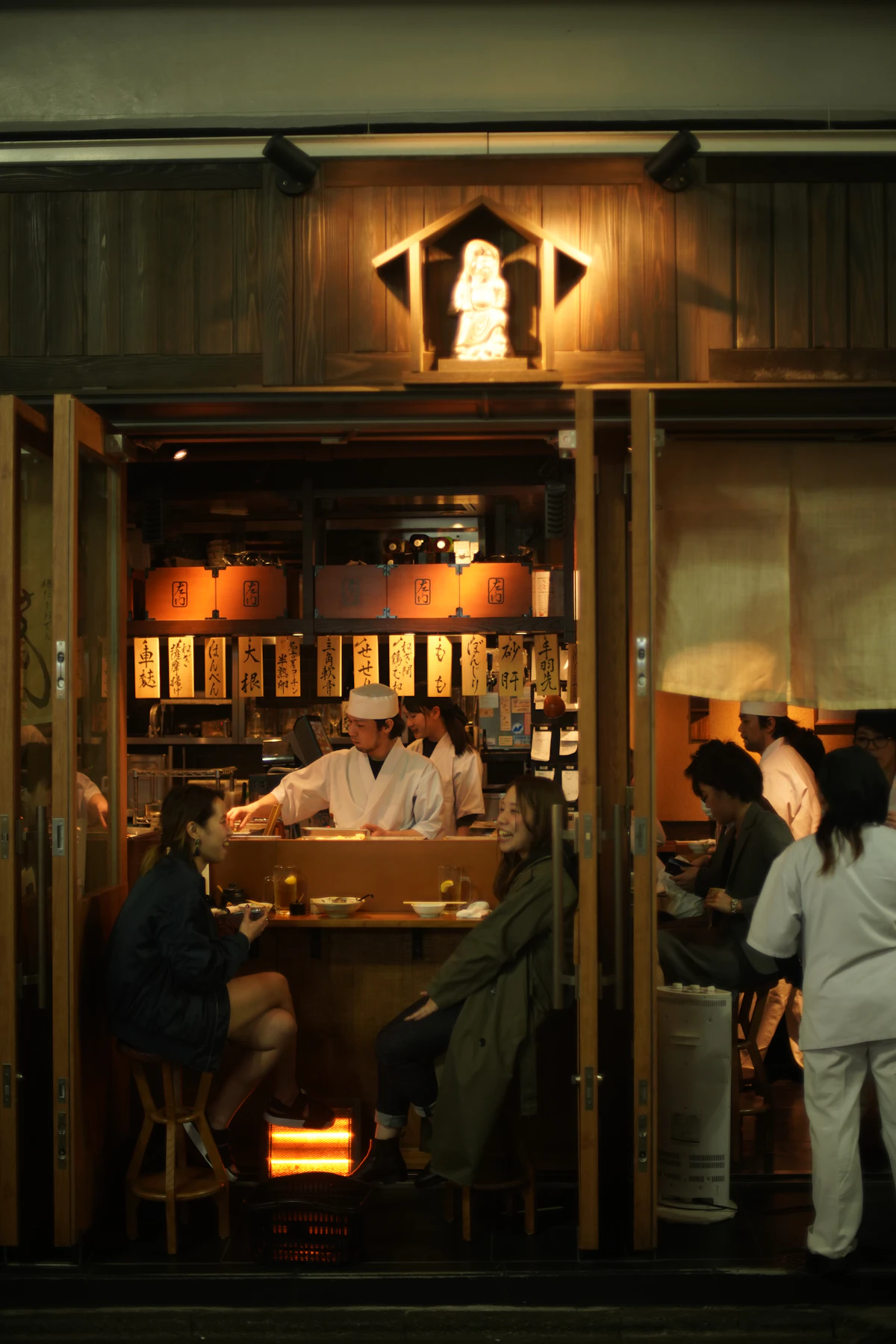
🟡 "Torirae Beer": Old Ritual or Quirky Custom?
"Torirae beer" (let's start with beer) was once almost a rule. It's no longer.
Foreign media has long described torirae beer (とりあえずビール) as a uniquely Japanese custom: a group sits down, the senior member declares "torirae beer," and everyone gets a beer to start. Quick kanpai (cheers), then individual orders.
If your image of Japanese drinking culture comes from those stories, that picture is increasingly outdated.
Of 72 responses about the "torirae beer" custom:
Only 26% of Japanese people now actively defend the custom. The defenders' point is fair. It's about efficiency:
大人数の場合、ドリンクの種類がひとりひとりバラバラだと注文に時間がかかります。みんな、早く乾杯して食べ出したいですよね。よって「とりあえずビール」とまとめるのだと思ってました。効率性を重視してるんじゃないですかね。 In a big group, taking individual drink orders takes forever. Everyone just wants to get to the kanpai and start eating. That's why "torirae beer" exists — it's about efficiency.
特に夏など喉が渇いている時など「喉を潤す」ために炭酸の爽快感と、空腹でないとゴクゴク飲めないからでしょう。アルコール度数も低いので、その後で日本酒やワインなどの度数が高いお酒にシフトするのが自然な流れ。 Especially in summer when you're thirsty — beer's carbonation refreshes, you can't drink it fast on a full stomach, and its low alcohol makes it a natural starter before moving to sake or wine.
But the modern view, especially among younger people, has shifted hard:
昔は「とりあえずビール」ってなるから否が応でも飲まされてた。今はそういうのハラスメントになるから、それぞれ好きなの頼める。 In the past, "torirae beer" meant you were forced to drink whether you wanted to or not. Now that's harassment, so people order whatever they want.
「とりあえずビール」で乾杯!ビール以外を最初から飲むな!って圧がなくなったから。 The pressure of "torirae beer for kanpai — don't order anything else first!" — that pressure is gone now.
ビールは苦くてまずいじゃん。昔から無理して飲んでた人はたくさんいると思うよ。 Beer is bitter and not actually that good. A lot of people forced themselves to drink it for years.
The data backs this up. A 2017 Sirabee survey of 6,000 Japanese drinkers already showed the generational gap: the rate of choosing beer for the first drink was:
- 60s men: 80%+
- 60s women: ~60%
- 20s men: ~50%
- 20s women: ~30%
And by 2024, a survey of Japan's Gen Z found that the top first drink at an izakaya was no longer beer at all:
- 1st: Lemon sour (lemon-flavored chuhai)
- 2nd: "Don't drink alcohol"
- 3rd: Draft beer
Even etiquette experts have weighed in:
乾杯の際にビールを飲むことは必須ではないため、マナー違反ではありません。もし「とりあえずビール」となった場合、むしろそのことが強要にあたります。 Drinking beer for the kanpai isn't required, so it's not a manner violation if you don't. In fact, forcing "torirae beer" on someone is closer to a violation itself. (Etiquette specialist, All About)
What this means for you: Order whatever you actually want for round one. Lemon sour, highball, plum wine, oolong tea, sparkling water: all completely normal. If your group has a torirae-beer-fan and they offer to start with beer, great, join in. If you don't drink alcohol at all, ordering an oolong-cha or jasmine-tea for the kanpai is genuinely fine. Japan has changed.
💡 The torirae-beer rule is now optional
Only 26% of Japanese people now actively defend "torirae beer." Among 20s women, only about 30% still choose beer first; among Gen Z overall, lemon sour has overtaken beer entirely. The custom hasn't disappeared, but the social pressure behind it has. Order what you actually want for round one.
The Cultural Engine: Why an Izakaya Works This Way
So why does the izakaya have all these little rituals (the noren that signals readiness, the otoshi that arrives unbidden, the "torirae beer" call) in the first place?
It comes down to two cultural ideas.
Ichi-go ichi-e (一期一会): One Meeting, One Chance
Ichi-go ichi-e is a tea-ceremony phrase that translates roughly as "one moment, one encounter, never to be repeated." It treats every gathering as something that won't happen again in exactly the same way.
In an izakaya, this idea expresses itself quietly. The owner gets nervous about a first-time customer because this might be the only time you ever cross paths. The otoshi might be a small dish, but it's the shop's introduction of itself: here's our taste, our care, our season. A quick "irasshaimase!" from every staff member isn't theater; it's an acknowledgment that this gathering exists.
This is also why a single "gochisousama deshita" (thank you for the meal) at the end of a meal carries so much weight. It tells the staff: I noticed. I appreciated this evening. That's enough.
Omakase, Kuuki: The Air of Care
The other engine is something subtler. Japanese hospitality often runs on kuuki wo yomu, reading the air. Staff watch you. They notice when your glass is empty, when your eyes wander toward the menu, when you look uncertain. The expectation isn't that you ask for everything; it's that they offer at the right moment, and you signal at the right moment.
That's why eye contact works as well as a shout: it's the language the system was built for. And it's why staff sometimes seem to "appear out of nowhere" to refill your water or take your next order. They've been watching the whole time.
If this sounds exhausting, it isn't. At least not from the inside. It's actually deeply relaxing once you trust it. The staff have got you. You can lean into the meal.
💡 The izakaya runs on shared attention
An izakaya runs on kuuki wo yomu, reading the air. Staff watch your eyes; you watch theirs. Eye contact does the work that shouting does in other countries. You don't need to memorize this. Just notice it once, and the whole rhythm starts to feel natural.
A Generational Shift
Something important is happening inside Japan's izakaya culture, and it shows up clearly in the data.
Of 55 voices we collected on generational differences, the pattern was unmistakable: the customs you may have read about (mandatory beer for the kanpai, o-shaku, pouring drinks for senior colleagues, long mandatory work drinking parties) are being actively rejected by people under 40.
A 20-year-old worker put it directly:
部署内のチームでの飲み会が月1で開催されます。メンバーは私の他50代後半のおじさん3人です。自分の親より上で、お互い話が合いません。話をするとなると仕事の話になって、私に対して「もっとこうした方がいい」とか半分説教もあるので、ほんとに苦痛です。 Our team has a drinking party once a month. It's me and three men in their late 50s — older than my own parents. We have nothing in common. The conversation always becomes work, with half-lectures about how I should do my job. It's genuinely painful. (20-something woman, in office)
A 20-something who pushed back even harder on the drinking culture:
「とりあえずビール」って訳分からんルール嫌いな人いますか? Anyone else hate the meaningless rule of "torirae beer"?
酒の席で、お酌をするという文化がいまいち理解できません。飲みたければ自分の意志で飲めばいいだけなのに、なぜ自分の意思を他人に押し付けて飲ませようとするのでしょうか? I don't really get this culture of pouring drinks for others. If you want to drink, just drink — why pressure someone else to drink along with you?
Even people in their 30s who once participated have stepped back:
新入社員時代から飲み会をほんとーーーーーーーーーに嫌と感じ、3年目でほぼ参加しなくなりました。仕事の話ばかりだし、酒飲めないし、金もかかるし、めちゃくちゃ疲れる。飲み会が嫌いなわけじゃない。会社の飲み会が嫌いだったのだ。 Since my first year as an employee, I really, really hated company drinking parties. By year three I'd basically stopped going. It's all work talk, I don't drink, it costs money, it's exhausting. I don't hate drinking parties: I hate company drinking parties. (30-something, anonymous post)
A 50-something looking back:
やっと飲み会が嫌いだと言えるようになった。若かりし頃、上司が音頭をとる飲み会では「とりあえずめちゃくちゃ飲まされる。断る選択肢はなく」。 I can finally say I hate drinking parties. When I was young, the boss-led drinking parties meant "you'll get poured into oblivion, no option to refuse." (50-something, looking back)
The izakaya itself isn't fading. What's fading is the forced version: mandatory beer, mandatory pouring, mandatory attendance. What's emerging is the chosen version: friends meeting because they want to, ordering what they want, leaving when they want.
For visitors, this matters in a small but real way: the izakaya you walk into in 2026 is a more relaxed place than the one in older travel guides. You don't need to follow rules that even Japan is letting go of. Whether you find your first one among Shinjuku's lantern-lit lanes, down a quiet back alley, or along the neon-lit canal of Osaka's Dotonbori, where izakaya and standing bars crowd shoulder to shoulder, the same easygoing welcome is waiting.
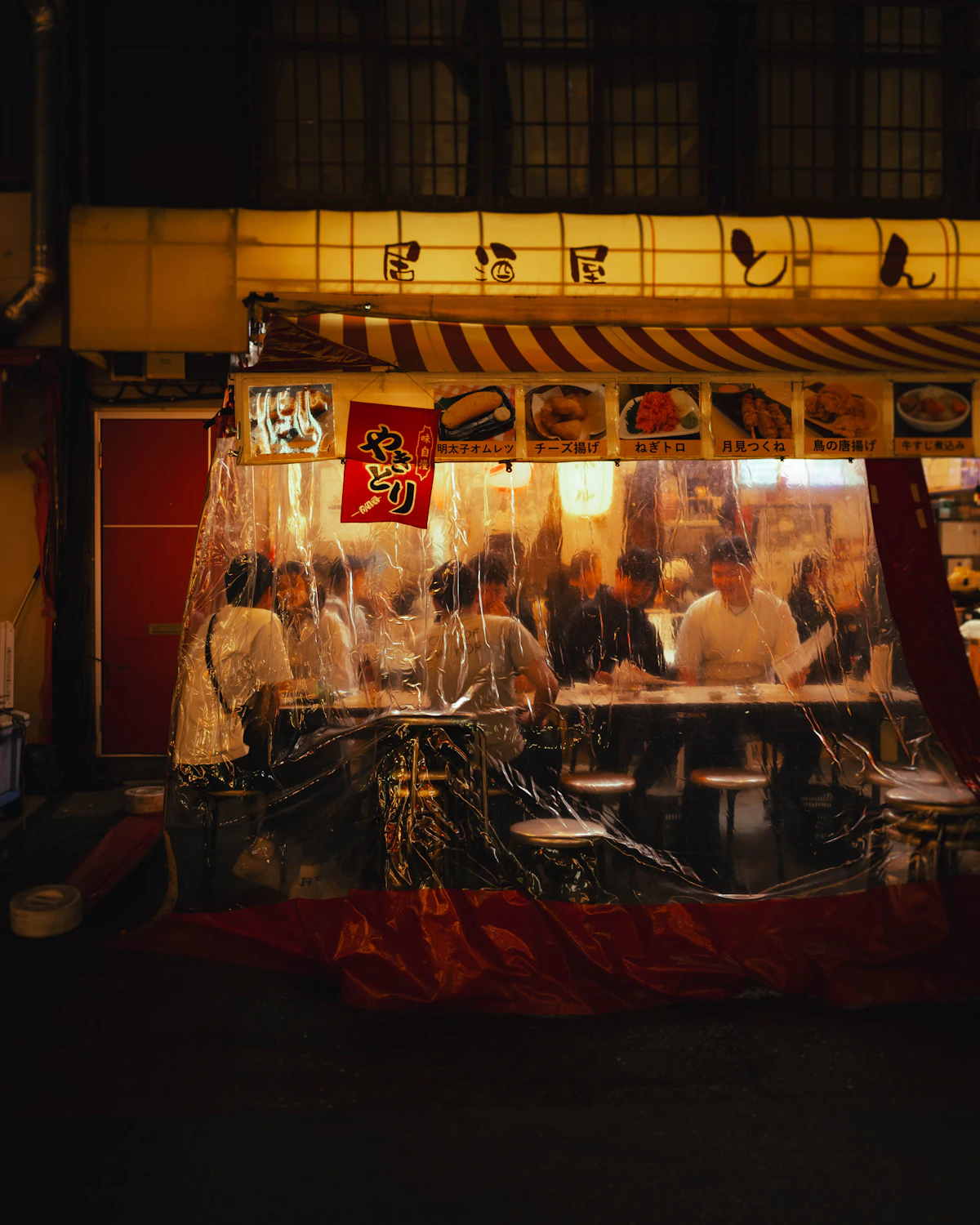
Practical Tips for Your First Izakaya
A short cheat sheet, drawn from everything above:
- Look for the noren. If the curtain is up at the door, the shop is open and ready to take you.
- You don't need to speak much Japanese. "Konnichiwa" or just a small bow at the entrance is enough. Many izakaya now have English menus or photo touch panels.
- Otoshi is automatic. A small dish (or two) will arrive. There will be a charge, usually 300–600 yen per person. Just say arigatou and move on.
- For round one, order what you want. "Torirae beer" isn't required. Lemon sour, highball, oolong-cha: all completely normal in 2026 Japan.
- Calling staff: eye contact + a small nod or raised hand. Or just say "sumimasen" once. Don't shout repeatedly. Don't pound the call button.
- Drink at your own pace. Nobody will pour for you unless you want them to. O-shaku (pouring for others) is now optional, especially among younger Japanese.
- Ask the staff for recommendations. "Osusume wa nan desu ka?" (What do you recommend?) is one of the most appreciated phrases in any izakaya.
- Wrap up with "gochisousama deshita." It's the warmest thing you can say. Worth more than any tip, and tips aren't the custom in Japan anyway. (More about that here.)
If something goes wrong (you sit at the wrong table, you don't understand the menu, you accidentally order the wrong thing), staff will help you. They want you to enjoy yourself. They've seen confusion before, and they know the difference between "this person is trying" and "this person doesn't care." You're trying. You'll be fine.
More Japanese Perspectives
If you found this useful, these related articles dig deeper into specific parts of the dining experience:
- The Power of Itadakimasu: A single phrase that changes the entire mood of a Japanese meal. What it means, when to use it, and why Japanese people light up when visitors say it.
- What Happens When You Tip in Japan?: Spoiler: nothing good, and possibly a lot of confusion. Why Japanese service runs on a completely different motivation structure.
- Is It Rude to Slurp Noodles in Japan?: The "you must slurp" myth, debunked. What 403 Japanese people actually said about how you eat noodles.
- The Unwritten Rules of Japanese Convenience Stores: Another small-but-important corner of Japanese daily life, with the same temperature-data treatment.
Share Your Experience
Had a moment at a Japanese izakaya: funny, confusing, unexpectedly warm? Did the otoshi make you laugh, or the staff make you smile? We'd love to hear it. Your story helps build a bridge between cultures, and might end up in our next article.
Share your experience on Voice Box →
Sources
Primary Research Data
- WMJS izakaya research data (381 Japanese-language responses collected April 2026)
- The nervous first step: 102 responses
- Reactions to otoshi: 78 responses
- Calling staff and ordering: 74 responses
- "Torirae beer" custom: 72 responses
- Generational perspectives: 55 responses
Statistical Data
- First-drink choice survey (Sirabee, 2017): 6,000 Japanese drinkers; beer chosen by ~80% of 60s men vs. ~30% of 20s women
- Gen Z first-drink ranking at izakaya (RECCOO survey, 2024): lemon sour 1st, "no alcohol" 2nd, draft beer 3rd
Opinion Collection Sources
The following sources were used to collect Japanese people's opinions and sentiments. These are platforms where real Japanese people expressed their views, not cited as factual authorities, but as the source of the voices in this article.
The nervous first step:
- https://ryourigaka.jp/hairiyasui/
- https://www.anytimefitness.co.jp/healthier-magazine/topics/izakaya/
- https://sakabanashi.takarashuzo.co.jp/cat4/izakaya_250711
Reactions to otoshi:
- https://www.utakata-radio.com/entry/2019/04/15/210036
- https://www.inshokuten.com/foodist/article/3819/
Calling staff and ordering:
- https://okwave.jp/qa/q9907364.html
- https://kindaipicks.com/article/001347
- https://livejapan.com/ja/in-tokyo/in-pref-tokyo/in-tokyo_suburbs/article-a0005056/
- https://sakabanashi.takarashuzo.co.jp/cat4/izakaya_250711
"Torirae beer" custom:
Generational perspectives:
Note on Quotations
Quotes from online platforms have been lightly edited for readability (fixing typos, formatting for clarity). The meaning and intent of each comment remain unchanged. Original sources are linked above.
The otoshi price references above (usually under ¥600, typically ¥300-600 per person) are corroborated by a Japan Today overview of the custom: "It's rare for otoshi to be less than 300 yen, most are 600 yen or less" (Japan Today, All You Need to Know About Japan's Unasked-for Restaurant Appetizers That You Have to Pay For).
WMJS is written in Japan, in English, with AI help. We check every page, but English is not our first language. If a sentence reads oddly, tell us. One sentence is enough.
Thank you. A person reads every note.
How well do you know Japan?
Built from 635 public posts by Japanese people
Want to know more? Ask Japanese people
Have a follow-up question about this topic? We'll ask real Japanese people.
Voice Box →