
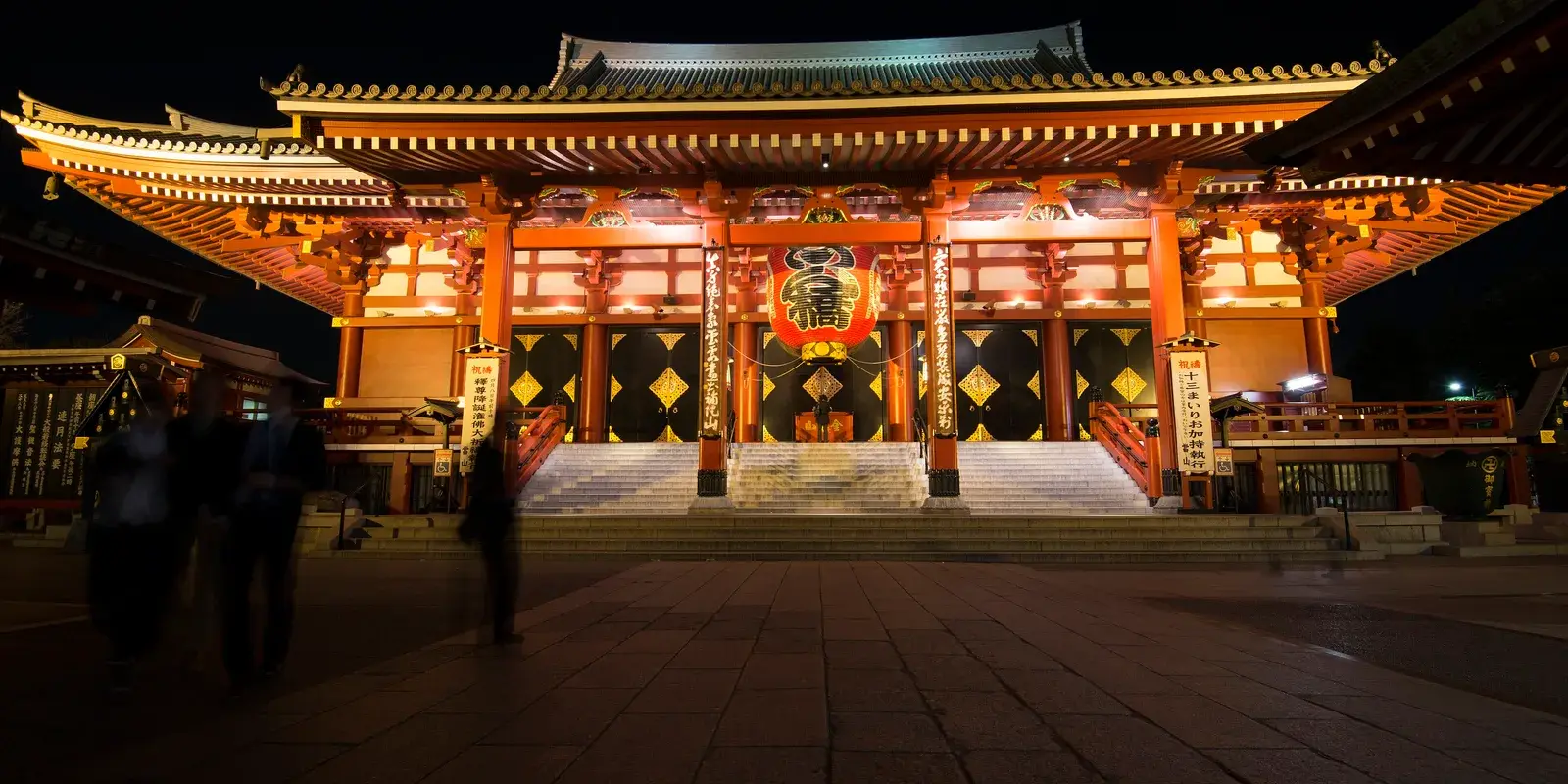
Is Senso-ji Worth It? What Visitors (and Tokyo Locals) Actually Say
You have probably seen the photo: a vast red lantern, a five-story pagoda, a sweep of curved temple roof. So you picture an ancient, hushed place. Then you step out of Asakusa Station into a roar of crowds, selfie sticks, and souvenir stalls, walk a shopping street to a main hall you later learn was rebuilt in 1958 in reinforced concrete, and a small voice asks: was this worth it?
Here is the short answer. What follows explains why the same temple can feel like a letdown to some visitors and a highlight to others: yes, and the let-down almost always comes from one fixable mismatch, between when you went and what you expected. The people who feel cheated arrived expecting silence. Senso-ji was never meant to be quiet.
Is it worth it? (in visitors' own words)
We gathered the voices of international travelers who have actually been to Senso-ji and Asakusa and, in effect, asked was it worth it? Weighted by how strongly each opinion resonated with other readers, here is how they fell:
Look at the shape of that, because it tells you almost everything. The "felt let down" sliver is small but real. And the huge 40% in the middle is not a shrug, it's a clue. Again and again, the same word comes up: timing. The handful who walked away disappointed describe a crowd, not a temple: "I personally didn't enjoy it much as it was way too busy for me. There was probably 200 people walking to the temple… The temple is beautiful but I left very quickly." One resident was blunter: "I was so disappointed by how boring it is and it just feels like a tourist trap." And a fair, common verdict: "It's not the only old temple… It's convenient, that's it."
But notice what the people who loved it keep saying: it is the same lever, pulled the other way. The single most-resonant voice on the whole question was a few words about when: "Nighttime is the best time IMO. It's waaaaay less busy and so peaceful." Another: "Show up as the sun is rising and it'll be you and the dogwalkers." And a third, on arriving jet-lagged: "the first time I visited… got there at 6am, there was no one." The temple didn't change between these accounts. The hour did.
Even the "tourist trap" charge, looked at closely, narrows to one specific thing. And it isn't the temple. "Not as a whole," one traveler clarified; "the place I would really call a tourist trap is some of the souvenir shops on Nakamise street… go to Asakusa for Senso-ji [and] the food." Another pushed back on the reputation entirely: "I just think it has an unfair reputation as being a tourist trap… it has a reputation for being gaudy, but it also has plenty of nice, old-fashioned places."
How Tokyo feels about its own temple
Guidebooks rarely include this next set of voices: what Japanese visitors and locals say, in their own reviews, about the same temple. It is a warmer register, and, tellingly, an even smaller share of regret.
Put the two gauges side by side and the most useful fact on this page appears: the foreign "let down" bar (6%) is roughly twice the Japanese one (3%), and the gap is made entirely of expectation. A Tokyo reviewer never arrives hoping for a silent thousand-year sanctuary, because they grew up knowing Senso-ji as exactly what it is: crowded, lit-up, festive, and beloved because of all that, not in spite of it. "Thanks to inbound tourism it's way more crowded than it used to be, but it's a temple I love very much," one writes, before adding the same timing tip the visitors give: the mornings and midday are packed, "but from evening into night" it calms.
And the two crowds give identical advice. Japanese reviewers go at dawn: "If you go at 6 o'clock you can see the opening of the hall's doors, [and] join the morning prayers", and after dark: "The main hall's doors close, but you can still pray even if you go at night. It was lit up with an orange-ish light and was beautiful." One who went on a weekday was pleasantly surprised: "I had the image that Senso-ji is always crowded, but on a weekday it was emptier than I expected… I was moved all over again at what a historic temple it is." The honest middle band is real ("it's so crowded there's nowhere to go" on a peak afternoon), but it is a verdict about an hour rather than about the place.
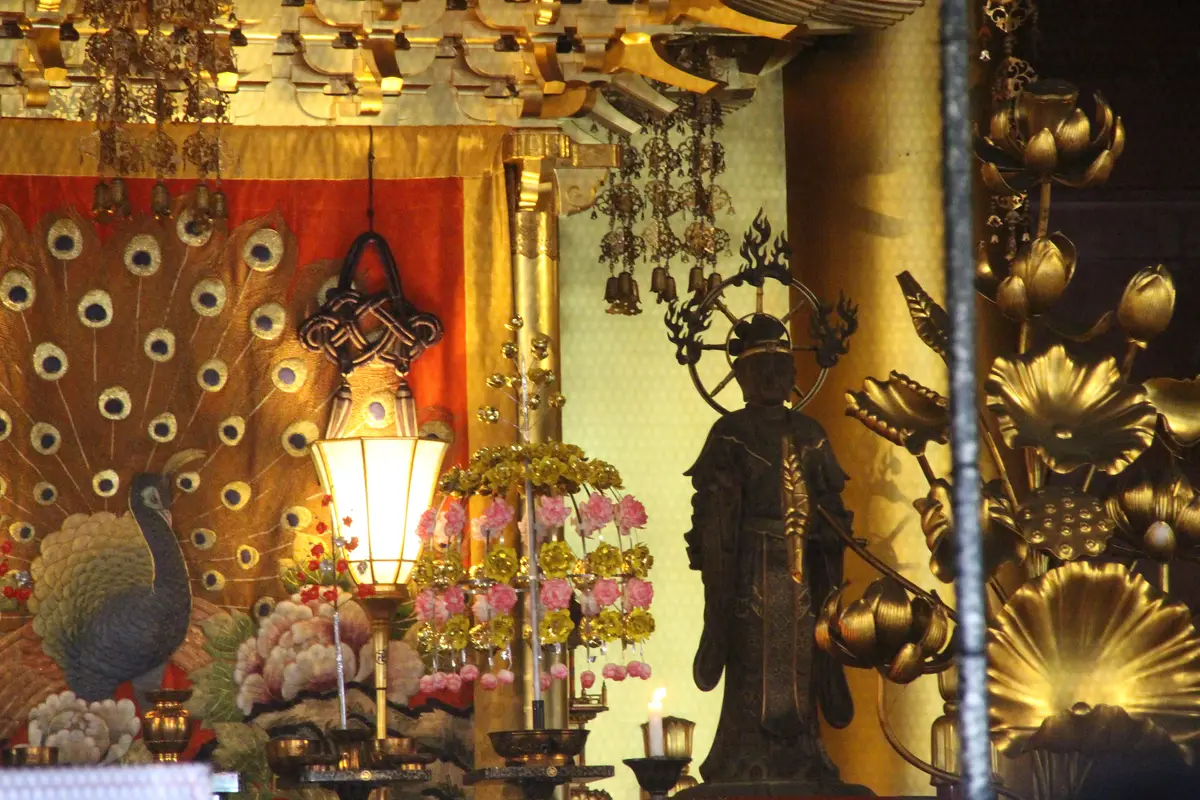
What we wish you'd noticed
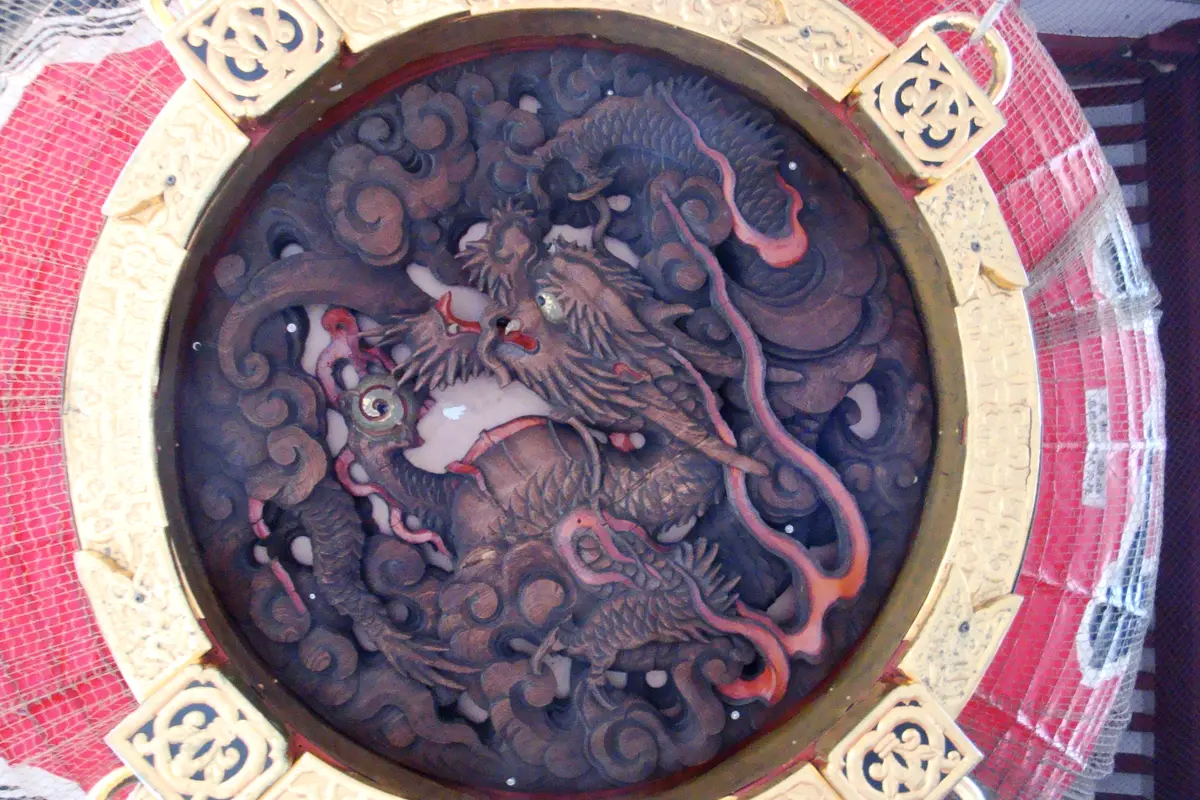
That "1958 concrete" hall is not a fake. It's a monument to survival. The original wooden Main Hall stood for centuries. Then it burned to the ground in the Tokyo air raid of March 10, 1945. What you see today was rebuilt in 1958, in reinforced concrete, faithfully modeled on the 1649 hall it replaced, and paid for by donations from believers across the whole country. The Thunder Gate tells the same story: it burned in 1865 and then stood missing for ninety-five years, until it was rebuilt in 1960 with a gift from Matsushita Konosuke, the founder of Panasonic. So when you stand under that 700-kilogram lantern, you are not looking at a stage set of "old Japan." You are looking at what a city and a nation chose to raise back up out of ash. Knowing that changes the concrete from a disappointment into the point.
Senso-ji has always belonged to the crowd. It begins, by tradition, in the year 628, when two fishermen brothers pulled a small golden statue of Kannon from the Sumida River. It was never a remote mountain monastery for monks and aristocrats; it grew up as the temple of ordinary townspeople, ringed by entertainers, food stalls, and shops. Nakamise (about ninety stalls, one of the oldest shopping streets in Japan, dating to the 17th century) is not a modern tourist bolt-on. The commerce is the heritage. The noise you're hearing is roughly four hundred years old.
The let-down is preventable, and locals and visitors agree on exactly how. It comes down to the clock, and both crowds reach for the same hands on it.
Visiting Senso-ji well: the welcomed way
- Go at dawn, or go after dark. This is the single most-repeated tip from both gauges, and it is the whole game. The Main Hall opens at 6:00 a.m. (6:30 from October to March), and in the first hour the great plaza is nearly empty: "it'll be you and the dogwalkers." After sunset the buildings are floodlit and the daytime scrum melts away; you can still pray at the hall even once its doors close, and, as the visitors put it, "the lighting is phenomenal."
- A weekday beats a weekend; mid-morning to mid-afternoon is the peak. If your only option is midday, expect the densest crowds between roughly 10 a.m. and the early afternoon, and budget patience.
- If you want to shop Nakamise, come before it winds down. The stalls start packing up surprisingly early ("the shops have a packing-up mood by 5:30 p.m.," one reviewer warns), so do your browsing in daylight and save the temple itself for dusk.
- Eat at the stalls rather than while walking through the lane. Nakamise gets shoulder-to-shoulder, and the welcomed habit (asked of everyone, locals included) is to step to the side or eat where you bought it, rather than drifting through the crowd mid-snack. It keeps the narrow street moving and is simply how the lane works best.
- Walk one street over for the older, quieter layer. The back lanes around the temple (toward Denboin-dori and the side streets) thin out fast. "The main street is crowded, but the back streets aren't so much," a local notes, and a visitor agrees Asakusa is "unfairly maligned… it also has plenty of nice, old-fashioned places." That older Asakusa is still there; it's just half a block off the photo.
Do these, and the day tends to go the way the delighted reviewers describe rather than the way the disappointed ones do. The temple isn't testing you; it's simply a four-hundred-year-old festival that happens to wear a thousand-year-old name, and it rewards the person who comes at the temple's own hours, not the postcard's.
So: is Senso-ji worth it? In the wrong hour, it can feel like a crowd with a gift shop. In the right one (first light, or after the lamps come on) it is a lit hall raised back from the ashes of a war, in a city that decided it mattered, free to walk into and quiet enough to hear yourself think. Come early or come late, expect a festival rather than a hush, and Senso-ji is one of the easiest "yes"es in Tokyo.
Still weighing which famous places actually earn a slot on a short trip? Start with what actually matters in Japan, and for the full walk from the Thunder Gate through Nakamise to the hidden Kannon, the Senso-ji audio guide is just below.
Sources
- Senso-ji Temple Official, Grounds Guide: the Main Hall (本堂): the original Main Hall was destroyed in the Tokyo air raid of March 10, 1945, and the current hall was rebuilt in 1958 in reinforced concrete, modeled on the 1649 Keian-era hall and funded by donations from believers nationwide.
- Senso-ji Temple Official, Grounds Guide: Kaminarimon (雷門): the Thunder Gate burned in 1865, stood unbuilt for 95 years, and was rebuilt in 1960 through a donation from Matsushita Konosuke (founder of Matsushita Electric, now Panasonic); the great lantern is 3.9 m tall and weighs about 700 kg.
- Senso-ji Temple Official, History / About: the temple's founding tradition dates to 628, when two fishermen brothers found a statue of Kannon in the Sumida River.
- Senso-ji Temple Official, FAQ (opening hours): the Main Hall is open 6:00 a.m.–5:00 p.m. (6:30 a.m. from October to March).
- JNTO (Japan National Tourism Organization), Nakamise-dori, Asakusa: Nakamise is one of Japan's oldest shopping streets, dating to the 17th century, with around 90 stalls; the temple and shops close around 5 p.m.
- GO TOKYO (Tokyo Convention & Visitors Bureau), Sensoji Temple: official visitor overview of Sensoji and Nakamise (about 90 shops) in Asakusa.
WMJS is written in Japan, in English, with AI help. We check every page, but English is not our first language. If a sentence reads oddly, tell us. One sentence is enough.
Thank you. A person reads every note.
How well do you know Japan?
Based on 51,218+ real Japanese voices
Want to know more? Ask Japanese people
Have a follow-up question about this topic? We'll ask real Japanese people.
Voice Box →