
このページは日本語でも読めます。日本語で読む →
이 페이지는 한국어로도 읽을 수 있습니다.한국어로 읽기 →
這個頁面也有繁體中文版。閱讀繁體中文版 →
这个页面也有简体中文版。阅读简体中文版 →
หน้านี้มีภาษาไทยด้วยอ่านภาษาไทย →
Trang này cũng có bản tiếng Việt.Đọc bằng tiếng Việt →
Halaman ini juga tersedia dalam Bahasa Indonesia.Baca dalam Bahasa Indonesia →
Cette page existe aussi en français.Lire en français →
Diese Seite gibt es auch auf Deutsch.Auf Deutsch lesen →
Esta página también está disponible en español.Leer en español →
Questa pagina è disponibile anche in italiano.Leggi in italiano →
Where to go
Japan's onsen towns, and how they differ
Three towns, three answers to the water under them: Hakone stacks many springs in one mountain, Kinosaki hands one water to the whole street, and Beppu has so much that bathing became ordinary
Last verified: 2026-08-15
Days
6 days for the full line, built as three self-contained two-night blocks you can lift out on their own
Best season
The thing I would settle before the where is the when. Cold air makes steam visible, so Beppu's plumes and Kannawa's rooftops read most clearly in the cold months, and that is also crab season in Kinosaki, when the inns fill with Japanese guests. Hakone is comfortable year round and doubles as a cool escape from a Tokyo summer
Base yourself
You move west and sleep two nights in each town. Two of the moves take half a day; the last one takes most of a day, and I say so where it happens
Getting around
Odakyu's Romancecar into Hakone, then Shinkansen and JR limited expresses west. Limited express seats are reserved. One IC card covers the local hops and the town buses
Who this plan suits
- First tripWorks well
- Been beforeGreat fit
- With kidsWorks well
- SoloGreat fit
- As a coupleGreat fit
- Gentle paceNot the focus
When to goYear-round
Year round, with the cold months as the window enthusiasts plan around: steam becomes visible, crab comes into season on the Sea of Japan coast, and a hot bath does more for you. Two of Kinosaki's seven bathhouses are closed for renovation at present.
Ask a planning forum which hot spring town to choose and someone will gently tell you it hardly matters. A bath is a bath, they say, and unless you are a connoisseur they are more alike than different across the country. I think that is a fair thing to say, and I also think it is where the interesting part starts.
Every onsen in Japan has to post a card on the wall of the changing room. It names the source the water came from, how hot it was where it left the ground, how many litres a minute it gives, what a tester saw and smelled and tasted in it, and how far it sits from neutral on the acid to alkaline scale. Most of us walk straight past it with a towel under one arm. Read it once and the bath in front of you turns into a specific thing out of a specific hole in the ground, and a second question arrives by itself: what did this town decide to do with what came up?
Three towns answer that very differently, and they sit a long way apart. Hakone stacks many different waters inside one mountain. Kinosaki gives one water to the whole town and treats the street as the corridor between baths. Beppu has so much of it that the water stopped being an occasion and became something you wash in on the way home from work. This is the line I would ride to hear all three, running west from Tokyo with two nights in each. Take the whole thing, or lift out a single block and carry the reading with you to whichever town you end up in.
Where to base yourself
Hakone. I would take the first night near Hakone-Yumoto, because everything on the mountain connects there and you can be in hot water within minutes of arriving. For the second night, moving higher gives you a different source and a quieter evening. Hakone spreads out, and the evenings up the mountain are genuinely dark and early, which some people love and others find long.
Kinosaki. Stay in the town itself. Nearly every inn hands you a pass to the public bathhouses at check in, along with a yukata and wooden sandals, and that pass is the reason the town works the way it does. Coming in for the day is possible, and you will pay for the baths separately and miss the part where you walk home in geta at eleven at night.
Beppu. Two moods to choose between. Kannawa is the steam district up the hill, where vapour rises out of the ground between houses and the hells are a walk away. The area around Beppu Station puts you next to the trains, the old wooden bathhouse and the small neighbourhood baths that people use after work. I have been glad of both, on different trips.
All three towns have a guide of their own here, so the fine detail lives there rather than on this page: Hakone, Kinosaki Onsen and Beppu Onsen.
Tokyo
~80 minHakone
~2.5 hrKyoto
~2.5 hrKinosaki Onsen
~3 hrShin-Osaka
~4 hrBeppu
Getting around & tickets
Hakone runs on one ticket. The Hakone Freepass covers the trains, the switchback railway, the cable car, the ropeway, the lake boats and the buses inside the area, plus the round trip out of Shinjuku. The part that catches people is that the Romancecar is a separate surcharge on top, because the pass covers the ordinary fare and not the reserved limited express seat. Figures are in the box below.
West of Hakone you are on JR. The limited expresses to Kinosaki Onsen come up from Kyoto and from Shin-Osaka, and every seat is reserved, so book them before the day rather than on the platform. Kyushu is Shinkansen as far as Kokura, then the Sonic down the coast into Beppu.
Send your suitcase ahead. Hot spring towns are made of narrow lanes, gravel, steps and old buildings, and inns are rarely laid out for wheeled luggage. An overnight bag and a forwarding slip for the rest makes this whole line easier on you.
Coins for the small baths. One IC card handles the local trains, the Hakone buses and the Kamenoi buses in Beppu. The little neighbourhood bathhouses are the exception: plenty of them take cash only, sometimes into a box by the door, so keep change on you.
Hakone, and the card on the wall
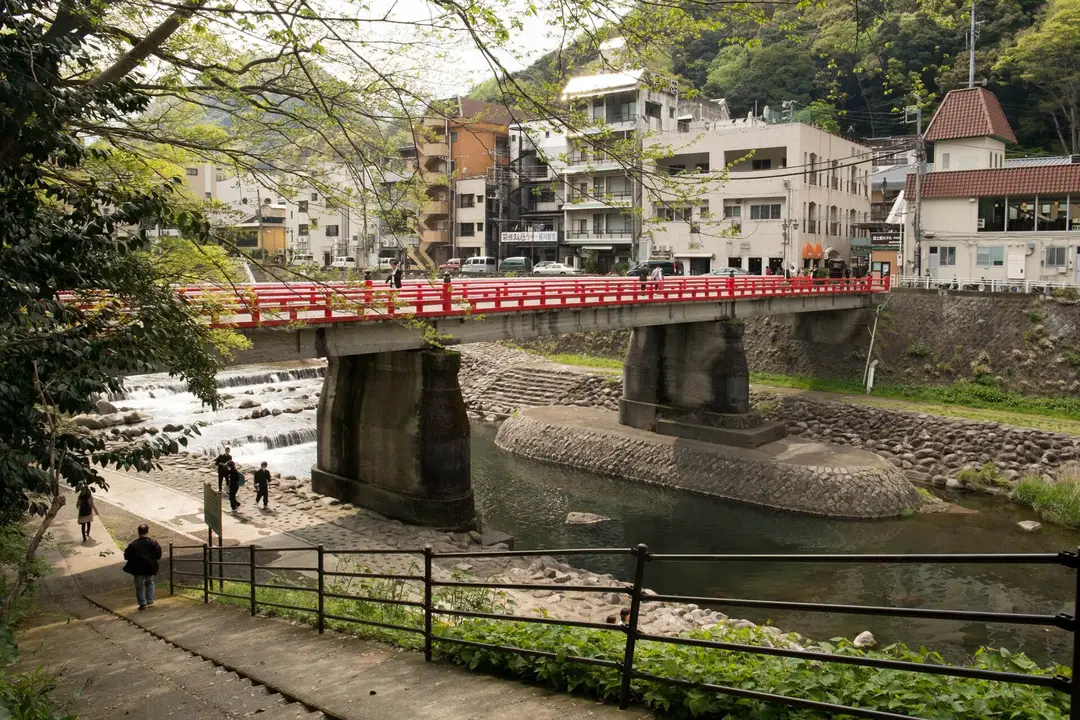
I would begin here because Hakone makes the lesson easy to learn. The Romancecar sets you down at Hakone-Yumoto, the oldest of these springs by tradition and still the junction the rest of the mountain hangs off, and you can be sitting in hot water inside the hour. Before you undress, look at the framed sheet by the lockers. The name across the top belongs to a source, a hole in the ground somewhere above you. The rows underneath record how hot the water was when it left that hole, how fast it comes, what colour and smell and taste a tester found in it, and how far it falls from neutral. Hakone is usually introduced as having seventeen springs. The seventeen are spring areas rather than bathhouses, each with water of its own, which is a strange amount of variety for a mountain you can cross in an afternoon.
- AfternoonInto Hakone-YumotoThe Romancecar comes in along the Hayakawa river and the air changes the moment the doors open. Yumoto is where the mountain railway, the buses and the town all meet, so it is the easiest place to land, leave your bag and start. The Hakone guide covers the area properly.
- Late afternoonYour first readingPick any bath that takes day visitors and give the analysis sheet two minutes before you go in. The sensory row is the friendly part: a person actually looked at this water, smelled it and tasted it, and wrote down what they found. Then get in and see whether you agree with them.
- EveningThe mountain emptiesHakone thins out once the day trippers catch the trains back down. If your inn serves dinner, this is an evening to take slowly. If it does not, Yumoto's main street has the most choice on the mountain, and it shuts earlier than you would guess.
Up through the floors
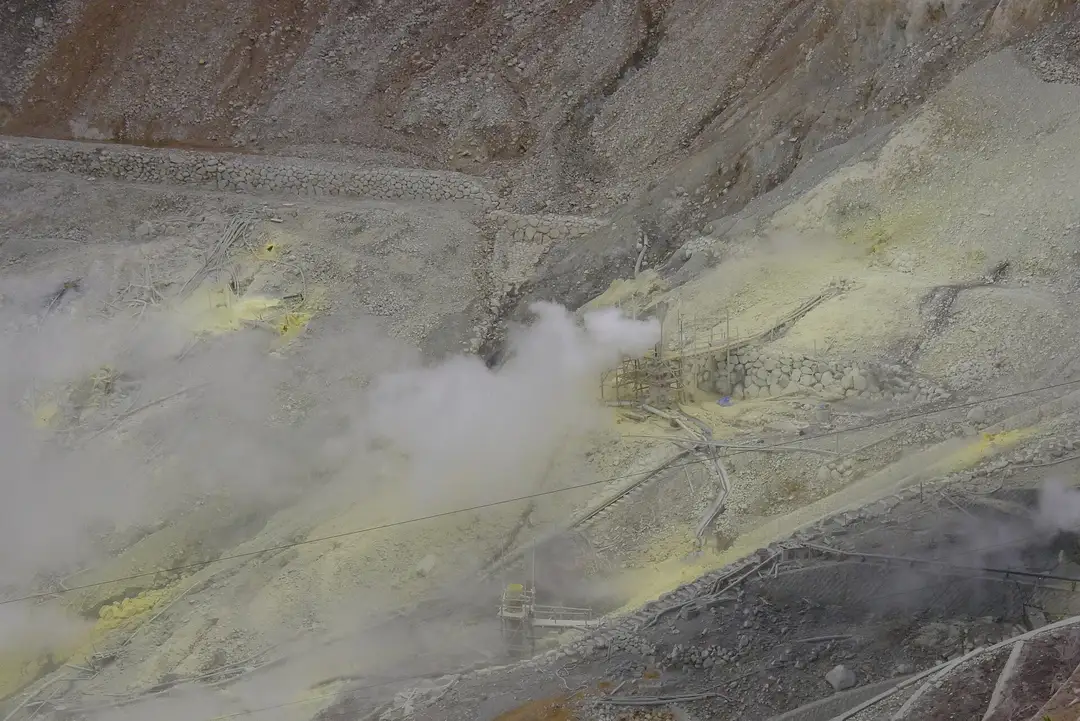
Hakone's own tourism association describes the mountain as a department store of hot water, with different chemistry on each floor: sharp acidic sulphate water high up near the vents, chloride water lower down, mixed water at the bottom. Today you ride up through it. The switchback railway climbs by reversing direction at each turn, and a cable car and a ropeway lift you over the ridge to Owakudani, where the ground is still venting and the smell reaches you before the view does. Get into a bath tonight and it will not be the water you sat in last night.
- MorningThe switchbacks to GoraThe Hakone Tozan line climbs by zigzag, reversing at every switch, and the driver and conductor swap ends each time. It is one of the more charming pieces of engineering in the country, and the pass covers it.
- Late morningOwakudani, where the water is madeThe cable car and then the ropeway carry you over the vents, and the smell reaches you while you are still in the air. From the terrace at the station you look straight down into the steam. Walking out among the fumaroles themselves is a separate, pre-booked thing with a helmet and a pair of safety wardens, and the guiding is conducted in Japanese only, which is worth knowing before you build a morning around it. Either way, this is the top floor of that department store, and seeing it is the quickest way to understand why a bath at the bottom of the mountain feels unlike a bath at the top.
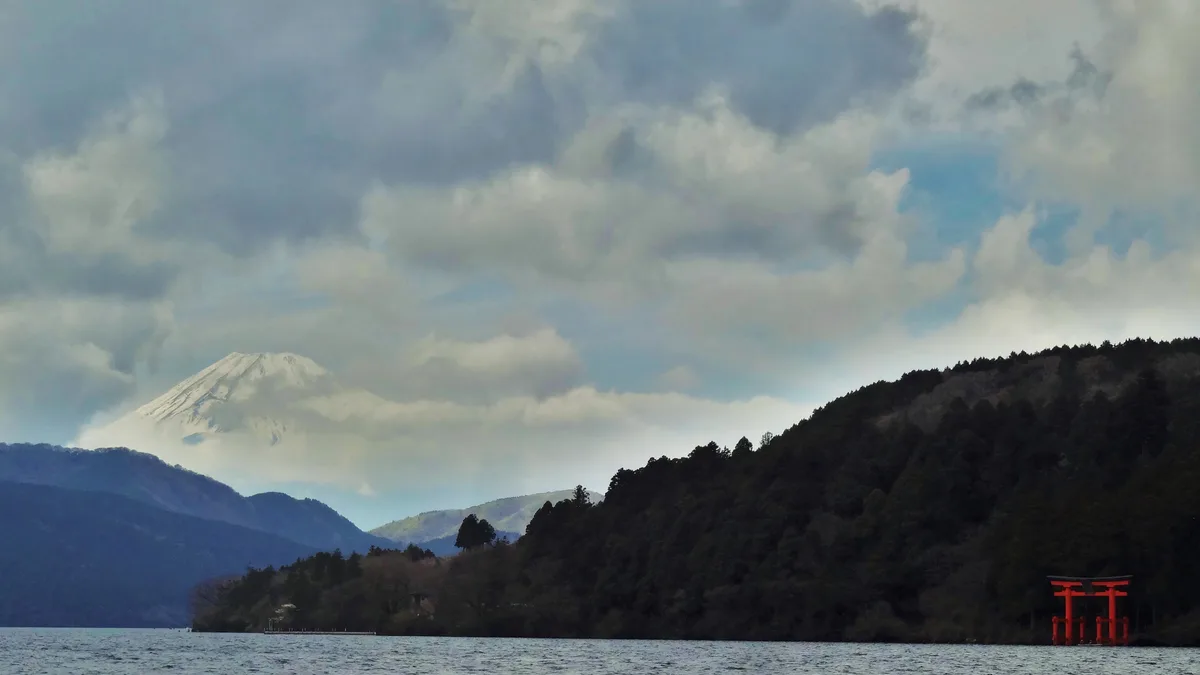
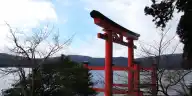
- AfternoonThe lake, or the sculpture parkLake Ashi with its torii standing in the shallows is the postcard, and the boats are on the pass. Fuji shows itself over the water on a clear day and stays hidden on plenty of others, so I would go for the window rather than expect the day to owe you a mountain. The Hakone Open-Air Museum is the other way to spend the same hours, and it is what travellers who are lukewarm about Hakone's baths tend to name as the reason they were glad they came. Either one is a full afternoon.
- EveningA second waterIf you moved up the mountain, tonight's bath draws on a different source from last night's, and after an afternoon spent standing above the vents you will feel the difference before you have finished getting in.
West, to a town that keeps its corridor outdoors
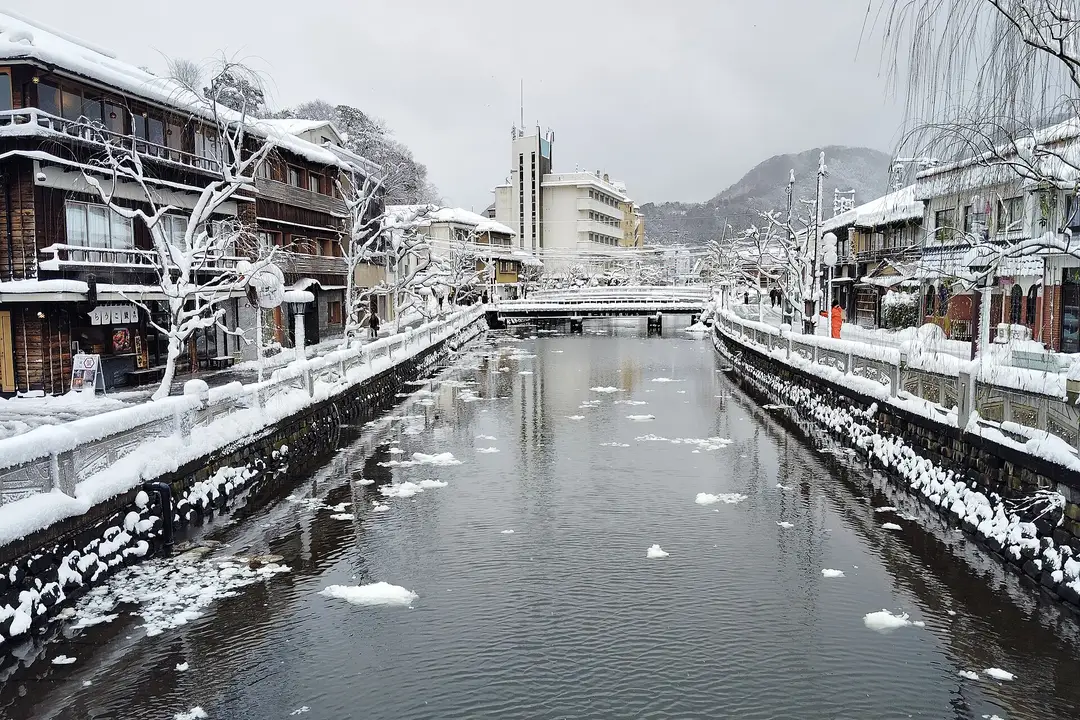
This is a travel morning and I would rather not dress it up: down off the mountain, along the Shinkansen, then north out of Kyoto on a limited express that leaves the cities behind and runs through rice country toward the Sea of Japan. What you arrive in is unlike Hakone in every structural way. Kinosaki describes itself as one large inn and means the arrangement literally, naming the station its entrance hall, the streets its corridor, the inns its guest rooms and the seven public bathhouses its big bath. The town's own tourism association writes it out in those words, and the people who live there use those bathhouses as their own bathroom, daily.
- MorningDown the mountain and onto the ShinkansenHakone-Yumoto to Odawara is short, and Odawara is a Shinkansen stop, which is the small mercy that makes today workable at all. Kyoto is where you change again.
- MiddayNorth on the limited expressThe train to Kinosaki Onsen runs up through Fukuchiyama and the country opens out around it. This is the leg where you stop planning and start looking out of the window. Seats are reserved, so book this one ahead.
- Late afternoonYukata, geta, and the first bathCheck in, change into the yukata your inn gives you and take the wooden sandals. You will feel conspicuous for about four minutes, until you notice everyone on the street is dressed the same way. Then walk to whichever bathhouse is nearest and begin. The individual baths are covered in the Kinosaki Onsen guide.
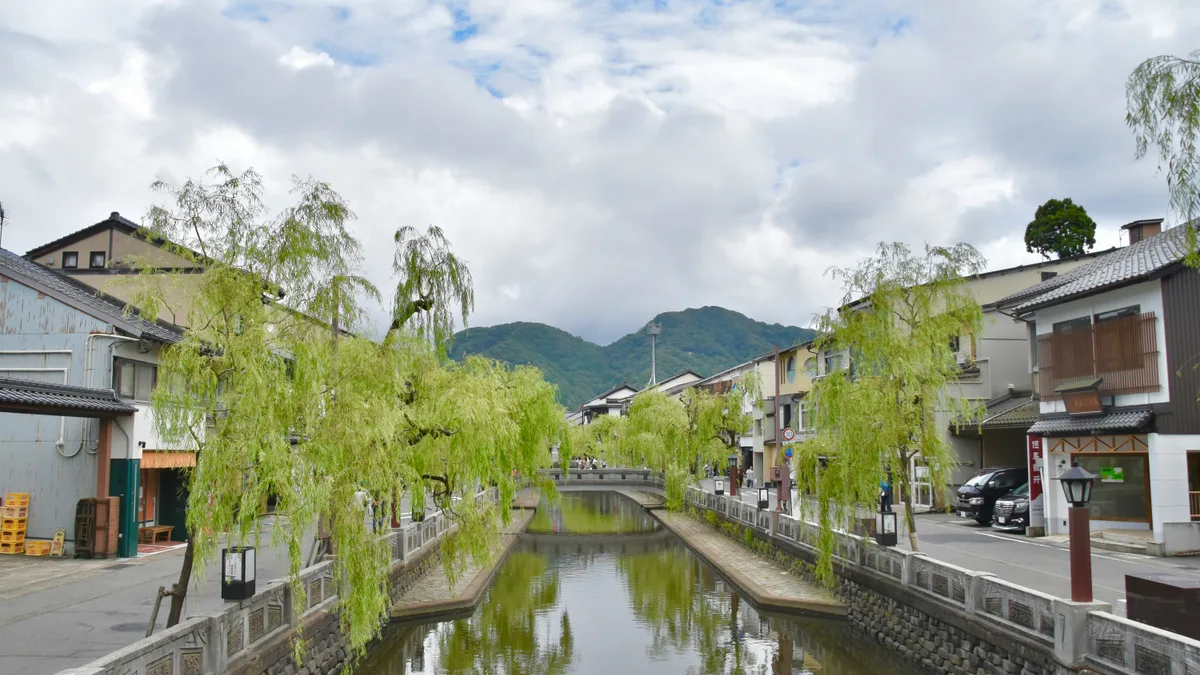
- EveningWillows and stone bridgesThe Otani river runs down the middle of town under arched stone bridges with willows along both banks. At night the lanterns come on and the sound of the street is wooden sandals on stone. People remember this walk more clearly than they remember any single bath.
Seven doors, one water town
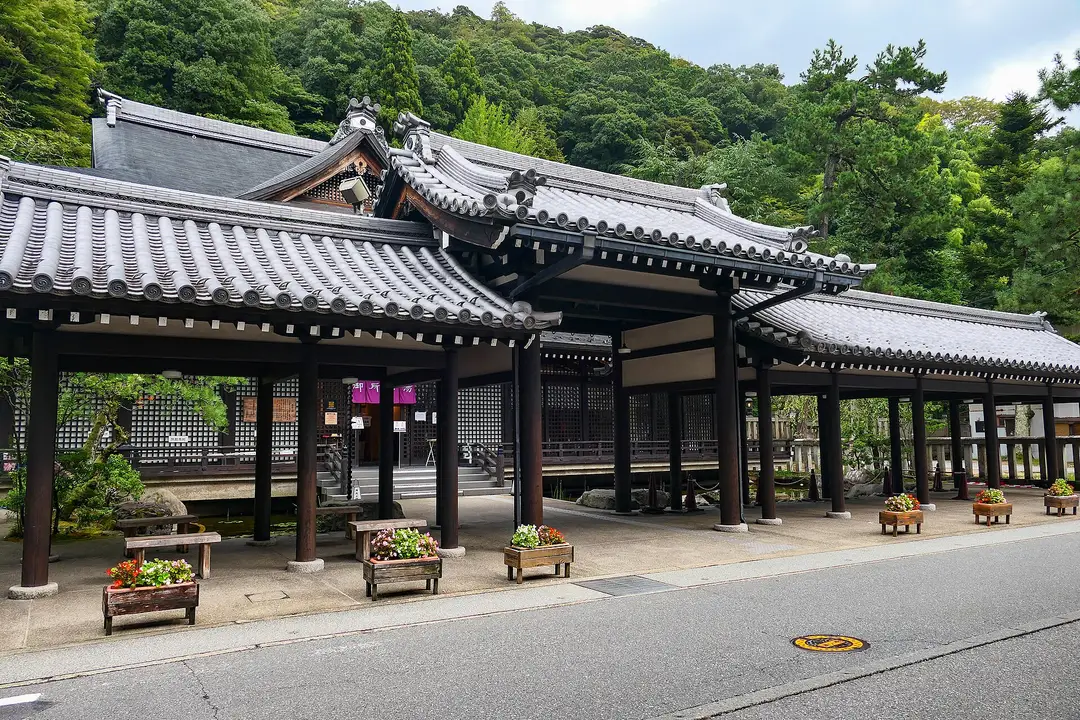
The pass in your inn's envelope opens all of the public bathhouses, and the pleasure of today is that they refuse to be interchangeable. Each was founded in a different century, each is a different building, and each takes a different weekday off. That last detail shapes your day more than any recommendation could, because which baths are open to you depends on which day of the week you happen to be standing here. Two are also shut for renovation at the moment, so the famous seven is currently five. The row is short enough to walk end to end in the time it takes to finish a coffee, which is how people end up doing three before lunch.
- Before breakfastThe locals' hourThe bathhouses that open early are quietest first thing, and that is when you are most likely to be sharing the water with people who live here rather than people on holiday. In summer it is also by far the kindest hour to be sitting in something hot.
- MorningOnsenji, up the hillLong before there were passes, you climbed to Onsenji temple to give thanks to the monk credited with opening the springs, and you were handed a ladle that served as your permission to bathe. The ropeway goes up if the climb does not appeal, and the detour is short enough to quietly rearrange the rest of your afternoon.
- AfternoonWork along the rowTake whichever are open, in whatever order the street offers them. They vary in temperature more than visitors expect, and one of them will end up being your favourite for reasons you will find hard to explain to anybody else.
- EveningCrab, beef, or bothKinosaki has the Sea of Japan on one side and Tajima cattle country on the other, and dinner at an inn here is treated as a serious event. In the cold months, crab is the reason a good many Japanese guests booked in the first place.
A long day west, ending in a very small bath
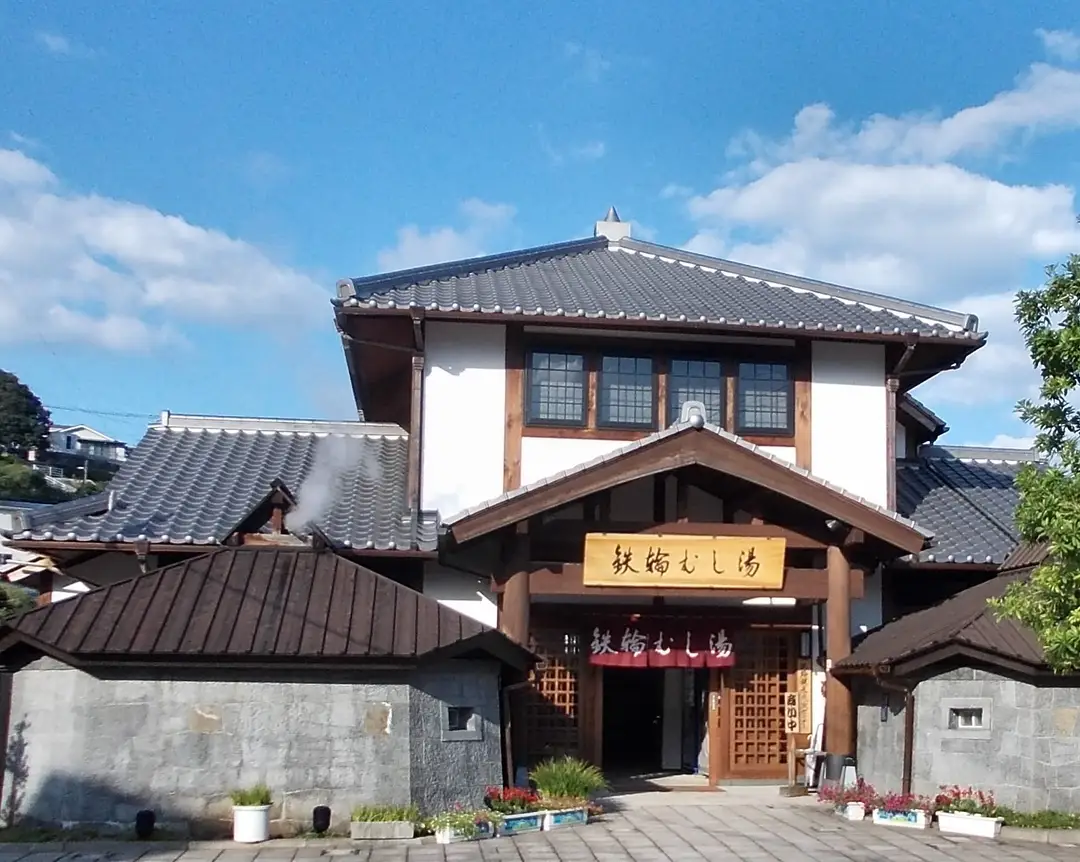
This is the frankly long one. Kinosaki back down to Shin-Osaka, Shinkansen as far as Kokura, then the Sonic along the coast into Beppu, and most of a day is gone. What the distance buys is a real change of ground. You cross onto a different volcanic system, into the prefecture that holds more hot spring sources than any other in Japan by a wide margin, and you feel it within an hour of arriving. Your first bath here will probably be a small tiled room on a residential corner, costing roughly what a tin of coffee costs from a vending machine, with three people in it who came straight from work.
- MorningOut of KinosakiThe limited express back down toward Shin-Osaka. Book it the day before; the morning departures fill up, and this is not a day with slack in it.
- MiddayShinkansen, then the SonicWest as far as Kokura, then change onto the Sonic, which tilts through the curves along the coast and is a pleasant train on which to be tired.
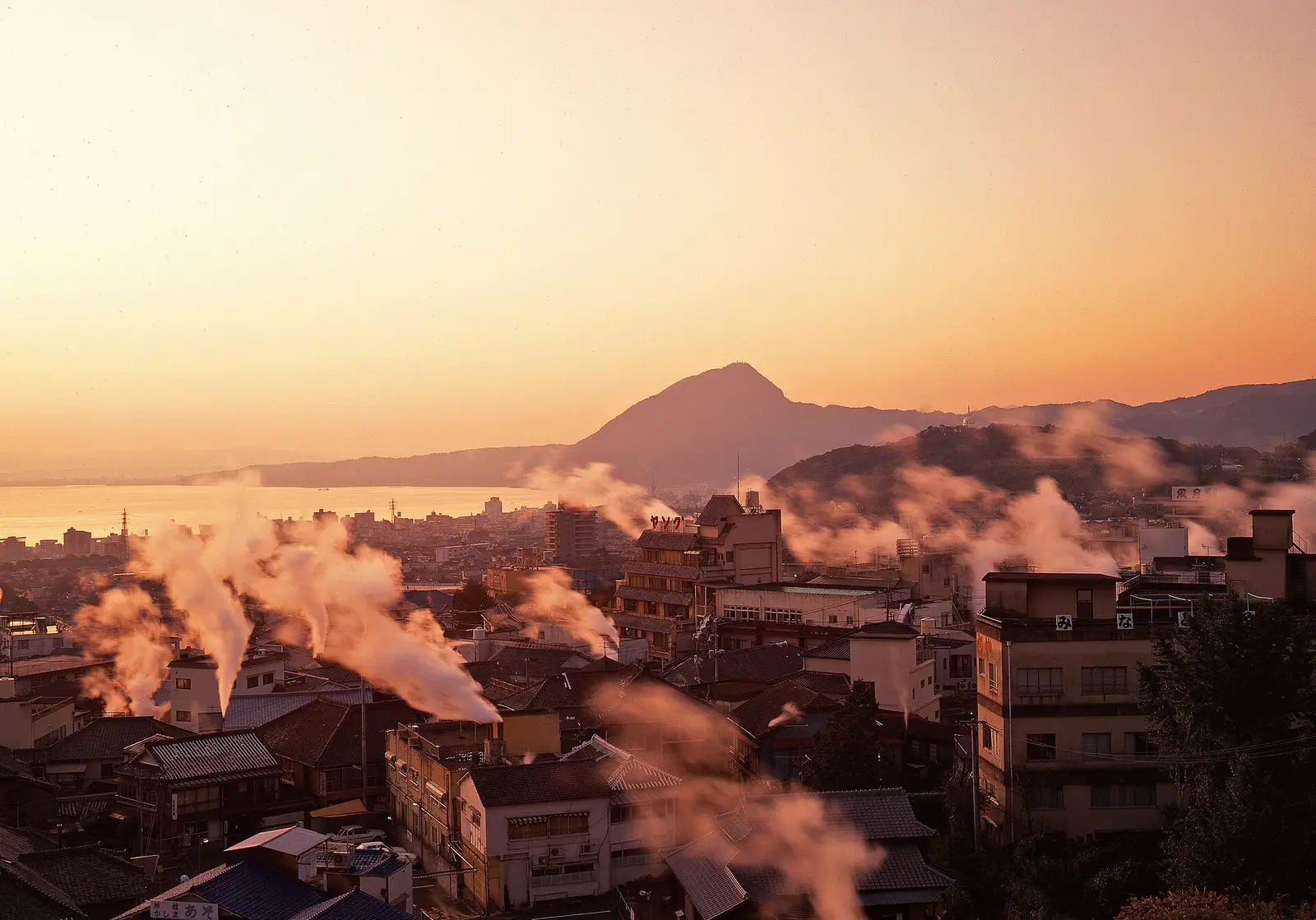
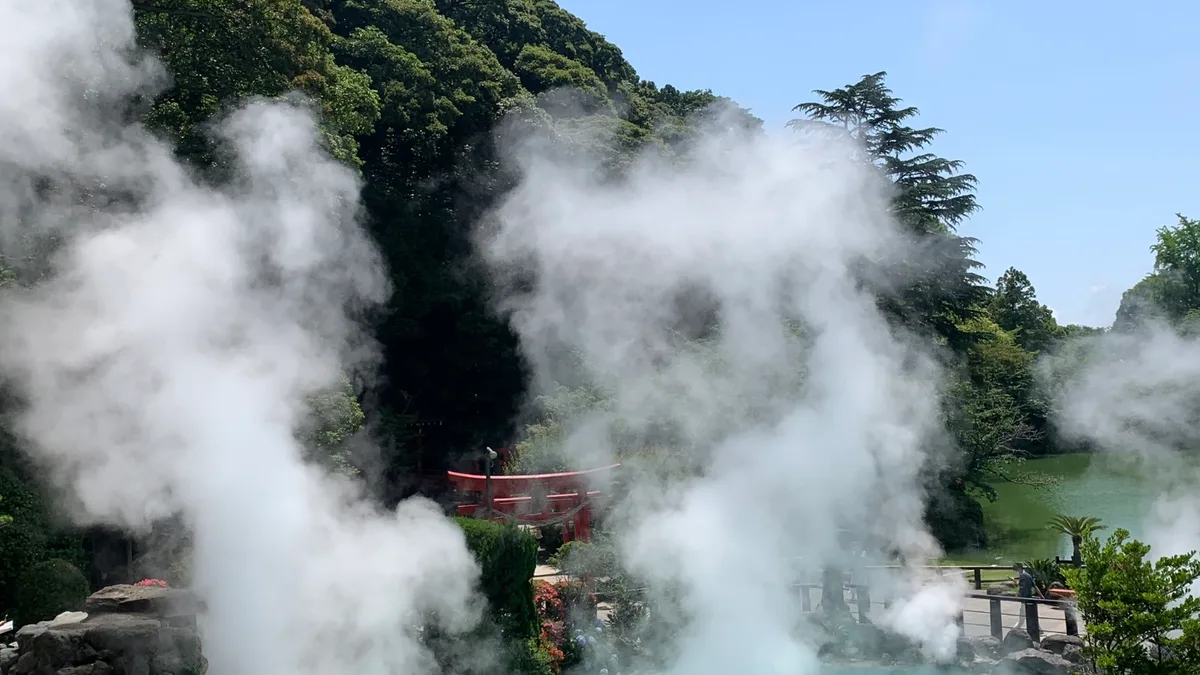
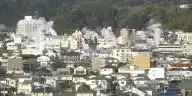
- Late afternoonArriving in the steamAs you come into Beppu, white columns start rising out of the hillside between the houses. Watch the carriage: nobody around you looks up at them.
- EveningSomeone else's bathroomFind the nearest neighbourhood bath and go in. The local bathing society writes its etiquette down, and the line I keep going back to is the reminder not to think of yourself as a customer: at a communal bath you are a guest in somebody's bathroom. Wash properly before you get in, and if the water is too hot for you, say so out loud before you reach for the cold tap, because quietly diluting it takes away the thing everyone else came for. That one sentence is most of the difference between being tolerated and being welcomed.
Where the water comes from
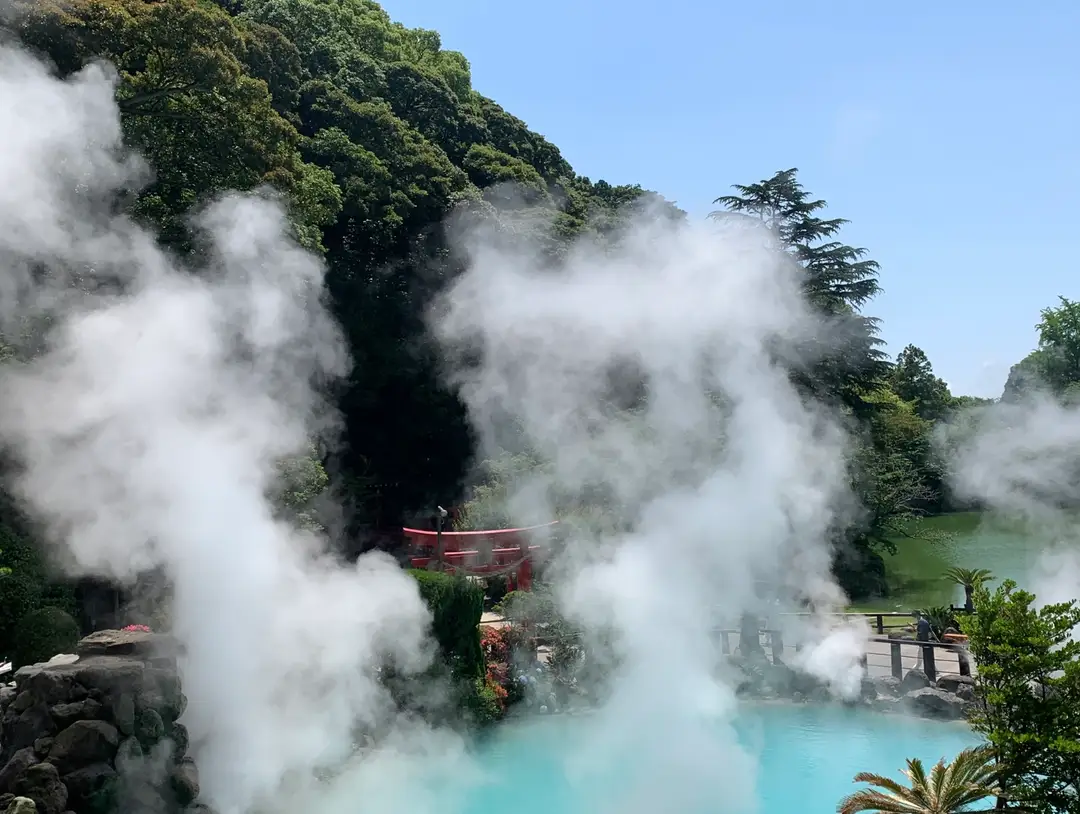
Beppu's famous sights are called hells, and it is worth being plain about them: they are the sources themselves, fenced and looked at rather than bathed in. Some are colours that do not look real, and four of the seven carry a national designation for their scenic value. Around them the Kannawa district gets on with its day inside the steam. Vegetables cook over the vents in communal steamers, drains breathe, and people walk to a bath the way people elsewhere walk to a postbox. This is the town where a week of paying attention finally pays for itself, because the water here changes street by street.
- MorningThe Kannawa hellsFive of the seven sit close enough to walk between, and a single ticket covers all of them across two days. Cobalt, grey, clay, each one venting hard. Which is which is laid out in the Beppu Onsen guide.
- Late morningSteam as a kitchenKannawa cooks with the vents. Eggs, sweet potato, whole baskets of vegetables, set over a hole in the ground and covered. It comes out tasting faintly of the water it was cooked in.
- AfternoonThe last two hells, or the old wooden bathhouseThe remaining two hells are a bus ride further along the coast. If you would rather stay in town, the old wooden bathhouse near the station has no showers at all: you sit on the floor, fill a bowl and pour it over yourself, the way everyone did before plumbing arrived. The water in there is very good.
- EveningThe last cardFor the final bath I would go small again. A neighbourhood room with a stamp for the local bathing pilgrimage sitting on the desk, and no view whatsoever. Read the sheet, get in, and notice that you knew what the water would feel like before your foot touched it.
If you have one more day
+1 dayWith a seventh day I would give it to Kyushu. Yufuin sits over the hill from Beppu and does something different again: a walking town of galleries, craft shops and a small lake, softer and more curated than its steaming neighbour, and there is a Yufuin guide here. Further inland, Kurokawa scatters its baths through a wooded valley and is the name Japanese onsen enthusiasts reach for most often when somebody asks them for a favourite.
If the spare day belongs earlier, Hakone absorbs one easily, since the art museums alone can fill a day between baths. From Kinosaki, Izushi is a small castle town of soba shops within an easy ride, and it makes a gentle half day out of the third morning.
If you're short a day
−1 daySix days is more than a lot of trips can spare. If yours is one of them, take a single two-night block and let the other two wait for another visit. Nobody needs to treat that as a compromise; it is how I would use this page myself.
Hakone if your trip is shaped around Tokyo and you would like a mountain, a lake, a ropeway and a bath inside the same two days. It is the easiest of the three to reach, and it has a reputation for costing more a night than less-visited hot spring towns, which travellers who come only for the water do sometimes feel.
Kinosaki if you want the town itself to be the experience, walking between baths in a yukata rather than settling into one. It is also the town where tattoos close no doors, which for some travellers settles the question on its own.
Beppu if you want the water at its most abundant and most ordinary, and if a plain neighbourhood bath on a back street sounds better to you than a designed one.
Whichever block you choose, the reading travels with you. It works just as well in a town none of us have mentioned here.
Extend from here
OnwardEach block clips onto a bigger region without any awkwardness. Hakone is the natural pause inside a Kanto week, two nights out of Tokyo and back again. Kinosaki hangs off the end of the Kansai lines from Kyoto and Osaka, and it also opens the door to San-in, because the same coastal railway carries on west toward Tottori and Izumo. Beppu is the eastern edge of Kyushu, so a Kyushu loop can begin or finish here instead of treating it as a detour.
If you are coming in the cold months, the winter plan covers what changes. Steam becomes visible, crab comes into season on the Sea of Japan side, and a bath at the end of a cold day is a different animal from the same bath in August.
WMJS is written in Japan, in English, with AI help. We check every page, but English is not our first language. If a sentence reads oddly, tell us. One sentence is enough.
Thank you. A person reads every note.
Good to know — fares & times
What the card on the wall tells you
Every onsen facility posts a hot spring analysis sheet: source name, temperature at the source, discharge in litres per minute, the sensory test (colour, clarity, taste, smell), pH and the resulting classification. Water under 25C is a cold mineral spring, 25 to 34C low-temperature, 34 to 42C onsen, 42C and above high-temperature. Below pH 3 is acidic and pH 8.5 and above is alkaline. The values are measurements from the day of testing rather than a permanent guarantee.
Hakone Freepass, and the surcharge it does not include
Hakone Freepass from Shinjuku: 7,100 yen adult, 1,600 yen child, valid 2 days, covering the round trip plus unlimited use of eight modes of transport inside Hakone. The Romancecar is a separate limited express surcharge of 1,200 yen one way from Shinjuku to Hakone-Yumoto, on top of the pass, and the journey takes about 80 minutes.
Odakyu Electric Railway (official)as of 2026-08
Hakone: seventeen spring areas, about twenty waters
Hakone counts seventeen named hot spring areas, grown from the historic seven of Yumoto, Tonosawa, Dogashima, Miyanoshita, Sokokura, Kiga and Ashinoyu. Together they yield about 25,000 tonnes of hot water a day, the fifth-largest discharge in Japan, across roughly twenty water types. The tourism association describes the range as a department store with four floors above ground and one below: acidic sulphate water on the top floor, chloride water on the second, mixed chloride-bicarbonate-sulphate water at ground and basement level. Yumoto is the oldest by tradition, dated to 738.
Owakudani: the terrace is open, the fumarole trail is booked
The walking trail through the Owakudani fumarole field, a loop of about 700 m, was closed from May 2015 and has reopened since 28 March 2022 on a pre-booked guided entry only: four departures a day at 10:00, 11:30, 13:00 and 14:30, 30 people per slot, about 40 minutes, helmets provided, and a safety cooperation fee of 800 yen per person payable cashless on the day. Entries are cancelled in bad weather or on volcanic activity. The wardens speak Japanese only, and the association asks that you apply only if you understand Japanese. The ropeway station, its terrace and the view over the steam need none of this.
Kinosaki: what a bath costs, and what the pass covers
A single entry to a Kinosaki public bathhouse is 800 yen for adults and 400 yen for children from age 3 through primary school. Guests staying in the town are usually given a bathhouse pass, the yumepa, at check in; day visitors can buy the same one-day pass at any bathhouse counter for 1,500 yen adult and 750 yen child. All seven draw on one shared classification of water, sodium-calcium chloride at 42C, while the association notes that the bathhouses differ from one another in era, building and water temperature. All of them allow tattoos of any size, which is unusual in Japan.
Kinosaki right now: the seven is currently five
Kono-yu is closed for renovation from 11 May 2026 to 30 October 2026, and Satono-yu has been closed for renovation since 1 April 2024. The remaining bathhouses each take a different weekday off (Kono-yu Tuesday, Mandara-yu and Ichino-yu Wednesday, Goshono-yu and Yanagi-yu Thursday, Jizo-yu Monday), and some open at 7:00 while others open at 15:00. Check the day of the week before you build an itinerary around a particular bath.
Visit Kinosaki (official) - The Mystic Onsenas of 2026-08
Getting to Kinosaki Onsen
From Tokyo the journey runs about 4 hours 40 minutes in total, Shinkansen to Kyoto and then the Limited Express Kinosaki. The Limited Express Kinosaki runs Kyoto to Fukuchiyama, Toyooka and Kinosaki Onsen; the Limited Express Kounotori runs the same northern section from Shin-Osaka. All limited express seats require a reservation in advance.
Why Oita feels different: 5,094 sources
Japan has 27,899 hot spring sources across 2,839 hot spring areas. Oita prefecture alone holds 5,094 of them, first in the country and close to double second-placed Kagoshima at 2,735. For comparison, Kanagawa (Hakone) has 602 and Hyogo (Kinosaki) has 443. A source is a wellhead rather than a bathhouse, so the count measures how much water comes up rather than how many places you can bathe.
The Beppu hells: ticket, hours and layout
A combined ticket to all seven hells is 2,400 yen for adults and 1,200 yen for primary and junior high school students, valid on the day of purchase and the following day, one entry per hell. All seven open 8:00 to 17:00, every day of the year. Five sit within walking distance of each other in Kannawa; Chinoike Jigoku and Tatsumaki Jigoku are about 3 km further on. Kamenoi bus from Beppu Station takes about 20 minutes to Kannawa, or about 40 minutes and 390 yen to Chinoike Jigoku.
Four of the seven hells are nationally designated
Umi Jigoku, Chinoike Jigoku, Tatsumaki Jigoku and Shiraike Jigoku are designated Places of Scenic Beauty by the national government for their range of colour and form. The hells are viewing sites at hot spring sources close to 100C, not bathing facilities, although four of them have free foot baths attached.
Beppu Jigoku Association (official)as of 2026-08
Beppu Hatto Onsendo, the local bathing pilgrimage
Beppu's eight hot spring districts are Hamawaki, Beppu, Kankaiji, Horita, Myoban, Kannawa, Shibaseki and Kamegawa. About 150 facilities take part in the Onsendo stamp circuit; collect stamps at 88 of them in a booklet called a spaport and you are certified as an onsen master.
The bathers' own code, in their own words
Onsendo publishes a ten-point code of conduct for participants. Point 5 asks bathers not to be captured by the fittings of the bath but to judge the water itself using taste, touch, smell and sight, and to enjoy each water's individuality. Point 4 asks them not to think of themselves as customers, since at a communal bath you are visiting someone else's bathroom. Point 2 asks anyone who finds the water too hot to say so aloud before adding cold water, because adding tap water dilutes the hot spring content for everyone. Point 8 notes that completing all 88 covers only a fraction of Beppu's 2,848 sources.
Beppu Hatto Onsendo (official) - code of conductas of 2026-08
Go deeper
13 min· 6 ch
Before you goWhile you walk
Visiting Hakone, the Mountain Loop Built Around a Hot Spring
Is Hakone worth visiting? We weighed 186 traveler voices: 59% say worth it, only 15% felt let down. The mountain-train, cable-car, ropeway, and boat loop built around a hot-spring cure, with tickets, timing, and an audio guide.
Hakone (Lake Ashinoko)
9 min· 6 ch
Before you goWhile you walk
Visiting Kinosaki Onsen, Where the Whole Town Is a Single Inn
Is Kinosaki Onsen worth it? We weighed 84 traveler voices: 69% call it a highlight worth the detour, and Japanese reviewers land close behind at 67%. The seven public baths, the yukata bath-crawl by lantern light, and the winter crab season, with an audio guide.
Kinosaki Onsen (Otani River)
11 min· 6 ch
Before you goWhile you walk
Visiting Beppu Onsen, the Town Where the Earth Boils Just Beneath Your Feet
Is Beppu worth it? We weighed 102 traveler voices: 46% say yes for the baths and boiling town, 44% say it depends on why you came, and Japanese reviewers are far warmer at 72%. The seven hells you look at but don't bathe in, steam-cooked eggs, the sand bath, and Beppu Hatto, with an audio guide.
Beppu Onsen (Kannawa)
9 min· 6 ch
Before you goWhile you walk
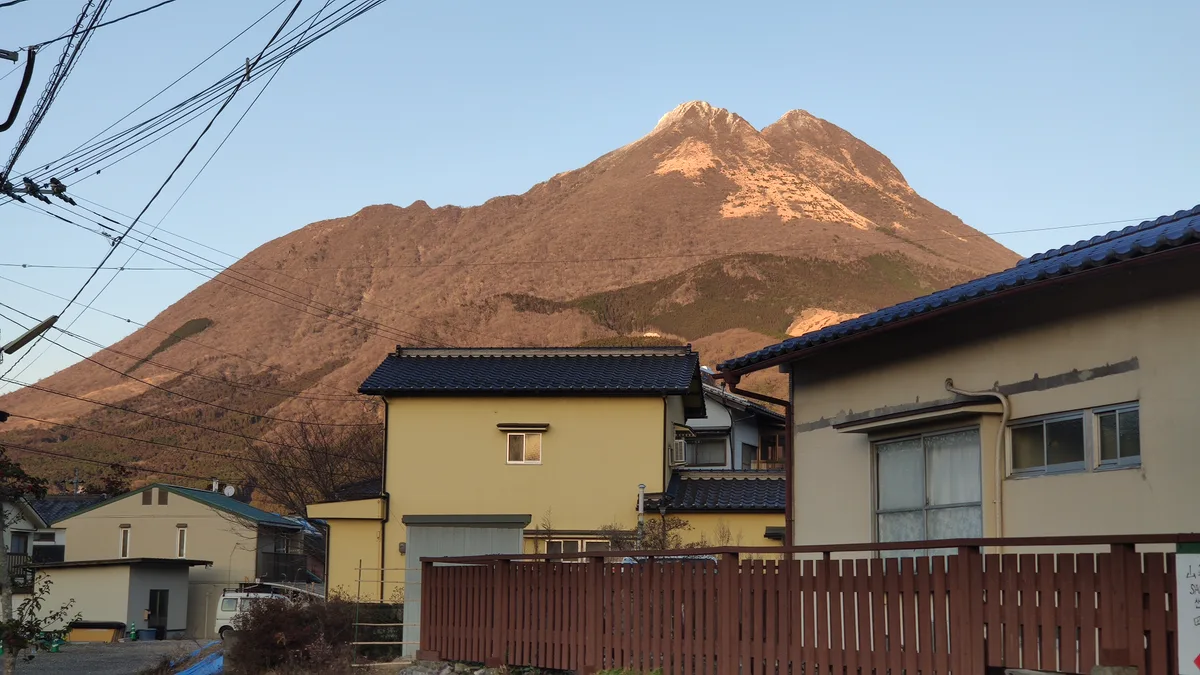
Yufuin: A Town to Walk Slowly, and a Mist That Waits for Morning
An audio cultural guide to Yufuin, verified against official sources. A hot-spring town you walk rather than watch, where the famous morning mist on Lake Kinrin belongs to those who stay the night, how it differs from Beppu, and how to actually get there on the Yufuin no Mori train.
Yufuin (Lake Kinrin)
Read before you go
Combine with another plan
Tokyo & around, an easy few days
The capital and its day trips — old-city Tokyo, seaside Kamakura, mountain Nikko — at a comfortable pace
Kansai, an easy few days
Japan's older heart — Kyoto, Nara, Osaka — at a comfortable pace
San-in, the quiet coast of the gods
The Sea-of-Japan coast the sunny side turned its back on — and kept the oldest Japan safe in the shade: a shrine older than the capitals where the gods still gather, one of only twelve original castle keeps, a silver mountain that kept its forest, and sunsets on Japan's official list of a hundred. Run it gently east to west, from the great sand dunes to Izumo and the setting sun.
Kyushu, an easy few days
A north-to-south spine down the island — a shrine of hope, an open-window harbour, a castle being healed, and a city under a volcano
Winter Japan, snow, onsen and light
One westbound line from Tokyo's clearest air into the snow country and down to the hush of Kyoto — read the way the people who love a Japanese winter read it, where the cold isn't the price of the trip but the instrument the whole season is played on
Sources
- Japan Spa Association - How to read a hot spring analysis sheet
- Ministry of the Environment - Protection and use of hot springs, statistics
- Odakyu Electric Railway - Hakone Freepass and Romancecar
- Hakone Tourism Association - The Seventeen Springs of Hakone
- Hakone Tourism Association - Owakudani guided entry
- Kinosaki Onsen Tourism Association - the soto-yu
- Kinosaki Onsen Tourism Association - the whole town as one inn
- Visit Kinosaki (official) - The Mystic Onsen and passes
- JR West (JR Odekake Net) - Limited Express Kinosaki
- Beppu Jigoku Association (official) - fees, hours and access
- Beppu Hatto Onsendo (official) - the circuit and its eight districts
- Beppu Hatto Onsendo (official) - the bathers' code of conduct