
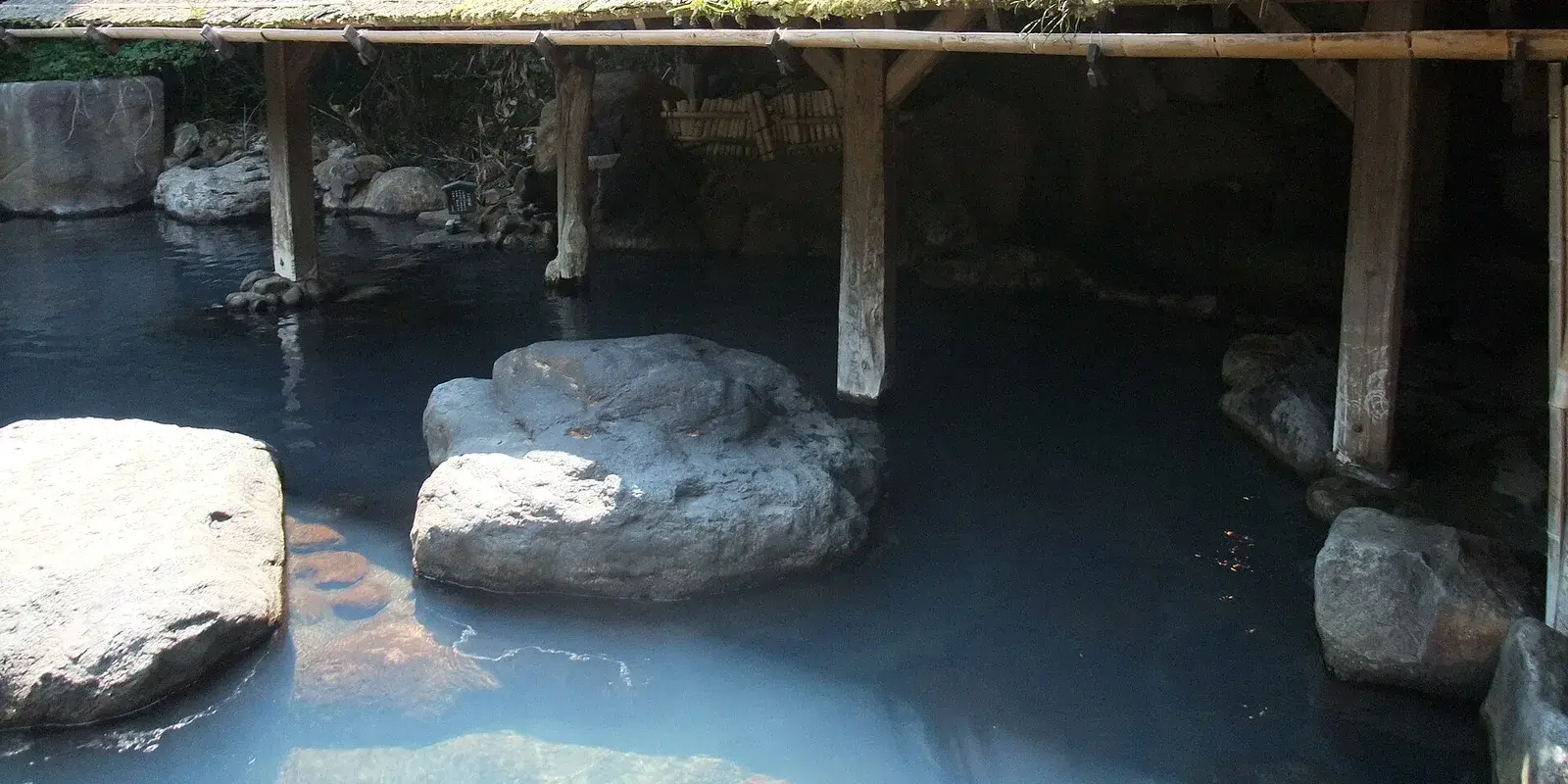
What Japanese Bathers Actually Think When You Walk In
What you'll learn in this article:
- What 295 Japanese people said about rinsing, towels, swimsuits, and showering etiquette
- Which bathing behaviors genuinely matter, and which ones you can relax about
- Why the person next to you in the bath is probably rooting for you
If you've ever stood at the entrance of a Japanese onsen or sento, heart pounding, trying to remember all the "rules" you read online: take a breath. You're going to be fine.
Every English-language onsen guide follows the same formula: rinse before entering, don't wear a swimsuit, keep your towel out of the water, wash while sitting. They give you a checklist. What they never show you is the other side: what the person soaking in the bath next to you is actually thinking.
We collected 295 real opinions from Japanese bathers across four specific topics (rinsing before entering, swimsuit wearing, towels in the water, and showering while standing) to find out what genuinely matters, what doesn't, and what makes Japanese people think: "ah, they get it."
And here's what might surprise you: the gap between what visitors fear and what Japanese bathers actually feel is much wider than you'd expect. On most things, the honest answer is closer to "we're happy you're here" than "you're doing it wrong." If you're already reading this article, you're probably the kind of person who'll do just fine.
Quick Guide
| Situation | What Japanese Bathers Said | |
|---|---|---|
| 🟡 Important | Rinse before entering (kake-yu) | This one matters. Not the exact number of rinses; nobody's counting. But skipping it entirely is the one thing that genuinely bothers people. A quick rinse shows you understand. |
| 🔴 Respect this | No swimsuits in the bath | This is the clear line. It's not about modesty rules. It's about water purity and shared bathing culture. If nudity feels uncomfortable, private baths (kashikiri) are a warm, judgment-free option. |
| 🟢 Relax | Towel etiquette | Don't stress about this. Keep your towel out of the water if you can, but if it slips in, nobody is going to scold you. Even Japanese people get confused about where to put the towel. |
| 🟡 Good to know | Sit when you shower | At the washing station, sit on the stool. Standing sends water splashing onto neighbors: that's the real issue rather than a mysterious rule. When nobody's around, even Japanese bathers say it's fine to stand. |
The one thing to remember: Japanese onsen culture isn't a test you can fail. The vast majority of Japanese bathers wrote the same thing: "They don't know the customs; they're not being rude." Show even a little awareness, and you'll be welcomed warmly. For tattoo-related questions, see our separate guide: Onsen and Tattoos.
What do Japanese people think when a foreigner enters the onsen? We read what 295 Japanese bathers wrote. The clear answer: rinse before entering and skip the swimsuit: those are the two real lines. Beyond that, 62% say towel etiquette is "a custom, not a law," and most bathers wrote that their instinct is to help rather than judge. One bather summed it up: "I don't scold. I teach." Your effort is noticed, and the person next to you is probably rooting for you.
How We Gathered These Voices
We collected 295 Japanese-language responses across four bathing etiquette topics: rinsing before entering (70 responses), swimsuit wearing (75 responses), towel usage (70 responses), and washing station behavior (80 responses). We also gathered 90 responses on generational differences in bathing attitudes.
Sources include public Japanese Q&A sites, forums, and social posts, news articles from MoneyPost, J-Cast, and ENCOUNT, and surveys from All About and other Japanese media.
A quick note: This isn't a controlled scientific survey. It's a collection of what real Japanese people said in their own words, in their own language, on public platforms. Most English-language guides simply tell you what to do. We wanted to show you what the person next to you in the bath actually thinks about it, and why.
The Temperature Gauge: What Actually Matters
Not every bathing behavior carries the same weight. Some things are essential. Some are flexible. And one thing is a clear boundary. Here's what 295 Japanese bathers wrote.
🟡 Rinsing Before Entering (Kake-yu)
The honest answer: do it, and you're golden. Skip it, and people notice.
Of 70 responses about pre-bath rinsing, the reactions split clearly: Japanese bathers consider kake-yu (rinsing your body before entering the shared bath) the baseline of bathing etiquette. But here's what makes it interesting: they're not counting your rinses.
That red bar looks intimidating, but look at what it's actually saying. The 43% who said "non-negotiable" are reacting to people who skip rinsing entirely. The question isn't whether you rinsed perfectly. It's whether you rinsed at all.
洗う。掛け湯もしないなんて論外。 Wash. Not even doing kake-yu is out of the question.
湯船につかる前に身体を洗いますよね?洗わずに入る方がいてひいちゃいました… You wash your body before getting in the bath, right? I was shocked when someone got in without washing...
Strong words, but notice something? These reactions aren't aimed at foreigners specifically. Japanese bathers apply this standard to everyone.
And here's the flip side: what happens when you do rinse:
温泉に来られる外国人の方は、日本の温泉文化を味わいたくて来られる方がほとんどです。身ぶり手ぶりと英語混じりで教えると、日本人の常識のない人よりも、まともです。なぜなら、温泉に来る前に事前に調べてくるからです。 Most foreigners who come to onsen want to experience Japanese bathing culture. When you show them with gestures and a bit of English, they're actually better-mannered than some Japanese people — because they researched before coming.
ほとんどの場合、マナー云々ではなく、知らないだけです。ですから、注意ではなく、教えます。 In most cases, it's not about manners — they simply don't know. So I don't scold. I teach.
That last quote captures something essential about Japanese bathing culture: the instinct isn't to judge. It's to help. Multiple bathers wrote that they actively look for confused visitors so they can show them what to do.
私は旅先で挙動不審で困っていそうな外国人には日本語と身振り手振りで教えてあげるよ、目が合ったらね。オ〜ウ!サンキュー!アリガトゴザイマース!て大概返してくれる。 When I see a foreigner who looks confused at a bath, I teach them with gestures and Japanese. When our eyes meet. And they usually go "Oh! Thank you! Arigato gozaimasu!" back at me.
And several voices put the whole thing in perspective:
マナーの悪い観光客など、日本人にも外国人にもいます。外国人だと接触の回数が少ないので、目につきやすく記憶に残りやすいだけなのです。 Badly-mannered bathers exist among both Japanese and foreign visitors. We just notice foreigners more because encounters are rarer — they stick in memory.
💡 The real standard
Nobody is counting your rinses. "Three times" is a guideline some guides invented. Japanese bathers aren't enforcing it. The actual standard is simpler: rinse before you get in. Do that, and you've cleared the bar. Many Japanese bathers wrote that they actively help confused visitors rather than judge them.
🔴 No Swimsuits: The One Clear Line
This is the one area where Japanese bathers are genuinely firm.
Of 75 responses about wearing swimsuits in onsen, nearly half expressed clear disapproval. This is the strongest negative reaction across all four topics, and it's rooted in something deeper than "rules."
Why does this one feel different? For Japanese bathers, the shared bath is defined by its water: natural, uncontaminated, shared equally by everyone. Fabric in the water disrupts that.
お風呂に水着では入らないから温泉にも水着で入らない。 You don't wear a swimsuit in the bath at home, so you don't wear one in an onsen either.
自然から湧出した湯に、何の加工もせずに浸かることを望む。 We want to soak in water that springs naturally from the earth — without anything added.
It's not about modesty or judgment of your body. It's about the water itself, and in a hot-spring town like Beppu, where some springs run so hot you can only look at them, not bathe in them, you start to feel just how alive that water is. In a mountain hot-spring region like Hakone, where seventeen different waters rise across a single set of slopes, that aliveness is the very thing people have traveled to soak in for centuries. And in a basin town like Yufuin, where ryokan baths sit beneath the twin peaks of Mount Yufu, lingering in your own inn's water is a large part of why travelers stay the night. In Kusatsu, whose spring comes up too hot to bathe in, you can even watch the water being cooled, as it runs through wooden channels across the town square on its way to the baths.
But even on this topic, Japanese bathers showed nuance. Several acknowledged that nudity norms vary by culture:
外国から日本にせっかく来ているのですから、日本の風情といいますか、文化を体で体験してみるのも良いと思いますよ。実際、温泉で外人の方を見かけますが、素っ裸で満喫していましたよ。 You've come all the way to Japan — why not experience the culture with your whole body? I've actually seen foreign visitors at onsen completely naked and thoroughly enjoying themselves.
身ぶり手ぶりと英語混じりで教えると、日本人の常識のない人よりも、素直に笑顔で真似してくれて、最後にはサンキューと教えたことに礼を言ってくれます。 When you teach them with gestures and a bit of English, they smile and follow along more willingly than some Japanese people — and at the end, they thank you for showing them.
And one person was remarkably blunt about where the real problem lies:
不快に感じたり、マナー悪い人みたことないですね。それよりも、サウナから出て水風呂で汗かいた顔洗ったり、全身潜ったりと、見てるだけで不快な日本人を先日見ました。 Honestly? I've never seen a foreign visitor with bad manners at onsen. What I did see recently was a Japanese person coming out of the sauna and washing their sweaty face in the cold bath, then dunking their whole body in. That was genuinely unpleasant to watch.
If nudity feels genuinely uncomfortable: That's completely okay. Japan has beautiful alternatives. Kashikiri buro (貸切風呂) are private baths you can reserve; many ryokan and onsen resorts offer them, as we cover in our guide to staying at a ryokan. Some facilities also offer yuami-gi (湯あみ着), special bathing garments designed for the water. You don't need to push past your comfort zone to enjoy Japanese hot springs.
水着着用可の温泉や、水着着用での温泉施設と大浴場を併設しているホテルや旅館等も有りますね。 There are also onsen where swimsuits are allowed, and hotels that have both swimsuit-friendly facilities and traditional baths side by side.
💡 Why it's about the water and never about you
The swimsuit reaction isn't about judging your body or enforcing modesty. It's about the water: natural hot spring water, shared equally by everyone, uncontaminated. That's what makes it different from a pool. Understanding this shifts the frame from "a rule I have to follow" to "something I can respect."
🟢 Towel Etiquette: Relax, It's Not What You Think
This is where the gap between visitor anxiety and Japanese reality is widest.
Of 70 responses about towels in the bath, the dominant tone was surprisingly understanding. Yes, you shouldn't dip your towel in the shared water, but if it happens, nobody is going to call the onsen police.
Here's something that might surprise you: the Japan Hot Spring Association itself has clarified that the towel prohibition has no legal basis.
タオル自体が汚れている可能性がある、タオルの繊維がほつれて湯を汚すなどと一般的に言われていますが、法的根拠はありません。 It's commonly said that towels might be dirty or that towel fibers could pollute the water — but there's no legal basis for the prohibition.
The custom exists for practical reasons (keeping loose fibers out of the filtration system and maintaining water clarity), but it's a custom, not a commandment. And Japanese people themselves sometimes struggle with it:
ウブだった頃、恥ずかしくてタオルで体隠しながら湯船に入ったら、知らない人に「タオル入れないでください」と激怒された。 When I was younger and shy, I tried to hide my body with a towel while getting in the bath — and a stranger angrily told me "Don't put your towel in the water!"
That's a Japanese person describing their own experience. Even locals get corrected.
So what do you actually do with your towel? You have options:
浴槽にかからなければ湯船の縁など、どこに置いても構わないと思います。 As long as it doesn't touch the bath water, you can put it on the edge of the tub — wherever is fine.
のぼせ防止のために水に浸したタオルや手拭いを頭に置いても構いません。 It's perfectly fine to place a damp towel or tenugui on your head to prevent overheating.
The towel-on-the-head thing you see in anime and travel photos? That's real, and it's practical: it helps regulate your body temperature. Feel free to try it.
💡 Even Japanese people get the towel thing wrong
The towel rule trips up locals too. Keep it out of the water if you can: fold it on the edge of the tub or place it on your head. But if it accidentally slips in, just take it out. Nobody will remember it by the time you're soaking together in comfortable silence.
🟡 The Washing Station: Why Sitting Matters
The hidden friction point that nobody tells you about.
Of 80 responses about the washing station, this topic generated the most visceral reactions, not because of cultural sensitivity, but because of something very physical: water splashing on the person next to you.
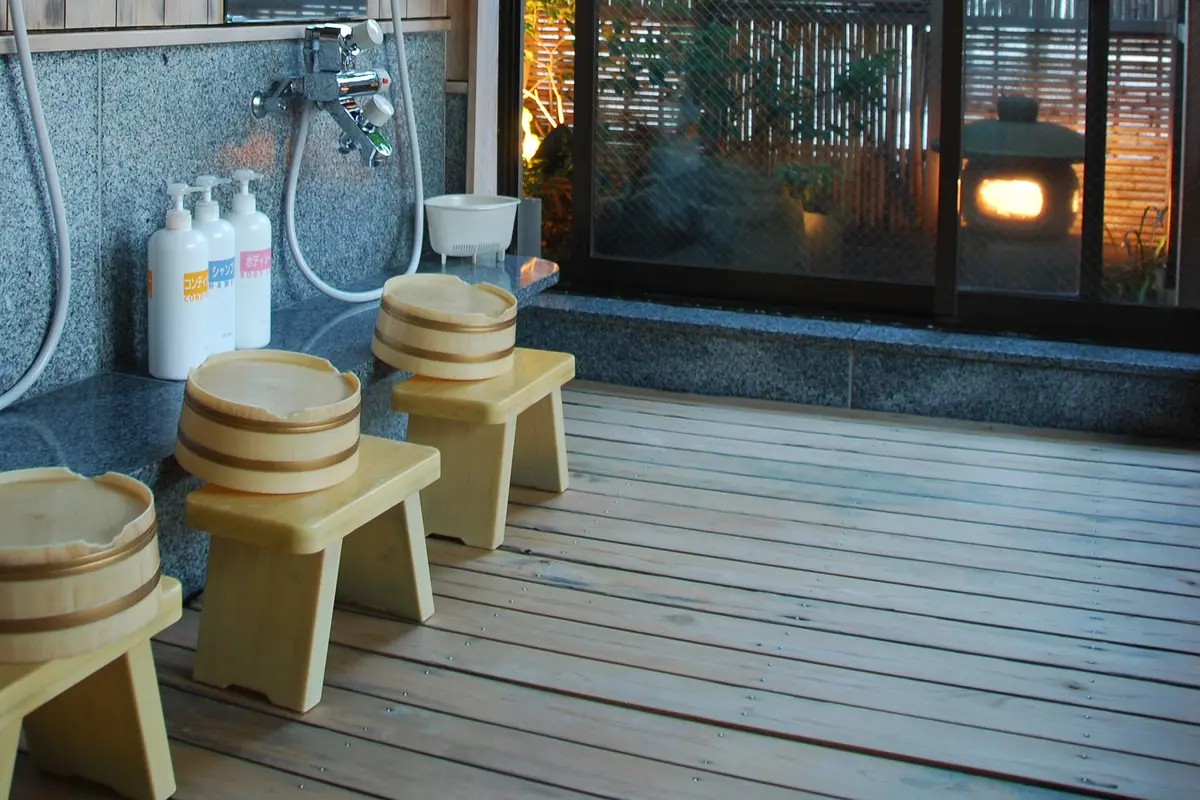
In most countries, you shower standing up. In Japanese sento and onsen, you wash sitting on a small stool. This isn't cultural theater; there's a very practical reason.
座るのがマナーなんてありませんよ。単に周りに人がいれば水滴が周りに飛んだり湯船に身体の泡が飛んだりするからです。しかしその辺の気配りできれば問題ないですよね。 There's no "rule" about sitting. It's simply that when other people are around, standing sends water drops and soap suds flying everywhere. If you can be considerate about that, there's no problem.
立ってシャワーは跳ね返りが強い。 Standing showers create strong splashback.
The issue is physics more than etiquette. Water from a standing height bounces off the tiles and splashes onto your neighbors. When everyone is sitting on low stools close together, that splashback is minimized.
But Japanese bathers are remarkably practical about this: they draw a clear line between "crowded" and "empty":
立ってシャワーを浴びても、誰にも散ったりしないような状況であれば…問題ない。 If you shower standing and it doesn't splash anyone... no problem.
殆ど客もいない時間帯で、実害も出ないものにマナー、マナーと言わなくても各人がしたいようにしたらよいと思う。 When there are barely any customers around and there's no actual harm, I think people should just do what they want instead of shouting "manners, manners."
And one person offered a fascinating perspective from the other side:
銭湯とか経験のない人はシャワーを真横に出して隣や裏の人に当てるよ。 People who haven't been to sento before point the showerhead sideways and spray the person next to or behind them.
Note: they said "people who haven't been to sento" rather than "foreigners." This happens to Japanese newcomers too.
What to do: Sit on the stool, rinse and wash, then head to the bath. If the washing station is empty and you prefer to stand, Japanese bathers themselves say it's fine: just be aware of splashing when others are nearby.
💡 It's physics before philosophy
The sitting rule isn't about cultural conformity. It's about not splashing soap and water onto the person 50 centimeters away from you. When nobody's nearby, even Japanese bathers say standing is fine. The key is simply awareness.
The Cultural Engine: Why Bathing Etiquette Exists
So what ties all of this together? Why do Japanese people care about rinsing, towels, and sitting? It comes down to one concept that no English guidebook adequately explains.
Hadaka no Tsukiai (裸の付き合い): Naked Connections
Japanese has a phrase, hadaka no tsukiai, that literally means "naked relationship." It describes the idea that when everyone is bare, social barriers dissolve. No uniforms, no status symbols, no pretense. The bath is an equalizer.
This is why the shared water matters so much. When you rinse before entering, you're not following a rule. You're showing respect for the water that everyone shares. When you keep fabric out of the bath, you're preserving the purity of that shared space. When you sit while washing, you're being aware of the people around you.
It's the same principle you'll find in how Japanese trains stay silent or why removing your shoes makes people smile: awareness of shared space.
The Sento Was a Neighborhood
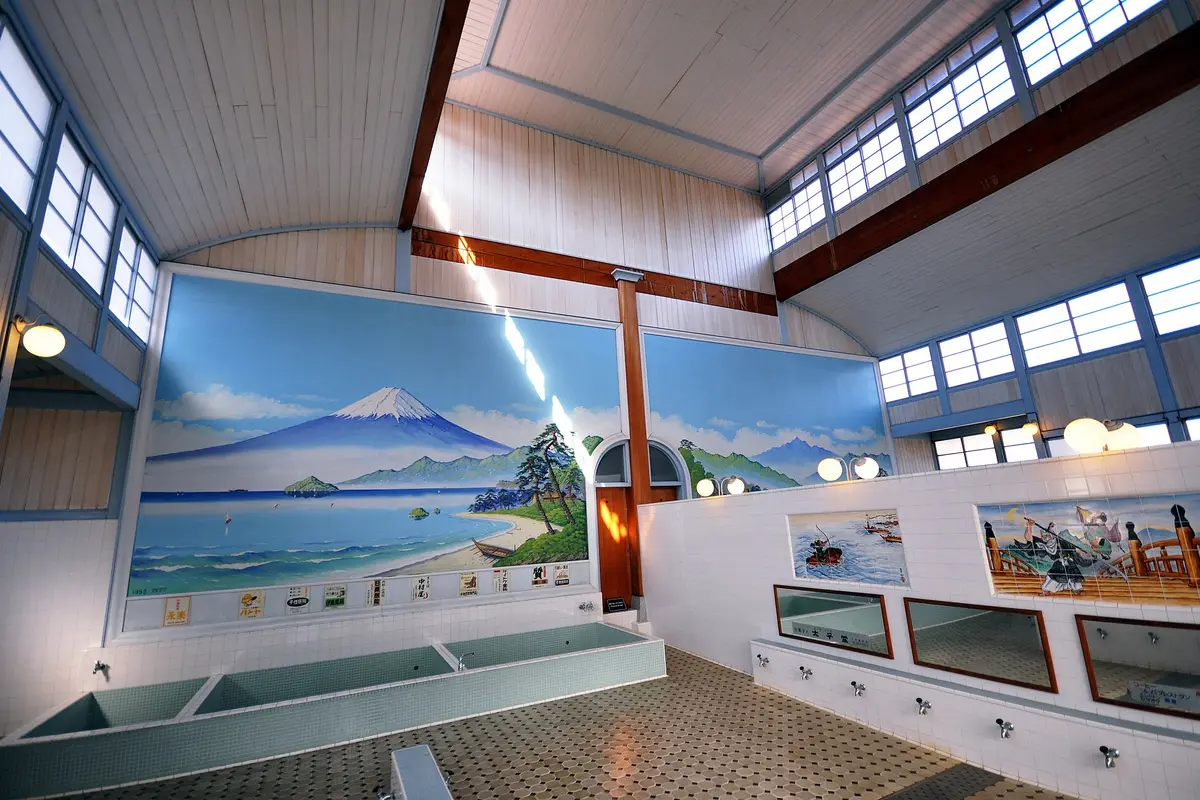
For centuries, public bathhouses weren't luxury experiences. They were where neighborhoods happened, and some of the oldest, like the historic Dōgo Onsen Honkan in Matsuyama, still open their doors to bathers today. In some onsen towns like Kinosaki Onsen, the whole town still shares its seven public baths, with guests strolling between them in yukata. There's the same unhurried rhythm to soaking in a hot-spring town like Ginzan Onsen, where gas lamps glow over the river at dusk: the bath is something a whole place gathers around, more than just a stop on a checklist. Before home baths became standard (roughly the 1960s-70s), sento were daily social infrastructure. Children learned bathing etiquette not from rulebooks but from neighbors. An elderly bather would gently correct a child's form, and that knowledge passed down through generations.
昔は今と違って銭湯と言えば大人の社交場でした。入浴についてお年寄りよりいろいろマナーのルールを教えてもらうこともあったのですが、今は自宅風呂が一般的になりマナーやルールの指導を受けたくない若者が銭湯を避けている。 Unlike today, sento used to be an adult social space. Elderly bathers would teach you the rules and customs. But now that home baths are standard, young people who don't want to be lectured about etiquette avoid sento altogether.
Japan had 18,000 sento at their peak. Today, roughly 1,800 remain, a 90% decline. That transmission chain is breaking. Which means many young Japanese people are just as unfamiliar with sento etiquette as foreign visitors.
The Generation Gap: A Surprising Reversal
One of the most striking findings from our research was the generational divide in bathing attitudes. We collected 90 responses specifically on this topic, and the pattern defied expectations.
Young Japanese bathers are often more informed than older ones.
This sounds counterintuitive. Older bathers grew up with sento. But the sauna boom of the 2020s brought millions of young Japanese people back to public bathing, and they came armed with something previous generations didn't have: social media research.
Multiple sources noted that younger visitors actively look up "sento manners" on YouTube and Twitter before their first visit. Meanwhile, some long-time elderly regulars developed habits in a different era, like diving into cold baths (common in the Showa era, now prohibited at most facilities), and resist changing them.
もうちょっと寛容になってもいいはず。知識のある者は、ない者に対し、優しくあるべき。 We could afford to be a bit more tolerant. Those who know the rules should be kind to those who don't.
昨晩、初来店の女性が常連さんにイジメられ帰ってしまうという出来事があり、とても悲しい思いをしました。 Last night, a first-time female visitor was bullied by a regular customer and left. It made me very sad.
That second quote describes the "nushi" (ヌシ) phenomenon: long-time regulars who claim specific spots and intimidate newcomers. It's a real issue that sento operators struggle with, and it affects Japanese newcomers as much as foreign visitors.
On tattoo acceptance, the generational split is clearest: Among people in their 20s, 32.5% support a blanket ban on tattooed bathers. Among people in their 50s, that number jumps to 50% (BIGLOBE, 2023). For a deeper look at how tattoo attitudes are shifting, see Onsen and Tattoos: A Gentle Guide to What's Actually Changing.
What Japanese Bathers Want You to Know
After reading 385 responses, the most consistent theme wasn't "follow the rules." It was something much warmer.
They know you're trying.
温泉に来る前に事前に調べてくるからです。 Because they research before coming to the onsen.
Multiple Japanese bathers wrote that foreign visitors who make even a basic effort (rinsing before entering, looking around to see what others do) earn immediate goodwill. Perfection isn't expected. Effort is noticed.
They know the problem isn't just foreigners.
不快な日本人のほうが気になる。外国人よりマナーが悪い日本人のほうが問題。 Badly-mannered Japanese bathers bother me more. Japanese people with worse manners than foreigners are the real problem.
日本人でも今は入浴のマナーを心得ていない人は多いです。年齢も関係なく。 Even among Japanese people, many don't know proper bathing manners these days. Regardless of age.
And their instinct is to help, not judge.
ほとんどの場合、マナー云々ではなく、知らないだけです。ですから、注意ではなく、教えます。直接言います。また、その方がお互い気分良く過ごせます。 In most cases, it's not about manners — they simply don't know. So I don't scold — I teach. I tell them directly. That way, we both have a better time.
番台にはガイドブック片手にやってくる海外からのお客さんが増加しており、銭湯は日本の文化を伝える場所へと変化しています。 More and more overseas visitors are arriving at the front desk with guidebooks in hand. Sento is evolving into a place that transmits Japanese culture.
That last quote is beautiful: a sento operator describing how their bathhouse is becoming a cultural bridge. Not a place of strict rules, but a place of welcome.
More Japanese Perspectives
Curious about other aspects of daily life in Japan? These articles explore what Japanese people actually think, based on hundreds of real voices.
- Onsen and Tattoos: 240 Japanese people share how they really feel about tattooed bathers. The rules are changing faster than guidebooks can keep up.
- Why Removing Your Shoes Makes Japanese People Smile: The gut reaction when someone walks in with shoes on, and why trying to take them off earns you instant warmth.
- Staying at a Ryokan: What your host wishes you knew about yukata, kaiseki, and that mysterious envelope.
Share Your Experience
Had a moment at a Japanese bath, whether nervous, awkward, funny, or unexpectedly heartwarming? We'd love to hear it. Your story helps build a bridge between cultures.
Share your experience on Voice Box →
Sources
Primary Research Data
- WMJS onsen etiquette research data (385 Japanese-language responses collected May 2026)
- Rinsing before entering (kake-yu): 70 responses
- Swimsuit wearing: 75 responses
- Towel usage: 70 responses
- Washing station behavior: 80 responses
- Generational differences: 90 responses
Statistical Data
- Japan Sento Association: Approximately 1,800 sento remain nationwide (down from 18,000 at peak)
- All About reader survey on onsen manners (2022)
- Tattoo ban support by age group: BIGLOBE survey (2023)
Opinion Collection Sources
The following sources were used to collect Japanese people's opinions and sentiments. These are not cited as factual authorities but as places where real Japanese people expressed their views on bathing etiquette. First-hand opinions were also gathered from public Japanese Q&A sites, forums, and social posts.
Rinsing before entering (kake-yu):
- Public Japanese Q&A sites, forums, and social posts: first-hand opinions on rinsing before entering
- https://allabout.co.jp/gm/gc/509973/
- https://honichi.com/news/2019/10/08/onsen-taikoku-ni/
- https://news.yahoo.co.jp/articles/8184edc400a28188763c5efa81badb282df7bd86
Swimsuit wearing:
- Public Japanese Q&A sites, forums, and social posts: first-hand opinions on swimsuit wearing
- https://encount.press/archives/872074/
- https://www.moneypost.jp/305477
- https://yamatogokoro.jp/report/27290/
- https://tripeditor.com/353138/2
Towel usage:
- Public Japanese Q&A sites, forums, and social posts: first-hand opinions on towel usage
- https://encount.press/archives/405738/
- https://encount.press/archives/412669/
- https://allabout.co.jp/gm/gc/509973/
Washing station behavior:
- Public Japanese Q&A sites, forums, and social posts: first-hand opinions on washing station behavior
- https://www.moneypost.jp/305477
- https://www.j-cast.com/2013/11/30190257.html?p=all
- https://nikkan-spa.jp/2096996
Generational differences:
- Public Japanese Q&A sites, forums, and social posts: first-hand opinions on generational differences
- https://www.biglobe.co.jp/pressroom/info/2023/03/230309-1
- https://maidonanews.jp/article/14864149
- https://maidonanews.jp/article/14840126
- https://sdgsmagazine.jp/2022/02/17/4879/
- https://tokyosento.com/column/6310/
Note on Quotations
Quotes from online platforms have been lightly edited for readability (fixing typos, formatting for clarity). The meaning and intent of each comment remain unchanged. Original sources are linked above.
Prefer just the numbers? The counts behind this topic live on one page: The tattoo question in onsen, in numbers.
WMJS is written in Japan, in English, with AI help. We check every page, but English is not our first language. If a sentence reads oddly, tell us. One sentence is enough.
Thank you. A person reads every note.
How well do you know Japan?
Built from 635 public posts by Japanese people
Want to know more? Ask Japanese people
Have a follow-up question about this topic? We'll ask real Japanese people.
Voice Box →