
Is Kinosaki Onsen Worth It? What Visitors, and the People Soaking Beside Them, Actually Say
Kinosaki sits about two and a half to three hours by direct limited express from Kyoto or Osaka, and that quiet stretch of railway is where nearly all the doubt begins. It is a small hot-spring town at the end of a scenic line, and the honest question people carry there is rarely whether the town is lovely. Almost everyone agrees that it is. The question is whether one town built around bathing earns a whole night of a short trip, and if it does, whether that means one night or two.
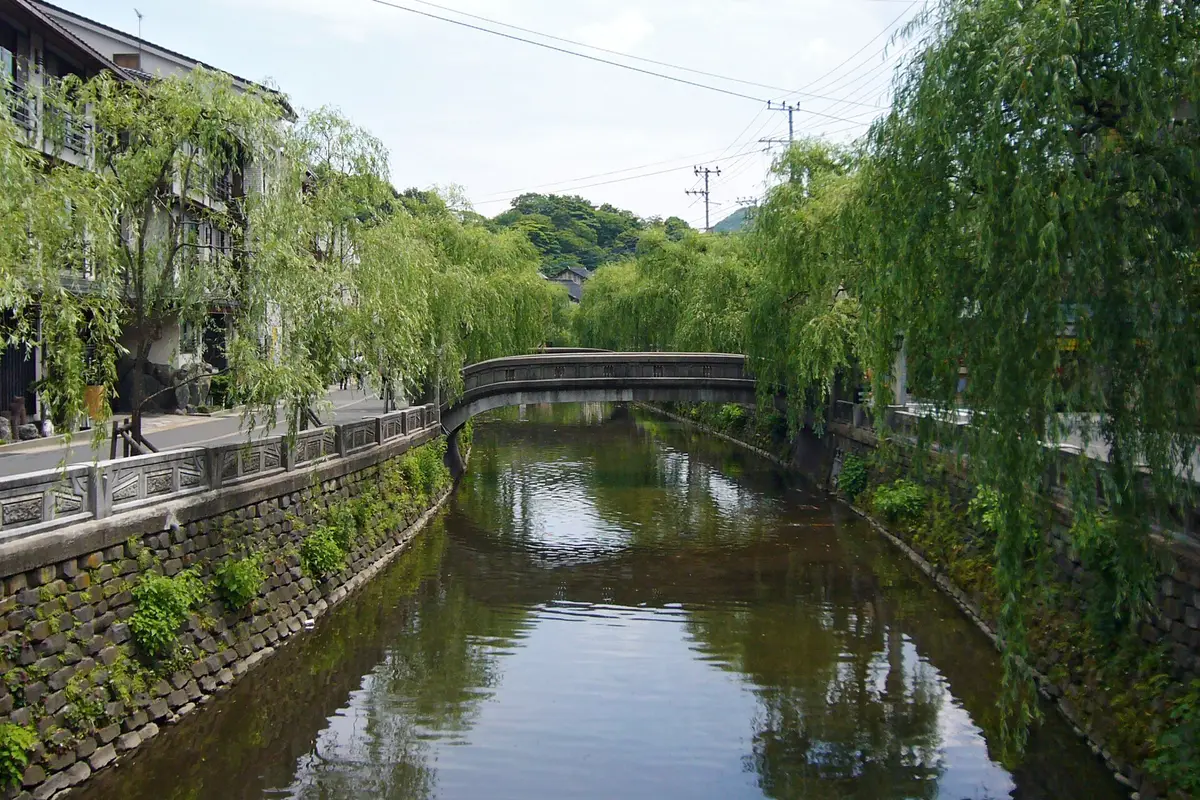
The travellers who love Kinosaki, and there are a great many of them, almost never talk about a single memorable bath. They talk about an evening. You stay at any inn in town, and your stay comes with a pass to all seven public baths. You change into a yukata and a pair of wooden geta, and you walk the willow-lined canal from one small bathhouse to the next as the lanterns come on. That evening is the thing people come home talking about, and it is the one thing a day trip cannot sell you. Come for it, arrive early enough to actually have it, and most of the doubt tends to soak away.
Is it worth it? (in visitors' own words)
We gathered the voices of international travellers who have actually been to Kinosaki and asked, in effect, was it worth the trip out? Weighted by how strongly each opinion landed with other readers, here is how they fell.
The green bar is large, but the shape of the warmth matters more than its size. People rarely call Kinosaki pleasant and leave it there. They tend to rank it above the very cities they built their trips around. One traveller on a packed schedule called it "probably my favorite memory from the entire trip," and added, "I would pick Kinosaki over Osaka." Another, posting in a thread titled should we skip Kinosaki, described "doing a bath crawl while stopping for some beers throughout" as "one of the more memorable things from my trips." A third came home with a single wish: "my only regret is that I didn't spend two nights."
Now hold the two smaller bars together, because that is where the real question lives. The 19% in the middle are almost never undecided about the town. They are deciding how many nights, and whether the side trip fits. "One night in Kinosaki is worth it, but two is overkill," one wrote. The 12% who felt let down are, with very few exceptions, saying that same thing in a sharper key: they had simply booked too much of it. "I personally don't think it's worth 2 nights unless you use it as a base," said one, who felt "onsen-ed out after 2-3 spots." The bluntest voice did the arithmetic out loud: "is it so great that it would worth 6 hours (at least) of train ride in your 240 hours itinerary? Maybe not." Read that red bar closely and you will see it is really about the shape of your itinerary.
How the people soaking beside you feel
Most guides stop at the foreign threads. The Japanese reviewers, writing in their own words about the very same town, speak in a warmer register, and they quietly settle the argument the foreign threads are still having.
The Japanese reviewers almost never ask whether Kinosaki is worth it. They have already decided, long ago. They call it "the kind of place that makes you want to go back again and again," they bring friends one year and family the next, they leave promising to return for the falling cherry blossoms after coming for the winter crab. And the evening at the centre of their green bar is exactly the one the foreign travellers treasure. Walking "through Kinosaki in a yukata and geta to visit the seven baths," one wrote, "is the best thing for a hot spring lover."
Their neutral band, that 23%, is built from something completely different from the foreign one. Where the foreign middle bar debates whether to come at all, the Japanese middle bar only ever discusses how to do it right. The baths run on a rota: each is closed one day of the week, and two of them open only from three in the afternoon, so on any single day you cannot get into all seven. "I could only get into three of them, which was a shame," wrote one visitor who had not checked the calendar. Another reached the conclusion the whole town seems to carry by heart: "next time I'd like to arrive around 3pm so we can enjoy the baths at a relaxed pace." The rest of that band is the same practical care, the parking that fills on a holiday afternoon, the shops that shut early, the souvenir counters that still only take cash. None of it doubts the town. All of it is instructions for getting the evening right.
The two doubts are the same coin
Set the two gauges beside each other and they are near twins: roughly two-thirds treasure it, about a fifth are working something out, close to one in ten came away cool. But the middle bars are made of opposite materials, and that is the most useful thing on this page. The foreign traveller stands outside the town and asks whether an evening of bathing is worth the train ride. The Japanese reviewer, who would never think to ask that, spends the whole review answering it anyway: arrive by mid-afternoon, mind which baths are open, and let the lantern-lit walk in yukata be the point of the night. One side argues the whether. The other, without meaning to, hands over the how. And the how turns out to be the entire answer, because the thing on offer was always bigger than a single bath: it was an evening you can only have by staying, arriving early, and slowing down enough to take it.
Even the small red bars mostly point somewhere other than the town. A handful of foreign visitors disliked the traffic squeezing down the narrow canal streets, a real complaint that Japanese reviewers echo when they warn you to watch for cars while you stroll and take photos. One long-time resident, after eighteen years of touring hot-spring towns, simply "rank[ed] Kinosaki at the bottom," which reflects one seasoned bather's personal favourites more than anything about the town itself. On the Japanese side, the honest let-downs are a bath that ran too hot to stay in long, a flagship bathhouse that "was disappointing" because it happened to be closed on the wrong weekday, one arcade with brusque service. Lay them all out together and the pattern is plain: almost no one who went wishes they had stayed away. They wish they had timed it better.
What we wish you'd noticed
The whole town is your bathhouse, and it comes with the room. Stay at any inn and you are handed a pass to all seven public baths, a barcode you simply scan at each door. They ring the little town, from Sato-yu by the station up to Kono-yu near the ropeway, and "every bath had its own distinct character." This is why people drift through the streets in yukata rather than staying in their inn: the town itself is one shared bath, and the walk between the doors is half the reason to go.
The evening is the real headline. After dark the canal is lit along both banks, and the sound that stays with people is footsteps. One traveller found it "incredibly atmospheric hearing people walking in their geta sandals to visit onsens." A Japanese reviewer described the same scene more plainly: after dark the town is "lit up and has a completely different, beautiful atmosphere." It is a thirty-minute stroll from one end to the other, and in that half-hour, in borrowed sandals, the town does the thing the daytime photos never manage.
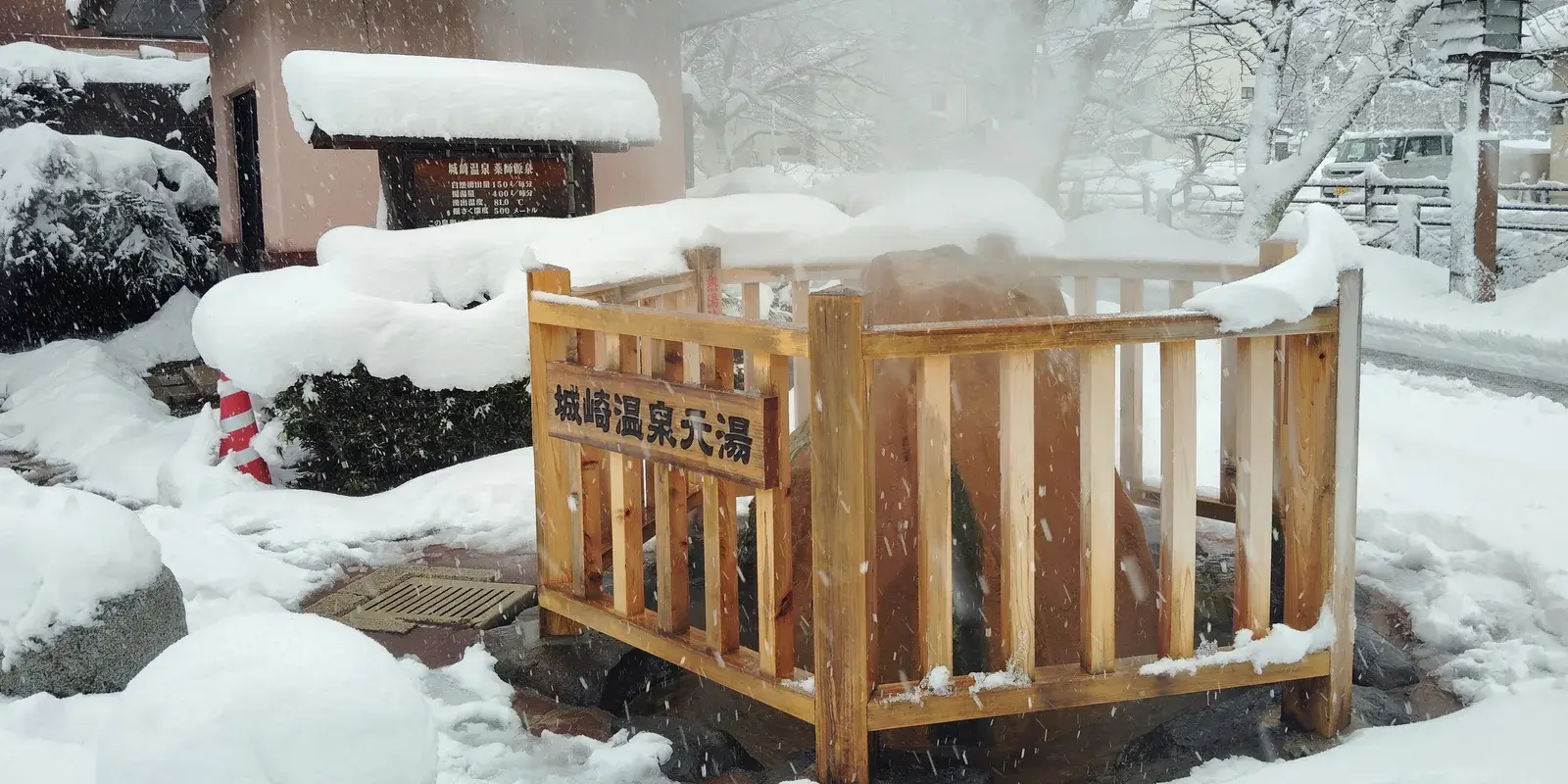
Winter brings the crab. From roughly November to March the region lands snow crab, and it turns a bath trip into a feast. "I still think about that dinner," wrote one visitor of the Matsuba crab, and the Japanese reviews fill with the same happy excess, plates of boiled, grilled, and raw crab remembered years later.
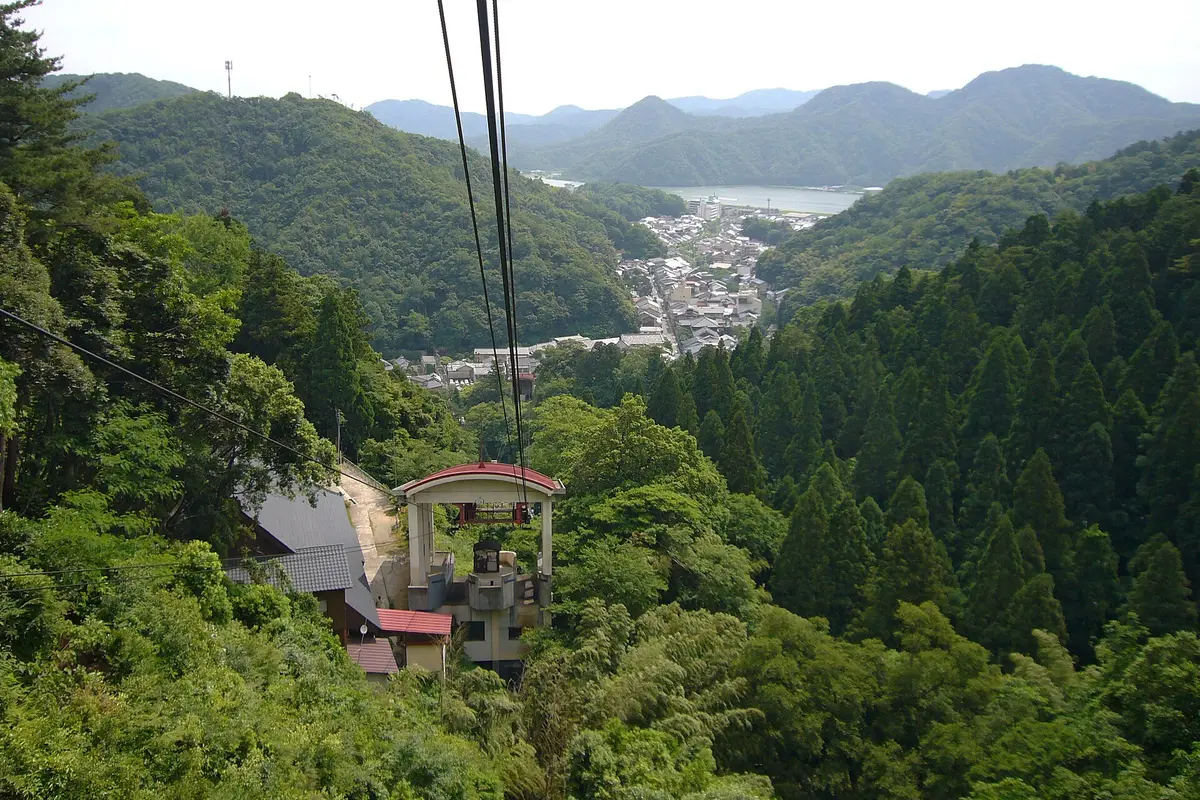
Give the ropeway an hour. Above the town, Mount Daishi holds Onsenji temple and an observation deck looking out over the rooftops toward the Sea of Japan. You can ride the ropeway up or take the climb on foot, about an hour through, as one visitor remembered, a "green mossy forest" that "was beautiful."
Getting the evening right
- Book the night. Don't day-trip it. As one seasoned voice advised, "it is not a day trip destination" from Kyoto, so "book a night and one of the ryokans there." The pass, the yukata, and the evening only exist if you stay, and staying is the whole point.
- Arrive by mid-afternoon. Because the baths close on rotating days and two open only from three, an early arrival is what turns a rushed stop into a full unhurried evening. The locals plan their day around exactly this.
- One night is usually right; make it two only if you love to soak. This is precisely where the disappointed voices went wrong. Match the trip to your own appetite for bathing, and the second night is a gift instead of a stretch.
- Wear what the town wears. Your inn provides the yukata and geta, and in winter a padded haori over the top. If there is snow, borrow boots for the melt-water underfoot, a tip the regulars pass around.
- Don't try to bag all seven. Only some are open on any given day, and one is often closed for its turn at renovation, so pick the two with the best open-air baths and let the walk between them be the achievement.
The photograph that sells Kinosaki is almost always the canal at dusk, lanterns doubled in the water, a figure in a yukata crossing a small stone bridge. It looks staged. It isn't. That is simply what the town does each evening for anyone who stayed the night and came down to the water in borrowed sandals. You don't weigh Kinosaki the way you weigh a castle or a famous view. You decide whether you have one slow evening to spend, and if the voices on this page are any guide, you will come home talking about the evening, the way nearly everyone here does.
Still working out which famous names actually earn a place on a short trip? Start with what actually matters in Japan. And for the full walk through the seven baths, the ryokan evening, the crab, and the ropeway, the Kinosaki Onsen guide is right here.
Sources
- Visit Kinosaki, The Seven Mystic Onsen (Official): the seven public outer baths (Sato-yu, Jizo-yu, Yanagi-yu, Ichi-no-yu, Goshono-yu, Mandara-yu, Kono-yu), their individual opening hours and rotating weekday closures, and the two baths (Mandara-yu, Yanagi-yu) that open only from 15:00. Each bath is closed on one fixed weekday (e.g. Kono-yu closed on Tuesday, Jizo-yu closed on Monday), so no single day gives access to all seven. Kono-yu and Sato-yu have each separately been listed as closed for renovations for extended periods (Kono-yu: 11 May 2026 to 30 Oct 2026; Sato-yu: from 1 Apr 2024), confirming the town's baths do rotate through maintenance closures.
- Visit Kinosaki, Onsen Pass (Yumepa) and Ryokan Access (Official FAQ): guests staying at a ryokan receive a free onsen pass (yumepa) at check-in giving barcode access to all seven public baths, valid until 13:00 on the checkout day; day-trippers buy a one-day pass
- JNTO, Kinosaki Onsen (English): the seven public bathhouses, yukata strolling (with a haori in winter), Onsenji temple and the Mount Daishi ropeway and observation deck, and direct limited-express access (about 2.5 to 3 hours from Kyoto or Osaka)
- JNTO, Snow Crab Season in Kinosaki Onsen (English): the winter snow-crab (Matsuba crab) season served by the town's ryokan, roughly November through March
WMJS is written in Japan, in English, with AI help. We check every page, but English is not our first language. If a sentence reads oddly, tell us. One sentence is enough.
Thank you. A person reads every note.
How well do you know Japan?
Built from 635 public posts by Japanese people
Want to know more? Ask Japanese people
Have a follow-up question about this topic? We'll ask real Japanese people.
Voice Box →