
このページは日本語でも読めます。日本語で読む →
이 페이지는 한국어로도 읽을 수 있습니다.한국어로 읽기 →
這個頁面也有繁體中文版。閱讀繁體中文版 →
这个页面也有简体中文版。阅读简体中文版 →
หน้านี้มีภาษาไทยด้วยอ่านภาษาไทย →
Trang này cũng có bản tiếng Việt.Đọc bằng tiếng Việt →
Halaman ini juga tersedia dalam Bahasa Indonesia.Baca dalam Bahasa Indonesia →
Cette page existe aussi en français.Lire en français →
Diese Seite gibt es auch auf Deutsch.Auf Deutsch lesen →
Esta página también está disponible en español.Leer en español →
Questa pagina è disponibile anche in italiano.Leggi in italiano →
Where to go
San-in, the quiet coast of the gods
The Sea-of-Japan coast the sunny side turned its back on — and kept the oldest Japan safe in the shade: a shrine older than the capitals where the gods still gather, one of only twelve original castle keeps, a silver mountain that kept its forest, and sunsets on Japan's official list of a hundred. Run it gently east to west, from the great sand dunes to Izumo and the setting sun.
Last verified: 2026-07-02
Days
4, run gently east to west and exiting at the far end (Tottori dunes, Matsue, Izumo, Iwami Ginzan) — composable, arrival to exit. San-in is spread out and slow by design, so this is an unhurried line rather than a tight loop
Best season
Year-round, but with a texture. spring and autumn are mild and easy; the myriad gods are said to gather at Izumo in the tenth lunar month (late autumn), the busiest window of the coast's year; Sea-of-Japan winters are genuinely grey with some snow, which is part of the mood rather than a reason to stay away
Base yourself
A night in Tottori for the dunes, then Matsue as the central base for the castle and the lake sunset, then a night out at Izumo near the shrine — which sets you up to push west to Iwami Ginzan on the last day
Getting around
The coast has no Shinkansen at all — that absence is the whole feeling. A limited express is the spine, with a private railway and a couple of buses filling in. IC cards work only in disconnected pockets, so this is carry-some-cash, buy-a-paper-ticket country. You don't need a car
Who this plan suits
- First tripWorks well
- Been beforeGreat fit
- With kidsWorks well
- SoloGreat fit
- As a coupleGreat fit
- Gentle paceWorks well
When to goYear-round
The sunsets and the shrines draw all year; the myriad gods are said to gather at Izumo in the tenth lunar month (late autumn), the coast's busiest season, and Sea-of-Japan winters are grey with some snow — part of the mood rather than a reason to stay away.
There's a pair of old words for the two sides of western Japan. The busy south — Hiroshima, Okayama, the bullet-train corridor — is San-yō, 'the sunny side of the mountains.' This coast, the one along the Sea of Japan, is San-in: 'the shade side.' And the honest first reaction to San-in is often a small shrug — no Shinkansen reaches it, the skies are greyer, the towns are far apart, and nothing here is on the standard first-trip list. I'd ask you to hold that shrug for a moment, because the thing worth knowing is that the shade here is a keeping, not a lack. While the sunny side rebuilt and hurried and modernised, the shade side simply never tore its oldest layer down. So this one coast still has a shrine older than Japan's first capitals, where the gods are said to gather each year; one of only twelve original castle keeps left standing in the whole country — the single survivor on this entire coast; the founding myths of Japan still pinned to real beaches and rivers you can stand on; and a silver mountain from the age when Japan produced a third of the world's silver — which nonetheless kept its forest, the trees quietly growing back over the shafts. The casual verdict — 'grey, far, nothing famous' — turns out to be exactly the connoisseur's reward: you're looking at the stratum the rest of the country was built on. And here's the line I love most: once a year, every god in Japan is said to turn its back on the sunny side and travel here. The tenth lunar month is called Kannazuki almost everywhere — 'the month without gods' — because they've all left for Izumo, which alone calls that same month Kamiarizuki, 'the month with gods.' The calendar itself confesses where the real address is.
The shape is simple: a coast you run gently from east to west, letting it build. I'd hold it as an unhurried four-day frame — the great sand dunes at Tottori, the black castle and lake-sunset town of Matsue, the grand shrine at Izumo, and the green silver valley of Iwami Ginzan at the far west — entered from Kansai in the east and slipping out toward Hiroshima in the west, so it bridges two of Japan's big trips rather than dead-ending. You could squeeze the heart into two days or stretch it to a week; I'll show you where it gives and where it grows. The one thing I'd make peace with before you go is the pace. San-in runs a slower operating system — a two-car diesel train on the coast line, an IC-card map that keeps reverting to cash and paper, the last overnight sleeper train in Japan still trundling out to the shrine of bonds to arrive at breakfast. The slowness isn't a flaw to engineer around; it's the medium the whole place is written in. Rush it and it gives you a grey day-trip; slow to it and it pays out in dawn light, tide tables and sunsets. Here's how I'd move, where I'd sleep, and how to rebuild it around your own days.
Where to base yourself
Where you sleep on San-in is really just a question of not fighting the coast: it runs one long line east to west, so I'd sleep my way along it rather than commute back and forth from a single base.
A first night in Tottori puts you at the dunes for late light or an early morning before the day-trip buses — the sand is a different, quieter thing at the edges of the day. Then Matsue is the natural middle, and where I'd give two of my nights if I could. It's the region's central city, sits where all the lines cross, and holds two of the trip's evenings on its own — the castle town by day and the Lake Shinji sunset at dusk — with the Izumo shrine an easy day-move west. If you want the coast's older kind of comfort, the hot-spring town of Tamatsukuri just outside Matsue has been called a 'bath of the gods' for over a thousand years and makes a lovely swap for a city hotel.
A night out at Izumo, near the great shrine, is the one I'd protect. The shrine is calmest early and late — the crowds are a midday problem — and staying nearby buys you a quiet dawn approach and the option of chasing the Sea-of-Japan sunset out at Hinomisaki without watching the clock for the last bus back to Matsue. It also nudges you one town further west, which is exactly the direction the last day goes. The far west (Iwami Ginzan) is remote enough that if you'd rather not rush it, a night in the old silver town of Ōmori or the little port of Yunotsu lets you walk the valley in the morning quiet and catch the westbound bus out unhurried.
Of the four anchors, only Izumo has a full WMJS guide today, and I link it; Tottori, Matsue and Iwami Ginzan I name honestly rather than link, because their guides aren't written yet.
Tottori — the great dunes, the raw eastern coast
west along the coast, a diesel limited expressMatsue — the black castle and the lake sunset (base)
a short day-move west (rail or the lakeside Ichibata)Izumo — the grand shrine where the gods gather
on west to the silver valleyIwami Ginzan — the silver mountain that kept its forest
Getting around & tickets
The first thing to understand about moving on San-in is what isn't here: there is no Shinkansen anywhere on this coast. The bullet trains all run the sunny San-yō side; over here the spine is an ordinary limited express, and the feeling of that — of dropping off the high-speed grid — is half the point of coming.
Two of those limited expresses matter. The Yakumo climbs over the mountains from Okayama (on the Shinkansen) down to Matsue and Izumo, and it's worth knowing that these days every seat on it is reserved — there are no non-reserved cars, so you hold a seat first even if you have a pass (the reservation is free with one, but it's not optional; details in the fact boxes). Along the coast itself runs a sparse little two-car diesel (the line isn't even electrified), so it pays to look up the times rather than turn up and hope.
The card won't save you here. IC cards like ICOCA and Suica work only in separate pockets — around Tottori, and around the Yonago–Matsue–Izumo stretch — and you can't tap between two disconnected pockets, so the middle of the coast line, the private Ichibata railway out to Izumo Taisha, and most local buses are all cash-and-paper. None of it is hard; it just means carrying some cash and buying the odd paper ticket, which saves a muddle at a rural gate. For a coast run like this there's a neat regional pass that fits (fact box), and reserved Yakumo seats come free with it.
Two lovely slow options, if the mood takes you. The Sunrise Izumo is the last regular overnight sleeper train in Japan: it leaves Tokyo at night, splits from its Shikoku-bound twin at dawn, and sets you down at the shrine of bonds in time for breakfast — the mode of arrival is itself a kind of overture. And the private Ichibata local hugs the sunset shore of Lake Shinji so prettily that the ride out to Izumo is the sightseeing, not the means to it. You don't need a car for any of this — the only place wheels would help is wandering up to Mt Daisen — and honestly, surrendering the speed is how the coast starts to work on you.
Tottori — the coast at its most elemental
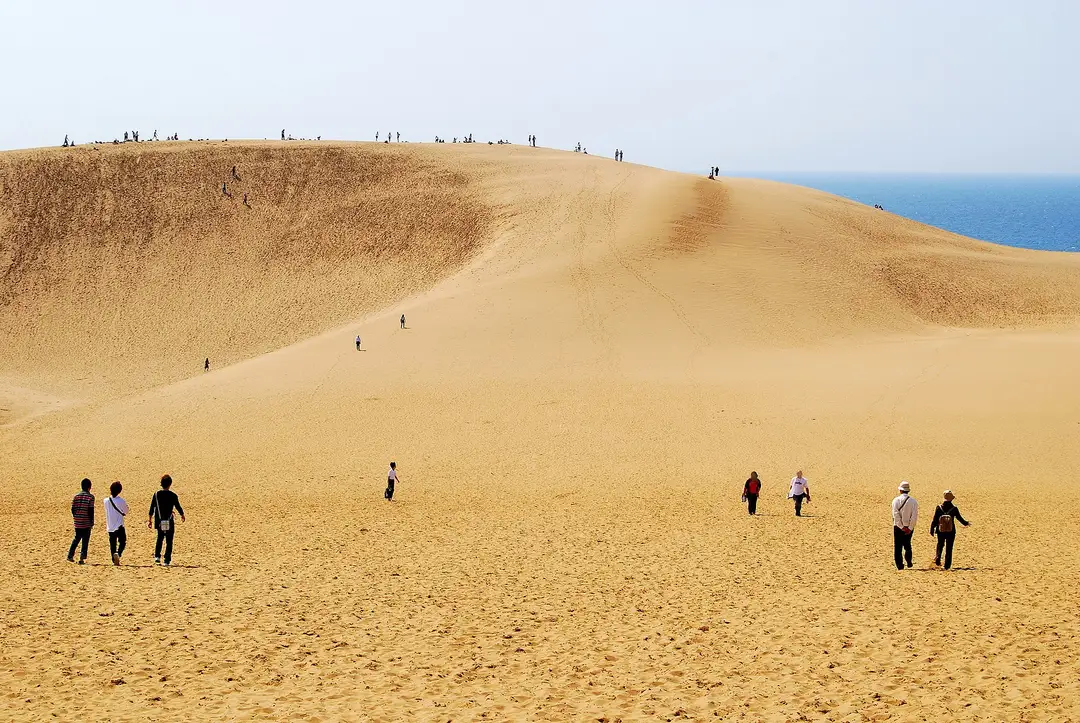
I'd open on the raw eastern edge, because Tottori teaches you the coast's grammar before any of its meanings: out here, nothing is tidied or finished. The Tottori Sand Dunes are the largest open to visitors in Japan — a genuine sweep of wind-piled sand rising to a ridge above the blue Sea of Japan — and they're not a managed attraction so much as a hundred thousand years of wind still at work, the ripples and crests rewritten every day. Even the region's museum leans into impermanence: the nearby Sand Museum is the only one in the world devoted to sand sculpture, and every year its world-class works are built to a new theme and then, when the season ends, quietly returned to loose sand — nothing kept. Rising over the plain to the west you'll often see the near-perfect cone of Mt Daisen, 'the Hōki Fuji,' whose great beech forest survived precisely because the mountain was held sacred and left alone. That's the coast's whole idea in one first day: what the sunny side would have smoothed over, the shade side leaves raw, un-made, or simply un-touched.
- In from KansaiOver the hills to the sandThe neatest arrival is the limited express Super Hakuto from Kyoto or Osaka, which cuts up over the mountains to Tottori in a couple of hours (fact box). Drop your bag near Tottori Station; the dunes are a short bus ride out on the coast.
- AfternoonThe dunes, and the light at the edges of the dayWalk out over the sand to the ridge for the view down to the sea — early or late is when the crowds thin and the low sun rakes the ripples. There are camel rides and sandboarding if you'd like them (fact box), or just the long barefoot walk. Next door, the Sand Museum is worth an hour if its annual sculptures are up (it closes for a stretch each spring while the new theme is built — check the dates).
- Nearby, if you have timeThe Tottori Blue coast, or the yōkai townThe rugged Uradome Coast just east has famously clear water and seasonal little sightseeing boats that nose into its sea-caves. Further west toward Matsue, a half-day at Sakaiminato walks a street lined with bronze yōkai — the misty shade coast that made the dunes and hid the silver breeds ghosts too, and this is where the manga artist Mizuki Shigeru turned them into friends. (Tottori has no WMJS guide yet, so I'm naming it honestly rather than linking it.)
Matsue — the city that kept its old self
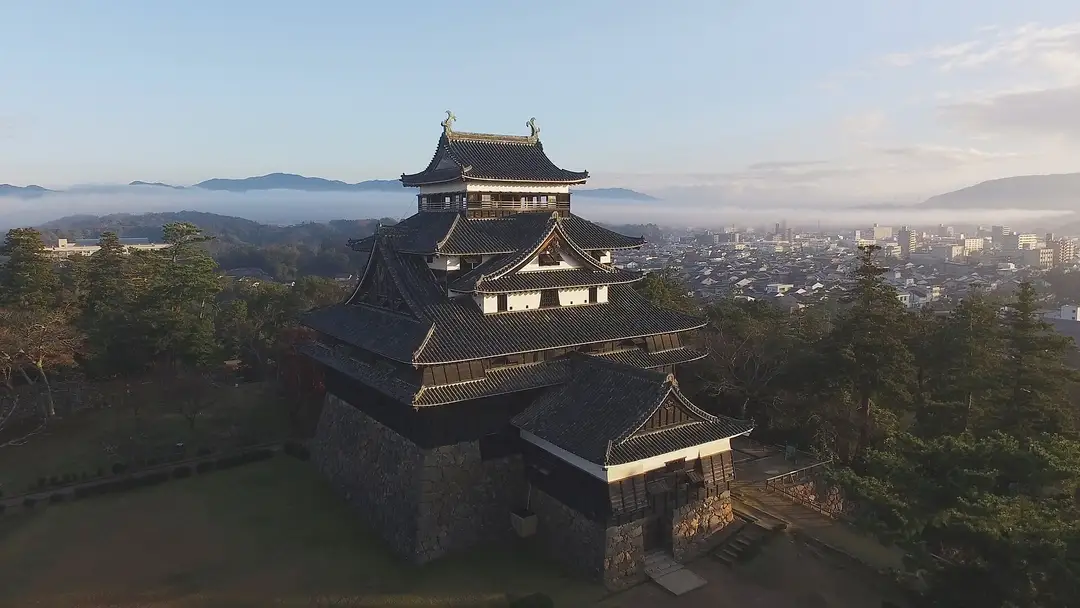
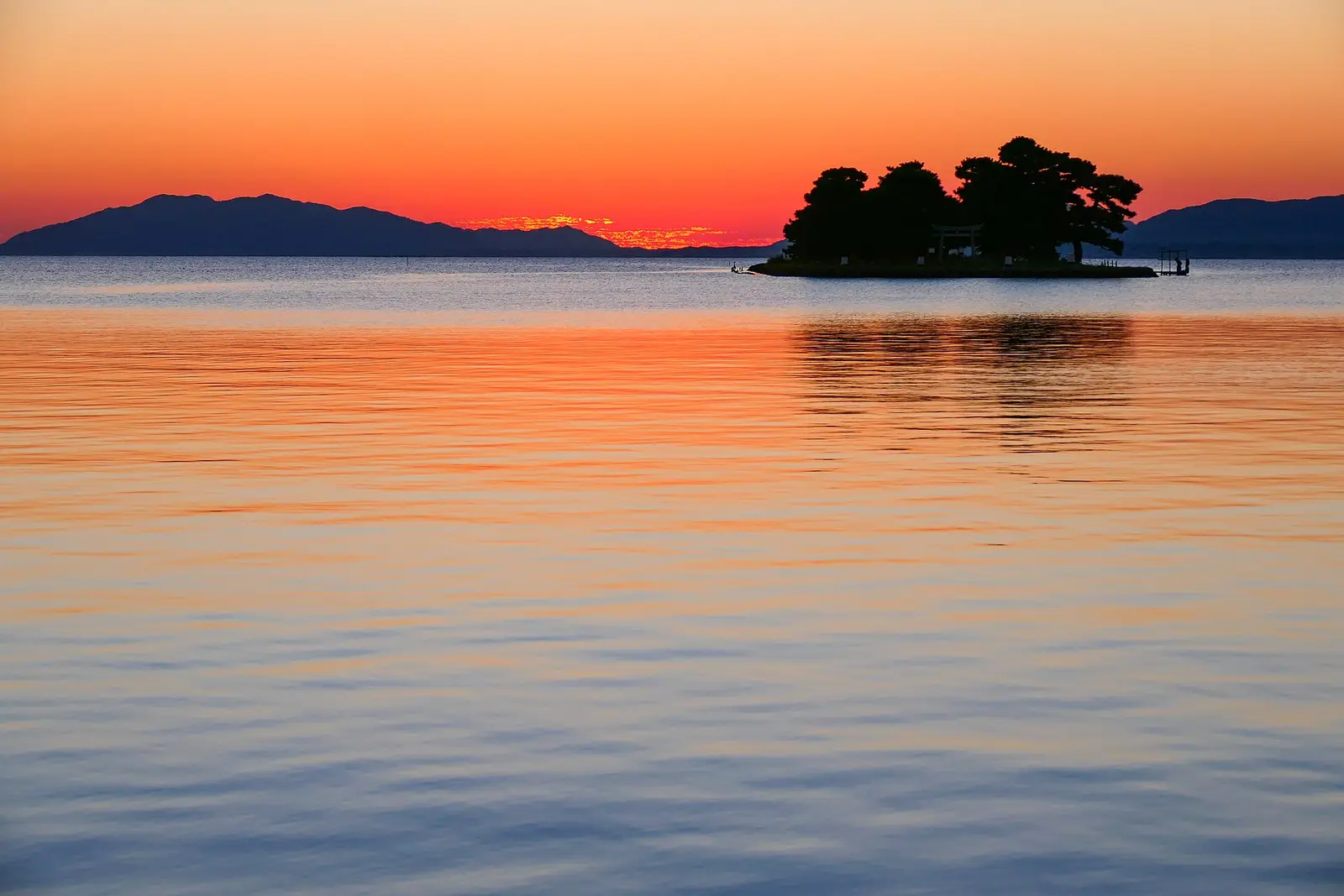
West to Matsue, and the coast's grammar starts to carry meaning: this is a town that never demolished its past, and so it holds something almost nowhere else does. Japan has only twelve original castle keeps left — towers that have stood since the age of the samurai, never burned and rebuilt in concrete — and Matsue Castle is the single one on this entire coast. It's a dark, severe thing, nicknamed the 'Plover Castle' for the way its black gables spread like a bird's wings, and it presides over a moat-town whose four-century canals still thread the modern streets. Matsue is also the town that kept a person: Lafcadio Hearn, one of the West's earliest interpreters of Japan, skipped Tokyo, came to this 'nothing' shore in 1890, married into a local samurai family and stayed on as Koizumi Yakumo — a foreigner the shade side quietly claimed. And then it ends the day the way San-in does best, over water: the sunset on Lake Shinji is one of the few in the country to make Japan's official list of a hundred, a slow burn behind the black silhouette of a tiny pine islet.
- MorningWest along the coast to MatsueThe coast's own limited express (the Super Matsukaze) runs from Tottori down to Matsue in well under two hours (fact box) — a two-car diesel through fishing towns and rice country, sparse enough that I'd check the time before breakfast. In town, the retro Lakeline loop bus links the sights.
- MiddayThe black keep and the moat that still fitsClimb the steep wooden floors of Matsue Castle — one of only twelve originals — for the view over the lakes, then take the little Horikawa moat boat around the old canals. At four of the low bridges the boat's roof mechanically drops and everyone ducks flat: a small piece of theatre that shows how snugly the four-century-old town still fits the new one (fact box).
- Late afternoonHearn's quarter, then the lake goes goldWander the samurai lane of Shiomi Nawate to Hearn's preserved residence and memorial museum, then be on the west shore of Lake Shinji as the sun drops — the islet of Yomegashima turning to a black cut-out on the burning water. It's weather's call, not yours (Matsue even publishes a 'sunset index'), which is its own lesson in slowing to the coast.
Izumo — where the gods gather
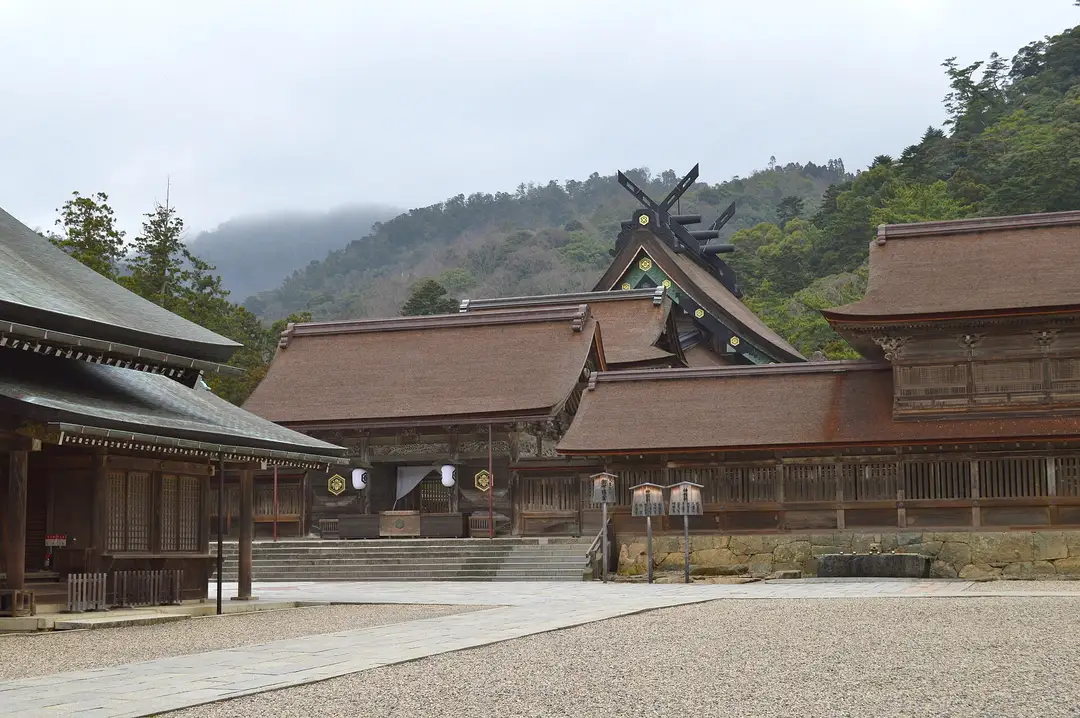
Today is the reason the calendar bends around this coast. Izumo Taisha — Izumo Ōyashiro — is among the oldest and highest shrines in Japan, named already in the 712 Kojiki, its main hall the tallest shrine building in the country and the very model the whole taisha-zukuri style is named after. It does everything its own way: you clap four times here, not the usual two; even the approach, unusually, slopes downhill. And once a year, in the tenth lunar month, the myriad gods of Japan are said to leave their home shrines and travel here for a divine council on the year's bonds — which is why the deity Ōkuninushi is the god of en-musubi, the tying not only of romance but of every bond a life is made of. I'd let the guide tell that story properly and just move slowly through it; the thing the casual visitor misses is that Izumo isn't a sight to tick but Japan's own origin story, still pinned to the sand and rivers around it. Then west to the cliffs, where the coast keeps its promise one more time — the open Sea of Japan and a lighthouse taking the last of the sun.
- MorningOut to the shrine, the quiet wayFrom Matsue you can take the private Ichibata railway along the north shore of Lake Shinji — the slow local is the sightseeing — or ride to Izumoshi and bus out; the shrine sits a little way from the JR station either way (fact box). Go early: the crowds are a midday thing, and the descending pine approach is quietest early, with room to hear your own footsteps.
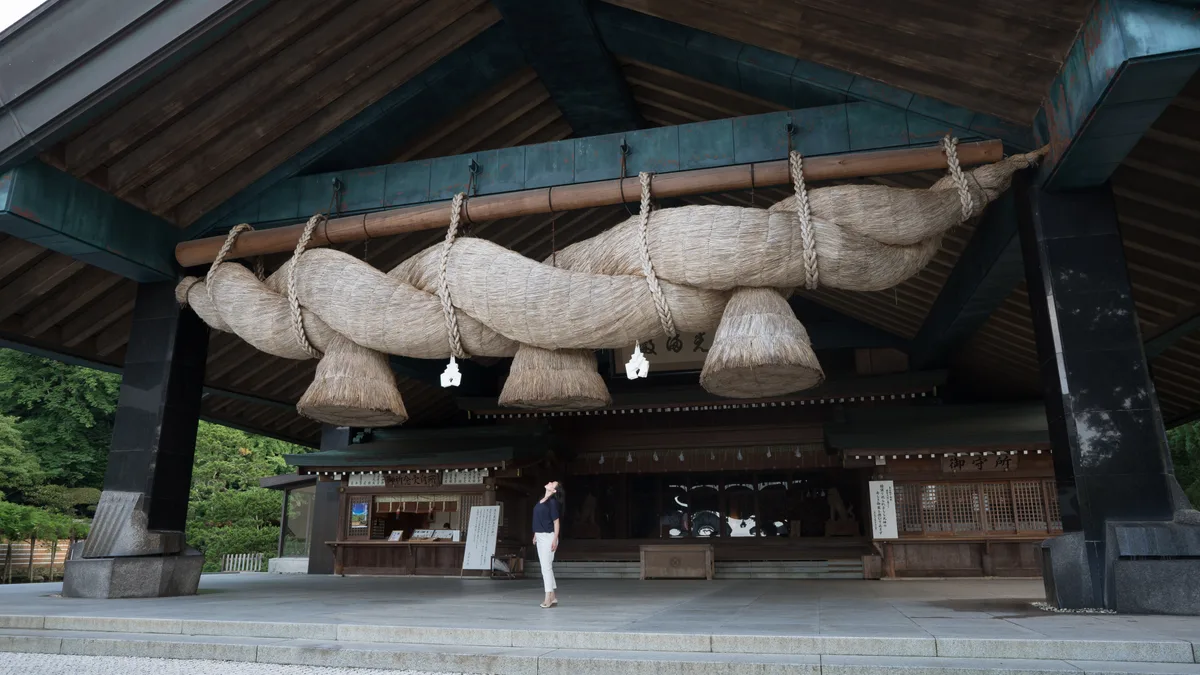
- MiddayThe great rope, the four claps, the gods' addressMake your offering in Izumo's own way, stand under the enormous hand-woven sacred rope at the Kagura Hall, and let the place unfold. The full story — the four claps, en-musubi, the month the gods gather — is in the guide: Izumo Taisha. A short walk west, Inasa Beach is the mythic shore where the gods come ashore; the local custom of swapping a handful of its sand for blessed sand at the shrine is a gentle thing to do.
- Late afternoonThe cliffs at Hinomisaki, and the sun on the seaIf the sky looks kind, a bus beyond the shrine reaches Hinomisaki, where a vermilion shrine and Japan's tallest stone lighthouse stand over the open Sea of Japan — a celebrated spot to watch the sun go down off the western tip of the land (fact box; the buses are infrequent, so mind the last one back). Then a night near Izumo, one town closer to tomorrow's west.
Iwami Ginzan — the mountain that kept its forest
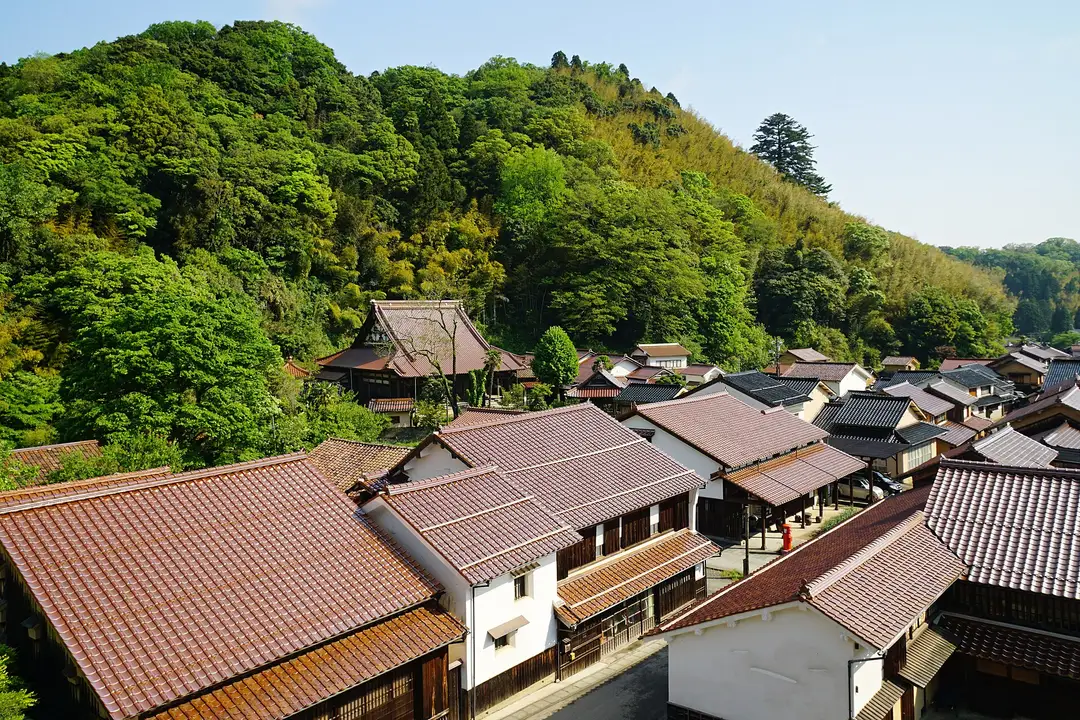
The last day is the one that lands the whole idea. Iwami Ginzan was once one of the largest silver mines on earth — in the early 1600s Japan produced roughly a third of the world's silver, and this valley was its leading source, its metal reaching Europe on Age-of-Discovery maps. Almost everywhere else, a silver rush on that scale left a scarred, poisoned landscape. Here it didn't. The mine was worked by hand in small units, the forest was managed rather than felled, and when the ore finally ran out the mountains simply grew back green over the shafts — which is why UNESCO made it the first industrial site in Asia to become World Heritage, honoured partly for that harmony with nature. You reach the old workings on foot, walking a shaded valley path into the forest that healed over the silver, so you feel the story before anyone tells it. It rhymes with everything the coast has shown you — Daisen's protected beech woods, the raw un-mended dunes, the sand sculptures un-made each year: San-in doesn't restore its past. It just never tore it down. A fitting last note before you slip out west.
- MorningWest to the silver valleyFrom Izumo or Matsue the coast line runs west to Ōda-shi, and a local bus climbs to the World Heritage village of Ōmori (fact box; the bus isn't on JR passes). Cars are kept out of the old town, which is part of why it's so quiet — a lived-in lane of magistrate's office, samurai homes and merchant houses, many now little shops and cafés rather than a museum-piece ruin.
- MiddayInto the forest that grew over the mineWalk the valley path up to the Ryūgenji Mabu, the one mine shaft open to enter, where you can still see the chisel and pick marks of hand-digging in the rock (fact box). It's a gentle walk each way (fact box), or a small shuttle cart, and going through the regrown woods is the point — the 'green mine' told as a path, not a plaque.
- The way onWest to Hiroshima, or a quiet night inHere the coast hands you cleanly onward: a highway bus runs from Ōda straight to Hiroshima (fact box), dropping you onto the Sanyō Shinkansen and the Seto Inland Sea trip without backtracking east. Or, if you'd rather not rush the silver valley, stay a night in Ōmori or the little port of Yunotsu and walk it in the morning hush. Flying out of nearby Izumo Enmusubi Airport is a third clean exit.
If you have one more day
+1 daySan-in rewards an unhurried extra day or two, because the whole coast punishes rushing. A few directions, none of them the 'right' one.
A sacred mountain day at Daisen. Between Tottori and Matsue rises Mt Daisen (the 'Hōki Fuji'), a mountain of worship since the 700s, with the temple of Daisen-ji partway up and one of western Japan's great beech forests — kept whole because the peak was long held sacred and off-limits. Gentle walks in the lower woods, a harder climb higher; the upper trails close under winter snow.
A garden that is a painting. East of Matsue at Yasugi, the Adachi Museum of Art holds a garden ranked first in Japan for more than two decades running — but you don't walk into it. It's framed to be viewed from fixed points inside the building, the windows acting as picture frames, so the garden is composed like a hanging scroll that changes with the seasons. A half-day spur by shuttle from the station.
An onsen night among the myths. Just outside Matsue, Tamatsukuri Onsen has been praised as a healing 'bath of the gods' since the eighth century and was the ancient workshop for the comma-shaped magatama beads; it makes a soft, story-soaked place to sleep. Further along the coast, the little hot-spring ports fold naturally into the western leg.
Out to the edge of the edge. From Sakaiminato or the Matsue side, a ferry runs to the remote Oki Islands, a UNESCO Global Geopark of sea-cliffs and old exile-island history — an overnight side-trip rather than a day-trip, and weather-dependent, for travellers who want the shade coast at its most far-flung.
If you're short a day
−1 dayIf time is short, the kind thing is to keep the Shimane heart and let the two ends wait. Matsue and Izumo make a tidy two days from a single Matsue base: the black castle and the Lake Shinji sunset on one day, the grand shrine where the gods gather on the next, with the eastern dunes and the western silver valley saved for another trip. It's also the simplest half to reach — you can drop straight in over the mountains from Okayama on the Shinkansen side, or fly into Izumo — and it still holds the whole idea in miniature: one coast that kept its oldest castle and its oldest gods. I'd rather you saw this half slowly than hurried all four anchors past the window.
Extend from here
OnwardSan-in is built to bridge two of Japan's bigger trips, so it extends cleanly at both ends. East, it hands back to Kansai: the Tottori end is a limited express from Kyoto and Osaka, and if you come or go that way, the San-in-edge onsen town of Kinosaki and the pine-bar view of Amanohashidate sit between the coast and the old capital — a gentle way to thread San-in onto a Kansai week. West, it hands on to the Seto Inland Sea: the Iwami Ginzan end drops you by highway bus onto the Sanyō Shinkansen at Hiroshima, the front door of the Hiroshima & the Seto Inland Sea trip (Miyajima, Naoshima), so north-coast quiet flows straight into island light. It also makes a natural second trip for anyone who's already done the golden route — the deeper, slower Japan you go looking for the second time — and its threads (an original castle keep, the myth-soaked shrines, the hot-spring towns) feed the castle and onsen theme routes. I'd treat San-in as the part of a longer journey where you finally drop off the fast grid and let the country get old and quiet around you.
WMJS is written in Japan, in English, with AI help. We check every page, but English is not our first language. If a sentence reads oddly, tell us. One sentence is enough.
Thank you. A person reads every note.
Good to know — fares & times
Kansai -> Tottori (LEX Super Hakuto)
Limited express Super Hakuto, Osaka to Tottori in about 2h30 (a little longer from Kyoto), via the Chizu Express line. One way from Osaka roughly ¥6,590 non-reserved / ¥7,420 reserved; both car types; about 7 round trips a day, so reserve ahead. Note: the Kamigori-Chizu stretch is a non-JR line, so JR Pass / Sanyo-San'in Pass holders pay a supplement of about ¥1,850 (reserved) for it.
Okayama -> Matsue / Izumoshi (LEX Yakumo) — all reserved
Limited express Yakumo over the mountains from Okayama (on the Sanyo Shinkansen): about 2h30 to Matsue, about 3h to Izumoshi; roughly hourly on the new 273-series tilting trains. EVERY seat is reserved (since the 16 Mar 2024 revision — no non-reserved cars), so book a seat first even with a pass (free, but mandatory). Reserved one way is roughly ¥6,000 to Matsue / ¥7,000 to Izumoshi. (A quoted '¥21,000' is the full Tokyo-to-Izumo daytime total, Shinkansen plus Yakumo — not the Yakumo leg.)
JR West (official) — Yakumo Limited Expressas of 2026-07
The coast spine — Tottori <-> Matsue <-> Izumoshi (Super Matsukaze / Super Oki)
The coast's own limited express: Tottori to Matsue in about 1h20-1h30 (roughly ¥4,700-5,100 one way), on a short KiHa 187 diesel (the line isn't electrified) with just one reserved and one non-reserved car. Service is sparse — only about 7 Super Matsukaze round trips a day Yonago-Izumoshi, with multi-hour gaps — so check the timetable rather than turn up and go.
Rail pass & IC cards on the coast
The JR West Tottori-Matsue Area Pass is ¥4,000 for 3 consecutive days: unlimited non-reserved limited express and local trains across the Tottori-Yonago-Matsue-Izumo area, with reserved seats (needed for the all-reserved Yakumo) bookable free at the ticket office; foreign visitors only. IC cards (ICOCA/Suica) work only in separate pockets — around Tottori, and Yonago-Matsue-Izumoshi — and you cannot tap between two disconnected pockets, so the middle of the line, the private Ichibata railway and most buses are cash-and-paper.
JR West (official) — Tottori-Matsue Pass; ICOCA areaas of 2026-07
The Sunrise Izumo overnight sleeper (Tokyo -> Izumoshi)
Japan's last regular overnight train. Leaves Tokyo about 21:50, splits from the Shikoku-bound Sunrise Seto at Okayama at dawn, reaches Matsue about 09:33 and Izumoshi about 10:00 (roughly 12 hours). All seats/berths reserved; the cheapest fare is the carpet-berth 'nobinobi' at about ¥16,040 total, with private compartments higher. Tickets go on sale at 10:00 exactly one month ahead and can sell out within minutes.
The three San-in airports (fly in or out)
Izumo Enmusubi Airport (IZO) is the closest fly-in for the Izumo/Matsue end: Haneda in about 90 min (JAL / Fuji Dream), airport bus to Izumoshi about 30 min ¥720 or to Matsue about 30-40 min ¥1,050. Yonago Kitaro Airport (YGJ, ANA) reaches Haneda in about 1h15-1h25 for the central coast; Tottori Sand Dunes Conan Airport (TTJ, ANA) about 1h15 from Haneda for the eastern end. The names alone tell you the coast: matchmaking gods, and two beloved manga artists.
Tottori Sand Dunes & the Sand Museum
Tottori Sakyu is the largest publicly accessible dune system in Japan — about 16 km along the coast, with dune faces up to about 50 m (up to ~90 m of relief across the whole field), wind-built over roughly 100,000 years and part of the San'in Kaigan UNESCO Global Geopark. Camel rides run roughly 09:30-16:00 (about ¥1,600); sandboarding and paragliding via local operators. Next door, the Sand Museum (the world's only, admission ¥800) shows a new sand-sculpture theme each year (2026: 'Spain', 24 Apr 2026-3 Jan 2027) and CLOSES for rebuilding between themes (roughly early Jan to mid/late April).
Matsue Castle, the Horikawa moat boat & the Lakeline bus
Matsue Castle (built 1607-1611) is one of only twelve surviving original keeps in Japan and the only one in the San'in region; designated a National Treasure in 2015; admission ¥800. The Horikawa Meguri moat boat loops the castle's ~3.7 km canals in about 50 min (¥1,600, re-boardable), its roof mechanically lowering at 4 of the 17 bridges so passengers duck flat; year-round, with heated kotatsu boats in winter. The retro Lakeline loop bus links the sights every ~20 min (¥210 single / ¥520 day pass).
Lafcadio Hearn (Koizumi Yakumo) in Matsue
Lafcadio Hearn reached Japan in April 1890 and taught English in Matsue; he lived in the Shiomi Nawate samurai quarter (1891) with his wife Koizumi Setsu, wrote 'Glimpses of Unfamiliar Japan' and later 'Kwaidan', and naturalised as Koizumi Yakumo in 1896. His preserved former residence and the neighbouring Memorial Museum (first opened 1934, renovated 2016) sit along the same old lane.
Lafcadio Hearn Memorial Museum (official)as of 2026-07
Lake Shinji sunset & Yomegashima
The sunset over Lake Shinji (Japan's 7th-largest lake) is listed among Japan's '100 best sunsets'; the tiny islet of Yomegashima (about 240 m around) forms the signature black silhouette, usually watched from Shirakata Park by the Shimane Art Museum. Clear evenings are hit-or-miss — Matsue even publishes a 'sunset index'.
JNTO (japan.travel) — Lake Shinji sunsetas of 2026-07
Matsue -> Izumo Taisha (private Ichibata railway / bus)
Izumo Taisha is about 8-10 km from JR Izumoshi Station, not beside it. From Matsue you can ride the private Ichibata railway from Matsue-shinjiko-onsen along Lake Shinji's north shore to Izumo-taisha-mae in about 1 hour (one transfer at Kawato, about ¥820; 1-day Ichibata pass ¥1,600), or take JR to Izumoshi and a bus (~25 min, ¥470-530). Ichibata is a private line: NOT covered by JR passes, and national IC cards are not accepted — buy paper tickets / pay cash.
VISIT MATSUE (official); japan-guide — Izumo accessas of 2026-07
Izumo Taisha — age, hall, rope, and the gathering of the gods
Among Japan's oldest and highest shrines, named in the 712 Kojiki. The main hall (honden) stands 24 m — the tallest shrine building in Japan — in taisha-zukuri, the oldest shrine style, named for this shrine (honden a National Treasure, 1952); medieval records and a 2000 pillar excavation suggest an ancient hall of ~48 m. The giant sacred rope (shimenawa) at the Kagura Hall is about 13.6 m and ~5.2 tons. Worship here is two bows, FOUR claps, one bow. In the tenth lunar month (lunar-based, so the solar date shifts each year; the 2026 welcoming is ~Nov 29) the myriad gods are said to gather — Izumo's busiest window.
Izumo Oyashiro (official); JNTO; Shimane officialas of 2026-07
Inasa Beach & Hinomisaki (the mythic shore and the lighthouse)
Inasa-no-hama beach, about 800 m (a 15-min walk) west of Izumo Taisha, is the mythic shore where the gods come ashore; a local custom is to gather clean sand there first, then offer it at the shrine's Soga-no-yashiro and take home an equal amount of blessed sand. Beyond the shrine (a ~20-25 min bus, infrequent — mind the last one), Hinomisaki has the vermilion Hinomisaki Jinja and Japan's tallest stone lighthouse (43.65 m; first lit 1903) on cliffs facing the open Sea of Japan — a celebrated sunset point.
Iwami Ginzan — the World Heritage silver valley
Iwami Ginzan Silver Mine and its Cultural Landscape was inscribed by UNESCO in 2007 (No. 1246) — the first mining/industrial-heritage site in Asia to be listed, recognised for Age-of-Discovery exchange and for harmony with nature: worked by small-scale hand methods from 1526/27 until 1923 with little deforestation, so the forest regrew over the shafts. In the early 1600s Japan produced roughly a third of the world's silver, with Iwami its leading source. The Ryugenji Mabu shaft (opened 1715) has about 273 m open to walk, hand-dig marks still visible (admission ~¥410); the old town of Omori keeps cars out.
Iwami Ginzan access, and the clean west exit to Hiroshima
From Matsue/Izumo the coast line runs west to Ōda-shi (Odashi) Station (roughly 45-90 min), then the Iwami Ginzan-go bus to Ōmori / the World Heritage Center (~30 min, ~¥760; NOT on JR passes, roughly hourly). Cars are banned in Ōmori; from town it's a 30-45 min walk in to the Ryugenji Mabu shaft and the same way back (or a small 'Ginzan Cart', not on Wednesdays). To avoid backtracking east, an Iwami Kotsu highway bus runs Ōda <-> Hiroshima Station (about 2h40-3h, ~2 a day, calling at the World Heritage Center), dropping you onto the Sanyō Shinkansen; reserve ahead.
Read before you go
Combine with another plan
Hiroshima & the Seto Inland Sea
Okayama, an art island, Hiroshima and Miyajima — run gently east to west
Kansai, an easy few days
Japan's older heart — Kyoto, Nara, Osaka — at a comfortable pace
Your second trip, going deeper
The trip after the golden route — fewer places, more present: one region you skipped, one city lived in, or one love followed clear across the country
Japan's castles, and what the walls remember
How castle lovers actually travel — a pilgrimage that teaches you to read a castle, west from Osaka into Shikoku
Japan's onsen towns, and how they differ
Three towns, three answers to the water under them: Hakone stacks many springs in one mountain, Kinosaki hands one water to the whole street, and Beppu has so much that bathing became ordinary
Sources
- JR West (official) — Yakumo Limited Express, Tottori-Matsue & Sanyo-San'in area passes, ICOCA area
- Osaka Station / Kobe Station guides — Limited Express Super Hakuto (Kansai to Tottori)
- JPRail — Super Matsukaze / Super Oki (coast limited express) and the Sunrise Izumo sleeper
- japan-guide — Izumo / Matsue / San-in access, Tottori Sand Dunes, Iwami Ginzan
- The Sand Museum (official) — world's only sand-sculpture museum, annual theme & season
- Visit Tottori (Tottori Prefecture) — Uradome Coast, Tottori Sand Dunes
- Shimane Official Travel Guide (kankou-shimane) — Matsue Castle, Ryugenji Mabu, myths, Hiroshima bus
- Matsue Horikawa Pleasure Boat (official) — moat cruise
- VISIT MATSUE (official) — Lakeline bus, Ichibata access, Lake Shinji sunset
- Lafcadio Hearn Memorial Museum (official) — Koizumi Yakumo in Matsue
- Izumo Oyashiro (Izumo Taisha, official) — honden, shimenawa, Kamiari festival
- VISIT IZUMO (Izumo Tourism Assoc., official) — Inasa-no-hama, Hinomisaki
- JNTO / japan.travel — Izumo Oyashiro, Lake Shinji sunset, Iwami Ginzan, Oki Islands, San'in Kaigan Geopark
- Japan Tourism Agency / MLIT — Izumo Hinomisaki Lighthouse (tallest stone lighthouse)
- UNESCO World Heritage Centre — Iwami Ginzan Silver Mine (No. 1246, inscribed 2007)
- Adachi Museum of Art (official) — the garden viewed as a living painting