
Why Japanese People Choose These Rules, and Why Understanding Earns You Something Money Can't Buy
What you'll learn in this article:
- The three cultural concepts that explain nearly every Japanese social rule
- Why these rules aren't imposed from above: they're a voluntary social agreement
- What we found across thousands of Japanese voices: effort matters more than perfection
- How Japan's unwritten rules are starting to become written ones, and what that means for you
Why do Japanese people follow so many unwritten rules? Our research across thousands of Japanese voices reveals they aren't imposed. They're voluntarily chosen, rooted in three cultural concepts: meiwaku (don't cause trouble), kuuki wo yomu (read the air), and omoiyari (consideration for others). The data consistently shows that effort matters more than perfection: trying to understand earns you something money can't buy.
You've probably seen the lists. Don't talk on the phone on trains. Take off your shoes indoors. Don't tip. Don't eat while walking. Bow when you enter a shrine. Line up for everything. Be quiet.
If you're planning your first trip to Japan, all those rules can feel overwhelming, like there's an invisible exam and you haven't studied. That feeling is completely understandable.
But here's what those lists never explain: Japanese people didn't inherit these rules from some ancient authority. They chose them. And every day, they continue choosing them, not because someone is watching, but because the alternative feels wrong.
That distinction changes everything. Once you see Japanese social rules not as a list of restrictions but as a shared agreement that people voluntarily maintain, navigating Japan shifts from anxious memorization to something that feels a lot more like common sense.
Quick Guide
| What It Looks Like | How Japanese People Respond | |
|---|---|---|
| 🟢 You understand | You read the room and adapt naturally, not because a sign told you to, but because you sensed why it matters | "This person gets it." Genuine warmth, sometimes a surprised smile |
| 🟡 You try | You don't know all the rules, but you're clearly paying attention and making an effort | Noticed, appreciated, and easily forgiven when you slip up |
| 🔴 You're unaware | You break a rule you didn't know existed | Not angry: they know you didn't mean it. But they notice, and they stay quiet |
The one thing to remember: Japanese social rules are a shared agreement, not a punishment system. People follow them because making others uncomfortable feels worse than any fine. When you understand that single idea, everything else follows naturally.
Why This Article Exists
Across our articles on Japanese culture, we've collected thousands of Japanese voices on topics ranging from chopstick etiquette to onsen behavior, from train silence to the tipping question.
One pattern kept appearing across every topic, every data set, every collection of voices.
It wasn't about specific rules. It was about why those rules exist, and what happens when visitors understand that why.
This article connects those dots. Think of it as the operating system behind every cultural insight on this site. The individual topics are the apps. This is the logic underneath.
The Three Words That Explain Nearly Everything
Ask a Japanese person why the train is quiet, or why everyone lines up, or why shoes come off at the door, and you'll hear a pause, followed by something like: "You just... don't want to cause trouble for others."
That instinct has a name. Actually, it has three.
Meiwaku (迷惑): Don't Cause Trouble for Others
This is the foundation.
Meiwaku literally means "annoyance" or "trouble," but in daily life it works more like an internal compass. Japanese people constantly, almost unconsciously, evaluate whether their actions might create discomfort for the people around them. Not dramatic discomfort. Small, everyday friction. The kind that accumulates when people share space.
When someone talks loudly on a train, the reaction isn't "that's against the rules." It's meiwaku da: that person is creating friction others have to absorb. When someone walks in with shoes on, the discomfort comes from something more specific: dirt from outside entering a space everyone worked to keep clean.
Japanese children don't learn "follow the rules." They learn hito ni meiwaku wo kakenai: don't cause trouble for people around you. It's less a restriction and more a social orientation: think about the shared space before your own comfort.
And here's what surprised us in our research: Japanese people hold themselves to this standard far more strictly than they apply it to visitors. When a foreigner causes meiwaku, Japanese people usually respond with quiet acknowledgment: the person probably didn't know.
旅行先のマナーを学んでから旅行に行く人なんていませんから……。こればっかりはどうしようもないですね。 Nobody studies the manners of their destination before traveling... It can't really be helped.
Kuuki wo Yomu (空気を読む): Read the Air
If meiwaku is the compass, kuuki wo yomu is the radar.
It literally means "reading the air": sensing the mood, energy, and unspoken expectations of a space without being told. On a packed morning commuter train, the kuuki is quiet concentration. At an izakaya on a Friday night, it's lively and relaxed. At a shrine, it's contemplative.
Japanese people read these shifts constantly and adjust their behavior to match. They don't expect visitors to read them perfectly, but when a visitor clearly senses the mood, lowering their voice on a quiet train, matching the pace of a line, pausing before entering a temple, it registers.
One voice from our train silence research captured it perfectly:
話し二割、周りへの気遣い八割。 Twenty percent conversation, eighty percent awareness of those around you.
That's not a rule written anywhere. It's kuuki wo yomu in a single sentence.
Omoiyari (思いやり): Consideration for Others
Omoiyari is the warmest of the three. It means actively imagining what someone else might be feeling, and acting on that understanding.
When a Japanese person chases you down to return your tip, that's omoiyari: they know you meant well, and they don't want you to feel confused later. When a stranger walks you to the station instead of just pointing, that's omoiyari too.
And when you show omoiyari back, through removing your shoes without being told, lining up naturally, or saying itadakimasu before a meal, it creates a moment of recognition. Not just "they followed the rule," but "they understand why we do this."
That moment is what this article is about.
The Pattern: Effort Over Perfection
After studying dozens of different aspects of Japanese culture and collecting voices on each one, one pattern kept emerging:
Japanese people care far less about whether you get the rules right, and far more about whether you seem to be trying.
When You Try, They Notice
Across topics as different as bowing, speaking Japanese, using chopsticks, and queuing, our temperature gauges showed the same story. When visitors try, the response is overwhelmingly warm, often more positive than visitors expect.
A light bow that's technically imperfect? Described as heartwarming. A fumbled arigatou at a convenience store register? Store staff have written that it makes their day. An imperfect attempt at removing shoes? The host smiles, because the effort itself is the message.
外国人のお客様がレジで「ありがとう」って言ってくださると、接客業やっててよかったなって思います。言葉は完璧じゃなくても気持ちは伝わる。 When foreign customers say "arigatou" at the register, I feel glad I work in customer service. Even if the words aren't perfect, the feeling comes through.
昨日の浅草寺の提灯前からの中継でも、提灯と写真撮るのに外国人は自然と並んで待ってるし、中に入る時も手を合わせてから入っていくってリポーターが言ってた。 Yesterday's live broadcast from Sensoji — the reporter said foreign visitors were naturally lining up to take photos with the lantern and pressing their hands together before entering.
When You Don't Know, They Understand
The flip side is just as revealing. When visitors break rules accidentally, the primary Japanese response across our research wasn't anger: it was understanding.
Japanese people know their social norms are unusual by global standards. Many pointed this out without being asked:
あれね。日本がマナー良すぎるというか、日本の電車が異常なんだよ。海外からきたら電車の中で携帯で話すなとか、わかんないから。 Here's the thing — Japan's trains are the unusual ones. If you're coming from abroad, you wouldn't know about the no-phone-calls thing.
The consistent message across our data: they don't expect perfection. They know their norms are globally unique. What they notice is whether someone seems to be paying attention to the people around them. To see exactly how this plays out across specific situations (trains, shrines, restaurants, and more), What Actually Matters (And What Doesn't) ranks 21 topics by temperature, from things Japanese people genuinely care about to things they barely notice.
What They're Actually Watching For
If Japanese people aren't checking for perfect rule execution, what are they looking for?
Based on our research across all topics, it comes down to three signals:
- Awareness: Do you notice the space around you? Are you looking at what others are doing?
- Adjustment: When you realize something is different here, do you adapt?
- Consideration: Does your behavior show you're thinking about other people's comfort?
These aren't rules. They're the visible expression of meiwaku-avoidance, kuuki-reading, and omoiyari. And when a visitor shows them, even imperfectly, it earns something that money, tips, or perfect Japanese never could: genuine recognition.
💡 The pattern in one sentence
Japanese people aren't watching for perfection. They're watching for awareness, adjustment, and consideration. Across every topic we studied, the effort itself was the message.
What Understanding Looks Like in Practice
The framework above might sound abstract. In daily life, it's extremely concrete. Here's how meiwaku, kuuki, and omoiyari play out in moments you'll actually encounter:
On the train: You're chatting with a friend. You notice everyone else is quiet. You lower your voice, not because you read a sign, but because you sensed the kuuki. That's enough. You don't need silence. Our research found that 83% of Japanese people are fine with quiet conversation on trains. It's only when volume breaks the shared atmosphere that discomfort begins.
At the front door: You see shoes lined up in the entryway. You slip yours off and set them to the side. Even if you don't know the "correct" direction to face them, the reaction is almost always positive, because the act of noticing and following is what matters.
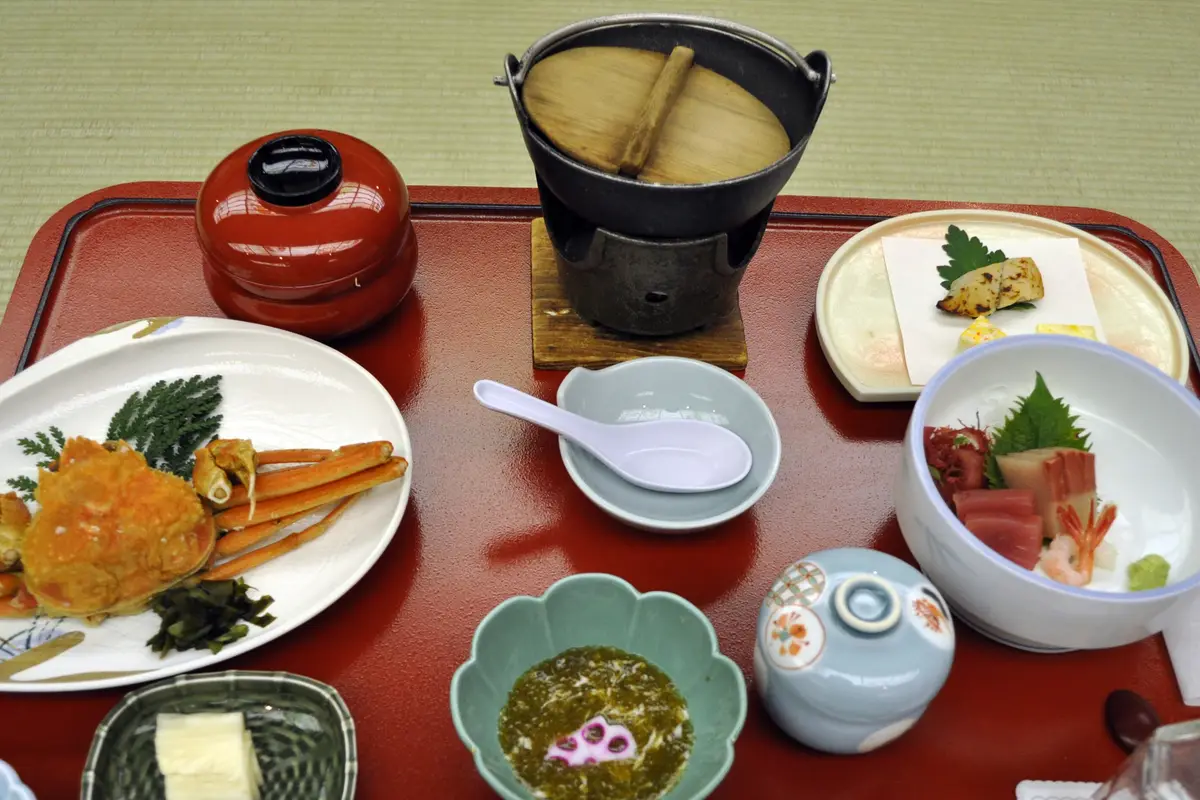
At a restaurant: You say itadakimasu before eating, even if your pronunciation is rough. Japanese hosts notice, and it shifts the mood of the entire meal. You didn't follow a rule. You joined a ritual.
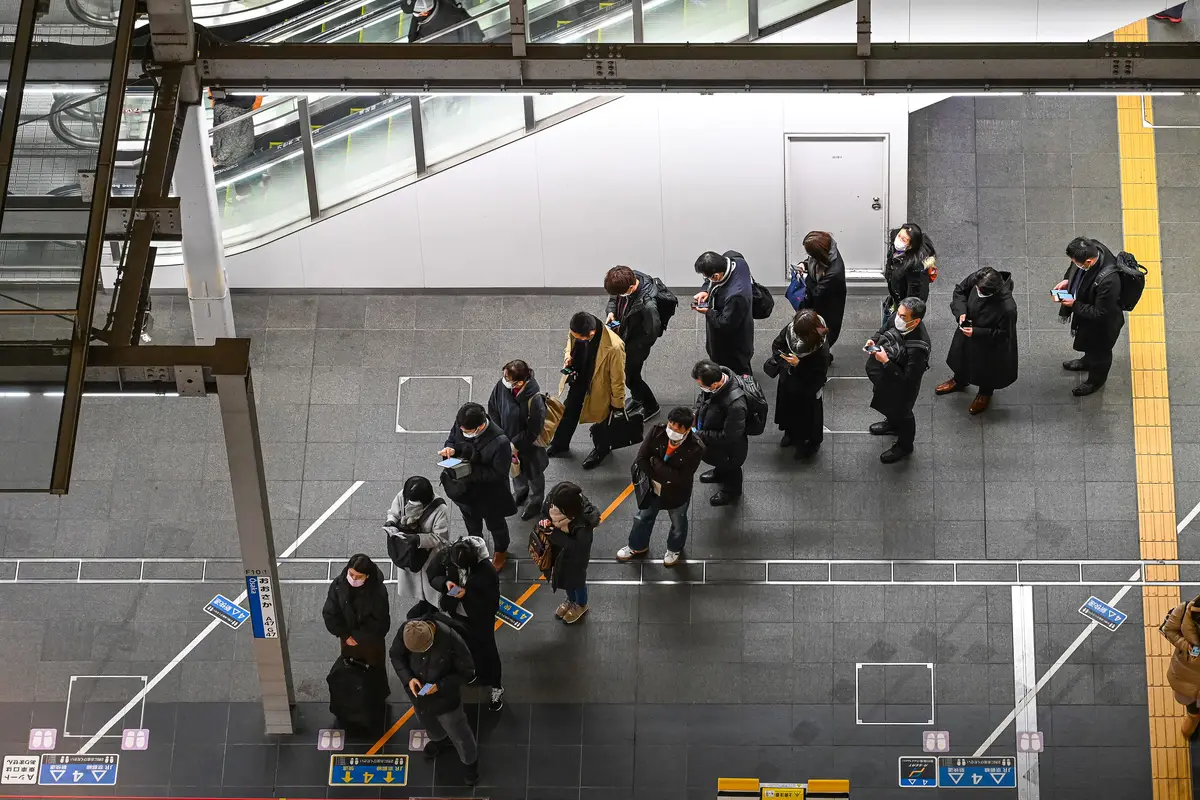
In a queue: You stand behind the last person and wait. That's it. Japanese people recognize this as visible omoiyari: proof that you're thinking about the people around you, not just yourself.
At an onsen: You rinse before entering the bath. You don't need to know the full ceremony. The rinse alone says: "I understand this is shared space."
With chopsticks: You hold them however feels natural. Japanese people overwhelmingly don't care about your grip. What they do notice, and what causes a genuine gut reaction, is sticking them upright in rice, which echoes funeral rituals. One thing to avoid, everything else is fine.
Each of these moments is small. None requires preparation or study. They're all variations of the same thing: I see the space. I see the people. I'm paying attention.
The New Reality: When Unwritten Becomes Written
Something is shifting in Japan.
In 2026, Mount Fuji introduced a ¥4,000 entry fee and a 4,000-climber daily cap. Hakuba Village announced fines of up to ¥50,000 for littering at ski resorts, taking effect in July. Kyoto's Gion district restricted access to certain residential side streets. Fujikawaguchiko erected a barrier blocking a viral Mount Fuji photo spot.
After decades of relying on unspoken social agreements, Japan is beginning to write some of them down, with explicit consequences attached.
A 2026 survey by the Association of Japanese Private Railways found that 62.9% of Japanese train riders have felt troubled by foreign tourist behavior. The top concerns: noise (69.1%), luggage blocking aisles (41.9%), and seating posture (26.2%).
These numbers are real, and they're worth sitting with honestly. But reading them as "Japan is getting stricter with tourists" misses the deeper story.
Japanese people see these measures the way you might see a lock on a door that used to be left open. It's not that they wanted the lock. It's that the unspoken agreement (we leave it open because everyone understands) stopped reaching everyone it needed to reach.
The Japan Tourism Agency's 2026 Sustainable Tourism Plan frames it in exactly those terms: the goal isn't enforcement. It's understanding. The ideal outcome is visitors who never need to be told. A ¥50,000 fine is just the backstop for the rest.
And the emotional equation hasn't changed. Understanding still earns warmth. Compliance alone earns compliance. The distance between those two outcomes is something no fine can close.
What Understanding Earns You
Throughout this article, we've talked about what Japanese people feel when visitors understand. But what does that actually mean for your trip?
It's the ryokan host who brings an extra dish because she noticed you especially enjoyed one flavor. It's the stranger at a confusing station who walks you to the right platform instead of pointing. It's the elderly woman at a shrine who gently shows you the hand-washing motion, smiling the whole time.
These moments aren't transactional. They happen because something subtle shifted: a signal that said, I see how things work here, and I respect it. For a practical guide to your first days in Japan, where these signals first appear, Your First Week in Japan walks through arrival, neighborhoods, and daily situations with the same grounding in how things actually work.
You don't need perfect Japanese. You don't need to memorize etiquette charts. You need three things you already have:
Notice the space. What are the people around you doing? How does this room feel?
Try. Remove your shoes. Give a small bow. Say arigatou. Even imperfectly.
Know that imperfect is enough. Japanese people aren't looking for a flawless performance. They're looking for the attempt: the visible moment when someone cares enough to try.
That attempt is what earns the smile.
More Japanese Perspectives
This article is the framework. Each article below goes deep on a specific situation, built on real Japanese voices and temperature data.
Shared Spaces & Daily Life
- Why Japanese Trains Are Silent: 177 voices on what actually bothers commuters (and what doesn't)
- No Trash Cans, No Problem: How carrying your trash earns quiet respect
- The Unwritten Rules of Convenience Stores: The invisible choreography of Japan's most-visited space
- Why Lining Up Matters: Queuing as visible omoiyari
Small Gestures, Big Impact
- The Power of a Small Bow: Why a simple nod changes the temperature
- When You Try to Speak Japanese: What they're really thinking
- The Power of Itadakimasu: How two words change a meal
- Why Removing Shoes Makes People Smile: The feeling behind a simple act
Understanding the System
- What Happens When You Tip: Why staff chase you down to return it
- Cash or Card?: How Japan's relationship with money affects your trip
- Your First Izakaya: A friendly guide to Japan's favorite way to eat
- Do I Need to Speak Japanese?: What Japanese people actually said
Specific Experiences
- What Japanese Bathers Actually Think: When you walk into an onsen
- Onsen and Tattoos: What's actually changing in 2026
- Staying at a Ryokan: What your host wishes you knew
The Bigger Picture
- Do Japanese People Want to Meet You?: What they're too shy to say
- Why Japan Wraps Around Solo Travelers: The invisible infrastructure that keeps you safe
- Mount Fuji's Daily Cap: The numbers behind the restriction
- Where You're Most Welcome: A data guide to the Japan guidebooks miss
Share Your Experience
Had a moment in Japan where understanding made a difference? A small gesture that earned an unexpected smile? We'd love to hear it.
Share your experience on Voice Box →
Sources
Research Data
- WMJS cultural research data: thousands of Japanese-language public posts collected across 30 topics (April–May 2026), covering train etiquette, shoe culture, bowing, queuing, chopstick manners, tipping, onsen behavior, language attempts, convenience store norms, temple visits, ryokan stays, and more. Full source URLs are available in each individual article.
Statistical Data
- Association of Japanese Private Railways (日本民営鉄道協会): 2026 survey on foreign tourist behavior on trains. 62.9% of riders reported feeling troubled; top concerns: noise (69.1%), luggage (41.9%), seating posture (26.2%)
- Railway Trend Research Institute (鉄道トレンド研究所): Survey finding that 62.4% of Japanese riders have noticed manner issues involving foreign passengers (n=306)
- Japan Tourism Agency (観光庁): Sustainable Tourism Action Plan 2026–2030
- Hakuba Village: Littering fine ordinance of up to ¥50,000, or roughly 50000 yen (effective July 2026)
- Yamanashi Prefecture / Shizuoka Prefecture: Mount Fuji climbing cap and entry fee regulations (2026 season); the entry fee is set at 4000 yen per climber
- Fujikawaguchiko Town: Barrier installation at Lawson convenience store photo spot (2024)
Note on Quotations
Quotes from online platforms have been lightly edited for readability (fixing typos, formatting for clarity). The meaning and intent of each comment remain unchanged. Original sources are linked in the respective individual articles.
WMJS is written in Japan, in English, with AI help. We check every page, but English is not our first language. If a sentence reads oddly, tell us. One sentence is enough.
Thank you. A person reads every note.
How well do you know Japan?
Built from 635 public posts by Japanese people
Want to know more? Ask Japanese people
Have a follow-up question about this topic? We'll ask real Japanese people.
Voice Box →