
Why Japan Wraps Around Solo Travelers: The Invisible Infrastructure That Makes Being Alone Feel Safe
What you'll learn in this article:
- What 396 Japanese people said about eating alone, being alone, nighttime safety, and helping strangers
- Why Japan feels different for solo travelers, and why it's not an accident
- The cultural concept behind it all: ohitorisama (the art of being happily alone)
Take a deep breath. You're going to be just fine.
If you're planning your first solo trip to Japan and your stomach is doing flips, you're in good company. "Can I eat alone without looking sad?" "Is it safe to walk home at night?" "Will I be lonely the entire time?" These are the questions solo travelers ask more than any others about Japan.
Here's the honest answer: Japan wasn't accidentally good for solo travelers. It was built this way. The counter seats at ramen shops, the 24-hour convenience stores on every corner, the police boxes every few blocks: these aren't happy coincidences. They're the invisible infrastructure of a country where being alone in public has always been normal.
We collected 396 real opinions from Japanese people to show you what they actually think about solo dining, solo drinking, nighttime safety, and what happens when you need help. The picture that emerges might surprise you, and it will almost certainly make you feel better about traveling alone.
Quick Guide
| Situation | What Japanese People Said | |
|---|---|---|
| 🟢 Relax | Eating alone | Restaurants are designed for solo diners. Counter seats, ticket machines, individual booths: you're not an afterthought. You're the default customer. |
| 🟢 Relax | Being alone in public | Japan has a word for it: ohitorisama. It means someone who enjoys solo activities, and it's a compliment rather than a consolation. |
| 🟡 Good to know | Walking alone at night | Japan is remarkably safe: women routinely walk home alone at midnight. But stay aware in quiet residential areas, especially late at night. |
| 🟢 Relax | Needing help | Japanese people will walk you to your destination, help you buy the right ticket, then disappear without asking your name. Help comes easily; strings don't. |
| 🟢 Relax | Drinking alone | Solo drinking is an art form in Japan. Standing bars and counter seats were built for exactly one person. The bartender is your built-in conversation partner. |
The one thing to remember: Japan wasn't designed for couples with a grudging afterthought for solo travelers. It was designed for individuals, and once you see that, everything clicks.
Is Japan good for solo travelers? We collected 396 public posts by Japanese people. The answer: 62% say eating alone is completely normal, 81% view solo drinking positively, and 78% would help a lost foreigner, many walking them all the way to their destination. Japan has a word for it: ohitorisama, meaning "a party of one," and it's a compliment, never consolation.
How We Gathered These Voices
We collected 396 Japanese-language responses across five solo-life topics: eating alone (78 responses), the ohitorisama culture (65 responses), nighttime safety (55 responses), helping strangers (60 responses), and solo drinking (83 responses), plus 55 responses on generational attitudes. We gathered these voices from public Japanese Q&A sites, forums, and social posts, along with reporting from various Japanese media.
A quick note: This isn't a controlled scientific survey. It's a collection of what real Japanese people said in their own words, in their own language, on public platforms. Most English-language guides tell you "Japan is great for solo travel." We wanted to show you why, from the people who built the culture you're about to step into.
First, the Biggest Surprise
Here's something that changes how you see Japan: being alone in public is the default, not the exception.
In much of the world (Southern Europe, Latin America, Southeast Asia, Korea), eating alone, drinking alone, or going to the movies alone carries a social cost. In Japan, it carries none. The country has a word for it: ohitorisama (お一人様), literally "a party of one," and it's used with respect rather than pity.
他の外国のことはよく分かりませんが、例えばお隣の韓国は基本的に食堂は二人くらいから利用するイメージで、日本みたいにひとりで利用するイメージは無いそうです。 I don't know much about other countries, but in neighboring Korea, restaurants are generally for groups of two or more — nothing like Japan, where eating solo is completely normal.
スペインは一人でほぼ食事はとらないんだって。でも米国とかは、普通に一人でもご飯食べるよ。 Apparently in Spain, people almost never eat alone. But in the US, eating alone is pretty normal.
なんで日本人は皆んな1人で旅行に行けるの⁉️寂しくないの?楽しくなくない? How can Japanese people all travel alone?! Don't you get lonely? Isn't it boring? (Thai commenter)
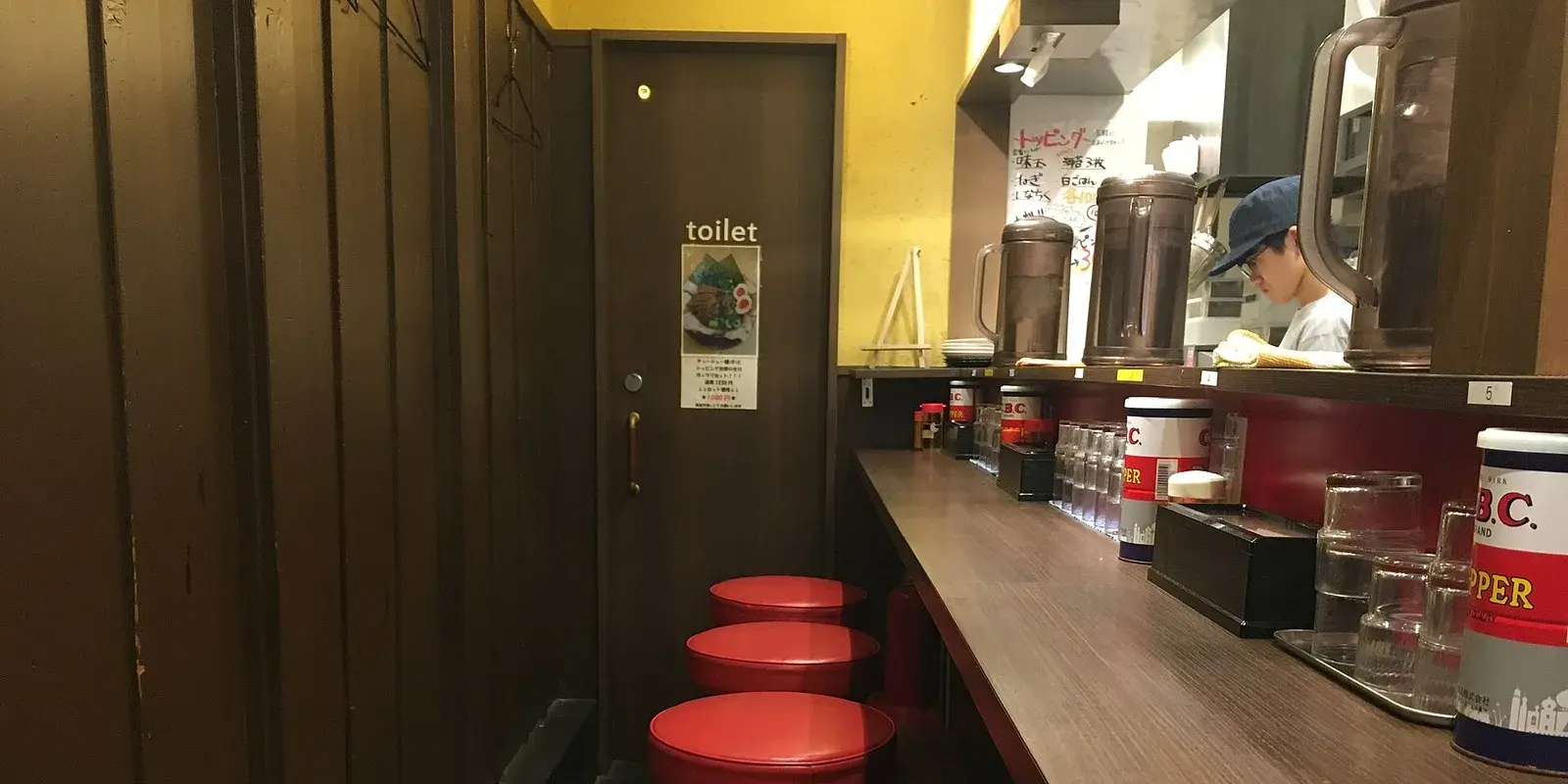
This isn't just a cultural attitude. It's been engineered into physical spaces. Ramen shops with nothing but counter seats. Karaoke chains with hitokara (solo karaoke) rooms. Yakiniku restaurants with individual grills for one. Even theme parks have started offering solo-rider lanes. Japan doesn't just tolerate solo activities. It builds dedicated infrastructure for them.
The Temperature Gauge: What Japanese People Actually Think
🟢 Eating Alone: "This Is Just... Normal"
The honest answer: nobody is watching you eat.
Of 78 responses about solo dining, 62% said it's completely normal. The remaining voices split between "depends on context" and "I personally find it a bit lonely." But even those who wouldn't eat alone themselves didn't judge others for doing it.
どこでも一人で行けます。カウンターとか1人用だと思います。 You can go anywhere alone. Counter seats are designed for solo diners.
一人客の方もまあまあいらっしゃいますよ。カウンター席が多いですが、四人掛けに1人座っても違和感持たれている感じはしません。孤独のグルメが浸透してきてるんじゃないでしょうか。 There are plenty of solo customers. Counter seats are common, but even sitting alone at a four-person table doesn't seem to raise eyebrows anymore. I think "Solitary Gourmet" [a popular TV show about a man happily eating alone] has really spread the idea.
The TV show Kodoku no Gourmet (The Solitary Gourmet) came up multiple times, a series about a businessman who eats alone at small restaurants, savoring every bite. It's been running since 2012 and has become a cultural touchstone for the joy of solo dining.
But what about the 24% who feel self-conscious? Their concerns were specific, and revealing:
ビジネス街だと一人の人もいるでしょうが...週末は一人だと、『恋人も友達もいないんだな』と思われるでしょうね。 In a business district, sure, there are solo diners... but on weekends, eating alone makes people think 'they must have no partner or friends.'
よくわかんないけど一人ラーメン行くって言ったら「それは女捨ててる!」って言われた。 I don't really get it, but when I said I go to ramen shops alone, someone told me "you've given up on being a woman!"
Notice the pattern: the judgment comes from specific people (a friend, a coworker) rather than from strangers in the restaurant. Nobody in a ramen shop is looking at you and thinking anything. They're too busy eating.
💡 Key insight
Counter seats aren't a compromise for solo diners. They're the original design. Ticket machines at ramen shops exist so you can order without speaking to anyone. Individual booths at places like Ichiran exist so you can eat without being seen. Japan's restaurants were built for individuals first.
🟢 The Ohitorisama Culture: "Solo Isn't Sad. It's Freedom."
Being alone in Japan doesn't feel lonely, because being alone is culturally respected.
Of 65 responses about ohitorisama culture, 48% were enthusiastic supporters. 37% admitted feeling some loneliness or social pressure. 15% saw both sides. What's striking is how passionate the positive voices are:
まじ?ダッサ 私なんか今、女1人でカツ丼食ってるよ。 Seriously? That's lame. I'm literally eating a pork cutlet bowl by myself right now.
自称、プロのお一人様です!ひとりディズニーでひとりスプラッシュ! I'm a self-proclaimed professional ohitorisama! Solo Disney, solo Splash Mountain!
赤の他人にどう思われてもいいから命ある限り海鮮丼を食べ尽くしたい。 I don't care what strangers think — I want to eat every seafood bowl in existence for as long as I live.
And from the other side, voices that help explain why ohitorisama culture matters so much:
彼氏いないのかな?旦那さんいないのかな?って思われるの怖くないですか? Aren't you afraid people will think "she must not have a boyfriend" or "she must not have a husband"?
見ず知らずの人にあの人一人なんだなあって思われるのが精神的に嫌。 I just can't stand the thought of strangers looking at me and thinking "that person is alone."
One voice captured the tension perfectly:
一人は好きだけど独りは嫌い。 I love being alone (hitori). I hate being lonely (hitori).
In Japanese, the same pronunciation, hitori, can be written two ways: 一人 (alone, neutral) or 独り (isolated, negative). This single sentence captures something profound about Japan's relationship with solitude. The infrastructure, the culture, the design of spaces: they all exist to keep "being alone" firmly in the first category.
💡 Key insight
In Japanese, the same word hitori can mean "happily alone" (一人) or "painfully isolated" (独り). Japan's entire solo infrastructure (from counter seats to capsule hotels to hitokara rooms) exists to keep you in the first meaning.
🟡 Walking Alone at Night: "Safe, but Don't Be Careless"
Japan is remarkably safe for solo travelers at night, but Japanese people themselves add an important "but."
Of 55 responses about nighttime safety, 42% said Japan is safe for walking alone, 35% urged caution, and 24% said it depends entirely on location. This is the most balanced of all the topics we collected, and that balance is actually the most useful finding.
夜中に女性がコンビニや24時間スーパーに1人で買い物に行ける国なんて日本ぐらいだと思う。 I think Japan is probably the only country where a woman can go to a convenience store or 24-hour supermarket alone in the middle of the night.
日本いると、フツーに夜の11時ぐらいに女の人が1人で帰宅してるよね。これはヨーロッパや北米じゃ考えられん。 Living in Japan, it's totally normal to see women walking home alone at 11pm. In Europe or North America, this would be unthinkable.
But Japanese people also push back against oversimplification:
日本は、確かに他の国に比べたら治安もマシでしょう。でも、若い女性が深夜に一人で夜道を歩いていて「安全です」とハッキリと言える場所なんてありませんよ。 Sure, Japan's safety is better compared to other countries. But there's nowhere you can say with certainty that a young woman walking alone on a dark street at night is "safe."
場所にもよるんだろうけどそんなに呑気に構えてられるほど「安全だ!」とは言い切れないよ。 It depends on the area, but you really can't be so carefree as to say it's absolutely safe.
The nuanced position, shared by many, is the most useful for visitors:
なんだかんだ言っても、まだ日本は安全ですからね。でも昼間に比べれば、犯罪に会う確率は高いので控えた方が良いと思います。 At the end of the day, Japan is still safe. But compared to daytime, the chance of encountering crime is higher, so it's better to be careful.
The invisible safety net: What makes Japan's nighttime feel different isn't just low crime rates. It's the infrastructure: roughly 6,000 kōban (police boxes) staffed around the clock, over 56,000 convenience stores open 24/7, brightly lit main streets, and a culture where people are out and about even late at night. You're never truly alone on a Japanese street: even at 2am, there's a konbini glowing a block away.
🟢 Anonymous Kindness: "Help That Arrives and Disappears"
Japanese people will go out of their way to help you, and then vanish like it never happened.
Of 60 responses about helping foreigners, 78% described positive experiences, many involving extraordinary effort. 12% mentioned communication barriers, and 10% took a philosophical perspective. But the pattern that emerged is unmistakable: Japanese people don't just give directions. They walk you there.
出来ないながらも教えます。もしくは携帯使って一緒にしらべます。最悪、時間に余裕があれば途中まで一緒に行きます。 I try to help even if I can't speak the language. Or I'll use my phone to look it up together. Worst case, if I have time, I'll walk partway with them.
新宿勤務で頻繁に道を聞かれ、「Follow me」で案内する。 I work in Shinjuku and get asked for directions constantly — I just say "Follow me" and take them there.
30分程歩いて案内し、相手の結婚の話を聞いて楽しかった。 I walked with them for about 30 minutes to show the way, and ended up hearing about their wedding plans. It was a lovely experience.
What often confuses visitors from other cultures is what happens next: after helping, Japanese people typically don't exchange names, social media, or contact information. They just... leave.
へこむ必要はないです。英語ができる人でも、突然のときは思うように答えられなかったり、後になって「あぁ言えば良かった」と落ち込むことはありますから。 No need to feel bad about it. Even people who speak English often can't respond properly when caught off guard — they'll kick themselves later thinking "I should have said that."
This "help then disappear" pattern isn't coldness. It's the opposite of imposing. As we explored in our article about whether Japanese people want to meet you, the desire to connect is real, but so is the instinct not to impose. For solo travelers, this means something powerful: you're being watched over, but never watched.
💡 Key insight
Japanese people don't just give directions. They walk you there. Then they disappear without asking your name. That's not coldness. In a culture built on not burdening others, helping without strings is the highest form of consideration.
🟢 Drinking Alone: "An Art Form, Not a Cry for Help"
Solo drinking in Japan isn't just accepted. It's a respected adult pastime with its own infrastructure.
Of 83 responses about hitori-nomi (solo drinking), 81% were positive, the strongest consensus across all five topics. Many described it with genuine enthusiasm.
カウンターでゆっくり飲みながら、まわりのお客さんの話してる様子とかを見たり聞いたりして、ひとりニヤニヤしながら飲んだり。 Drinking slowly at the counter, watching and listening to other customers chat — sipping away with a quiet little grin on my face.
チェーンの居酒屋や焼き鳥屋、焼肉屋に1人で行って喧騒の中にポツンといる孤独感を楽しむのが最近のマイブーム。 Going alone to a chain izakaya or yakitori place and enjoying the solitude of being a single still point in a sea of noise — that's my current obsession.
BARですと、女性の1人客珍しくないですよ。マスターも気を使って、男性グループを近くに座らせたりはしませんし。 At bars, solo women aren't unusual at all. The bartender is considerate — they won't seat a group of men next to you.
Japan's solo drinking infrastructure is specific and intentional: tachinomi (standing bars) where the entire format assumes you arrived alone. Izakaya counter seats where the chef becomes your conversation partner. Bars where the master (bartender) reads the room, engaging solo customers in chat while respecting those who want silence. Even the price structure helps: many places offer otoshi (a small starter dish) and single-glass pours rather than bottle service, so you can enjoy a full experience without ordering for two.
The main caution came from women, and it was about safety rather than stigma:
女の子の一人飲みって私は危ないと思うんですが。 I think solo drinking for women is a bit risky, honestly.
程良くほっておいてくれるから好きなのよね。話し出すと営業みたいな仕事してる気分になるから疲れるのよね。 I love places that leave me pleasantly alone. When people start talking to me, it feels like I'm working and I get tired.
The Generation Gap
One of the most interesting patterns in our data involves age. We collected 55 responses specifically about generational attitudes toward solo activities, and the results suggest Japan's ohitorisama culture is still evolving.
A 2018 Gurunavi survey (n=2,625) breaks it down by generation:
「率先して一人飯を選択」している人は30代が最も高く56.5%、次いで20代の53.9%。「仕方なく」一人飯をしている人は60代がもっとも多く68.0%。 People who "proactively choose to eat alone" peak in their 30s at 56.5%, followed by their 20s at 53.9%. People who eat alone "because they have no choice" are highest among those in their 60s at 68.0%.
母親世代(アラフィフくらい?)の人には超引かれる。女性が一人で食事したりしてるのは、その世代にとってはすごく恥ずかしくてみっともないことだって認識らしい。 My mother's generation (around their 50s?) are totally shocked. For them, a woman eating alone is something genuinely embarrassing and shameful.
若い時はね1人が楽しいの。年取ってくるとね1人が寂しいの。矛盾してないよ。 When you're young, being alone is fun. When you get older, being alone is lonely. That's not a contradiction.
The data paints a clear picture: Japan's solo culture is strongest among people in their 20s and 30s, where over half actively choose to do things alone. For visitors (who tend to skew younger), you're arriving in a country where your peers consider solo activities a form of self-expression, not a last resort.
Why This Works: The Cultural Engine
Japan's comfort for solo travelers isn't just one thing. It's four systems working together.
Physical infrastructure: Counter seats, ticket machines, capsule hotels, individual booths, solo karaoke rooms, vending machines on every corner. These aren't accommodations for people who couldn't find a group. They're the primary design.
Safety infrastructure: Police boxes (kōban) every few blocks, 56,000+ convenience stores open 24/7, well-lit main streets, women-only train cars during rush hour. The result isn't just low crime. It's a feeling of being structurally protected.
Cultural infrastructure: The ohitorisama concept, the lack of social judgment for solo activities, the understanding that someone eating alone isn't lonely. They're choosing their own pace. In Japan, doing things alone doesn't require an explanation.
Social infrastructure: Anonymous kindness without intrusion. People who help then disappear. A service culture where staff naturally accommodate solo customers without making it awkward, much like how Japanese train silence isn't a rule but a shared understanding.
Together, these four layers create something that no individual tip or travel hack can replicate: the feeling that Japan was designed with you, a single person, as the default user.
More Japanese Perspectives
Curious about other aspects of daily life in Japan? These articles explore what Japanese people actually think, based on hundreds of real voices.
- Do I Need to Speak Japanese?: 271 Japanese people share the truth about the language barrier. Spoiler: they want to help you even when they can't find the English words.
- Why Japanese Trains Are Silent: 177 Japanese people explain why train silence isn't a rule. It's a shared cultural understanding, and after a long day of solo exploring, you'll love it.
- Getting Around Japan: How to navigate the train system alone, and the tiny things that earn you a quiet nod of respect from Japanese commuters.
- Your First Izakaya: Walking into a noren-curtained izakaya is intimidating even for Japanese people. Here's what the staff actually thinks when you try.
Share Your Experience
Had a moment traveling solo in Japan: a kindness from a stranger, a perfect meal at a counter seat, or that 2am walk that felt inexplicably safe? We'd love to hear it. Your story helps build a bridge between cultures.
Share your experience on Voice Box →
Sources
Primary Research Data
- WMJS solo travel research data (396 Japanese-language responses collected May 2026)
- Eating alone: 78 responses
- Ohitorisama culture: 65 responses
- Nighttime safety: 55 responses
- Helping foreigners: 60 responses
- Solo drinking: 83 responses
- Generational attitudes: 55 responses
Opinion Collection Sources
The following sources were used to collect Japanese people's opinions and sentiments. These are not cited as factual authorities but as platforms where real Japanese people expressed their views on solo life in Japan.
Eating alone:
- Personal essays on solo dining experiences from Japanese blogs and social posts
Ohitorisama culture:
Nighttime safety:
- Personal essays on feeling safe in Japan from Japanese blogs and social posts
Helping foreigners:
- Personal essays on cross-cultural encounters from Japanese blogs and social posts
Solo drinking:
- Personal essays on solo drinking philosophy from Japanese blogs and social posts
Generational attitudes:
- Gurunavi survey (2018, n=2,625): solo dining attitudes by generation
- Essays on changing attitudes toward solitude from Japanese blogs and social posts
Note on Quotations
Quotes from online platforms have been lightly edited for readability (fixing typos, formatting for clarity). The meaning and intent of each comment remain unchanged. Original sources are linked above.
- https://news.yahoo.co.jp/expert/articles/3baa5c78143c80d706bcd618c71e7eb06a36db36
- https://business.nikkei.com/atcl/report/15/226265/011800008/
- https://prtimes.jp/main/html/rd/p/000000200.000071963.html
- https://www.i-tenpo.com/news/topic/11637
- https://corporate.gnavi.co.jp/release/2018/20180912-018826/
- https://www.smartanswer.jp/reports/1cd19934-3d57-4468-b045-acb14f9a170d
- https://esse-online.jp/articles/-/9461
- https://oshiete.goo.ne.jp/qa/13807334.html
- https://hfujiwarablog.sense-create.co.jp/solo/
- https://news.yahoo.co.jp/expert/articles/2d6f21bfa5ad92bb606b26a0e8c625af67424b69
WMJS is written in Japan, in English, with AI help. We check every page, but English is not our first language. If a sentence reads oddly, tell us. One sentence is enough.
Thank you. A person reads every note.
How well do you know Japan?
Built from 635 public posts by Japanese people
Want to know more? Ask Japanese people
Have a follow-up question about this topic? We'll ask real Japanese people.
Voice Box →