
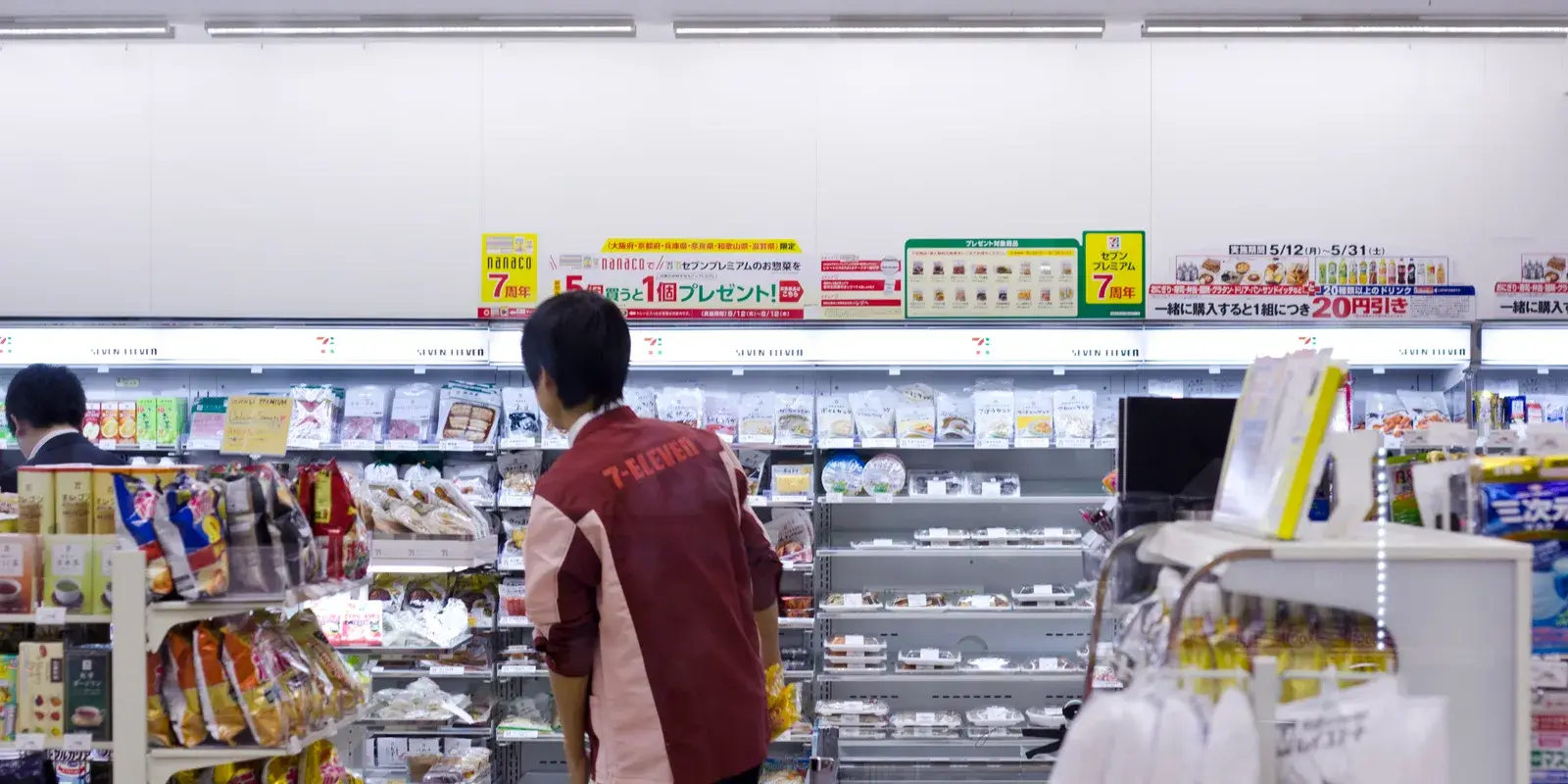
The Unwritten Rules of Japanese Convenience Stores: And Why They Exist
What you'll learn in this article:
- What 369 Japanese people said about foreign customer behavior at convenience stores
- Why some things that are perfectly normal abroad genuinely shock Japanese people
- The invisible choreography that keeps Japanese konbini running, and how knowing it changes everything
What are the unwritten rules of Japanese convenience stores? We collected 369 Japanese-language posts. The biggest surprise: 70% were genuinely shocked by customers opening products before paying. For many Japanese people, an item stays the store's until you've paid. Meanwhile, 73% of staff responses were warm and appreciative toward foreign customers. You don't need to memorize rules; just notice what others do.
If you've been to Japan, you've been to a konbini. 7-Eleven, FamilyMart, Lawson: they're everywhere, and they're probably the place you'll interact with Japanese daily life more than anywhere else. You can buy an onigiri at 2 AM, pay your bills, print concert tickets, and pick up a surprisingly decent meal, all in 30 seconds flat.
Those 30 seconds run on an invisible choreography. Both the staff and customers are participating in a system so smooth that Japanese people don't even notice it, until someone doesn't know the steps. That's when the feelings come out.
We collected 369 real opinions from Japanese people about convenience store experiences with foreign customers: the register dance, the invisible queue, the cultural gap that stunned everyone, and what staff actually think when a visitor walks through the door.
The results might surprise you.
Quick Guide
| Situation | What Japanese People Said | |
|---|---|---|
| 🟢 Relax | The register dance | The rapid-fire questions ("Bag? Heat it up? Points card? Payment method?") are confusing even for some Japanese people. Nobody expects you to know this. Just smile through it. |
| 🟡 Good to know | The invisible queue | Japanese konbini have a single-file line system that isn't always marked. If you're not sure where the line is, look for where other people are standing. |
| 🔴 Worth noting | Opening products before paying | This is normal in many countries but genuinely shocks Japanese people. The widely shared feeling in Japan is that an item stays the store's until you've paid for it. |
The one thing to remember: Japanese convenience stores run on consideration for others in a small, shared space. You don't need to memorize rules. Just notice what people around you are doing, and you'll fit right in. The fact that you're reading this article already puts you ahead.
How We Gathered These Voices
We collected 369 Japanese-language responses across four convenience store topics: opening products before paying (67 responses), the register question flow (87 responses), queuing and line behavior (70 responses), and staff experiences with foreign customers (75 responses), plus generational perspectives (70 responses). Sources include public Japanese Q&A sites, forums, and social posts, along with articles from Diamond Online, Shueisha Online, and other Japanese media.
A quick note: This isn't a controlled scientific survey. It's a collection of what real Japanese people said in their own words, in their own language, on public platforms. Most English-language guides simply tell you "here's what to do at a konbini." We wanted to show you what Japanese people actually feel, and why the konbini matters more than you'd think.
What Actually Matters: The Temperature Gauge
Not everything at a Japanese convenience store carries the same weight. One thing is completely understandable. One thing requires a little awareness. And one thing genuinely stuns people. Here's what those 369 Japanese voices show.
🟢 The Register Dance
Nobody expects you to know this. Not even Japanese people agree on the steps.
If you've ever stood at a Japanese konbini register and been hit with a barrage of rapid-fire Japanese, you're not alone. The typical checkout involves up to four questions fired in about ten seconds:
- レジ袋いりますか? (Do you need a bag?)
- 温めますか? (Want it heated up?)
- ポイントカードはお持ちですか? (Do you have a points card?)
- お支払い方法は? (Payment method?)
Of 87 responses about the register experience:
The good news: the majority of Japanese people are understanding. Many of them find the register flow confusing too, especially since the 2020 plastic bag charge added yet another question to the sequence.
袋有料化してからレジの質問多すぎ。日本人の私でも面倒だなって思う。 Ever since bags became paid, there are too many register questions. Even as a Japanese person, I find it annoying.
ポイントカードは?袋は?温めますか?支払いは?…コンビニのレジはもはや面接。 Points card? Bag? Heat it up? Payment method? ... The konbini register is basically a job interview at this point.
And here's something that might make you feel better: foreign convenience store staff face the same confusion from the other side:
冷やし中華を「温めますか?」って聞かれた。 I was asked "Would you like it heated up?" about a cold ramen salad.
「ポイントカードお持ちですか?」「お前、ポイントカード持ちですか?」と「お前」呼びされた。 They asked me about my points card — but used "omae" (a very rough "you") instead of polite language.
That second one happens because translation tools sometimes render "you" as omae or kisama, words that sound aggressive in Japanese. Japanese customers found it hilarious rather than offensive.
外国人はよく「お前」「貴様」などの敬語を使う。日本語の「あなた」を翻訳するとそうなるから。 Foreign staff often accidentally use "omae" or "kisama." It's because translation tools convert "you" that way.
What to do: You don't need to understand every question. A smile and a nod goes a long way. If you don't want a bag, just wave your hand gently. If someone asks "atatamemasuka?" and you're holding a bento, they're asking if you want it heated. Say "hai" (yes) or "daijoubu" (I'm fine). When it comes to the payment question, most konbini now accept IC cards and credit cards alongside cash: our article on cash or card in Japan covers what works where. And honestly, even if you freeze for a moment, nobody behind you is judging. They've been there too.
💡 The konbini register in one sentence
Even Japanese people find the rapid-fire questions overwhelming: "Points card? Bag? Heat it up? Payment method? ... The konbini register is basically a job interview at this point."

🟡 The Invisible Queue
There's a line. You just can't see it.
In many countries, you walk up to whichever register is free. In Japan, most konbini use a single-file queue: one line for all registers, with the next person stepping forward when a cashier is available. The catch? It's rarely marked with signs or floor tape.
Of 70 responses about queuing and line behavior:
This one shows a genuine split. About 41% feel frustrated when someone cuts in line, but a significant portion of people also point out that the system itself is the problem.
日本ではコンビニで全ての人が一列に並び、空いたレジに順番に進む。こうすることが一番効率よくマナーにかなったことであることを皆が自然に理解している。 In Japan, everyone lines up in a single file at the konbini and moves to whichever register opens next. Everyone naturally understands this is the most efficient and mannerly approach. Shino Murata, hospitality training instructor
すべての国の人がそうであるわけではなく、その列の意味を理解しない人もいる。 Not everyone from every country operates this way — some people genuinely don't understand what the line means. Shino Murata, hospitality training instructor
And here's something that might surprise you: even when Japanese people feel frustrated, many of them choose not to say anything.
言わない。割り込みされても黙っている。 I don't say anything. Even when someone cuts in, I stay silent.
外国人のお客さんがレジの列わかんなくて横から入ってきた。周りの人微妙な顔してたけど誰も何も言わない。 A foreign customer didn't see the line and came in from the side. The people around made subtle faces, but nobody said a word.
That silence isn't indifference. It's a very Japanese form of conflict avoidance. But it does mean that if you accidentally cut in line, you might never know. Several people pointed out that the real solution is better signage:
外国語の案内やフロア表示がないと、列があること自体がわからない。店舗側の問題でもある。 Without multilingual signs or floor markings, people can't even tell there's a line. That's partly on the store.
What to do: When you walk into a konbini, look for where people are standing before heading to the register. If there's a line, join the end. The next available cashier will wave you forward. If you accidentally walk up to the register out of turn, nobody will be angry at you. As many Japanese people said: they know it's not intentional.
Want to learn more? Japan's queue culture goes far beyond convenience stores. It's one of the most distinctive things visitors notice. For a deeper look, see our article: Why Lining Up Matters More Than You Think in Japan.
🔴 Opening Products Before Paying
This is the one that genuinely stuns Japanese people, and it reveals one of the biggest cultural gaps between Japan and the West.
In the United States, it's perfectly normal to open a bottle of water and drink it while shopping, then pay for the empty container at checkout. In parts of Europe, parents routinely open a snack for their child to eat while grocery shopping. It's not considered stealing. It's considered practical.
In Japan, this is a completely different story.
Of 67 responses about opening products before paying:
This is the strongest reaction across all four topics. The reason comes down to a fundamental difference in how Japan thinks about ownership:
会計前の商品は店の物。会計後の商品は購入者の物。よって犯罪です。 Products before checkout belong to the store. Products after checkout belong to the buyer. Therefore, it's a crime.
会計が済むまではお店の占有物、財物なので、お店の意思に反して会計前に開封などして自分の占有にしてしまうと窃盗罪になります。 Until you've paid, the item is the store's property. Opening it without permission technically constitutes theft.
Those are individual opinions rather than legal advice, but they show how firmly the feeling is held. In everyday Japanese thinking, an item on the shelf stays the store's until it has been paid for, and that assumption sits deep in how people here treat property and transactions.
But here's the important context: Japanese people understand that this is a cultural gap, not malice.
どうせ買うんだから、いつ食べてもいいだろう! I'm going to buy it anyway, so what does it matter when I eat it!
That quote, from a radio program discussing the topic, captures exactly how visitors from other countries think about it. And several Japanese people who've lived abroad acknowledged the gap:
会計前の物を食べる人を見かけたことはありますが、誰もがすることではありませんし、平均的な躾を受けた人はしません。 I've seen people eat before paying, but not everyone does it — people with average upbringing don't. Japanese resident in France
1度だけ、子供が食べてるスナック菓子を指差してこれも、と言っていたお母さんを見かけて少しだけ驚きました。 I was a little surprised when I once saw a mother pointing at the snack her child was eating and saying "this too" at the register.
What to know: In Japan, wait until you've paid before opening anything. It's one of those things where the cultural gap is genuinely large: what's normal in one place is shocking in another. Nobody is trying to be rude when they do this abroad, and Japanese people increasingly understand that. But in Japan, it's one of the clearest ways to accidentally cross a line you didn't know was there. This same invisible-rules dynamic shows up in how Japan handles trash, as we explored in why Japan has no trash cans.
💡 The ownership line
In many Western countries, "I'll pay for it at the register" is enough. In Japan, the widely shared assumption is that the item stays the store's until you've paid for it. This single difference explains the 70% shock reaction, and it's one of those cultural gaps that nobody warns you about.
The Human Side: What Staff Actually Think
If you want to understand how Japanese people really feel about foreign visitors, ask a convenience store worker. They're on the front line, and their answers might not be what you'd expect.
Of 75 responses from or about convenience store staff experiences with foreign customers and colleagues:
73% warm. That number surprised us too. Here's what's behind it.
The Respect
Japanese convenience stores have become one of the country's most diverse workplaces, with workers from Vietnam, China, Nepal, and many other countries. Japanese customers have noticed, and the overwhelming reaction is respect.
外国人コンビニバイト、間違いなく俺よりは優秀だと思ってるので横柄な態度に出られない。 Foreign konbini workers are definitely more capable than I am — I could never be rude to them.
努力して外国語身につけて複雑なコンビニ業務をこなすって並大抵の器量じゃない。 Learning a foreign language and handling the complex konbini workload is no ordinary feat.
この島国でしか使われない上に難解と謳われる言語で接客してる外国人は本当にすごい。 Serving customers in a language that's only used on this island and is famously difficult — foreign workers are truly amazing.
And then there are the moments that just make you smile:
暇だとちょいちょい踊ってて楽しい。陽気で元気でほがらか。 When it's slow, they'll dance a little. So cheerful and lively.
ナマステ~って言ってくれる。お客さんも返してた。 They greet customers with "Namaste!" And the customers say it back.
レターパックぅーあかいのひとつぅーって居酒屋みたいでほっこり。 Lettah-packuuu — the red one pleaaase — it sounds like an izakaya order and I love it.
日本人のコンビニ店員より愛想良いからありがとうって言いたくなる。 They're friendlier than Japanese konbini staff, which makes me want to say thank you.
The Difficult Side
But the picture isn't all warm. About 20% of the responses described genuinely difficult experiences, and there's a pattern to who's causing the problems.
相手は70代くらいの男性客。「日本語わかってる?」「外国人のくせにレジに立つなよ」って。ちゃんと説明してるのに、「何言ってるかわかんねぇよ!」って他のお客さんの前なのに大声で… The customer was a man in his 70s. "Do you even understand Japanese?" "Foreigners shouldn't be behind a register." Even though I was explaining properly, he shouted "I can't understand a word you're saying!" right in front of other customers... Chinese woman, 25, konbini staff in Takadanobaba
ベトナムの子かな。タバコの番号間違えて「お前頭おかしいんか?数字も読めんのやったら辞めてまえやこのアホが!」って怒鳴ってた。 I think she was Vietnamese. She got the cigarette number wrong, and a customer screamed at her: "Are you stupid? If you can't read numbers, quit!"
What matters most is how other people respond:
店長と料理長とリーダーが「○○は真面目で優しくて優秀な子だ!」と追い出した。 The store manager, head chef, and shift leader told the man, "This person is hardworking, kind, and excellent!" — and kicked the customer out.
真面目に働いてる外国人の店員に横暴な態度を取るのを見てると注意したくなる。 When I see someone being rude to a foreign worker who's doing their job well, I want to step in.
The harassment overwhelmingly comes from a specific demographic, middle-aged and elderly men, and the rest of Japan doesn't accept it.
💡 What konbini staff actually remember
The frustrating moments get attention, but the warm ones are what stick. Staff remember the customer who said "arigatou." They remember the regular who always smiles. As we found in our article on trying to speak Japanese, these tiny gestures outweigh the language barriers by a wide margin.
The Cultural Engine: Why Japanese Konbini Work This Way
So why do Japanese convenience stores have so many unwritten rules? It comes down to two cultural ideas.
Omoiyari (思いやり): Consideration
Omoiyari is the Japanese concept of anticipating what others need and acting on it without being asked. In a konbini, this looks like: having your payment ready, stepping aside if you need to check your bag, keeping the space flowing smoothly for everyone.
It's not about rigidity. It's about awareness. Japanese people have been practicing this in konbini since childhood. It becomes invisible to them, which is exactly why they notice when someone doesn't do it.
The Positive List vs. Negative List
A Diamond Online article captured a structural insight that explains much of the cultural gap:
日本人は「許可されたこと以外やらない」ポジティブリスト思考。外国人は「禁止されたこと以外やっていい」ネガティブリスト思考。暗黙ルールが伝わらない構造的原因。 Japanese people follow "positive list" thinking — don't do anything unless it's explicitly allowed. Many people abroad follow "negative list" thinking — anything goes unless explicitly banned. That's the structural reason unwritten rules don't translate. Diamond Online
This isn't about one approach being right. It's about different operating systems running in the same store. When you understand this, the "unwritten rules" stop feeling arbitrary and start making sense.
In most countries, if there's no sign saying "don't open this before paying," you assume it's fine. In Japan, if there's no sign saying "you may open this before paying," you assume you shouldn't. Same situation, completely different defaults.
💡 Why the rules are invisible
Japan runs on "positive list" thinking: if it's not explicitly allowed, assume you shouldn't. Most other cultures run on "negative list" thinking: if it's not explicitly banned, assume it's fine. Same konbini, different operating systems. That's the real reason the rules feel invisible.
A Generational Shift
Something interesting is happening in Japan's convenience stores, and it shows up in the generational data.
The customer base has shifted dramatically. Seven-Eleven Japan, the country's largest chain, publishes an age breakdown of its own customers: in 1989, people under 30 accounted for more than 60% of visits. By 2023 that share had fallen to about 22%, while customers aged 50 and over rose from under 10% to nearly 40%.
This matters because our data shows a clear generational pattern: the most tolerant attitudes toward foreign customers, and the most supportive views of foreign workers, tend to come from younger Japanese people. Meanwhile, the handful of harassment incidents in our data were overwhelmingly attributed to middle-aged and elderly male customers.
高校生のコンビニ店員です。大人の客の態度に腹が立ちます。なんで大人達はマナーがなってないんですか? I'm a high school student working at a konbini. I'm angry about how adult customers behave. Why don't adults have any manners?
大人はタバコのポイ捨て、態度の悪さ…なのに若者を批判する。大人がマナーがなっていないのに子供には偉そうに言う矛盾。 Adults litter cigarettes, act rudely... and then criticize young people. Adults who have no manners lecturing kids — it's a contradiction.
Japan's konbini culture is evolving. The younger generation is more open to diversity, more empathetic to cultural gaps, and more likely to step in when they see harassment. The unwritten rules remain, but the spirit behind them is shifting toward inclusion.
More Japanese Perspectives
Curious about other aspects of daily life in Japan? These articles explore what Japanese people actually think, based on hundreds of real voices.
- Why Japanese Trains Are Silent: 177 Japanese people explain why their trains are quiet, why they know it's unusual, and what they actually think when visitors don't know the rules.
- Do Japanese People Actually Care How You Hold Chopsticks?: 163 Japanese people share the honest truth about chopstick etiquette. Spoiler: there's really only one thing worth knowing.
- Why Lining Up Matters More Than You Think in Japan: Japan's queue culture explained through real voices, and why naturally joining a line earns you more warmth than you'd expect.
Share Your Experience
Had a moment at a Japanese convenience store, funny, confusing, or unexpectedly warm? We'd love to hear it. Your story helps build a bridge between cultures.
Share your experience on Voice Box →
Sources
Primary Research Data
- WMJS convenience store research data (369 Japanese-language responses collected April 2026)
- Opening products before paying: 67 responses
- Register question flow: 87 responses
- Queuing and line behavior: 70 responses
- Staff experiences: 75 responses
- Generational perspectives: 70 responses
Statistical Data
- Seven-Eleven Japan customer age composition (the chain's own in-store customer survey): customers under 30 fell from more than 60% (1989) to about 22% (2023), while customers aged 50 and over rose from under 10% to nearly 40%. This is one chain's published data and covers Seven-Eleven only.
- Seven & i Holdings, Convenience Store Operations in Japan (Corporate Outline data): https://www.7andi.com/ir/library/co_financial/2025/convenience_store.html
- NLI Research Institute analysis of the same series: https://www.nli-research.co.jp/report/detail/id=59608
- CNN: Japan's mandatory plastic shopping bag charge took effect July 2020
Opinion Collection Sources
The following sources were used to collect Japanese people's opinions and sentiments. These are not cited as factual authorities but as platforms where real Japanese people expressed their views on convenience store culture.
Opening products before paying:
- Public Japanese Q&A sites, forums, and social posts: first-hand opinions on opening products before paying
- https://www.jprime.jp/articles/-/38183
- https://radichubu.jp/makozuba/contents/id=27810
Register question flow:
- Public Japanese Q&A sites, forums, and social posts: first-hand opinions on the register question flow
Queuing and line behavior:
- Public Japanese Q&A sites, forums, and social posts: first-hand opinions on queuing and line behavior
- https://gentosha-go.com/articles/-/24108
Staff experiences:
- Public Japanese Q&A sites, forums, and social posts: first-hand opinions on staff experiences with foreign customers
- https://shueisha.online/articles/-/254259
Generational perspectives:
- Public Japanese Q&A sites, forums, and social posts: first-hand opinions on generational perspectives
Cultural References
- Diamond Online: "Positive list" vs "negative list" thinking framework
Note on Quotations
Quotes from online platforms have been lightly edited for readability (fixing typos, formatting for clarity). The meaning and intent of each comment remain unchanged. Original sources are linked above.
This article is available in 日本語, 한국어, 繁體中文, 简体中文, ภาษาไทย, Tiếng Việt, Bahasa Indonesia, Français, Deutsch, Español, and Italiano.
WMJS is written in Japan, in English, with AI help. We check every page, but English is not our first language. If a sentence reads oddly, tell us. One sentence is enough.
Thank you. A person reads every note.
How well do you know Japan?
Built from 635 public posts by Japanese people
Want to know more? Ask Japanese people
Have a follow-up question about this topic? We'll ask real Japanese people.
Voice Box →