
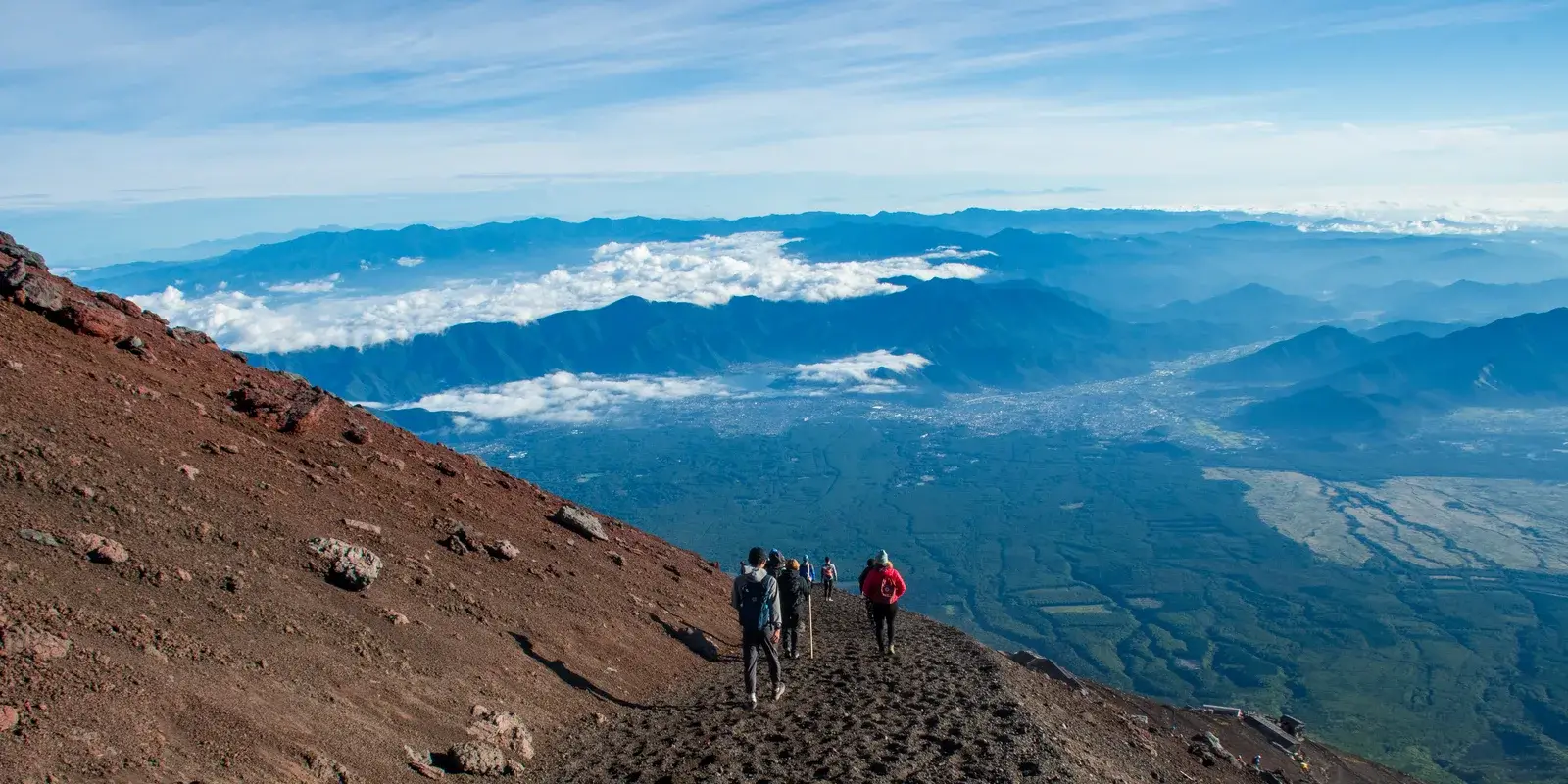
Why Mount Fuji Is Capped at 4,000 Climbers a Day: The Numbers That Explain It
What you'll learn in this article:
- How Mount Fuji went from 318,000 annual climbers to a daily cap of 4,000, and what the data says about why
- What 277 Japanese people said about the fee, the regulations, and foreign climbers on their most iconic mountain
- Why the people who live beside Fuji want you to come, just not the way some climbers used to
Why is Mount Fuji limited to 4,000 climbers per day? After Japan introduced its first-ever climbing regulations in 2024, bullet climbing dropped 95% and dangerous overcrowding days fell from 12 to zero. The mandatory ¥4,000 fee funds trail maintenance, rescue stations, and toilets at 3,776 meters. We read what 277 Japanese people wrote: 58% support the regulations, and 82% want foreign climbers to experience Fuji, just with proper preparation.
95%. That's how much bullet climbing dropped in one year (from 14,469 to 708) after Japan introduced its first-ever climbing regulations on Mount Fuji.
The fee made headlines. The daily cap made travelers nervous. But here's what most coverage missed: the Japanese people who live beside this mountain, staff its huts, and rescue its climbers overwhelmingly support these changes. The reason has nothing to do with keeping people out.
We took the official climbing data published by Japan's Ministry of the Environment and the National Police Agency, and layered it with 277 real opinions from Japanese people (mountain hut operators, local residents, rescue workers, experienced climbers, and everyday citizens) to understand what they actually think about the mountain they share with the world.
The numbers tell you what changed. The voices tell you why it matters.
Quick Guide
| What the Numbers Say | What Japanese People Say | |
|---|---|---|
| 🟢 Good news | Bullet climbing dropped 95%. The gate system works. Night climbers fell from 28,233 to 6,737. Mountain huts are quiet again. | "ようやくか。もっと早くやるべきだった。" / "Finally. They should have done this much earlier." The relief is real. |
| 🟡 The real story | ¥4,000 isn't a tourist tax. It's infrastructure. Toilets, rescue stations, trail repairs at 3,776 meters cost more than most people imagine. | "4,000円はラーメン一杯分。世界基準で見れば安い方だ。" / The fee is about one bowl of ramen. Internationally, it's on the low end. |
| 🔴 The concern | Preparation, not crowding, is the real risk now. In 2025 (the second regulated year), Fuji rescues fell to 49, about 10% below the 5-year average, yet nationwide mountain accidents hit a record high. | "準備不足が問題。国籍は関係ない。" / "The problem is preparation. Nationality has nothing to do with it." Japanese climbers cause more accidents than foreign ones. |
The one thing to remember: Mount Fuji's regulations aren't about keeping you out. They're about making sure the mountain is still there, and still safe, for the next person who dreams of climbing it.
About the Data
📊 Government statistics: Climbing figures are from the Ministry of the Environment's Mount Fuji Climber Count Survey (2024 Final and 2025/令和7年 Detailed Report). Accident data is from the National Police Agency's 2025 Mountain Accident Overview (令和7年, published 2026-06-18). Regulation details are from Yamanashi Prefecture and Fujisan-Climb.jp.
💬 Japanese voices: 277 Japanese-language responses collected from public platforms across five topics: the climbing fee, bullet climbing regulations, crowding, attitudes toward foreign climbers, and generational differences. Not a scientific survey. A collection of what real Japanese people said in their own words.
Part 1: The Numbers
All amounts are in Japanese yen (¥). For reference: ¥1,000 ≈ about $7 USD / €6 / £5. Current rates →
A Mountain at Its Limit
Mount Fuji isn't just any mountain. It's a UNESCO World Cultural Heritage Site (registered 2013), the highest peak in Japan at 3,776 meters, and a spiritual symbol that has shaped Japanese art, religion, and identity for centuries.
It's also been loved almost to death.
| Year | Total Climbers | vs. Peak (2012) | Key Event |
|---|---|---|---|
| 2012 | 318,565 | - | Peak year |
| 2013 | 310,721 | 97.5% | UNESCO registration |
| 2017 | 284,862 | 89.4% | Pre-regulation high |
| 2019 | 235,646 | 74.0% | Pre-pandemic benchmark |
| 2020 | 0 | - | COVID closure |
| 2023 | 221,322 | 69.5% | Last unregulated year |
| 2024 | 204,316 | 64.1% | First regulated year (Yoshida ¥2,000) |
| 2025 | 205,100 | 64.4% | All routes ¥4,000 |
The numbers tell a clear story: even before regulations, Fuji was already seeing fewer climbers than its peak. The 2024 regulations accelerated that trend, but not dramatically. The total dropped 8% from 2023, then held essentially flat in 2025 (+0.4%). What changed dramatically was how people climbed. It mirrors a pattern visible across Japan's 42 million visitor surge: the issue was never the total number, but the concentration.
Where Climbers Go: Four Routes, Four Worlds
Mount Fuji has four climbing routes. They're not equal.
| Route | 2025 Climbers | Share | Change vs. 2024 | Character |
|---|---|---|---|---|
| 🔴 Yoshida (Yamanashi) | 121,068 | 59.0% | +5.4% | Most popular, most regulated, most crowded |
| 🟢 Fujinomiya (Shizuoka) | 55,121 | 26.9% | +3.6% | Shortest route, busy and well-serviced |
| 🟡 Subashiri (Shizuoka) | 21,792 | 10.6% | −4.5% | Quiet forest trail |
| 🔵 Gotemba (Shizuoka) | 7,119 | 3.5% | −46.9% | Longest, quietest, for experienced climbers |
After the upheaval of the first regulated year, 2025 settled into a clearer pattern: the serviced routes held or grew (Yoshida +5.4%, Fujinomiya +3.6%), while the long, demanding Gotemba route fell by nearly half. Climbers concentrated on the shorter, hut-lined routes, and the total barely moved. The mountain is finding a new equilibrium.
The Bullet Climbing Problem, and How It Was Solved
"Bullet climbing" (弾丸登山) means leaving the 5th station at night, climbing straight through without sleeping, and reaching the summit for sunrise. It sounds adventurous. The data says it's dangerous.
| Metric | 2023 (Before) | 2024 (After) | Change |
|---|---|---|---|
| Bullet climbers (Yoshida) | 14,469 | 708 | −95.1% |
| Night climbers 21:00–24:00 | 3,413 | 317 | −90.7% |
| Night climbers 17:00–03:00 | 28,233 | 6,737 | −76.1% |
| Peak day (all routes) | 7,221 | 5,977 | −17.2% |
The gate at the Yoshida 5th station (closed from 14:00 to 03:00 unless you have a mountain hut reservation) achieved what years of warning signs couldn't. Bullet climbing didn't just decrease. It essentially ended.
The Safety Picture: Two Years In
Two regulated seasons tell a more nuanced story than the first year alone.
| Metric | 5-Year Average | 2025 | Change |
|---|---|---|---|
| Mount Fuji accidents (persons) | 54.4 | 49 | −9.9% |
| National mountain accidents (persons) | 3,241 | 3,623 | +12% |
| National deaths/missing | - | 332 | +32 vs 2024 |
| Foreign climber accidents (national) | - | 246 (174 incidents) | Record high since 2018 |
In 2024, Fuji's first regulated year, accidents actually spiked even as climbers fell. But in 2025, the second year, Fuji rescues dropped to 49, about 10% below the five-year average, even as climber numbers held essentially flat. The regulation's safety benefit is starting to show on the mountain itself.
Nationwide, though, mountain accidents climbed to a new high (3,623 people, with foreign-climber accidents at a record 246), and the deeper issue on Fuji, inadequate preparation, hasn't gone away. Altitude sickness, hypothermia, and exhaustion don't care about gate times.
The Fee: What It Costs and Where It Goes
| Year | System | Amount | Scope |
|---|---|---|---|
| 2013–2023 | Conservation fee (voluntary) | ¥1,000 | All routes |
| 2024 | Trail fee (mandatory) + conservation fee | ¥2,000 + ¥1,000 | Yoshida only (trail fee) |
| 2025–2026 | Trail fee (mandatory, consolidated) | ¥4,000 | All routes |
The old ¥1,000 conservation fee was voluntary, and collection rates hovered around 60%. The new ¥4,000 trail fee is mandatory, and it replaced the conservation fee entirely.
Where does it go? Much of it addresses the same challenge behind why Japan has no trash cans: maintaining cleanliness at scale takes infrastructure as well as goodwill. The conservation fee's last published accounts (FY2023) show: ¥16.6 million for trail maintenance, ¥8.6 million for rescue stations, ¥8.3 million for toilet operations, ¥6.6 million for safety guides, and ¥28.3 million for on-site management, totaling about ¥103 million. With the trail fee now at ¥4,000 and roughly 200,000 climbers per year, annual revenue could approach ¥800 million, a transformative budget for mountain infrastructure at 3,776 meters.
Who's Climbing: The Foreign Climber Picture
| Year | Foreign Climber Share (Yoshida) | Notable |
|---|---|---|
| 2019 | ~20% | Pre-pandemic baseline |
| 2021 | 21.3% | Border restrictions |
| 2022 | 15.8% | Early reopening |
| 2023 | 38.8% | Inbound surge |
| 2024 | 42.4% | Peak share |
| 2025 | 37.4% (50,340 of 142,814) | Slight normalization |
Foreign climbers now make up roughly 4 in 10 on the most popular route. And here's a fact that surprises most people: foreign climbers have higher registration and conservation fee payment rates than Japanese climbers. On the Shizuoka side, where pre-registration is required, almost all foreign climbers register, while Japanese climber registration is below 50%.
The 2026 Rules at a Glance
| Yoshida (Yamanashi) | Fujinomiya / Subashiri / Gotemba (Shizuoka) | |
|---|---|---|
| Fee | ¥4,000 (mandatory) | ¥4,000 (mandatory) |
| Daily cap | 4,000 climbers | No cap |
| Gate hours | Closed 14:00–03:00 | Closed 14:00–03:00 |
| Night entry | Mountain hut reservation required | Mountain hut reservation required |
| Booking | Online reservation system | Pre-registration + e-learning |
| Season | July 1 – September 10 | July 10 – September 10 |
The key difference: Yoshida has a hard daily cap of 4,000. The three Shizuoka routes don't, yet. If Yoshida fills up, you can't just show up and climb. Plan ahead.
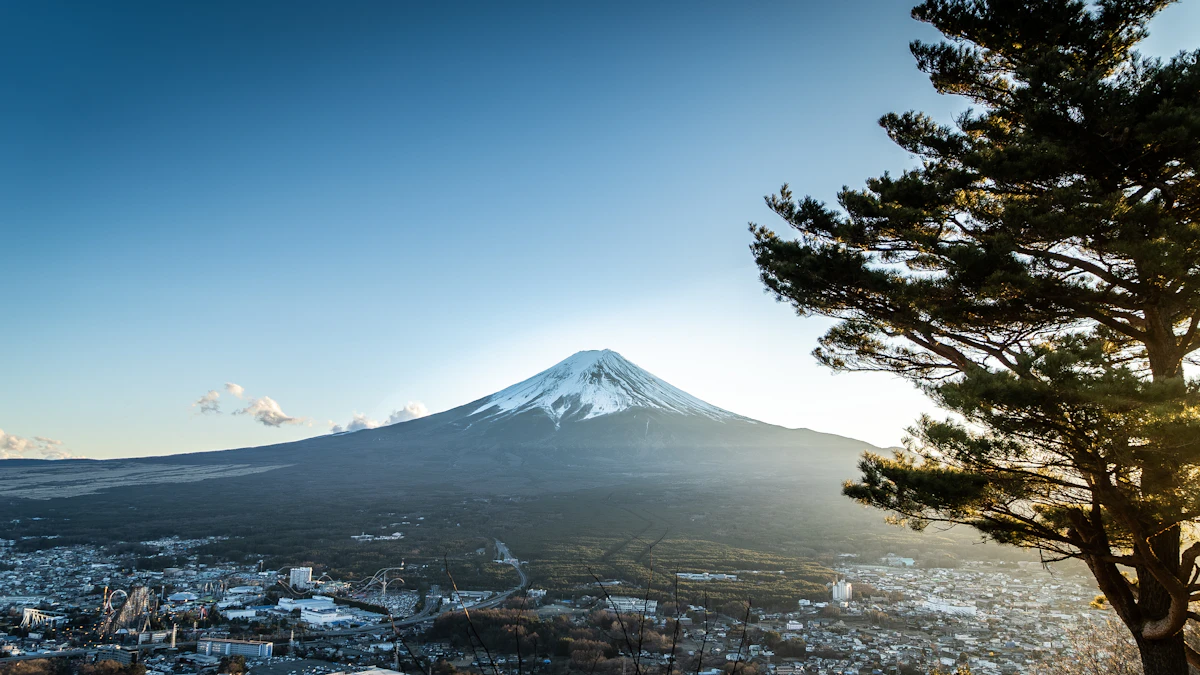
Part 2: What the Numbers Don't Tell You
The data above tells you what changed. It doesn't tell you what the mountain hut owner feels when the midnight trails finally go quiet, or why a rescue worker says "the problem isn't nationality," or what makes a 70-year-old climber say "this is unavoidable."
That's where 277 Japanese voices come in.
💰 Is ¥4,000 Worth It?
Most Japanese people think the fee is justified, but they want to see where the money goes.
Of 55 responses about the climbing fee:
The strongest voices came from people who understand mountain infrastructure firsthand:
高山でのインフラ整備(トイレ・水・救護所など)は想像以上にコストがかかり、1,000円程度の協力金ではまかなえない。4,000円は妥当だと思う。 Mountain infrastructure — toilets, water, rescue stations — costs far more than people imagine. The old ¥1,000 fee couldn't cover it. ¥4,000 is reasonable.
国際的に有名な登山スポットや国立公園などでも、一定の入場料や環境保護費を徴収する例は珍しくない。むしろ4,000円は国際基準で見れば安い方だ。 Famous climbing spots and national parks worldwide charge entrance or conservation fees. By international standards, ¥4,000 is actually on the low end.
But the 29% who object aren't just complaining about cost. Their concern runs deeper:
お金を払えない人が富士山に登れないのはおかしい。日本を象徴する山であるにもかかわらず、経済的ハードルが上がってしまう可能性がある。 It's wrong that people who can't afford it can't climb Mount Fuji. This is Japan's most iconic mountain — and the economic barrier keeps rising.
4,000円という金額が本当に必要なのか、具体的にどこにいくら使われるのかなど、明確な説明がなければ賛同を得られない。使途の透明性が重要だ。 Without clear explanations of exactly where every yen goes, they won't win public support. Transparency is everything.
Data × Voices: The numbers show that ¥4,000 from ~200,000 climbers generates roughly ¥800 million, enough to transform mountain infrastructure. But the voices reveal that acceptance depends on trust. Japanese people support the fee in principle but want receipts. The mountain hut operators who live with these costs daily are the most vocal supporters; the skeptics are people who haven't seen how their money is spent. For visitors: the fee isn't a tax on tourism. It's the cost of keeping a 3,776-meter mountain safe enough for you to climb it.
🌙 The End of Bullet Climbing
Japanese people overwhelmingly support the bullet climbing ban, but the reasons go beyond safety.
Of 55 responses about bullet climbing regulations:
The relief from mountain hut staff is palpable:
弾丸登山者の数は圧倒的に少なくなり、山小屋の前が静かになったという声もいただいております。 The number of bullet climbers has dropped dramatically. We've received feedback that it's become quiet in front of the mountain huts. Mountain hut association
一部の弾丸登山者がマナーに反して登山道上で休憩やテント設営、焚き火を行うといった事例も問題となっていました。 Some bullet climbers were resting on the trail, setting up tents, even making campfires. These incidents were a real problem.
But 20% worry about something less obvious: the soul of the mountain.
過度な規制や管理によって、富士山がおもしろみのない画一的な山になってしまうのではないか。 I worry that excessive regulation will turn Mount Fuji into a bland, uniform mountain — stripped of its character.
持つ者も持たざる者も自らの足で登るという平等性が富士山信仰のポイントでした。 The essence of Mount Fuji worship was its equality — rich or poor, everyone climbed with their own two feet. That principle is being tested.
Data × Voices: The 95% drop in bullet climbing is the regulation's headline success. But the voices reveal a tension that numbers can't capture: the mountain's identity is shifting from "anyone can climb" to "only the prepared should climb." Most Japanese people accept this trade-off. They've seen the midnight chaos, the altitude sickness, the rescue helicopters. But a meaningful minority mourns what's being lost. For visitors: the regulations aren't punishing you for wanting to see sunrise. They're protecting you from a decision that still sends dozens of Fuji climbers to rescue every year.
🌏 Foreign Climbers: The Compliance Paradox
Japanese people welcome foreign climbers. Their worry is about preparation, and nationality isn't the issue.
Of 55 responses about foreign climbers on Mount Fuji:
The data behind the welcome is striking:
外国人はほとんど登録してくれる。日本人は1~2割…半分以下。 Foreign climbers almost all register. Japanese climbers? Only 10–20%. Less than half.
富士山保全協力金でも、外国人登山客はほとんど協力してくれる。日本人の協力金は半分に満たない。 Foreign climbers almost all pay the conservation fee. Less than half of Japanese climbers contribute.
問題はインバウンドよりも日本人のほう。遭難事故は日本人のほうが圧倒的に多い。それをまずどうにかしないと。 The problem is Japanese climbers more than inbound tourists. Japanese people cause far more accidents. That's what needs fixing first. Mountain accident prevention official
But the concern about preparation is genuine:
Tシャツ、短パンにサンダルで山頂へ向かう外国人とすれ違ったことは何度もあります。正直、命知らずだなと。 I've passed foreign climbers heading to the summit in T-shirts, shorts, and sandals many times. Honestly — reckless.
富士山に登山をするんだという気持ちをしっかり持って、観光ではなく登山という気持ちで来ていただきたい。 Please have the mindset that you are mountaineering — not sightseeing. Come prepared for a mountain, not a tourist attraction.
Data × Voices: Here's the paradox the numbers reveal: foreign climbers actually comply with regulations better than Japanese climbers, with higher registration rates and higher fee payment rates. But the visual impression of underprepared tourists in sandals sticks in people's memory more than the quiet majority who came with proper gear and a reservation. The 82% of Japanese people who want foreigners to know Fuji is a World Heritage Site aren't gatekeeping. They're saying: "We want you here. We want you to understand what this place means. And we want you to come home safe."
📊 Peak vs. Quiet: When the Mountain Breathes
The crowding problem is real, but it's concentrated in time and space.
Of 58 responses about Mount Fuji crowding:
The data backs up the "it depends" crowd:
| When | Average Climbers/Day (2024) | Experience |
|---|---|---|
| Weekend (all routes) | 3,904 | Busy: mountain huts full, summit congested |
| Weekday (all routes) | 2,673 | Comfortable: space to rest, shorter waits |
| Peak day (Sept 7, Sat) | 5,977 | Crowded: lines at every station |
| Quiet day (mid-week Sept) | ~1,500 | Near-empty: the mountain to yourself |
The voices confirm what the numbers suggest: timing is everything, a theme that echoes our broader research on when Japanese people most want you to visit:
登山者が4,000人を超えると山頂付近で人が密集し、危険な状況になることが判明しました。 We found that when climbers exceed 4,000 per day, dangerous overcrowding occurs near the summit. Yamanashi Prefecture regulation team
世界文化遺産としての富士山を感じられる要素が少ないのが現状です。景色がいい、日本一の山に登った、で終わってしまう。 Currently, there's little to make you feel Fuji's status as a World Cultural Heritage site. People just think "nice view, climbed Japan's tallest mountain" and that's it. Mountain hut owner
Data × Voices: The 4,000/day cap on Yoshida was set based on summit safety data rather than picked arbitrarily. But 33% of Japanese voices say it's still not enough. The real story is in route choice: the Shizuoka-side trails stay far quieter than Yoshida, and Japanese insiders increasingly recommend them, not because they want to keep Yoshida for themselves, but because they know a quieter climb is a better climb. For visitors: the best version of Mount Fuji isn't the busiest day on the most popular route. It's a weekday on Subashiri, with space to actually look up.
The Generation Gap
One theme cut across every viewpoint: age shapes how Japanese people feel about Fuji's transformation.
通行料・協力金が環境保全や整備に使われることを考えれば、仕方のないことだと思っています。 Considering the fees go to environmental conservation and maintenance, I think it can't be helped. 70-year-old climber from Chiba
拝金主義でもう登る気がしない。 It feels like money worship. I don't feel like climbing anymore. Older climber who remembers unregulated Fuji
賛成。お金を払うことで富士山の価値が上がる。登山者の意識も変わると思う。 I'm in favor. Paying changes how people value the mountain. It changes climber mindset too. Younger climber
富士山は「誰でも登れる山」ではなくなった。「登る覚悟」を持たなければならない山になる。 Mount Fuji is no longer "a mountain anyone can climb." It's becoming a mountain that requires resolve.
The pattern: older climbers who remember free, unregulated Fuji feel the loss most acutely, even when they intellectually support the regulations. Younger climbers, who've only known overcrowded trails and altitude sickness headlines, tend to accept the fees as obvious and necessary. Both are right. The mountain changed because the world changed.
What This Means for You
If you're planning to climb Mount Fuji in 2026, here's what the data and voices together suggest:
Before you book:
- Reserve early. Yoshida mountain huts sell out weeks in advance. The 4,000/day cap means walk-ups risk being turned away.
- Consider Fujinomiya or Subashiri. The data shows these routes are growing, and the people who climb them love the quieter experience.
- Complete Shizuoka's e-learning if using those routes. It takes about 15 minutes and is available in English.
The fee:
- ¥4,000 is mandatory on all routes. Budget for it. It covers trail maintenance, rescue infrastructure, and toilets at extreme altitude.
- Japanese people see this as reasonable, and many think it should be higher.
What earns respect:
- Come prepared. Proper shoes, rain gear, cold-weather layers. The single biggest concern Japanese people have about foreign climbers is safety equipment rather than language or culture.
- Don't bullet climb. The gate exists because people died. The 95% drop in bullet climbing saved lives.
- Choose a weekday if you can. The mountain on a Tuesday is a completely different experience from a Saturday. Mountain hut staff explicitly wish more people knew this.
What they want you to know:
- You are welcome. 82% of Japanese people want foreign visitors to experience Mount Fuji.
- Foreign climbers have higher compliance rates than Japanese climbers. The registration system works, and you're already doing better than most people realize.
- The fee isn't about you. It's about a 3,776-meter mountain that needs ¥800 million a year just to keep its trails walkable, its toilets functioning, and its rescue stations staffed.
Your Voice Matters
Have you climbed Mount Fuji? Planning to? We'd love to hear about your experience: what surprised you, what you'd tell the next person, or how you felt when you reached the top.
Your story could become part of future WMJS research and help the next visitor prepare better.
Sources
Statistical Data (Primary Sources, directly analyzed)
All statistical data was extracted directly from the following government files, downloaded and stored in the article's sources/ directory. See sources/README.md for detailed extraction notes and sheet references.
Ministry of the Environment: Mount Fuji Climber Count Survey 2024 (Final/確報)
- Published: 2024-09-30
- Detailed Report PDF (
env_2024_detail.pdf):- p.1: 10-year climber count by route (Table 1). Full-year totals used in this article: 2020 = 0 (COVID closure, national park fully closed to climbers), 2022 = 160,145 (partial reopening), 2023 = 221,322 (last unregulated year, 69.5% of the 2012 peak)
- p.3-4: Daily/seasonal climber counts, peak days (Tables 2-4)
- p.6: Weekday vs. weekend averages (Table 5)
- p.10-11: Climbing conditions and my-car regulations
- Downloaded from: https://www.env.go.jp/park/fujihakone/data/files/fujihakone_shosai_R6.pdf
Ministry of the Environment: Mount Fuji Climber Count 2025 / 令和7年 (Detailed/詳細版)
- Published: 2025-09-29
- Detailed Report PDF:
- Total: 205,100 climbers (100.4% vs 2024); by route: Yoshida 121,068, Fujinomiya 55,121, Subashiri 21,792, Gotemba 7,119 (Table 1)
- https://www.env.go.jp/park/fujihakone/data/files/fujihakone_shosai_R7.pdf · summary: https://kanto.env.go.jp/press_00073.html
National Police Agency: 2025 Mountain Accident Overview (令和7年)
- Published: 2026-06-18
- Report PDF:
- p.2 / Table 1: national totals: 3,122 incidents, 3,623 victims, 332 deaths/missing
- p.7 Table 3: Mount Fuji: 49 victims, 9.9% below the 5-year average (54.4)
- p.13 Table 9: foreign-visitor mountain accidents: 246 victims (record high since 2018)
- https://www.npa.go.jp/publications/statistics/safetylife/r07_sangakusounan_gaikyou.pdf
National Police Agency: 2024 Mountain Accident Overview (令和6年, for comparison)
Yamanashi Prefecture: Yoshida Route Trail Fee and Regulations
- Trail fee details: fee history used in this article — ¥1,000 voluntary conservation fee (2013-2023), ¥2,000 (written without a thousand-separator: 2000 yen) mandatory trail fee on Yoshida only (2024), ¥4,000 (4000 yen) mandatory trail fee on all routes (2025-2026). Gate closed 14:00-03:00; mountain hut reservation required for night entry through the gate.
- Conservation fee annual results: FY2023 (last published conservation-fee accounts before the trail fee replaced it) breakdown by use — ¥16.6 million trail maintenance, ¥8.6 million rescue stations, ¥8.3 million toilet operations, ¥6.6 million safety guides, ¥28.3 million on-site management, totaling approximately ¥103 million. The ¥800 million annual-revenue figure cited in this article is WMJS's own estimate (¥4,000 trail fee × ~200,000 annual climbers), not an official prefecture figure.
Fujisan-Climb.jp (Official): 2026 Regulation Details
- Yoshida Route regulations: ¥4,000 fee, gate closed 14:00-03:00, mountain hut reservation required for night entry
- Shizuoka regulations: ¥4,000 fee, gate closed 14:00-03:00, pre-registration + e-learning required
Yoshida Route Detailed Statistics
- Mt. Fuji Keizai Shimbun: 2024 Yoshida Route Final Statistics: Foreign climber ratio 42.4%, bullet climbing 91% decrease. Night climber counts by time band, 2023 vs. 2024: 21:00-24:00 band 3,413 to 317; wider 17:00-03:00 band 28,233 to 6,737.
- yamatogokoro.jp: Inbound Climbing Trends 2024: Bullet climbing 14,469→708, foreign ratio timeline 2021 (21.3%), 2022 (15.8%, early pandemic reopening), 2023 (38.8%), 2024 (42.4%)
Japanese Voices (Public Platforms)
Voices were collected from the following public platforms:
- Public Japanese Q&A sites, forums, and social/blog posts
- YAMAP Magazine
- mineo community
- news comment sections (Nikkei, CNN Japan, J-CAST, Gendai Media, FLASH)
- Yamanashi Prefecture public comments
- Mountain guide blogs and professional forums
Note on Quotations
Quotes from online platforms have been lightly edited for readability (fixing typos, formatting for clarity). The meaning and intent of each comment remain unchanged. Original sources are linked above.
WMJS is written in Japan, in English, with AI help. We check every page, but English is not our first language. If a sentence reads oddly, tell us. One sentence is enough.
Thank you. A person reads every note.
How well do you know Japan?
Built from 635 public posts by Japanese people
Want to know more? Ask Japanese people
Have a follow-up question about this topic? We'll ask real Japanese people.
Voice Box →