
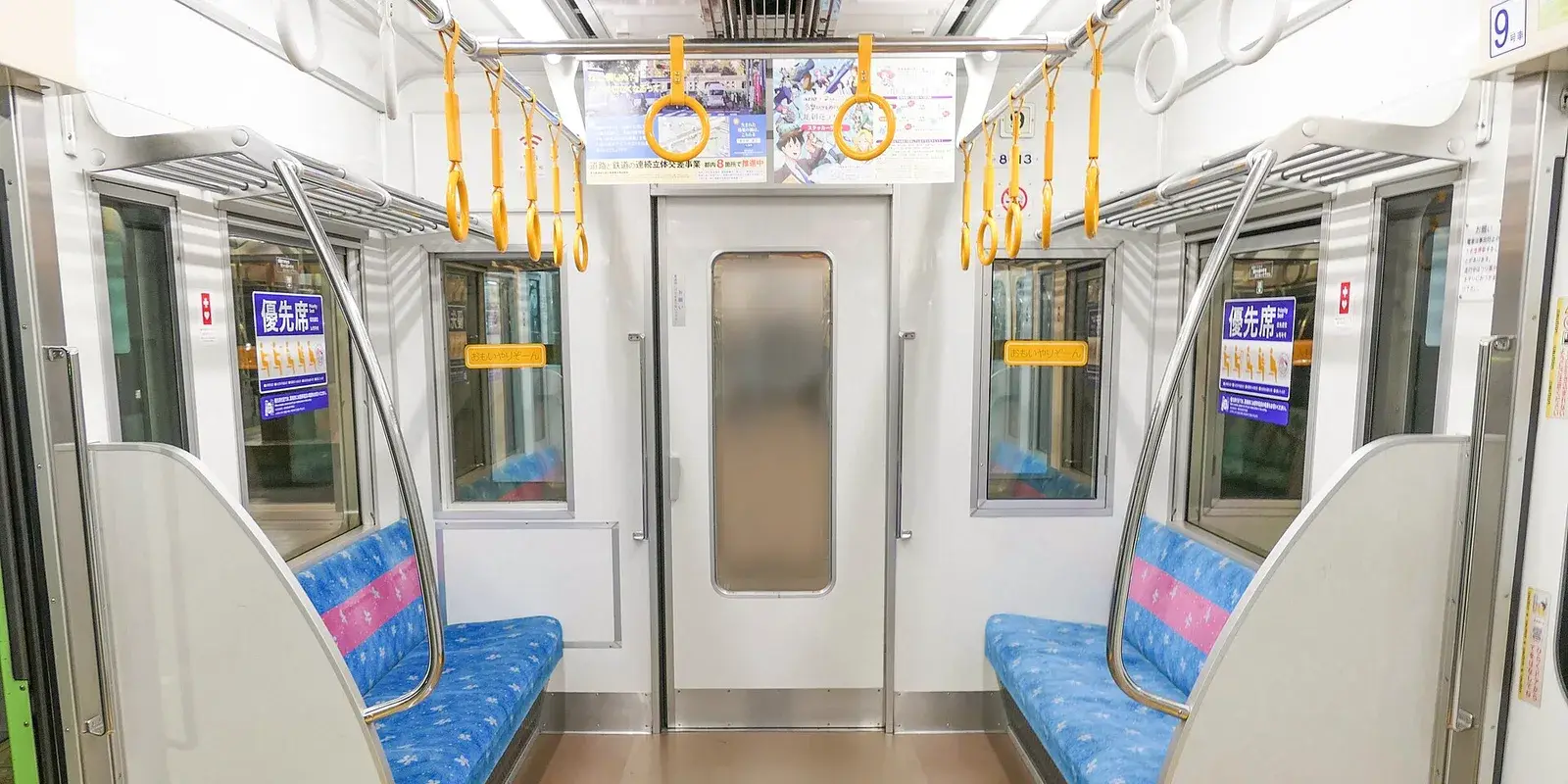
The Priority Seat Question: What Japanese People Really Think When a Tourist Sits Down
We posted a video asking Japanese people whether it bothers them when visitors talk on trains.
One comment didn't answer the question. Instead, it redirected everything.
優先席に座るなが先でしょう Telling them not to sit in the priority seat should come first.
This viewer wasn't interested in phone calls. They had seen foreign visitors sitting in priority seats, and for them, that mattered more than any conversation on a train.
That single comment sent us down a path we hadn't planned. We pulled data from Japan's Private Railways Association survey, gathered voices from Japanese commuters, parents, people with disabilities, and discovered that priority seats reveal something far more complex than any travel guide has ever shown.
What we found wasn't a simple "don't sit there." It was a country quietly arguing with itself.
Quick Guide
| Situation | What Japanese People Said | |
|---|---|---|
| 🟢 Relax | The seat is empty and nobody nearby seems to need it | About two-thirds of Japanese people say sitting is fine, as long as you're ready to yield. "It's not a reserved seat. It's a priority seat. There's a difference." |
| 🟡 Good to know | Someone who might need the seat boards the train | This is where it gets complicated. Many Japanese commuters want to offer their seat but freeze, afraid of offending, being refused, or looking performative. You can break through simply by standing up without a word. |
| 🔴 Worth noting | You sit and don't look up | What actually bothers Japanese commuters isn't the seat itself. It's sitting there and disappearing into your phone. The difference between "sitting while watching" and "sitting while ignoring" is everything. |
The one thing to remember: Priority seats aren't really about rules. They're about awareness. Stay aware of who's around you, and you're already doing better than many daily commuters (including, as Japanese people themselves will tell you, quite a few Japanese ones).
Can you sit in a priority seat in Japan? Japanese people are genuinely split. About 60% say sitting is fine if you yield when needed, but 25% want them kept empty, especially those with invisible disabilities who say "almost nobody yields for me." A survey of 1,949 people found 66.9% do sit (Wakamoto Pharmaceutical, 2023). The consensus: it's not about sitting or standing, it's about watching.
How This Article Came Together
This article didn't start with a research plan. It started with a comment on our YouTube channel.
When we posted videos about train etiquette in Japan, Japanese viewers kept steering the conversation toward priority seats, even when the video was about something else entirely. That pattern told us something: this topic carries emotional weight that travel guides haven't captured.
So we investigated. We analyzed the Japan Private Railways Association's 2025 Manner Survey (5,202 respondents, the largest annual public transportation survey in Japan), collected voices from Japanese online platforms, and cross-referenced with data we'd already gathered for articles on traveling with kids and getting around Japan.
A note on what you're reading: This isn't a scientific survey. It's a collection of what Japanese people said in their own words, on public platforms, in Japanese. We gathered voices from commuters, parents, people with invisible disabilities, service workers, and retirees. Some voices contradict each other. That's the point. Priority seats are one of the few topics where Japanese people openly disagree.
What the Data Says First
Before we get to individual voices, here's what Japan's largest manner survey found.
The Japan Private Railways Association surveys over 5,000 train riders every year about what bothers them. In 2025, "seating behavior" ranked #2 among all annoying behaviors at 31.9%, just behind coughing without covering your mouth (34.7%).
But here's the detail that matters: when you break down what "seating behavior" actually means, priority seat yielding is only 5.3% of the seating complaints. The bigger issues are people spreading their legs (45.7%) and not scooting over (31.9%).
So statistically, priority seats aren't the #1 concern. But emotionally? The comment on our video, and the dozens of voices we collected afterward, suggest otherwise. Priority seats hit differently because they involve a moral judgment: should I act, or can I pretend I didn't notice?
When the survey asked specifically about foreign visitors, 77.1% of respondents said they'd experienced bothersome behavior from tourists. Seating behavior came in at #3 (26.2%), behind loud conversation (69.1%) and luggage handling (41.9%).
The Question That Splits Japan: Can You Sit in an Empty Priority Seat?
This is the question every visitor asks, and the one Japanese people genuinely can't agree on.
Multiple Japanese surveys consistently show that roughly two-thirds of people will sit in an empty priority seat. A pharmaceutical company survey of 1,949 people found 66.9% sit (Wakamoto Pharmaceutical, 2023). A newspaper poll found 58% don't (Kahoku Shimpo, 2022). A transportation news survey found 20% sit without hesitation, 35% sit only if the car is empty, and 26% never sit (Traffic News, 2019).
The majority position is clear: sitting is fine, as long as you yield when someone needs it. But the minority position is powerful, and it comes from lived experience.
The "sit and yield" voices:
「優先」という言葉の意味が分からないのか?「専用」じゃないから、ちゃんと譲れば問題ない Do people not understand the word "priority"? It's not "reserved." If you yield properly, there's no problem.
空いてたら座る。その代わり常に周りを見てる If it's empty, I sit. But I'm always watching my surroundings.
専用席ならともかく、自分も優先席には普通に座ります。もちろん、絶対に譲るという意思を持って It's not a reserved seat. I sit in priority seats normally — but always with the firm intention of yielding.
The "keep it empty" voices, and they're hard to ignore:
すでに座っている人がいると「譲ってくれ」っていいづらいんだよ… When someone's already sitting there, it's really hard to ask them to move...
先に座っている人がいたら、優先席が必要な人がいても「どうせ譲ってもらえない」と思って近付けないよ If someone's already sitting there, people who need the seat think "they won't give it up anyway" — and don't even approach.
自分は優先席を必要とする当事者ですが、譲ってくれる人は全然いません。だからこそ、できれば空けておいてほしい… I'm someone who actually needs priority seats. And honestly, almost nobody yields for me. That's why I wish people would just keep them empty...
This is the tension at the heart of the priority seat question. The "sit and yield" logic sounds perfectly reasonable, until you hear from the people it doesn't work for.
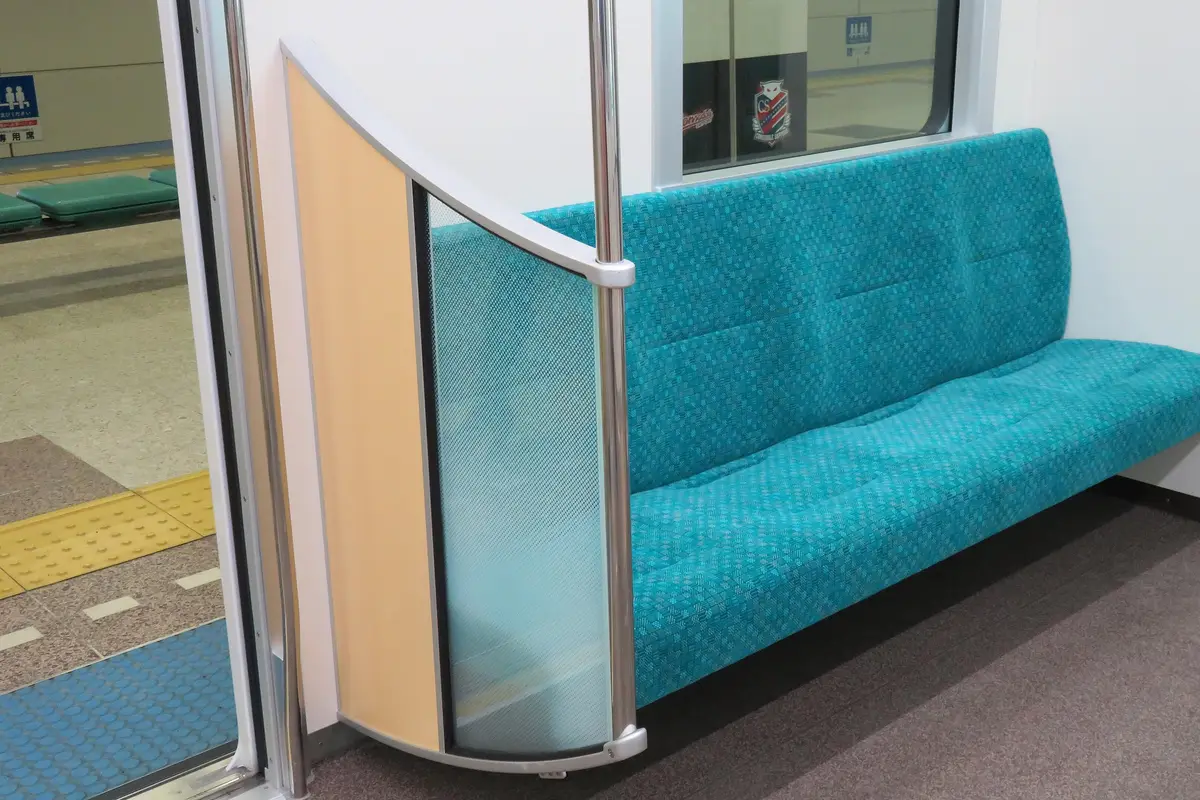
One city found a different answer. Sapporo uses the term senyo-seki (専用席, exclusive seats) instead of yusen-seki (優先席, priority seats). The result? Even on packed trains, those seats stay empty.
札幌へ旅行した時、満員電車なのに優先席は当然のことながら空いていて感動しました! When I visited Sapporo, the exclusive seats were empty even on a packed train — I was genuinely moved! Japanese traveler in their 60s
The Freeze: Why Even Japanese People Can't Yield
Here's something travel guides never tell you: Japanese people themselves struggle enormously with yielding seats. This isn't a foreign-visitor problem. It's a shared human problem, one that Japanese society has been debating for years.
A 2022 survey of 1,765 people found that over 40% had hesitated to offer their seat. The top three reasons:
| Rank | Reason | % |
|---|---|---|
| 1 | "I was extremely tired" | 24.1% |
| 2 | "I've been refused before" | 20.4% |
| 3 | "Asking an elderly person might be rude" | 20.0% |
And when people see someone not yielding? The most common response, given by 56.4%, is "I'm annoyed, but I say nothing." (AirTrip, 2022)
This is the freeze. And it has layers.
Layer 1: Exhaustion
席を確保するため4、5本の電車を見送る。そこまでして確保した席を簡単には譲れない I let four or five trains pass just to get a seat. After that much effort, I can't give it up easily. Commuter from Ibaraki Prefecture, traveling to central Tokyo
Japan has some of the longest commutes in the world. When someone has stood in line through multiple trains just to sit down, the calculus changes. This isn't selfishness. It's the arithmetic of a system that pushes people past their limits.
Layer 2: The fear of offending
年寄り扱いされるのを嫌がる高齢者がいる。譲ろうとしても断わられ、時には逆ギレされることもある Some elderly people hate being treated as old. You try to offer your seat and get refused — sometimes they actually get angry at you.
Once you've been snapped at for trying to be kind, the next time is harder. And the time after that, you might not try at all.
Layer 3: The audience
声かけするのは目立つし、周りの人に偽善者っぽくみられるのが嫌 Offering your seat draws attention, and I don't want people around me thinking I'm just being performative.
In a culture that values blending in, the act of standing up and offering your seat is, paradoxically, a kind of standing out. The Japanese word for this fear doesn't have a clean English equivalent. It's somewhere between "embarrassment" and "not wanting to be seen trying."
The paradox, captured in one data point: An international comparison study (2015) published in Japan's Civil Engineering journal found that Japanese people's belief that seats should be yielded is as strong as, or stronger than, people in the UK, France, Germany, Sweden, and South Korea. But the frequency of actually doing it is significantly lower.
They want to. They just can't.
「迷惑をかけない」という美徳が、「迷惑をかけられることを許さない」という態度に変化した The virtue of "not causing trouble for others" has transformed into an attitude of "not tolerating any trouble from others." Cultural analyst
And then, sometimes, the freeze breaks:
「席どうぞ」とお兄さんがおばあさんに声をかけた。おばあさんが「いいわよ」と断ると、「いえ、レディファーストなんで」と言って、おばあさんが嬉しそうに座った A young man said "Please, take my seat" to an elderly woman. When she declined, he said "No really — ladies first." She sat down with a big smile.
How Japanese People See You in That Seat
This is where the WMJS community taught us something we didn't expect.
When we started investigating, we assumed the story was straightforward: Japanese people are bothered when foreign visitors sit in priority seats. Our YouTube comment certainly suggested that.
But as we collected more voices (across our own channel, Reddit threads, forum discussions, and our research for other articles), a different picture emerged. Japanese people's perceptions of foreign visitors and priority seats are genuinely split.
The "foreigners are the problem" voices:
優先席に座るなが先でしょう Telling them not to sit in the priority seat should come first. Comment on our YouTube channel
This is real. This person has seen foreign visitors occupying priority seats while people who need them stand. It's not abstract. It's Tuesday morning on the Yamanote Line.
The "it's everyone" voices:
優先席に平然と座るのは外国人に限りませんね。昨日は日本人の若者と女性。スマホを見ていて席を譲るそぶりもせず People sitting in priority seats without a care isn't limited to foreigners. Yesterday it was Japanese young people and women — staring at their phones, making no move to yield.
The "foreigners yield more" voices, and this genuinely surprised us:
有名な観光名所を通る路線を使ってますが、どっちかっていうと英語圏の外国人の方がお年寄りや子供連れに優先席を譲ってあげてるのを見ますよ I ride lines that pass major tourist spots, and honestly, English-speaking foreigners yield priority seats to the elderly and families with kids more readily than others.
外国の方が、お年寄りや体の不自由な方にすぐに席を譲る場面を何度も目にしたので、マナーに関しては日本人より優れていると感じます I've seen foreign visitors immediately yield their seats to elderly and disabled people many times. In terms of manners, I actually think they're better than Japanese people.
How can both be true? Because different people are observing different moments. The visitor who sits in a priority seat and doesn't notice the elderly person standing, that's real. The visitor who stands up immediately when someone who needs the seat boards, that's also real. Both happen every day on the same train lines.
One knowledge-sharing platform commenter identified the cultural gap precisely:
外国人はPriority seatsの意味を正しく理解しているが、西洋の規範に従っている: 空いていたら座り、必要な人が来たら譲る Foreign visitors understand "Priority Seats" correctly — they just follow a different norm: sit when it's empty, yield when someone needs it.
In most countries, the expectation is: sit, then yield. In Japan, a significant minority believes: keep it empty so people don't have to ask. Neither approach is wrong. They're just different answers to the same question: whose responsibility is it to make the first move?
The Invisible Passenger
There's a reason the priority seat question is harder than it looks, and it's attached to a small red tag you might not have noticed.
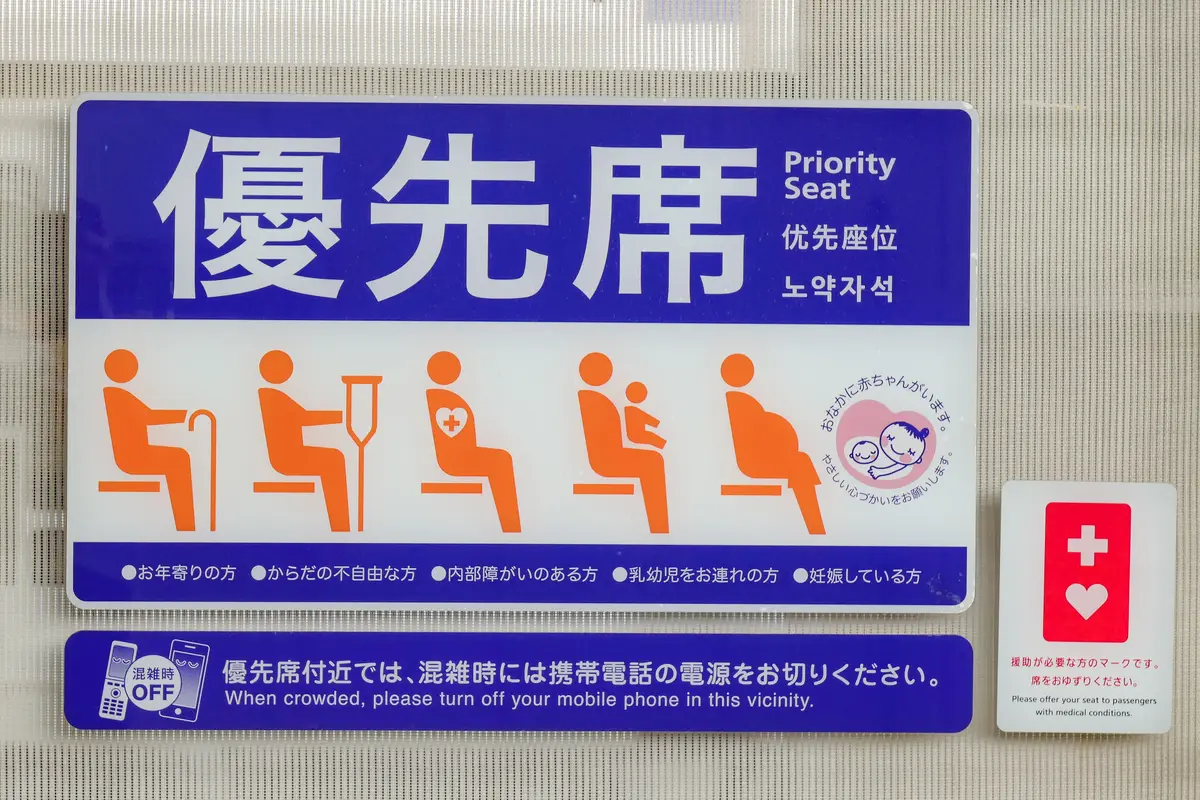
Japan has something called a Help Mark (ヘルプマーク): a red tag with a white cross and heart that people with invisible disabilities can attach to their bag. Internal disorders, chronic pain, early pregnancy, panic disorder, epilepsy: these are conditions that make standing difficult but don't show on the outside.
The Help Mark exists because of moments like this:
てんかん・パニック障害を抱えている。優先席に座っていたら、見た目は健常者と変わらないので「席を代われ」と怒鳴られた I have epilepsy and panic disorder. I was sitting in a priority seat when someone yelled at me to give it up — because I look perfectly healthy.
And this:
生理が重くて脂汗が出てるけど傍目には分からない My period is so heavy I'm breaking out in cold sweat — but from the outside, you can't tell anything is wrong.
The Help Mark creates a quiet signal in a culture where asking for help out loud is difficult. But awareness is still growing. One comment with over 1,600 likes on a Japanese women's online forum captured the complicated reality:
ヘルプマークつけよ。何しても絡まれるんだから Just put on a Help Mark. You'll get hassled no matter what you do.
The message underneath: even with a visible marker, the system doesn't always work. People don't notice. People don't know what it means. And sometimes, people question whether the wearer really needs it.
For visitors, the practical takeaway is this: the person sitting in that priority seat who looks perfectly fine? They might need that seat more than anyone standing around them. The Help Mark is one signal, but not everyone who needs the seat wears one.
A response from a person who requires supplemental oxygen offered perhaps the best guidance anyone could give:
健康な人でも座っていいが、各駅で乗車してくる人の中に必要な人がいないか見るべき Healthy people can sit — but you should check at every station whether someone boarding needs the seat more.
The Generation Line
Priority seats also expose one of Japan's quieter generational tensions.
The comment with the most likes (2,143) in a major forum discussion about priority seats wasn't about foreigners at all:
登山帰りの元気な高齢者には譲らない I won't yield to elderly people coming back from hiking — they're healthier than I am.
And with 588 likes:
仕事で疲れてる30代より遊びの帰りの高齢者 A 30-year-old exhausted from work vs. an elderly person coming back from a fun outing...
The traditional expectation, that younger people yield to older people, is being quietly renegotiated. Younger Japanese workers, dealing with long hours and crushing commutes, are pushing back against automatic age-based yielding. Their argument: what someone needs should decide who sits, regardless of age.
Meanwhile, some elderly people resist the other direction:
年寄り扱いするなと怒る高齢者がいる Some elderly people get angry when you try to give them your seat — they don't want to be treated as old.
The result is a double bind: younger people fear being called selfish for not yielding, and fear being snapped at for trying. No wonder so many freeze.
What Priority Seats Reveal
We started this investigation because of a YouTube comment. What we found goes well beyond train etiquette.
Priority seats sit at the intersection of everything that makes Japanese shared spaces both remarkable and complicated: the desire to be considerate, the fear of standing out, the gap between wanting to help and actually doing it, the invisible burdens people carry, and the generational shifts reshaping what "respect" even means.
No travel guide can give you a simple rule for this, because Japanese people themselves don't have one. What they do have is an ongoing, honest, sometimes heated conversation about how to share space well. And now you've heard a piece of it.
Here's what we'd suggest: if you sit in a priority seat, stay aware. Look up from your phone at each station. Notice who's boarding. And if someone seems to need the seat, stand up. You don't need a perfect phrase. You don't even need to say anything. Just stand.
That small act (noticing, and responding) is exactly what the Japanese people in these posts wish more people would do. Not just visitors. Everyone.
Share Your Experience
Have you had a moment on a Japanese train involving priority seats? Did someone yield for you, or did you yield for someone? We'd love to hear about it.
Sources
Survey Data
Japan Private Railways Association: 2025 Manner Survey
- 5,202 respondents, October–November 2025
- Full results
- Seating behavior: #2 at 31.9%; priority seat yielding: 5.3% of seating sub-category
- Inbound visitor concerns: 77.1% experienced bothersome behavior; seating #3 at 26.2%
AirTrip Yielding Survey (2022)
- 1,765 respondents, July 2022
- 40%+ hesitated to yield; top reason: exhaustion (24.1%)
- Reaction to seeing someone not yield: "annoyed but say nothing" 56.4% (most common)
- Source
Wakamoto Pharmaceutical Priority Seat Survey (2023)
- 1,949 respondents; 66.9% sit in priority seats
- Most common reason: "I'll yield if someone needs it" (618 people)
- Source via nippon.com
Kahoku Shimpo Priority Seat Poll (2022)
- 267 respondents, SNS/LINE reader poll, June 2022
- 58.4% don't sit in priority seats; 41.6% sit (33.3% among under-50s, 57.8% among 60+)
- Source
Traffic News (Norimono News) Priority Seat Survey (2019)
- 797 respondents, December 2019
- 20.3% sit without hesitation; 35.1% sit only if the car is empty; 18.3% sit when unwell or tired; 26.2% never sit
- Source
Cabinet Office Public Transportation Survey (2020)
- 72.0% would yield to elderly, disabled, or pregnant passengers
- Source
International Comparison: Yielding Behavior
- Published in Journal of Japan Society of Civil Engineers, Series D3, 2015
- Japanese belief that yielding is important: equivalent to UK, France, Germany, Sweden, South Korea
- Actual yielding frequency: significantly lower than all compared countries
- Referenced in nippon.com analysis
Online Voices
- Public Japanese Q&A sites, forums, and social posts: first-hand opinions on priority seats, yielding, and how foreign visitors are perceived
- Business Insider Japan: Why Japanese people don't yield seats
- nippon.com: Why Japanese people don't yield: Taiwan comparison
- grapee.jp: Georgian ambassador priority seat debate
- PRESIDENT WOMAN: Priority seat ethics analysis
- ABEMA TIMES: Help Mark awareness and priority seat conflicts
WMJS Original Data
- YouTube channel comment on train_chat video (April 22, 2026)
- Cross-referenced voices from existing WMJS research: kids_stroller_train (67 voices), transport_big_luggage (55 voices), train_chat (65 voices)
Note on Quotations
Quotes from online platforms have been lightly edited for readability (fixing typos, formatting for clarity). The meaning and intent of each comment remain unchanged. Original sources are linked above.
This article is available in languages covering 95%+ of visitors to Japan (based on JNTO 2025 data). Need another language? Let us know through Voice Box.
WMJS is written in Japan, in English, with AI help. We check every page, but English is not our first language. If a sentence reads oddly, tell us. One sentence is enough.
Thank you. A person reads every note.
How well do you know Japan?
Built from 635 public posts by Japanese people
Want to know more? Ask Japanese people
Have a follow-up question about this topic? We'll ask real Japanese people.
Voice Box →