Kansai, an easy few days
Japan's older heart — Kyoto, Nara, Osaka — at a comfortable pace
Last verified: 2026-06-08
Who this plan suits
- First tripGreat fit
- Been beforeWorks well
- With kidsWorks well
- SoloGreat fit
- As a coupleGreat fit
- Gentle paceWorks well
Beautiful all year; cherry blossom in spring and maple colour in late autumn are the busiest, loveliest windows.
Kansai is the easy part of Japan to fall for — three cities sitting close enough that you can wake up in Kyoto, feed deer in Nara by lunch, and be standing under Osaka's neon by night, all on a single tap of one card. Most people arrive into the region by Shinkansen at Shin-Osaka or Kyoto, or fly into Kansai Airport (KIX) and ride in from there; from any of those doors, the loop below is yours. I'd treat this as a loose four-day frame, not a checklist: Kyoto for two days because the temples reward slowness, Nara for a day because the deer and the Great Buddha are worth the trip out, and Osaka to finish loud and warm.
Everything here is a ride of forty-five minutes or less, so you don't have to be precious about it. If a day runs long, fold it shorter. If you fall in love with one lane in Gion, stay in it. I'll lay out how I'd move and where I'd sleep, and you can pull the pieces apart and put them back together however your trip wants to go.
Where to base yourself
I'd base in one city for the whole trip and let the rail mesh do the commuting — Kyoto, Nara and Osaka are all roughly thirty to forty-five minutes apart, so day-returns from any of the three are routine. The real choice isn't which city so much as which station you sleep near, because the closest line decides how friction-free your mornings feel.
If I wanted day trips to feel effortless, I'd base near Kyoto Station. Every long-distance and regional line converges here, so both Osaka and Nara are one-seat rides from the same spot — no transfers, no thinking. The trade-off is atmosphere: you're south of the historic core, a little removed from the old-Kyoto lanes.
If I wanted to wake up inside old Kyoto, I'd choose Higashiyama or Gion, on the east side. You'd be walking distance to the temple-and-lane cluster — Kiyomizu-dera, Gion, the stone-paved Higashiyama slopes. The Keihan Main Line runs down the east side straight to Osaka, and for Nara you'd hop a few minutes back to a hub first. I'd pick this when temples are the priority and the day trips are the bonus.
If I wanted the balance, I'd stay downtown around Karasuma or Kawaramachi — it sits between the station and Higashiyama, a short walk to the historic district and to Nishiki Market, with the Hankyu line running directly to Osaka's north side. It's the all-rounder: walk to old Kyoto, one-seat ride to Umeda.
Or you could base in Osaka instead. Osaka has two centers, and they point at different day trips. Namba (Minami) puts Dotonbori and the food-and-nightlife heart right outside your door, and the Kintetsu Nara Line runs direct from Osaka-Namba to Nara's park — so if Nara and late dinners matter most, this is a natural launchpad (it's also the direct line to Kansai Airport). Umeda (Kita) is the northern hub built around JR Osaka Station, with Hankyu and Hanshin starting here and the fastest JR Special Rapid up to Kyoto — better if Kyoto and Kobe are your repeat day-returns and you like a climate-controlled, station-to-hotel kind of convenience.
One quirk worth knowing wherever you base: Nara has two stations. Kintetsu Nara is underground, a few steps from the park and the Great Buddha; JR Nara is a fifteen-to-twenty-minute walk west of it. When the line lets you choose, I'd aim for Kintetsu Nara — it drops you right where you want to be.
Getting around & tickets
The single thing I'd sort before anything else is an IC card — and then you can mostly stop thinking about tickets. It's a prepaid, rechargeable smart card: you tap it on the reader entering a station and tap again leaving, and the fare is worked out and deducted automatically. Kansai's home card is ICOCA (issued by JR West), but you don't need a specific one — a Suica or PASMO from Tokyo, or any of the other regional cards, all work here too, because they're mutually interoperable. JR West's own wording is that one card covers "railways, buses, and other purchases" across the ICOCA area and the Suica, PASMO, manaca, TOICA, PiTaPa and other card areas.
What it taps on for this trip: JR lines, the Osaka Metro, the Kyoto subway, and essentially all the major Kansai private railways (Keihan, Hankyu, Kintetsu, Nankai) plus Kyoto and Osaka city buses — anywhere you see the IC mark. That's every short hop in this itinerary.
Buying and topping up: ICOCA is sold at JR West ticket machines (look for the ICOCA mark) and ticket offices, plus some private railways and subways. In my own experience you charge it with cash at the machines, so it's worth keeping a few coins and notes on you for top-ups. There's a small refundable deposit baked into the card (see the fact box for the price breakdown), which you get back when you hand the card in at the end.
Two things an IC card does not do: it won't tap you onto the Shinkansen as a plain card, and you can't ride across two different IC-card areas on a single tap. Neither matters for short Kyoto/Nara/Osaka hops — both only come up if you extend out to Tokyo or Hiroshima.
Do you need a rail pass? For a relaxed Kyoto–Nara–Osaka loop, usually not. The JR Kansai Area Pass is JR-only at its core, but several of the handiest connections here run on non-JR private lines (Kintetsu to Nara, Keihan and Hankyu between Kyoto and Osaka, the subways), and the individual JR hops are short and cheap — so a few rides rarely beat the daily pass price. A pass like that earns its keep mostly when you string several long JR legs into one day, like adding Himeji or an airport run. Otherwise, tapping an IC card is cheaper and works across all the lines without buying a separate ticket for each leg.
Where a day pass genuinely helps: on a bus-heavy Kyoto day, the Kyoto Subway & Bus 1-Day Pass can pay for itself in a few rides, because Kyoto's top sights lean on buses. In Osaka, the Enjoy Eco Card (Osaka 1-Day Pass) is worth a look on a metro-heavy day, and it's priced lower on weekends and holidays. I've put the current prices in the fact boxes — buy these only on days you'll actually ride a lot within one city.
Kyoto — the eastern hills

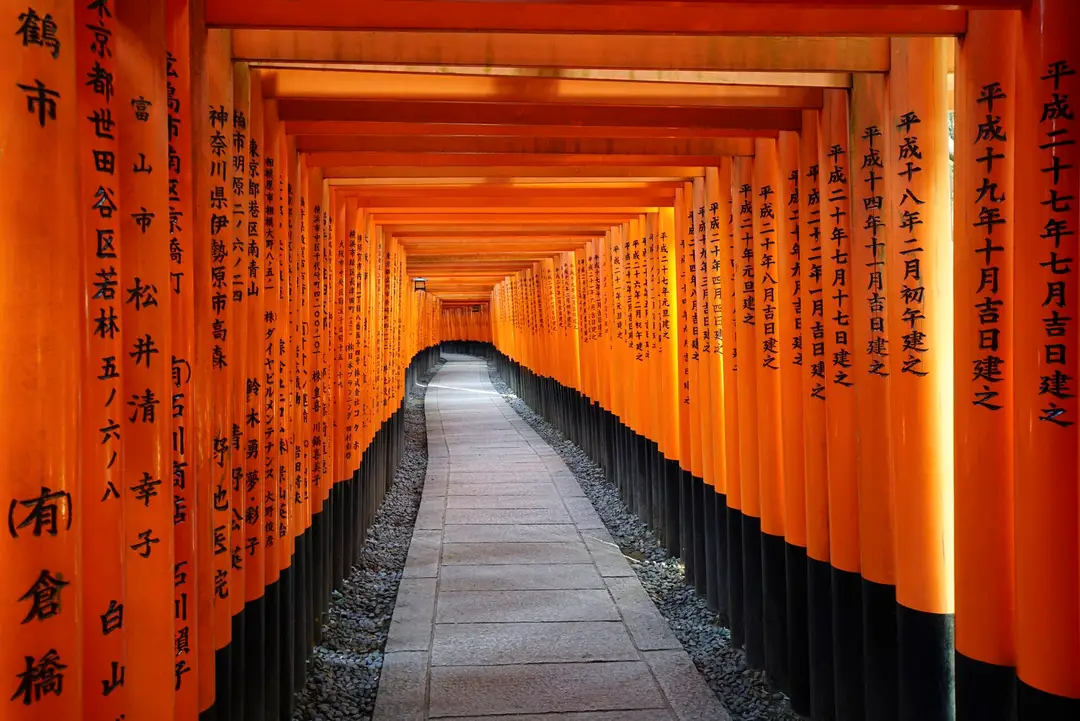
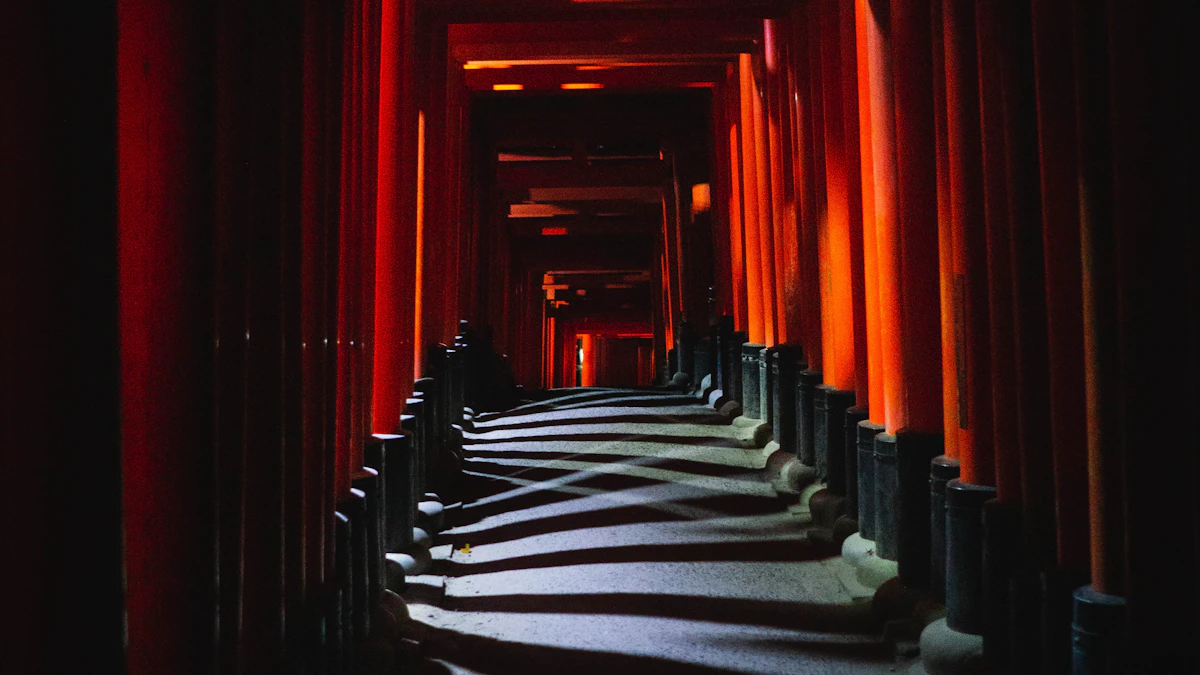
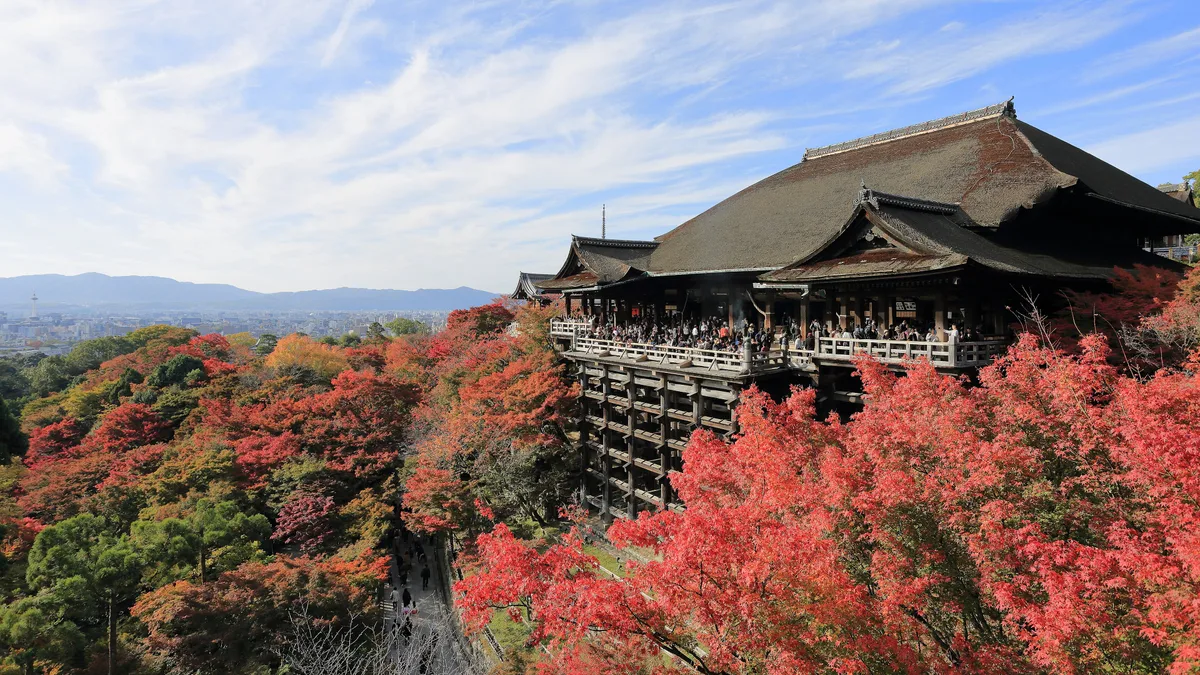
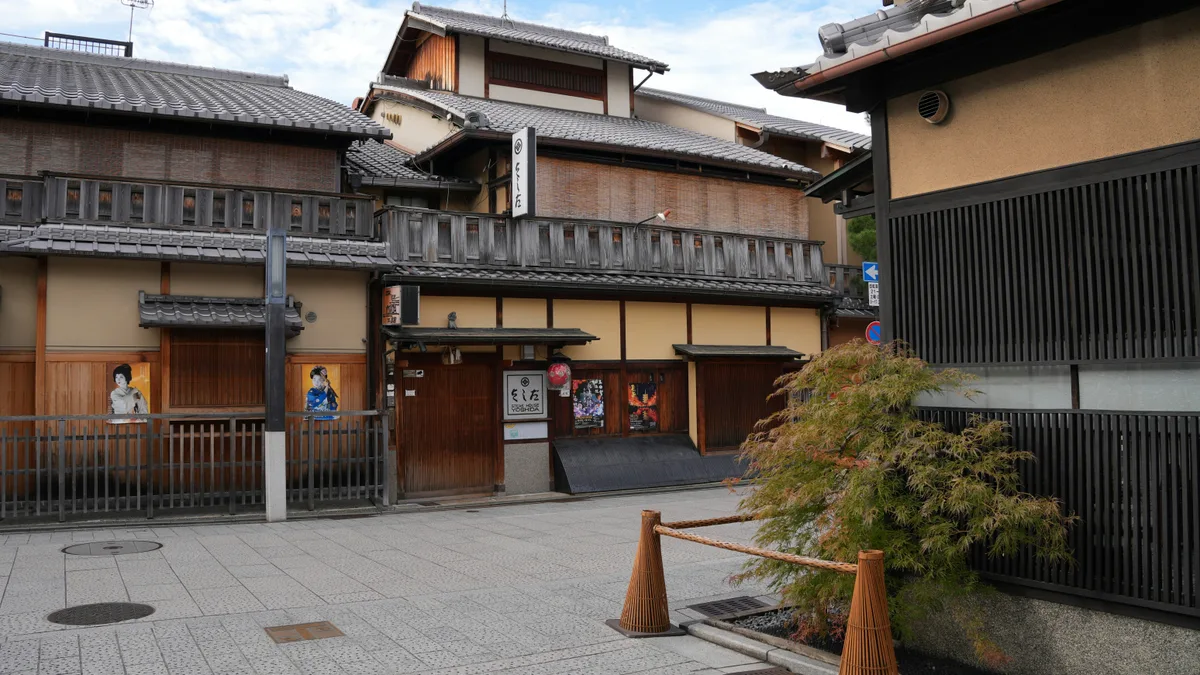
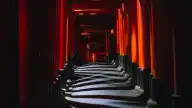
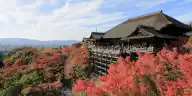
I'd start before the city wakes. The thing about Fushimi Inari is the corridor of vermilion gates climbing the hillside — and for me, it only feels like the photographs early, before the path fills, when your footsteps change on the gravel and the city noise falls away behind you. From there the day tilts toward the old eastern slopes — Kiyomizu-dera's cliff stage reached up stone lanes that have carried pilgrims for centuries — and ends, gently, in Gion as the lanterns come on. A reminder I'd hold onto in Gion: people live and work in these lanes. Walk softly, keep to the public streets, and you'll be welcome.
- 08:00Fushimi Inari, earlyKyoto Station -> Inari Station on the JR Nara Line — take a Local train (the faster Rapid services don't stop at Inari), a couple of stops and only a few minutes. The main gate is right at the station. Climb as far up the gate corridor as you like; the higher you go, the quieter it gets. Linked guide: Fushimi Inari.
- 11:00Kiyomizu-dera up the slopesBack to a central hub, then a Kyoto City Bus toward the Kiyomizu-michi / Gojozaka stops (bus times here swing a lot with traffic), then a short uphill walk through the souvenir lanes to the cliff stage. Alternatively, ride Keihan to Kiyomizu-Gojo Station and walk up. Linked guide: Kiyomizu-dera.
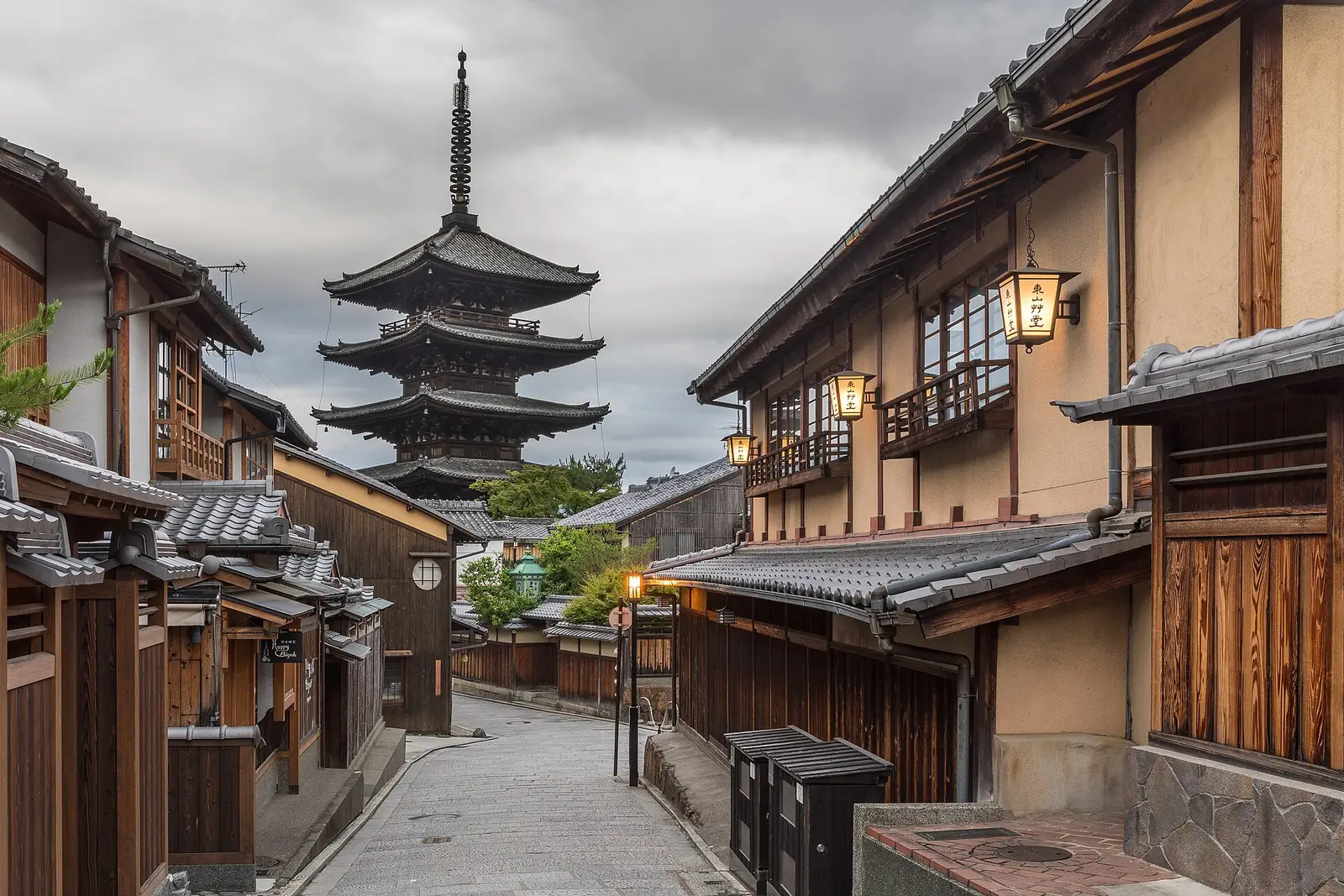
- 14:00Wander the Higashiyama lanesFrom Kiyomizu, the stone-paved slopes of Sannenzaka and Ninenzaka drop down through old townhouses on foot — no transit needed, just follow the hill down toward Gion. You'll pass the Yasaka (Hokan-ji) pagoda standing over the lanes, the silhouette on so many Kyoto postcards. This is the slow, on-foot middle of the day.
- EveningGion at lantern timeOn foot from Higashiyama, or a few minutes by Keihan to Gion-Shijo Station, the gateway to Gion and Hanamikoji. Drift the lanes as the lights come on — gently, on the public streets, since this is a working neighborhood. Linked guide: Gion.
Kyoto — west and north

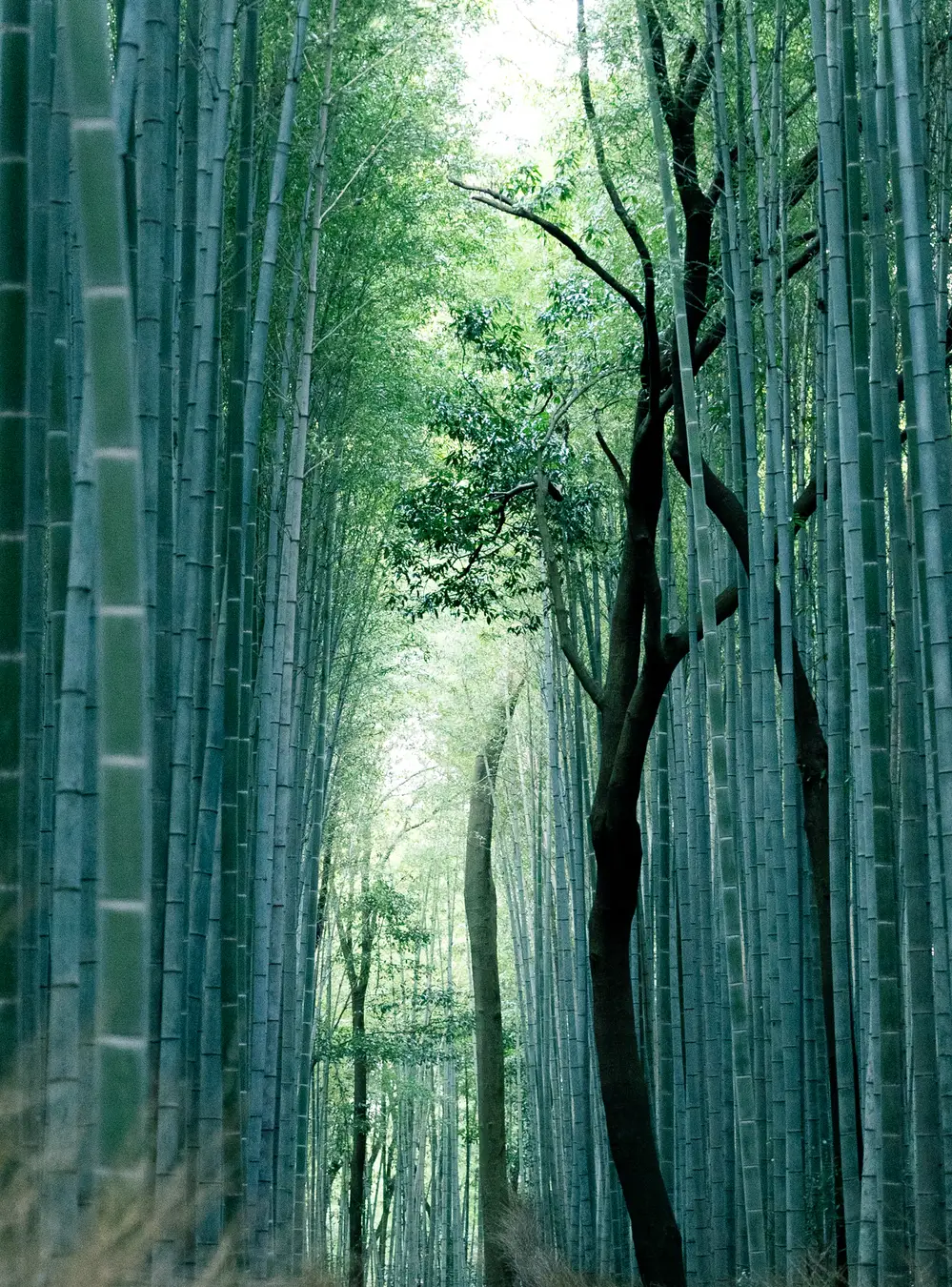
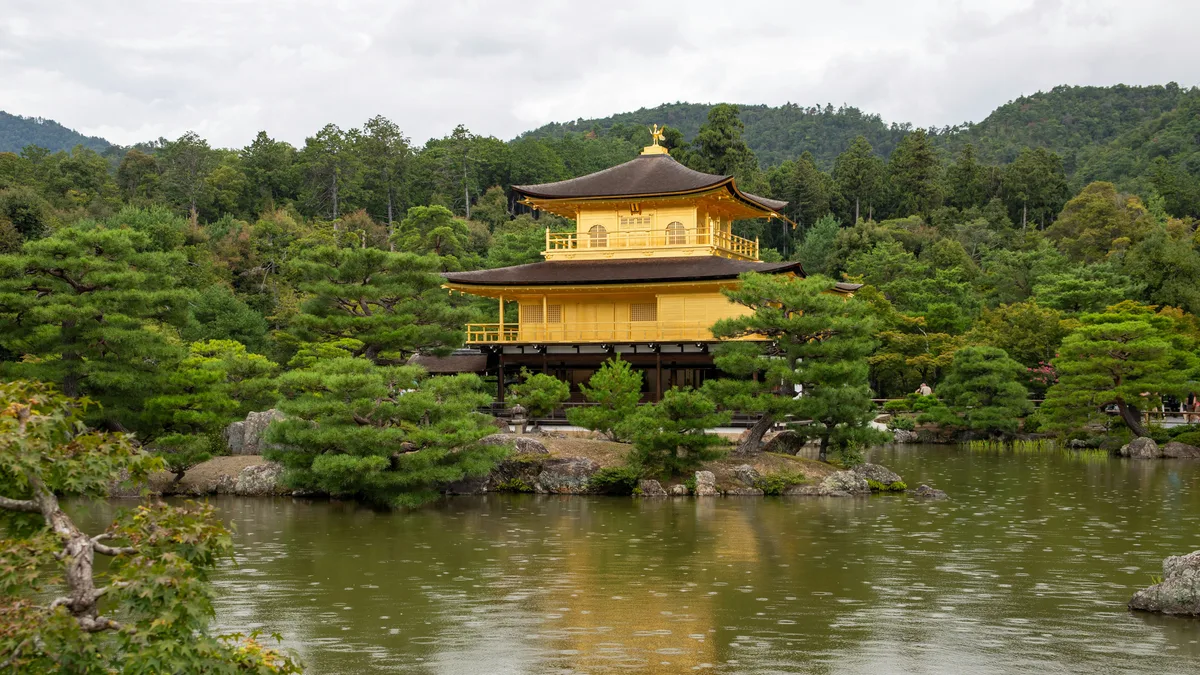
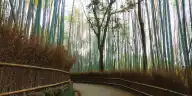
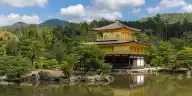
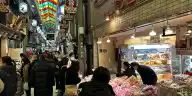
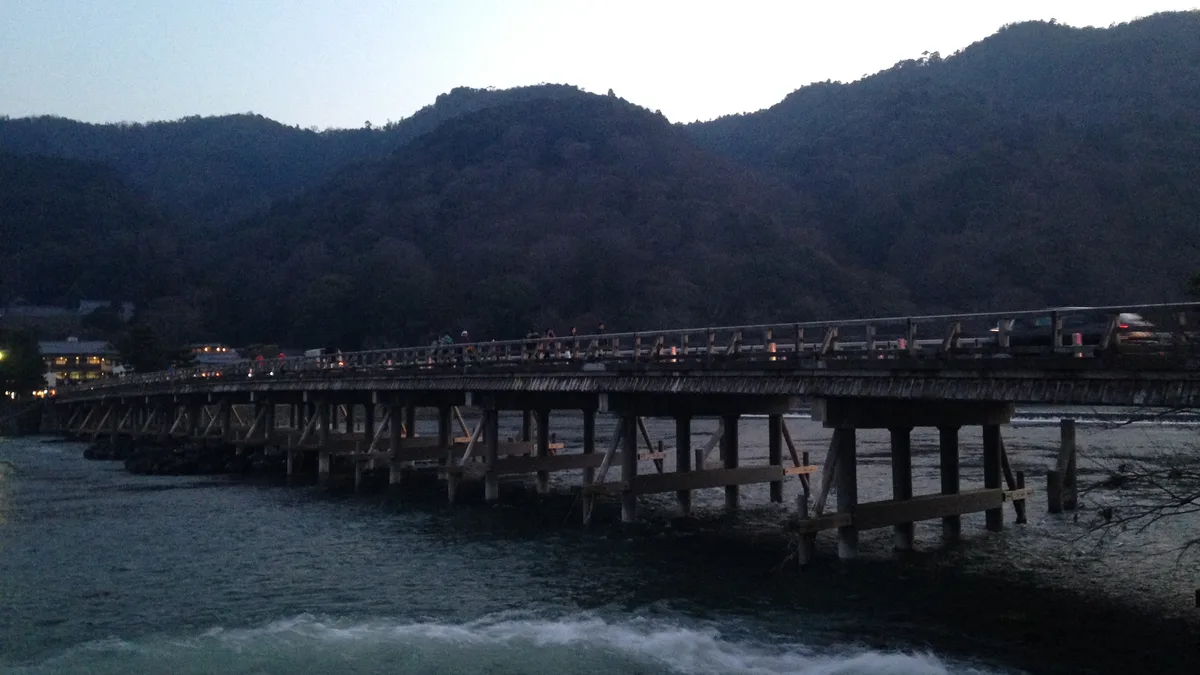
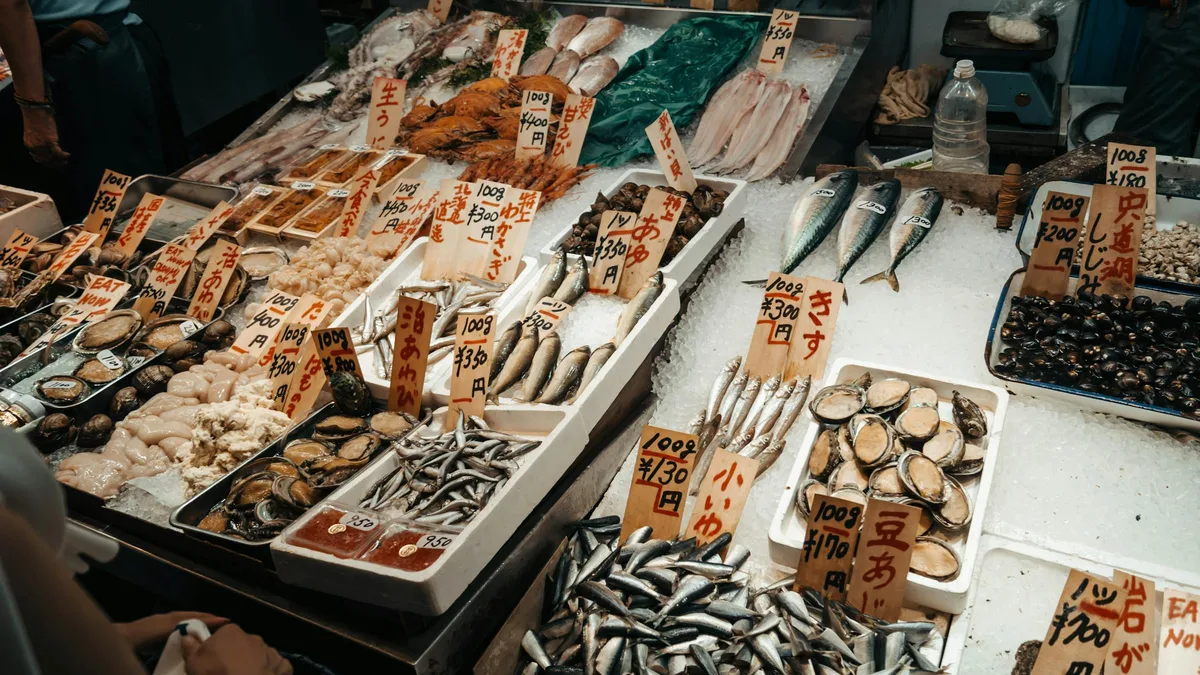
Day two I'd flip to the western and northern edges of the city. Arashiyama's bamboo grove is the one people come to photograph, but I'd go early for how it sounds — the hush and creak of the stalks before the crowds arrive. Then north to Kinkaku-ji, the gold pavilion mirrored on its pond; I'd give it a slow loop rather than a single photo. And I'd close in the middle of town at Nishiki Market, where the local way is to buy something and stand right there to eat it, rather than walk and snack.
- 08:00Arashiyama bamboo, for the soundKyoto Station -> Saga-Arashiyama on the JR Sagano (San-in) Line, then a short walk to the grove. Or take the Keifuku 'Randen' tram from central Kyoto (Omiya) into Arashiyama — a slower, prettier approach. Go early; the grove is most itself before the day fills. Linked guide: Arashiyama.
- Late morningKinkaku-ji, gold on the pondKinkaku-ji has no rail station, so a Kyoto City Bus is the practical way in (traffic-dependent) to the Kinkakuji-michi stop. Walk the pond circuit slowly — the pavilion reads differently from each angle of the loop. Linked guide: Kinkaku-ji.
- AfternoonNishiki Market, buy and eat on the spotTo the city center: the Kyoto subway Karasuma Line to Shijo Station, then a short walk to the west end of the market; Hankyu Kyoto-Kawaramachi is also a few minutes' walk. The local rhythm is to buy a bite and pause right at the stall to eat it. Linked guide: Nishiki Market.
Nara — a day trip

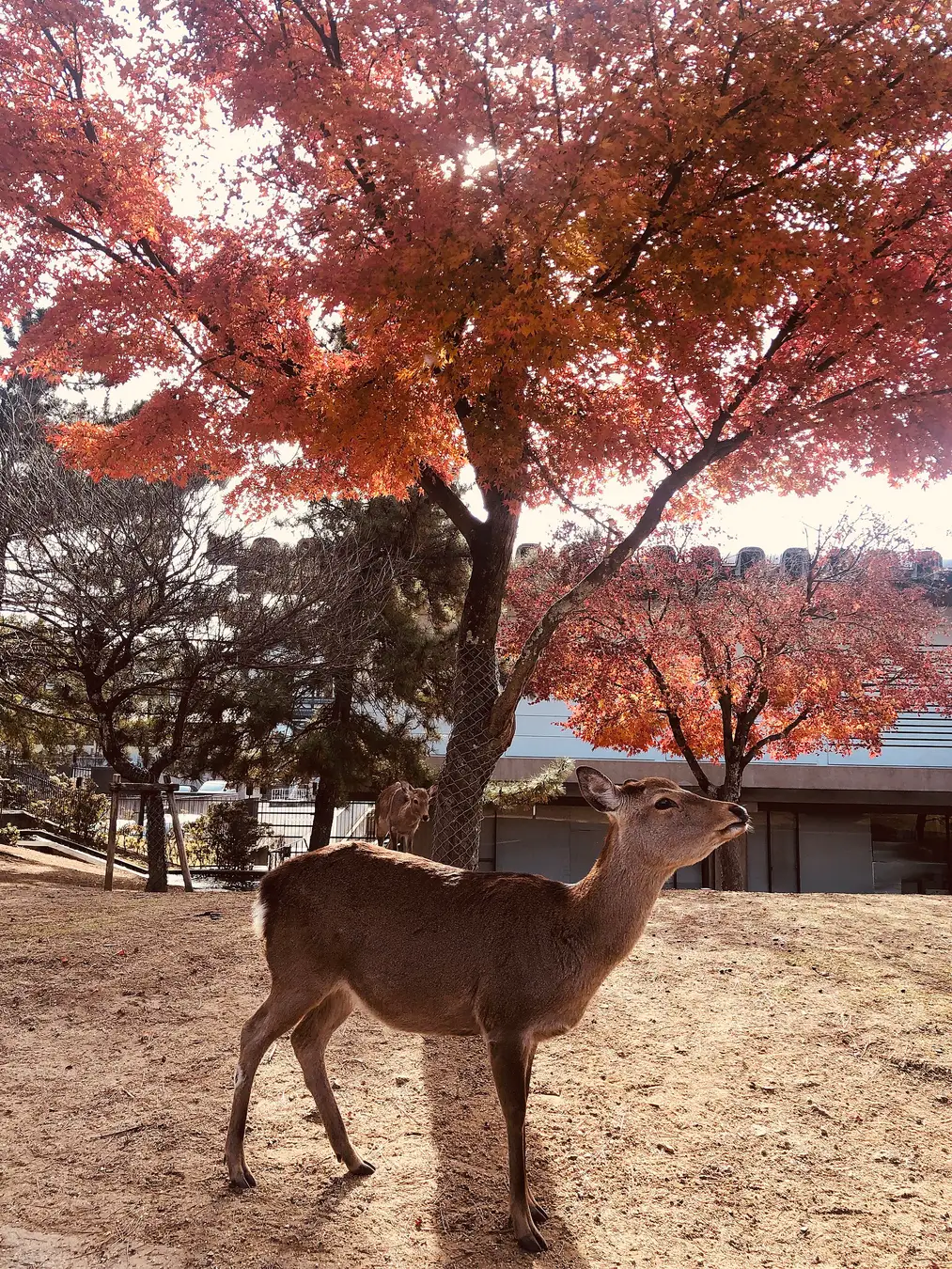
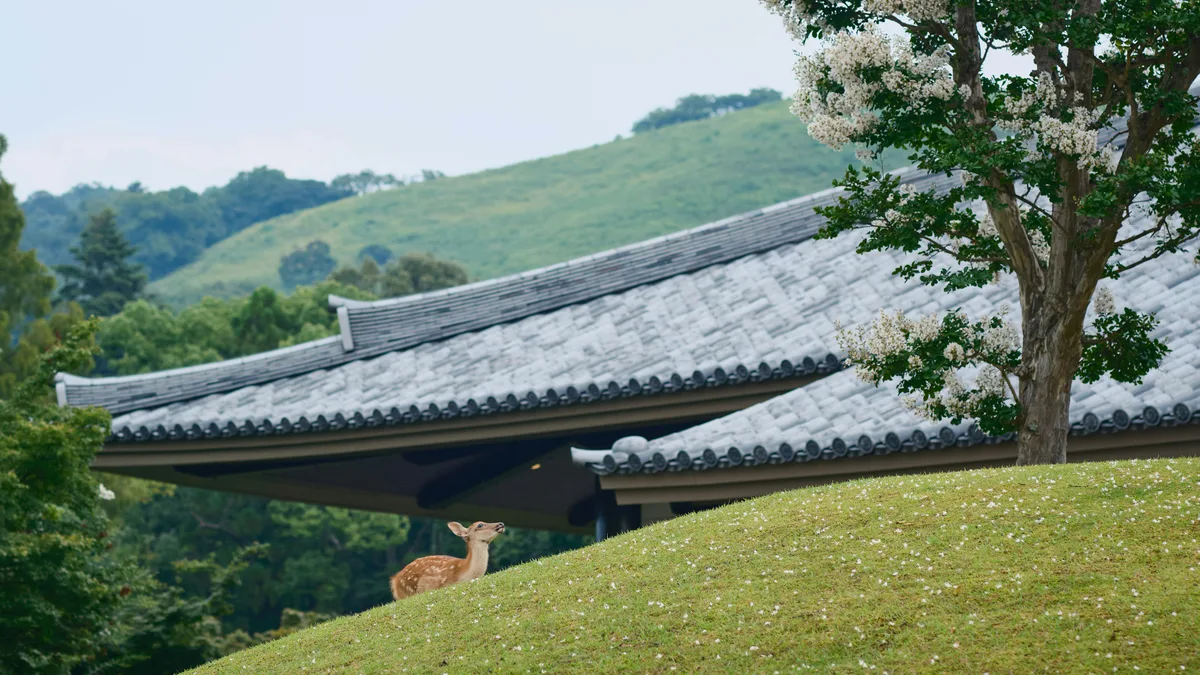
Nara is the easy day out, and the deer are the heart of it. They're treated as sacred messengers here, free-roaming through the park, and the official deer crackers (shika senbei) sold around the park are the food made for them — I'd stick to those, hand a cracker over, then show your empty palms, and they'll understand the food is gone. Beyond the deer, Todai-ji holds the Great Buddha under one of the world's great wooden roofs, and a lantern-lined avenue leads on toward Kasuga Taisha through the trees. I'd take the whole day; by late afternoon, once the crackers sell out, the deer fold their legs on the grass and the park goes quiet, and that's a lovely note to ride back to Kyoto on.
- 09:00Out to NaraFrom Kyoto Station you've got a choice: the JR Nara Line Miyakoji Rapid runs every half hour or so and lands you at JR Nara, a 15-20 minute walk from the park; or Kintetsu from Kyoto (a quicker limited express, or a direct express) lands you at Kintetsu Nara, which is right by the park. When the line lets you choose, Kintetsu drops you closer. Times and fares are in the fact boxes.
- 10:30Nara Park and the deerFrom Kintetsu Nara it's a few steps into the park; from JR Nara, walk east. Buy the official shika senbei from the park stalls (the food made for the deer), hand them over, then show empty hands. Linked guide: Nara Park.
- MiddayTodai-ji and the Great BuddhaA walk through the park to Todai-ji, where the Great Buddha sits inside the huge wooden hall. The approach is itself part of it — deer along the path, the gate looming ahead.
- AfternoonLantern avenue to Kasuga TaishaOn foot from Todai-ji, follow the lantern-lined paths through the wooded park toward Kasuga Taisha. Then retrace to Kintetsu or JR Nara and ride back to Kyoto by evening.
Osaka — castle and neon

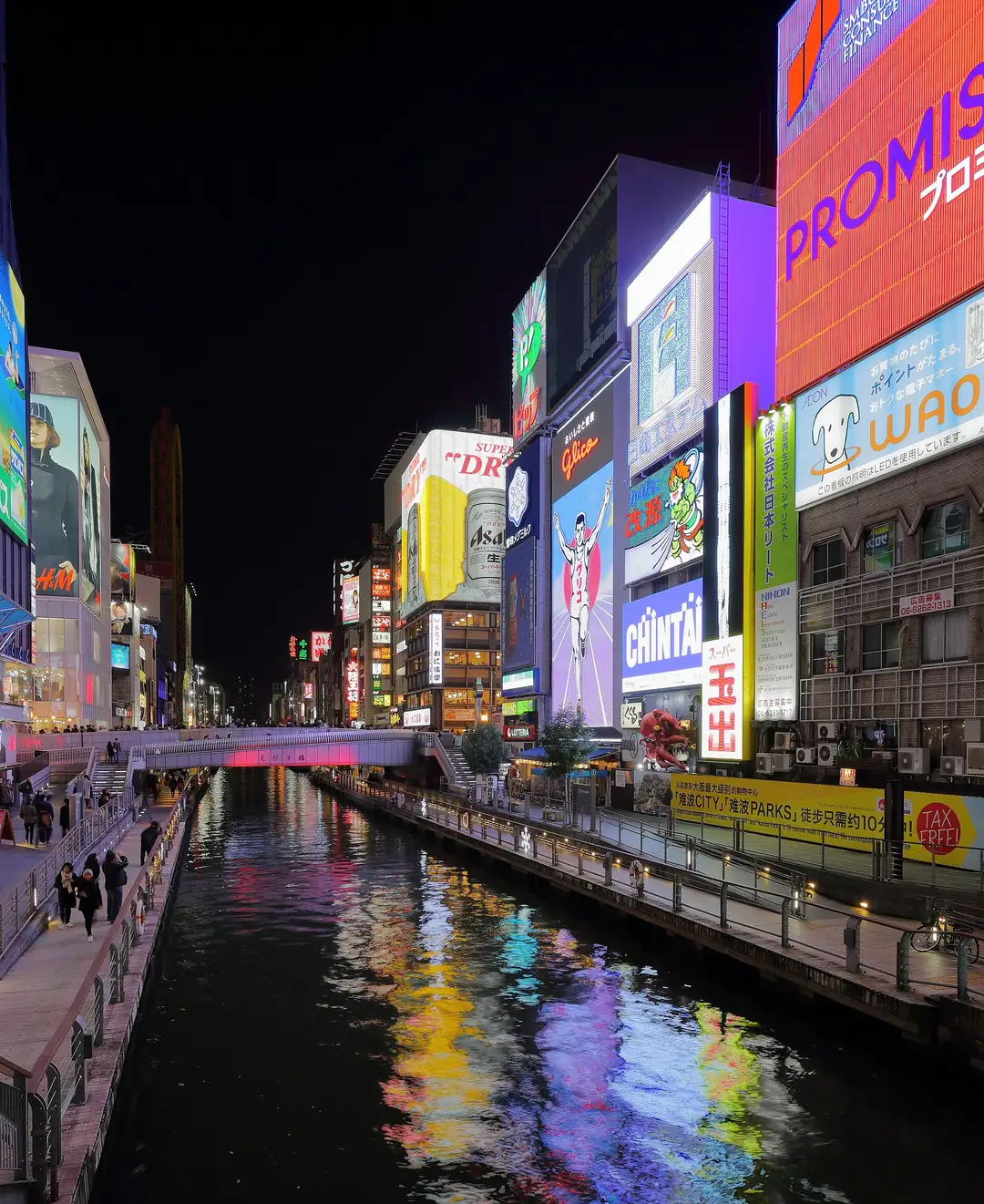
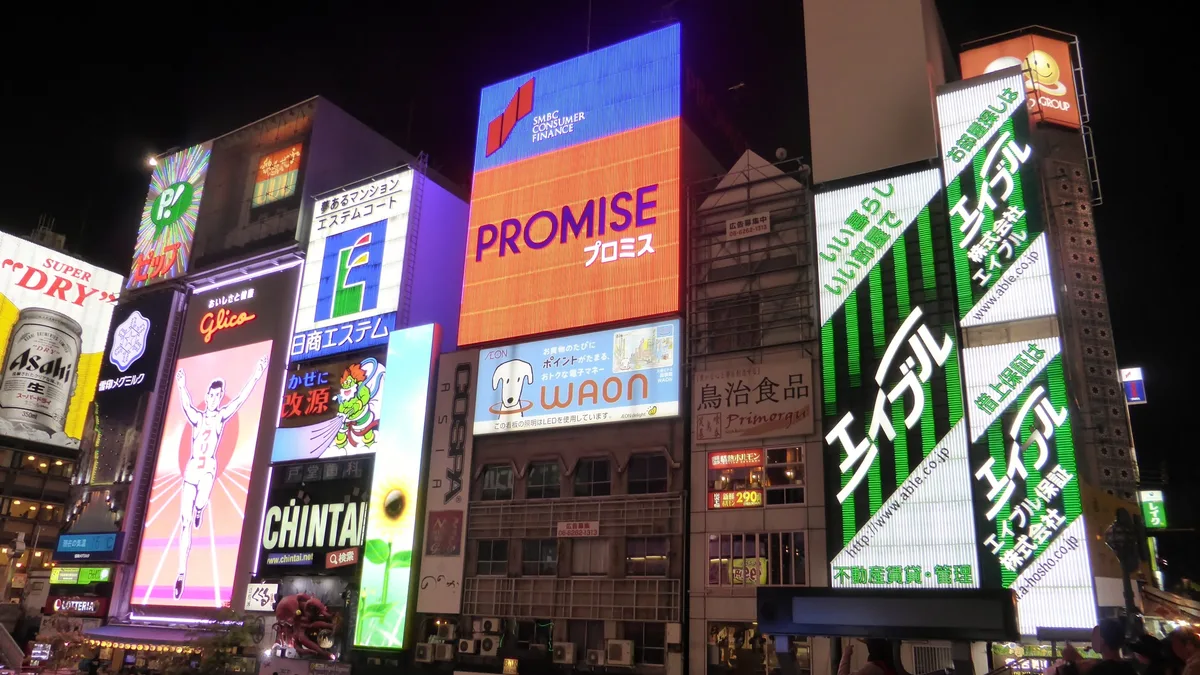
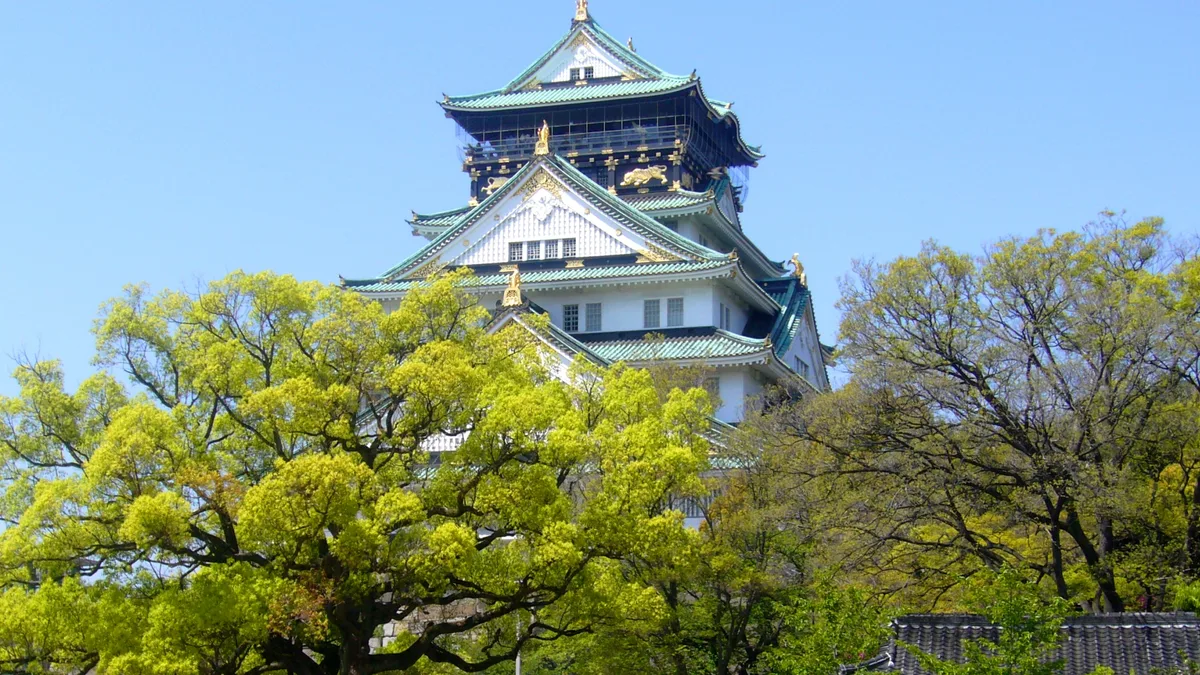
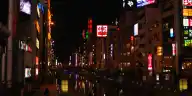
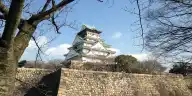
Osaka closes the trip loud and friendly. Osaka Castle is worth understanding before you see it: the keep you walk into is a citizens'-funded modern reconstruction, but the moats and the colossal stone walls around it are the real, old castle — the genuine fortress is the ground, not the tower. Then I'd let the evening pull me down to Dotonbori, where the canal throws neon back at itself — the giant running Glico man sign glowing over the water is the one everyone knows — and the food is the point. Eat small bites on the move if you like — just hold your wrapper until you find a bin.
- 09:30Over to OsakaThe city-center-to-city-center run is the JR Special Rapid, Kyoto Station -> Osaka Station (it stops only at Kyoto, Takatsuki, Shin-Osaka and Osaka). There's a Shinkansen option too, but it lands at Shin-Osaka, north of the center, so the Special Rapid is usually the simpler door-to-door choice. Times and fares are in the fact boxes.
- Late morningOsaka Castle — the walls are the castleFrom central Osaka, the metro or JR Osaka Loop Line gets you to the castle park; the grounds are broad and open. Walk the moats and the giant stone walls first — that's the original fortress — then the reconstructed keep. Linked guide: Osaka Castle.
- 17:30Dotonbori for food and neonDown to Namba/Minami by subway. Dotonbori is the canal-side food and neon heart of the city — small bites on the move are part of it, just carry your wrapper to a bin rather than leaving it. Linked guide: Dotonbori.
If you have one more day
+1 dayIf you've got an extra day, I'd offer two very different directions, and neither is the 'right' one — they just suit different moods.
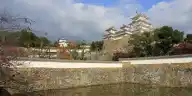
West to Himeji Castle. This is the real thing — an original white keep that survived, the genuine surviving castle that Osaka's reconstruction can only echo. It's an easy run west of Osaka by JR Special Rapid (direct), and the castle is a straight fifteen-to-twenty-minute walk from Himeji Station. A good pairing if Osaka Castle left you wanting to stand inside the real thing.
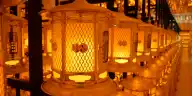
Or up to Koyasan for a quiet mountain night. This is the opposite energy: a temple town high in the mountains south of Osaka, reached by Nankai train, a short cablecar, and a bus into town. The way to do it is to stay overnight in a temple lodging, eat the vegetarian monks' food, and join the early-morning service — then walk the cedar-lined paths of the Okunoin among the lanterns. It costs you a night, but it's the one that slows the whole trip down.
If you're short a day
−1 dayIf you're short on time, the trip folds down without losing its heart. I'd make Nara a half-day rather than a full one — a morning with the deer and the Great Buddha, back to Kyoto for the afternoon — or I'd keep Kyoto to a day and a half and let one of the eastern or western clusters go. The thing I'd resist is cramming all four days into three: a slower trip holds more. Pick the two or three places that pulled at you most and give them room, instead of collecting all nine.
Extend from here
OnwardThis block snaps onto the rest of Japan in both directions. East, the Tokaido Shinkansen takes you from Kyoto toward Tokyo and the Kanto region in a couple of hours — a clean handoff to a Tokyo block. West, the Sanyo Shinkansen runs toward Hiroshima and Miyajima, where the floating torii and the Peace Memorial make a natural two-or-three-day extension. Note that IC cards don't tap you onto the Shinkansen on their own — you'll buy a separate ticket (or register a Smart-EX/EX-IC account) for those longer legs.
Good to know — fares & times
Go deeper
伏見稻荷 — 為什麼一萬座鳥居不斷出現在這座山上
經官方資料驗證的伏見稻荷大社語音文化指南。了解約一萬座鳥居為何不斷出現、狐狸使者的真正含義,以及如何體驗1,300年的參拜之路。
Fushimi Inari Taisha
清水寺 — 人們為何爬上山坡、站在懸崖邊許願
清水寺不只是觀景台。從千年不涸的音羽瀑布、無一根釘的懸造木舞台,到拾級而上的產寧坂——陪您在凌空的舞台前,靜靜許下一個心願。
Kiyomizu-dera Temple
祇園——漫步京都的花街,一座至今仍有人生活的城
祇園不是景點,而是京都至今仍有人生活與工作的花街。從八坂神社、花見小路到白川巽橋,學會如何懷著敬意漫步、認識藝妓與舞妓、避開私人小巷,以及最佳造訪時段與交通方式。
Gion
嵐山 — 為什麼日本把這片竹林列入「最值得守護的聲音」
嵐山語音導覽:一千多年來,山、河與橋讓旅人在同一處駐足。聆聽嵯峨野竹林——風穿過竹竿的聲音,被日本列入百大「最值得守護的聲景」之一;走過以渡月為名的橋,在天龍寺借山入景的庭園裡多站一會兒。放慢腳步、比人群多走一段路,避開喧囂,您將遇見嵐山最美、卻無法用相機留住的東西。
Arashiyama
金閣寺 — 為什麼大家都停在同一個地方拍攝金色樓閣
京都金閣寺(金色樓閣)完整指南:從鏡湖池畔欣賞池水倒影、三層樓閣建築,附參觀時間9:00–17:00、門票(供養)與京都車站交通方式,以及語音導覽般的逐步解說。
Kinkaku-ji (Rokuon-ji)
奈良公園——鹿兒為何鞠躬,而日本又為何守護牠們千年之久
一份依官方資料逐一查證的奈良公園聲音文化導覽。理解這裡的鹿為何被稱為神明的使者、牠們為何鞠躬,以及如何溫柔地與牠們共度一個午後——從鹿仙貝攤位,走到東大寺的大佛,再走過通往春日大社的燈籠之路。
Nara Park
道頓堀——心甘情願為美食「吃到傾家蕩產」的城市
歡迎來到大阪道頓堀,這座為美食心甘情願「食倒」的城市。從固力果看板下舉臂合照、章魚燒的滾燙內餡、串炸只蘸一次的體貼,到河上倒影與法善寺橫丁的靜謐——溫柔陪您讀懂這條街的喧鬧與溫度。
Dotonbori
大阪城——這座城市蓋了三次的天守
您望著的天守是1931年重建的鋼骨之城,大阪人明知並非原物卻依舊深愛。公園免費、天守購票,但真正擁有四百年歷史的,是腳下的護城河與托起山丘的巨大石牆。
Osaka Castle
錦市場——京都的廚房,一口一口慢慢品
京都四百年美食老街「錦市場」語音導覽:吃什麼、買什麼、何時去最好,以及如何溫柔地享用這座城市的廚房。漬物、出汁、京野菜,一口一口慢慢嚐。
Nishiki Market
Combine with another plan
Tokyo & around, an easy few days
The capital and its day trips — old-city Tokyo, seaside Kamakura, mountain Nikko — at a comfortable pace
Chubu & the Japan Alps, a slower few days
Mountains and old towns — Matsumoto, Takayama, Shirakawa-go, Kanazawa — at a reserve-ahead pace
Hiroshima & the Seto Inland Sea
Okayama, an art island, Hiroshima and Miyajima — run gently east to west
Japan's castles, and what the walls remember
How castle lovers actually travel — a pilgrimage that teaches you to read a castle, west from Osaka into Shikoku
Cherry blossom, a trip timed to the bloom
The Tokyo-to-Kyoto golden route led by the blossom — and how to read the moving front the way locals do, so a date you can't book becomes the best part of the trip
Autumn leaves, a trip timed to the colour
Kyoto at peak maple — and how to read the clock the colour runs on, so you stand in it instead of chasing it
Japan with kids, the first trip
One Tokyo base, one big thing a day, and a country quietly built for families — at a pace your little ones set
Sources
- Fushimi Inari Taisha — official Access
- JR-West — route & fare search (official)
- JR-West — ICOCA (what it is / buy / deposit)
- JR-West — ICOCA Usage Area & interoperability
- JR-West — Kansai Area Pass
- Kintetsu Railway — route/fare search (official)
- Kintetsu Railway — Limited Express information
- Hankyu Railway — official (English)
- Nankai Railway / how-to-Osaka — Koyasan access (official)
- Koyasan tourism (KCCN) — Access
- Randen (Keifuku Electric Railroad) — official
- Smart-EX (JR-Central) — Shinkansen booking & fares
- Kyoto City Transportation Bureau — Bus fare
- Kyoto City Transportation Bureau — Subway & Bus 1-Day Pass
- Osaka Metro — Enjoy Eco Card / Osaka 1-Day Pass
- JNTO / Japan.travel — Kansai railway & bus passes overview