
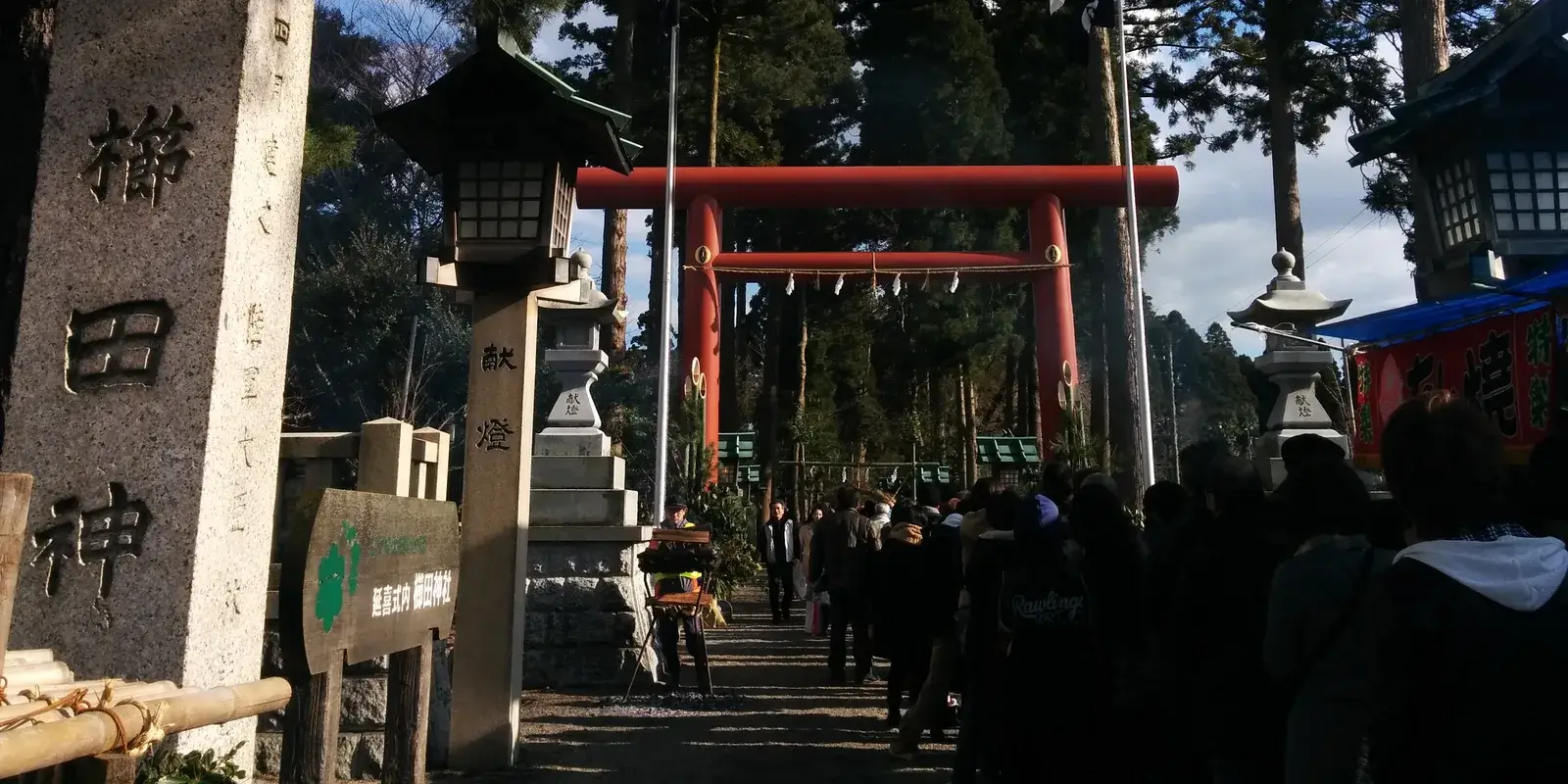
Japan at New Year: What Closes, What Fills Up, and What People Are Glad You Do
What you'll learn in this article:
- A day-by-day picture of late December into early January, so you know what is happening on the day you land
- Which places close by law, which close by choice, and why the pattern is changing again
- What 420 Japanese voices said about the shrine queues, the quiet streets, the lucky-bag sales, and what their own families have stopped doing
- The small, easy things that make Japanese people glad you were there for their New Year
If you are thinking of being in Japan around 1 January and you have read that "everything closes," the picture is more specific than that.
Is Japan open during New Year? National government offices close by law from 29 December and banks from 31 December, both to 3 January, and many small independent shops close with them, while convenience stores, chains, malls and shrine food stalls stay open. Of the 60 Japanese voices we collected on this question, 13 (22%) fell on the "it really does shut down" side, and most of those are nostalgia or worrying in advance rather than reports of being stranded.
The direction of travel has reversed. Japan spent a generation opening more shops on New Year's Day. Over the 2026 New Year, major department stores closed again on the 1st and at least one large supermarket chain closed for all three days, citing staffing and working conditions rather than tradition. The reversal is documented in the reporting linked at the end of this article. What Japanese people make of it is further down this page, in their own words.
Quick Guide
| Over the New Year | What Japanese People Said | |
|---|---|---|
| 🟢 Open | Convenience stores, chains, malls, shrine stalls | The convenience store is the thing Japanese people name first when they reassure each other that nobody is going to go hungry. |
| 🔴 Closed | National offices, banks, many independent shops | Offices are closed by law from 29 December and banks from 31 December, both to 3 January. Independent shops close by their own choice, and the argument people are having is about how many days, one or three. |
| 🟢 Welcome | Coming to a shrine for hatsumode | Of 65 voices on hatsumode, 51% said to come and not worry about the form. A Shinto priest writing for a foreign audience says the shrine welcomes you whatever your faith. |
| 🟡 Busy | Trains, shrines, the first sales | Reserved seats booked by mid-December for the 2025 to 2026 New Year averaged more per day than in any year since at least fiscal 1996. Most of the crowd is on the move between cities. |
| 🟢 A small kindness | A Japanese coin, placed gently | Japanese voices describe shrines being left with foreign coins that banks will not exchange, and they are consistently unenthusiastic about coins being thrown. |
The one thing to remember: the New Year is the week when Japan slows down on purpose. Slow down with it and you get a version of the country that opens only once a year.
The Week, Day by Day
The dates below describe the 2025 to 2026 season, which is the most recent one with published figures. The shape repeats every year, but the travel peaks track the weekend, so check the current year before you book.
- Up to the last weekday before 29 December: everything is open and offices are working. National counters close from the 29th, and because Saturdays and Sundays are closing days too, the final working day moves with the calendar. The outbound travel peak was forecast for 27 December.
- 29 and 30 December: national offices and many independent shops are shut, but banks, supermarkets, department stores and restaurants are running. This is when Japanese households do their big shop.
- 31 December: New Year's Eve. Temples ring their bells from late evening, a custom usually described as 108 strikes, and many shrines stay open through the night.
- 1 January: the quietest morning of the Japanese year and the busiest shrine day. Banks, national offices and many independents are closed. Convenience stores, chains and shrine stalls are open, and Japan Post delivers New Year cards.
- 2 and 3 January: the first sales open, the malls fill up and the roads around them clog by early afternoon. The homebound travel peak was forecast for 3 January.
- 4 January onward: a normal country again. Shrines are far calmer while still fully decorated, and a visit within the matsunouchi period, commonly the 7th in eastern Japan and the 15th in the west, is still counted as hatsumode.
If you are choosing when to come to Japan at all, our guide to the best time to visit has the crowd and pricing picture for the whole year, and getting around Japan covers the reservation system you will want during the peak days.
How We Gathered These Voices
We collected 425 Japanese-language voices and count 420 of them here. Five are set aside: three target a national or ethnic group, one argues for shutting visitors out altogether, and one is a complaint aimed at Japanese worshippers. All five are negative, and they fall in three of the six questions, so those three red bars sit slightly lower than the raw collection would put them. The 420 fall across six questions: what is really closed (60), how people feel about visitors at hatsumode (65), how the quiet of the first three days feels (60), whether the first sales and lucky bags are still worth it (66), what visitors do that pleases people (77), and how the customs differ by generation (92). They come from 95 threads and articles on public Japanese Q&A sites, discussion boards, social posts, personal blogs, review and visit logs, and the reader-comment sections of Japanese media, posted between 2008 and 2026. The older ones describe a New Year in which more shops opened on the 1st. Every percentage here is a count of those voices, rounded independently, so a gauge may total 99 rather than 100.
A quick note: we did not run a controlled scientific survey. We read what Japanese people wrote, in their own words, to each other, on public platforms. Almost none of it was written with a foreign reader in mind.
The Closures That Are Written Into Law
Two of the closures below are in the law and never move. The third is announced by Japan Post each autumn and shifts with the calendar.
National government offices close from 29 December to 3 January. The Act on Holidays of Administrative Organs lists "the days from 29 December to 3 January of the following year" alongside Saturdays, Sundays and national holidays. It covers national bodies, so immigration counters are shut for six days. City and ward halls generally keep the same dates under their own rules.
Banks close from 31 December to 3 January. The Banking Act Enforcement Order sets a window two days narrower, so branch counters are still open on 29 and 30 December. ATMs are generally described as running through the period.
Ordinary post pauses, but not on the 1st. For the 2026 New Year, Japan Post listed 1 and 3 January as delivery days and 2 and 4 January as suspension days for ordinary mail, while express, registered, Letter Pack and Yu-Pack ran on every one of them. New Year cards are timed to land on the 1st.
Everything else is a business decision.
What people run into
The 45% in the middle is where most of this corpus sits. What closes is a specific and fairly small set of things: government counters, banks, family-run restaurants, small local shops, some clinics. What stays open is nearly everything a traveller needs day to day, though clinics keep holiday hours, so a pharmacy run before the 29th is worth doing.
元日だけ休業なら特に困らない If it's only New Year's Day that's closed, it doesn't really bother me.
The argument Japanese people are having with each other is about how many days, one or three, rather than about whether shops close at all.
最近3日までじゃないけど、1日休みな所増えてない? It's not usually all three days now, but haven't more places started closing on the 1st?
Often the reality is softer than "closed" suggests. Plenty of places simply finish early.
私の近所は、商業施設が密集しているエリアだから飲食店・レストランは、通常通り営業するけど、閉店時間を少し、早めにしています。 My area has a lot of shopping complexes, so the restaurants open as usual, they just close a bit earlier than normal.
Japanese people name the convenience store first when they reassure each other, and convenience stores really do stay open through the week. One supermarket run on 30 December covers the rest.
The closures are coming back
Japan spent a generation opening on New Year's Day. Over the 2026 New Year it reversed.
Sogo & Seibu shut all ten of its stores on 1 January, having opened six of them the year before, with the first sales starting on the 2nd. Nihombashi Takashimaya, Hankyu Umeda, Hanshin Umeda and Daimaru Fukuoka Tenjin are reported to have closed on both the 1st and the 2nd. Tobu Department Store closed on 2 January for the first time in 49 years. The supermarket chain Summit announced it would close almost every store for all three days. The reason the companies give is staffing and working conditions.
One person describing hiring for a shop put it plainly:
応募に来た人に「元日も仕事があります」って言うと、人が集まらないんです。 When we tell applicants "there's work on New Year's Day too," nobody applies.
The reaction among the voices we collected is closer to relief than to complaint.
三が日くらいお店やってなくても生きていけるよ We can survive three days without the shops being open.
揺り戻し来てるよね The pendulum's swinging back, isn't it.
Each retailer announces the following year's arrangements in the autumn, so the shop you want is worth checking directly rather than assuming last year's pattern.
Where Everyone Actually Goes
As of 15 December 2025, the six JR passenger railways had taken 5.24 million reserved-seat bookings for the ten days from 26 December, up 2% on the year and a daily average of 520,000, the highest since at least fiscal 1996. The busiest days were forecast to fall on 27 December outbound and 3 January homebound.
What the 42% keep saying is that the stillness is real but local. It sits in office districts, residential streets and the early hours. It thins out at the shrine, at the mall and after lunch.
年々お正月の風習も薄れて元旦の昼過ぎにはもうショッピングモール周辺などは大渋滞! The customs fade a bit every year, and by early afternoon on the 1st the roads around the shopping malls are already gridlocked.
A Japanese visitor to Tokyo writing about New Year's Day in 2014, when the big department stores were still opening on the 1st, found the opposite of what they expected.
東京のお正月はガラガラっていうけど、そんなことない! People say Tokyo is deserted at New Year. It really isn't!
For the 38% who love the quiet, it is the main reason they look forward to the week.
私も今日は電車を使って初詣に行き、帰りに繁華街を歩いてきましたが、神社以外で正月らしいと一番感じたのは「静けさ」ですね。 I took the train to my New Year shrine visit today and walked back through the shopping district, and apart from the shrine itself, the thing that felt most like New Year was the quiet.
Some people photograph it on purpose.
毎年渋谷行くけど店が閉まってるからガラッガラで人っこ1人いない写真が撮れるのよねw I go to Shibuya every year, and because the shops are shut it's so empty you can get a photo without a single person in it.
The 20% in red are honest about what the silence costs.
逆に最近は3日まで休んでるスーパーも多くて昔みたいな正月感だと思うよ。人もいなくて閑散としてて寂しい。無人島に放り投げられた気分。 Actually a lot of supermarkets close through the 3rd now, so it feels like the old New Year again. There's nobody about, it's desolate and lonely. Like being dumped on a desert island.
A hushed city and a busy one are the same city eight hours apart. The morning of 1 January in an office district is the quiet version.
Hatsumode: The Queue and the Welcome
Hatsumode is the first shrine or temple visit of the year, and the voices treat it as routine rather than remarkable. There is no reliable national total for it: the National Police Agency stopped publishing its nationwide count after 2009.
The two-bow, two-clap, one-bow question
Two bows, two claps, one bow is the form the Association of Shinto Shrines describes. It is also a form Japanese people argue about constantly, because a lot of them did not grow up with it.
私もその参拝の仕方知ったの大人になってからだよ。 I only learned that way of praying as an adult myself.
そもそもお賽銭をあげたり参拝する場所も真正面じゃなくても良いんだよね You don't even have to be directly in front of the hall to make your offering and pray.
When a Japanese person asks online whether they ruined their prayer by getting the order wrong, the answers arrive fast and they all point the same way.
神様です。作法を間違えようが問題ありません。お参りに来た貴方の姿以上のものはありませんので。 They're gods. Getting the form wrong is not a problem. Nothing counts for more than the fact that you came.
The Association of Shinto Shrines makes the same point in its own guidance, describing the etiquette as a "form" that rests on an underlying "heart." If you want the full sequence with the water basin and the bell, it is laid out in our guide to visiting temples and shrines. If your worry is the deeper one about whether a non-believer should be there at all, we looked at that separately.
The famous queue, and what Japanese people say about it
That enormous single-file line at a big shrine forms for the bell rope and the centre of the offering box. Whether it is also the queue for praying is something Japanese people disagree about, in public, at length.
By one poster's account, an announcement at their shrine told anyone who was not going to ring the bell that they could step in from the side, that the bells on either side were free, and that it did not count as cutting in. The line shrank in front of them.
日本人は行儀よく並ぶという意識が刷り込まれてて、お正月から列を乱すなんて恥ずかしい・罰が当たると思うのでしょうね。 Japanese people are conditioned to queue neatly, and I think we feel it would be shameful, or that the gods would punish us, to break the line at New Year of all times.
Others in the same thread take the opposite view, and their advice is worth having too.
並ぶのが嫌なら三が日を過ぎて、空いた頃を見計らっていけばいいんですよ。 If you don't like queueing, just go after the first three days when it has thinned out.
Both moves exist, and which one fits depends on the shrine and the hour. From 4 January the crowds thin out at most places, which is the option that needs no judgement call.
What the red voices are unhappy about
Of the 12 voices in red, three are about form, and all three are about Japanese people correcting each other: walking down the middle of the torii, skipping the water basin, turning up with the wrong envelope. Five of the remaining nine are about crowding, queue-cutting and wanting somewhere quiet to pray. The other four are aimed at visitors, and not one of them is about how anybody bows. What they name is theft from the grounds, the crush, and a working religious site being treated as an attraction.
The same corpus holds its warmest line, from someone who goes to Fushimi Inari every New Year's Day, writing about the overseas worshippers they see there.
日本の風情を楽しんでおられるご様子で、皆様の行儀良さには感心させられます、中には手水舎での作法や参拝の仕方までも心得ておられる方もいますので尚更感心させられます。 They seem to be enjoying the atmosphere of Japan, and I'm impressed by how well-mannered everyone is. Some even know the water-basin etiquette and how to pray, which impresses me all the more.
First Sales and Lucky Bags
While the offices sit dark, the department stores fill up. Hatsuuri, the first sale of the year, and fukubukuro, the sealed lucky bag, produce the queues that confuse visitors most.
This is the one question where Japanese people are genuinely, evenly split. The red bar is made of people who have stopped queueing, for reasons that have nothing to do with visitors.
なんだかモロに商業主義に煽られている感じがして、自分が安っぽく感じられるようで嫌ですね。 It feels like being whipped up by pure commercialism, and it makes me feel cheap. I don't like it.
Others sit in the middle band, where the habit has simply moved online.
オンラインで福袋買ったのよ。だから年末に届いてた。もう初売りとか面倒だなと思っちゃう。 I bought my lucky bag online, so it arrived before the end of the year. The whole first-sale thing feels like a hassle now.
For the people who still love it, the appeal was never the discount.
年1回の楽しみですし、おみくじと同じかな と考えています。 It's a once-a-year treat. I think of it as being like drawing a fortune slip.
The lucky bag is also quietly becoming a different object. Bags with the contents listed on the outside now sit next to the sealed ones, and purists are unimpressed.
中身が見えるのは邪道だと思ってます! Being able to see what's inside is heresy, in my opinion!
子供の服なんかも格安なので福袋大好きです The children's clothes are so cheap that I love lucky bags.
The people who still queue mostly do it at malls and mid-size stores on the 2nd and 3rd, which draw shorter lines than a flagship electronics store at dawn on the 1st.
What People Are Glad You Do
The things that please people here are small, and five minutes of preparation covers all of them.
Say it out loud, from the 1st. Akemashite omedetou gozaimasu is the New Year greeting, and from 1 January it is used with everyone from a hotel clerk to a stranger at the shrine gate. Before midnight on the 31st the greeting is yoi otoshi o, roughly "have a good end of the year." Learning those two sentences goes further that week than learning ten others.
A Japanese coin, placed rather than thrown. This is the one practical detail in the corpus with a consequence attached to it. The voices describe banks declining to exchange foreign coins, which leaves a shrine holding money it cannot use.
両替できない外国通貨だと日本円に交換できず困っている神社も多いようです。 When it's a foreign currency they can't exchange, it seems a lot of shrines are left with money they can't turn into yen.
The voices that mention throwing all lean the same way.
投げ入れずそっと賽銭箱に入れるのがマナーです。 The polite way is to place it in the box gently rather than throw it.
Any Japanese coin, set down quietly, answers all of it.
Just praying is enough. Someone watching foreign visitors at Meiji Jingu on an ordinary weekday wrote down what it looked like from beside them.
なんだか微笑ましい。みんなの神社への敬意を感じる。来てちゃんと拝んでくれてどうもありがとう~って気持ちになる。 It's rather heartwarming. You can feel everyone's respect for the shrine. It makes you want to say thank you for coming and praying properly.
Someone else, answering a question about whether tourists count as worshippers, put the definition as low as it goes.
そこに行って、わけも分からず手を合わすだけで参拝なんです。 Going there and putting your hands together without really knowing why is already a visit.
A Shinto priest posting for a foreign audience made the invitation explicit.
あなたがキリスト教でも、イスラム教でも、他の宗教を信仰していても、神社側は歓迎します。 Whether you're Christian, Muslim or of any other faith, the shrine welcomes you.
The same priest drew the line themselves, in the same set of posts, and it is a fair one.
しかし、それは神様への敬意があってこそだと思います。 That said, I think it holds only where there is respect for the gods.
And if the worry is the bigger one about whether you belong at a Shinto shrine at all, one reply to exactly that question is hard to improve on.
俺たちもよくわかってないから心配すんな! We don't really understand it either, so don't worry about it!
What Japanese Families Do Now
The New Year is changing faster than any other Japanese holiday, and the postal numbers are stark. Japan Post's initial print run of New Year postcards was just over 3.02 billion for 2016. For 2026 it was 748.41 million, roughly a quarter of the figure a decade earlier and down about 30% in a single year.
Of the voices that mention their own age, the people agonising over whether to send a last round of New Year cards are in their thirties and above. Younger people are described as never having started.
若い人に聞いたら、最初から出したこともないって感じだった。 I asked younger people about it, and the feeling was that they'd never sent them in the first place.
Osechi, the lacquered boxes of New Year food, runs by age rather than by generation. People describe eating more of it as they get older.
旦那は歳を取ったら食べるようになったよ。20代の時はほとんど食べなくて私1人食べてたけど、40代になった今中学生の子どもと共にたくさん食べている。 My husband started eating it as he got older. In his twenties he barely touched it and I ate it alone, but now he's in his forties he eats plenty of it along with our middle-schooler.
ウチの中学生の娘は「小学生の時はおせちに感動なかったけど、段々美味しさがわかってきた。お正月最高」と言っておせちもお雑煮も美味しそうに食べます。 My middle-school daughter says "osechi did nothing for me in primary school, but I've gradually come to taste it. New Year is the best," and tucks into both the osechi and the ozoni.
When people explain what changed, they reach for shop opening hours.
昔は飲食店もスーパーもがっつり休むので食材買いだめして保存のきくおせちを作ってた In the old days restaurants and supermarkets shut completely, so you stocked up and made osechi because it keeps.
便利な世の中になって全ての会社や店が一斉に休まなくなったから以外にあるか? The world got convenient and companies and shops stopped all closing at once. What other reason is there?
Osechi was invented for a week when nothing was open. The shops opened, and the reason for osechi thinned out. Now the shops are closing again.
More Japanese Perspectives
- Visiting Temples and Shrines: the full etiquette, at your own pace, with no queue behind you.
- Am I Cosplaying Their Religion?: what Japanese people think about non-believers praying, collecting goshuin and wearing the symbols.
- Japan During Obon: the other great Japanese holiday, in August, with a completely different rhythm.
- The Unwritten Rules of Japanese Convenience Stores: your open-all-week safety net, and how to use it well.
Share Your Experience
Were you in Japan over the New Year? Did you find the silence beautiful or unnerving, or did a shrine queue turn out to be shorter than it looked? Tell us what surprised you.
Sources
Legal and Official Sources (Tier 1)
- Act on Holidays of Administrative Organs (行政機関の休日に関する法律), Article 1: administrative holidays are Saturdays and Sundays, national holidays, and "the days from 29 December to 3 January of the following year"; paragraph 2 defines the organs covered as national bodies.
- Banking Act Enforcement Order (銀行法施行令), Article 5: bank holidays include "the days from 31 December to 3 January of the following year."
- Japan Post, delivery of mail on holidays in 2026 (announced 17 October 2025): for ordinary mail, 1 January and 3 January 2026 are delivery days and 2 January and 4 January are suspension days; express, registered, Letter Pack and Yu-Pack are delivered on all of them.
- Japan Post, 2026 New Year postcards (announced 29 August 2025): an initial print run of 750 million, about 69.9% of the roughly 1.07 billion printed for 2025.
- Japan Post, breakdown of 2026 New Year postcard types (same announcement, appendix 1): total initial print run of 748.41 million.
- Summit Co., Ltd. press release: the supermarket chain closed for all three days of the 2026 New Year at Summit Store and Colmopia outlets, with a few exceptions, framed as creating an environment where staff can work well.
- Association of Shinto Shrines (神社本庁), on worship: the standard form of two bows, two claps and one bow, described as a "form" resting on an underlying "heart."
- National Diet Library Collaborative Reference Database: the National Police Agency published national New Year attendance rankings only up to 2009 and discontinued them thereafter.
Reporting (Tier 2)
- Nihon Keizai Shimbun, 16 December 2025: the six JR passenger railways took 5.24 million reserved-seat bookings for 26 December to 4 January, up 2% year on year, a daily average of 520,000 and the highest since fiscal 1996; the outbound peak was forecast for 27 December and the homebound peak for 3 January.
- Nihon Keizai Shimbun, 2 November 2025: Sogo & Seibu closed all ten stores on 1 January 2026, having opened six of them a year earlier, with first sales from 2 January, citing improvement of employee working conditions.
- Nihon Keizai Shimbun, 25 August 2025: Tobu Department Store closed on 2 January 2026, its first closure on that date in 49 years.
- Bengo4.com News, 31 December 2025: New Year closures reported at Nihombashi Takashimaya S.C., Hankyu Umeda, Hanshin Umeda, Daimaru Fukuoka Tenjin, Tokyu department stores and Azabudai Hills Market; Hankyu Hanshin cited working conditions and recruitment.
- Impress Watch, 29 August 2025: New Year postcard print runs of 1.44 billion for 2024 and 3.0229 billion for 2016, nearly halving in two years and falling to under a quarter of the 2016 figure.
Sources of the Quoted Voices
The 420 Japanese voices behind the percentages come from 95 threads and articles on public Japanese Q&A sites, discussion boards, social posts, personal blogs, review and visit logs, and the reader-comment sections of Japanese media, posted between 2008 and 2026. They are not cited as factual authorities, and individual posters are not named.
Note on Quotations
Quotes from online platforms have been lightly edited for readability (fixing typos, formatting for clarity). Where a quotation is a single sentence taken from a longer post, the omission is at a sentence boundary and the meaning and intent are unchanged. Original sources are linked above.
This article is available in languages covering 95%+ of visitors to Japan (based on JNTO 2025 data). Need another language? Let us know through Voice Box.
WMJS is written in Japan, in English, with AI help. We check every page, but English is not our first language. If a sentence reads oddly, tell us. One sentence is enough.
Thank you. A person reads every note.
How well do you know Japan?
Built from 635 public posts by Japanese people
Want to know more? Ask Japanese people
Have a follow-up question about this topic? We'll ask real Japanese people.
Voice Box →