
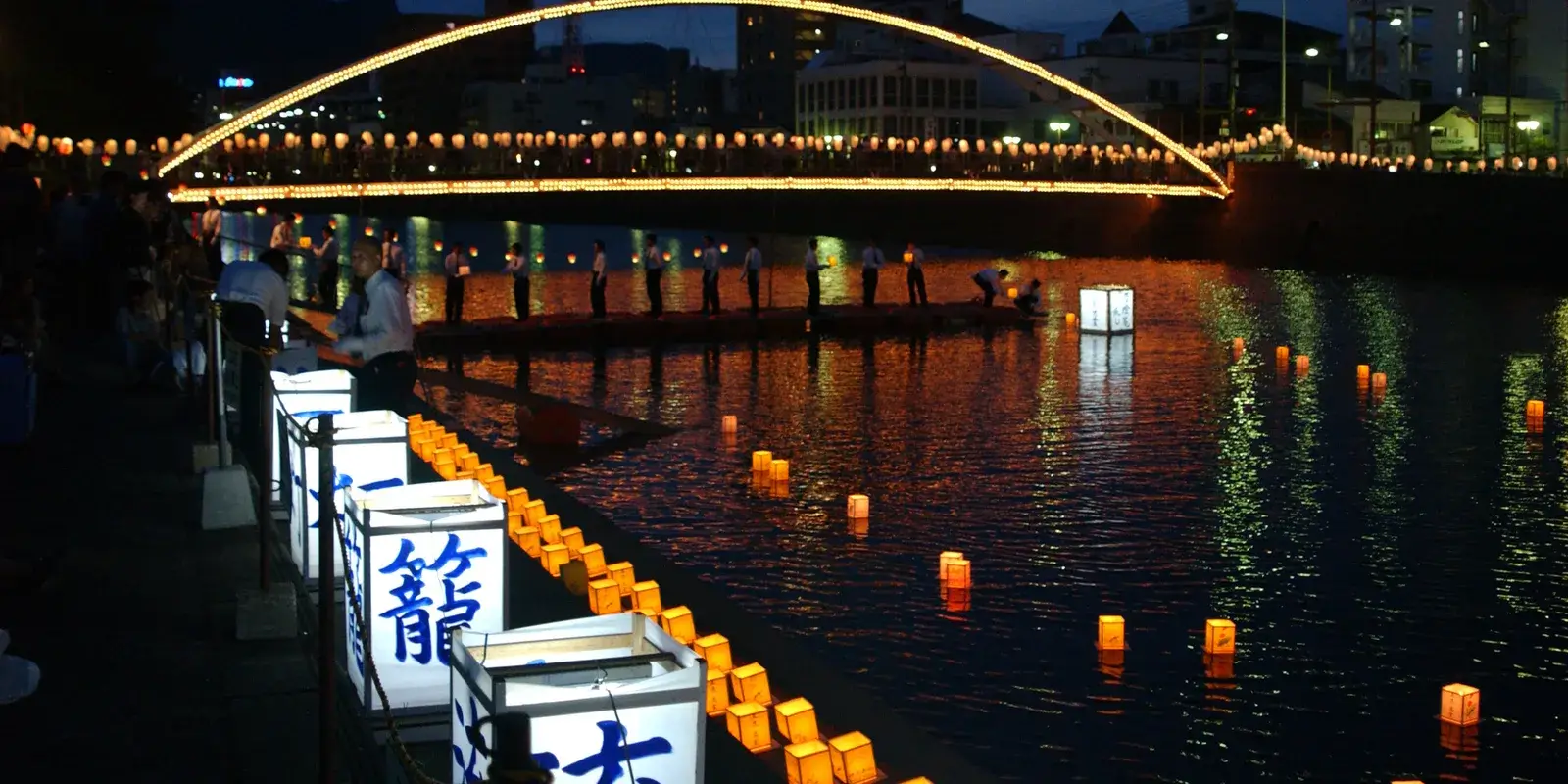
Japan During Obon: Why the Country Goes Quiet, and Where It Doesn't
What you'll learn in this article:
- What 288 Japanese people said about Obon: the quiet, the spiritual, and the complicated
- Whether Japan really "shuts down" (the answer surprised us too)
- The invisible side of mid-August that travel guides never mention
Does Japan really go quiet during Obon? We collected 288 public posts by Japanese people. The short answer: Tokyo's business districts genuinely empty out: "empty trains" trends on social media every August. But the full picture is more nuanced. Only 30% of Japanese people actually go home for Obon now, shopping malls get busier, and foreign tourists have largely filled the gap in city centers. The "silent Japan" of travel guides is increasingly a thing of the past. What hasn't changed is something deeper: Obon is when Japanese people pause to remember those who came before them.
If you're visiting Japan in mid-August, you've probably read something like this: "Japan shuts down during Obon. Everything closes. It's quiet."
That's not wrong. But it's not the whole story either.
Obon is one of those periods where Japan does something travel guides struggle to explain. Yes, trains get emptier. Yes, some businesses close. But the reason why, and the emotional weight behind it, is something most visitors never get to see.
We collected 288 real opinions from Japanese people about Obon across four themes: whether Japan really gets quiet, how they feel about tourists during this time, what the spiritual traditions mean to them today, and the complicated reality of going home. What we found was more nuanced, and more human, than any guidebook summary.
Quick Guide
| What Travel Guides Say | What We Found | |
|---|---|---|
| 🟢 True... mostly | Tokyo gets quiet | Business districts genuinely empty. Trains that are normally packed become almost surreal. Office workers? Gone. But tourist areas and shopping malls? Still busy, sometimes more so. |
| 🟡 It's complicated | Everyone goes home | Only about 30% of people actually go home for Obon now. Among people in their 20s-30s, that drops to 20%. Many stay in the city and enjoy the space. |
| 🔴 Missing the point | Japan shuts down | Major stores, restaurants, and attractions stay open. Commerce isn't what changes. The feeling does. The city air shifts. And in homes across Japan, something invisible is happening. |
The one thing worth knowing: Obon doesn't shut Japan down. It shifts it. People move, moods change, and for a few days, Japan runs on a different rhythm. Understanding that rhythm is what makes mid-August in Japan genuinely special.
How We Gathered These Voices
We collected 288 Japanese-language responses across four Obon topics: whether Japan really gets quiet (57 responses), how Japanese people feel about tourists during Obon (55 responses), the spiritual meaning of Obon today (64 responses), and the reality of going home (57 responses). We also collected 55 responses on generational differences. We gathered these voices from public Japanese Q&A sites, forums, and social posts, along with reporting from news outlets like J-CAST, TBS, PRESIDENT, and Diamond Online, and survey data from research institutes.
A quick note: This isn't a scientific survey. It's a collection of what real Japanese people said in their own words, on public platforms. Most English-language guides tell you "Obon is quiet." We wanted to show you what's actually happening, and why it matters.
What Is Obon?
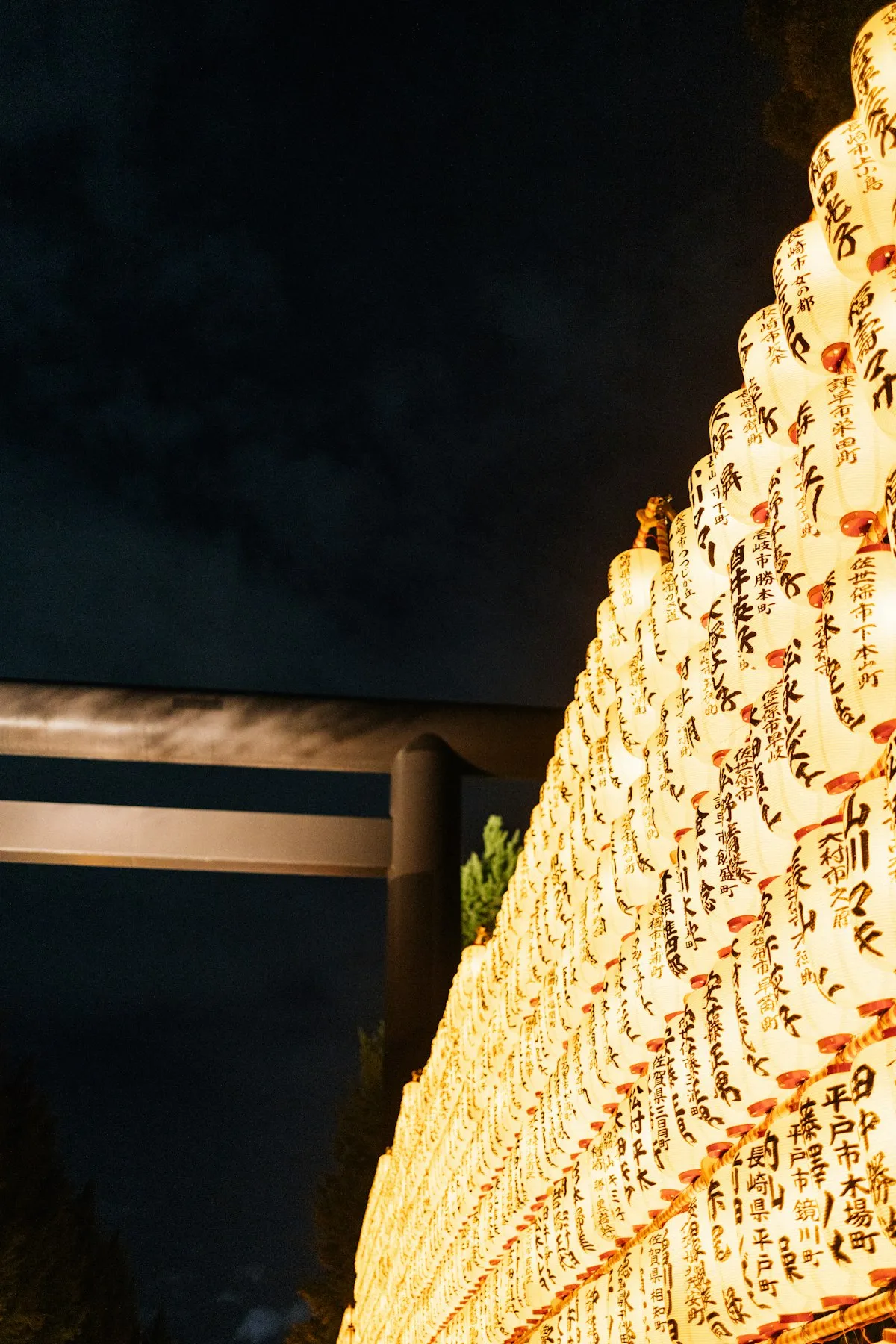
Obon (お盆) is a Buddhist-influenced tradition held in mid-August (typically August 13-16) when Japanese people believe their ancestors' spirits return home for a brief visit. Families light small fires at their doorstep to guide the spirits home (mukaebi), prepare offerings on household altars, visit family graves, and finally light fires again to send the spirits back (okuribi).
It's one of Japan's three major holiday periods, along with New Year and Golden Week. Many companies give employees several days off, and millions of people travel to their hometowns, creating what Japanese media calls kisei rasshu (帰省ラッシュ), the homecoming rush. The New Year runs on a different rhythm entirely, and we've broken down what actually closes and what fills up during those days.
Obon actually exists on two levels simultaneously. On the surface, it looks like a national holiday: offices close, highways jam, and bullet trains fill up. Underneath, something much older and quieter is happening: families reconnecting with people who are no longer here.
Understanding both levels is what makes visiting Japan during Obon different from visiting during any other week.
Does Japan Really Go Quiet?
The honest answer: it depends entirely on where you are.
This is the question every travel guide tries to answer, and most oversimplify. We read what 57 Japanese people wrote about it in public posts, and their views split three ways.
The Tokyo Effect Is Real
If you're in Tokyo's business districts during Obon, the difference is dramatic. In 2019 and again in 2025, "empty trains" (電車ガラガラ) trended on social media as commuters posted photos of eerily deserted carriages.
都心の通勤電車は時間帯によっては1車両に自分だけになるレベルでガラガラになる。別世界に迷い込んだのかと思うほど。 Depending on the time, commuter trains in central Tokyo get so empty you might be the only person in the whole car. It feels like you've wandered into another world.
オフィス街はどこをとってもガラガラ。特に新橋あたりはそれが顕著で、ランチも貸し切りみたいにすんなり入れる。 Business districts are empty everywhere. Shimbashi is especially noticeable — you can walk right into lunch spots as if you've reserved the whole place.
お盆の山手線、ガラガラすぎて快適。いつもこうならいいのに。 The Yamanote Line during Obon is so empty it's comfortable. I wish it were always like this.
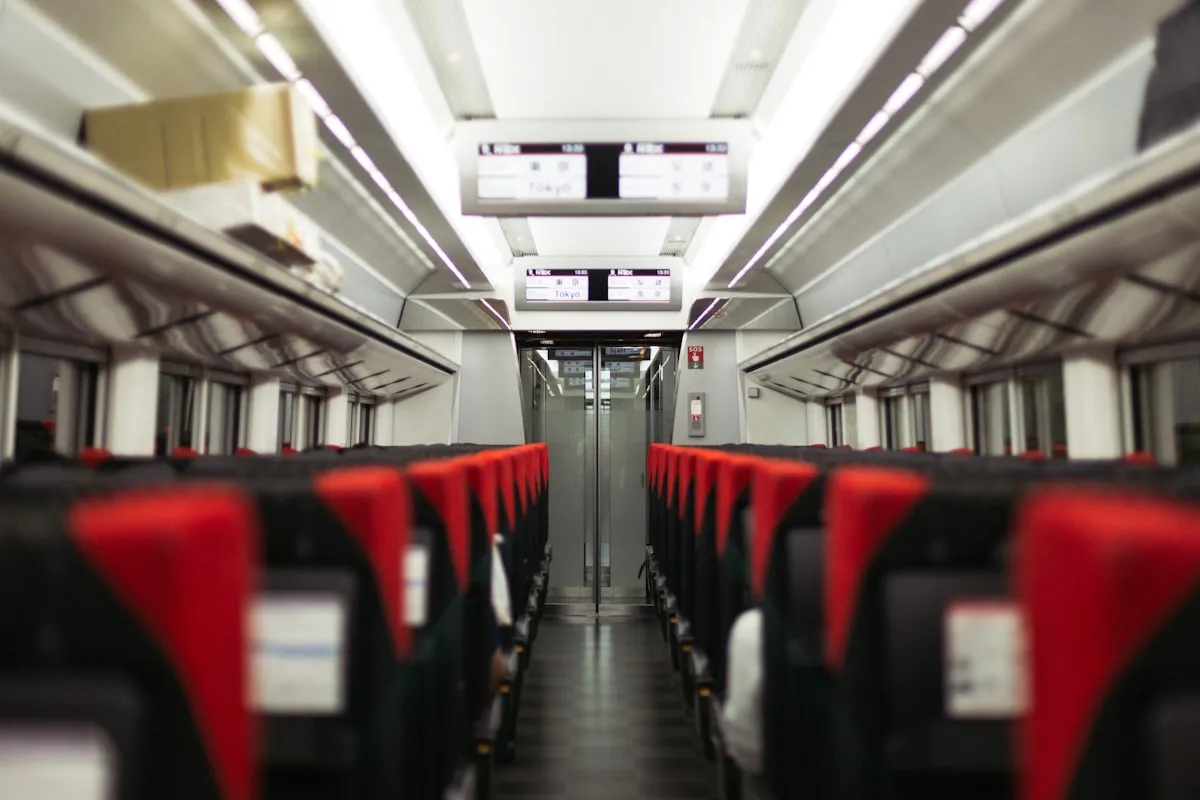
The emptiness makes sense when you see the numbers: at the 2026 Obon peak, unreserved cars on the Tokaido Shinkansen's Hikari trains hit 150-160% capacity (JR Central, 2026). Highway traffic jams stretch 45 kilometers on the Chuo Expressway. The people aren't disappearing. They're leaving.
But Here's What They Don't Tell You
The "quiet Japan" narrative has a blind spot. Several places actually get busier during Obon.
渋谷や原宿など若者の多い場所は、お盆休みでも学校が夏休み中なので混んでいる。空くのはオフィス街だけ。 Places popular with young people like Shibuya and Harajuku stay crowded during Obon because schools are on summer break. Only business districts really empty out.
お盆に東京のショッピングモールは逆に混む。帰省しない家族が集まるし、涼を求めて来る人も多い。 Shopping malls in Tokyo actually get more crowded during Obon. Families who don't go home gather there, and many come to escape the heat.
And for the people on the receiving end of the homecoming rush:
田舎に住んでいると、お盆は逆にうるさくなる。他県ナンバーの車が増えて道が混み、普段静かな近所に人があふれる。 Living in the countryside, it actually gets noisier during Obon. Cars with out-of-prefecture plates increase, roads get crowded, and people flood our usually quiet neighborhood.
The Inbound Shift
And then there's the biggest change of all, one that's rewriting the Obon script in real time:
「都心がガラガラ」は昔の話。インバウンドの外国人観光客が増えて、お盆の都心はすっかり様変わりしている。 "Downtown emptying out" is a thing of the past. With the increase in inbound foreign tourists, the city center during Obon has completely changed.
The paradox: as fewer Japanese people go home for Obon, and as more international visitors arrive, Tokyo during Obon is becoming less "empty Japan" and more "a different kind of busy."
💡 The real picture
Obon doesn't make Japan quiet. It makes Japan shift. Business districts empty, but shopping malls fill. Cities thin out, but hometowns swell. And with 30% or fewer people actually going home these days, the mass migration that creates the "quiet" isn't as massive as it used to be.
The Invisible Side of Obon
This is the part travel guides almost never explain, and it's the reason Obon exists.
If you're visiting Japan in mid-August, you might notice something you can't quite put your finger on. The pace feels different. People seem a little more reflective. In homes you'll never enter, families are setting out offerings on small altars and lighting fires at their doorsteps.
We collected 64 public posts in which Japanese people wrote about how important Obon's spiritual meaning (the belief that ancestors' spirits return home) is to them today.
The Japanese Paradox
Here's something fascinating: over 70% of Japanese people identify as non-religious. And yet, millions still visit graves during Obon, prepare altar offerings, and observe rituals that are explicitly about welcoming spirits.
How do they reconcile this? The voices tell the story better than any textbook:
お墓参りのおかげ、とは言いません。ご先祖様のパワーだとも言いません。たまたまなのかも。でも、お墓に行って手を合わせる、という事が大事なんだろうなと思ってます。 I won't say it's thanks to visiting the grave. I won't say it's the power of my ancestors. Maybe it's just coincidence. But I think the act of going to the grave and putting my hands together — that matters.
先祖は心の中に帰ってくるのであって、物理的に帰ってくるわけではありません。お盆は「生活の知恵」で、家族の絆を維持するための仕組みです。 Ancestors return in our hearts, not physically. Obon is a "life wisdom" — a system for maintaining family bonds.
仏教徒じゃないし、お墓参りに行かなくても何の不幸も起きていません。お盆は家族が集まること自体に意味があって、儀式そのものには意味がないと思います。 I'm not Buddhist, and nothing bad has happened from skipping grave visits. Obon's meaning is in the family gathering itself — I don't think the ritual matters.
And then there are those who feel it deeply:
祖母の初盆に行った時、仏壇のある部屋の電気が勝手についたり消えたりしました。おばあちゃんが戻ってきたんやなーと思いました。 When I went for my grandmother's first Obon after she passed, the lights in the room with the altar turned on and off by themselves. I thought — Grandma came back.
じーちゃんばーちゃん、そのまたじーちゃんばーちゃん、お盆の最中は、ふつーに家の中にいっぱいいるってば! Grandpa, grandma, and their grandpa and grandma — during Obon, they're all just here in the house, for real!
A Tradition That Bends Without Breaking
What's remarkable isn't that Obon is changing. It's how it's changing. The ritual is evolving, but the emotional core persists. Even people who call grave visits "an annoying custom" often add, in the same breath, that they'd feel guilty stopping entirely.
As one person put it with startling clarity:
仏教には「霊」の概念はもともとありません。先祖が帰ってくるというのは日本の民間信仰であって、仏教の教義ではないのです。 Buddhism doesn't originally have a concept of "spirits." The idea that ancestors come home is Japanese folk belief, not Buddhist doctrine.
And yet this folk belief (this blend of custom, memory, and family) endures in a way that formal religion doesn't. More than 70% non-religious, and yet millions still light the welcome fires.
💡 Why it persists
Obon isn't sustained by religious conviction. It's sustained by something quieter: the feeling that stopping would mean forgetting. Even the most skeptical voices didn't say "I've stopped caring." Instead, they said "I don't believe in spirits, but putting my hands together still feels important."
The Great Homecoming, and Who Stays Behind
Travel guides describe Obon as "when everyone goes home." The data tells a different story.
The image is iconic: packed bullet trains, highway gridlock, tearful family reunions. But the reality of the Obon homecoming (kisei) is more complicated, and more human, than the postcard version.
We collected 57 public posts in which Japanese people wrote about how they feel about going home for Obon.
This was our most lopsided result. Only 18% said they genuinely look forward to going home for Obon. The rest? A mix of obligation, guilt, dread, and complicated family dynamics.
The Numbers Behind the Rush
Here's what the data actually shows:
- Only about 30% of Japanese people plan to go home for Obon
- Among people in their 20s-30s, 80% don't go home during Obon break
- Over 60% of people living alone choose to stay put
- People who do go home cite "wanting to see family" (60%) as the top reason, while "Obon tradition" and "seeing local friends" trail behind at about 40%
So the iconic images of packed Shinkansen? They're real, but they represent a shrinking minority. The majority stays put.
The Voices Behind the Statistics
For those who don't want to go, the reasons are deeply personal:
お盆って絶対に実家に帰省しないといけないものなのでしょうか。正直、行きたくないです。 Do you absolutely have to go back to your parents' house for Obon? Honestly, I don't want to go.
愚痴です。盆の帰省を辞めました。罪悪感でしんどいです。 This is just a vent. I quit going home for Obon. The guilt is killing me.
実家に帰るとしんどいのは、自分が変わったのに実家のほうは変わっていないから。距離感の再調整が必要。 Going home feels exhausting because you've changed but your family home hasn't. You need to readjust the emotional distance. Psychiatrist
For many married women, the hardest part comes after the train ride: days spent in someone else's home, running on someone else's rules. One woman's description cut to the heart of it:
お盆に夫の実家へ帰省したくない。家事と親戚づきあいという重労働が待っている。帰省は休暇じゃなくて出張みたいなもの。 I don't want to go to my husband's family home during Obon. Housework and socializing with relatives is heavy labor. Going home isn't a vacation — it's more like a business trip.
This has given rise to a new trend: separate homecoming, where each spouse visits their own family independently. 41.3% of people now support this approach, with only 13% opposed.
Those Who Genuinely Love It
But it's not all dread. For some, the homecoming is the best part of the year:
帰省する派の帰省理由は「家族に会いたい」が6割程と最も高い理由で、ついで「お盆の習慣として」、「地元の友人に会いたい」が4割前後と続きます。 Among those who do return home, "wanting to see family" is the top reason at about 60%, followed by "as an Obon tradition" and "wanting to see local friends" at around 40%.
The homecoming works best, the data suggests, when it's chosen rather than obligated: when people go because they want to, not because they feel they must.
💡 The homecoming is changing
The mass exodus is becoming a curated trip. More people are visiting outside the Obon window to avoid crowds and costs. "Separate homecoming" is normalizing. And the question is shifting from "Are you going home for Obon?" to "Do you even need to?"
Are Tourists Welcome During Obon?
The question visitors worry about but rarely ask.
If you're in Japan during Obon, you might wonder: is it OK to be here? This is a time of family, memory, and ancestor veneration. Are you intruding?
We read what 55 Japanese people wrote about it in public posts.
The Welcome Is Real
Tourism businesses are genuinely grateful for foreign visitors during Obon. With many Japanese tourists heading to their hometowns, international visitors help keep urban businesses running:
去年に比べると日本人の客も、インバウンドの客も、両方ともに増えた。お盆は書き入れ時なので、来てくれるのはありがたい。 Compared to last year, both Japanese and inbound customers have increased. Obon is our busiest season, so we're grateful they come.
お盆に開催されるイベントの中には、外国人や観光客が楽しめるものも多く、盆踊りは誰でも参加でき、気軽に楽しめます。 Many Obon events are enjoyable for foreigners and tourists. Bon odori is open to everyone and easy to enjoy.
What They'd Like You to Know
The "neutral" voices, those who welcome tourists with a caveat, consistently asked for one thing: understanding.
訪日観光客にも単なるお祭りやイベントとしてだけではなく、お盆に込められた意味や、その背後にある文化や歴史を知ってもらいたいです。 I want foreign tourists to understand not just the festival aspects, but the deeper meaning, culture, and history behind Obon.
観光地で外国人が多すぎます。規制してほしいくらいです。けど観光業の人の生活もあるしって思っちゃいます。 There are too many foreigners at tourist spots. I wish they'd restrict it. But then I think about the livelihoods of people in the tourism industry.
That last quote captures something important: the internal conflict many Japanese people feel. They're not anti-tourist. They're pro-balance. And the fact that someone pauses mid-complaint to consider the other side? That tells you a lot about how Japanese people think about these things.
If you're curious about this broader dynamic, Is Japan Overtouristed? dives deeper into how Japanese people feel about the visitor boom.
💡 The one request
You don't need to participate in Obon rituals or avoid tourist spots during mid-August. But if someone asks what brings you to Japan and you can say "I know it's Obon, and I wanted to see what it's like," that small awareness goes a long way. It's the difference between being a tourist who happens to be here and a visitor who chose to be here.
What This Means for Your Trip
If you're visiting Japan during Obon (roughly August 13-16, though many companies take the whole week off), here's what actually changes:
What stays open:
- Major stores, shopping malls, convenience stores (24/7 as always)
- Tourist attractions, theme parks, museums
- Most restaurants, especially chains
- Public transportation (trains run on a holiday schedule, slightly less frequent, but still operating)
What might close:
- Small independent shops, family-run restaurants
- Some medical clinics, banks, government offices
- Corporate offices (this is why business districts empty out)
What gets crowded:
- Shinkansen and highways (especially August 13 departure and August 16 return)
- Hometown areas and rural tourist spots
- Shopping malls and indoor entertainment (people escaping the heat)
What gets quiet:
- Tokyo's business districts (Marunouchi, Shimbashi, Otemachi)
- Weekday commuter trains
- Office-area restaurants
The opportunity: If you're in Tokyo during Obon, you get to experience the city at a pace it almost never operates at. Restaurants that normally have hour-long waits? Walk right in. Trains that are normally crushing? Sit down with room to spare. It's a version of Tokyo that even most Japanese people only get to see once a year.
For a bigger picture of timing your trip, Best Time to Visit Japan covers all seasons with data on crowds, weather, and what Japanese people recommend.
More Japanese Perspectives
Curious about other aspects of Japanese culture and daily life? These articles explore what Japanese people actually think, based on hundreds of real voices.
- Best Time to Visit Japan: 500+ Japanese voices on when to come, what to expect each season, and which months Japanese people secretly hope you'll choose.
- How to Blend In at Summer Festivals: What Japanese people really think when foreigners join in the dancing, the food stalls, and the fireworks.
- Japanese Fireworks Festivals: 85.4% of Japanese people react positively when foreigners shout "Tamaya!", and there's a beautiful reason why.
- Why Japanese Trains Are Silent: 177 Japanese commuters share the honest truth about train etiquette, including why they know their silence is the global exception.
Share Your Experience
Visited Japan during Obon? Stumbled into a bon odori? Experienced the eerie quiet of a Tokyo business district in mid-August? We'd love to hear about it.
Share your experience on Voice Box →
Sources
Primary Research Data
- WMJS Obon research data (288 Japanese-language responses collected May 2026)
- Does Japan really go quiet during Obon: 57 responses
- Tourists during Obon: 55 responses (several respondents frame the crowding complaint as a year-round overtourism pattern, not something specific to the Obon window)
- Spiritual meaning of Obon today: 64 responses
- The Obon homecoming: 57 responses
- Generational differences: 55 responses
Survey Data
- Able & Partners (2025): Obon homecoming survey of ~800 single adults; 30% plan to go home, 60% don't
- Serendipity LLC (2025) "Kisei Blues" survey: 41.5% look forward to it, 21.9% feel drained, 14% feel obligated, 8% reluctant
- AERA / Yahoo News (2025): 41.3% support "separate homecoming" (each spouse visits own family)
- Josei Jishin survey of 500 married adults (2025): 54.6% not planning to return home for Obon
- Trenders survey (2022, ages 15-29, n=536): 43.5% don't know what Obon is for
- JR Central, 2026 Obon ridership results (announced 2026-08-17, via SBS News): Hikari unreserved-car peak load 150% outbound (Aug 8) / 160% return (Aug 16)
- NEXCO highway congestion data: 45km traffic jams predicted during peak Obon
- Nissei Basic Research Institute: Transportation cost vs. homecoming frequency analysis
Opinion Collection Sources
The following sources were used to collect Japanese people's opinions and sentiments. These are not cited as factual authorities but as platforms where real Japanese people expressed their views on Obon.
Does Japan really go quiet:
- Public Japanese Q&A sites, forums, and social posts: first-hand opinions on whether Japan goes quiet during Obon
- https://x.com/rica0867/status/1954485204384620800
- https://dorashine.com/790.html
- https://ameblo.jp/happygram/entry-12814596937.html
- https://obtainedknow.net/329.html
- https://www.j-cast.com/2019/08/13364962.html?p=all
- https://merkmal-biz.jp/post/99174
- https://news.yahoo.co.jp/articles/712eb2aeb14f7962a0fa3c5af6893c522b000620
- https://topics.smt.docomo.ne.jp/article/tbs/nation/tbs-2112278
- https://news.yahoo.co.jp/articles/5c9bdc9cd0948c06ac9fbfdf6ee0febd04cf9c52
- https://news.yahoo.co.jp/articles/b56e90bd4d2e2f35836592f20be4d1b450a07c17
- https://tokyo.publishing.3rd-in.co.jp/article/3ccaa0e4-6e7c-11f0-a0e6-9ca3ba0a67df
- https://prtimes.jp/main/html/rd/p/000000068.000126910.html
- https://manamina.valuesccg.com/articles/2626
- https://president.jp/articles/-/72603
- https://limo.media/articles/-/18644
Tourists during Obon:
- Public Japanese Q&A sites, forums, and social posts: first-hand opinions on tourists during Obon
- https://lightboat.lightworks.co.jp/article/japan-culture-obon
- https://en.motenas-japan.jp/obon/
- https://topics.smt.docomo.ne.jp/article/tbs/nation/tbs-2112278
- https://news.yahoo.co.jp/articles/712eb2aeb14f7962a0fa3c5af6893c522b000620
- https://news.livedoor.com/topics/detail/29385383/
Spiritual meaning of Obon:
- Public Japanese Q&A sites, forums, and social posts: first-hand opinions on the spiritual meaning of Obon today
The Obon homecoming:
- Public Japanese Q&A sites, forums, and social posts: first-hand opinions on the reality of going home for Obon
- https://prtimes.jp/main/html/rd/p/000000179.000016136.html
- https://ampmedia.jp/2025/08/01/obon-kisei-2508/
- https://jisin.jp/life/living/2497541/
- https://diamond.jp/articles/-/327413
- https://president.jp/articles/-/72603
- https://o-temoto.com/akiko-kobayashi/kisei1/
- https://forzastyle.com/articles/-/75318
Note on Quotations
Quotes from online platforms have been lightly edited for readability (fixing typos, formatting for clarity). The meaning and intent of each comment remain unchanged. Original sources are linked above.
This article is available in languages covering 95%+ of visitors to Japan (based on JNTO 2025 data). Need another language? Let us know through Voice Box.
WMJS is written in Japan, in English, with AI help. We check every page, but English is not our first language. If a sentence reads oddly, tell us. One sentence is enough.
Thank you. A person reads every note.
How well do you know Japan?
Built from 635 public posts by Japanese people
Want to know more? Ask Japanese people
Have a follow-up question about this topic? We'll ask real Japanese people.
Voice Box →