
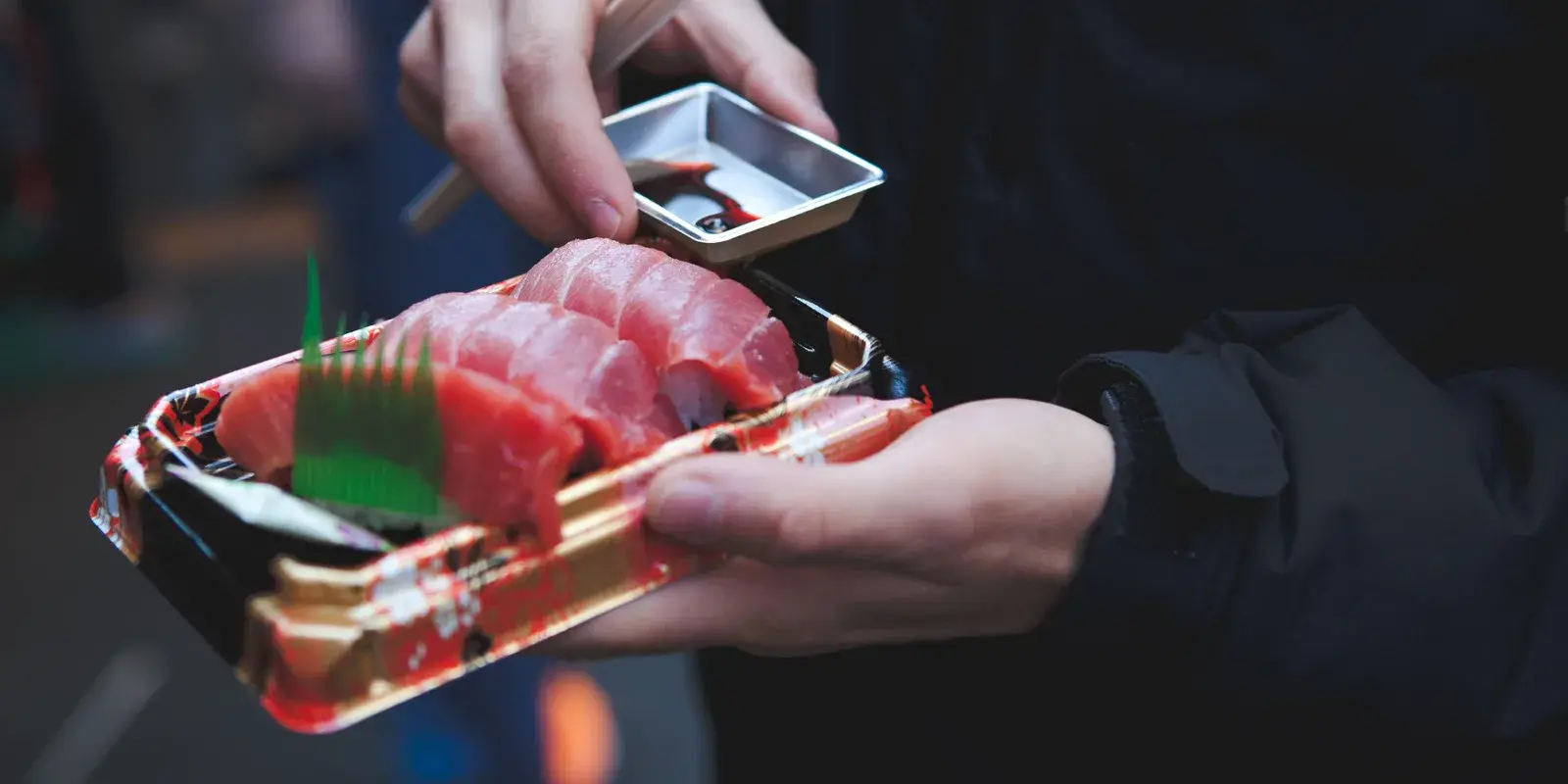
Is Tsukiji (or Toyosu) Worth It? The Tokyo Fish Market Is Now Two Different Places
Is Tsukiji (or Toyosu) worth it? More of the posts we collected say yes than no: 52 of 127 posts by international visitors found it worth it and 36 felt let down, and 44 of 96 reviews by Japanese visitors and locals were glad they went, with 15 let down and the rest saying it depends. The tuna auction (about 5:30 to 6:30 a.m.) moved to Toyosu in 2018, while the food stalls stayed at the Tsukiji Outer Market, and of the 36 let-down visitor posts, 15 cite prices or crowds at Tsukiji and 10 cite Toyosu feeling sterile or seen only through glass. As of October 2026, Toyosu's official calendar shows it closed on Sundays, most national holidays and most Wednesdays; on open days the auction is free to watch from the upper corridor without booking, and the closer deck is by free online lottery the month before.
You've seen the photos: rows of frozen tuna under bright lights, a man in boots ringing a handbell, narrow lanes crammed with sizzling skewers and gleaming sashimi. Then someone comes back saying it was magical, someone else says it's a sterile glass corridor, a third says the whole thing is an overpriced tourist trap. There is no single Tokyo fish market anymore, so they may not have been to the same place.
Was it worth it? (visitors, in their own words)
We gathered the voices of international travelers who have actually been (to Toyosu, to Tsukiji, or both) and asked, in effect, was it worth it? Counting each post once, here is how the 127 of them fell:
That red bar is bigger than for most places we've measured: better than one in four visitors felt let down. But read what they actually say, and the disappointment has almost nothing to do with bad fish: only 2 of the 36 let-down posts fault the food itself. Fifteen cite prices or crowds at Tsukiji and ten cite Toyosu feeling sterile or seen only through glass, so most of it comes down to which market, and what you expected of it. "I've been to both places," one traveler wrote, in the single cleanest piece of advice on the subject: "long story short, go to Tsukiji but eat at Toyosu." Another put the difference perfectly: "Toyosu feels a lot like you are going to a business meeting with some fish... Tsukiji feels a lot like you are going on a stroll in a cute neighborhood with some fish." As a third summed it up: "it really depends on why you want to go."
How the people who live here feel
Here is the layer most guides skip: what Japanese visitors and locals say, in their own reviews of the same two markets. It's a more matter-of-fact register. And, tellingly, a gentler one.
Notice the red bar here is smaller: 16% against the visitors' 28%. That gap is the most useful thing on this page. One likely reason shows in the reviews themselves: 15 of the 96 mention the 2018 move in passing, as something already known (the inner market and the auction went to Toyosu, the food street stayed at Tsukiji), so fewer of them arrive expecting the old market. When locals complain about Toyosu, it's the same complaint visitors have, just stated more plainly: "the building is new, but it has no atmosphere at all," one wrote of Toyosu; another, "mostly flavorless corridors and walls, if I had to compare it, it was like a university hospital."
And one example that this is about knowing what you came for, not about a bad place, is a Japanese reviewer who shrugged off the very same sterile Toyosu: "if you go for sightseeing there's nothing to see... so it wasn't interesting at all. That said, I came to eat the char-siu-and-egg set at Odayasu anyway, so it didn't matter to me." Same building, same crowds: completely different verdict, because he knew his goal walking in.
What's actually there, and which one is for you
The split is simple once someone draws you the map. In October 2018, the licensed wholesale trading floors and the famous tuna auction moved across Tokyo Bay to a brand-new market called Toyosu. The neighborhood of small shops and restaurants that had grown up around the old market (the Tsukiji Outer Market, around 460 shops) stayed exactly where it was. Two separate places: Toyosu sits by Shijo-mae Station on the Yurikamome line. (One trap: there's still a subway stop called "Tsukiji Market Station." It's named for the market that moved away, and it lets you out at the outer market.)
Go to Toyosu for the tuna auction. This is the real spectacle, and it's genuinely worth the brutal early start if the auction is what you came for. It runs roughly 5:30 to 6:30 a.m., with nearly a thousand frozen tuna laid out like pale logs while auctioneers chant and buyers answer with quick flicks of the hand. Visitors who came for this were rewarded: "even though you are standing behind a glass screen, there is plenty to watch and admire... I thought it was fascinating and we watched for about 20 minutes." The honest caveat, from a traveler who saw the old Tsukiji auction: "if it's your first fish auction, do it. If you have been at Tsukiji, you might be disappointed." And if you skip the auction, Toyosu's draw shrinks to its restaurants, and on those the posts split: four praise the food, while five find the restaurants packed, overpriced or overhyped, or say Tsukiji's taste better. On the praising side: "the restaurant/food court area still has super high quality sushi so it's worth a visit if you're nearby."
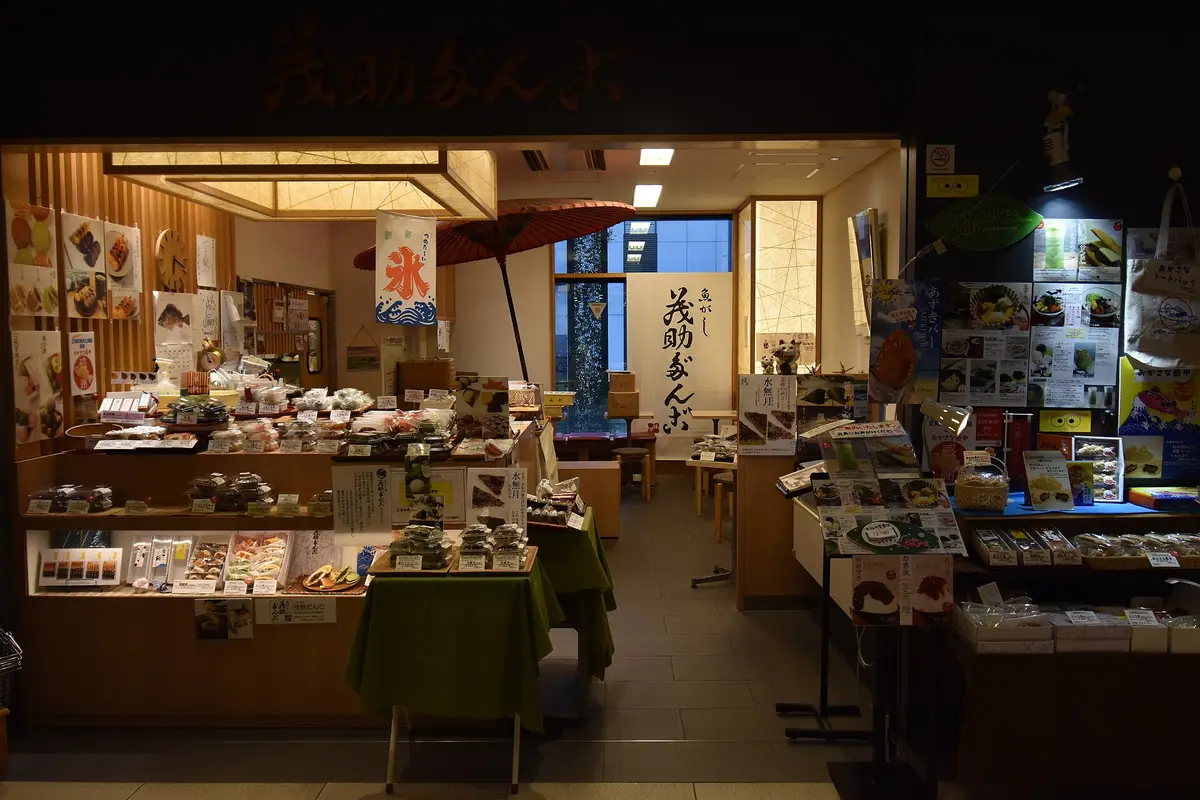
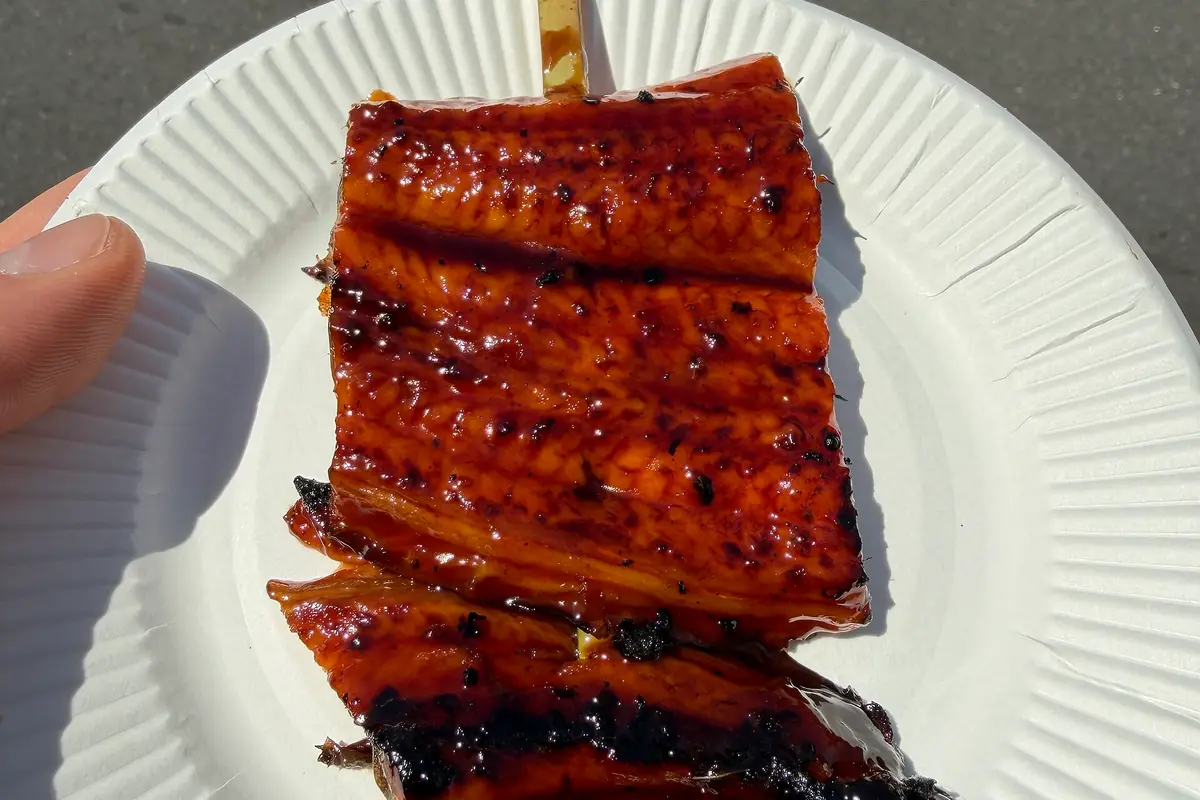
Go to Tsukiji Outer Market for the walking-and-eating. This is what most people picture when they imagine "the Tokyo fish market," and it's still here, still alive: tamagoyaki skewers, seared tuna, oysters, knife shops, tea and pickles, lane after lane of it. "Worth a visit," one traveler wrote; "plan on having breakfast there and then just a walk around... spent a couple of hours looking around." It is, openly, a place set up for visitors now, and prices reflect that (a point worth hearing honestly): "it's obviously set up for tourists, so just like any other tourist place, you're going to get tourist prices." Fifteen of the 36 let-down posts felt that tipped it into a trap. Far more didn't: 43 posts by international visitors and 31 of the 96 Japanese reviews are positive about Tsukiji, among them: "people complaining about the price gouging are exaggerating... I found all food to be good and convenient. Plenty of Japanese also enjoying the market."
Getting Toyosu and Tsukiji right
Everything above resolves into a few simple moves that turn the 28% let-down into the 41% who left glad they came.
- Pick the market that answers your question. Want the auction and a serious early-morning fish experience? Toyosu. Want to wander, snack, and soak up the atmosphere? Tsukiji Outer Market. Want both? The traveler's advice from above, again: "go to Tsukiji but eat at Toyosu." Don't go to one expecting the other: 10 of the 36 let-down posts by visitors cite Toyosu feeling sterile or seen only through glass.
- Go early. This is the whole game at Tsukiji. The repeated advice from happy visitors is almost monotonous (10 of the positive posts recommend an early start or say it kept the crowds down): "just go early." One went "3 days in a row for breakfast. We avoided the crowds by going before 8am." Many shops keep market hours and begin to wind down through the afternoon, and the lanes get genuinely packed by mid-morning. A Japanese reviewer learned it the gentle way: "weekdays really do look more fun... most shops shut after 2 p.m., so I recommend going early."
- For the auction, you don't need to win the lottery. Toyosu opens to the public from 5:00 a.m., and anyone can watch the auction for free from an upper glass-walled corridor, no booking required. A closer viewing deck is reserved through advance lottery only, rather than handled first-come, and the corridor itself carries live audio of the auction floor. The free corridor is enough to feel it; the lottery is a bonus, not a requirement.
- At Tsukiji, the lanes belong to working shops, so a few small courtesies go a long way. The market's own guidance asks visitors to eat at the stall or just in front of it rather than wandering with food (the lanes are narrow and full), to leave the early morning, before 9 a.m., to the professional buyers, to ask before photographing a shop, to keep your group small, and not to handle the goods or haggle, since prices are set. Do these, and you're not a tourist being tolerated; you're a guest the street is glad to see. (More on why walking-and-eating reads differently here in is it rude to eat while walking in Japan?)
- Bring cash, and right-size your expectations on price. Many stalls are cash-only, and a stroll of small tastes adds up. You're paying for freshness and convenience in one of the world's great food cities, rather than for a bargain.
Why there are two markets at all
It helps to know that none of this was an accident, and nothing was really "lost." The old Tsukiji was one of the largest and busiest fish markets on earth, handling the seafood for a city of millions in a site that kept drawing more traders and visitors. Moving the licensed wholesale trade to Toyosu gave that work a larger, cleaner, climate-controlled home built for the twenty-first century, almost twice the size of the old one. The glass you stand behind is part of that design: Toyosu is a closed building, and keeping the outside air out is what lets it hold the temperature steady and the food safe.
What feels "sterile" to a visitor is, for the trade, a market with far more room and steady temperatures. And the part everyone loved (the snacking, the browsing, the morning energy) was never the wholesale floor. It was the neighborhood. That neighborhood is still at Tsukiji, still busy, still yours to wander. As one Japanese reviewer put it: "the wholesale market moved to Toyosu, but for the outer market, Tsukiji's outer market is still the one." Two places now, each very good at one job. The only mistake is asking one of them to be the other.
Deciding which famous Tokyo sights actually earn a slot on a short trip? Start with what actually matters in Japan, and for a chapter-by-chapter walk through both markets, from the 5:30 a.m. auction to breakfast where the fish lands, the Toyosu & Tsukiji audio guide is just below. Toyosu sits on the same bayfront as Odaiba, so an early market run pairs naturally with an afternoon across the water.
Sources
- Tokyo Metropolitan Central Wholesale Market: Toyosu (Official): the relocation of the central wholesale market and tuna auction to Toyosu (opened October 2018).
- The Toyosu Market (Official): Early-Morning Tuna Auction Viewing: the tuna auction runs 5:30–6:30 a.m.; general visitors may enter from 5:00 a.m.; nearly 1,000 frozen tuna; the visitor corridor is open to anyone, no booking required, and carries live audio of the auction floor (checked 2026-10-19: the auction starts at 5:30 a.m. and runs to about 6:30 a.m.; the visitor corridor needs no booking).
- Tokyo Metropolitan Central Wholesale Market: Early-Morning Tuna Auction Viewing (Lottery): the closer viewing deck is by advance application and lottery, rather than first-come (page updated 2026-10-07, checked 2026-10-19: the application details linked there say the deck lottery is free and entered online, entries for the November 2026 dates were taken October 7 to 13, 2026, the month before, with 100 places a day and deck viewing from 5:45 to 6:25 a.m.; people not drawn can still watch from the 2nd-floor visitor corridor).
- Tokyo Metropolitan Central Wholesale Market: 2026 Market Calendar (Open and Closed Days): the fish markets, Toyosu among them, are closed on Sundays, most national holidays and most Wednesdays in 2026 (51 of 52 Sundays, 16 of 18 public holidays, 45 of 52 Wednesdays; October 2026 closed days: the 4th, 7th, 11th, 12th, 18th, 21st, 25th and 28th, with Wednesday the 14th open) (checked 2026-10-19).
- Tokyo Metropolitan Central Wholesale Market: Tuna Auction Viewing FAQ (PDF): the market cannot be entered on its closed days; without the lottery, the auction can be watched free from the 2nd-floor visitor corridor from 5:00 a.m. on market days, with no limit on visitor numbers (updated 2025-06-16, checked 2026-10-19).
- Tsukiji Outer Market Shopping District Cooperative (Official): How to Walk Tsukiji: the visitor manners: before 9 a.m. is buyers' priority time; eat inside or in front of the shop rather than while walking; move in small groups; ask before photographing; don't touch the goods; prices are set (no bargaining).
- GO TOKYO: Tsukiji Outer Market (Tokyo Official Travel Guide): the outer market (around 460 shops) remained at Tsukiji after the wholesale market relocated; most stores are cash only; food is eaten in front of the store or in designated areas; Tsukijishijo Station (Toei Oedo Line) exit A1 is 1 minute on foot (page updated 2026-08-20, checked 2026-10-19).
- JNTO: Toyosu Market: overview of Toyosu Market and its public viewing areas: moved from Tsukiji in October 2018 to reclaimed land in Tokyo Bay; almost twice the size of Tsukiji; a self-contained facility with climate control for food safety; reached from Shijo-mae Station on the Yurikamome line; without a lottery place, the auction can be watched from the upper-floor windows (checked 2026-10-19).
WMJS is written in Japan, in English, with AI help. We check every page, but English is not our first language. If a sentence reads oddly, tell us. One sentence is enough.
Thank you. A person reads every note.
How well do you know Japan?
Built from 635 public posts by Japanese people
Want to know more? Ask Japanese people
Have a follow-up question about this topic? We'll ask real Japanese people.
Voice Box →