
Is Meiji Jingu Worth It? What Travelers, and Tokyoites, Actually Say About the Forest Shrine
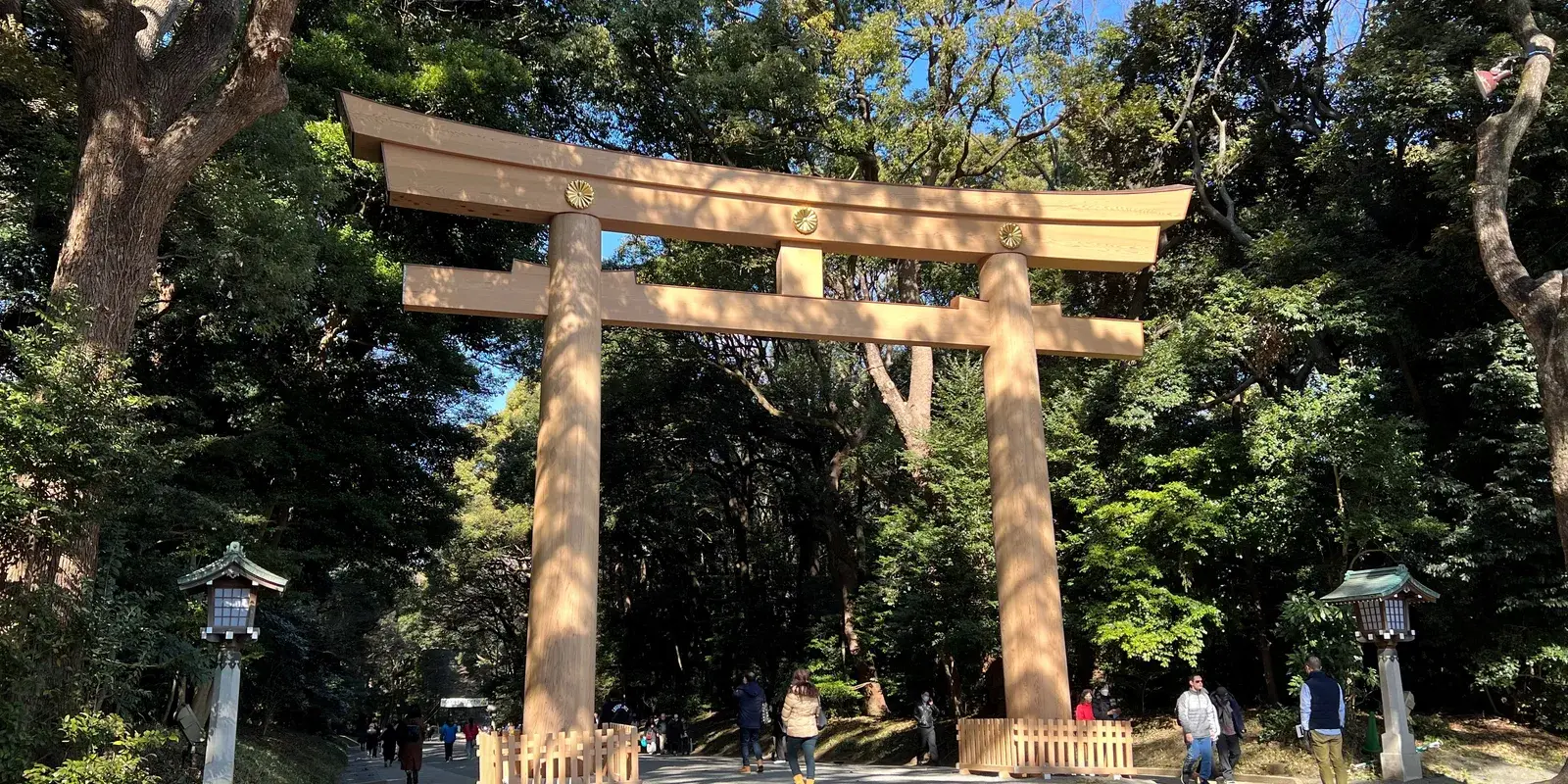
You step out of Harajuku Station, one of the loudest corners in Tokyo, and a minute later you are on a wide gravel path under tall trees, walking, and walking, toward a shrine you cannot yet see. Some people feel the city fall away and call it the best half hour of their trip. A few reach the plain wooden hall at the end, look around, and think: that's it?
So here is the short answer, and everything below unpacks why: yes, it's worth it, but only if you know what it is. Meiji Jingu is not trying to dazzle you. The plainness is the design, and the "just trees" you walk through is the point: an entire forest, carried in by hand, built to last forever.
Is it worth it? (in visitors' own words)
We gathered the voices of international travelers who have actually been to Meiji Jingu and asked, in effect, was it worth it? Weighted by how strongly each opinion resonated with other readers, here is how they fell:
That thin red sliver is small, but it is worth reading closely, because the people in it almost all made the same mistake. They came expecting drama. "Meiji is kinda meh if you're expecting lots of cool architecture and stuff, like I was," one wrote, "but the grounds are really relaxing to walk through." Another, comparing it to a famous garden nearby: "slightly underwhelming." A third: "It's whatever. It just feels like you are in a dense forest." And one local resident, honest about it: "it's a good shortcut for me, but it has never really wowed me."
Notice what nearly every let-down has in common: it is a mismatch of expectation rather than a complaint about the place. They wanted gold, ornament, a scene, and Meiji Jingu, on purpose, offers none of that. The travelers who loved it wanted the opposite thing and got it in full. "A quiet oasis right next to Harajuku and Omotesando," one wrote. "Walk the busy streets and then recharge in the shrine." "It feels like an escape." "It completely changed our impression of Tokyo." The single most-upvoted voice put the whole calculation in one line: "If you visit one shrine in Tokyo, it should be Meiji Jingu."
And here is the tell that this is about expectation and not quality: several visitors who had also been to Kyoto came back and said the quiet here still held up. "Even after going to Kyoto, I still enjoy the atmosphere at Meiji Jingu." One even named the design out loud: "Meiji Jingu was explicitly constructed as a purely Shinto shrine, so you'll see more unvarnished wood and natural elements." He wasn't disappointed by the plain wood. He understood it.
How Tokyo feels about it
Now set that against what Japanese visitors and locals say, in their own reviews, about the very same gravel path and plain hall.
Look at the red bar. Across 111 Japanese reviews, it never moves off zero: not one of them came away feeling let down. That is the most useful contrast on this page, and it is because they arrive for exactly what is there, not because Japanese visitors are easily pleased. They don't come to tour a monument; they come for the forest. "So lush you'd never think it was Harajuku, truly an oasis in the city." "The air is crisp and dignified; you can worship while strolling slowly through nature." "On a brutal heatwave day, the moment I stepped inside, the trees made it cool." "I feel as if there are spirits among the trees." The word that recurs is the same word the happy foreign visitors used: escape.
The honest edge, where it exists, sits entirely in that middle band, and it is the same edge the let-down travelers felt, named more gently. "For all its size, there are no benches or rest spots, so it feels more like a walking course." "From the big torii to the main hall is just so far!" "There were too many tourists, so I couldn't feel the sacredness I'd imagined." "It was a shame I had to rush. If I'd gone slowly, I think I'd have felt its appeal more." That last one is the quiet key to this whole place: rushed, it can feel like a long walk to not much. Unhurried, it becomes the thing people return to for thirty years.
What we wish you'd noticed
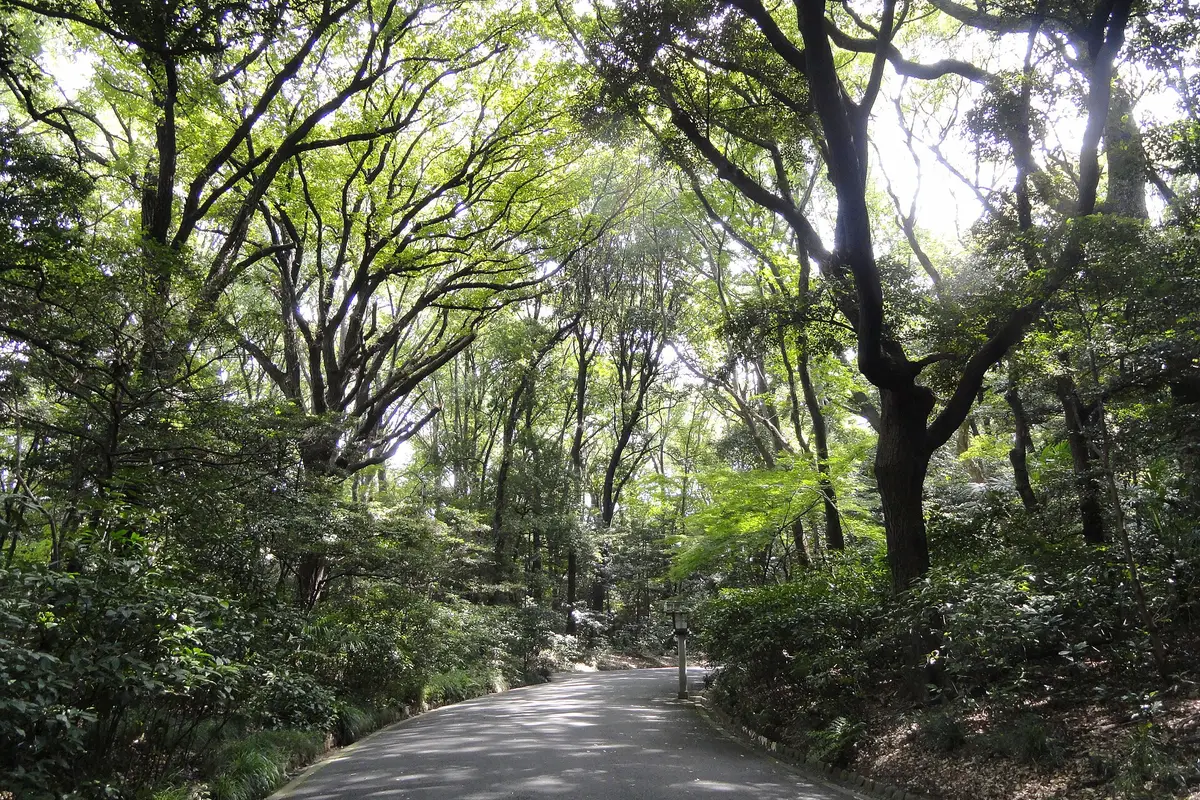
The forest is the masterpiece, and it is entirely man-made. This is the fact that turns "just trees" inside out. When the shrine was dedicated in 1920 to the spirits of Emperor Meiji (who died in 1912) and Empress Shoken, this ground was mostly bare. So people from every part of Japan donated around 100,000 trees, and roughly 110,000 volunteers came to plant them by hand across 70 hectares (about the size of fifteen Tokyo Domes). The foresters, led by Dr. Honda Seiroku, chose each of its 234 species not for how it would look in ten years, but in one or two hundred. They were not planting a garden to be tended. They were engineering a forest that would one day drop its own seeds, replace its own fallen trees, and carry on with no gardener at all. They called it the eternal forest, and the shrine has honored that intention ever since: no human intervention, nothing added, nothing taken away. So when a traveler shrugs and says "it just feels like you're in a dense forest," that shrug is correct. That dense forest is a hundred-year-old gift, planted by people who knew they would never see it finished.
The plain wood is reverence, not a budget. Meiji Jingu was built as a purely Shinto shrine, and Shinto prizes restraint: unvarnished cypress, clean lines, no gold leaf. If you have just come from the lacquered, gilded temples of Kyoto, the understatement can read as "nothing here." It is the opposite: the aesthetic is doing its job. (The current halls are themselves a quiet story: the originals were destroyed in the air raids of 1945 and rebuilt with donations from across the country. The forest you walk through, though, is the original 1920 planting, now grown up.)
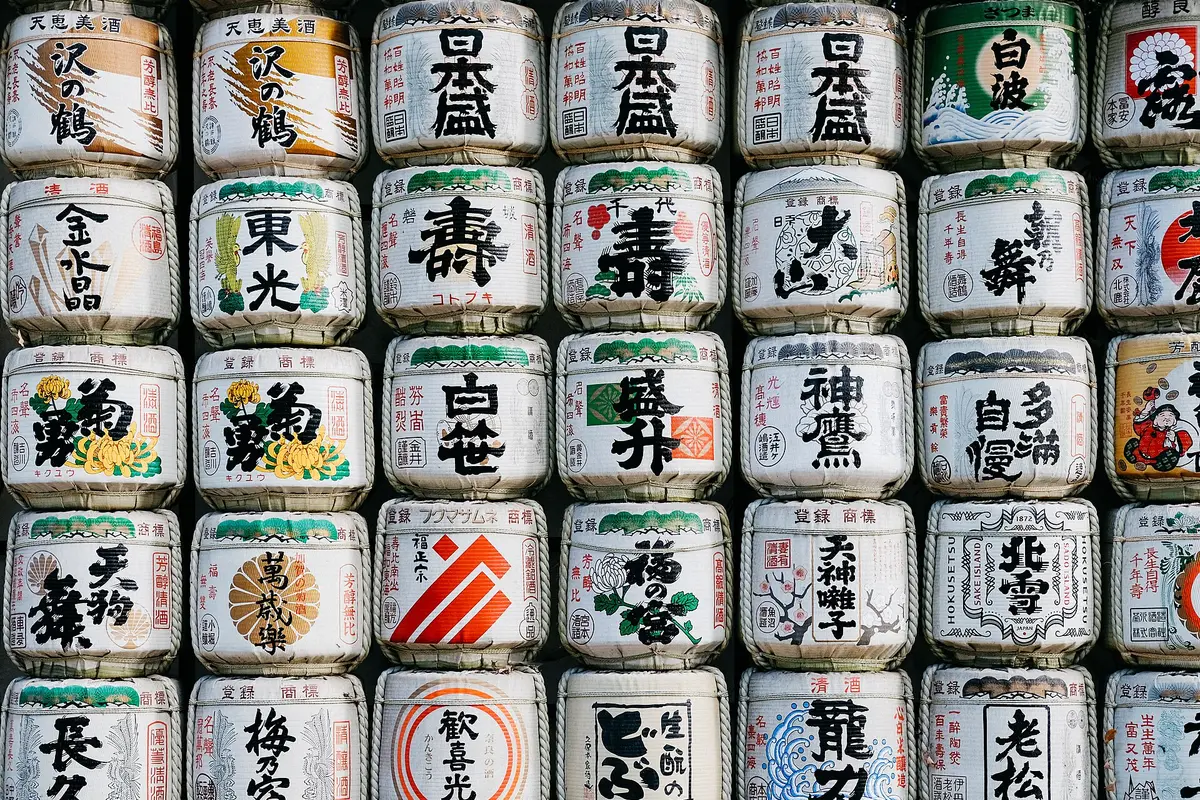
Two small surprises reward the curious. Near the approach, a wall of sake barrels, offered to the shrine each year, faces a row of wine barrels from Burgundy (a nod to Emperor Meiji, who urged Japan to learn from the West). And deep in the Inner Garden (a separate ¥500 contribution) is Kiyomasa's Well, a clear spring that holds steady at around 15°C all year and has never run dry; in June the garden's iris field comes into bloom. The shrine grounds themselves are free.
Doing it well, the welcomed way
Everything above resolves into a few moves that turn the let-down visit into the treasured one.
- Go early, the calm is the experience. The grounds open at sunrise and close at sunset (hours shift through the year). Visitors who came right at opening, or in the last hour, describe near-solitude: "I was lucky enough to have the place almost to myself. It was wonderful." Jet lag is your friend here: "woke up early, walked over, easily the most spiritual shrine I visited." By mid-morning the main path fills up, and the quiet that is the entire point gets crowded out.
- Let the walk be the visit itself, never just the wait before it. It is a ten-minute stroll through the trees to the hall and back, twenty to thirty minutes in all, unless you linger. Don't power-walk to the shrine to "see the thing." The path is the thing.
- Come for calm, not for spectacle. If you want lights, crowds, and street food, that is Senso-ji in Asakusa, and it is wonderful too, just different. As one visitor mapped it perfectly: "If you want peace, go to Meiji. If you want a scene, go to Senso-ji." Knowing which you're in the mood for is most of the battle.
- A small bow at the great torii. The giant cypress gate marks the line between the everyday city and a sacred space; many people pause and give a slight bow before passing through. At the hall, the gesture is two bows, two claps, one bow, and the shrine itself says plainly that anyone may pray, whether or not you follow Shinto. If the sequence feels unfamiliar, a quiet moment with your hands together is completely enough. What's noticed here is your attention rather than your technique.
- Keep your voice low and your camera kind. The thing every visitor comes for (that wide, unexpected silence) is made of everyone choosing to keep it. Soften your voice on the path, and when you photograph a wedding procession or someone at prayer, do it from a respectful distance.
So: is Meiji Jingu worth it? If you arrive hungry for gold and grandeur, you may walk out shrugging, and you'll have company: about one traveler in eleven. But come for the other thing: a hundred-year-old forest that tends itself, a plain hall that asks nothing of you, a pocket of deep quiet you reach in a minute from the busiest streets in Tokyo, and you'll understand why the people who live here have been coming back their whole lives, and never once felt let down.
Still deciding which famous places actually earn a slot on a short trip? Start with what actually matters in Japan, and for a chapter-by-chapter walk under the great torii, through the forest path, to Kiyomasa's Well, the Meiji Jingu audio guide is just below.
Sources
- Meiji Jingu Official: The Forest (English), the forest is man-made, planted in 1920 by 110,000 volunteers across 70 hectares with 234 varieties of trees; led by Dr. Honda Seiroku (1866–1952); every tree chosen for how it would look after 100–200 years; no human intervention since creation, so the plants sustain themselves (the "eternal forest").
- Meiji Jingu Official: About (English), established in 1920 to commemorate Emperor Meiji and Empress Shoken; 70-hectare forest in the middle of Tokyo; open every day, with hours varying by season.
- Meiji Jingu Official: How to Visit & Access (English), opening from sunrise to sunset (varying through the year); the shrine grounds are free to enter.
- Meiji Jingu Official: Inner Garden (Gyoen), the strolling garden requires a small ¥500 maintenance contribution; the iris field blooms in June; Kiyomasa's Well is a clear, constant spring within it.
- Meiji Jingu Official: Q&A / FAQ, anyone is welcome to worship, whether or not they follow Shinto; basic etiquette of two bows, two claps, one bow.
- JNTO (Japan National Tourism Organization): Meiji Jingu, built in 1920 to commemorate Emperor Meiji and Empress Shoken; the buildings were destroyed during World War II and rebuilt following a public fundraising effort; over 100,000 trees were donated from across Japan and planted by young volunteers; free to enter during daylight hours.
WMJS is written in Japan, in English, with AI help. We check every page, but English is not our first language. If a sentence reads oddly, tell us. One sentence is enough.
Thank you. A person reads every note.
How well do you know Japan?
Built from 635 public posts by Japanese people
Want to know more? Ask Japanese people
Have a follow-up question about this topic? We'll ask real Japanese people.
Voice Box →