
Is Miyajima Worth It? What Visitors Actually Say, and the One Thing That Decides Your Day
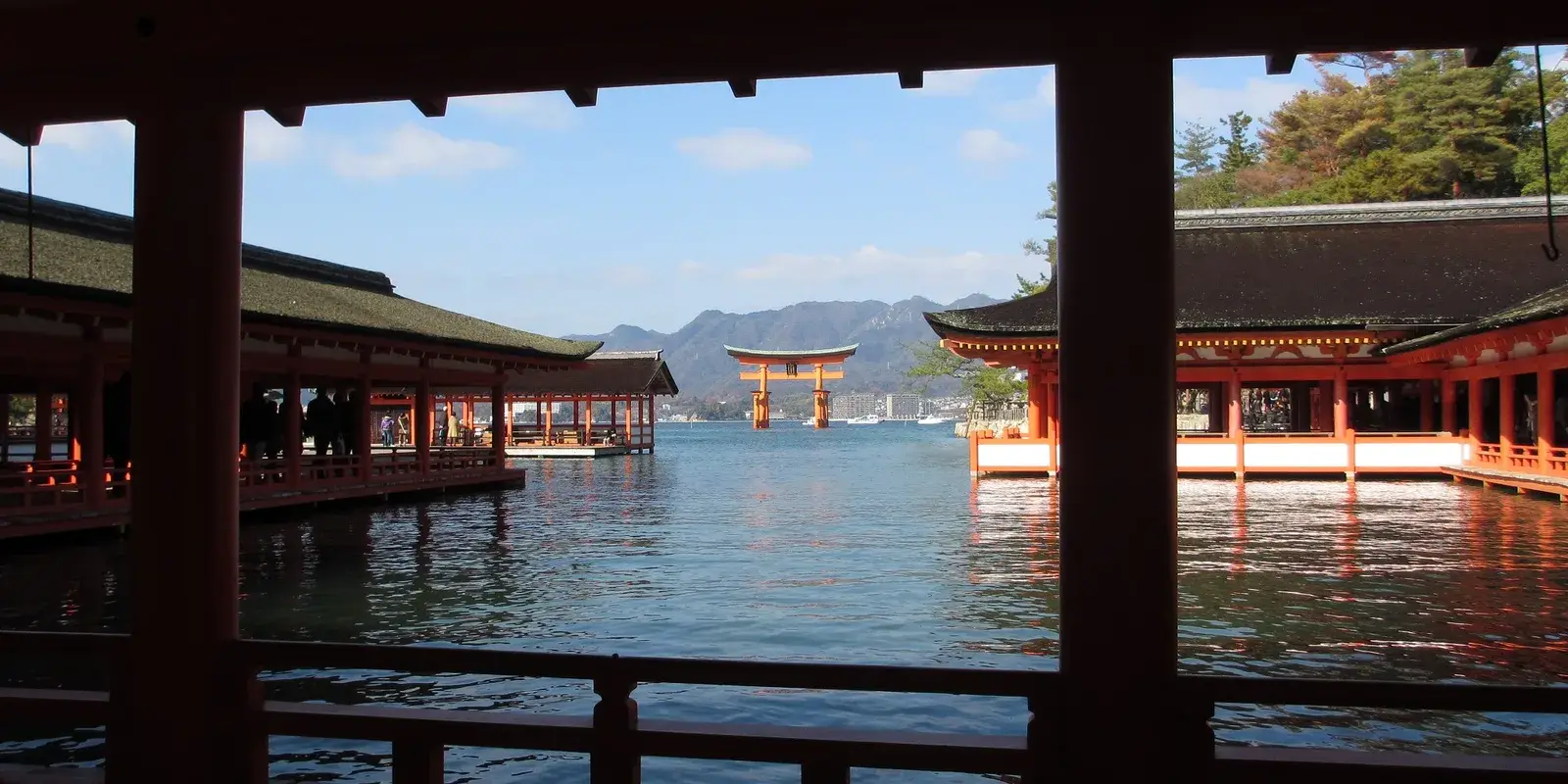
You have seen the photo a thousand times: a great vermillion gate floating on a mirror of sea, a shrine drifting behind it. So you build a half-day around it, the ferry pulls in, and the water is gone. The gate is standing on bare mud, ringed by a crowd, and a little voice asks whether you should have skipped the whole thing.
Here is the short version: the travelers who have actually been are nearly unanimous that yes, it's worth it, and the few who came away let down almost all describe the same fixable thing: not the place, the timing. Miyajima is the rare spot where the real question isn't whether to go. It's when.
Is it worth it? (in visitors' own words)
We gathered the voices of international travelers who have actually been to Miyajima and, in effect, asked was it worth it? Weighted by how strongly each opinion resonated with other readers, here is how they fell:
Look at the shape of that. The red is thin, and the people in it are almost all describing something they could have sidestepped. One was blunt about it: "I was highly disappointed by my own trip to Itsukushima because I did not check the tides and saw it at low-tide, when I had really wanted to see it at high-tide." Another's whole letdown was an hour in a line: "Very crowded. Hour wait for the cable car. Honestly, it was kinda a let down." These are not verdicts on Miyajima. They are verdicts on a wrong hour.
And the green is emphatic in a way few places manage. "My answer is an emphatic DEFINITELY SHOULD GO. Miyajima is probably my favorite place on all of planet earth," wrote one. "By far, my favorite experience," said another, "absolutely worth the money and time." The enormous middle band isn't doubt: it's the same advice said gently, that it's worth it, and the tide and the hour decide which Miyajima you meet.
How the people who keep coming back feel
Here is the layer most pages never show you: what Japanese visitors and locals, many on their third, tenth, thirtieth visit, say in their own reviews of the same island.
Now hold the two pictures side by side, because the comparison is the most useful thing on this page. The visitors' red bar (7%) is almost twice the locals' (4%), and yet they are unhappy about the exact same things: the tide, the crowds, a closed ropeway. The gap isn't taste. It's information. The people who return every year have quietly solved the timing, so it almost never bites them, and reading how they do it is the whole trick.
One wrote, after years of visits: "It was my third visit, but for the first time I hit the low-tide window and could go right up close to the torii gate. It looked completely different." They don't see low tide as a failure; they collect it. Another laid out the move plainly: "During the day it's packed with people and more people, but if you get up early in the morning, it's quiet and the crowds are sparse." And one captured the trade-off the disappointed visitor missed, without a trace of regret: "It happened to be low tide, so I could walk right up to the torii. Wonderful. The flip side is that at low tide the main hall doesn't appear to float." Same fact. Opposite feeling. The difference is knowing it before you board the ferry.
The one thing that decides your day: read the tide
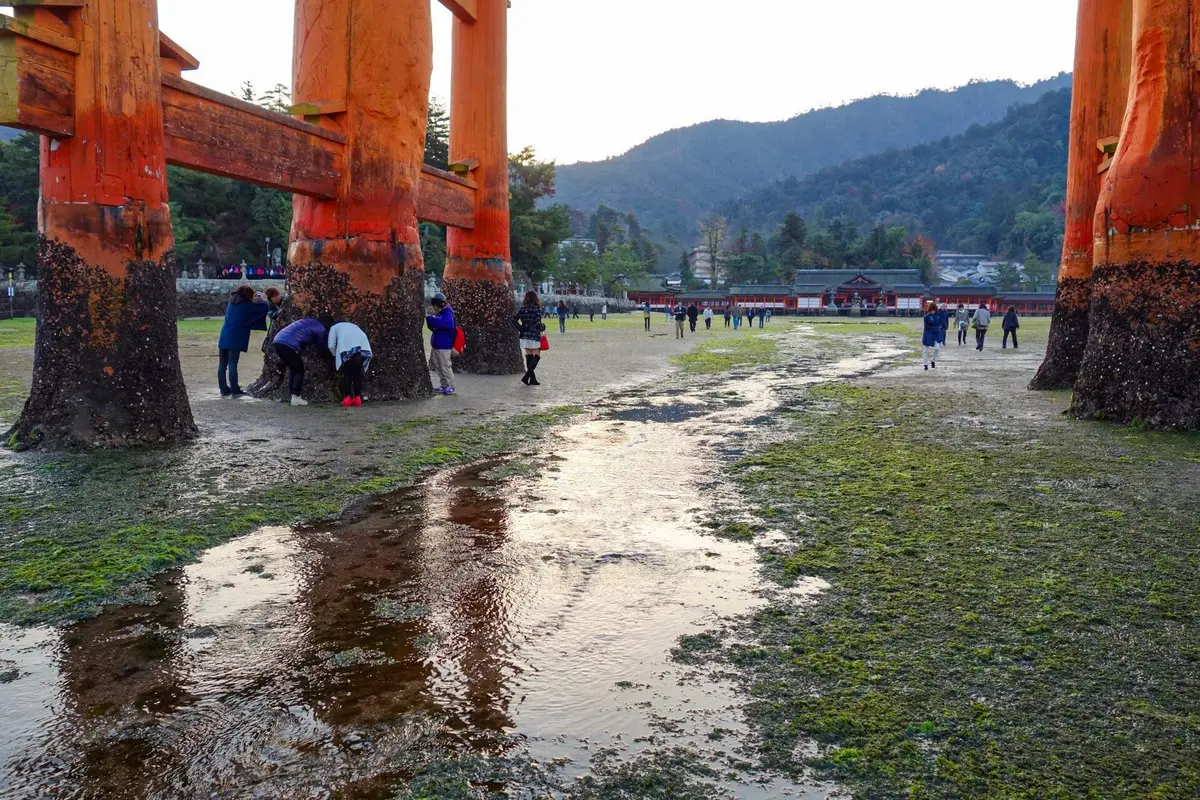
The torii only appears to float when the tide is high: above about 250 cm on the local tide chart, the sea reaches its feet and the whole shrine seems to drift. When the tide drops below about 100 cm, the sea withdraws and you can walk across the wet sand and lay your hand on a pillar wider than your arms can reach.
Here is what the disappointed visitor and the delighted local both prove: neither one is the "wrong" Miyajima. "Low tide means you can walk to the torii and see it up close," one traveler noted; "high tide means all the tourists can't walk out to it, so it looks nicer." Another got both in one visit: "I arrived at low tide and was able to walk right up to the gate, which was such a cool and fun experience." That happened because on many dates the tide cycles through a high window and a low window in the same day. The island even publishes a tide table so you can plan it.
So do the one thing that separates the 7% from everyone else: check the tide table for your date before you go, and decide which face you're chasing, or time your hours to catch both. If you arrive and the water isn't where you hoped, you haven't missed Miyajima. You've met its other face, and the quiet Japanese habit of accepting what the day hands you turns out to be exactly the right thing to pack.
What makes the day go well
Everything the happiest voices say resolves into a handful of moves.
- Check the tide chart first, and don't fear low tide. Above ~250 cm it floats; below ~100 cm you can walk out beneath it. Both are real. Many dates give you both if you stay a few hours.
- Think of the crowd as a clock rather than a constant. The same island that feels like a theme park at midday empties at the edges of the day. Locals are unanimous: "I got up early and took the very first ferry. Thanks to that it was uncrowded, and I could pray with hardly anyone around." Visitors agree ("walking around in the morning was one of my highlights") and note the shops don't open until 10, so the early shrine is yours. After about 4:30 p.m. it empties again.
- You don't have to stay overnight, but mornings are magic. Staying is a genuine highlight for many ("the real magic was the next morning at sunrise"), but be clear-eyed: the evening isn't as deserted as the hype suggests, since day-trippers linger until the last ferry. One regular's honest math: the last ferry back runs until about 10 p.m. and the island thins out after 5:30, "so you have a few hours of no tourists in the evening even on a day trip." Stay for the sunrise; don't stay expecting an empty dusk.
- The torii is fully back. Skip the outdated warnings: the years-long Reiwa restoration that wrapped the gate in scaffolding finished at the end of 2022, and it is completely visible again. One local who'd been let down before: "Last time it was under restoration and I sadly couldn't see the torii. So I was glad to get my revenge this time."
- Budget the visitor tax. Since October 2023 there's a ¥100 Miyajima visitor tax per person, collected with your ferry fare on the way to the island. It's small, but it surprises people who haven't read about it.
- Don't build the day around the ropeway alone. Mount Misen's view is lovely, but queues run long at peak times and the ropeway suspends service for scheduled maintenance twice a year, typically around February and July; check the official site for exact dates. Plenty of visitors skip it happily: "To me Miyajima is more about Itsukushima shrine, the deer, and just wandering." The shrine, the gate, and the food street are a complete visit on their own.
Do these, and the day tends to go the way the heart-warmed reviewers describe rather than the way the let-down ones did. Miyajima isn't testing you. It simply shows one face at a time: floating or walkable, busy or still, and the visitors who check the tide and come at the quiet hours are the ones it meets most gently.
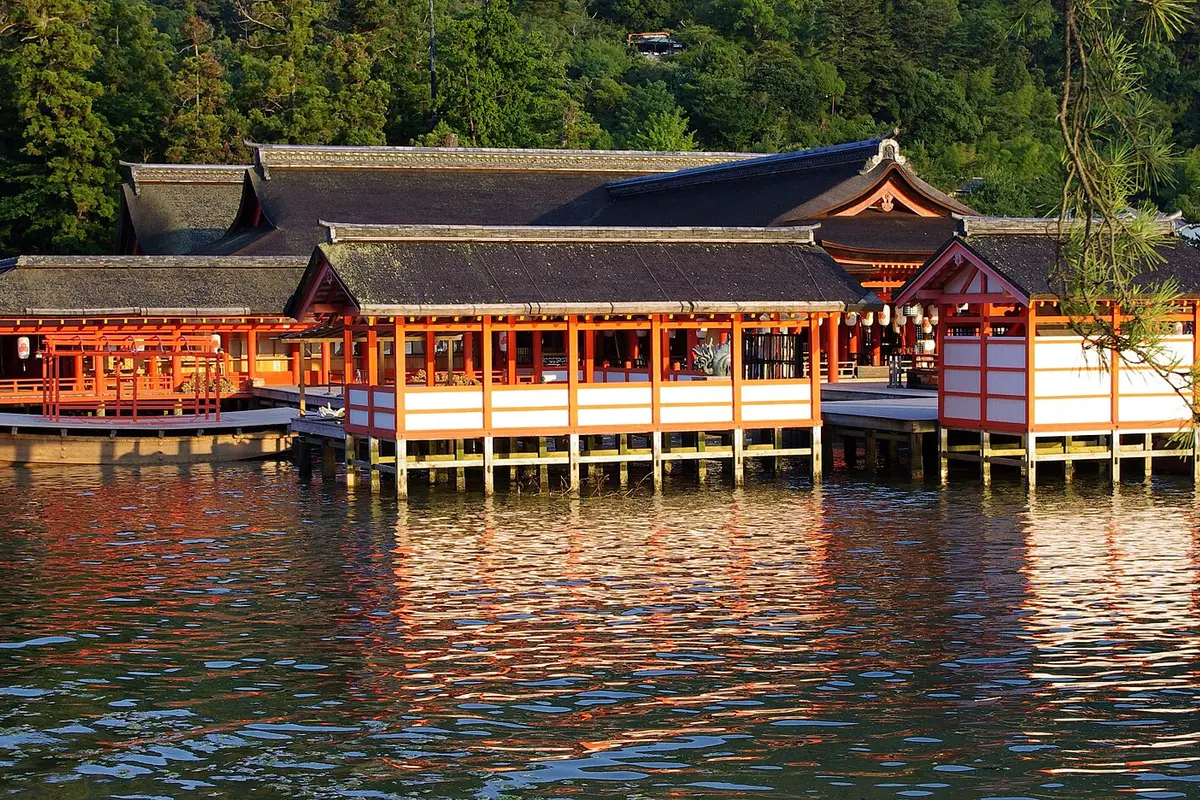
The crowds are real at midday, the ropeway has its lines, and one date can hand you mud where you pictured water. And still, a thousand-year-old shrine built out on the sea, a gate three storeys tall that stands by nothing but its own weight, deer in the streets, oysters and maple-leaf cakes on the grill, and an island that, after the last ferry leaves, goes quiet enough to hear the tide come in. Check the chart, come early, and Miyajima gives you the version it was always going to give you, and that one turns out to be the right one.
Still deciding which famous places actually earn a slot on a short trip? Start with what actually matters in Japan, and for the full story of why a whole island built its shrine on the sea, how to read the tide, which ferry to take, and Mount Misen, the Miyajima audio guide is just below. If a hillside temple walk sounds like more your day than a checklist of sights, weigh it against Is Onomichi Worth It?, the other Setouchi day trip travellers set against this one.
Sources
- Itsukushima Shrine, Official Website: the over-the-water design and how the shrine and Great Torii change with the tide; hours and admission.
- Miyajima Tourist Association, Official Site & Tide Table: the tide thresholds the whole visit turns on: the shrine and gate appear to float above about 250 cm, and you can walk out to the gate below about 100 cm; the official daily tide table.
- Hatsukaichi City, Miyajima Visitor Tax: ¥100 per visit (¥500 annual), collected on the ferry fare when traveling to the island, since 1 October 2023.
- JR West Miyajima Ferry, Official: both ferry companies cross in about ten minutes for the same fare; the daytime Ōtorii route that passes close to the gate; the visitor tax added to the fare.
- The Official Guide to Hiroshima (Dive! Hiroshima), Itsukushima Shrine: at high tide the gate and shrine sit on the water; at low tide visitors walk right up to the foot of the Great Torii; the Reiwa restoration of the Great Torii.
- The Official Guide to Hiroshima (Dive! Hiroshima), The Reiwa Renovation of the Great Torii Gate: the renovation ran from June 2019 to December 2022.
- Miyajima Ropeway, Fares & Facilities: suspension of service for bad weather and periodic maintenance twice a year (around February and July).
WMJS is written in Japan, in English, with AI help. We check every page, but English is not our first language. If a sentence reads oddly, tell us. One sentence is enough.
Thank you. A person reads every note.
How well do you know Japan?
Built from 635 public posts by Japanese people
Want to know more? Ask Japanese people
Have a follow-up question about this topic? We'll ask real Japanese people.
Voice Box →