
Is Harajuku Worth It? It Depends Which Harajuku You Mean
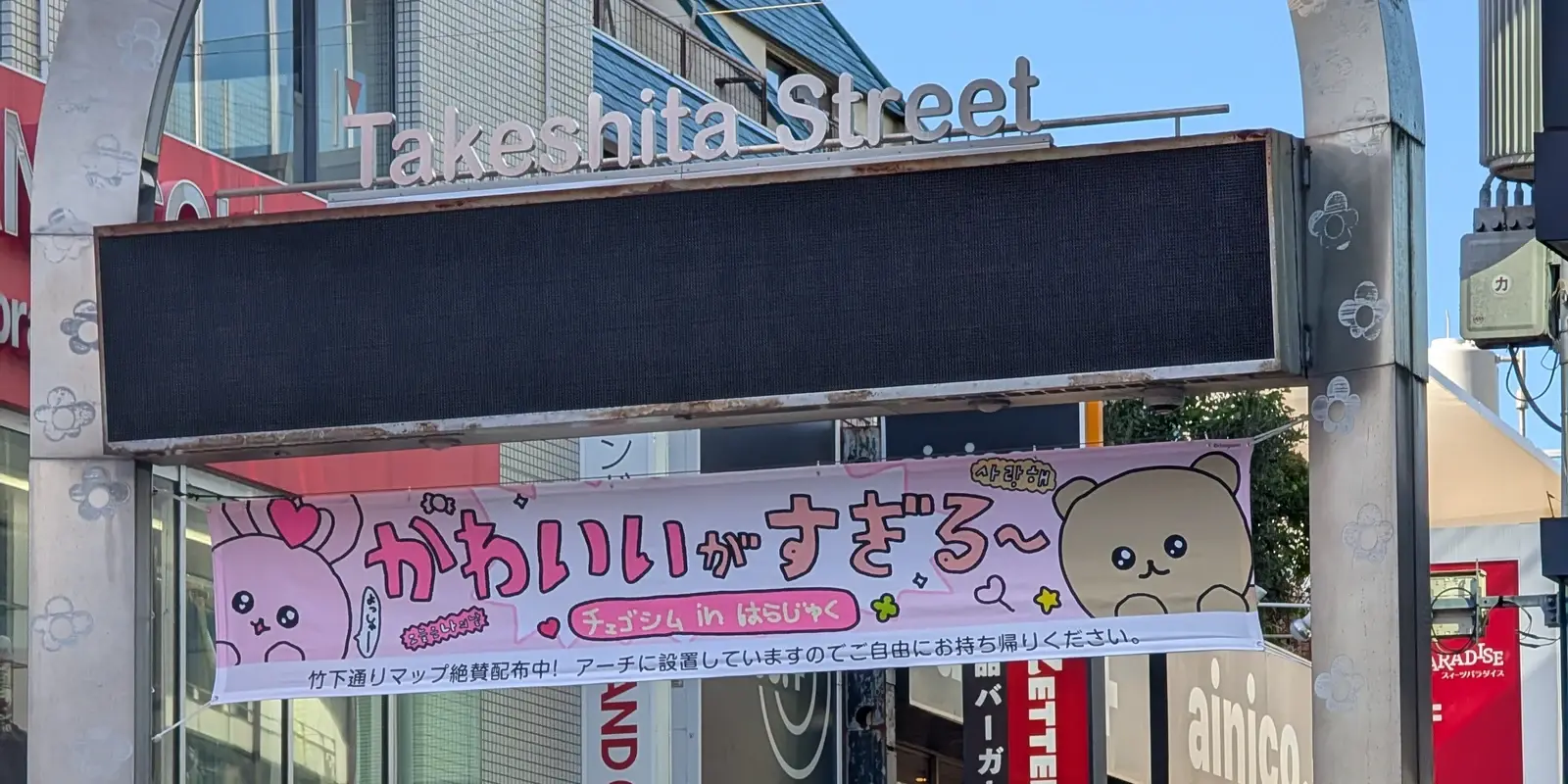
You have seen the doubt, because it is one of the loudest on the travel forums: "Takeshita Dōri has been an overcrowded tacky tourist trap for decades." People come to Harajuku expecting the legendary birthplace of Japanese street style, step into a 350-meter lane packed shoulder to shoulder with teenagers, crepe stands, and cheap fashion, and leave a little let down. "This is my idea of hell," one visitor recalled thinking, standing in the middle of it. Another, who later added that they meant Takeshita Dōri and not the wider area: "Harajuku might be the most overrated spot in Japan."
Here is the short version: much of the let-down comes from mistaking one street for the whole of Harajuku. Takeshita Street is the loud, famous sliver, a teenagers' shopping lane that was aimed at teenagers all along. The Harajuku that people fall for is one block off it: the vintage shops of Cat Street, the quiet backstreets of Ura-Harajuku, the tree-lined avenue of Omotesando. About half of the disappointed voices are describing Takeshita Street and its crowd. Many of the ones who loved it stepped one street over, and knew who the crowded street was for.
Is it worth it? (in visitors' own words)
We gathered the voices of international travelers who have actually walked Harajuku's shopping streets. Counting each voice once, here is how they fell:
That red bar is real, and half of it (18 of the 36 let-down voices) is about one street and its crowd; most of the rest say the old Harajuku scene has faded, which the end of this page comes back to. "It's literally a trap now," one traveler wrote of Takeshita. "You can get in, but it's so crowded that it's impossible to leave. You just have to ride the current of bodies until you're carried to an exit or side street." One of the most-upvoted disappointments simply pointed elsewhere: "Harajuku is old news. Daikanyama and Shimokitazawa is where it's at."
But look at the middle bar: the biggest of the three. This is the tell. Nearly half of the voices (45 of the 99) do not land on "amazing" or "terrible." They land on a redirect, that you're looking in the wrong place, and 23 of those 45 point to another part of Harajuku itself. The single highest-resonating voice we found put it exactly: "Harajuku's still very much relevant for edgy fashion and small creators, and I mean Harajuku as a whole, not Takeshita Dōri, which is a notorious tourist trap." Another was blunter about the cure: "Don't go to Takeshita-dori. It's awful and overcrowded... If you want crepes, there are other places on side streets literally just metres away without any queue." And a resident of Japan added the map: "Takeshita Street especially is mostly cheap fast fashion aimed at younger crowds. If you're looking for something more creative I'd check out Cat Street or wander around the backstreets of Ura-Harajuku, that's where the cooler indie shops are."
The green bar is small, and the biggest group inside it says the one-street-over walk pays off. "I still like going. It's worth it for a couple of hours at least. Don't skip on Cat Street." "I'd start there and walk down to Harajuku Cat Street through Omotesando and explore the side streets there... It's a really cute walk if you avoid the main streets!" The people who love Harajuku and the people who feel trapped by it are, over and over, describing the same neighborhood and a different street.
How the people who live with it feel
Here is what Japanese visitors and locals say, in their own reviews, about the very same street.
Put the two gauges side by side, because the gap between the red bars is the whole story. More than a third of the foreign voices felt let down. About one in eight of the Japanese ones did. And it is not that the Japanese reviewers find the street less crowded; they name the crush just as plainly. "A little way in, the flow suddenly stopped and you couldn't move at all," one wrote. "Even the New Year's shrine crowds flow better than this." The difference is not the crowd. It is what they expected the street to be.
For the Japanese reviewers, warmth fills about two in five of the reviews, and it is specific. "It's always so lively, it feels like coming to Tokyo to have fun, and it lifts you up." "Even when I'm feeling down, going there gives me energy." One parent wrote, a little surprised: "I went along with my daughter, and even for someone past forty like me, there were more clothes I could actually wear, shoes I could wear, and cute little things than I'd expected. I want to go again." They are not grading a legend. They are enjoying a bright, cheap, youthful street for exactly what it is.
And the thin red bar is almost never a sense of betrayal. Most of it is the crush itself, and a third of it is a calm act of self-selection: a reviewer deciding this particular street is not theirs. "The rainbow soft-serve and cotton candy are colorful, and I think they go over well with middle and high schoolers and with foreigners," one thirty-something wrote, "but for us, a family in our thirties, one look at that crowd and we never want to go near it again." Nobody feels tricked. They simply know which street they are looking at.
What the doubt is actually about
Now line up the two most telling sentences on this page, because they say the same fact and mean the opposite thing by it.
A disappointed traveler: "Unless you are a mid-teens girl, I don't know how anyone can find it appealing."
A Japanese reviewer, describing the street with a shrug: "Middle and high schoolers pretty much all go here. Once they become university students, everyone somehow drifts off to Nakamise Street in Asakusa instead."
Read them together and the entire misunderstanding falls out. Both the visitor and the Japanese reviewer arrive at the same observation: this is a street for teenagers. But the visitor says it as a let-down, because they came expecting Harajuku the legend, a subculture capital for everyone who loves fashion. The reviewer says it as plain fact, because Takeshita Street was never anything but a teenagers' shopping lane, a place you love at fifteen and grow gently out of. The street did not fail anyone. It was simply never the whole of Harajuku, and the people who grew up with it always knew which street was which.
So there are, in a real sense, two Harajukus. There is Takeshita Street: 350 meters of teen fashion, cheap accessories, and crepe stands, thrilling at fifteen and a wall of bodies on a Saturday. And there is the wider Harajuku all around it, which Japan's own tourism office describes as three distinct shopping areas, not one: Takeshita, the indie backstreets of Ura-Harajuku, and the grown-up calm of Cat Street, with the tree-lined designer avenue of Omotesando just beyond them. Judge the neighborhood by the first street and you will agree with the let-down camp. Step one block into the others, and you join the people who never stop recommending it. The single most reliable way to love Harajuku is to stop treating Takeshita Street as if it were all there is.
What's actually there to see
The reward is the walk between the streets, which is exactly why the people who wander out-love the people who stay on the main lane. The full loop (the arch, the crepes, Cat Street, Omotesando) is in the Harajuku walking guide just below. Here is what turns a tourist trap into a favorite afternoon.
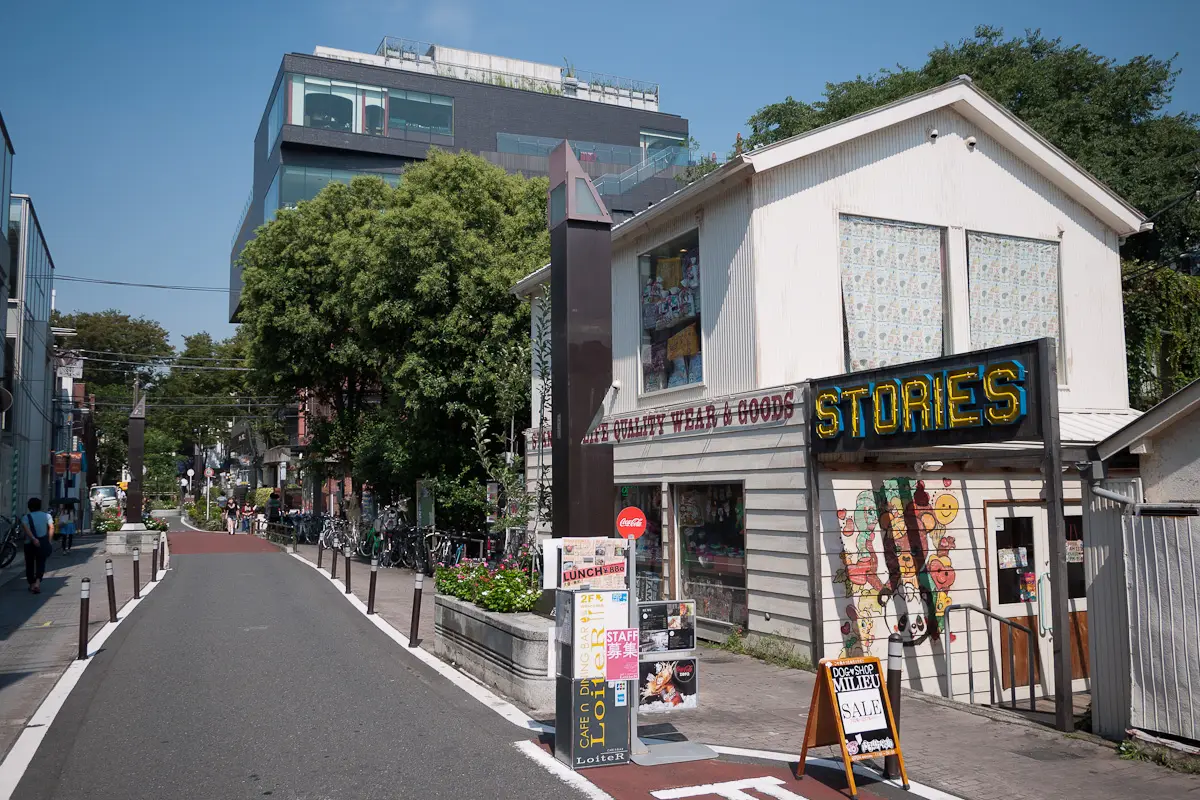
- Cat Street is the grown-up Harajuku. Tokyo's own tourism office calls it, simply, "the more grown-up version of Takeshita Street." It runs from Harajuku toward Shibuya, lined with vintage shops and small boutiques, and, unlike Takeshita, it breathes. Of all the places the visitor voices name, this one comes up most (12 of the 99), and it is a short walk from the crush.
- The backstreets of Ura-Harajuku are where the creativity went. Off the main lanes, the small independent shops that made Harajuku a fashion name in the first place are still there for anyone willing to wander. "That's where the cooler indie shops are," as one resident of Japan put it. There is no map for this; the wandering is the point.
- Omotesando is the calm, leafy counterweight. The broad tree-lined avenue was, originally, the formal approach to Meiji Jingu. Tokyo's tourism site lines it up as the city's answer to a grand European boulevard, with the flagship stores of the world's fashion houses. If Takeshita is the loud teenager, Omotesando is the composed older sibling, about ten minutes on foot from Harajuku Station.
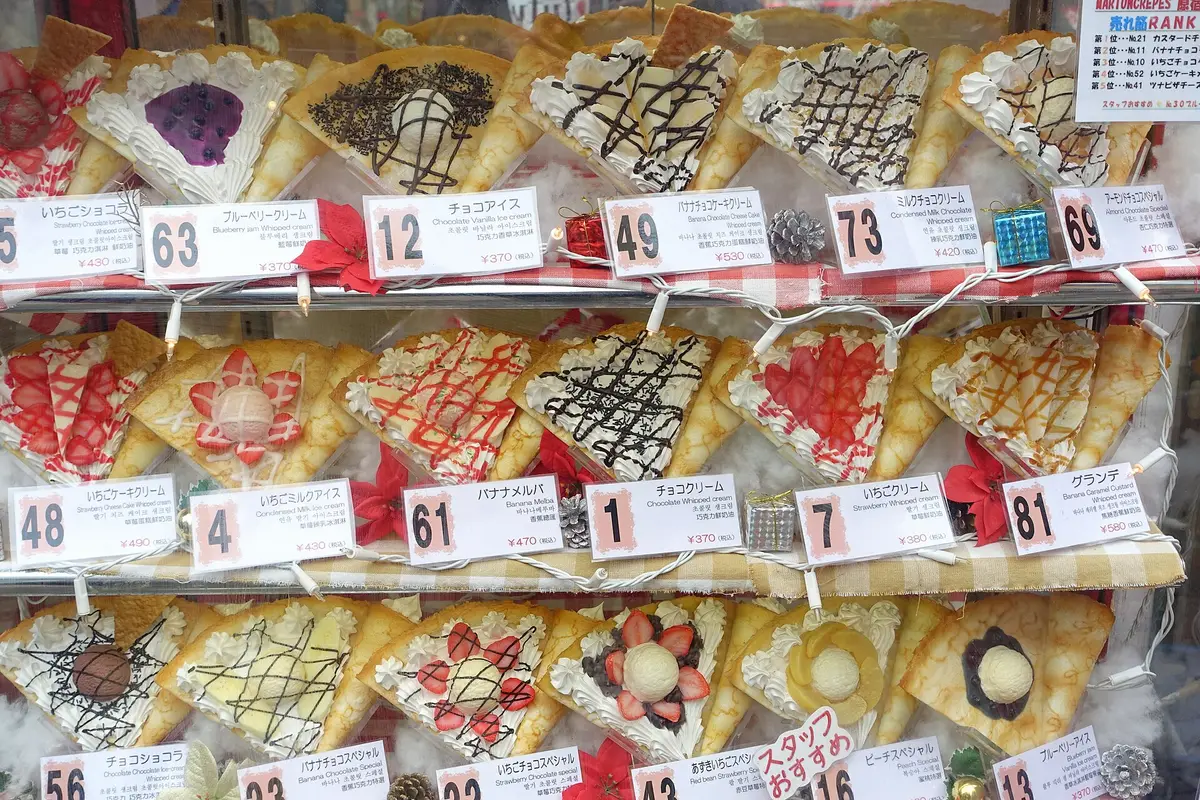
- Takeshita Street itself, done right, is genuinely fun. Come on a weekday morning instead of a weekend afternoon, buy a crepe (the street is often credited with Japan's first crepe stand, back in 1977), and let the color carry you. "Walking down Takeshita Dōri in its prime is an experience all on its own." Just treat it as the doorway. The whole house waits one street over.
How to Enjoy Takeshita Street
Takeshita Street works, even at its busiest, because thousands of people extend each other small courtesies at once. You can be part of that, and the voices, foreign and Japanese alike, are quietly clear about how.
- Come on a weekday, and come early. "On weekends so many people visit that it's hard to walk," as one Japanese review put it. Weekday mornings are when the same street turns browsable and kind.
- When the crush hits, the cure is one street over. You are never trapped. The moment Takeshita stops being fun, slip out a side lane into Ura-Harajuku or Cat Street, where the same neighborhood turns calm and roomy.
- In the crowd, keep left and keep moving. The street's merchants' association asks, in Japanese and English, that everyone keep to the left and move in one direction to prevent congestion. Stopping dead in the middle of that flow, for a photo or anything else, works against it, so take your picture from the edge, or on the move.
- Finish your crepe near the shop you bought it from. A crepe is walking food, but when the street is packed, the gentle move is to eat it close to the stand rather than trailing it through the crush. The etiquette around eating while walking is softer than many visitors fear, and this is one of the most relaxed streets for it.
- Bring the right expectation, and Takeshita can't disappoint you. It is a teenagers' street, bright and cheap and loud, and it is wonderful at being that. "If you're old enough to be married, Harajuku probably isn't for you," one Reddit commenter half-joked, and the grown-up Harajuku is one block away. Knowing which street is which is the whole secret.
Why a teen crepe alley became famous
It helps to know what you are actually standing in. Takeshita Street is 350 meters long, the front door to one of the most famous corners of young Japan, and for almost fifty years it has been where teenagers came to try on a louder version of themselves. The crepe stands have been here since 1977. The kawaii banners, the cheap fashion, the purikura booths: all of it is aimed, precisely and unashamedly, at the young.
The creativity that made Harajuku a legend (the wild street fashion, the subculture the whole world came to see) did not die. It dispersed. "The people who made Harajuku trendy back in the day no longer have anything to do with Harajuku," one visitor wrote, and they were, as the same voice put it, chased out by the throngs. A few Japanese reviewers mourn the change too; one remembers when students lingered outside the shops at night and the street felt stylish rather than noisy. But what they are describing is not an ending. The scene moved into the backstreets, into Cat Street, into a thousand small shops that never make the postcards. The famous street stayed famous, and the interesting part quietly walked one block over, which is exactly the walk this whole page is asking you to take.
So: is Harajuku worth it? If you mean stand in the middle of Takeshita Street on a Saturday and expect the legend, the forums will warn you off, loudly, and more than a third of the foreign voices here agree. But if you come on a weekday, buy a crepe, and then step one street into Cat Street, the backstreets, and Omotesando, you will have done exactly what the people who love it did. Harajuku was never one crowded lane. It is a neighborhood, and the best of it is always one block off the crowd.
Still deciding which famous places actually earn a slot on a short trip? Start with what actually matters in Japan. For the full walk (the Takeshita arch, the crepes, Cat Street and the tree-lined calm of Omotesando), the Harajuku audio guide is just below.
Sources
- GO TOKYO (Tokyo Convention & Visitors Bureau): Harajuku, "Birthplace of kawaii (cute) culture" and "the land of free-spirited fashion"; Cat Street described as "the more grown-up version of Takeshita Street."
- GO TOKYO: Takeshita Street, the 350-meter lane directly across from JR Harajuku Station's Takeshita Exit; crepes and purikura; a young, inexpensive shopping street.
- GO TOKYO: Aoyama & Omotesando, Omotesando as a tree-lined boulevard of flagship fashion stores, the city's answer to a grand European avenue.
- JNTO (Japan National Tourism Organization): Harajuku, Harajuku's three main shopping areas named as Takeshita-dori, Ura-Harajuku, and Cat Street.
- JNTO: Harajuku & Omotesando, "If Harajuku is the cool teenager, then Omotesando is the more mature and sophisticated older sibling."
- niponica (published for Japan's Ministry of Foreign Affairs): Crepes, the shop often credited as Japan's first crepe stand opened on Takeshita Street in 1977.
- Takeshita Street Merchants' Association, official request to keep to the left and move in one direction during heavy crowds.
WMJS is written in Japan, in English, with AI help. We check every page, but English is not our first language. If a sentence reads oddly, tell us. One sentence is enough.
Thank you. A person reads every note.
How well do you know Japan?
Built from 635 public posts by Japanese people
Want to know more? Ask Japanese people
Have a follow-up question about this topic? We'll ask real Japanese people.
Voice Box →