
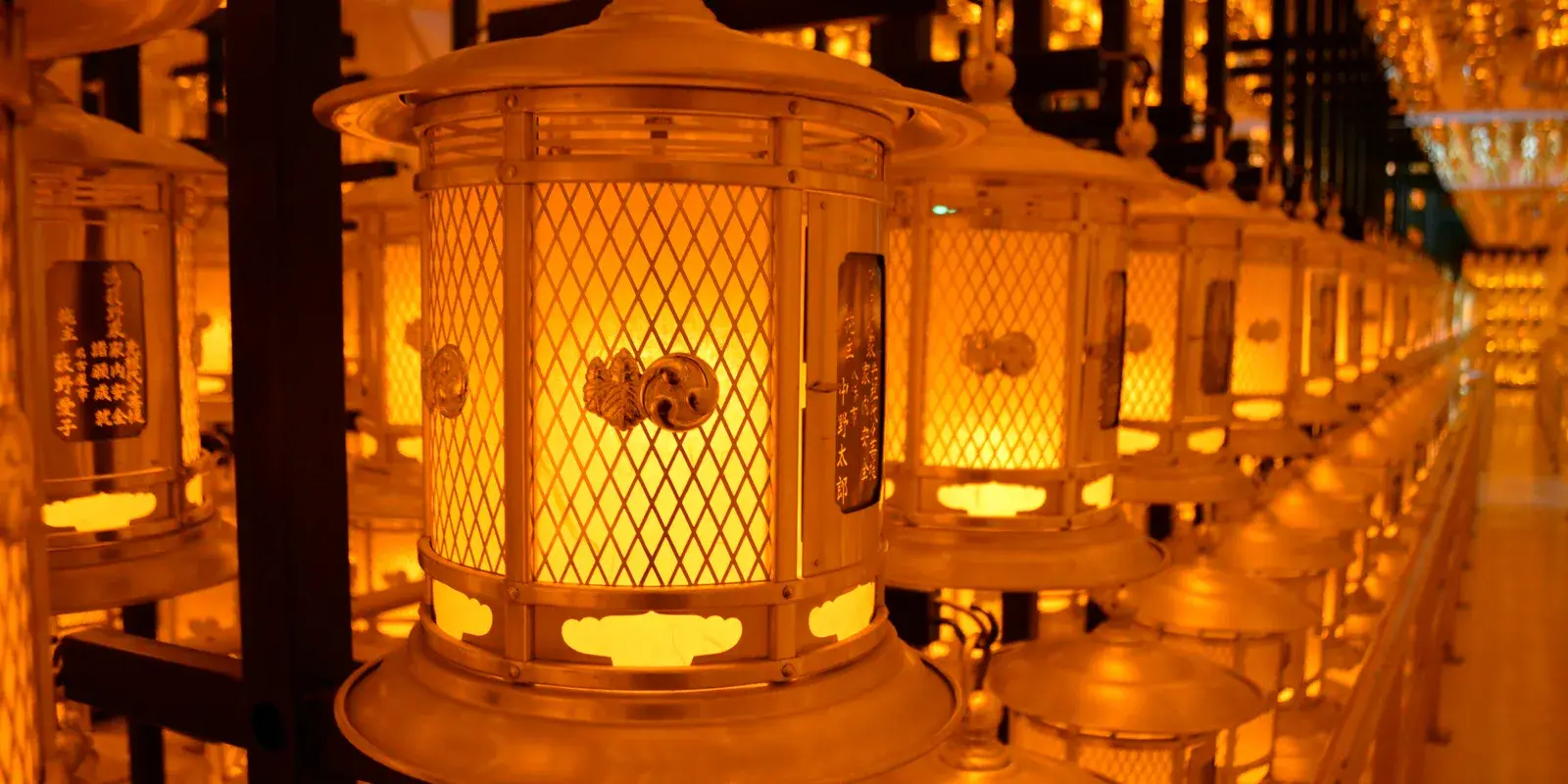
Is Koyasan Worth It? What Visitors, and the People Who Stay the Night, Actually Say
It is the first question almost everyone asks about Mount Koya: is it worth the trek? Two hours or more each way from Osaka, a chain of train, cable car and bus, and a night in a temple that travelers report costing several times a normal hotel room. So you do the math, and you wonder whether to just rush the famous cemetery on a day trip and head back.
Here is the short answer: yes, but Koyasan is the rare place where the day trip quietly optimizes away the reason to come. The people who feel let down almost never disliked the mountain. They rushed it.
Is it worth the trip? (in visitors' own words)
We gathered the voices of international travelers who have actually been to Koyasan and read them with one question in mind: was it worth it? Weighted by how strongly each opinion resonated with other readers, here is how they fell:
Look at the shape of that, because it is the whole point. Only one in eight came away disappointed, and the biggest band is the it depends, even bigger than the yes. For Koyasan, the real question was never whether it's worth it. It's how you do it. The travelers in that 35% almost all say the same thing one of them put plainly: "It's too much traveling for a day trip in my opinion, but it is worth visiting if you can stay for the night." Another was blunter: "I wouldn't recommend a day trip to Koyasan unless you really, really want to see the sights but don't care about the shukubo part. The draw for most tourists is the temple stay. Without that, there's just a rather long walk through a cemetery... and a lot of temples you mostly can't go into."
And the thin red sliver? It is mostly that same lesson, learned the hard way. One traveler, after a day trip from Osaka: "It's about two and a half hours both ways. It's just way too much time to rush through the attractions. Hopefully when we go back we can actually spend a night, and take our time." The ones who stayed sound completely different. "We both thought it was absolutely worth it," wrote one. "Koyasan is worth the trek if you're going for the right reasons. If you're going for Instagram photos, this is not the place for you." Another, simply: "Okuno-in is one of the most astonishing places I've ever experienced."
How the people who treat it as a pilgrimage feel
What follows is something most guides skip entirely: what Japanese visitors and locals say, in their own reviews, about the same mountain.
Notice the red bar has almost vanished, down to 2% against the visitors' 12%. That gap is the most useful thing on this page, and it isn't because Japanese visitors are easier to please. It's because they tend to arrive already doing the thing the let-down travelers wish they'd done: they stay the night, and they go early. One reviewer in his sixties put his finger on exactly what the day trip misses: "Tasting the crisp, dignified early-morning atmosphere is a privilege reserved for overnight guests."
Their let-downs, when they come, are revealing. The rare red voices aren't "Koyasan wasn't worth it." They're things like a guided night tour that felt overpriced for an hour's stroll. And one Japanese visitor, on his first trip back in 55 years, even spotted the visitors' trap for you: at lunchtime, he wrote, "many of the eating places were closed, and besides us, many people seemed troubled. The inbound visitors especially must have been disappointed." The disappointment foreigners feel and the serenity locals feel are, very often, the same Koyasan seen at two different hours and two different speeds.
What the mountain actually gives you
The warmth in those reviews keeps landing on the same handful of things, and almost none of them are the daytime checklist.
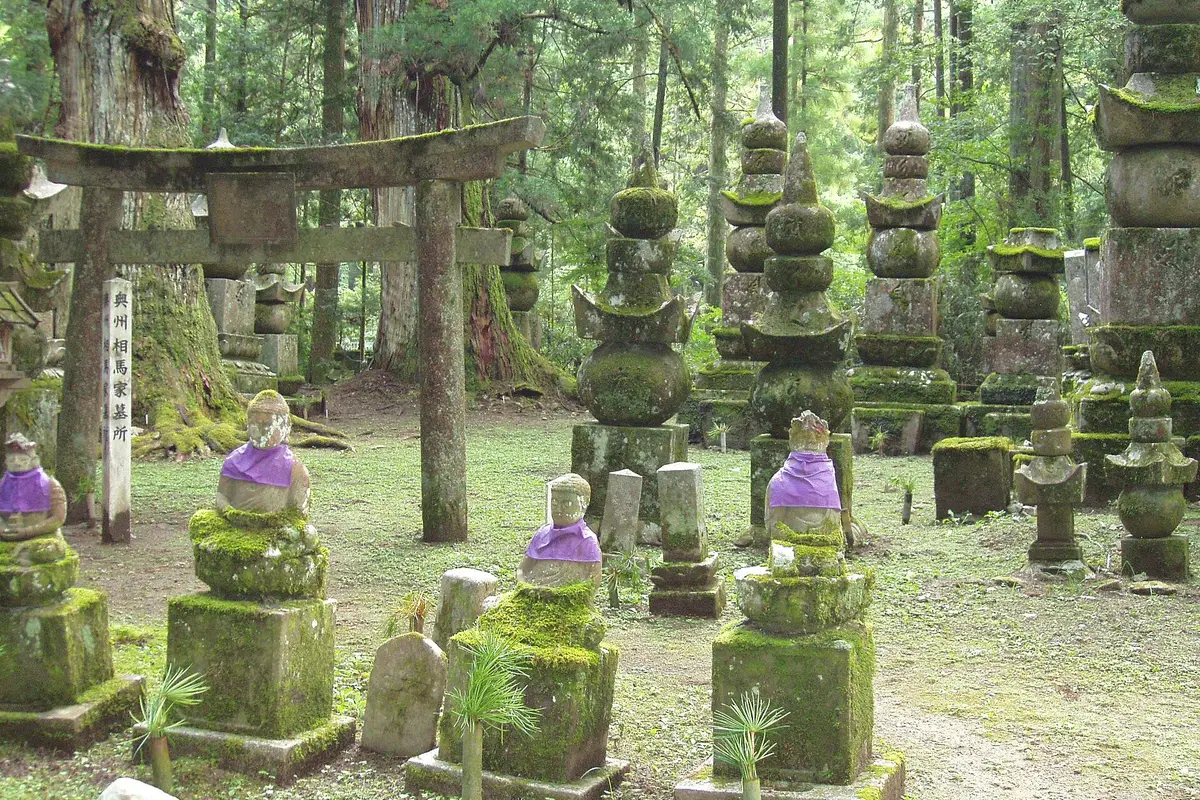
Okunoin, at the quiet hours. A two-kilometer path runs under cedars so old the morning light arrives in shafts, past more than 200,000 memorial stones, to the mausoleum where the temple believes Kobo Daishi remains in eternal meditation, and where monks still carry him a hot meal twice a day, as they have for over 1,200 years. "Okuno-in is one of the most astonishing places I've ever experienced," one visitor wrote; a Japanese reviewer added that "the night Okunoin is another world entirely." It is the same path the day-trippers walk at noon. It is not the same experience.
The shukubo and the morning service. Of the mountain's temples, around fifty take in overnight guests. You sleep on a futon in a working temple, eat shojin ryori (the meat-free Buddhist cuisine), and, if you like, join the monks' dawn service and goma fire ritual. One traveler called the morning prayers "mesmerizing... almost trance-like to watch the huge fire." A Japanese guest summed up the surprise many feel: "My image of a temple lodging completely changed. I'd stay again."
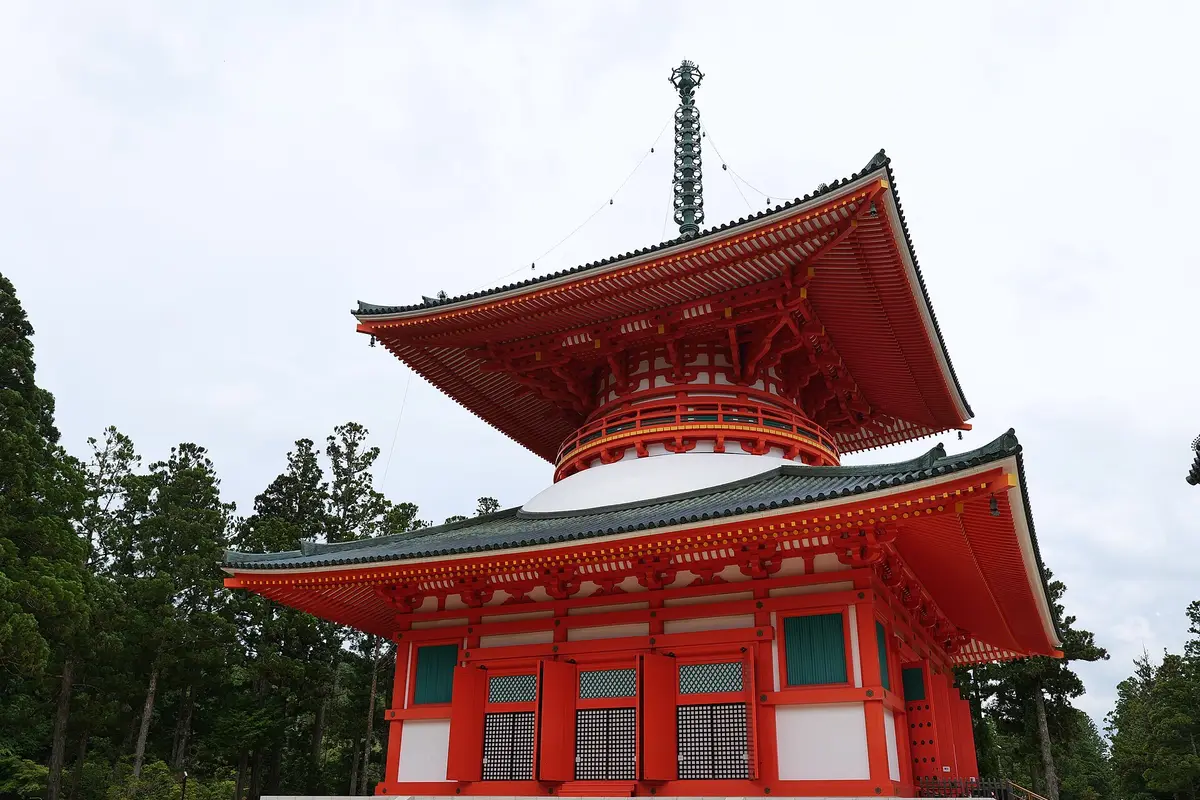
The Danjo Garan. The sacred precinct where Kukai began building, crowned by the vermilion Konpon Daito pagoda, described by one local review as "the most overwhelming place in all of Koyasan," with a three-dimensional mandala inside that "is a must-see."
How to visit well
Everything above resolves into a few choices that put you in the 53% instead of the 12%.
- If you can, stay the night. This is the single clearest signal in every review, foreign and Japanese alike. The dawn-and-dusk Okunoin, the morning service, the fire ritual, the slow shojin dinner: these are Koyasan, and the day trip is the one version that cuts them out. As one visitor warned: "everyone on Instagram advertises it as a great day trip from Kyoto or Osaka, and it really isn't."
- Walk Okunoin early, before the buses. "Not too crowded in the morning before the buses come in," one traveler noted. The crowds the disappointed reviewers describe are a midday phenomenon. The hush they came for lives at the edges of the day.
- Come for reverence. Past the small bridge called Gobyobashi, phones go away and voices drop, out of respect for a living religious and burial site rather than a museum exhibit. Read that quiet as the welcome it is, and a simple bow at the bridge is all it takes to belong there.
- Pack the right expectations for the shukubo. It is a working temple, not a resort: simple rooms, a shared bath that closes early, a curfew, a modest meal. Travelers who arrived expecting a luxury inn are the ones who wrote that it was "a lot of money... not what we expected." Travelers who arrived expecting a temple found it unforgettable. The simplicity isn't a shortfall; it's the point. (If the rhythm of a Japanese inn is new to you, the way a ryokan welcomes a guest is a gentle place to start.)
- Do five minutes of homework on what's open. Lunch spots close unpredictably and individual halls close for repairs; a Japanese reviewer who missed the Lantern Hall to construction simply wished she'd "looked it up before going." A snack in your bag and a glance at the calendar prevent the most common small letdowns.
- Let the long way be part of it. The train-cable-car-bus chain sounds harder than it is, and the Koyasan World Heritage Ticket folds the whole thing into one purchase. The travelers who love Koyasan tend to describe the slow climb not as the obstacle before the experience, but as the first hour of it: the time it takes for the world below to fall away.
In the end, is it worth it? If you want to rush up, photograph a cemetery at noon, and rush back, honestly, maybe not; there are easier mountains. But give Koyasan a night and a dawn, treat it as the thousand-year prayer it still is, and you join the overwhelming majority, both visitors and pilgrims, for whom it becomes the quietest, most astonishing part of the whole trip.
Still deciding which famous places actually earn a slot on a short trip? Start with what actually matters in Japan. For how to reach the mountain, choose a shukubo, and spend the night and the dawn, our full Koyasan audio guide is just below.
Sources
- Kongobu-ji: Head Temple of Koyasan Shingon Buddhism (Official, English): founding by Kukai, Shingon esoteric Buddhism, the belief that Kobo Daishi remains in eternal meditation, Okunoin and the mausoleum.
- Kongobu-ji Official: Highlights / 見どころ (Japanese): the ~2 km Okunoin approach, the 200,000+ memorial stones, the Torodo Hall of Lanterns, the Konpon Daito.
- Kongobu-ji Official: Column / もっと知りたい!金剛峯寺 (Japanese): the meals offered to Kobo Daishi twice daily (6:00 and 10:30) for more than 1,200 years without a missed day; the count of temples and shukubo.
- Kongobu-ji Official: Guidelines for Visits (English): modest dress at the Garan and Okunoin, the designated no-photography areas, the bow at sacred thresholds.
- Koyasan Shukubo Association (Official, English): what a shukubo is, the reservation method, the number of temple lodgings, and the 2004 World Heritage inscription.
- JNTO (Japan National Tourism Organization): Koyasan Shukubo / Temple Lodging: temple lodging, shojin ryori, the otsutome morning service, and the World Heritage context.
- UNESCO World Heritage Centre: Sacred Sites and Pilgrimage Routes in the Kii Mountain Range (2004): the World Heritage inscription that includes Koyasan.
- Nankai Electric Railway: Koyasan World Heritage Ticket (English): the Nankai Koya Line, Limited Express Koya, cable car, mountain bus, and the World Heritage Ticket that bundles the connections.
WMJS is written in Japan, in English, with AI help. We check every page, but English is not our first language. If a sentence reads oddly, tell us. One sentence is enough.
Thank you. A person reads every note.
How well do you know Japan?
Built from 635 public posts by Japanese people
Want to know more? Ask Japanese people
Have a follow-up question about this topic? We'll ask real Japanese people.
Voice Box →