Tokyo & around, an easy few days
The capital and its day trips — old-city Tokyo, seaside Kamakura, mountain Nikko — at a comfortable pace
Last verified: 2026-06-10
Who this plan suits
- First tripGreat fit
- Been beforeWorks well
- With kidsGreat fit
- SoloGreat fit
- As a coupleGreat fit
- Gentle paceWorks well
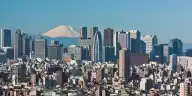
Good all year; spring blossom and autumn colour are the prettiest, and clear winter days give the best Mt Fuji views.
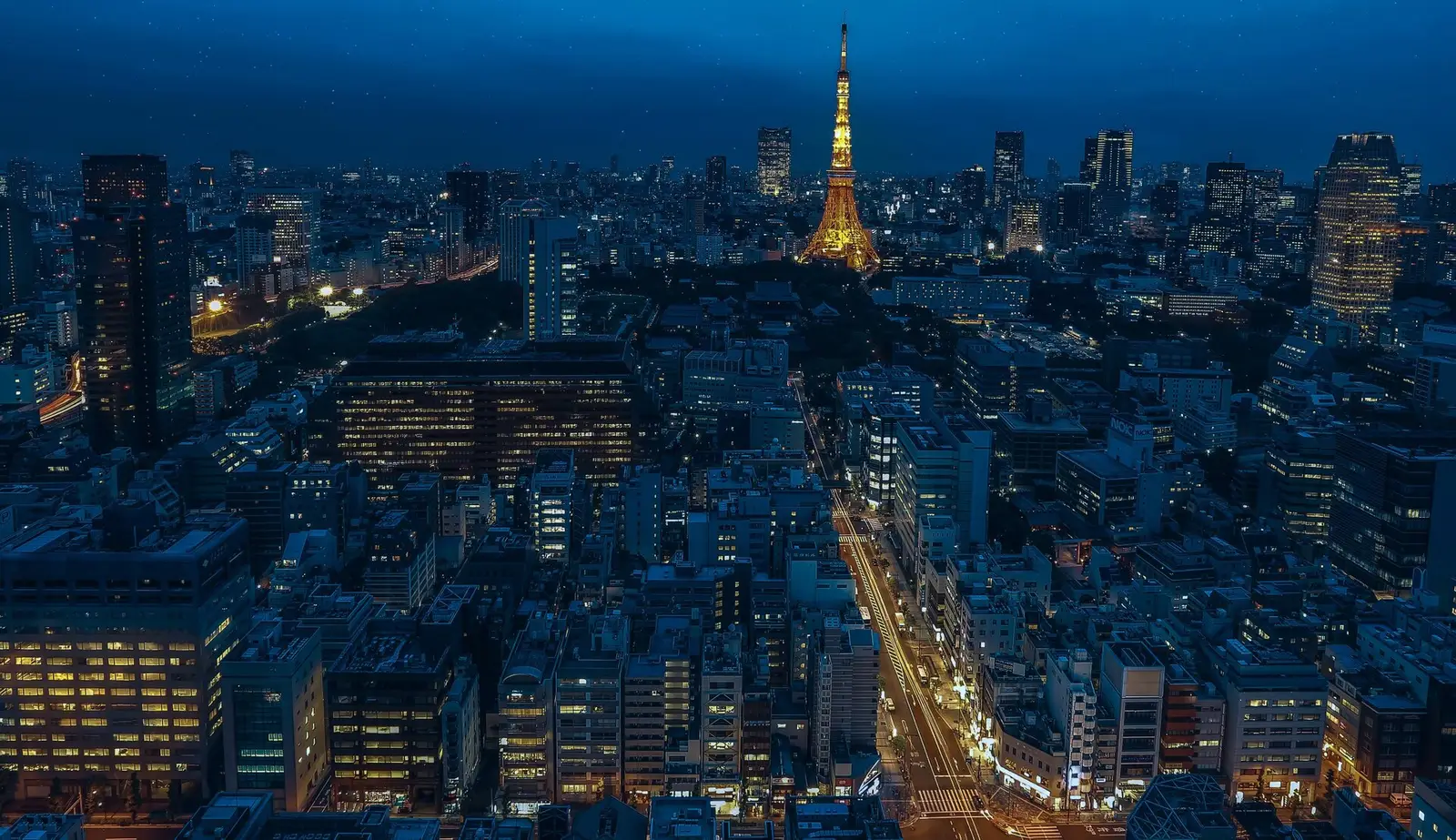
Tokyo can sound overwhelming — it's the biggest city most people will ever stand in — but the part you came to feel sits inside one train loop and a few easy day trips. I'd hold this as a loose four-day frame rather than a checklist: two days in Tokyo itself, the old low-city east on one and the green, young heart of it on the other, then two days out — to the sea-and-temples of Kamakura and the mountain shrines of Nikko. Most people land at Haneda or Narita, or arrive by Shinkansen into Tokyo or Shinagawa Station; from any of those doors the loop below is yours, and it all runs back to a single base on one tap of one card.
The thing that makes Tokyo feel warm instead of huge is how quietly it's organised around not crowding each other — the hushed carriage, the tidy queue on the platform, the lane everyone leaves clear on the escalator. You don't have to study any of it; you just fall into the rhythm, and the city softens around you. So I wouldn't be precious about the plan. If a day runs long, fold it shorter. If one back lane in Asakusa or one hillside in Kamakura holds you, stay in it. I'll lay out how I'd move and where I'd sleep, and you can pull the pieces apart and put them back together however your trip wants to go.
Where to base yourself
I'd base in Tokyo for the whole trip and let the trains do the commuting — every day trip here is a day-return, and the city's own loop, the JR Yamanote Line, threads most of what you'll want together. As in Kyoto, the real question isn't which neighbourhood so much as which station you sleep near, because the nearest line decides how easy your mornings feel.
If I wanted everything to feel one-tap simple, I'd base around Shinjuku or Tokyo Station. Both are giant interchange hubs where the Yamanote loop meets the lines out of town — Shinjuku is the launchpad for the Odakyu Romancecar to Hakone and the trains toward Mt Fuji, while Tokyo Station is where the Shinkansen and the Yokosuka Line down to Kamakura begin. The trade-off is atmosphere: both are businesslike and busy rather than old-Tokyo.
If I wanted to wake up in old Tokyo, I'd choose Asakusa. You'd be walking distance to Senso-ji and the low-city lanes, and Asakusa is also the departure point for the Tobu Limited Express straight to Nikko — so the temple side of this trip is right outside your door. It's quieter and older-feeling; the trade-off is that the western sights are a longer ride across town.
If I wanted the young, green centre, I'd stay around Shibuya or the south side of Shinjuku — a short walk or a stop from Meiji Jingu and Harajuku, with the Yamanote loop running both ways around the city. It's the all-rounder for people-watching and late dinners.
One quirk worth knowing wherever you base: the JR Yamanote Line is a loop. Tokyo, Shinjuku, Shibuya, Harajuku, Akihabara and Ueno are all beads on the same circle, so wherever you sleep on it, the others are a single ride away in one direction or the other. That's what makes a single base work for the whole city.
Getting around & tickets
The first thing I'd sort is an IC card, and then you can mostly stop thinking about tickets. It's a prepaid, rechargeable smart card: you tap it entering a station and tap again leaving, and the fare works itself out and is deducted automatically. Tokyo's home card is Suica (from JR East), but you don't need a specific one — a PASMO from the Tokyo private railways, an ICOCA carried up from Kansai, or any of the other regional cards all work here too, because they're mutually interoperable across the country.
What it taps on for this trip: JR lines (including the Yamanote loop), the Tokyo Metro and Toei subways, the private railways you'll ride out to the day trips, city buses, and most convenience-store and vending-machine purchases — anywhere you see the IC mark.
Buying it: a regular Suica carries a small refundable deposit; if you're visiting short-term there's also a Welcome Suica made for overseas visitors with no deposit (you just don't get leftover balance back), plus a mobile version you can load onto a phone. I've put the deposit details in the fact box, and in my experience it's easiest to top up with cash at the station machines, so a few coins and notes are handy.
Two things an IC card does not do: it won't tap you onto the Shinkansen as a plain card (you register it with Smart-EX or buy a separate ticket), and you can't ride across two separate IC-card areas on one tap. Neither matters for Tokyo and its day trips — both only come up when you extend out west.
Do you need a pass? For a Tokyo-based trip, often not — tapping an IC card leg by leg is simple and you only pay for what you ride. But a few passes earn their keep on the right day:
- On a subway-heavy Tokyo day, the visitor-only Tokyo Subway Ticket (24, 48 or 72 hours of unlimited Tokyo Metro + Toei) can pay for itself in a handful of rides. It doesn't cover JR, though, so it suits days spent on the subway rather than the Yamanote loop.
- For the day trips, each line has its own value pass — the Enoden Noriorikun day pass around Kamakura, the Tobu Nikko Pass for Nikko, the Hakone Freepass for the Hakone loop — and these genuinely pay off, because they bundle the local trains, buses and boats you'll ride that day into one price. I've put the current prices in the fact boxes; I'd buy each one only on the day you'll actually use it.
Tokyo — the old east

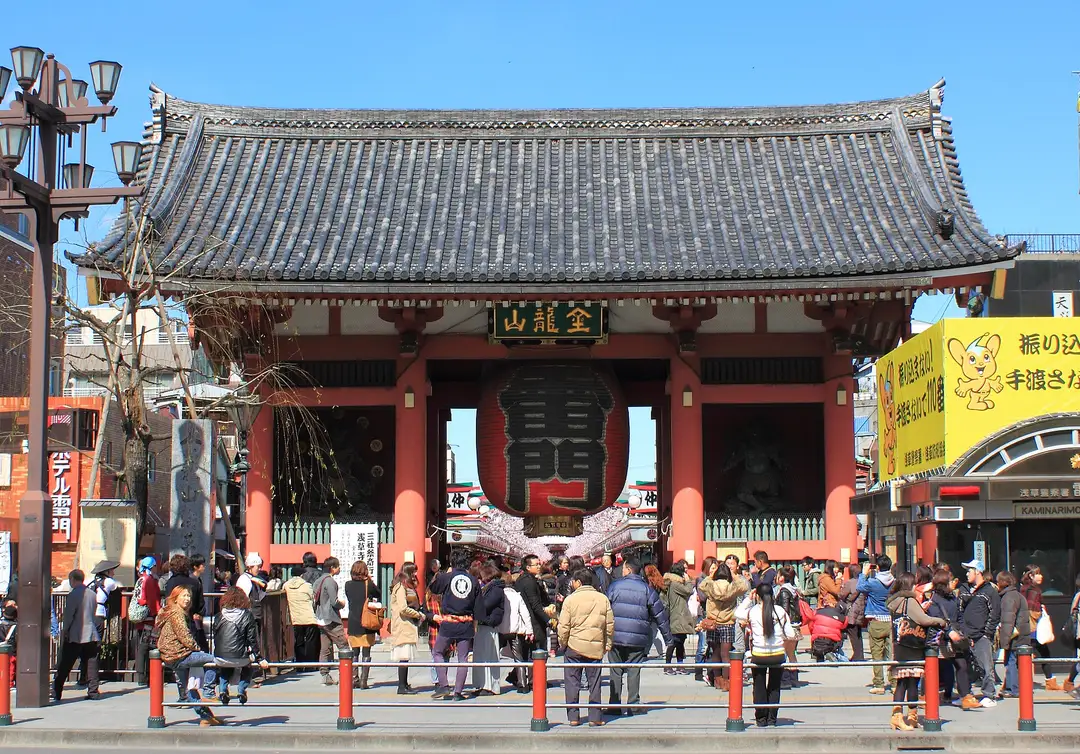
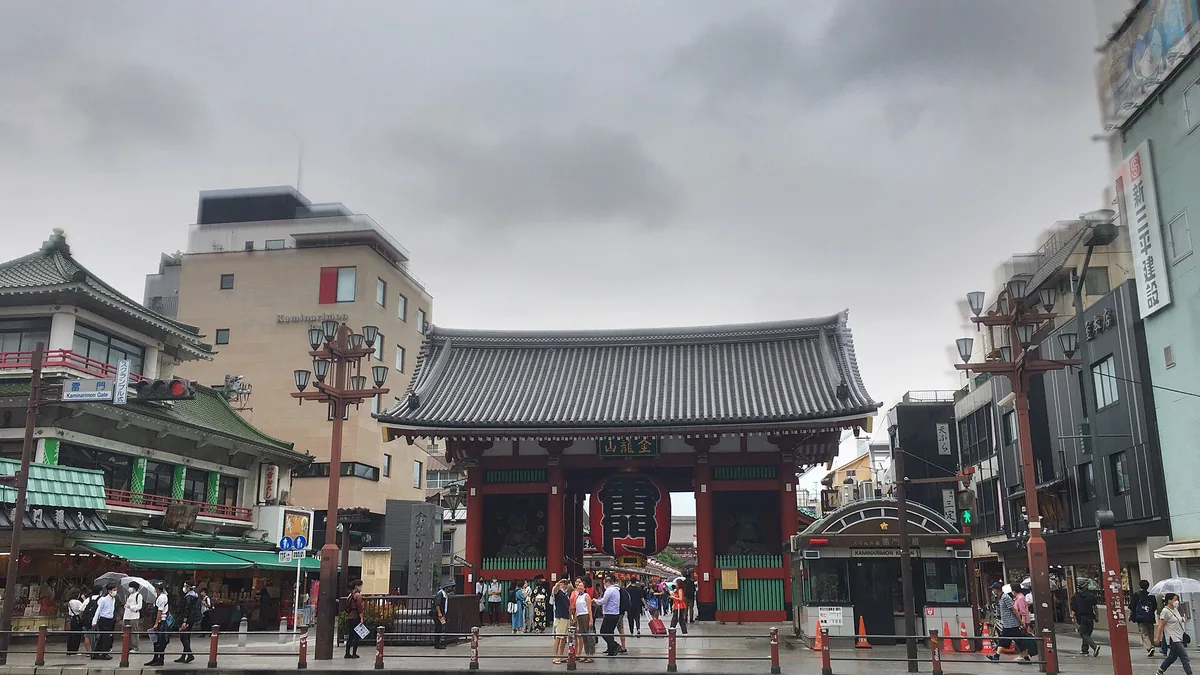
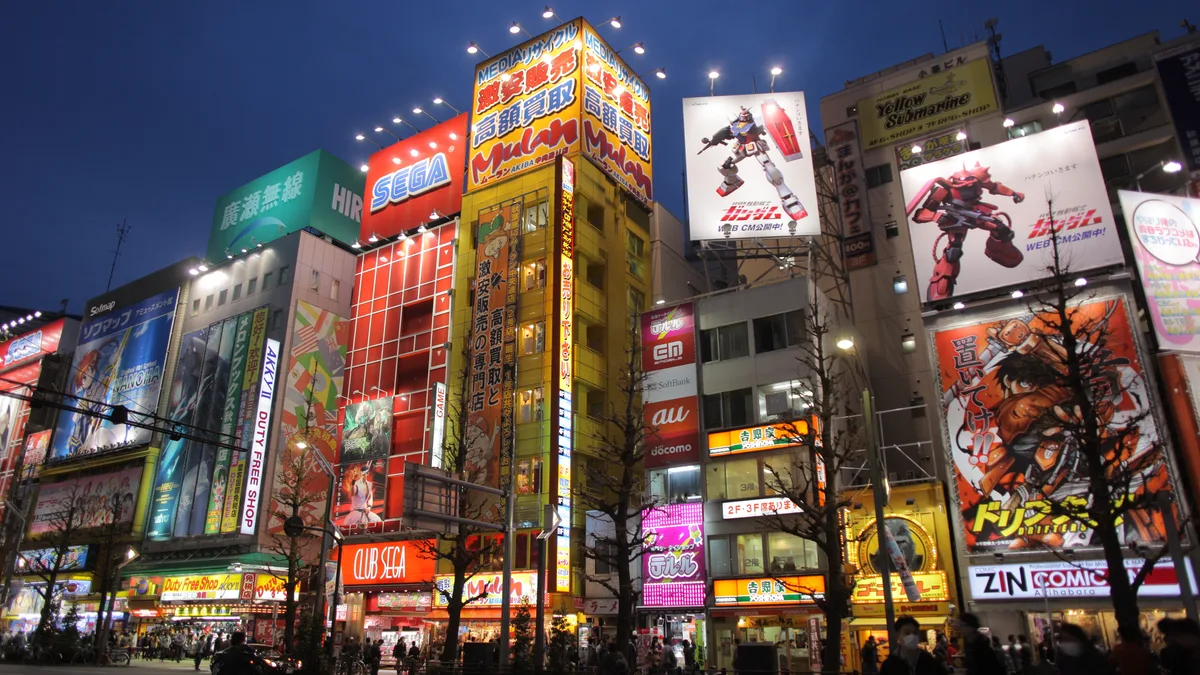
I'd give the first day to the low city — shitamachi, the old eastern wards where Tokyo feels less like a metropolis and more like a string of neighbourhoods. The heart of it is Senso-ji, the city's oldest temple, reached through the great Kaminarimon gate and a long arcade of tiny shops that has been selling snacks and charms to pilgrims for centuries. I'd go early, before the arcade fills, when the incense smoke is still settling and the shopkeepers are rolling up their shutters. From there the day can drift toward Akihabara — Tokyo's electric town, loud and bright and devoted to the things people love without apology. One gentle thing to carry through the morning: at the temple, people are praying, not posing — a small bow at the gate and a quiet phone, and you fold right in.
- 08:00Senso-ji, before the crowdsSenso-ji sits right by Asakusa Station, served by the Tokyo Metro Ginza Line and the Toei Asakusa Line — the Kaminarimon gate is a minute or two from the exits. Walk the Nakamise arcade up to the temple early; the lane is at its calmest before mid-morning. Linked guide: Senso-ji.
- Late morningWander the shitamachi lanesAround and behind the temple, the old back streets reward slow walking — craft shops, tiny eateries, the occasional rickshaw. No transit needed; this is the on-foot middle of the morning. By the Sumida River the Skytree stands across the water, a clean line of new Tokyo over the old.
- AfternoonAkihabara, electric townA short ride to Akihabara — on the JR Yamanote or Sobu Line, or the Tokyo Metro Hibiya Line. This is the city's electronics-and-anime quarter, floor over floor of it; you don't need to buy a thing to enjoy the sensory wall of it. Linked guide: Akihabara.
- EveningBack along the loopAkihabara sits on the Yamanote loop, so wherever you're based you're a single ride home. After a full first day on your feet, I'd let the evening stay easy.
Tokyo — the green centre and the new

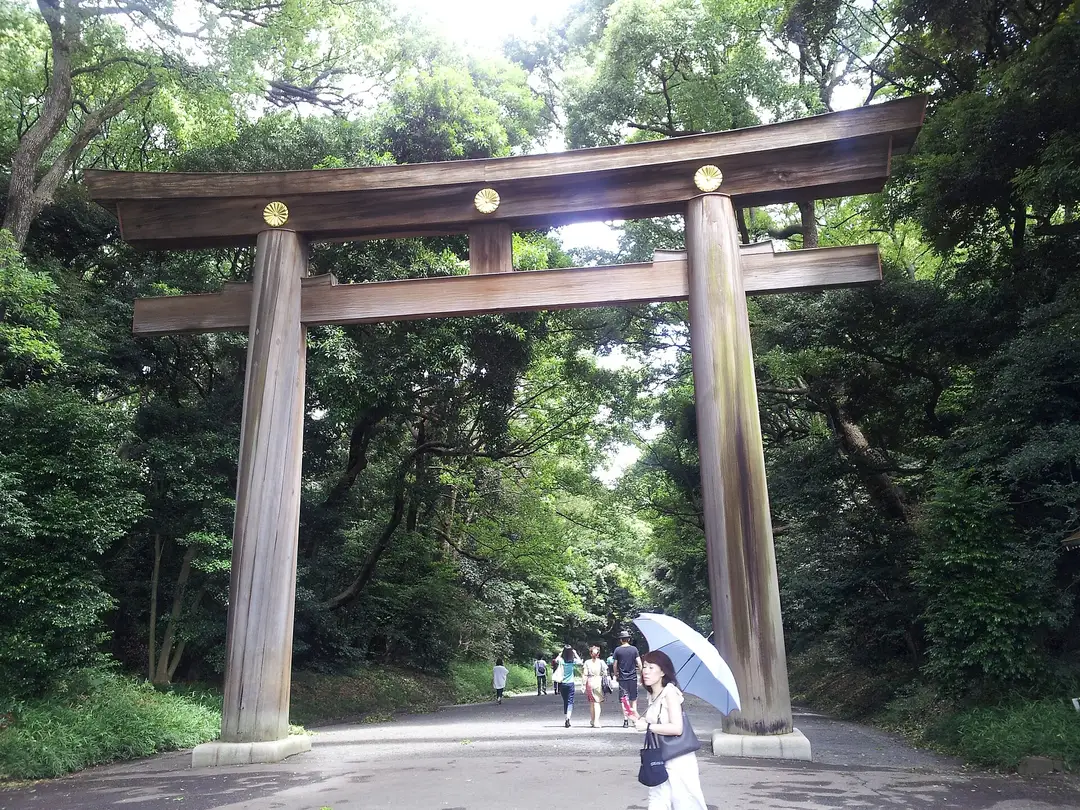
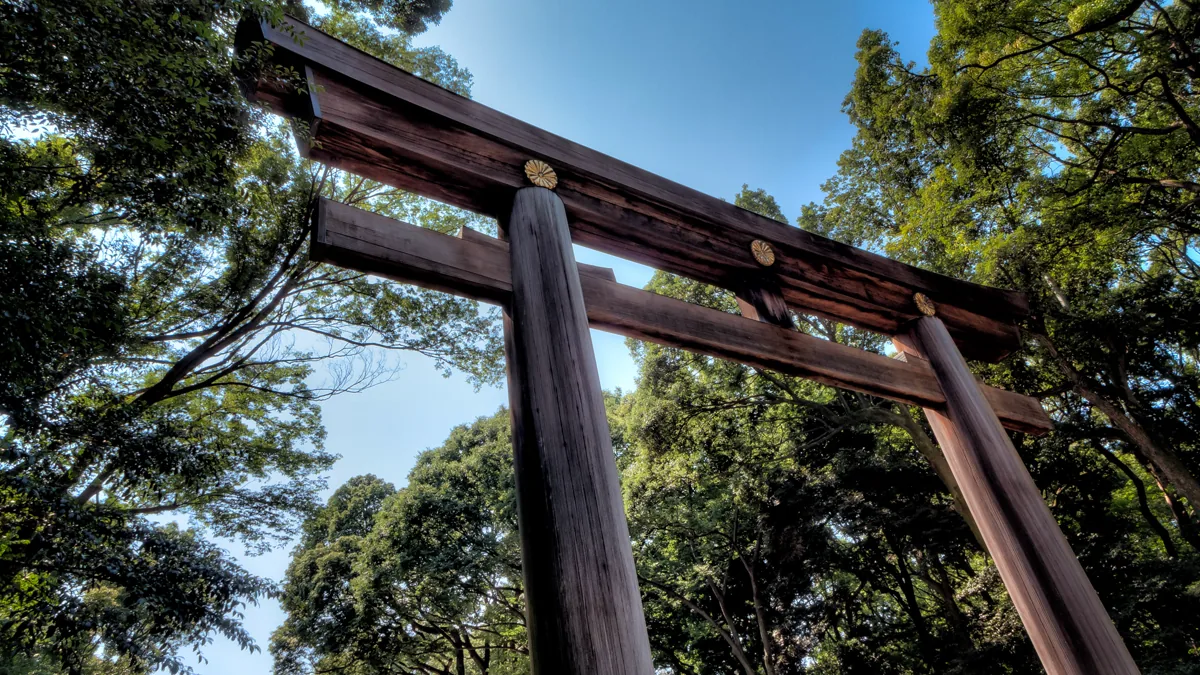
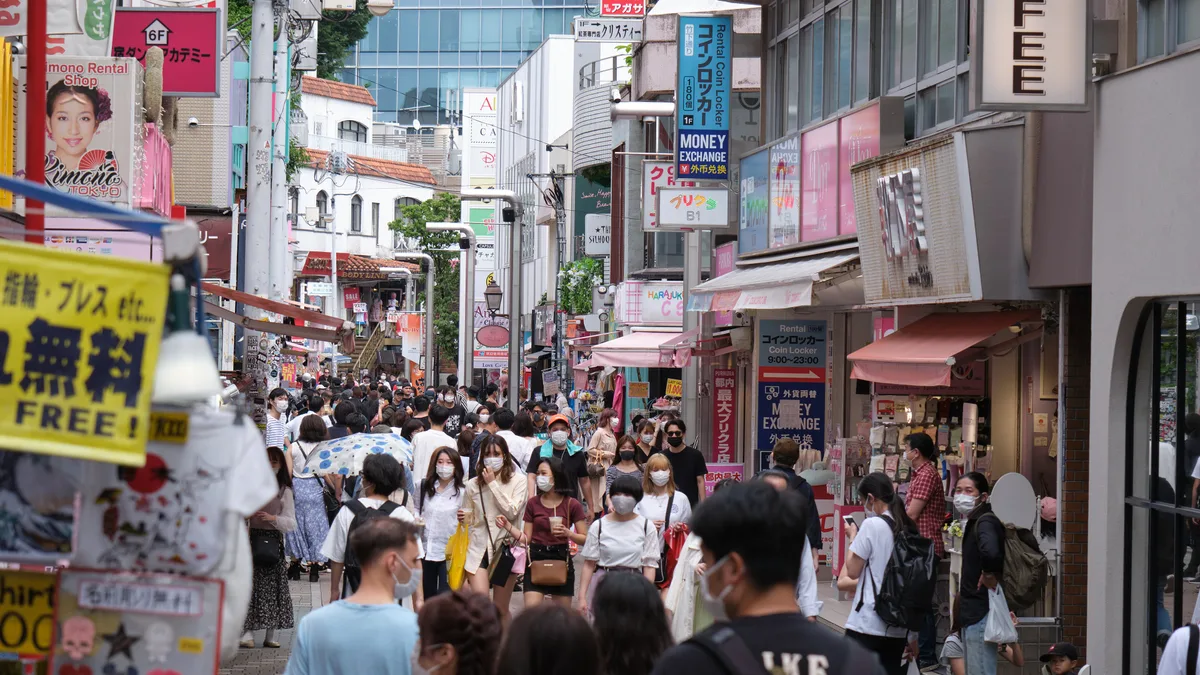
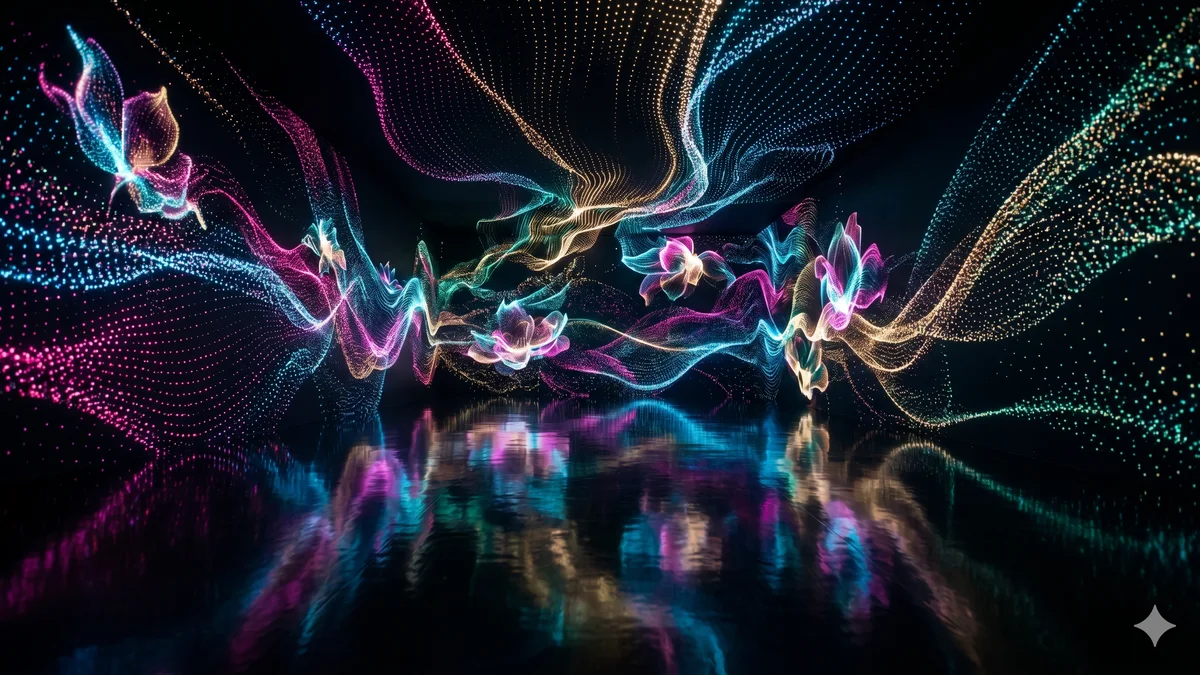
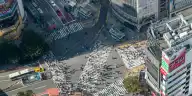
Day two I'd flip to the western, greener heart of the city and then let it build into Tokyo's bright, modern energy. Meiji Jingu is a forest shrine in the middle of the city — you pass under a great wooden gate and the traffic noise simply stops, replaced by gravel underfoot and tall trees. Step out the other side and you're in Harajuku, where the city's youngest, most playful self spills down Takeshita Street. From there the day flows downhill along the leafy boulevard of Omotesando into Shibuya — the scramble crossing where the whole city seems to move at once, the image a lot of people picture when they picture Tokyo. The forest shrine asks for stillness, the crossing asks for a different kind of wonder — and Tokyo holds both without blinking. If digital art pulls at you more than crowds, you could trade the afternoon for one of the teamLab worlds instead.
- 08:30Meiji Jingu in the morning hushThe closest door is Harajuku Station on the JR Yamanote Line, or Meiji-jingumae on the Tokyo Metro; the shrine entrance is right there. Walk the forest path in — a few minutes under the trees to the inner shrine — and go gently, since people come here to pray. Linked guide: Meiji Jingu.
- Late morningHarajuku and Takeshita StreetStraight out of the shrine and across the station, Takeshita Street is the narrow, candy-coloured spine of youth fashion and crepes. It's busiest in the afternoon, so mid-morning is a touch calmer. Linked guide: Harajuku.
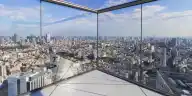
- AfternoonOmotesando down to ShibuyaFrom Harajuku it's a gentle downhill walk along Omotesando — Tokyo's tree-lined avenue of glass-fronted flagship stores — into Shibuya, or a single stop on the Yamanote loop if your legs are done. The scramble crossing outside the station is the one everyone films; Hachiko's loyal-dog statue waits on the corner, and Shibuya Sky lifts you to a rooftop view over the whole sprawl if you want the city from above. For the full story of the crossing and Hachiko's loyal-dog statue, there's the Shibuya guide; this is the on-the-ground version. IC card taps you between Harajuku and Shibuya. Or, if digital art is more your thing than crowds, book ahead and trade the afternoon for a teamLab world — Borderless in Azabudai or Planets in Toyosu, both timed-ticket (Planets is the barefoot-through-water one).
- EveningA Tokyo night in ShinjukuA few stops around the Yamanote loop brings you to Shinjuku for the evening — the neon canyon of Kabukicho, and the tiny lantern-lit lanes of Omoide Yokocho and Golden Gai, where dinner is a counter and a handful of stools. Wander it gently and follow what's lit. It's the loud, warm counterpoint to the morning's quiet forest — and an easy ride home on the loop after.
Kamakura — a day by the sea

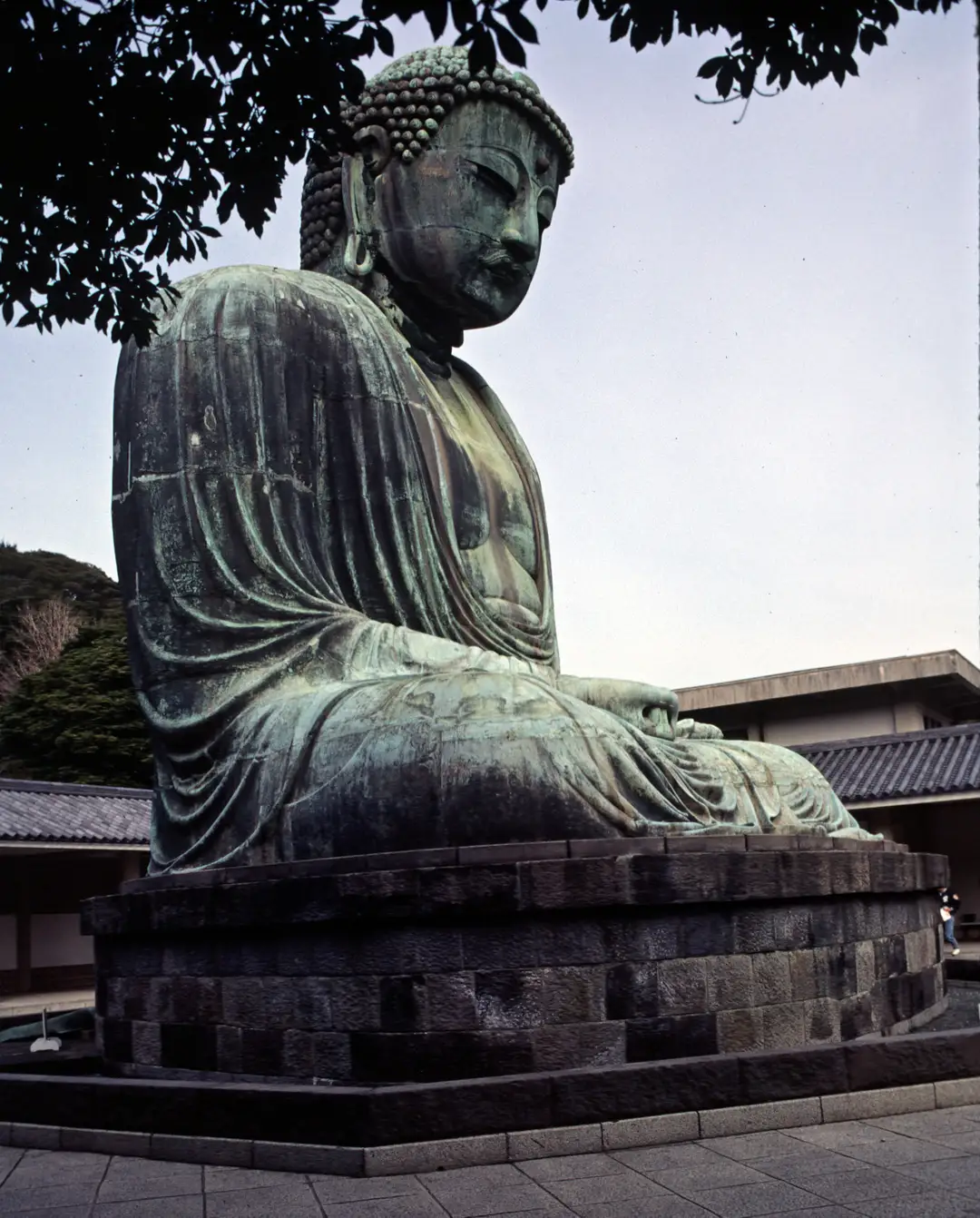
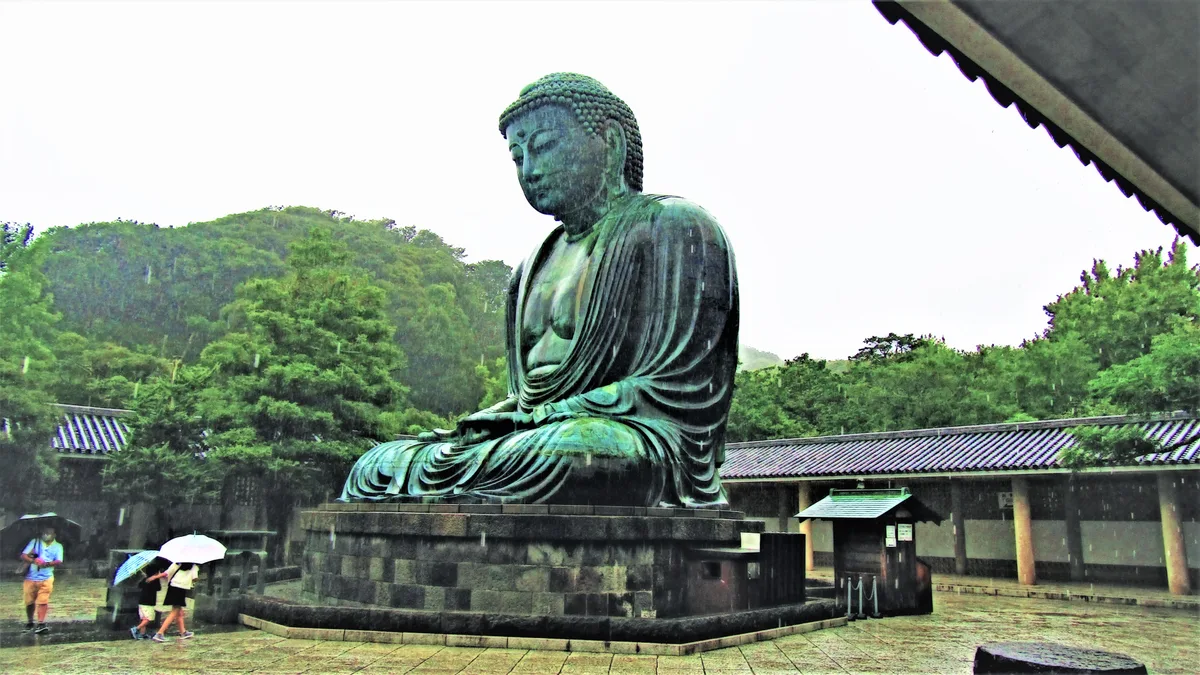
Kamakura is the easy day out to the south — a small seaside town that was once the seat of Japan's first samurai government, now full of temples tucked into green hills with the Pacific at the bottom of the streets. The heart of it for most people is the Great Buddha at Kotoku-in: a bronze figure that has sat out in the open air for centuries, ever since the hall built over it was washed away — there's something quietly moving about a giant Buddha that simply weathers the seasons under the sky. I'd ride the little Enoden tram between the sights; it rattles along the coast almost close enough to touch the houses, and the sea opens up between stops. A slow, salt-air counterpoint to the city.
- 09:00Out to KamakuraFrom central Tokyo it's about an hour: the JR Yokosuka Line runs direct from Tokyo Station and Shinagawa, and the JR Shonan-Shinjuku Line comes down from Shinjuku and Shibuya. An IC card taps you straight through. Times in the fact box.
- Mid-morningThe Great Buddha at Kotoku-inFrom Kamakura Station, hop the Enoden a few stops to Hase, then a short walk uphill to the Great Buddha at Kotoku-in. Hasedera, with its hillside garden and sea view, is a few minutes away. Linked guide: Kamakura.
- AfternoonKomachi-dori and the old townBack at Kamakura Station, Komachi-dori is the lively shopping street running up toward Tsurugaoka Hachimangu, the town's grand shrine at the head of a long approach. This is the wandering, snacking part of the day.
- Late afternoonThe coast, then backIf there's light left, the Enoden carries on toward Enoshima along the water — a lovely stretch at golden hour — before you retrace to Kamakura and ride back to Tokyo for the evening.
Nikko — mountains and gilded shrines

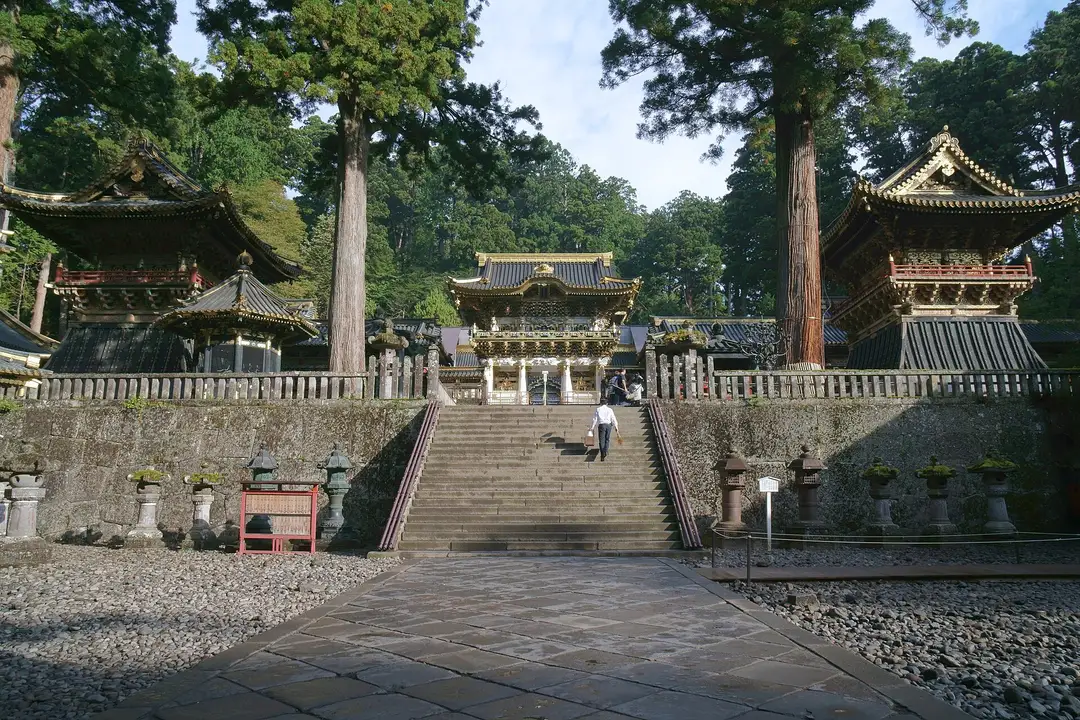
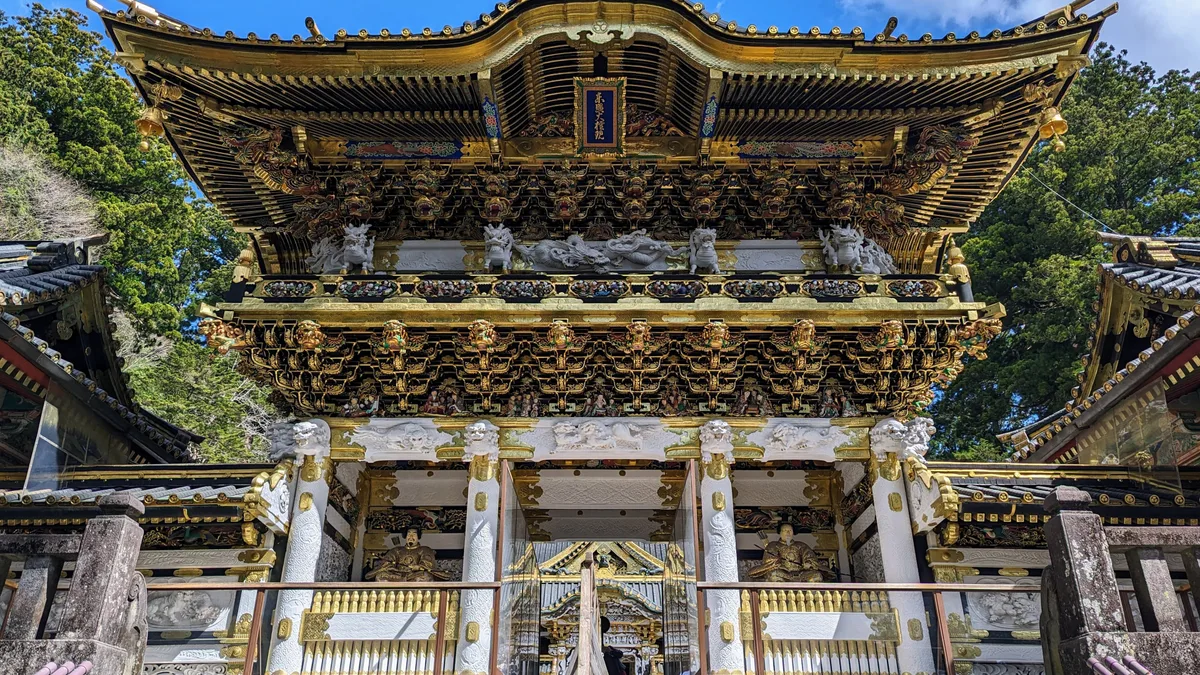
Nikko is the day trip north, up into the mountains, and it's a complete change of register from the city — cedar forests, waterfalls, and one of the most ornately decorated shrine complexes in Japan. Nikko Toshogu is the mausoleum of the shogun who unified the country, and unlike the restraint you'll have felt at other shrines it is gloriously, almost defiantly carved and gilded — gold leaf, painted beasts, and the famous three monkeys among them. There's an old line that Nikko is where the Japanese word for 'magnificent' was earned, and standing under the Yomeimon gate you feel where it comes from. Beyond the shrines, the cryptomeria avenues and the mountain air make the long ride out worth it.
- 08:00Out to NikkoNikko is about two hours out, and the classic way is the Tobu Railway Limited Express from Asakusa straight to Tobu-Nikko (a reserved-seat train). There's also a JR route via the Tohoku Shinkansen to Utsunomiya and the JR Nikko Line. Either way I'd start early — it's a long, rewarding day. Times and passes in the fact boxes.
- Late morningToshogu and the shrine precinctFrom Nikko's stations, a World Heritage tour bus (or a roughly 40-minute walk over the Shinkyo bridge) reaches the precinct. Toshogu, Rinno-ji and Futarasan sit together in the cedars; I'd give Toshogu the most time. Linked guide: Nikko.
- AfternoonUp toward Lake ChuzenjiWith time and good legs, the buses climb the hairpin Irohazaka road to Lake Chuzenji and Kegon Falls — the mountains behind the shrines. In autumn this is some of the most famous foliage in Japan; I'd check the bus times first, since the road is slow.
- EveningBack to TokyoRetrace to Tobu-Nikko or JR Nikko and ride back down to the city. It's a full day, so I'd keep the evening soft.
If you have one more day
+1 dayIf you've got an extra day, I'd offer two very different directions, and neither is the 'right' one — they just suit different moods.
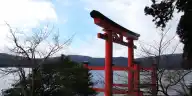
Out to Hakone for hot springs and, on a clear day, Mt Fuji. Hakone is the mountain onsen escape southwest of the city, reached by the Odakyu Romancecar from Shinjuku. The lovely part is the loop: a little mountain railway switchbacks up to a cablecar, then a ropeway floats over the steaming Owakudani valley, then a boat crosses Lake Ashi, where Fuji rises above the far shore when the weather's kind — and a single Hakone Freepass covers the whole circuit. The way to do it justice is to stay a night in a ryokan and soak. (Mt Fuji has its own WMJS guide under the Chubu region; the Fuji Five Lakes are reached on a separate line, not the Hakone loop.)
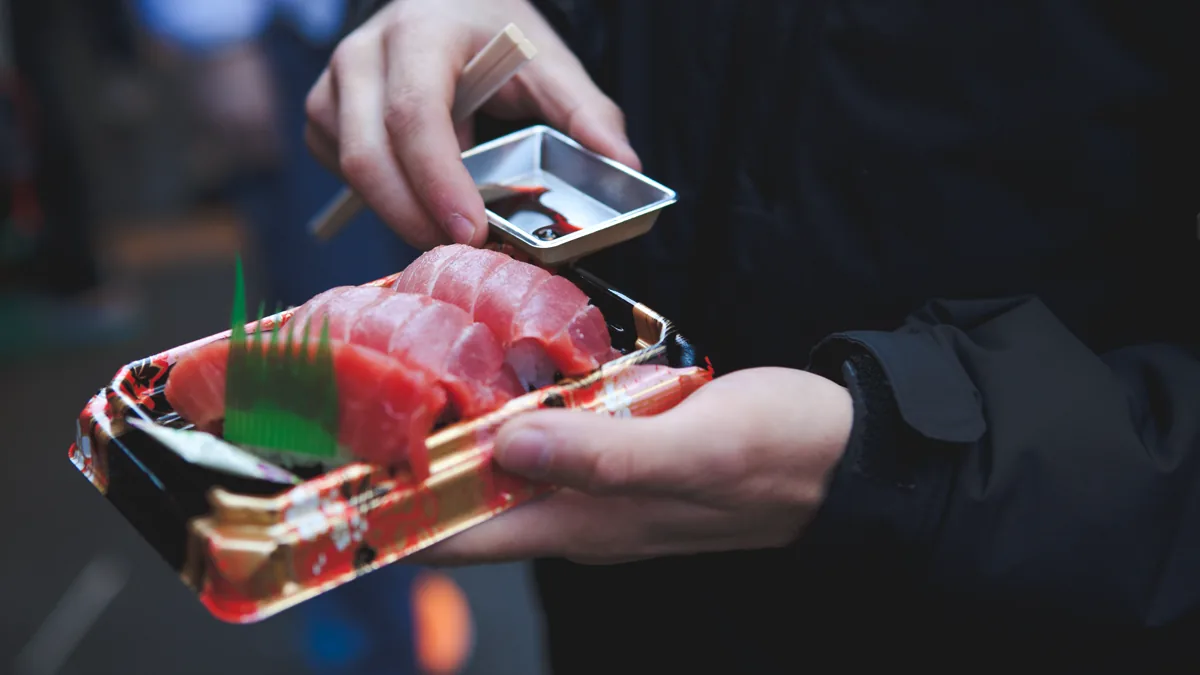
Or a slower bay day in Tokyo. Start before dawn at Toyosu Market — the working wholesale fish market that took over from old Tsukiji, where the tuna auction runs below and the breakfast really is that fresh — then spend the afternoon a few minutes away inside teamLab Planets in Toyosu. It's the gentler choice if a second Tokyo day appeals more than a journey out.
If you're short a day
−1 dayIf you're short on time, the trip folds down without losing its heart. I'd keep one day trip instead of two — Kamakura is the easier and shorter of the pair, Nikko the more dramatic but the longer haul — and give the two Tokyo days a little more room. Or I'd make the Tokyo half a single, slower day, choosing either the old east or the green centre rather than both. The thing I'd resist is trying to cram all of it into less time; Tokyo rewards a slower pass far more than a complete one. Pick the two or three places that pulled at you most and let them breathe.
Extend from here
OnwardThis block hands off cleanly in two directions. West, the Tokaido Shinkansen runs from Tokyo or Shinagawa toward Kyoto and Osaka in a little over two hours — a clean handoff to the Kansai block, Japan's older heart. The same corridor passes Odawara (the gateway to Hakone) and the foot of Mt Fuji, so an onsen night slots naturally onto the start of a westward run. One thing to remember: a plain IC card won't tap you onto the Shinkansen — you register it with Smart-EX or buy a separate ticket for those longer legs.
Good to know — fares & times
Go deeper
浅草寺——东京最古老的寺庙,从来就不该是安静的
东京浅草寺的文化导览:雷门、仲见世、本堂、五重塔与浅草神社。一段关于人群、祈祷与秘佛的温柔故事,附实用须知与礼仪贴士。
Senso-ji Temple
秋叶原——一个可以大大方方爱你所爱的地方
东京电器街秋叶原(Akihabara)语音导览:街区如何分布、玩什么、怎么去,以及为何这里能让你大声说出自己的热爱,尽情做自己。
Akihabara (Electric Town)
明治神宫——为何要种下十万棵树,造一片自己照顾自己的森林
明治神宫语音导览:这片神圣森林为何由人手栽种、被设计成自我照料,以及如何漫步其间——十万棵捐赠之树、大鸟居、清正井,藏在原宿站背后的百年馈赠。
Meiji Jingu
原宿——在这里,你穿什么都行,没人会回头多看一眼
原宿是kawaii文化的发源地与自由时尚之地。漫步竹下通、猫街与表参道,吃可丽饼、看奇装异服,在这条街上尽情做自己,没人会回头多看一眼。
Harajuku
teamLab 东京 —— 别再"看"艺术了,走进去,活在它里面
东京 teamLab Borderless 与 Planets 完整攻略:两馆区别、预约购票、赤脚涉水穿着、拍照礼仪与交通指南,带你真正走进会回应你的光与水之中。
teamLab Tokyo
镰仓 — 为什么日本让大佛安坐于露天之下
镰仓大佛起初并不是为露天而造的:它原本端坐在一座木造殿堂里,殿堂被台风与1498年的地震摧毁后,五百多年来再无人重建。这座日本最早的武士之都三面环山、一面临海,鹤冈八幡宫、高德院的露天大佛与由比之滨的海滩都在步行可达之处。从东京站搭JR横须贺线约55分钟即到,慢慢走上大半天,让这座有人居住的古镇温柔地接纳你。
Kamakura
日光东照宫——一个国家为何要用黄金覆盖一整片森林,只为一个人
日光东照宫文化音频导览:被尊为神的将军、三猿、阳明门与睡猫。依官方资料核实,附实用参观与交通须知。
Nikko Toshogu
箱根——绕着山行走,只为抵达一池温泉
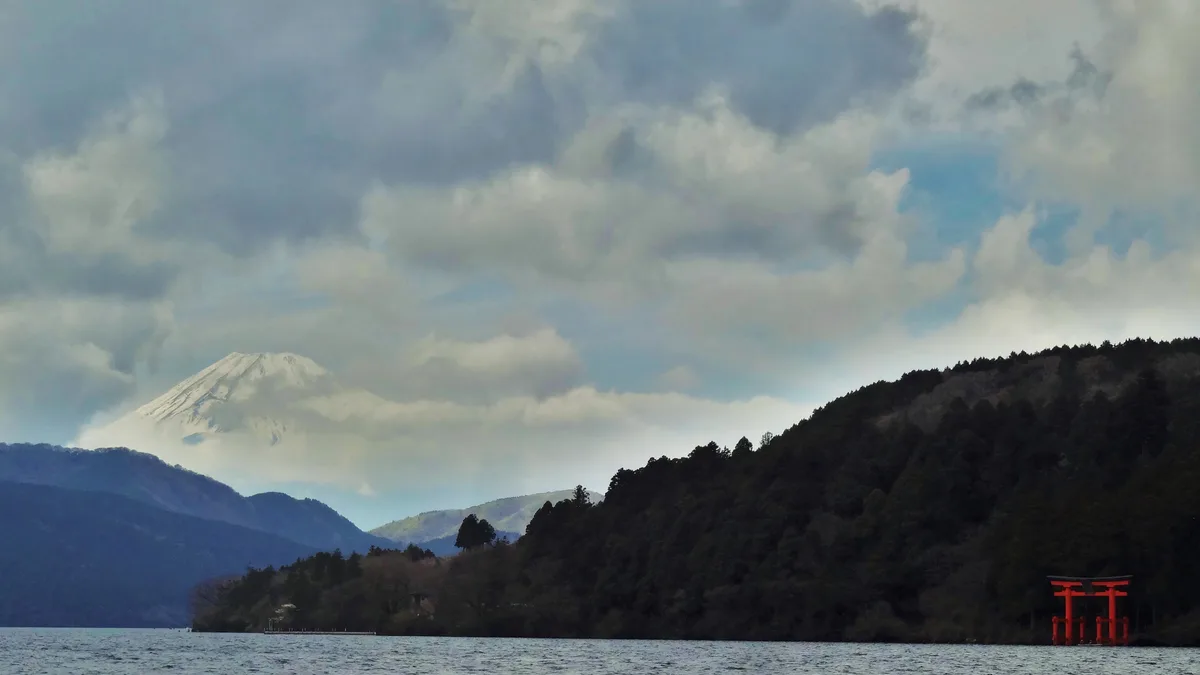
乘红色登山电车、缆车、空中索道与海盗船绕游箱根这个圆环:从箱根汤本到大涌谷的硫磺蒸汽与延寿黑鸡蛋,再到芦之湖中升起的红色鸟居与晴日里的富士山。理解汤治的疗愈传统,在十七处温泉里安歇,以日本人的温柔态度,慢慢绕山而行。
Hakone (Lake Ashinoko)
丰洲・筑地 — 一分为二的东京鱼市
东京最有名的鱼市为何分成了两个?丰洲是凌晨拍卖金枪鱼的批发市场,筑地外市场是可漫步的美食街。带你读懂这里的规矩与温度,像朋友一样陪你逛一趟。
Toyosu Market & Tsukiji Outer Market
Combine with another plan
Kansai, an easy few days
Japan's older heart — Kyoto, Nara, Osaka — at a comfortable pace
Chubu & the Japan Alps, a slower few days
Mountains and old towns — Matsumoto, Takayama, Shirakawa-go, Kanazawa — at a reserve-ahead pace
Hokkaido, an easy few days
Japan's frontier north — Sapporo and Otaru, the lavender hills or the snow, the steaming onsen valleys, and Hakodate — at an unhurried, season-led pace
Japan's castles, and what the walls remember
How castle lovers actually travel — a pilgrimage that teaches you to read a castle, west from Osaka into Shikoku
Cherry blossom, a trip timed to the bloom
The Tokyo-to-Kyoto golden route led by the blossom — and how to read the moving front the way locals do, so a date you can't book becomes the best part of the trip
Autumn leaves, a trip timed to the colour
Kyoto at peak maple — and how to read the clock the colour runs on, so you stand in it instead of chasing it
Japan with kids, the first trip
One Tokyo base, one big thing a day, and a country quietly built for families — at a pace your little ones set
Sources
- JR-East — official (route & fare search)
- JR-East — Suica
- Tokyo Metro — fares & Tokyo Subway Ticket
- Toei Transportation — tickets (official)
- Tokyo Metropolitan Govt (GO TOKYO) — getting around / IC cards
- Tokyo Metropolitan Govt — Toyosu Market (visiting)
- Yurikamome — official (Shijo-mae / Shin-Toyosu stations)
- teamLab — official (Planets / Borderless)
- Enoshima Electric Railway (Enoden) — Noriorikun day pass
- Kotoku-in (Great Buddha) — official access
- Tobu Railway — NIKKO PASS
- Tobu Railway — Limited Express information
- JNTO / Japan.travel — Nikko Toshogu access
- Odakyu Electric Railway — Romancecar
- Odakyu Electric Railway — Hakone Freepass
- Hakone Navi (official) — round course & discount passes
- Fujikyu Railway — Fuji Excursion (Mt Fuji access)
- Smart-EX (JR-Central / JR-West) — Shinkansen booking & fares
- JNTO / Japan.travel — useful tickets in Tokyo