
Is the Kumano Kodo Worth It? What Hikers and Japanese Pilgrims Actually Say
Most of what you can find about the Kumano Kodo is a packing list and a bus timetable. Fewer people tell you what it actually feels like on day three, legs heavy, forest unchanging, with no view at the top of the climb you just finished. So here is the short answer first, from the people who walked it: most say it was worth it, and among the ones who regret it, the most common complaint is expecting a different hike than the one they got.
Is it worth the walk? (in hikers' own words)
We gathered the voices of foreign visitors who have walked some or all of the Kumano Kodo or visited its shrines, from trip reports and reviews on Reddit, TripAdvisor, a Taiwanese travel forum, the japan-guide.com forum, and Google Maps. Here is how their experiences fell.
Here is how some of the 58% put it. "The journey was worth every step," one hiker wrote after four days on the Nakahechi route, adding that the scenery was "unlike anything I've ever seen." Another, describing five nights on the trail as the best part of a month-long trip across Japan: "HIGHLIGHT OF THE WHOLE TRIP." A third splurged on the most expensive room of their entire Japan trip at a riverside ryokan after a soaking-wet day on the trail, and called it "so worth it."
The 17% who were let down give several different reasons, closed trail sections, confusing booking sites, a brutal final day into Nachi, but the most frequent one is a mismatch between what the trail promises and what it delivers underfoot. "No wildlife, in two days I saw 3 birds and a bum of a furry thing," one hiker wrote of the stretch between Takijiri-oji and Hongu. Another put it almost apologetically, as if they felt they owed the trail an apology rather than the reverse: "I feel expectations should be managed... for the most part it's not a very physical hike. The trails are very well maintained and marked and in some ways, the mystery and fun has been taken out." A third described the forest the trail spends much of its time inside as "monocultural plantation forest (which is not explained in any of the reports or brochures I have seen) of Japanese cedars," adding that at the shrines of Nachi Taisha at the end, "tourists arrive the easy way by the busload so it is very crowded except late in the evening or first thing." Strip away the specifics and the shape is the same each time: someone who came for a scenic mountain trek got a long walk to a shrine instead, through cedar planted for timber rather than for the view.
How Japanese visitors and pilgrims feel about it
Japanese hikers and pilgrims, writing in jalan and 4travel reviews, in TripAdvisor write-ups, and in their own hiking logs on Yamareco, describe a trail that overlaps only partly with the foreign complaint above.
Only 8% land in the honest-hard-moments band. Several Japanese hikers call sections of the walk just as exhausting as the foreign reviewers do, so it isn't that the trail is easier for them. What differs is what the difficulty is for. One hiker who set out assuming the point was scenery wrote it most plainly. After about 20 kilometers of climbing through cedar mountains, they had expected to simply enjoy the view: "古道歩きは、景色や雰囲気を楽しむものかと思い込んでいましたが" (I'd assumed walking the old road was about enjoying the scenery and atmosphere). Arriving at the shrine exhausted, they realized something else instead: "大社に詣でる前に、足を棒にして苦しんで、日頃の汚れを落として、その後に、参拝することに意味があるのかな" (maybe the point is to suffer, legs turned to sticks, washing off your everyday grime, before you worship). Another, who had walked from Koyasan, wrote that the fatigue of "いくつもの峠越え" (one mountain pass after another) simply vanished the moment they reached the great shrine, calling it "心が洗われる場所" (a place that washes the soul clean). The hardship isn't incidental to either account. It's the thing that makes the arrival mean something.
Something else turns up in nine of these Japanese reviews and logs: who else is on the trail. One hiker, on the bus out toward the trailhead, counted the crowd: "まず日本人は自分だけでした" (I was the only Japanese person on it). Another, after completing every route of the Kii pilgrimage network over three years, wrote: "外国人の方が多いのには驚きましたが皆さんすれ違うたびに挨拶はされてましたね" (I was surprised how many foreigners there were, though everyone greeted each other whenever they passed). A third hiker put a number on their stay in the Kumano area, pre-hike town included: roughly "8-9割が外国人" (80-90% foreign), with "日本語を聞くことが少ない" (rarely any Japanese spoken). None of them write it as a complaint. They simply note it, the way you'd note any detail worth remembering about the trip.
What we wish you'd noticed
The Kumano Kodo has been part of UNESCO's "Sacred Sites and Pilgrimage Routes in the Kii Mountain Range" since 2004, a network of paths connecting three sacred sites, Kumano Sanzan, Koyasan, and Yoshino and Omine. The routes run nearly 1,200 years deep as a living pilgrimage tradition, and the World Heritage area has grown since the original listing: UNESCO inscribed roughly 307 km of trail in 2004, and added another 40 km in 2016, bringing the registered network to about 347.7 km across Wakayama, Nara, and Mie prefectures. It was this working, religious character, people still walking it to pray rather than just to look at it, that earned the UNESCO listing, the same quality the disappointed reviewers above are reacting against without necessarily naming it.
The Tanabe City Kumano Tourism Bureau describes it and the Camino de Santiago as the only two pilgrimage routes registered as UNESCO World Heritage, "sister" routes (in 2025, UNESCO also inscribed a Mexican pilgrimage route, the Wixárika Route). Since February 2015, hikers who complete both the Camino and one of five qualifying Kumano Kodo routes can register as a "Dual Pilgrim" through the Tanabe City Kumano Tourism Bureau. Five of the foreign hikers in our corpus have walked the Camino as well, and two of them describe collecting the Dual Pilgrim certificate. The first option on the bureau's list is the roughly 38-kilometer walk from Takijiri-oji to Kumano Hongu Taisha; a much shorter, roughly 7-kilometer option from Hosshinmon-oji to Hongu Taisha, paired with visits to the other two Kumano Sanzan shrines, also qualifies.
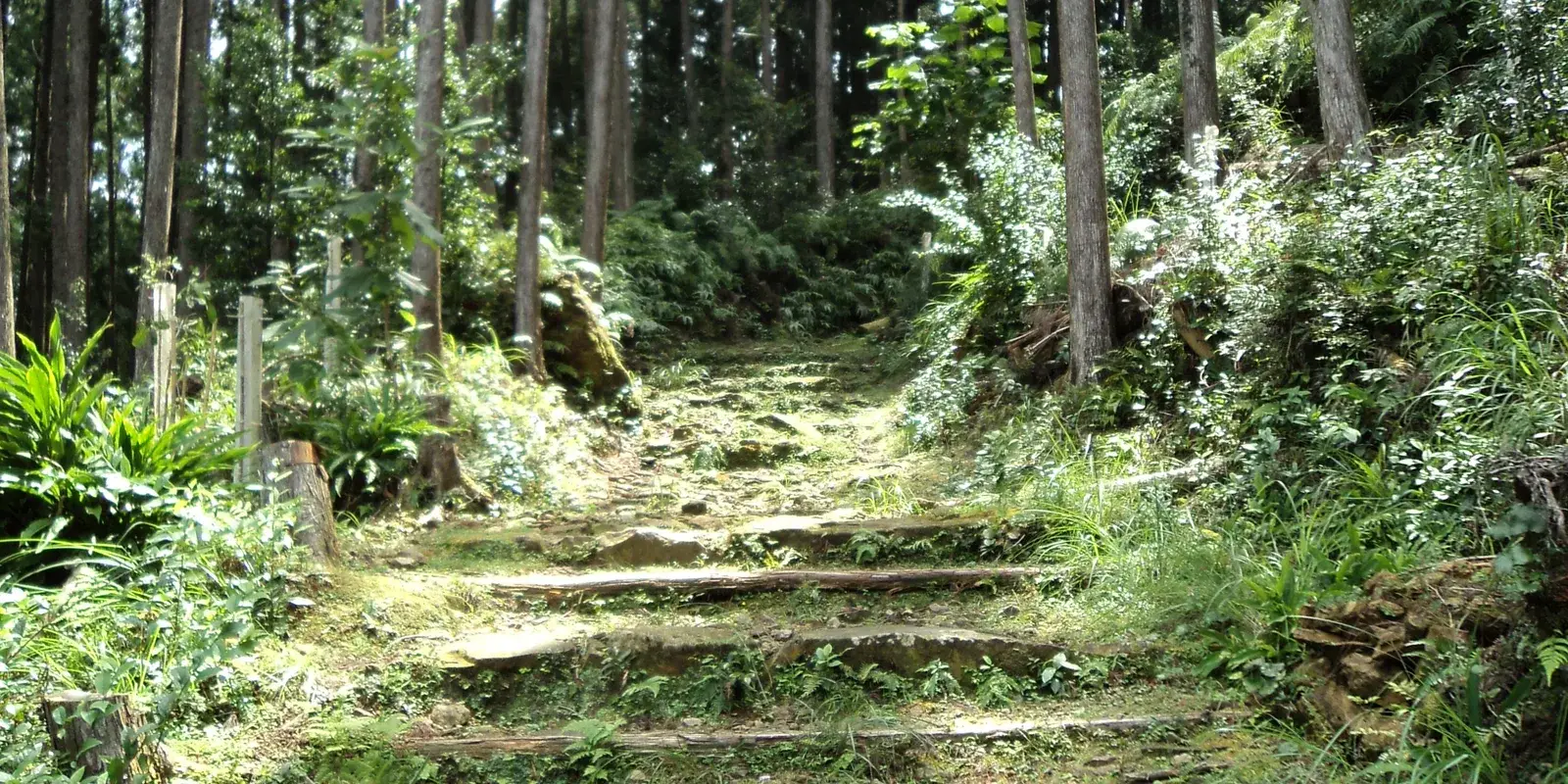
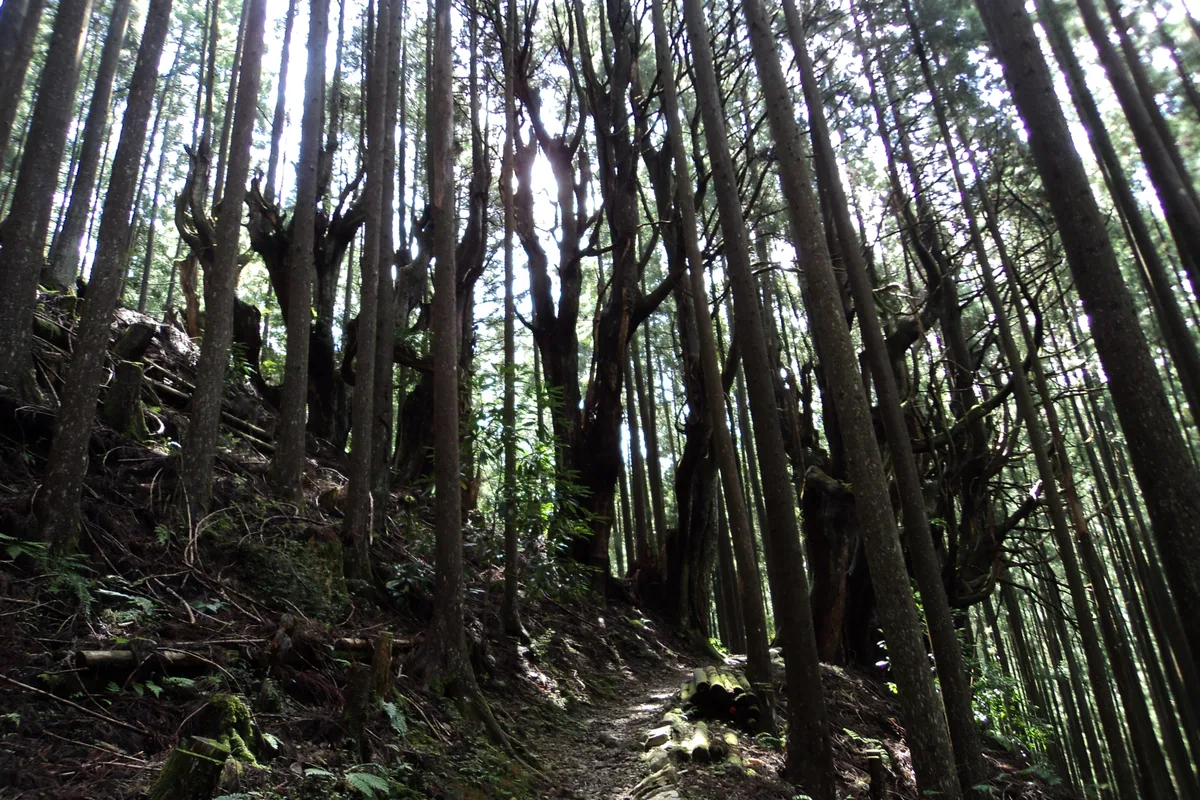
The "boring forest" several reviewers describe is a real, repeatedly reported stretch of the route, not a one-off complaint. Multiple Nakahechi hikers, foreign and Japanese alike, describe long stretches between Takijiri-oji and Hongu as cedar forest with few long views, and the foreign reviewers add that it was planted for timber rather than scenery. The stretch many reviewers single out tends to be near the end, around the giant cedars of Daimon-zaka, the stone-stepped ascent to Kumano Nachi Taisha and its waterfall.
Doing it well, the welcomed way
Decide what you're walking for before you book your days. Several reviewers' disappointment suggests the Nakahechi's cedar-forest middle stretch won't deliver ridgeline views or wildlife. If you're drawn instead to a slow, repetitive physical task that ends at a shrine, the same stretch is exactly the point, and the Japanese hikers above are the clearest evidence the walk rewards that mindset.
Kumano Travel, the official community reservation system developed by the Tanabe City Kumano Tourism Bureau, books lodging along the route directly. One hiker found the booking site itself confusing to navigate; another, who had struggled to find good advice online, says everything was sorted out at Kumano Travel. If you go through an overseas tour operator instead, it helps to know what it adds. One hiker who paid a premium to one discovered it had simply outsourced the same bookings to Kumano Travel and marked up the price, then met other hikers on the trail who had booked direct and gotten better rooms.
Pack trekking poles for the stone steps. One hiker who called their poles essential describes the trail as full of steps with almost no switchbacks, and the steps get slick in the rain; at least one hiker in our corpus calls boots and poles close to required gear.
If your schedule forces a tradeoff between sections, weigh it carefully rather than defaulting to the easiest cut. The Koguchi-to-Nachi stretch is the day several reviewers describe as the hardest on the trail, and opinions on it split sharply: some call the arrival at Nachi the best part of the whole walk, while at least one hiker says that final day ruined the trip for them.
Walking straight through a cedar plantation expecting ridgeline views is one way to end up in the 17%, and one reviewer says none of the reports or brochures they had seen spelled that out. Walking it as a pilgrimage, legs aching, a shrine waiting at the far end of the climb, is how the Japanese hikers above who reached Kumano Hongu Taisha on foot describe it. Many of the hikers who loved it and the ones who didn't walked the same stretch of forest. They just carried different questions into it.
Planning the rest of a Kansai trip around Koyasan or Kyoto? Start with what actually matters in Japan before you build the itinerary.
Sources
- UNESCO World Heritage Centre, Sacred Sites and Pilgrimage Routes in the Kii Mountain Range: inscribed 2004; roughly 307 km of pilgrimage routes at inscription across 506.4 ha; tradition of sacred mountains maintained for over 1,200 years; up to 15 million visitors annually to the wider site.
- The Japan Times, "UNESCO adds 40 km of Kumano Kodo pilgrimage routes to World Heritage register" (2016-10-25): 2016 extension added roughly 40 km, mostly in Wakayama Prefecture, bringing the registered Kumano Kodo network to a total of 347.7 km across Mie, Wakayama, and Nara.
- UNESCO World Heritage Centre, Wixárika Route through the Sacred Sites to Wirikuta: inscribed 2025; a route of 20 sacred sites spanning more than 500 km in north-central Mexico, followed by the Wixárika people's annual pilgrimage.
- Tanabe City Kumano Tourism Bureau, Dual Pilgrim program: official program recognizing hikers of both the Camino de Santiago and the Kumano Kodo; running since February 1, 2015; five qualifying Kumano Kodo options including Takijiri-oji to Kumano Hongu Taisha (~38 km) and Hosshinmon-oji to Kumano Hongu Taisha (~7 km) plus visits to the other Kumano Sanzan shrines; the bureau describes the Camino and the Kumano Kodo as the only two pilgrimage routes registered as UNESCO World Heritage, "sister" routes.
- Tanabe City Kumano Tourism Bureau, Daimon-zaka: a cobblestone staircase slope about 600 m long with 267 steps, lined with centuries-old Japanese cedars, leading up to Kumano Nachi Taisha, Seiganto-ji, and Nachi Falls.
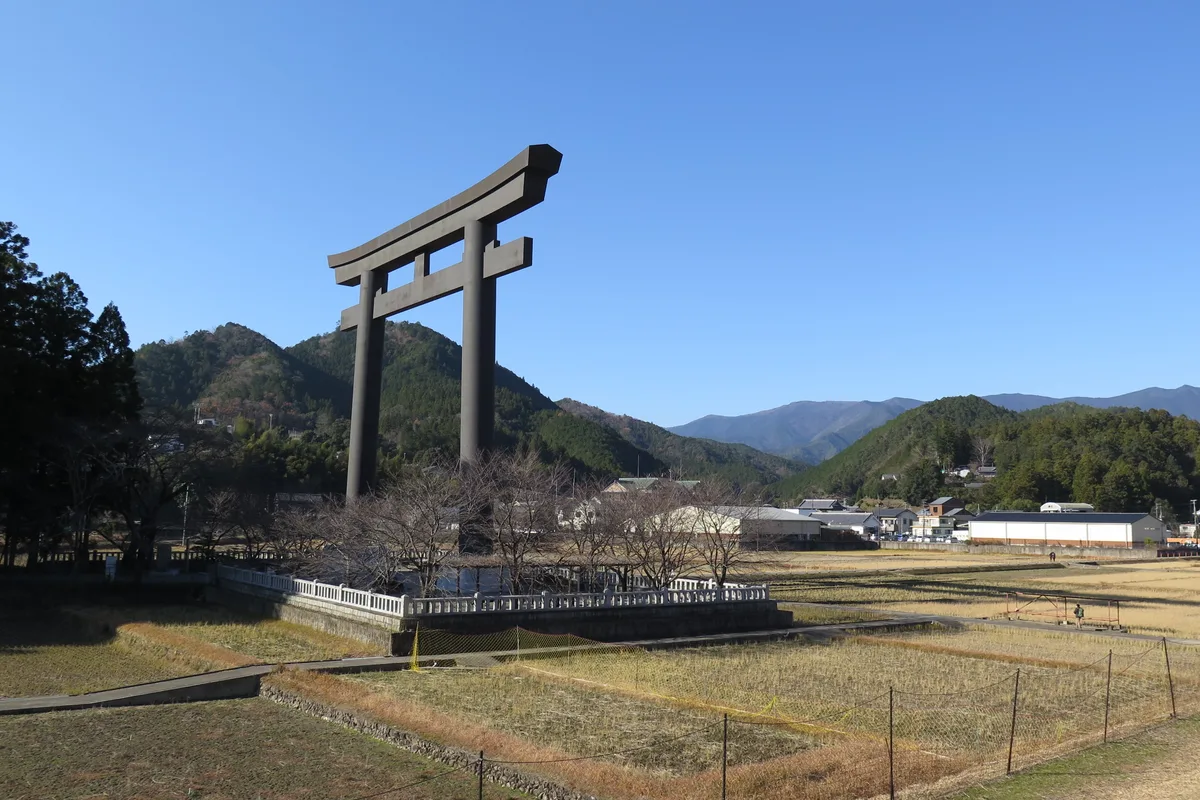
- Tanabe City Kumano Tourism Bureau, Kumano Hongu Taisha: the shrine originally stood at Oyunohara, a sandbank where the Kumano and Otonashi rivers meet, until a severe flood in 1889; the giant torii at the entrance to Oyunohara is 33.9 m tall.
- KUMANO TRAVEL, About KUMANO TRAVEL: the official community reservation system for the region, developed by the Tanabe City Kumano Tourism Bureau to link visitors with local lodging and services.
WMJS is written in Japan, in English, with AI help. We check every page, but English is not our first language. If a sentence reads oddly, tell us. One sentence is enough.
Thank you. A person reads every note.
How well do you know Japan?
Built from 635 public posts by Japanese people
Want to know more? Ask Japanese people
Have a follow-up question about this topic? We'll ask real Japanese people.
Voice Box →