
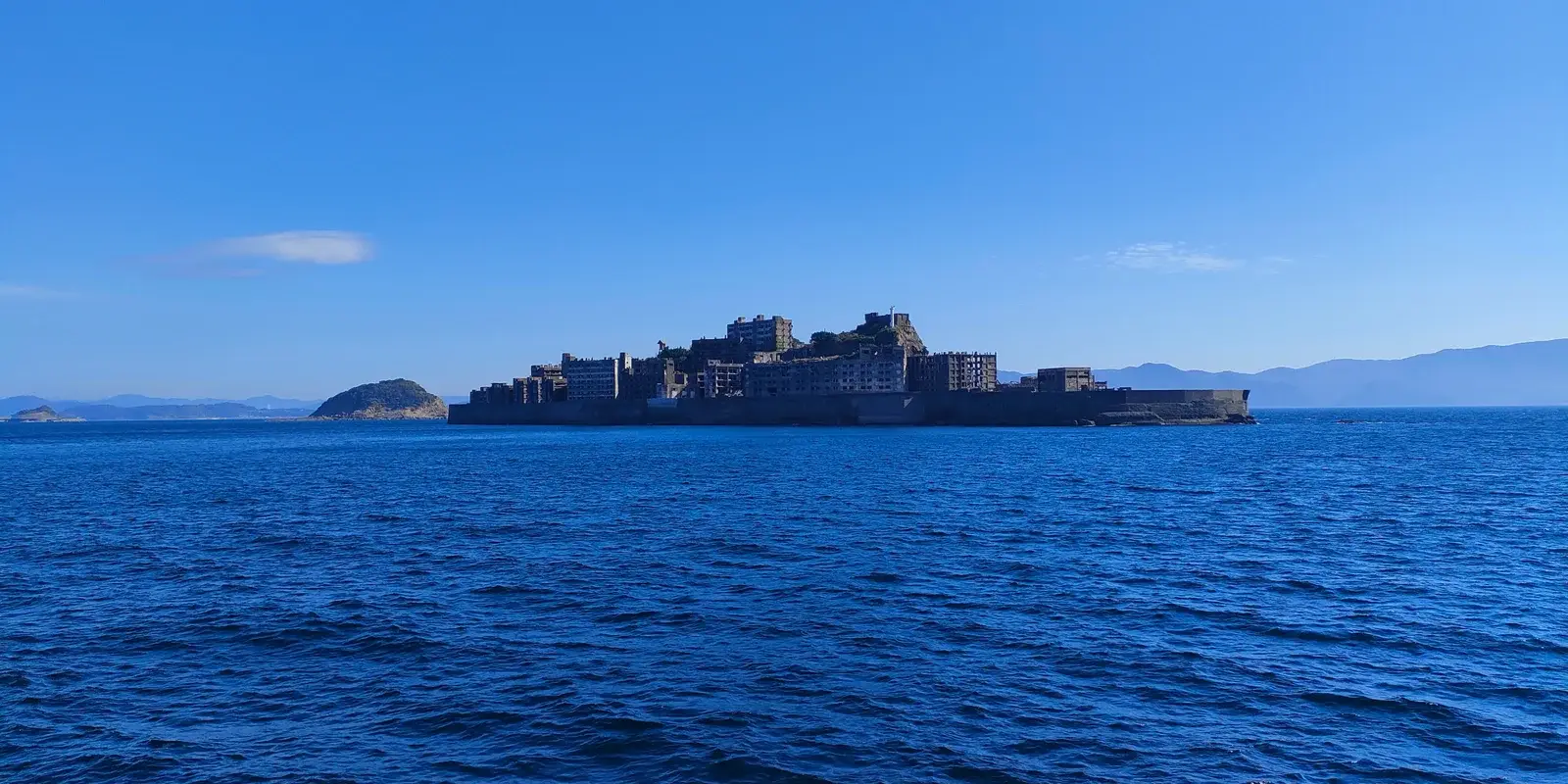
Is Gunkanjima (Battleship Island) Worth It? What 204 Real Visitors Say
The brochures sell it as a landing tour. An external safety standard, wave height and wind speed measured on the day, means it might not be one. You book a ticket to walk on Battleship Island, watch the forecast for days, show up at the pier, and only find out whether you actually get to step on the island once the boat is already alongside it.
The direct answer: book it as a boat trip around a collapsing coal-mining island that might also let you land, and most people come home glad they went, whether they set foot on it or not. That holds up whether or not the weather cooperates on your particular day. What actually splits visitors, on both sides of the language line, has less to do with the weather than you'd expect.
Is it worth it? (in international visitors' own words)
We gathered the voices of visitors from outside Japan who have actually taken a Gunkanjima cruise, on TripAdvisor and Reddit, and asked, in effect, was it worth it? Here is how they fell:
That red 12% falls into a few loose groups: a cold, rough crossing; a short visit that felt underwhelming from behind the ropes; and, in a real number of reviews, the language gap: "[r]eally no English speaking staff, which is surprising for such a high profile place... the audio guide is an ancient app that doesn't work on all phones," wrote one visitor. Another, on the same problem: "It is even more true for those who don't speak Japanese (the audio guide in English is not working properly)... The walk is very short and has no interest at all."
The people who loved it despite the same restrictions took it in stride rather than fighting it. "There is a path with waist-high railings on either side, and you never get closer than about 20m away," wrote one visitor, surprised by how restricted the walk turned out to be, in a review titled, tellingly, "If your boat can't land, you haven't missed much." They gave it five stars anyway. On the language side, some visitors simply picked the right operator: "Commentary on the boat and around the island was in Japanese, but we were given detailed transcripts which gave a thorough background to the history of mining on the island," wrote one, who had booked a company that pairs the cruise with English materials. Another, whose live narration to the island was Japanese-only, still got lucky: "[o]ne of the crew came over to us with a folder of photographs and talked us through it which was really good and so unexpected."
How Japanese visitors feel about the same trip
On the Japanese side, the same boat produces a mostly different complaint. Japanese visitors, in their own jalan cruise reviews, get frustrated too, but not one of the negative reviews mentions the language gap or the fenced-off walk that bother foreign visitors most.
Here is the surprise: most of that tiny 3% red still isn't about failing to land. Reviewers who didn't land wrote things like "[r]ough wave conditions meant we couldn't land, but we could still see the island up close from the boat, and the guide's clear explanation left us very satisfied," and rated the trip five stars anyway. More often, Japanese reviewers get frustrated by something else entirely: an overcrowded boat after a tour group was added at the last minute ("my husband and I couldn't even sit together... [i]ndividual customers who booked earlier should be prioritized"), or a crew member who scolded a passenger for holding a safety rope in rough seas, then scolded them again for grabbing a railing instead. There is one exception worth naming: a single one-star review accuses the crew of calling off the landing too quickly, suspecting "they never really intended to let us land."
Put the two gauges side by side and most reviewers on both sides pin a cancelled landing on the weather, not the operator, and one four-star Japanese review is even titled simply "Couldn't land, but," going on to describe the circling tour as moving regardless. What mostly divides the two groups is what happens around the weather rather than the weather itself. Foreign frustration clusters on the language gap and a more tightly restricted island than the photos suggest. Japanese frustration clusters on crowding and how the crew treats passengers once they're already aboard. If your own boat can't dock, both corpora suggest disappointment is the exception you should expect least.
What we wish you'd noticed
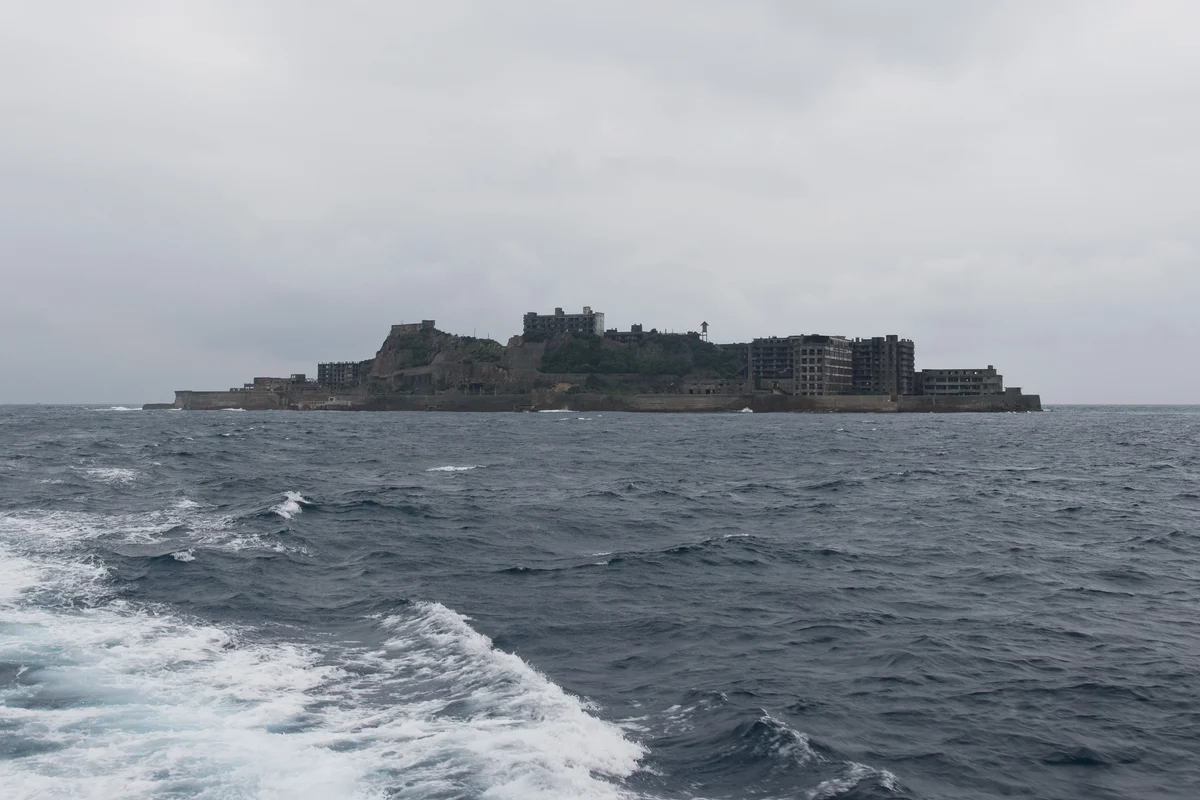
"Landing tour" and "circling tour" are two different products sold as one ticket. By an external safety standard, a boat may only dock at Gunkanjima's single pier, Dolphin Pier, when the wave height is within 0.5 metres and the wind is under 5 metres per second, among other conditions. Miss either threshold and the operator cannot let you land, no matter how calm the harbor looked when you boarded. Every tour is run as a circling cruise by default, with landing added only if conditions allow, which is why the same company can land its morning sailing and cancel the afternoon one on the very same day.
Any specific landing-rate number you're quoted is closer to a mood than a plan. In our corpus, reviewers report having heard figures anywhere from one in five to around three in five as the rough odds of stepping on the island, always secondhand and never from an official source. The same visitor can be turned away once and land easily the next time: one reviewer landed on a third attempt after two earlier sailings were cancelled for weather, and another landed anyway on a day a typhoon was forming out at sea, when three of the five operators cancelled outright. Treat whatever percentage you hear as scene-setting for the day, useful for a feel but too shaky to build an itinerary on.
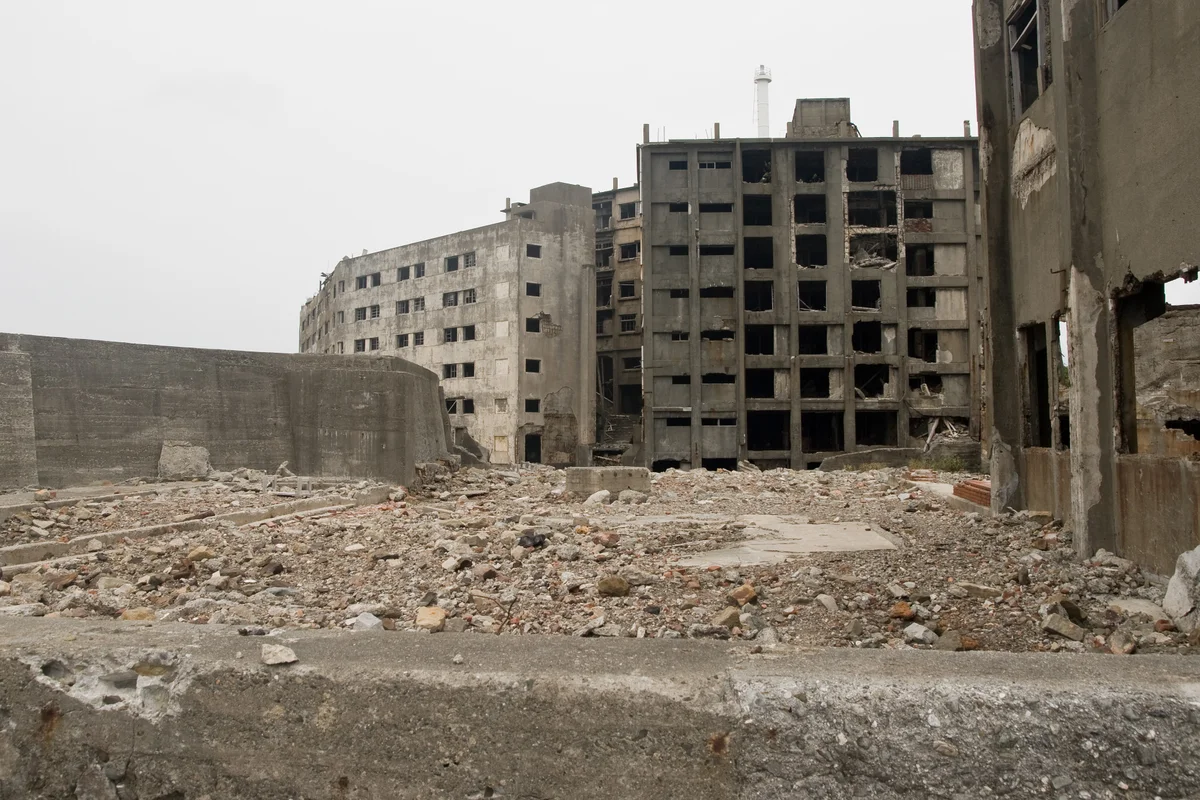
The island itself is smaller, and more tightly managed, than it looks in photos. Gunkanjima (formally Hashima) sits 18.5km off Nagasaki port and once held around 5,300 residents at its peak. Television reached roughly 10% of Japanese households at the time; it reached effectively 100% of Gunkanjima's. The coal mine that supported all of it closed in January 1974, and the island was fully uninhabited within three months. Landing tours are guided along three fixed viewing spots, and reviewers who do land consistently describe a short, fenced walkway with no access to any building interior, including the famous Building 30, completed in 1916 as Japan's oldest reinforced-concrete high-rise apartment block, and no shade anywhere along the route (parasols and umbrellas aren't allowed, by visitor accounts, one guessing it's because groups are packed close together on the path). Gunkanjima was inscribed as part of Japan's UNESCO World Heritage industrial sites in 2015.
Doing it well, the welcomed way
- Choose your operator with the language gap in mind. Several reviewers single out Gunkanjima Concierge for pairing the tour with a digital museum visit; one describes it going further, with detailed English transcripts of the guide's commentary. Book elsewhere and expect the live narration to be Japanese-only, sometimes softened by an English brochure or a crew member improvising with photos.
- Book early, but don't assume early check-in buys you a better seat everywhere. Some operators seat by reservation order regardless of arrival time; others board in check-in order, rewarding an early arrival with a better view. It varies by company, so ask when you book if it matters to you.
- Pack seasickness medicine regardless of the forecast. Reviewers on both gauges mention rough crossings even on days that looked fine from shore, and the ones who took medicine beforehand say it made the crossing manageable.
- Bring a hat. There's no shade at all once you land, and reviewers repeatedly advise bringing one; at least one specifically regrets not having.
- Go in expecting the circling cruise first, landing second. Foreign and Japanese reviewers who framed it that way, rather than as a guaranteed landing tour, are the ones who rated the trip highest.
- If you land, go in without expecting to enter a single building. The value is in standing close to the ruins along a fixed, guided path. Wanting to explore freely is one of the most common regrets on this page.
None of this changes the actual odds on the day you go. It changes only which trip you paid for, and which frustration, if any, actually shows up: a language gap and a fenced-off view for some foreign visitors, a crowded boat and a curt crew member for a few Japanese ones, and for the large majority on both gauges, a company town built on undersea coal, run until oil replaced it, and left standing within months of the mine closing.
Deciding what else deserves a slot on a Kyushu itinerary? Start with what actually matters in Japan.
Sources
- Nagasaki City Tourist Association, "What is Gunkanjima? World Heritage landing tour guide": official history (coal discovered in the Edo period, Mitsubishi acquisition in 1890, peak population of roughly 5,300, near-100% household television penetration versus a roughly 10% national rate at the time, mine closure in January 1974 and full depopulation within three months, 2015 UNESCO World Heritage inscription); the current five licensed tour operators, each running one morning and one afternoon sailing; the landing safety standard of wave height within 0.5m and wind speed under 5m/s, among other conditions; landing via the single Dolphin Pier and a guided route through three fixed viewing spots; Building 30 as Japan's oldest reinforced-concrete high-rise apartment block, completed in 1916.
WMJS is written in Japan, in English, with AI help. We check every page, but English is not our first language. If a sentence reads oddly, tell us. One sentence is enough.
Thank you. A person reads every note.
How well do you know Japan?
Built from 635 public posts by Japanese people
Want to know more? Ask Japanese people
Have a follow-up question about this topic? We'll ask real Japanese people.
Voice Box →