
Is Okayama Castle Worth It? What Visitors Say About Its 1966 Concrete Rebuild
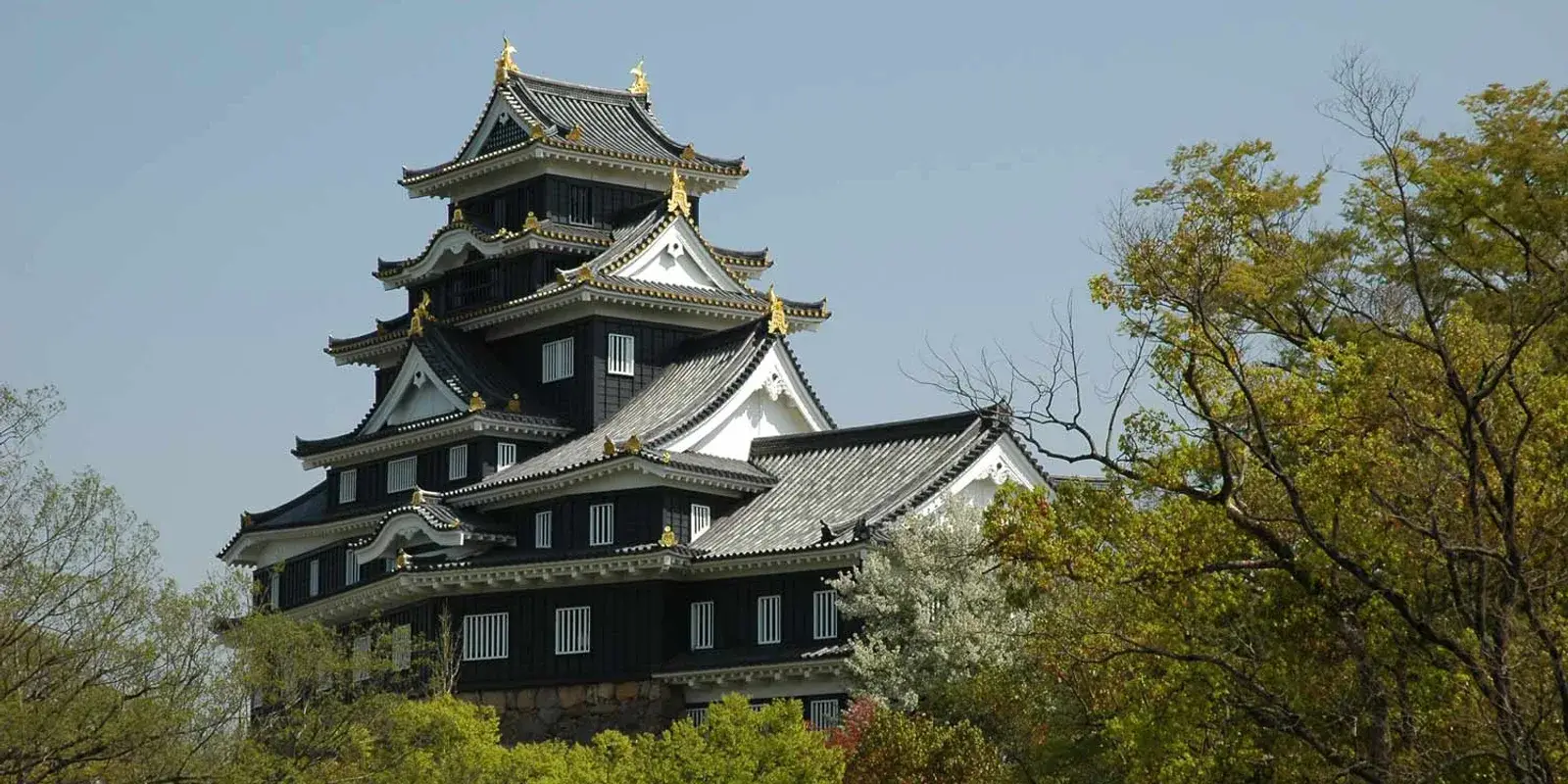
In the early hours of June 29, 1945, Allied bombers burned Okayama Castle's original keep to the ground. What stands today, black-walled and gold-trimmed above the Asahi River, is a building that opened in 1966. That one fact comes up in about one in five of the 181 voices we gathered, in the warm ones as well as the critical ones.
Is it worth it? (in international visitors' own words)
We gathered voices from international travelers discussing Okayama Castle on Reddit, TripAdvisor, travel forums, review sites, and Google Maps, and sorted them by how they landed.
Roughly half of the red band names the rebuild or its modern interior directly. "it's a concrete replica of the wooden original," wrote one visitor. "Second, the inside is just a mediocre museum." Another compared it point-blank to the castle most people already know: "Himeji is the king of castles, and still original where Okayama Castle is a reproduction." The rest of the red band points at everything else about the visit instead: a keep covered up for renovation work, a walk from the station that felt long, a disappointing parfait, or simply, as one visitor put it, "kinda grim," with no further explanation offered.
The green band leans on the same facts and reaches the opposite conclusion. "This is the 'sister' castle to Himeji, but unlike that castle, this one was destroyed in World War II and has been rebuilt," one visitor explained, before listing what the rebuild actually bought the castle: "a lift that goes up to the 4th level, and airconditioning throughout. It just makes the visit that much more comfortable." Another, after conceding the interior is "very modern," still called it "probably the most beautiful castle one has ever visited in Japan." Same concrete, same elevator, read as a loss by one traveler and a convenience by the next.
How Japanese visitors feel about the same castle
Here is what Japanese visitors say about this exact building, in their own reviews on jalan, Google Maps, a castle-touring community, and one travel blog.
The red band, nearly a third of the international voices, shrinks to under a tenth on the Japanese side, even though the same 1945-and-1966 history comes up in about one in six Japanese reviews, most of them warm. One visitor did the counterfactual math out loud: "It's a shame the keep was destroyed by fire. If it were among the 12 surviving original keeps, I think it would be National Treasure-class." The regret is right there in the sentence. It just stops before turning into a complaint: the same review opens by calling it a splendid castle.
The Japanese reviews that do turn critical say something narrower than "it's fake." "Seen from Korakuen park, Okayama Castle is simply wonderful," one wrote. "Inside, though, it's a modern museum and lacks atmosphere. Viewing it from outside was more soothing." Another, after the 2022 renovation: "The exterior is almost too new and too clean, giving it a plastic-model-kit feeling, and inside, with the elevator and the clean stairs, I couldn't shake the sense that it lacked a castle's proper atmosphere." Both are complaints about how the rebuild feels to stand inside, not accusations that the castle misrepresents itself.
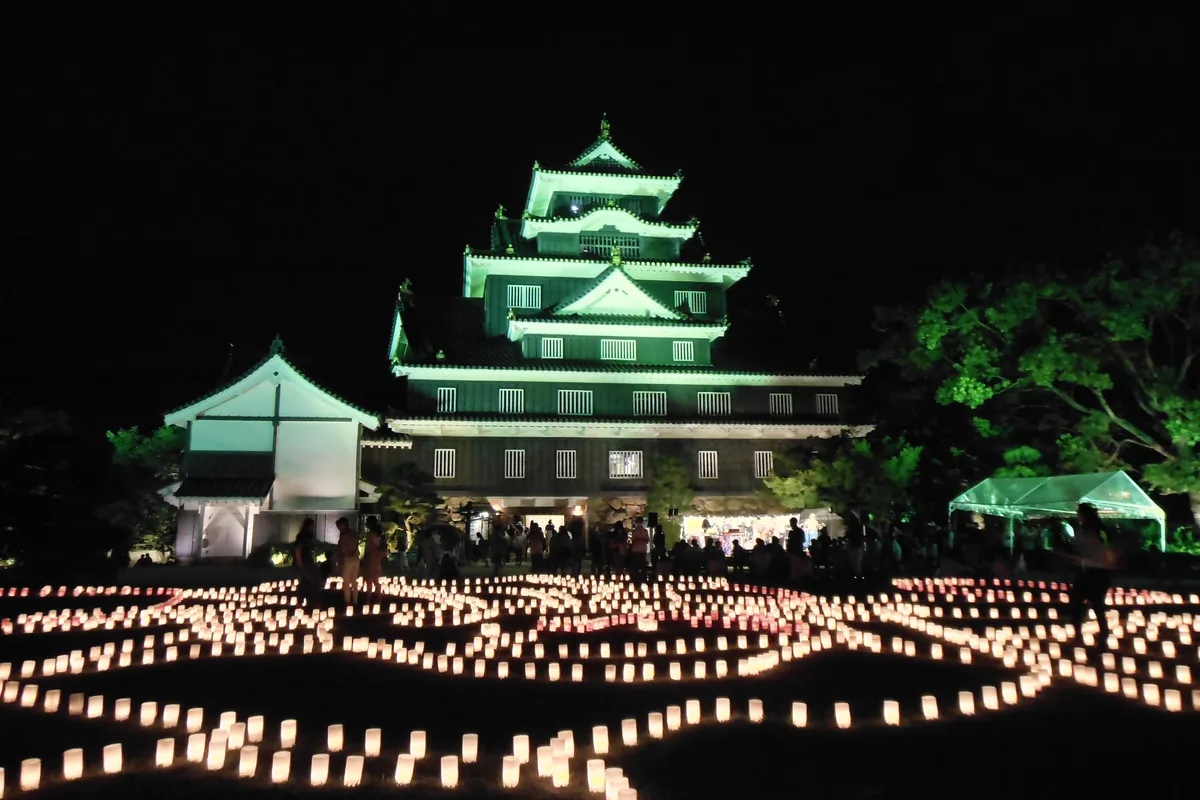
What fills the green band instead is a specific, repeatable list: the seasonal night light-ups, a hands-on corner where you can hold a real-weight replica sword or matchlock gun, an elevator that makes six floors manageable for grandparents and small children, and a set of exhibits that a couple of reviews credit to a historian by name, Michifumi Isoda. One reviewer, after noting the exterior "feels artificial" up close, still called the exhibits "well thought out and plenty enjoyable." People come back: one visitor ended up going four times over a two-night trip, another came back after about forty years.
What we wish you'd noticed
This isn't one of Japan's twelve surviving original castle keeps, and that's knowable before you buy a ticket. Himeji, Matsumoto, and ten others kept their original wooden towers standing through the twentieth century. Okayama's did not: the keep raised in 1597 by the warlord Ukita Hideie burned in the Okayama air raid of June 29, 1945, and the black tower you see today is a 1966 reinforced-concrete rebuild of it. A top-to-bottom renovation the castle calls the Major Renovations During Reiwa, finished in November 2022, replaced the exhibits inside with the video displays and hands-on exhibits that now fill it. None of this is a secret; it's on the castle's own website in plain language.
Two pieces of the real, pre-1945 castle survive. The Tsukimi Yagura turret, built in the 1620s, is the one original building left standing in the castle's main enclosure, and it's a national Important Cultural Property. The Nishinomaru Nishite Yagura also survived and carries the same designation. Neither is the keep you pay to enter, and only three of the 181 voices we gathered mention them at all.
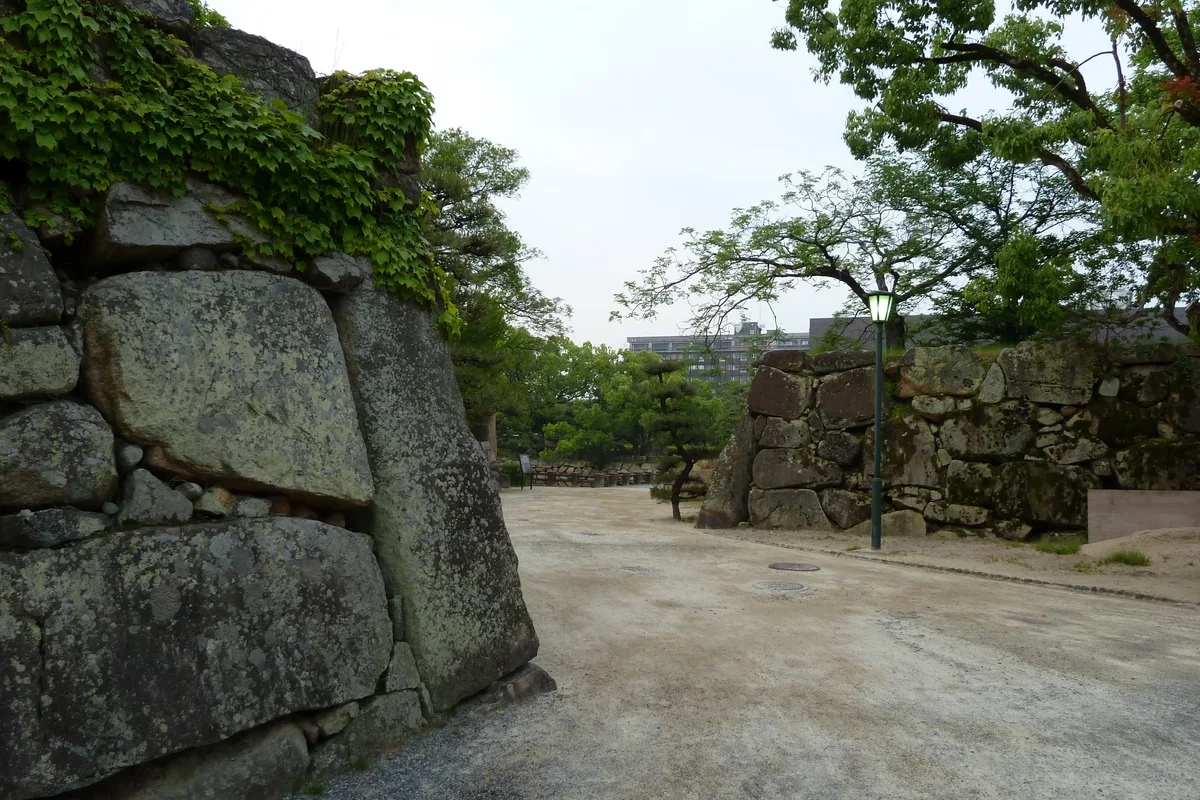
The black-and-gold exterior and the odd keep shape are real history, not styling. The black board-and-batten cladding is what earned the castle its nickname, Ujo, "Crow Castle," and excavated gilded roof tiles from Hideie's era suggest the original was gaudier still, hence the alternate name Kin-ujo, "Golden Crow Castle." The keep's stone base is also a genuine rarity: an irregular, five-sided pentagon rather than a standard rectangle, shaped to fit the hill under it. Japanese reviews in particular mention comparing the stonework from different building eras, visible in how the stones in the walls around the keep are cut and laid.
Doing it well, the welcomed way
Everything above settles into a short list of things that make the visit land closer to the green band than the red one.
- Know what you're buying before the ticket window. You're paying for a history museum and an interactive exhibit, built inside a rebuilt keep that recalls the 400-year-old original. Several reviews that take it as a museum come away satisfied, and several of the disappointed ones were hoping for Himeji's experience inside a different building.
- Pair it with Korakuen Garden. The castle sits directly across the Asahi River from Korakuen, one of Japan's three great gardens, connected by a bridge, and a combined ticket covers both for less than paying separately. Reviews on both gauges describe the two as a single outing rather than two separate stops.
- Go up by elevator, then walk down. The lift reaches partway up the keep; stairs cover the rest to the top floor. Visitors on both gauges recommend riding up first and reading the exhibits floor by floor on the way down, rather than climbing straight to the top.
- Expect a mix on English support. Some reviews mention subtitled videos and translated panels; others found most of the static displays Japanese-only. The castle's English exhibition guide works through QR codes you scan with your phone, so bring one, and a translation app if the history detail matters to you.
- Check the calendar for a light-up. Okayama Castle runs seasonal evening illuminations, including Ujo Togenkyo in spring, summer, and autumn, when the keep and grounds stay lit after dark. More than one Japanese review names this as the version of the visit they'd go out of their way to repeat.
- If an original keep matters more to you than convenience, it's nearby. Bitchu-Matsuyama Castle, also in Okayama Prefecture, is the only one of Japan's twelve surviving original keeps that still stands on a mountaintop.
None of this changes what Okayama Castle is. It changes whether you walk in already knowing it, and the rebuild is behind about half of the disappointed voices on both gauges above.
Wondering how a reconstructed castle compares with the sites that survived intact? Start with what actually matters in Japan, and for the mountaintop original nearby, the Bitchu-Matsuyama Castle guide is just below.
Sources
- Okayama Castle official website, Major Renovations During Reiwa: the renovation project's official English name and November 2022 completion.
- Okayama Castle official website, About the Tenshukaku: the keep's black board-and-batten exterior and "Ujo" nickname; gilded roof tiles from the Ukita Hideie era; the scalene-pentagon keep base; destruction by fire in the Second World War and the 1966 reconstruction.
- Okayama Visitors & Convention Association, Okayama Castle (Ujo): built in 1597 by Ukita Hideie; opening hours and closed dates; the Ujo Togenkyo seasonal light-up events held in spring, summer, and autumn.
- Okayama City, Tsukimi Yagura special opening: Tsukimi Yagura, built in the 1620s, is the sole surviving original building in the castle's main enclosure and a national Important Cultural Property.
- Okayama City, Important Cultural Property: Okayama Castle Nishite Yagura: the Nishinomaru Nishite Yagura also survives and carries the same national designation.
- Okayama City, Burnt roof tiles of the keep excavated at the Okayama Castle site: the Okayama air raid of the early hours of June 29, 1945 destroyed the city center, and the keep built in 1597 by Ukita Hideie burned down in it.
- Takahashi City, Bitchu-Matsuyama Castle, Important Cultural Property (重要文化財): the only surviving original keep among Japan's twelve standing on a mountain castle site.
- Okayama Castle official website, Major Renovations During Reiwa (Japanese): the keep rebuilt in reinforced concrete after the air raid; the exhibits renewed under the historian Michifumi Isoda, with hands-on exhibits and video.
- Okayama Castle official website, User guide: adult admission 500 yen; discounted common tickets with Okayama Korakuen Garden (800 yen for both); the elevator runs to the 4th floor, with stairs to the 6th.
- Okayama Castle, English Exhibition Guide pamphlet (PDF): the English exhibition guide reached through QR codes; English subtitles for the videos; the suggested route from the 6th floor down; the hands-on area with a matchlock gun, a sword, and a palanquin; displays supervised by the historian Michifumi Isoda.
- Okayama Castle official website, Map of Honmaru's Features: stone walls built by Ukita Hideie by 1597, extended by Kobayakawa Hideaki, and reinforced between 1688 and 1703.
- Okayama Korakuen Garden official website: Korakuen as one of Japan's three great gardens.
WMJS is written in Japan, in English, with AI help. We check every page, but English is not our first language. If a sentence reads oddly, tell us. One sentence is enough.
Thank you. A person reads every note.
How well do you know Japan?
Built from 635 public posts by Japanese people
Want to know more? Ask Japanese people
Have a follow-up question about this topic? We'll ask real Japanese people.
Voice Box →