
Is Hama-rikyu Gardens Worth It? What 145 Visitors and 40 Japanese Reviews Say
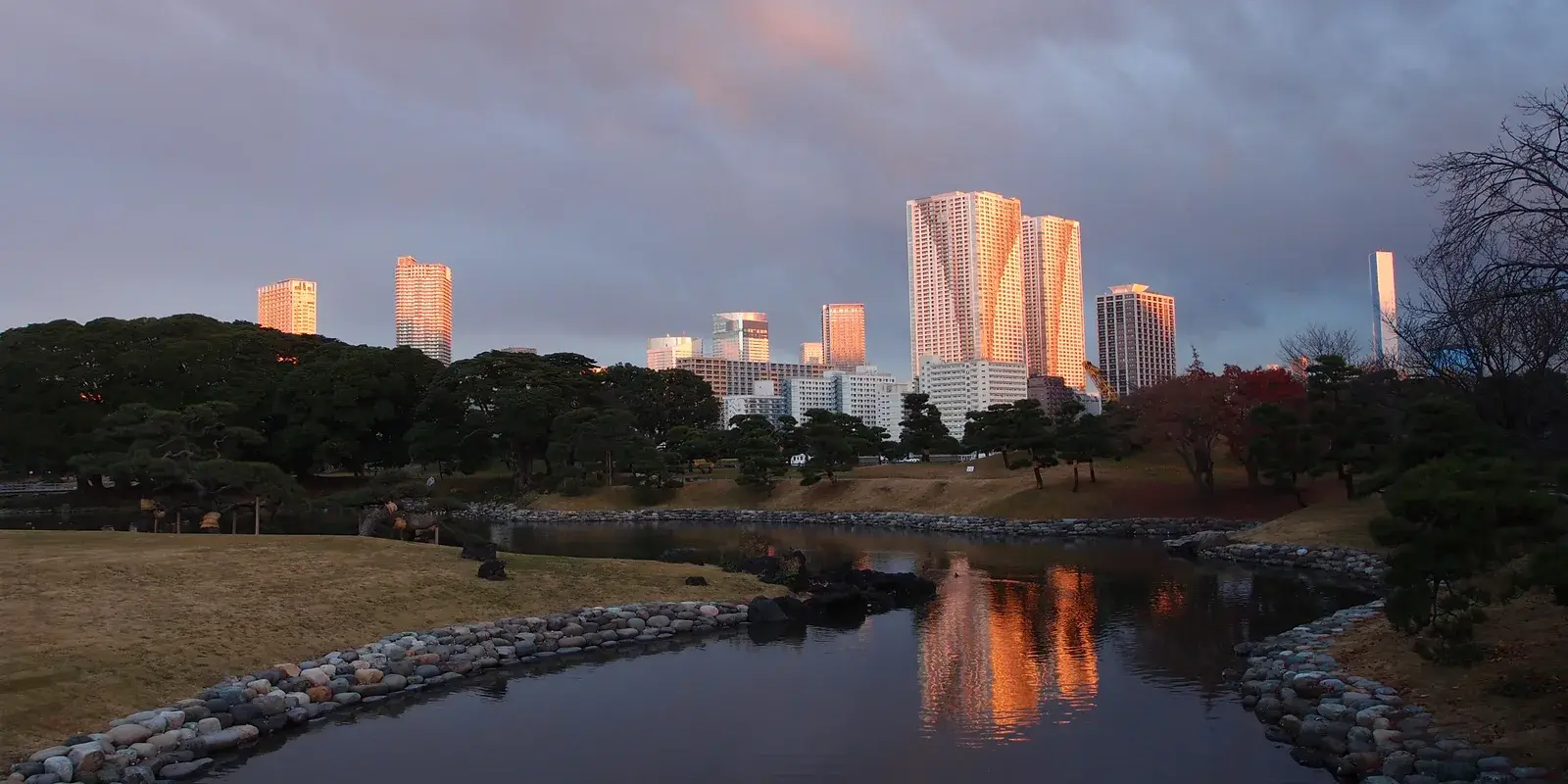
Most people who leave a review after visiting Hama-rikyu Gardens say yes. Of the 145 reviews we gathered from international visitors on Google Maps, TripAdvisor, AllTrails, and Reddit, 78% landed on "worth it, and glad we came." The reasons that repeat most are the calm in the middle of the city, the teahouse on an island in the pond, and the skyscrapers of Shiodome around it all. "The contrast between the garden and the skyscrapers of Shiodome gives a real character," one visitor from Paris wrote. Another, from the UK, called it "our favourite garden of several visited in Tokyo."
But the Japanese visitors who left their own reviews are noticeably harder to please. Among 40 reviews we gathered in Japanese, only 48% land in the same warm zone, and 35% describe something closer to disappointment. Part of that gap comes from how we gathered the Japanese reviews (more of the low-star ones, as the note under the second gauge explains), and part from what people compare the garden to.
What international visitors say
The 14% who felt let down mostly ran into one of three things: the 300 yen admission fee catching them off guard ("I didn't realise there was an admission fee, and as it was the end of my trip, I had limited yen," one reviewer wrote), a visit timed to a dry or bare season, or a gate that closes earlier than expected (last entry is 4:30pm even though the garden technically stays open until 5). One visitor who came at the end of winter, after what they called the three driest months of the year, described the let-down directly: "The grass was 90% yellow and many of the smaller waterways were either completely dry or sludge... with only four days in Tokyo I wish that we had given these gardens a miss as there is so much more that we want to do." Another reviewer, visiting from Thailand, summed up the rare flat-out negative take: "A large but overall average garden/park near Shiodome station... I don't think it is worth a visit, or at least not during the winter months."
What Japanese visitors say, in their own words
Reading through the Japanese-language reviews, a clear pattern shows up: about 1 in 10 names a specific rival garden, and most of those favor the rival. "Shinjuku Gyoen looks better," one visitor wrote after an off-season trip with no flowers out. "I'd rather go to Koishikawa Korakuen or Rikugien than here," wrote another. A third, who had been to Ritsurin Garden in Kagawa, admitted the comparison "raised my personal bar for Japanese gardens, so I ended up judging this one a bit harshly," while still calling the walk pleasant and the place relaxing, and summing the garden up as "more of a paid park than a Japanese garden, really."
Not every hard moment is about comparison, though. One reviewer, planning a visit with parents who have trouble walking, never found a way in at all: "Where's the parking, where's the entrance?... We couldn't even get close, let alone go in. Clearer signage would help."
International reviews make the same kind of comparison too, just less often (5 of 145, about 1 in 30), and they go both ways. One Reddit commenter weighing Hama-rikyu against Shinjuku Gyoen picked Hama-rikyu as "quieter and prettier," adding that Shinjuku Gyoen "now has a Starbucks smack in the middle of it." The visitor from Paris quoted above called Hama-rikyu "much more impressive than the imperial gardens." Others lean the other way: one visitor who'd planned a river cruise that wasn't running wrote, "We think the gardens at the Imperial Palace would have been more worthwhile."
One likely reason for part of the gap: a first-time visitor from overseas usually isn't weighing Hama-rikyu against a specific memory of another Tokyo garden, so skyscrapers reflected in a seawater pond that still fills and drains with the tide is often striking enough on its own. A Japanese visitor who has already walked Shinjuku Gyoen, Rikugien, or Koishikawa Korakuen is measuring against something concrete, and the comparison doesn't always go Hama-rikyu's way.
What's actually worth seeing inside
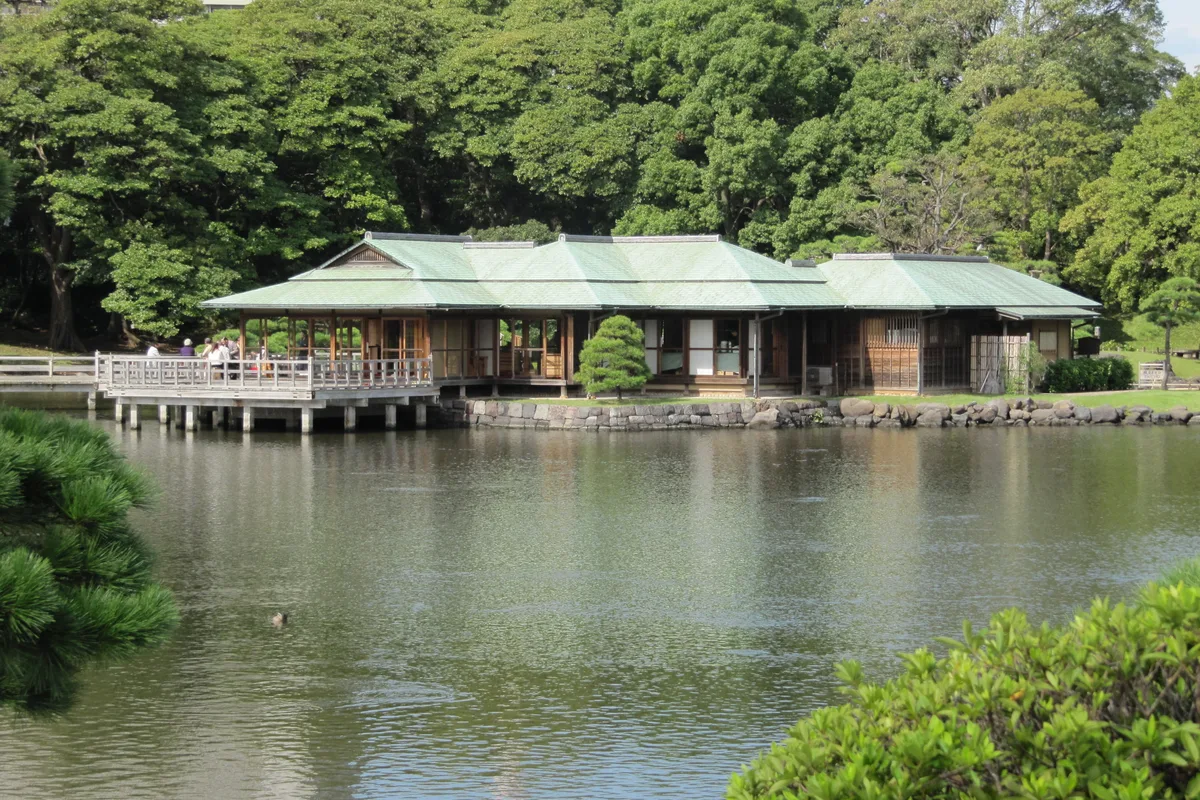
The tidal pond, Shioiri-no-ike, is the one feature nothing else in central Tokyo has: a seawater pond, still connected to Tokyo Bay by water gates, where the view genuinely shifts with the tide. The teahouse at its center, Nakajima-no-Ochaya, is the single most-named thing in the foreign reviews, roughly a quarter of them call it out directly. It's rebuilt in the old style, reachable only by bridge, and serves matcha and a seasonal sweet while you look back at the water.
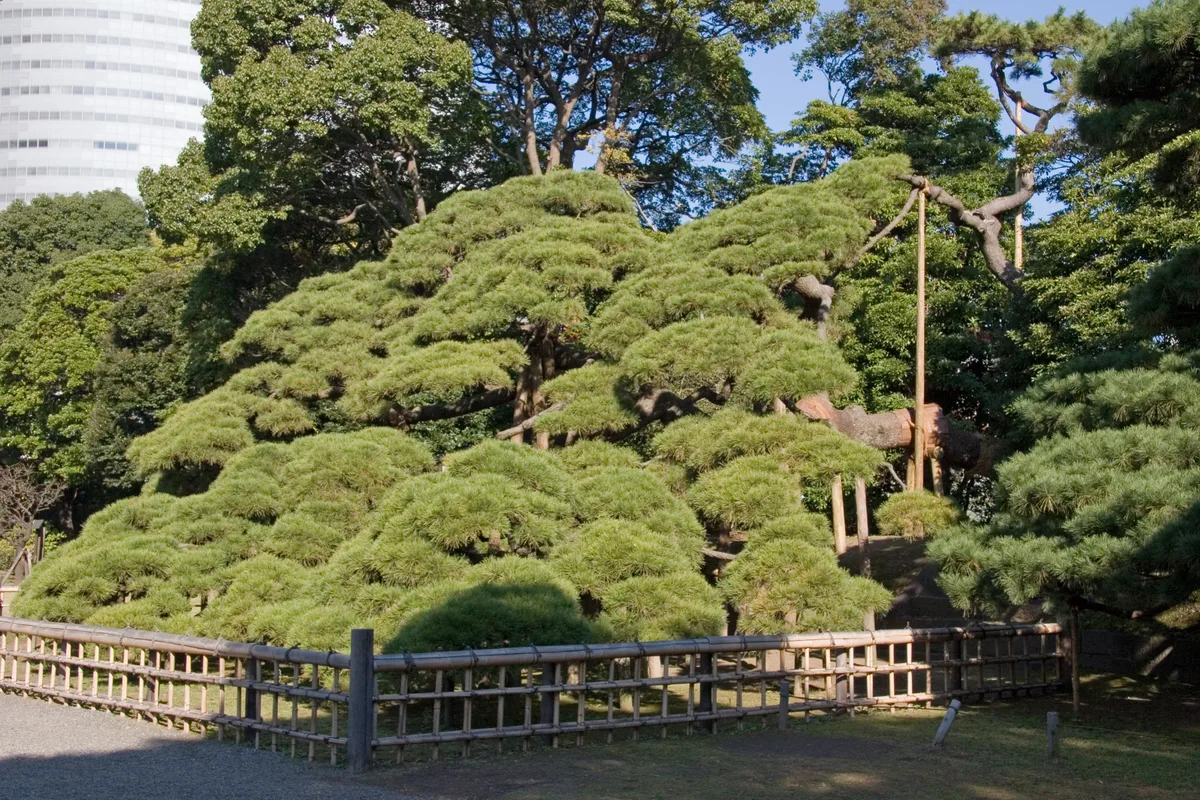
The other recurring object of praise is the pine standing near one of the garden's entrances, trained low and wide for roughly 300 years and propped up now on wooden supports. "The 300-year pine was overwhelming," one Japanese reviewer wrote; a visitor from New York called it, more simply, "a really old tree." It comes up about as often as the teahouse in the Japanese reviews.
Beyond those two fixed points, what's in bloom changes the experience the most, and several of the lukewarm or negative reviews turn out to be visits timed to a gap between flowering seasons. Canola flowers carpet the flower field from late winter into early spring, cosmos take over that same field from late September into October, wisteria and azalea bloom around May, and plum blossoms come in January and February. Visit in the stretch between those windows and the same garden that draws five stars from one reviewer reads, to another, as "just a big open space with some trees, a pond, and a few flowers blooming... nothing moved me."
A few things that make the visit go smoothly
Admission is 300 yen for adults, or 150 yen if you're 65 or older, and the ticket window takes IC transit cards, credit cards, and QR code payments as well as cash, so the gate itself stops being a source of friction. Two of the international reviews describe arriving expecting a free public park and being caught off guard by the fee, so knowing it ahead of time is most of the fix.
The garden is open 9am to 5pm, but the ticket counter stops selling at 4:30, so arriving by mid-afternoon rather than right before closing keeps the trip from ending at the gate; one visitor "said it closed at 5 but couldn't get in just after 4:30 because that's the time of last admission." There's no parking for regular cars (the few spaces just past the main gate are for wheelchair users' cars and tour buses), so arriving by train, on foot, or by water bus is the smoother route; the garden sits close to Shiodome and Shimbashi stations, and within easy walking distance of the Tsukiji outer market, which is why more than a dozen of the international reviews mention it alongside the Tsukiji market or Ginza. A water bus also runs from Asakusa to a pier inside the garden, only a couple of sailings a day, and for now that pier is for getting off only, so the boat works for arriving but not for leaving; more than one reviewer built their arrival around it rather than the train.
Sources
- Hama-rikyu Gardens official page, Tokyo Metropolitan Park Association: opening hours (9am-5pm, last entry 4:30pm); admission (300 yen general, 150 yen age 65+); payment by IC transit card, credit card, and QR code as well as cash; parking near the main gate limited to wheelchair users' cars and tour buses; access from Shiodome, Tsukiji-shijo, and Shimbashi stations; Shioiri-no-ike as Tokyo's only remaining seawater pond with its water gates; Nakajima-no-Ochaya teahouse, rebuilt in 1983; the roughly 300-year-old pine planted during the garden's major renovation under the 6th shogun, Ienobu; the canola and cosmos flower field.
- Hama-rikyū Gardens, Wikipedia: history as a Tokugawa family villa; location at the mouth of the Sumida River; the teahouse reached by bridges (last updated 2026-10-04).
- Notice on the cosmos in the flower field, Hama-rikyu Gardens, Tokyo Metropolitan Park Association: cosmos flowering from late September into October.
- Timetable and fares, Tokyo Cruise Ship Co. (water bus): Asakusa-Hamarikyu route, a couple of sailings a day, the Hamarikyu pier currently for disembarking only.
WMJS is written in Japan, in English, with AI help. We check every page, but English is not our first language. If a sentence reads oddly, tell us. One sentence is enough.
Thank you. A person reads every note.
How well do you know Japan?
Built from 635 public posts by Japanese people
Want to know more? Ask Japanese people
Have a follow-up question about this topic? We'll ask real Japanese people.
Voice Box →